wayground logo

Free Printable Worksheets

Font size

S
M
L
XL
Worksheets

Skeletal System

Total questions: 144

Worksheet time: 1hrs 24mins
Name
Class
Date
1.
1.) The function(s) of the skeletal system is/are:
a)
A storage area for calcium and lipids.
b)
Red blood cell formation.
c)
Provides structural support for the entire body.
d)
Serves as protection for various internal organs.
e)
All of the above.
2.
2.) During growth of a long bone, the site of growth in length is the:
a)
Medullary cavity
b)
Marrow
c)
Epiphyseal plate
d)
Endosteum
e)
Periosteum
3.
3.) The outer surface of bone is covered by a connective tissue layer called the:
a)
Lamellae
b)
Periosteum
c)
Endosteum
d)
Epiphysis
e)
Diaphysis
4.
4.) A long bone:
a)
Has a medullary cavity in the diaphysis.
b)
Has red marrow and yellow marrow in its cavities.
c)
Has endosteum lining the medullary cavity.
d)
Has an epiphysis at each end.
e)
All of the above.
5.
5.) Compact bone consists of cells called osteocytes located within spaces in the matrix called:
a)
Lamellae
b)
Haversian canals
c)
Canaliculi
d)
Lacunae
e)
Medullary cavities
6.
6.) In compact bone, a haversian canal, with the lamellae and osteocytes surrounding it are called:
a)
Lacunae
b)
Osteons (haversian systems)
c)
Canaliculi
d)
Cancellous bone
e)
Medullary cavities
7.
7.) The interconnecting rods or plates of bone in spongy bone are called:
a)
Osteocytes
b)
Trabeculae
c)
Haversian canals
d)
Haversian system
e)
Epiphyses
8.
8.) After ______________ (bone forming cells) become completely surrounded by bone matrix, they are called ________________ (mature bone cells).
a)
Osteocytes, osteoblasts
b)
Osteoblasts, osteoclasts
c)
Osteoclasts, osteoblasts
d)
Osteoblasts, osteocytes
e)
Osteocytes, osteoclasts
9.
9.) Which of the following statements about bone growth is NOT correct?
a)
Bone growth can occur by either endochondral ossification or appositional growth.
b)
Appositional growth is responsible for the increase in length of long bones.
c)
There are two types of ossification- intramembranous and endochondral
d)
Ossification occurs when other tissue, such as cartilage is replaced by bone.
e)
All of the above are correct.
10.
10.) Which of the following statements about bone remodeling and repair is (are) correct?
a)
Bone remodeling involves removal of old bone by osteoblasts.
b)
As a long bone increases in diameter, the size of the marrow cavity decreases.
c)
Bone is the major storage site for calcium in the body.
d)
The zone of tissue repair between two bone fragments is called a callus.
e)
Both the 3rd and 4th options are correct.
11.
11.) Which of the following anatomical terms for bone features is NOT correctly matched with its description?
a)
Condyle --> smooth, rounded end of bone where it forms a joint with another bone.
b)
Tubercle or tuberosity --> knob or enlargement
c)
Process --> prominent indentation
d)
Head --> enlarged (often rounded) end
e)
Facet --> small, flattened articular surface
12.
12.) Which of the following bones is NOT a part of the axial skeleton?
a)
Skull
b)
Ribs
c)
Sternum
d)
Clavicle
e)
Hyoid
13.
13.) Which two bones contribute to the pectoral girdle?
a)
Sternum and scapula
b)
Scapula and true ribs
c)
Scapula and thoracic vertebrae
d)
Scapula and clavicle
14.
14.) The bones that make up the appendicular division of the skeleton consist of the:
a)
Bones that form the longitudinal axis.
b)
Rib cage and vertebral column.
c)
Skull and the arms and legs.
d)
Pectoral and pelvic girdles, and the upper and lower limbs.
e)
None of the above are correct.
15.
15.) Parathyroid hormone, one of the hormones required for bone maintenance and repair:
a)
Increases calcium absorption by the intestines
b)
Inhibits osteoclast activity.
c)
Decreases calcium excretion by the kidneys.
d)
Both the 1st and 3rd options are correct
e)
All of the above.
16.
16.) Which of the following sections of the vertebral column is matched with its correct number of vertebrae?
a)
Thoracic --> 7 vertebrae
b)
Cervical --> 12 vertebrae
c)
Sacral --> 12 fused vertebrae
d)
Lumber --> 5 vertebrae
e)
Coccygeal --> 2 fused vertebrae
17.
17.) Which of the following sections of the vertebral column curve posteriorly?
a)
Cervical & lumbar
b)
Thoracic & cervical
c)
Thoracic & lumbar
d)
Lumbar & sacral
e)
Thoracic & sacral
18.
18.) Which of the following vertebrae is NOT correctly matched with its (their) identifying characteristics.
a)
Thoracic vertebrae --> contain articular facets for ribs.
b)
Lumbar vertebrae --> contain transverse foramina in transverse processes.
c)
Atlas --> articulates with occipital condyles.
d)
Axis --> allows motion as in shaking head "no".
e)
Sacrum --> has sacral crest and sacral promontory.
19.
19.) Gaps that permit the passage of nerves running to or from the enclosed spinal cord are called:
a)
Lamina propria
b)
Vertebral pedicles
c)
Intervertebral foramen
d)
Intervertebral discs
e)
None of the above
20.
20.) The correct arrangement for the following parts of the sternum, from superior to inferior would be:
a)
Body, jugular notch, manubrium, xiphoid process.
b)
Jugular notch, body, manubrium, xiphoid process.
c)
Manubrium, jugular notch, body, xiphoid process.
d)
Jugular notch, manubrium, body, xiphoid process.
e)
Xiphoid process, jugular notch, manubrium, body.
21.
21.) The first seven pairs of ribs that attach directly to the sternum are called:
a)
True ribs
b)
False ribs
c)
Floating ribs
d)
Sternal ribs
e)
Major ribs
22.
22.) The pectoral girdle
a)
Attaches the lower limbs to the body.
b)
Consists of the clavicle and scapula.
c)
Is part of the axial skeleton.
d)
Is attached to the body only where the clavicle attaches to the vertebrae.
e)
All of the above.
23.
23.) The scapula
a)
Has a depression called the glenoid fossa where the head of the humerus articulates.
b)
Has a coracoid process to which arm and chest muscles attach.
c)
Has an acromion process to which arm and chest muscles attach.
d)
Has a ridge, called the spine, on the posterior surface.
e)
All of the above.
24.
24.) Which of the following statements concerning the upper limbs is true?
a)
The hand is composed of 5 metacarpals.
b)
Each digit is composed of 4 phalanges.
c)
The wrist is composed of 10 carpal bones.
d)
The head of the ulna is closer to the thumb than is the distal end of the radius.
e)
Epicondyles on the radius and ulna provide attachment sites for forearm muscles.
25.
25.) The coxal (hip) bones
a)
Are part of the pectoral girdle.
b)
Are formed by the fusion of the ilium, ischium, and femur.
c)
Each have a large hole called the greater trochanter.
d)
Are joined together posteriorly by the pubic symphysis.
e)
Join the sacrum at the sacroiliac joint.
26.
26.) Large points of muscle attachment near the head of the femur are called:
a)
Epicondyles
b)
A malleolus
c)
The acetabulum
d)
The trochanters
e)
The patellas
27.
27.) Fibrous interlocking joints between the bones of the skull are called:
a)
Sutures
b)
Synovial joints
c)
Gomphoses
d)
Cartilaginous joints
e)
Syndesmoses
28.
28.) Which of the following statements about synovial joints is (are) correct?
a)
Articular cartilage covers articular surfaces of bones.
b)
Synovial joints contain synovial fluid.
c)
The synovial membrane may extend as a pocket or sac, called a bursa.
d)
The joint cavity is enclosed by a joint capsule.
e)
All of the above statements are correct.
29.
29.) Which of the following joints could be described as a ball-and-socket joint?
a)
The knee joint
b)
The shoulder joint
c)
The articular process between vertebrae
d)
The thumb joint
e)
The joint between occipital condyles and the atlas
30.
30.) Using your right hand and starting with your palm down, you turn the doorknob clockwise to open the door. The movement your hand makes would be called:
a)
Extension
b)
Flexion
c)
Adduction
d)
Pronation
e)
Supination
31.
31.) Bones are connected to other bones by _______________, while muscles are connected to bones by _________________.
a)
Tendons, ligaments
b)
Ligaments, tendons
c)
Ligaments, bursa
d)
Both the 1st and 3rd options are correct
e)
None of the above
32.
32.) After suffering multiple cervical fractures, a patient, was given a choice of which vertebrae to fuse together, i.e., he could leave only one articulation unfused. He decides to choose the fusion which would allow him to shake his head "no". His choice was:
a)
To leave the atlas-axis joint free.
b)
To leave the atlas free to move against the occipital condyles.
c)
To leave the articulation between C2 and C3 unfused.
d)
To leave the articulation between C6 and C7 unfused.
33.
33.) Which of the following movements would be needed to bend over and touch your big toe?
a)
Extension of the arms.
b)
Flexion of the forearm.
c)
Flexion of waist.
d)
Both the 1st and 3rd options are correct.
e)
All of the above.
34.
34.) From the following steps, identify the correct sequence in the process of endochondral ossification. (1) Osteoblasts cover the shaft of the cartilage in a thin layer of bone. (2) Blood vessels invade epiphyses; osteoblasts form secondary centers of ossification. (3) Chondrocytes at center of growing bone enlarge and calcify, and then die. (4) Bone enlarges; osteoclasts break down spongy bone, creating a marrow cavity and cartilage is replaced by bone. (5) Osteoblasts form a primary center of ossification.
a)
1, 5, 3, 4, 2
b)
3, 1, 5, 4, 2
c)
1, 3, 5, 4, 2
d)
2, 3, 1, 5, 4
e)
None of the above are in correct order
35.
35.) After intercepting a pass, a football player ran down field with the football. Trying to avoid a tackle, he passed the ball to a much faster player. As he attempted this, he stepped in a hole and his foot was twisted under him with great force. The x-ray shows a "broken ankle". The structure that is most likely broken is the:
a)
Talus bone
b)
The patella
c)
A bone in the second metatarsal
d)
The lateral malleolus of the fibula
e)
The head of the fibula
36.

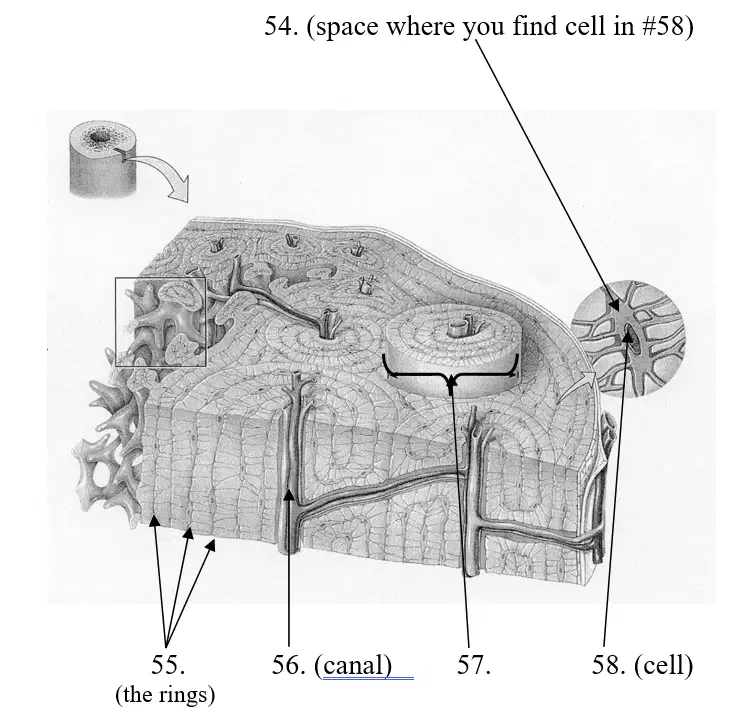
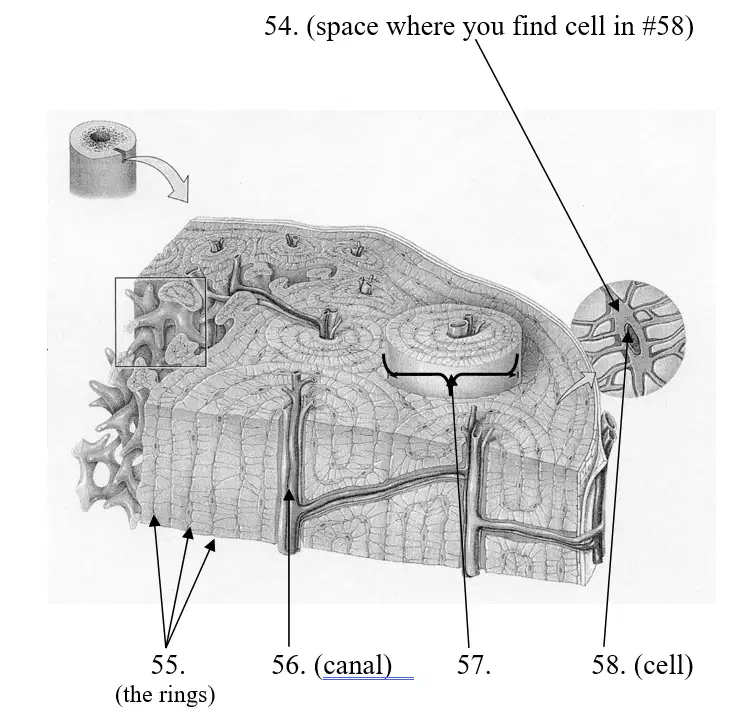
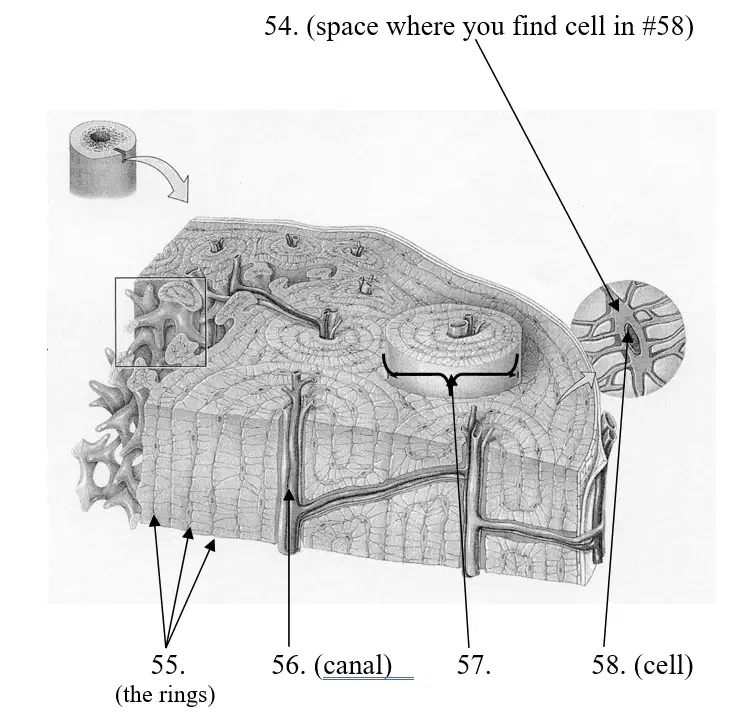
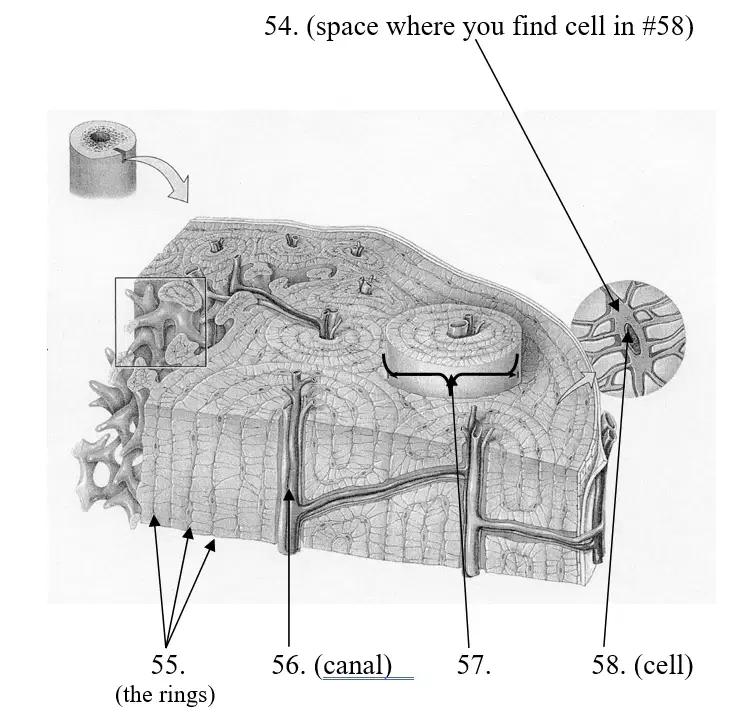
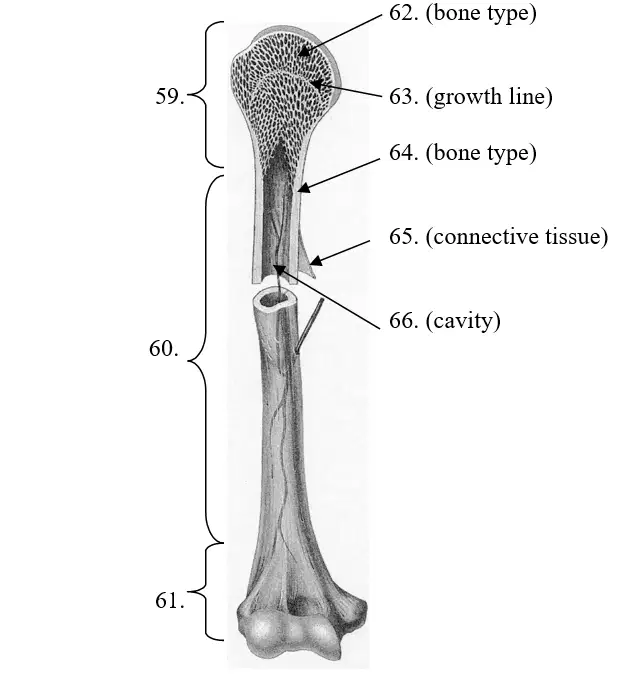
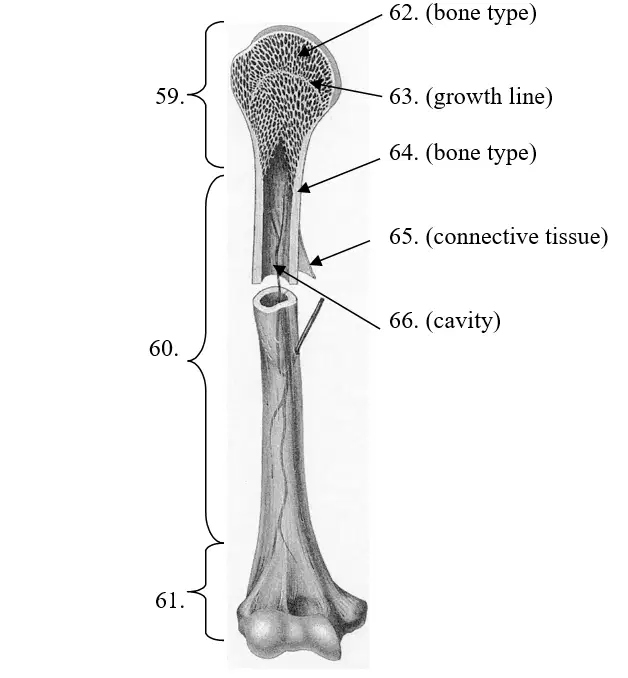
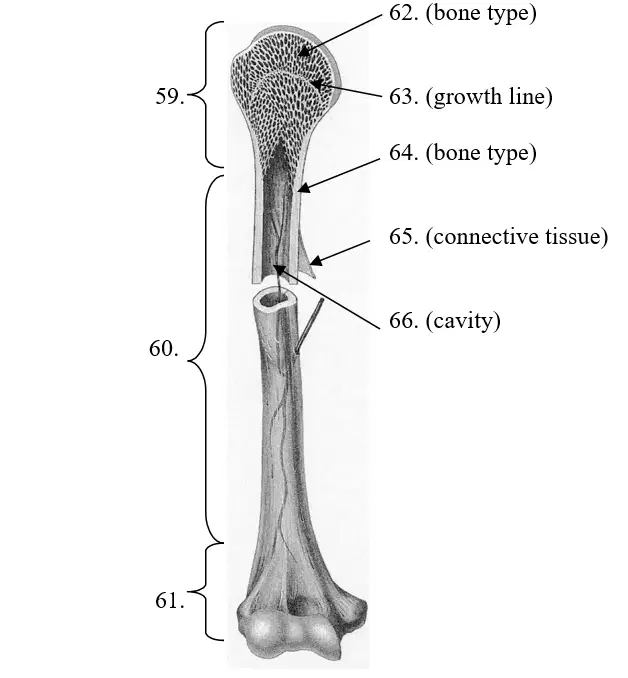
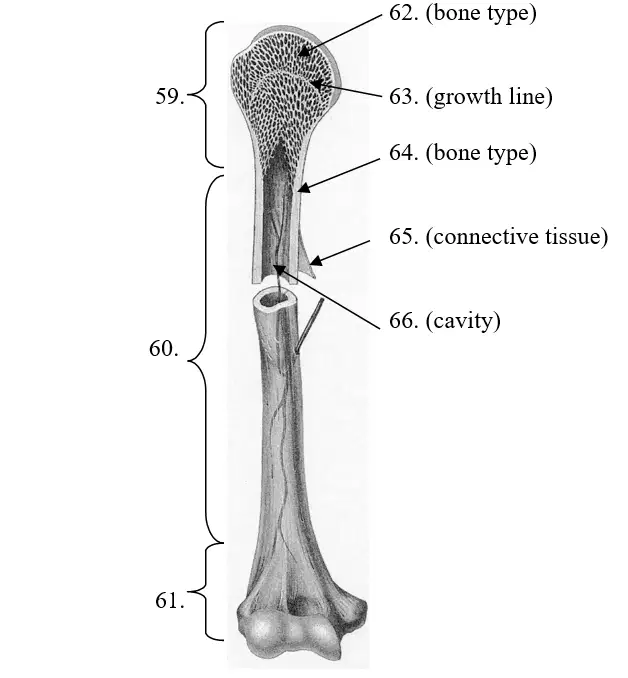
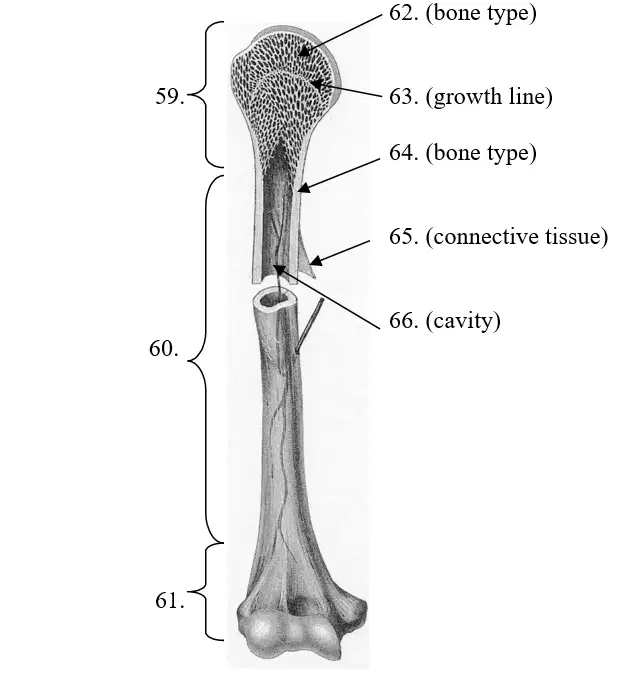
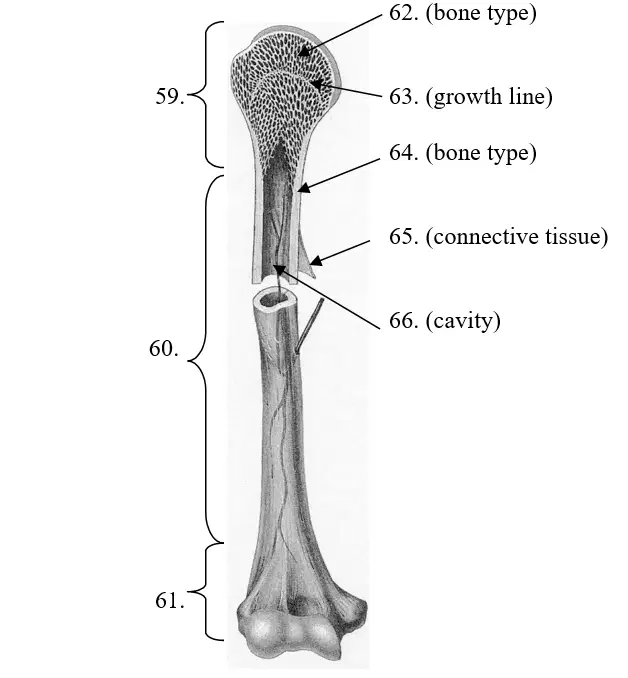
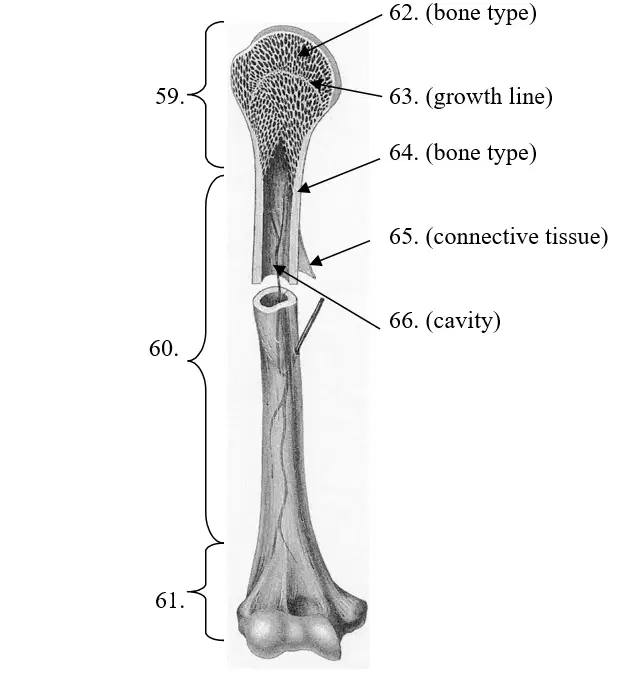
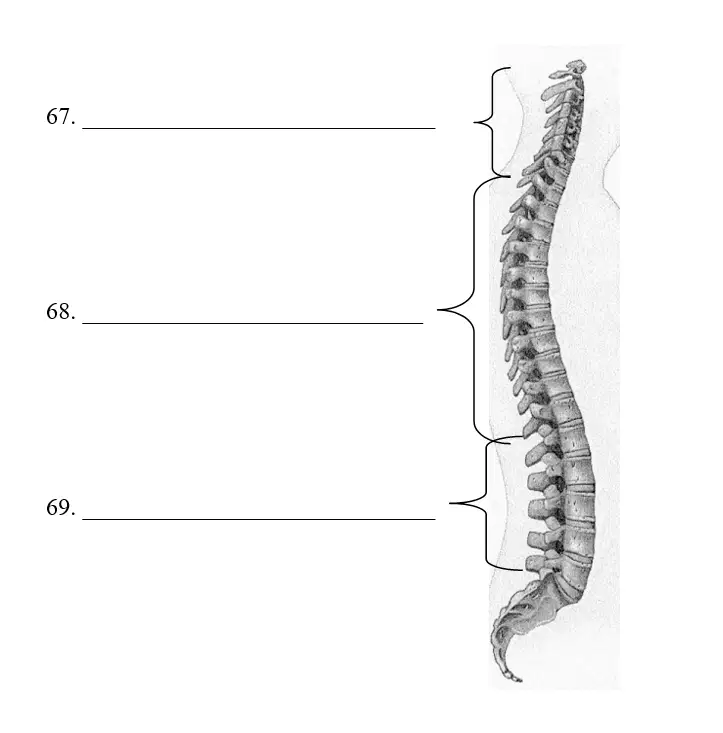
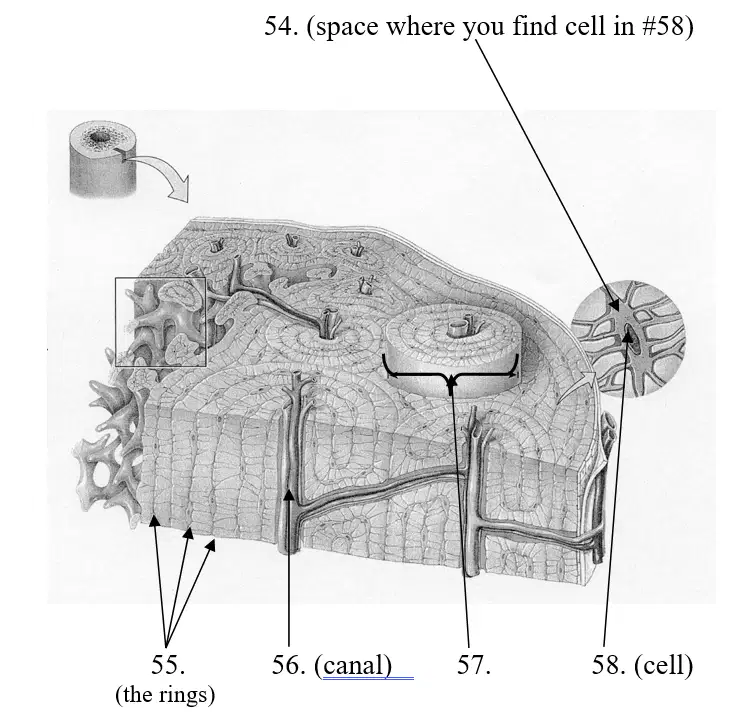
#54 is pointing to (a)  

37.

#55 is pointing to...

(a)  

38.

#56 is pointing to...

(a)  

39.

#57 is pointing to...

(a)  

40.

#58 is pointing to...

(a)  

41.

#59 is pointing to...

(a)  

42.

#60 is pointing to...

(a)  

43.

#61 is pointing to...

(a)  

44.

#62 is pointing to...

(a)  

45.

#63 is pointing to...

(a)  

46.

#64 is pointing to...

(a)  

47.

#65 is pointing to..

(a)  

48.

#66 is pointing to...

(a)  

49.

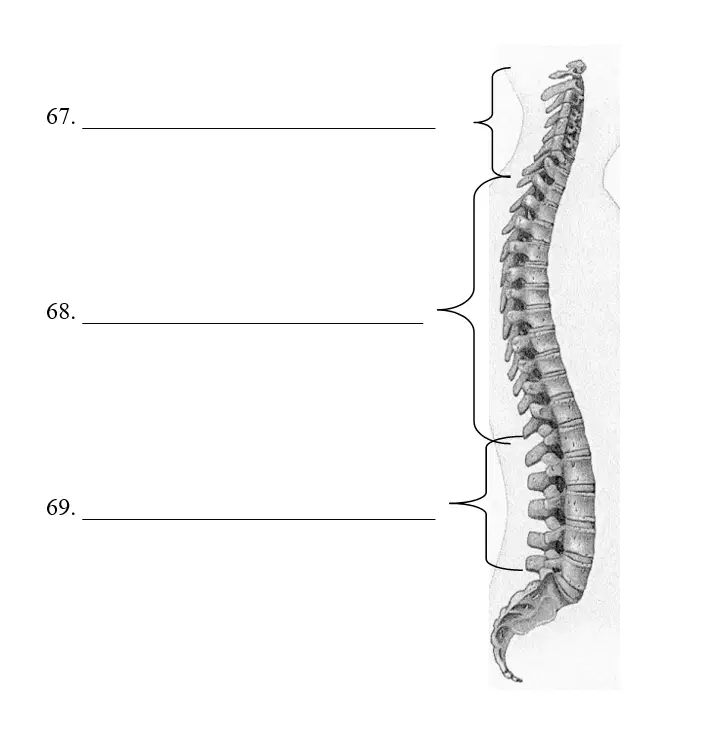
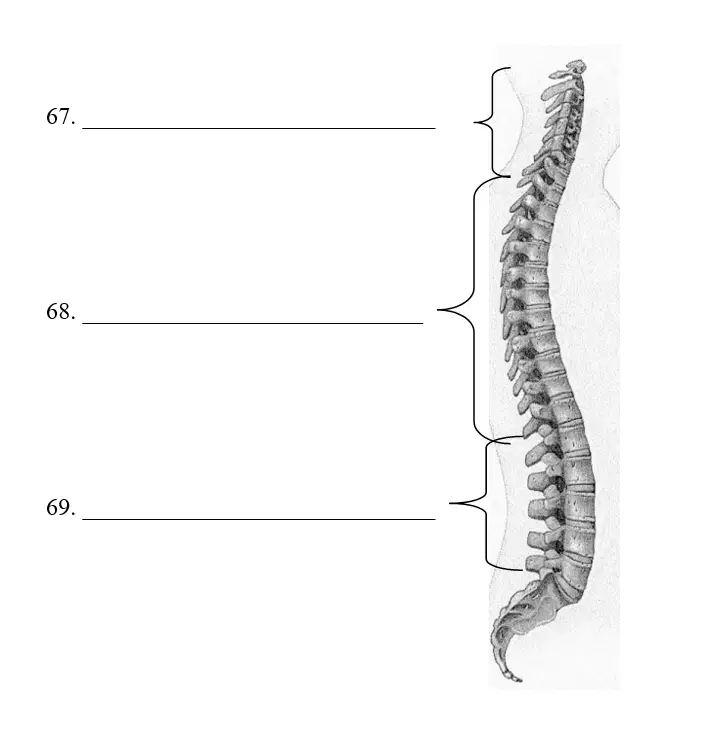
#67 is pointing to...

(a)  

50.

#68 is pointing to...

(a)  

51.

#69 is pointing to...

(a)  

52.

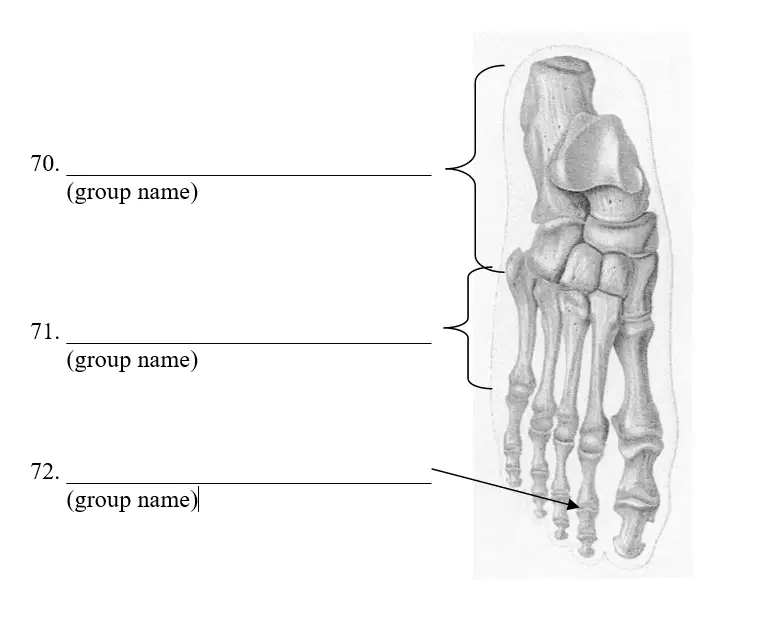
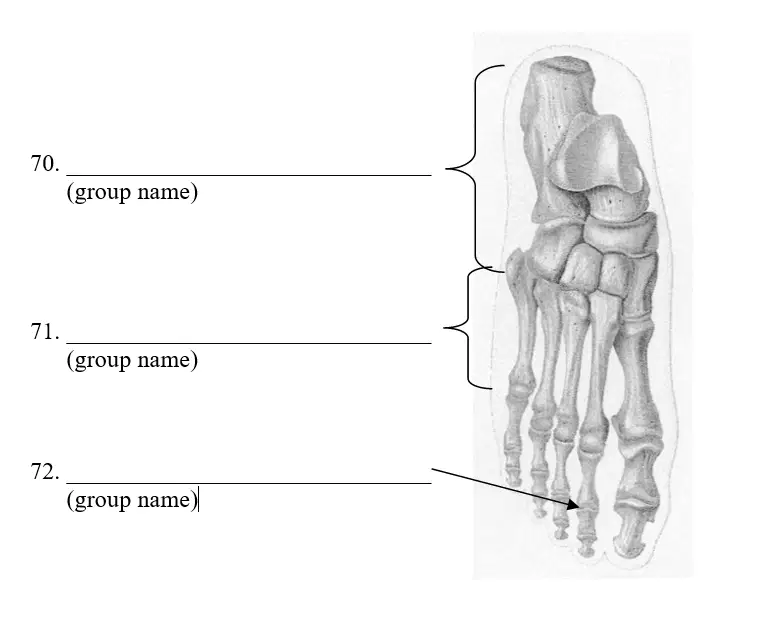
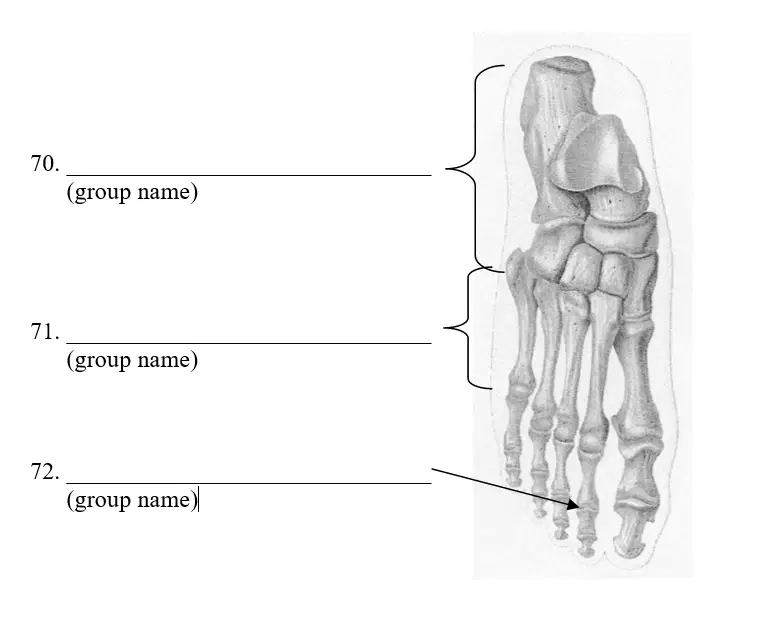
#70 is pointing to...

(a)  

53.

#71 is pointing to...

(a)  

54.

#72 is pointing to...

(a)  

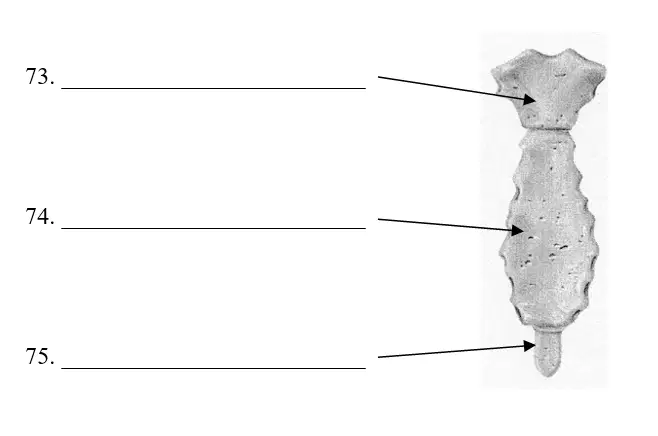
55.

#73 is pointing to...

(a)  

56.

#74 is pointing to...

(a)  

57.

#75 is pointing to...

(a)  

58.

Which of the following bones is part of the axial skeleton?

a)

Clavicle

b)

Femur

c)

Scapula

d)

Pelvis

e)

Sternum

59.

The periosteum is best described as:

a)

A cartilage plate at the end of long bones

b)

A type of bone cell

c)

A dense connective tissue covering the outer surface of bone

d)

A membrane lining the medullary cavity

e)

A cavity within the bone containing marrow

60.

Which of the following statements about the function of ligaments is correct?

a)

They store calcium

b)

They connect muscles to bones

c)

They line the joint cavity

d)

They connect bones to other bones

e)

They produce red blood cells

61.
The adult skeletal system is composed of how many bones?
a)
216
b)
371
c)
206
d)
199
62.

What do the bones make?

a)

veins

b)

cartilage

c)

red blood cells

d)

bone marrow

63.

Match the following common names of bones to their scientific names

a)

Kneecap

1.

Patella

b)

Thigh Bone

2.

Femur

c)

Collar Bone

3.

Clavicle

d)

Shoulder blade

4.

Scapula

64.

Which tissue cushions the end of bones?

a)

tendons

b)

ligaments

c)

cartilage

d)

joints

65.

What do we call the place where two bones meet?

a)

skeleton

b)

joint

c)

muscle

d)

rib

66.

Which is NOT a function of the skeletal system?

a)

production of red blood cells

b)

store calcium

c)

digest food

d)

movement, protection, and support

67.

Which type of tissue connects bone to bone?

a)

tendons

b)

ligaments

c)

skeletal mucscles

d)

smooth muscles

68.

What kind of joint is found at your elbow?

a)

pivot

b)

hinge

c)

gliding

d)

ball and socket

69.

Which of the following describes the joints in the skull and ribs?

a)

movable

b)

hinge

c)

pivot

d)

immovable

70.

What is the name of the outer membrane that surrounds bones?

a)

compact bone

b)

periosteum

c)

spongy bone

d)

bone marrow

71.

Which bone disease causes bones to become weak and brittle?

a)

artereosclerosis

b)

arthritis

c)

fracture

d)

osteoporosis

72.

Which type of joint is found at your shoulder and hip and allows for the greatest range of motion?

a)

ball and socket

b)

gliding

c)

hinge

d)

pivot

73.

Where are red blood cells produced?

a)

compact bone

b)

red bone marrow

c)

spongy bone

d)

yellow bone marrow

74.

Which part of the bone stores fat?

a)

yellow bone marrow

b)

red bone marrow

c)

spongy bone

d)

compact bone

75.

The disease in which bones become irritated or inflamed because cartilage in the joints has worn away is called ___.

a)

arthritis

b)

cancer

c)

osteoporosis

d)

fracture

76.

What is the name for the connector that attaches bone to bone?

a)

ligament

b)

tendon

c)

joint

d)

cartilage

77.
What are the 2 types of bone tissue?
a)
spongy bone and compact bone
b)
marrow and blood vessels
c)
axial and appendicular
78.
During this stage of development, the bones may become less dense and break easily.
a)
Infancy
b)
Childhood
c)
Adolescence
d)
Adulthood
79.

All of the following are major functions of skeletal system EXCEPT

a)

body movement

b)

posture and balance

c)

support and protection

d)

storage of calcium, magnesium, sodium, potassium

80.

The bones in the appendicular skeleton includes

a)

head, neck, trunk

b)

pectoral and pelvic girdle

c)

vertebral column and thoracic cage

d)

limbs and bones that connect to the pectoral and pelvic girdle

81.

The two ends of the long bone is called

a)

diaphysis

b)

epiphysis

c)

spongy bones

d)

articular cartilage

82.

Inside the long bone, the hollow chamber filled with bone marrow is called

a)

compact bone

b)

spongy bone

c)

medullary cavity

d)

red marrow

83.

The lining of the medullary cavity is called

a)

perimysium

b)

epiphysis

c)

epimysium

d)

endosteum

84.

The membrane that covers the entire bone is called

a)

endosteum

b)

endomysium

c)

periosteum

d)

perimysium

85.

The shaft or the central part of a long bone is called

a)

epihysis

b)

diaphysis

c)

perosteum

d)

articular cartilage

86.

Bone tissue is called

a)

osseous tissue

b)

osteocytes

c)

lacunae

d)

canaliculi

87.

Bone cells are called

a)

osseous

b)

osteoblasts

c)

osteocytes

d)

osteclasts

88.

Hyaline cartilage covering the ends of the bones is called

a)

epiphysis

b)

diaphysis

c)

medullary cavity

d)

articular cartilage

89.

appendicular skeleton

a)

name given to the pieces of the skeleton which are not part of the main trunk of the body

b)

the skeleton that makes up the main trunk of the body

c)

soft and bendy tissue which covers the ends of bone and provides cushioning between bones

d)

bones which protect organs and provide places for strong muscles to attach

90.

axial skeleton

a)

name given to the pieces of the skeleton which are not part of the main trunk of the body

b)

the skeleton that makes up the main trunk of the body

c)

soft and bendy tissue which covers the ends of bone and provides cushioning between bones

d)

bones which protect organs and provide places for strong muscles to attach

91.

flat bone

a)

name given to the pieces of the skeleton which are not part of the main trunk of the body

b)

the skeleton that makes up the main trunk of the body

c)

soft and bendy tissue which covers the ends of bone and provides cushioning between bones

d)

bones which protect organs and provide places for strong muscles to attach

92.

cartilage

a)

name given to the pieces of the skeleton which are not part of the main trunk of the body

b)

the skeleton that makes up the main trunk of the body

c)

soft and bendy tissue which covers the ends of bone and provides cushioning between bones

d)

bones which protect organs and provide places for strong muscles to attach

93.

irregular bone

a)

bones that are found in the skull, spinal column and wrist

b)

the place where two bones meet

c)

tough fibers which link bones together

d)

bones which have a shaft which contains marrow

94.

joint

a)

bones that are found in the skull, spinal column and wrist

b)

the place where two bones meet

c)

tough fibers which link bones together

d)

bones which have a shaft which contains marrow

95.

ligament

a)

bones that are found in the skull, spinal column and wrist

b)

the place where two bones meet

c)

tough fibers which link bones together

d)

bones which have a shaft which contains marrow

96.

long bone

a)

bones that are found in the skull, spinal column and wrist

b)

the place where two bones meet

c)

tough fibers which link bones together

d)

bones which have a shaft which contains marrow

97.

short bone

a)

tough fibers which tie muscles to bones

b)

soft tissue found in the center of some bones which makes red and white blood cells and platelets

c)

bones which are found embedded in tendons

d)

bones which are cuboidal shaped and fond in the fingers and toes

98.

marrow

a)

tough fibers which tie muscles to bones

b)

soft tissue found in the center of some bones which makes red and white blood cells and platelets

c)

bones which are found embedded in tendons

d)

bones which are cuboidal shaped and fond in the fingers and toes

99.

tendon

a)

tough fibers which tie muscles to bones

b)

soft tissue found in the center of some bones which makes red and white blood cells and platelets

c)

bones which are found embedded in tendons

d)

bones which are cuboidal shaped and fond in the fingers and toes

100.
The site of of bone growth on a long bone is called
a)
epiphyseal plate
b)
diaphysis
c)
periosteum
d)
medullary cavity
101.
Which fracture is common in older people due to osteoporosis?
a)
simple fracture
b)
compound fracture
c)
greenstick fracture
d)
compression fracture
102.
The joints in the skull are called
a)
hinge joints
b)
synovial joints
c)
gliding joints
d)
fibrous joints
103.
A common term for chronic inflammation of a joint is 
a)
osteoporosis
b)
fracture
c)
scoliosis
d)
arthritis
104.
In the second step of bone formation
a)
hyaline cartilage is covered with bone matrix
b)
bone building cells are destroyed
c)
hyaline cartilage is digested away leaving a cavity in newly formed bone
d)
blood vessels "invade" the bone cells
105.
Which fracture is common when a person tries to break their fall with outstretched arms?
a)
greenstick fracture
b)
impacted fracture
c)
compression fracture
d)
spiral fracture
106.
The matrix for the bone cells and the skeletal system includes all of the following except
a)
myelin
b)
collagen
c)
calcum
d)
phosphorus
107.
A ball and socket joint is located 
a)
in the wrist
b)
in the ankle
c)
in the hip
d)
in the foot
108.
Blood cells produced from within the bone are called
a)
yellow marrow
b)
red marrow
c)
osteocytes
d)
osteon systems
109.
The process of bone formation from cartilage is called
a)
growth
b)
ossification
c)
fracture repair
d)
callus zone
110.
The outer covering of bone is called 
a)
spongy bone
b)
compact bone
c)
periosteum
d)
medullary cavity
111.
The shaft of a long bone is called
a)
epiphysis
b)
epiphyseal plate
c)
epiphyseal line
d)
diaphysis
112.
Rickets is caused by a deficiency of which vitamin?
a)
Vitamin A
b)
Vitamin C
c)
Vitamin D
d)
Vitamin E
113.
Which of the following is filled with yellow marrow (adipose tissue)?
a)
medullary cavity
b)
spongy bone
c)
periosteum
d)
compact bone
114.
Spongy bone is located
a)
in the epiphysis
b)
in the diaphysis
c)
in the compact bone
d)
in haversian canals
115.
A part of the bone that protrudes or sticks out is called
a)
foramen
b)
meatus
c)
sinus
d)
process
116.
Which type of bone is a solid matrix with tightly packed cells?
a)
spongy bone
b)
compact bone
c)
skull bone
d)
long bone
117.
Which of the following is not part of a synovial joint?
a)
cartilage
b)
joint capsule
c)
ligaments
d)
sutures
118.
All of the following are synovial joints except
a)
cartilaginous joints
b)
gliding joints
c)
saddle joints
d)
hinge joints
119.
Which of the following are not features of compact bone/
a)
osteocytes
b)
Haversian canals
c)
lamallae
d)
trabeculae
120.
An abnormal curvature of the spine is called
a)
scoliosis
b)
greenstick fracture
c)
osteoporosis
d)
arthritis
121.
The spaces of trabeculae are filled with 
a)
yellow marrow
b)
interstitial fluid
c)
red marrow
d)
Haversian systems
122.
Which of the following is not a function of the skeletal system?
a)
maintain body shape
b)
help transmit impulses from place to place
c)
protect organs
d)
provide levers for movement
123.
The human skeleton can be subdivided into two parts, what part is made up of the skull, sternum, vertebral column and rib cage?
a)
appendicular
b)
axial
124.
What type of bone is the scapula?
a)
long bone
b)
short bone
c)
flat bone
d)
sesamoid bone
125.
What type of bone is the femur?
a)
Long bone
b)
Short bone
c)
Flat bone
d)
Irregular bone
126.
Which one of the following is an irregular bone?
a)
humerus
b)
tibia
c)
temporal
d)
vertebrae
127.
What is the name of the collar bone?
a)
Clavicle
b)
Scapular
c)
Sternum
d)
Xiphoid
128.
What is the name of the long bone in the top part of the leg?
a)
Patella
b)
Femur
c)
Fibula
d)
Tibia
129.
Name the bone located at number  8.
a)
Humerus
b)
Radius
c)
Fibula
d)
Tibia
130.
Name the bone located at number 12.
a)
Patella
b)
Clavicle
c)
Sternum
d)
Scapula
131.
Name the bone located at number 16.
a)
Clavicle
b)
Humerus
c)
Radius
d)
Ulna
132.
Name the bone located at number 14.
a)
Femur
b)
Fibula
c)
Tibia
d)
Radius
133.
Name the bone located at number 3.
a)
Scapula
b)
Humerus
c)
Sternum
d)
Clavicle
134.
The ______________ is made up of arms, wrists, hands, fingers, legs, ankles, feet, and toes.
a)
Axial
b)
Appendicular
135.
One function of the skeletal system is _______ especially in regards to the vital organs, such as the brain, heart, and lungs.
a)
Protection
b)
Storage
c)
Synthesis
d)
Movement
136.
A mature bone cell is called a _________.
a)
osteon
b)
osteocyte
c)
osteoclast
d)
osteoblast
137.
An osteocyte "lives" in __.
a)
lacunae
b)
lamellae
c)
Haversian canals
d)
Volkmann's canals
138.

bone building cells; deposit calcium

a)

osteoclasts

b)

osteoblasts

c)

hematoma

d)

fibrocartilage callus

139.

Bone destroying cells

a)

osteoblasts

b)

hematoma

c)

bony callus

d)

osteoclasts

140.

Disease of the bone caused by lack of exposure to the sun and lack of vitamin D; results in bending of the femur

a)

osteoporosis

b)

hematoma

c)

rickets

d)

reduction

141.

Name the bone

a)

maxilla

b)

palatine

c)

lacrimal

d)

temporal

142.

Name the bone

a)

lacrimal

b)

maxilla

c)

palatine

d)

nasal

143.

Name the bone

a)

zygomatic

b)

palatine

c)

frontal

d)

lacrimal

144.

Name the bone

a)

maxilla

b)

nasal

c)

frontal

d)

sphenoid