wayground logo

Free Printable Worksheets

Font size

S
M
L
XL
Worksheets

Grade 12 ( Advanced Biology 2nd quarter Final Revision)

Total questions: 140

Worksheet time: 2hrs 37mins

Name
Class
Date
1.
What is it called when a sperm and egg meet?
a)
meiosis
b)
fertilization
c)
cell division
d)
mitosis
2.
Which process and type of resulting cells are represented?
a)
mitosis, gametes
b)
mitosis, body cells
c)
meiosis, gametes
d)
meiosis, body cells
3.
The chromosomes that pair up during meiosis, are called __________ chromosomes.  
a)
homozygous 
b)
asexual
c)
homologous
d)
genes
4.
A male shark has 40 chromosomes in each of its sex cells. How many would be present in its body cells?
a)
20
b)
40
c)
80
d)
160
5.
What causes genetic variation in meiosis?
a)
chromosomes lining up
b)
crossing over of chromosomes
c)
separation of chromosomes
d)
chromosomes pulling apart
6.
What is one of the advantages, why is it better to reproduce sexually versus asexually?
a)
survival of the fittest
b)
overproduction
c)
genetic variation
d)
cloning
7.
Chromosomes exchange genetic material during 
a)
crossing over
b)
replication
c)
synthesis
d)
translation
8.
a)

INCREASES GENETIC VARIATION

b)

TAKES PLACE IN PROPHASE I

c)

CROSSING OVER

d)

ALL ARE TRUE

9.

MEIOSIS

a)

REDUCES THE NUMBER OF CHROMOSOMES BY ONE HALF

b)

PRODUCES UNIQUE SEX CELLS-1N

c)

ALLOWS TRAITS TO BE PASSED TO OFFSPRING

d)

ALL ARE TRUE

e)

INCREASE GENETIC VARIATION

10.

MEIOSIS PRODUCES 4 CELLS, THEY ARE

a)

N

b)

2N

c)

3N

11.
The purpose of sexual reproduction and meiosis is to form ________ cells.
a)
body
b)
sex
c)
somatic
d)
brain
12.
How many daughter cells are produced at the end of meiosis?
a)
1
b)
2
c)
3
d)
4
13.
What is one reason why we need meiosis?
a)
To double the number of chromosomes going into sex cells
b)
To halve the number of chromosomes going into sex cells
c)
To triple the number of chromosomes going into sex cells
d)
To not change the number of chromosomes going into sex cells
14.
What phase is  shown in the picture?
a)
anaphase 1
b)
anaphase 2
c)
metaphase 1
d)
telophase 1
15.
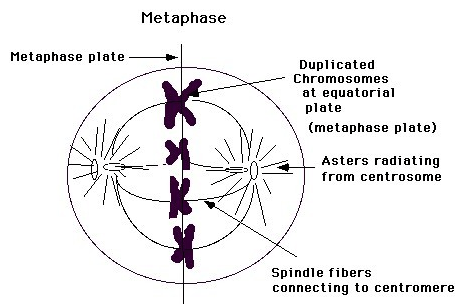
Which of the following phases of mitosis is represented by the diagram below?
a)
prophase
b)
metaphase
c)
anaphase
d)
telophase
16.
What phase is shown here?
a)
Prophase II
b)
Metaphase I
c)
Metaphase II
d)
Anaphase I
17.
What phase is shown here?
a)
Metaphase II
b)
Telophase I
c)
Telophase II
d)
Metaphase I
18.
What phases is shown here?
a)
Prophase II
b)
Prophase I
c)
Anaphase II
d)
Interphase I
19.
What phase is shown here?
a)
Anaphase I
b)
Prophase I
c)
Metaphase II
d)
 Metaphase I
20.
What phase is shown here?
a)
Telophase II
b)
Anaphase II
c)
Metaphase I
d)
Interphase I
21.
What phase is shown here?
a)
Telophase I
b)
Metaphase II
c)
Telophase II
d)
Anaphase I
22.
What phase is this?
a)
Interphase II
b)
Prophase I
c)
Metaphase I
d)
Anaphase II
23.
Which of the following cell types is formed by meiosis?
a)
muscle cells
b)
skin cells
c)
sperm cells
d)
blood cells
24.
If an intestinal cell in a butterfly contains 24 chromosomes, a butterfly egg would contain ____ chromosomes.
a)
3
b)
6
c)
12
d)
24
25.
How many times in meiosis does the cell divide?
a)
2
b)
4
c)
3
d)
1
26.
When homologous chromosomes match up, they form a structure call a ___________.
a)
tetrad
b)
triad
c)
diploid
d)
gamete
27.
Which of the following best describes meiosis?
a)
It is carried out in all tissues theat require cell replacement
b)
It occurs only in cells in the reproductive structures of an organism
c)
It happens in all of the tissues except the brain and spinal cord
d)
It is the first stage of mitosis
28.
products of meiosis are genetically
a)
different
b)
identical
29.
A human zygote should have _____ chromosomes inside.
a)
46
b)
23
c)
92
d)
64
30.

Body cells. Basically these are any cells not including sperm or egg.

a)

germ cells

b)

somatic cells

c)

gametes

d)

sister chromatids

31.
The cells produced via meiosis are called:
a)
sex cells
b)
somatic cells
c)
body cells
d)
skin cells
32.
Unlike mitosis, meiosis in male mammals results in the formation of
a)
one haploid gamete
b)
three diploid gametes
c)
four diploid gametes
d)
four haploid gametes
33.
If the Diploid number of Carrots is 18, the haploid number is
a)
18
b)
9
c)
27
d)
36
34.
If a body cell in a butterfly contains 24 chromosomes, a butterfly egg would contain
a)
3
b)
6
c)
12
d)
24
35.
The chromosomes that pair up during meiosis, are called __________ chromosomes.  
a)
homozygous 
b)
asexual
c)
homologous
d)
genes
36.
Identify the phase.
a)
Metaphase I
b)
Metaphase II
c)
Prophase I
d)
Anaphase II
37.
How many daughter cells are produced from meiosis ?
a)
10
b)
6
c)
4
d)
2
38.
Name the growth phase of the cell cycle for both Mitosis and Meiosis.
a)
metaphase
b)
telophase
c)
interphase
d)
anaophase
39.
How many cells are produced during telophase I ?
a)
4
b)
8
c)
2
d)
0
40.
Why do we need meiosis?
a)
To double the number of chromosomes going into sex cells
b)
To halve the number of chromosomes going into sex cells
c)
To triple the number of chromosomes going into sex cells
d)
To not change the number of chromosomes going into sex cells
41.
A human zygote should have _____ chromosomes inside.
a)
46
b)
23
c)
92
d)
64
42.

At the end of mitosis you have _____ cells

a)

identical

b)

different

c)

identical twins

d)

variety

43.
products of meiosis are genetically
a)
different
b)
identical
44.
This picture shows which process?
a)
mitosis
b)
meiosis
c)
the cell cycle
45.
Human eggs and sperm are _____, and each has ____ chromosomes.
a)
diploid, 23
b)
diploid, 46
c)
haploid, 23
d)
haploid, 46
46.
Name the phase of Mitosis:
a)
Prophase
b)
Metaphase
c)
Anaphase
d)
Telophase
47.

Meiosis explains why

a)

you inherited half of your DNA from each of your parents

b)

the sister chromatids in a chromosome are identical to each other

c)

each of your somatic cells contains the same DNA

d)

zygotes contain half as much DNA as somatic cells

48.

What event occurs soon after a cell completes meiosis I?

a)

homolgous chromosomes pair up

b)

homolgous chromosomes move apart from each other

c)

DNA is replicated for the second time

d)

cytokinesis divides the cytoplasm

49.
What process does a multi-cellular organism use to replace its damaged body cells?
a)
mitosis
b)
meiosis
c)
replication
d)
transcription
50.
Meiosis occurs
a)
in all sexually reproducing organisms
b)
In all reproducing organisms
c)
In all asexually reproducing organisms
d)
During gametogenesis
51.

The study of ____________ is called genetics

a)

heredity

b)

dominance

c)

pea plants

d)

mutations

52.

Gregor Mendel studied heredity using _______ plants

a)

rose

b)

pea

c)

berry

d)

corn

53.

____________ used plants to study the way traits are passed from parent to offspring

a)

Mendel

b)

Punnett

c)

Sutton

54.

If you cross a white flower (pp) with a purple flower (PP), the possible genotypes of the offspring are

a)

PP and pp

b)

All Pp

c)

All PP

d)

All pp

55.

The organism's appearance is known as its

a)

heredity

b)

pedigree

c)

phenotype

d)

genotype

56.

_____________ describes a trait that covers over, or masks another form of that trait.

a)

recessive

b)

gene

c)

allele

d)

dominant

57.

Same traits produced in offspring from generation to generation is called?

a)

pure breeding

b)

cross breeding

c)

hybrid

d)

children

58.

_________________ describes a trait that is covered over, or masked by another form of that trait.

a)

dominant

b)

punnett

c)

recessive

d)

gene

59.

Different forms of a gene are called

a)

alleles

b)

traits

60.

Two of the same alleles of the gene for a certain trait

a)

heterozygous

b)

homozygous

61.

A ______________ square is a model that helps make genetic predictions.

a)

Punnett

b)

Mendel

62.
A characteristic that an organism can pass on to its offspring
a)
heredity
b)
punnett square
c)
trait
d)
phenotype
63.
Are recessive traits shown with capital or lowercase letters? 
a)
Capital
b)
Lowercase
64.
Sperm from one plant fertilizes the eggs of the same plant in
a)
cross-pollination
b)
cross-breeding
c)
self-pollination
d)
self-breeding
65.
When parents with different traits are bred, a trait that reappears in the second generation after disappearing in the first generation is a
a)
dominant trait
b)
true-breeding trait
c)
recessive trait
d)
characteristic
66.
When a first-generation plant self-pollinates, what is the ratio of dominant to recessive traits in the second-generation plants?
a)
1:3
b)
4:1
c)
1:4
d)
3:1
67.
If a true-breeding male plant with wrinkled seeds (ww) is crossed with a true-breeding female plant with round seeds (WW), describe the seeds of the offspring.
a)
all round seeds
b)
three round seeds and one wrinkled seed
c)
all wrinkled seeds
d)
half wrinkled seeds and half round seeds
68.

Sexual Reproduction

a)

One parent organism produces offspring.

b)

Passing of traits from parents to offspring

c)

The two alleles that control the phenotype.

d)

Genetic materials from two different cells combine, producing offspring

69.

One cat has a heterozygous genotype, black fur (Bb), and its mate has a homozygous genotype grey fur (bb). Use a Punnett square to determine the probability of one of their offspring having grey fur.

a)

100%

b)

25%

c)

50%

d)

75%

70.

Heterozygous is when...

a)

the alleles are the same.

b)

the alleles are different.

c)

the alleles are absent.

d)

the alleles are present.

71.

T = tall and t = short

In the punnett square shown, what belongs in the missing square

a)

tt

b)

Tt

c)

Bb

d)

TT

72.
G = green, g = yellow
The genotype for a yellow plant is...
a)
GG
b)
Gg
c)
gg
d)
all of the choices result in yellow
73.

If a black guinea pig (BB) and a white guinea pig (bb) mate, there is a ______ chance that a white guinea pig will be born.

a)

0%

b)

25%

c)

50%

d)

75%

e)

100%

74.
In a punnet square where are the parent alleles written?
a)
Top and inside the boxes
b)
Only on the left and right side of the boxes. 
c)
outside of the boxes (top and left side)
d)
All on the top side of the boxes
75.

Which of the following genotypes is homozygous dominant?

a)

A

b)

Aa

c)

AA

d)

aa

76.

Which of the following genotypes is heterozygous?

a)

Bb

b)

BB

c)

bb

d)

B

77.

A dominant allele is represented by a ______ letter.

a)

lower-case

b)

capital

78.
What is a phenotype
a)
The genetic make up (code)
b)
The physical trait
79.
How many alleles (letters) do each person carry for a trait?
a)
1
b)
2
c)
3
d)
4
80.

What happens when a true-breeding plant self-pollinates?

a)

It does not produce offspring.

b)

It produces offspring with the same trait the parent plant has.

c)

It produces offspring with the opposite trait the parent plant has.

d)

It produces twins.

81.
How many traits did Mendel study in his pea plants?
a)
1
b)
3
c)
5
d)
7
82.
Who was Gregor Mendel?
a)
A French Botanist
b)
A German Physician
c)
An American Cowboy
d)
An Austrian Monk
83.
Gregor Mendel is often called _____________. This is due to his experiments with pea plant genetics.
a)
The Father of Heredity
b)
The King of Peas
c)
The Father of Genetics
d)
The Father of Modern DNA
84.
What did Mendel do to make sure his plants didn't self-pollinate?
a)
Removed the anther/pollen.
b)
Added anthers to the plant
c)
Removed the stigma
d)
Cut the stems
85.
___________ make up DNA.
a)
Chromosomes
b)
Genes
c)
Dominant
d)
Cells
86.

Which trait(s) did Mendel study in pea plants?

a)

flower color

b)

pod color

c)

stem size

d)

all of the above

87.

An example of a recessive trait in pea plants is

a)

green pods

b)

round seeds

c)

yellow seeds

d)

white flowers

88.

How do pea plants pollinate?

a)

reproduce without pollination.

b)

only cross-pollination

c)

asexually

d)

self-pollination, but can be cross-pollinated

89.

Reasons that pea plants were a good choice to study for Mendel included that

a)

pea plants have a long gestation period.

b)

pea plants are asexual.

c)

pea plants have easily identifiable traits.

d)

pollination was random.

90.

Through his studies, Gregor Mendel was able to prove the blending theory of inheritance.

a)

True

b)

False

91.

Crossing over results in

a)

less genetic variation

b)

More genetic variation

c)

removal of genotypes

d)

less combinations of genes

92.

What technique did Gregor Mendel use to help understand inherited traits?

a)

removed dominant alleles

b)

cross pollinated same-sex plants

c)

cross pollinated male and females

d)

allowed plants to self-fertilize

93.

what is polyploidy?

a)

one or more extra sets of chromosomes

b)

one or less sets of chromosomes

c)

same number of chromosomes

d)

sister chromosomes

94.

Genes located close together on the chromosome are described as linked and travel together during gamete formation

a)

True

b)

False

95.

Genes that are located far apart on a chromosome are more likely to cross over

a)

False

b)

True

96.

What is this picture?

a)

Meiosis

b)

A homologous chromosome

c)

A Punnette Square to predict genotypes

d)

A chromosome map for showing how genes are arranged on a chromosome

97.

Where is polyploidy benefical?

a)

in humans

b)

in math class

c)

in agriculture (crops (wheat,oats) and fruits)

d)

in the law of segregation

98.

What conclusion can be made from this picture? LOOK CAREFULLY

a)

random assortment results in 4 possible gametes

b)

random assortment results in 8 possible gametes

c)

gametes are not allowed to form

d)

alleles are not allowed to combine

99.

What is an exception to Mendel's law of independent assortment?

a)

crossing over

b)

gene linkage

c)

law of segregation

100.

A housefly has 6 pairs of chromosomes, how many possible combinations could be produced?

a)

12

b)

6

c)

64

d)

36

101.

What is an exception to Mendel's law of independent assortment?

a)

crossing over

b)

gene linkage

c)

law of segregation

d)

meiosis

102.
If results of recombination do NOT follow Mendel's Law of Independent Assortment, genes are likely to be - - - 
a)
shuffled during meiosis
b)
linked
c)
inherited
d)
on separate chromosomes
103.
Which genes are most likely linked?
a)
genes 1 & 2
b)
genes 2 & 3
c)
genes 3 & 4
d)
genes 1 & 4
104.

__________________ has been used in agriculture to increase the size of flowers.

a)

genetic variation

b)

genetic recombination

c)

polyploidy

d)

triploid

105.
The physical appearance of a trait is known as the-
a)
genotype
b)
phenotype
c)
characteristics
d)
intelligence
106.
rr
a)
Homozygous Dominant
b)
Homozygous Recessive
c)
Heterozygous
d)
Heterozygous Recessive
107.
TT
a)
Homozygous Dominant
b)
Homozygous Recessive
c)
Heterozygous
d)
Heterozygous Dominant
108.
Which of the following is heterozygous
a)
FF
b)
tt
c)
Gg
d)
RR
109.
Mark is heterozygous. If B is for brown hair, and b is for blonde hair, what is Mark's phenotype?
a)
Brown Hair
b)
Blonde Hair
c)
Brown and Blonde Hair
d)
Black Hair
110.
The genotype is the ______________.
a)
physical appearance
b)
Genetic makeup
c)
Alleles gained from one parent
111.
If a gene is found only on the X chromosome and not the Y chromosome, it is said to be what?
a)
sex-linked trait
b)
polygenic trait
c)
codominant trait
d)
incomplete dominance trait
112.

What is the genotype of a person with type A blood, who had a father with type O blood?

a)

AB

b)

AO

c)

AA

d)

OO

113.

A calico cat shows both the traits for orange fur and black fur. What kind of allele expression is this?

a)

Incomplete Dominance

b)

Codominance

c)

Complete dominance

d)

Multiple Alleles

114.
For an XX female to express a recessive sex-linked trait, she must have....
a)
two recessive alleles
b)
a Y chromosome 
c)
one recessive allele
d)
two dominant alleles
115.

Human height occurs in a continuous range because it is affected by the interaction of many genes, making it a(n)

a)

autosomal trait

b)

polygenic trait

c)

codominant trait

d)

sex-linked trait

116.

A man with type A blood marries a woman with Type AB blood. Based on what you know about blood types, what is the only blood type not possible for their children?

a)

A

b)

O

c)

AB

d)

B

117.
The 23rd pair of chromosomes that differ in males and females are called___.
a)
autosomes
b)
sex chromosomes
c)
multiple alleles
d)
polygenic
118.

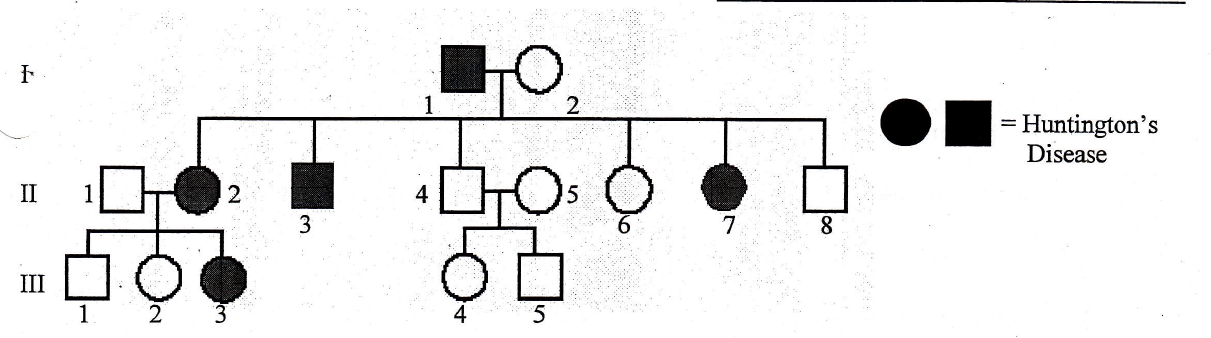
There are no carriers for Huntington's Disease- you either have it or you don't. Is Huntington's disease autosomal dominant or autosomal recessive?

a)

Dominant

b)

Recessive

119.

Hemophilia is a recessive sex-linked trait. If H = normal & h = has hemophilia, which genotype represents a male with hemophilia.

a)

XHY

b)

XHXh

c)

XhXh

d)

XhY

120.

Colorblindness is a recessive, X chromosome sex-link disorder. Cross the parents to figure out which percentage of their offspring will be colorblind.

a)

25%

b)

0%

c)

75%

d)

50%

121.

Coat color in calico cats is an example of:

a)

Polygenic Traits

b)

Epistasis

c)

X-Chromosome Inactivation

d)

X-linked traits (same as sex-linked)

122.

Alternative forms of a gene are called

a)

genes

b)

alleles

c)

chromosomes

d)

locus

123.

When several genes control a single trait, this is called _____ _____.

a)

polygenic inheritance

b)

incomplete dominance

c)

co-dominance

d)

recessive

124.

Traits that display intermediates, or blended variations, have alleles of ______ ______.

a)

incomplete dominance

b)

co-dominance

c)

recessive

d)

polygenic inheritance

125.

Genes controlled by 3 or more alleles, such as blood type and eye color, are _____ ______ traits.

a)

multiple allele

b)

incomplete dominance

c)

sex-linked recessive

d)

phenotype

126.

Traits in which 2 alleles are BOTH dominant at the same time are BOTH expressed, are said to be ________.

a)

co-dominant

b)

incomplete dominant

c)

sex-linked recessive

d)

recessive

127.

Human blood types ___ and ___ are co-dominant.

a)

A and B

b)

A and o

c)

B and o

128.
A red flowered plant (RR) breeds with a White flowered plant (WW). The gene for petal color in these plants expresses incomplete dominance.  What percentage of the offspring will have pink (RW) flowers?
a)
0%
b)
25%
c)
50%
d)
100%
129.

In the arctic fox, which trait is controlled by both its genes AND the environment?

a)

fur color

b)

eye color

c)

head size

d)

teeth sharpness

130.

Sickle Cell Anemia is a _______ disorder that produces a defective form of the hemoglobin protein.

a)

dominant

b)

recessive

c)

sex-linked

d)

co-dominant

131.

In Sickle Cell Anemia, misshapen red blood cells cannot carry as much ___ and rupture easily.

a)

blood

b)

oxygen

c)

carbon dioxide

d)

water

132.

The genetic disorders hemophilia and color-blindness are called Sex-Linked recessive disorders because the mutated allele is located on the ______.

a)

Y-chromosome

b)

X-chromosome

c)

any chromosome

d)

all chromosomes

133.

Sex-linked disorders like hemophilia and color-blindness are more common in _____ because they only have one X chromosome.

a)

males

b)

females

134.
blood types consist of 4 different alleles.
a)
false
b)
true
135.
incomplete dominance means that there traits are,,,
a)
expressed equally
b)
dominant
c)
recessive
d)
blended
136.
polygenic means that _________ control a characteristic
a)
many genes
b)
single genes
c)
3 genes
d)
no genes
137.
What is the genotype of a person with type A blood, who had a father with type O blood?
a)
AB
b)
AO
c)
AA
d)
OO
138.
What are the blood types of the possible children that a woman (type O) and man (type AB) can have?
a)
O and AB
b)
O and A
c)
O and B
d)
A and B
139.
What is the phenotype of a person with the genotype AO?
a)
type A
b)
type O
c)
AA
d)
OO
140.
A man with type O blood is accused of being the father of a type B baby. The mother is type A. Could this man be the father? 
a)
Yes 
b)
No