
 Worksheets
Biology Final Review
Total questions: 141
Worksheet time: 2hrs 17mins
Name
Class
Date
1.

Which organelle is only found in a plant cell?
a)
nucleus
b)
chloroplast
c)
mitochondria
d)
cell membrane
2.

This organelle creates energy.
a)
Nucleus
b)
Ribosome
c)
Mitochondria
d)
ER
3.

Where is DNA stored in a cell?
a)
Lysosomes
b)
Golgi Complex
c)
Ribosomes
d)
Nucleus
4.

What is the fluid inside a cell called?
a)
Endoplasimic Reticulum
b)
Ribosome
c)
Water
d)
Cytoplasm
5.

Which of these is NOT a part of the Cell Theory?
a)
All cells are independent.
b)
Cells are the basic unit of living things.
c)
All living things are one or more cells.
d)
Cells come from cells.
6.

This organelle helps plants keep their rigid structure.
a)
Cell wall
b)
Cell membrane
c)
Chloroplast
d)
Nucleus
7.

This organelle turns the light energy into sugar.
a)
Mitochondria
b)
ER
c)
Chloroplast
d)
Nucleus
8.

This organelle eliminates waste.
a)
Nucleus
b)
ER
c)
Vacuole
d)
Lysosome
9.

This organelle makes proteins.
a)
Cell membrane
b)
Nucleus
c)
Ribosome
d)
ER
10.

Plant and animal cells are identical.
a)
True
b)
False
11.

This organelle contains only fluid.
a)
nucleus
b)
mitochondria
c)
vacuole
d)
cell membrane
12.

Under a microscope, what kind of cells lack membrane-bound internal organelles?
a)
Prokaryotes
b)
Eukaryotes
c)
Plants
d)
Animals
13.

The picture illustrates a
a)
Prokaryotic Plant Cell
b)
Prokaryotic Animal Cell
c)
Eukaryotic Plant Cell
d)
Eukaryotic Animal Cell
14.
Controls what enters/leaves a cell
a)
cell membrane
b)
Nuclear membrane
c)
cell wall
d)
cytoplasm
15.

Amino acids link together to form proteins. In which organelle would this process occur?
a)
Lysosome
b)
Ribosome
c)
Centriole
d)
Mitochondria
16.
packages proteins for delivery
a)
Endoplasmic reticulum
b)
ribosomes
c)
golgi apparatus
d)
lysosomes
17.
collect sunlight which it converts to sugars
a)
chloroplasts
b)
cytoplasm
c)
cell wall
d)
mitochondria
18.
hold/store water, mainly found in plant cells
a)
nuclolus
b)
ribosomes
c)
golgi bodies
d)
vacuoles
19.
Transportation network for the cell, moves materials around in the cell
a)
Lysosome
b)
Nuclear Membrane
c)
Endoplasmic Reticulum
d)
Centriole
20.

What am I?
a)
mitochondria
b)
lysosomes
c)
chloroplast
d)
endoplasmic reticulum
21.

What am I?
a)
cell wall
b)
mitochondria
c)
cytoplasm
d)
chloroplast
22.

What am I?
a)
vacuole
b)
ribosome
c)
endoplasmic reticulum
d)
golgi apparatus
23.
All living things are made of...
a)
sugar
b)
cells
c)
bacteria
d)
plants
24.

What am I?
a)
Nucleus
b)
Golgi Body
c)
Mitochondria
d)
Plasma Membrane
25.
All of these are considered natural color pigments except
a)
Chlorophyll
b)
Chartreuse
c)
Anthocyanin
d)
Carotenoids
26.
The worst thing you can do for the health of a green-leafed plant is to only use
a)
red light
b)
green light
c)
blue light
d)
orange light
27.
Which of the following is the correct equation for photosynthesis?
a)
6CO2 + 12H2O ---> C6H12O6 + 6O2
b)
6CO2 + 6H2O ---> C6H12O6 + 6O2 + 6H2O
c)
6CO2 + 12H2O ---> C6H12O6 + 6O2 + 6H2O
d)
6O2 + 12H2O ---> C6H12O6 + 6CO2 + 6H2O
28.
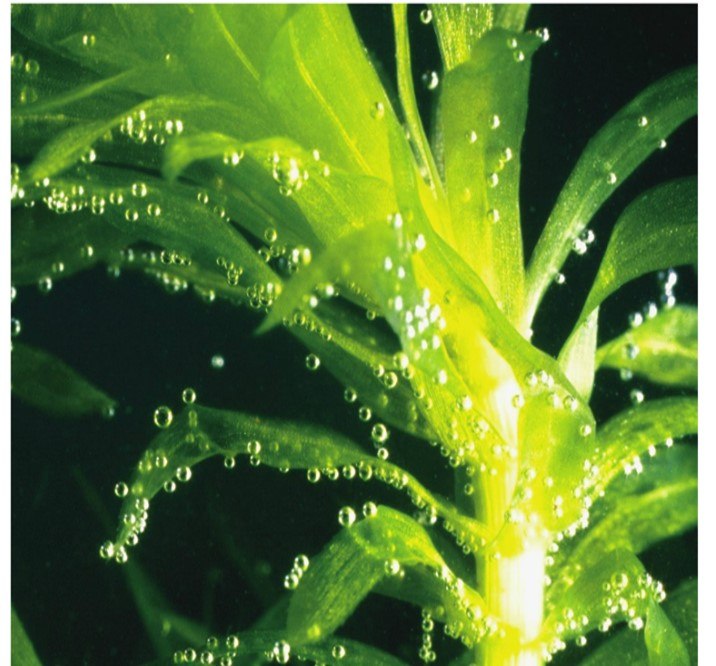
If this was a plant in a lake, what would these bubbles be composed of?
a)
oxygen gas
b)
carbon dioxide gas
c)
glucose
d)
water
29.
This is referred to as the energy molecule of the cell
a)
ADP
b)
ATP
c)
Mitochondria
d)
Nucleus
30.
This molecule contains three phosphate groups
a)
ADP
b)
ATP
c)
Mitochondria
d)
Nucleus
31.
This molecule contains two phosphate groups
a)
ADP
b)
ATP
c)
Mitochondria
d)
Nucleus
32.
This process releases energy from sugar and other to make ATP
a)
photosynthesis
b)
light-independent reaction
c)
cellular respiration
d)
light-dependent reaction
33.
Cellular respiration takes place in the
a)
nucleus
b)
cytoplasm
c)
ribosomes
d)
mitochondria
34.
Which is not a waste product of cellular respiration?
a)
Water
b)
Heat
c)
Carbon Dioxide
d)
Oxygen
35.
Up to how many ATP molecules are made from the breakdown of one glucose molecule?
a)
2
b)
1 Million
c)
38
d)
45
36.
This means that oxygen is needed
a)
anaerobic
b)
aerobic
37.
This means that oxygen is not needed
a)
anaerobic
b)
aerobic
38.
The process by which the nuclear material is divided equally between two new cells
a)
mitosis
b)
cancer
c)
spindle
d)
centromere
39.

Structure (b) is a ____.
a)
chromosome
b)
chromatid
c)
centromere
d)
sugar
40.

Structure (a) is a ____.
a)
chromosome
b)
chromatid
c)
centromere
d)
sugar
41.

Structure (c) is a ____.
a)
chromosome
b)
chromatid
c)
centromere
d)
sugar
42.

Name the phase:
a)
Anaphase
b)
Telophase
c)
Metaphase
d)
Prophase
43.

What is the next phase of mitosis?
a)
Prophase
b)
Metaphase
c)
Anaphase
d)
Telophase
44.

What was the phase before this?
a)
Prophase
b)
Metaphase
c)
Anaphase
d)
Telophase
45.

What was the phase before this?
a)
Prophase
b)
Metaphase
c)
Anaphase
d)
Telophase
46.

What was the phase before this?
a)
Prophase
b)
Metaphase
c)
Anaphase
d)
Telophase
47.

Name the phase:
a)
Prophase
b)
Metaphase
c)
Anaphase
d)
Telophase
48.

Name the phase:
a)
Prophase
b)
Metaphase
c)
Anaphase
d)
Telophase
49.

Name the phase:
a)
Prophase
b)
Metaphase
c)
Anaphase
d)
Telophase
50.

The organelle that helps in cell division and produces spindle fibers.
a)
Chromosome
b)
Centriole
c)
Cytoplasm
d)
Chloroplast
51.

The stages of mitosis in order
a)
Metaphase, Anaphase, Prophase, Telophase
b)
Prophase, Anaphase, Metaphase, Telophase
c)
Prophase, Metaphase, Anaphase, Telophase
d)
Anaphase, Prophase, Telophase, Metaphase
52.
When a cell is not actively dividing, it is in what phase?
a)
interphase
b)
anaphase
c)
prophase
d)
telophase
53.
What portion of the cell cycle involves the actual dividing?
a)
interphase
b)
mitosis
c)
G1
d)
G2
54.
Before a cell can divide, what must happen?
a)
Nothing, it is always ready to divide
b)
The number of chromosomes must be cut in half
c)
The number of chromosomes must double
d)
The number of chromosomes must triple.
55.
When you start with 1 cell, at the end of mitosis, how many identical cells will you have?
a)
1
b)
2
c)
3
d)
4
56.
After meiosis is complete, the new cells:
a)
are all identical
b)
are all different
c)
are half identical and half different
d)
are all stretched out
57.
Why is sexual reproduction better for adaptations than asexual reproduction?
a)
It creates genetic diversity
b)
It is better for all organisms to be the same.
c)
It happens faster.
d)
It helps skin cells divide faster to heal wounds.
58.

The process on the left is:
The process on the right is:
The process on the right is:
a)
Left: meiosis
Right: meiosis
Right: meiosis
b)
Left: meiosis
Right: cloning
Right: cloning
c)
Left: mitosis
Right: meiosis
Right: meiosis
d)
Left: mitosis
Right: mitosis
Right: mitosis
59.
What is the process where parts for chromosomes will switch and create new, different chromosomes?
a)
fragmentation
b)
cytokinesis
c)
fertilization
d)
crossing over
60.
Cells produced during mitosis are genetically
a)
different
b)
identical
61.
Cells produced during meiosis are genetically
a)
different
b)
identical
62.
Meiosis is considered this type of reproduction
a)
sexual
b)
asexual
63.
Mitosis is considered this type of reproduction
a)
sexual
b)
asexual
64.
Meiosis occurs in _____ cells.
a)
body
b)
sex
65.
Mitosis occurs in
a)
Sex Cells
b)
All Cells except Sex Cells
66.

Which type of cancer treatment works best for when cancer has metastasized (traveled) around the body?
a)
Chemotherapy
b)
Radiation Treatments
c)
Hormones Treatments
d)
Surgery
67.
Any substance that is known to cause cancer is called a
a)
carcinogen
b)
sugar
c)
bacteria
d)
virus
68.
An abnormal mass of cancer cells is called a
a)
tumor
b)
cyst
c)
lesion
d)
polyp
69.
The structures that hold together sister chromatids
a)
tissues
b)
chromosomes
c)
spindle
d)
centromeres
70.
the uncontrolled division of cells that results in malignant (dangerous) growth
a)
tissues
b)
cancer
c)
mitosis
d)
anaphase
71.
Which of the following terms means the division (or breaking) of the cytoplasm?
a)
interphase
b)
mitosis
c)
cytokinesis
d)
cell cycle
72.
Which of these is a risk factor for developing cancer?
a)
growing older
b)
genetic inheritance
c)
exposure to carcinogens
d)
all of the above
73.

What phase is this?
a)
prophase
b)
metaphase
c)
anaphase
d)
telephase
74.

What phase is this?
a)
prophase
b)
metaphase
c)
anaphase
d)
telephase
75.
Stem cells can be obtained from
a)
embryos
b)
some adult tissues
c)
umbilical cord blood
d)
all of the above
76.
Stem cells are
a)
cells that grow uncontrollably
b)
can be any type of cell
c)
never go through cell division
d)
only found in embryos
77.
What does heterozygous mean?
a)
An organism that has the same genes for a trait (TT or tt)
b)
An organism that has different genes for a trait (Tt)
c)
When neither gene is fully dominant; offspring is a mixture of both
d)
the different forms of a trait (hair color--> brown, blonde, red
78.
If a heterozygous tall pea plant is crossed with a short pea plant, what are the possible genotypes of the future offspring?
a)
100% Tt
b)
50% Tt, 50% tt
c)
75%Tt, 25%tt
d)
25%TT, 50%Tt, 25%tt
79.

Two brown eyed parents (Bb) have a baby. What is the chance the baby is blue eyed?
a)
0 %
b)
25%
c)
50%
d)
75%
80.

A corn plant heterozygous for tall sprouts mates with a corn plant with short sprouts. If tall sprouts are dominant, how many different phenotypes are possible in the offspring?
a)
1
b)
2
c)
3
d)
4
81.
Snapdragon flowers come in red, pink and white. What type of inheritance is this?
a)
Complete Dominance
b)
Incomplete Dominance
c)
Codominance
d)
Polygenic Inheritance
82.

A heterozygous yellow pea plant's genotype would be:
a)
YY
b)
yy
c)
Yy
d)
Yg
83.
Incomplete dominance means that the traits are
a)
expressed equally
b)
dominant
c)
recessive
d)
blended
84.

Term for homozygous organisms that display two dominant phenotypes at the same time
a)
codominance
b)
incomplete dominance
c)
multiple alleles
d)
linked genes
85.
W=white hair
w= non-white hair
If you cross a horse with WW and a horse with ww what fraction of the offspring would be expected to have white hair?
w= non-white hair
If you cross a horse with WW and a horse with ww what fraction of the offspring would be expected to have white hair?
a)
none
b)
3/4
c)
1/2
d)
all
86.
What is a phenotype?
a)
The expression of a trait; what you see.
b)
refers to the genetic makeup of an individual
c)
An organism that has the same genes for a trait (ex. TT or tt)
d)
the passing of traits from parent to offspring
87.
An organism's appearance is known as its
a)
heredity
b)
phenotype
c)
genotype
d)
pedigree
88.
B=brown eyes
b= blue eyes
What is true about two brothers that have brown eyes?
One has genotype BB the other Bb.
b= blue eyes
What is true about two brothers that have brown eyes?
One has genotype BB the other Bb.
a)
they have same phenotype and genotype
b)
they have different genotypes and phenotypes
c)
they have same phenotype but different genotypes
d)
they have same genotype but different phenotypes
89.

If the dominant allele (B) represents brown hair and the recessive allele (b) represents blonde hair, which offspring represents a homozygous recessive genotype?
a)
BB
b)
Bb
c)
blonde
d)
bb
90.

This type of inheritance pattern shows BOTH traits in possible offspring
a)
complete dominance
b)
incomplete dominance
c)
co-dominance
d)
dominant pattern
91.
The base guanine is always paired up with the base ________________.
a)
thymine
b)
guanine
c)
cytosine
d)
adenine
92.
The base adenine is always paired with the base ____________.
a)
cytosine
b)
guanine
c)
thymine
d)
nitrogen
93.
Aa is
a)
homozygous
b)
heterozygous
94.
aa always shows up as
a)
dominant
b)
recessive
95.
Which of the following is a phenotype?
a)
Aa
b)
red hair
c)
heterozygous
d)
DNA
96.

This type of inheritance pattern is a blending of both traits.
a)
incomplete dominance
b)
co-dominance
c)
complete dominance
d)
recessive pattern
97.
Dominant alleles are represented by a:
a)
Male gene
b)
lowercase letter
c)
recessive trait
d)
capital letter
98.

He is known as the father of modern day genetics.
a)
Gregory Mendel
b)
Greg Mendel
c)
Gregor Mendel
d)
Grace Mendel
99.
What characteristic would a child not inherit from parents?
a)
freckles
b)
eye color
c)
hair style
d)
dimples
100.
molecule that carries genetic information and is stored in the nucleus.
a)
DNA
b)
protein
c)
RNA
d)
glucose nucleic acid (GNA)
101.
having two of the same alleles for the trait
a)
homozygous
b)
hetrozygous
c)
protein
d)
chromosome
102.
An allele whose trait always shows up in the organism when the allele is present.
a)
recessive allele
b)
dominant allele
c)
hidden allele
d)
present allele
103.
the passing of genetic traits from parent to offspring.
a)
inherited
b)
trait
c)
gene
d)
allele
104.
Which sequence of DNA bases would pair with this
ATG TGA CAG
ATG TGA CAG
a)
ATG TGA CAG
b)
TAC ACT GTC
c)
GTA AGT GAC
d)
CAT TCA CTG
105.
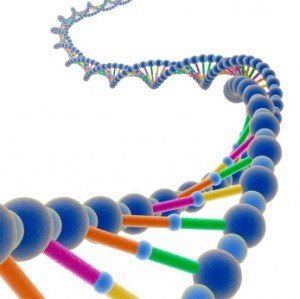
Which of the following best describes a DNA molecule?
a)
double helix
b)
contains ribose
c)
made of amino acids
d)
contains Uracil
106.
Which of the following units are repeatedly joined together to form a strand of DNA?
a)
amino acids
b)
nucleotides
c)
fatty acids
d)
polysaccharides
107.

In a molecule of double-stranded DNA, the amount of Adenine present is always equal to the amount of
a)
cytosine
b)
guanine
c)
thymine
d)
uracil
108.
Adenine bonds with ______________.
a)
Guanine
b)
Thymine
c)
Cytosine
d)
Adenine
109.
Guanine bonds with ______________.
a)
Adenine
b)
Guanine
c)
Cytosine
d)
Thymine
110.
Which organelle is DNA usually found in?
a)
cell membrane
b)
vacuole
c)
chloroplast
d)
nucleus
111.
The enzyme that unzips the DNA to prepare for replication
a)
helicase
b)
replicase
c)
polymerase
d)
synthase
112.
DNA replication results in two DNA molecules,
a)
each one with two original strands
b)
each one with two new strands
c)
each one with one new strand and one original strand
d)
one with two new strands and the other with two original strands
113.
A process in which DNA has the unique ability to make an exact copy of itself.
a)
Replication
b)
Translation
c)
Transcription
114.
What is the correct complimentary strand for the following DNA?
ATCGAG
ATCGAG
a)
TACGAG
b)
ATCGAG
c)
TAGCTG
d)
TAGCTC
115.
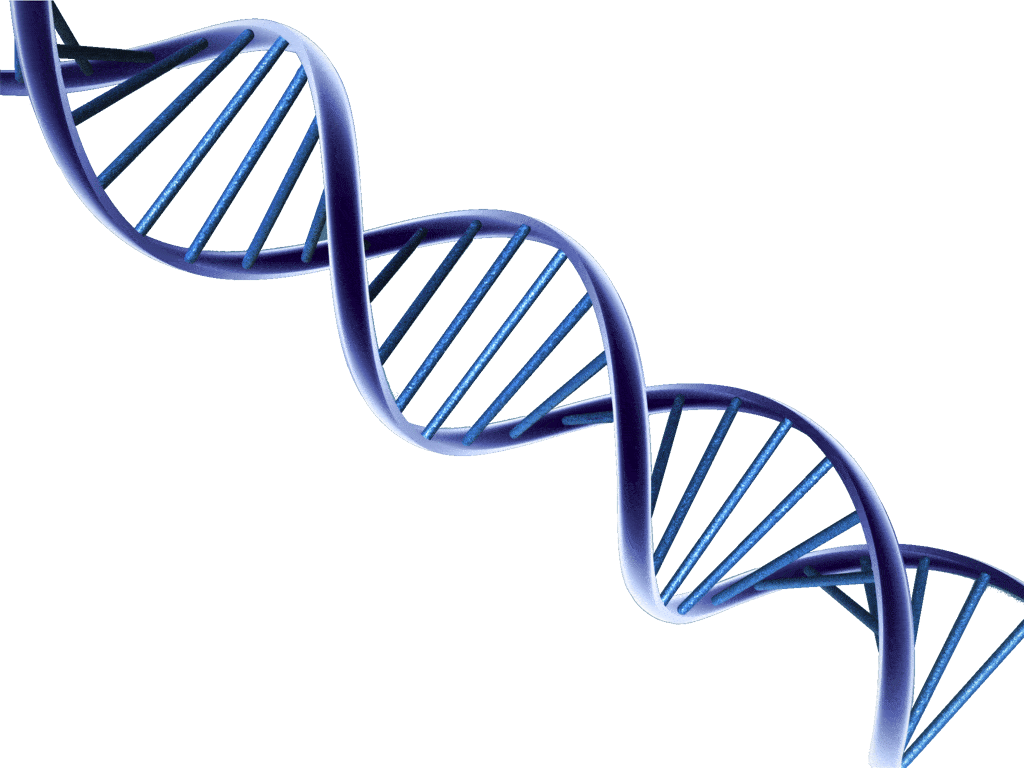
The drawing shows the structure of what molecule?
a)
A DNA molecule
b)
A lipid molecule
c)
A carbohydrate molecule
d)
A protein molecule
116.
In what phase of the cell cycle does DNA replication take place?
a)
G1
b)
S
c)
G2
d)
M
117.
Which of the following is a base that is NOT contained in DNA?
a)
Adenine
b)
Thymine
c)
Uracil
d)
Guanine
118.
What protein glues together the nucleotides after replication?
a)
Helicase
b)
Ligase
c)
DNA Polymerase I
d)
DNA Polymerase III
119.
What proteins add nucleotides to DNA?
a)
Helicase
b)
Ligase
c)
DNA Polymerase I & III
120.
_______ is made during transcription and ________ is made during translation.
a)
mRNA / a protein
b)
a protein / mRNA
c)
Ribosome / Nucleus
d)
mRNA / tRNA
121.
Which process is used to make mRNA from the DNA in the nucleus?
a)
transcription
b)
translation
c)
replication
122.
Which RNA bases would pair with TACGAA in transcription?
a)
AUGCUU
b)
ATGCTT
c)
GCATCC
d)
GCAUCC
123.
One difference between DNA and RNA is that....
a)
Only RNA has the base Uracil
b)
only RNA contains the base Thymine
c)
only RNA contains the base Cytocine
d)
only RNA contained the base Guanine
124.
A triplet of mRNA is called a
a)
codon
b)
anticodon
c)
amino acid
d)
peptide bond
125.

DNA codes for...
a)
cholesterol
b)
proteins
c)
fatty acids
d)
a sandwich
126.

Which process is happening in this picture?
a)
Transcription
b)
Translation
c)
Replication
127.

What amino acid is represented by the codon CAG?
a)
Aspartic Acid
b)
Histidine
c)
Glutamine
d)
Methionine
128.
Translation happens in the -
a)
Nucleus
b)
Ribosome
c)
Chloroplast
d)
Smooth Endoplasmic Reticulum
129.
Which of these is correct?
a)
DNA --> mRNA --> Protein
b)
DNA --> Protein--> mRNA
c)
mRNA --> DNA --> Protein
d)
Protein --> DNA --> mRNA
130.
What is the advantage of having different shaped beaks?
a)
To look different from other species.
b)
To be able to eat the food readily available in the environment.
c)
To protect itself against predators.
d)
To protect itself against prey.
131.
Mutations are a change in what?
a)
DNA
b)
tRNA
c)
genotype
d)
phenotype
132.
What characteristic did Darwin observe about the finches on the Galapagos Islands?
a)
Their feathers
b)
Genotypes
c)
Their beaks
d)
Their body sizes
133.
Change over time is
a)
evolution
b)
generation
c)
growth
d)
biogenesis
134.

What did Charles Darwin observe in finch populations of the Galapagos Islands off the coast of South America?
a)
different species on different islands
b)
all species on one of the islands
c)
identical species on all the islands
d)
the same species as North America
135.
The white feathers of a snowy owl allow it to blend in with its environment during the winter months (snow). This is an example of ________________
a)
Species
b)
Environmental Change
c)
Adaptation
d)
Variation
136.
Darwin referred to this as survival of the fittest. Over time, it results in changes in the inherited characteristics of a population.
a)
Natural Selection
b)
Genetic Variation
c)
Survival of the Fittest
137.

which of the following is an example of a vestigial structure?
a)
the wings of a red-tailed hawk
b)
the hind limbs of a house cat
c)
the fins of sharks
d)
the wings of an ostrich
138.

Some organisms that share a common ancestor have features that have different functions, but similar structures. These are known as
a)
vestigial structures
b)
analogous structures
c)
homologous structures
d)
fossil structures
139.

If an organism has a vestigial structure, that structure likely once had a function in a(n)
a)
close relative
b)
early ancestor
c)
unrelated organism
d)
fetus
140.

An earthquake causes an ocean channel top open and separate an island into two, the species on each section are now in
a)
geographic isolation
b)
behavioral isolation
c)
disruptive selection
d)
temporal isolation
141.
What is the term for a feature that allows an organism to survive better in its environment?
a)
variation
b)
adaption
c)
homologous structure
d)
vestigial structure
100 %

