wayground logo

Free Printable Worksheets

Font size

S
M
L
XL
Worksheets

Genetics Unit Review

Total questions: 137

Worksheet time: 2hrs 23mins

Name
Class
Date
1.
Aa, DD, yy are all examples of
a)
genotypes
b)
phenotypes
2.

In simple genetics, AA and Aa always show up as

a)

the dominant phenotype

b)

the recessive phenotype

3.
Which of the following genotypes is homozygous dominant?
a)
short
b)
Aa
c)
AA
d)
tall
4.
B = brown fur  b = white fur
In the punnett square, what is the probability for white fur? 
a)
0%
b)
25%
c)
50%
d)
75%
5.
Which of the following genotypes is heterozygous?
a)
Bb
b)
BB
c)
bb
d)
B
6.
In a heterozygous genotype, the ___________ allele is what is visible in the phenotype.
a)
recessive
b)
dominant
c)
lower case letter
d)
both 
7.

What you see, or the physical appearance is called the

a)

Genotype

b)

Phenotype

c)

Homozygous

d)

Heterozygous

8.
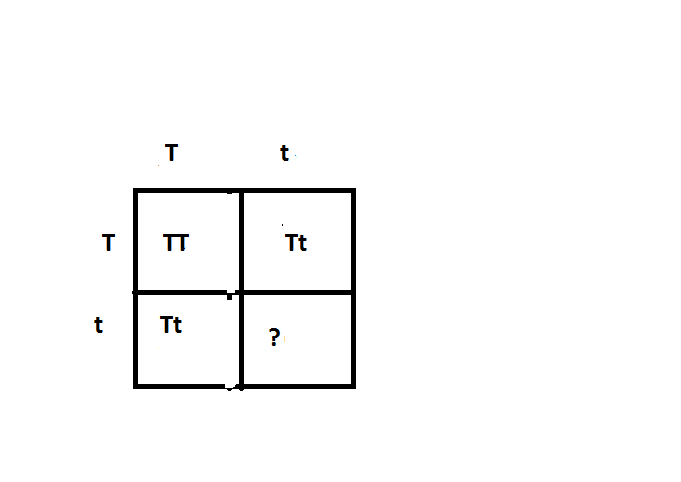
T - tall and t = short
In the punnett square below, what belongs in the missing square
a)
tt
b)
Tt
c)
Bb
d)
TT
9.
A complex molecule that carries genetic information that that codes for the production of proteins. Each protein is expressed as a trait. Example: blonde hair.
a)
DNA
b)
protein
c)
RNA
d)
glucose nucleic acid (GNA)
10.
Black fur (B) is dominant to tan fur (b). Find the probability of a tan offspring when a homozygote black fur mouse is mated with a tan furred mouse?
a)
0%
b)
25%
c)
50%
d)
100%
11.
This type of inheritance pattern shows a blending of both alleles?
a)
incomplete dominance
b)
co-dominance
c)
complete dominance
d)
recessive pattern
12.
Mrs. Jones has heterozygous type A blood.
Mr. Jones has blood type AB.
What percent of offspring will have A blood?
a)
100% 
b)
75%
c)
50%
d)
25%
13.
Which describes the type of cross shown in the picture?
a)
codominance: the heterozygote shows a blending
b)
incomplete dominance: both homozygous alleles become a mixture for the heterozygous
c)
sex-linked: each box is worth 50%
d)
Nondisjunction: chromosomes separate incorrectly
14.
A dog gives birth to 5 puppies. What percentage of the chromosomes does each puppy share with the mother?
a)
25%
b)
50%
c)
75%
d)
100%
15.
Eye color, skin color, and hair color are examples of traits that are controlled by...
a)
dominant/recessive traits
b)
polygenic inheritance
c)
mulitple alleles
d)
codomiance
16.
G = green, g = yellow
The genotype for a yellow plant is...
a)
GG
b)
Gg
c)
gg
d)
all of the choices result in yellow
17.
How many alleles make up one gene?
a)
1
b)
2
c)
3
d)
4
18.
How many females are in this pedigree?
a)
3
b)
4
c)
6
d)
7
19.

All of the following are recessive diseases except

a)

cystic fibrosis

b)

colorblindness

c)

PKU

d)

hemophilia

e)

Huntington's

20.
 Which gene combination(s) would result in someone having sickle cell disease?
a)
AA
b)
aa
c)
Aa
d)
both AA and aa
21.

Which of the following is an example of the environment effecting a gene?

a)

getting skin cancer from too many sunburns

b)

having sickle cell anemia

c)

being born with diabetes

22.
A calico cat shows both the traits for orange fur and black fur. What kind of allele expression is this?
a)
Incomplete Dominance
b)
Co dominance
c)
Independent assortment
d)
Recessive inheritance
23.

What would be the genotype for someone who has Type O blood?

a)

IAi

b)

IBi

c)

ii

d)

XHY

24.
R  = red and W = white. 
In the RW genotype is both red and white.
What pattern of inheritance is being shown?
a)
simple genetics
b)
codomimance
c)
multiple alleles
d)
polygenic inheritance
25.
Huntington's disease is an autosomal dominant trait. Parent 1 has a heterozygous, genotype and parent 2 does not have the disease. What is the probability that their offspring will inherit the disease?
a)
0%
b)
25%
c)
50%
d)
75%
26.
In plants, tall (T) is dominant to short (t). Two heterozygous parents mate. What is the probability of producing a short plant?
a)
0%
b)
25%
c)
50%
d)
75%
27.
Which type of trait is shown in the pedigree?
a)
recessive
b)
sex-linked
c)
dominant 
28.

All of the following are true about genetic diseases except

a)

they are inherited through gametes

b)

cystic fibrosis creates excess mucus in the lungs and digestive tract

c)

sickle cell creates mis-shaped blood cells

d)

Huntington's must eat a vegetarian diet and get injections to remain healthy

29.
Which individual in generation III is a carrier female?
a)
1
b)
2
c)
3
d)
4
30.
How many kids did the mother and father from the first generation have?
a)
2
b)
4
c)
5
d)
6
31.
What is the difference between codominance and incomplete dominance
a)
There is no difference
b)
incomplete dominance uses X's
c)
You can see both phenotypes in codominance
d)
There is only one phenotype regardless of genotype.
32.
What is a possible genotype for someone with type B blood?
a)
IAIB
b)
ii
c)
IAIA and IAi
d)
 IBIB and IBi
33.
Which term(s) best describes the inheritance of human blood types? 
a)
sinple genetics 
b)
codominance 
c)
multiple alleles
d)
incomplete dominance 
34.
Which genetic abnormality is shown in this karyotype?
a)
Partial Addition
b)
Partial Deletion
c)
Down's syndrome
d)
Monosomy of sex chromosome
35.
Which is the correct sequence? 
a)
mitosis - gametes - zygote - meiosis - fertilization - embryo
b)
Fertilization-mitosis-zygote-gametes-meiosis-embryo
c)
meiosis-zygote-gametes-mitosis-fertilization-embryo
d)
meiosis-gametes-fertilization-zygote-mitosis-embryo
36.
What is the sex of this baby in this karyotype?
a)
Male
b)
Female
37.
Which of the following is an example of a polyenic trait?
a)
eye color
b)
skin tone
c)
height
d)
all of the above are polygenic traits.
38.
Which of the following is an example of the environment effecting the phenotype of a gene?
a)
genes carried on the "X" or "Y" chromosome
b)
Jane is 5 foot tall and Marquan is 6 foot tall
c)
lizard eggs kept at 105⁰F will be females
39.

The law of segregation states that in meiosis, the 2 alleles for each gene must ________ in the gamete.

a)

stay together

b)

separate

40.

Two carriers of sickle cell are expecting a child. What percent chance do they have of giving birth to a child with the disease?

a)

0%

b)

25%

c)

50%

d)

75%

41.
If a section of DNA has 13% thymine, then there is _____ adenine
a)
13%
b)
26%
c)
37%
d)
74%
42.
If there is 29% guanine in a section of DNA, then there is _____ thymine
a)
21%
b)
29%
c)
42%
d)
58%
43.
The percentage of A + G equals _____.
a)
26%
b)
50%
c)
80%
d)
100%
44.
Who said, "The amount of A = the amount of T, and the amount of G = the amount of C"?
a)
Chargaff
b)
Avery
c)
Griffith
d)
Franklin
45.
If a DNA stand has 32 % guanine before semi conservative replication occurs, what percent thymine will each new strand have after replication? 
a)
64%
b)
32%
c)
18%
d)
36%
46.
If a DNA stand has 32 % guanine before semi conservative replication occurs, what percent thymine will each new strand have after replication? 
a)
A = C
b)
A=C  & C=T
c)
A + C = G+T
d)
G+C = T +A
47.

British scientist used X-ray diffraction to take a photograph of DNA

Photograph (photo 51) showed DNA was a helix The X shape of the photo suggested 2 strands

She died at age 37 of ovarian cancer. Many believe it was due to the exposure to the radiation of the X-rays.

a)

Martha Chase

b)

Rosalind Franklin

c)

Francis Crick

d)

Erwin Chargaff

48.

Used Franklin's photo 51 to build the 3-D model of DNA

a)

Hershey and Chase

b)

Rosalind Franklin

c)

Watson and Crick

d)

Griffith and Avery

49.

Nucleotides are composed of

a)

sugar, phosphate, and a nitrogenous base

b)

sugar and nitrogenous base

c)

Nitrogenous base: adenine, thymine, cytosine, and guanine

d)

deoxyribose

50.

Stores, copies and transmits genetic info

a)

DNA

b)

RNA

c)

Nitrogenous bases

d)

Phosphate groups

51.

Location of DNA in a eukaryotic cell

a)

cytoplasm

b)

mitochondria

c)

chloroplast

d)

nucleus

52.
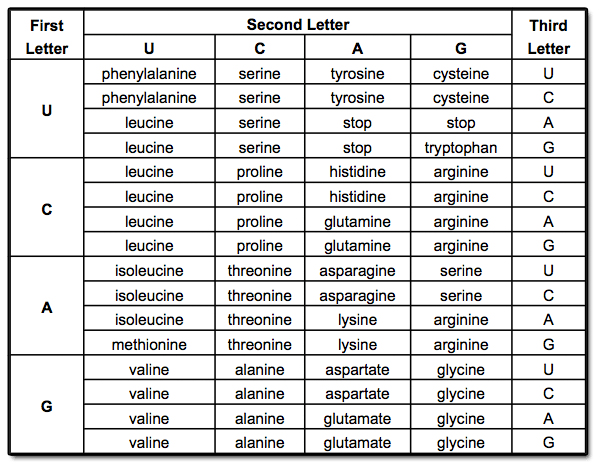
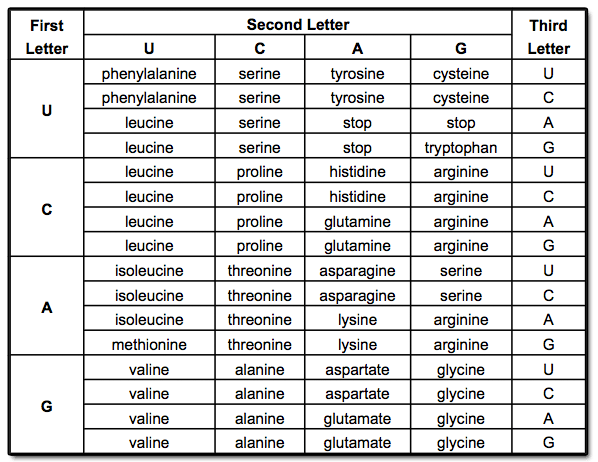
What amino acid is represented by the codon UUA?
a)
Phenylalanine
b)
Tyrosine
c)
Leucine
d)
Stop codon
53.

What is the correct amino acid sequence for the mRNA code AUG-CCA-GUA-UGA

a)

Met-Pro-Ala-Val

b)

Met-Pro-Val

c)

Tyr-Gly-His

d)

Tyr-Gly-Arg-His

54.

What codon is represented by the STOP amino acid?

a)

AUG

b)

UAA

c)

CUC

d)

GUA

55.

What is the correct amino acid sequence for the mRNA code AUG-CCA-GCA-GUA

a)

Met-Pro-Ala-Val

b)

Met-Pro-Val-His

c)

Met-Gly-His-Val

d)

Tyr-Gly-Arg-His

56.
The codon CCU codes for what amino acid?
a)
Isoleucine
b)
Stop
c)
Methionine
d)
Proline
57.
Which amino acid pairs with the codon AGA
a)
Thr
b)
Arg
c)
Ala
d)
Glu
58.
Choose the nucleotide sequence of the RNA strand that would be complementary to the following strand: 
GTAGTCA
a)
UATUAGA
b)
ACGACTG
c)
CAUCAGU
d)
CATCAGT
59.

When using your codon chart, what sequence can you use to find the correct amino acid?

a)

DNA

b)

mRNA

c)

tRNA

d)

Any of these will do

60.

What organelle reads the mRNA and finds the correct amino acid?

a)

DNA

b)

Nucleus

c)

Ribosome

d)

Chloroplast

61.

How many nucleotides make up a codon?

a)

1

b)

3

c)

5

d)

15

62.

How many codons: AAU GCG AUG

a)

9

b)

1

c)

3

d)

15

63.
What type of cell has a nucleus? 
a)
eukaryotic
b)
prokaryotic 
64.
Main producer of ATP in all eukaryotes
a)
chloroplast
b)
mitochondria
c)
lysosome
d)
smooth er
65.
Only eukaryotic cells have....
a)
membrane-bound organelles 
b)
DNA
c)
ribosomes
d)
cell membranes 
66.
What does this organism use for movement?
a)
Pseudopod
b)
Cilia
c)
Flagella
d)
legs
67.

This organelle is called the "powerhouse" of a cell because it breaks down food and converts it to energy.

a)

Endoplasmic Reticulum

b)

Nucleus

c)

Mitochondria

d)

Nucleolus

68.

What is the function of the mitochondria?

a)

manufactures ribosomes

b)

Structures that converts nutrients to energy

c)

Structure that contains DNA and directs the cell

69.

Which part of the cell is often called "the brain of the cell"?

a)

nuclear membrane

b)

endoplasmic reticulum

c)

nucleus

d)

mitochondria

70.

What is the cell membrane?

a)

Power House

b)

Its the outer layer of a cell

c)

Large sac that holds food, water, and waste

d)

Jelly like substance

71.

Hair and nails are mostly filled with the protein keratin. Keratin is produced by keratinocytes. The cells must contain several of which of the following organelles?

a)

mitochondria

b)

endoplasmic reticulum

c)

ribosomes

d)

lysosomes

72.

Jared observes a cell in biology lab with the light microscope. The cell has the following structures: nucleus, cell wall, and chloroplast. Identify the type of cell that Jared is observing.

a)

animal

b)

plant

c)

fungus

d)

bacteria

73.

Animal cells can be distinguished from plant cells easily because of which of the following?

a)

Animal cells have mitochondria and plant cells do not.

b)

Plant cells have lysosomes and animal cells do not.

c)

Only plant cells have centrioles around their nucleus.

d)

Only plant cells have large central vacuoles and cell walls.

74.
Where is the DNA of a Prokaryotic cell located?
a)
In the nucleus
b)
In the Ribosomes
c)
In the Cytoplasm
d)
In the flagela
75.
There are three parts to the cell theory. Which is NOT one of those parts?
a)
All organisms are composed of one or more cells.
b)
The cell is the basic unit of structure and organization in organisms.
c)
Cells spontaneously arise from carbon and nutrients carried in the bloodstream.
d)
All cells come from pre-existing cells.
76.
What do all of these organisms have in common?
a)
They all have uniform offspring
b)
They are all made of cells
c)
They possess the same features
d)
They have the same internal and external structures
77.
What of the following is a prokaryote?
a)
animal cell
b)
bacteria
c)
virus
d)
plant cell
78.
Which of the following scientists was the first to observe bacteria?
a)
Anton van Leuwenhoek
b)
Matthais Schleiden
c)
Robert Hooke
d)
Theodor Schwann
79.
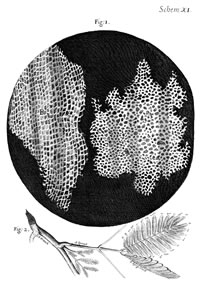
Who named the "cell" after looking at a cork slice using an early compound microscope?
a)
Robert Hooke
b)
Marcello Malpighi
c)
Francisco Redi
d)
Theodore Schwann
80.
Who discovered the nucleus in plant cells?
a)
Robert Brown
b)
Thomas Hunt Morgan
c)
Anton van Leeuvenhoek
d)
Gregor Mendel
81.
Who observed cells dividing leading to #3 of the cell theory?
a)
Rudolph Virchow
b)
Francis Crick and James Watson
c)
Mattias Schleiden
d)
Walter Fleming
82.
Who was the first person to observe red blood cells?
a)
Marcello Malpighi
b)
Francisco Redi
c)
Theodore Schwann
d)
Hans and Zacharias Jansen
83.
Who showed that genes are found on chromosomes?
a)
Thomas Hunt Morgan
b)
Anton Van Leeuvenhoek
c)
Gregor Mendel
d)
Robert Hooke
84.
Who proved that genes are responsible for heredity?
a)
Francis Crick & James Watson
b)
Matthias Schleiden
c)
Walter Fleming
d)
Robert Brown
85.
Who rejected the theory of spontaneous generation?
a)
Francisco Redi
b)
Theodore Schwann
c)
Hans and Zacharias Jansen
d)
Rudolph Virchow
86.
Who was the first person to observe bacteria and protozoa in a drop of pond water?
a)
Anton Van Leeuvenhoek
b)
Gregor Mendel
c)
Robert Hooke
d)
Marcello Malpighi
87.
Who decided that all plant tissues are made of cells and that the cell is the basic building block of all plants?
a)
Matthias Schleiden
b)
Walter Fleming
c)
Robert Brown
d)
Thomas Hunt Morgan
88.
Who decided that all animal tissues are made of cells, adding to the Cell Theory that the cell is the basic unit for life. 
a)
Theodore Schwann
b)
Hans and Zacharias Jansen
c)
Rudolph Virchow
d)
Francis Crick & James Watson
89.
Who tracked the genetic changes in the offspring of pea plants?
a)
Gregor Mendel
b)
Robert Hooke
c)
Marcello Malpighi
d)
Francisco Redi
90.
Who examined stained cells and finds rods called "chromosomes"?
a)
Walter Fleming
b)
Robert Brown
c)
Thomas Hunt Morgan
d)
Anton Van Leeuvenhoek
91.
Who built a compound microscope by combining two convex lenses with a tube?
a)
Hans and Zacharias Jansen
b)
Rudolf Virchow
c)
Francis Crick and James Watson
d)
Mathias Schleiden
92.
Meiosis occurs in the testes in men and the ___________ in women.
a)
uterus
b)
cervix
c)
ovaries
d)
stomach
93.

A cat has a total of 40 chromosomes in its body cells. How many in its sex cells?

a)

38

b)

20

c)

76

d)

10

94.
The process of crossing over occurs in what meiotic phase?
a)
anaphase 1
b)
prophase 1
c)
prophase 2
d)
telophase 1
95.

Meiosis would occur in which of these cells?

a)

skin cells

b)

liver cells

c)

brain cells

d)

sperm cells

96.
The chromosomes that pair up during meiosis, are called __________ chromosomes.  
a)
homozygous 
b)
asexual
c)
homologous
d)
genes
97.

In humans, sperm cell have ___________ chromosomes and are ___________________, while skin cells have _____________ chromosomes are are diploid.

a)

23. haploid. 46 diploid

b)

46. haploid. 23. diploid

c)

23 diploid. 46 haploid

d)

46. diploid. 23. haploid.

98.
Crossing over helps promote ?
a)
male genotype
b)
genetic variation
c)
DNA replication
d)
mitosis
99.
You get one homologous chromosome from your ________ and one from your _______.  
a)
dad, mom
b)
brother, sister
c)
grandmother, grandfather
d)
dog, cat
100.
With mitosis you get ___, _________ cells, but with meiosis, you get ___, ____________.
a)
4 different, 2 identical
b)
4 identical, 2 different
c)
2 different, 4 identical
d)
2 identical, 4 different
101.
The purpose of meiosis is to form ________ cells.
a)
body
b)
sex
c)
somatic
d)
brain
102.

What is this phase of Mitosis?

a)

Prophase

b)

Metaphase

c)

Anaphase

d)

Telophase

103.

What is this phase of Mitosis?

a)

Prophase

b)

Metaphase

c)

Anaphase

d)

Telophase

104.

Which is used to repair or grow cell?

a)

mitosis

b)

meiosis

c)

replication

d)

transcription

105.
Which of these phases of mitosis take place first?
a)
anaphase
b)
telophase
c)
prophase
d)
metaphase
106.

Meiosis is the _____.

a)

division of sex cells

b)

division of body cells

107.

Which of the following is a sex cell?

a)

sperm

b)

bone

c)

heart

d)

muscle

108.

At the end of Mitosis, how many cells are there?

a)

1

b)

2

c)

3

d)

4

109.

At the end of cell division, what happens after telophase?

a)

cytokinesis

b)

cytoplasm

c)

Indiana Jones wins the day!

d)

telophase 2

110.

Where does Mitosis take place?

a)

where growth and repair are happening

b)

in your hair cells only

c)

in your blood cells only

111.

What is this phase of mitosis? (hint: apart)

a)

Prophase

b)

Anaphase

c)

Telophase

d)

Metaphase

112.

What is this phase of mitosis?

a)

Prophase

b)

Anaphase

c)

Telophase

d)

Metaphase

113.
A sugar, a phosphate group, and a nitrogen base form the building blocks of which organic compound?
a)
carbohydrates
b)
nucleic acids
c)
lipids
d)
proteins
114.
Which of the following is the template for the production of RNA within a cell?
a)
DNA
b)
protein
c)
ATO
d)
carbohydrate
115.
which process is shown?
a)
diffusion
b)
repiration
c)
recombination
d)
translation
116.
When an extra base is inserted into the DNA sequence of a gene, the protein doesn't work. Which explains why?
a)
the base increases rate of translation
b)
the base causes DNA to be transcribed in opposite direction
c)
the inserted base causes the codons in the sequence to be incorrect for the desired protein
d)
the base signals enzymes to translate DNA rather than RNA
117.
What molecules do both DNA and RNA contain?
a)
uracil
b)
nucleotides
c)
thymine
d)
deoxyribose
118.
The genetic material of an organism is composed of
a)
lipids
b)
proteins
c)
deoxyribonucleic acids
d)
complex carbohydrates
119.
Which of the following best describes how DNA and RNA are similar?
a)
they both contain A and T
b)
They both have a double helix
c)
They are both composed of 5 different nucleotides
d)
they both have C and G
120.
The DNA sequence ATCAGCGCTGGC is part of a gene. how many amino acids are coded for by this message?
a)
4
b)
8
c)
12
d)
20
121.
A scientist puts nucleotide chains of UUUUUU in a test tube under conditions allowing protein synthesis. Soon they are only amino acids chains of phenylalinine. What does the experiment indicate?
a)
phenylalanine is composed of uracil
b)
UUU codes for phenylalanine
c)
protein synthesis malfunctions in test tubes
d)
proteins contain one kind of amino acids
122.
One human disease is caused by a change in one codon in a gene from GAA to GUA. The disease is a result of 
a)
a mutation
b)
crossing-over
c)
a meiosis error
d)
polyploidy
123.
DNA sequence is ACAGTGC. How would this be coded on mRNA?
a)
TGTCACG
b)
UGUCACG
c)
GUGACAU
d)
CACUGUA
124.
Which process?
a)
mutation
b)
transcription
c)
respiration
d)
translation
125.
An RNA polymer is composed of subunits known as
a)
polysaccharides
b)
ribose molecules
c)
nucleotides
d)
uracil molecules
126.
Which sequence of DNA bases would pair with this partial strand
ATG TGA CAG
a)
ATG TGA CAG
b)
TAC ACT GTC
c)
GTA AGT GAC
d)
CAT TCA CTG
127.
Which of the following best describes a DNA molecule?
a)
double helix
b)
contains ribose
c)
made of amino acids
d)
contains Uracil
128.
How does RNA differ from DNA?
a)
RNA contains uracil and deoxyribose
b)
RNA contains ribose and thymine
c)
RNA contains uracil and ribose
d)
RNA contains adenine and ribose
129.
How would the DNA sequence GCTATA be transcribed to mRNA?
a)
GCUAUA
b)
CGATAT
c)
CGAUAU
d)
GCUTUT
130.
In eukaryotes, functional messenger RNA molecules are made from
a)
exons spliced together after introns are removed
b)
introns spliced together after eons are removed
c)
exons spliced together with introns
d)
long pieces of RNA shortened by the Dicer enzyme
131.
The process by which the genetic code of DNA is copied into a strand of RNA is called
a)
translation
b)
transcription
c)
transformation
d)
replication
132.
In messenger RNA, each codon specifies a particular
a)
nucleotide
b)
enzyme
c)
amino acid
d)
promoter
133.
The number of codons in the genetic code is
a)
3
b)
4
c)
20
d)
64
134.
Changes is DNA sequences that affect genetic information are known as
a)
replications
b)
mutations
c)
transformations
d)
translations
135.
Blocking gene expression in eukaryotes with microRNA strands is called RNA
a)
transcription
b)
translation
c)
interference
d)
digestion
136.
A group of genes that are regulated together is called a(n)
a)
promoter
b)
operon
c)
intron
d)
allele
137.
An expressed gene
a)
functions as a promoter
b)
is transcribed into RNA
c)
codes for just one amino acid
d)
is made of mRNA