
 Worksheets
Cell Cycle, Mitosis, & Meiosis
Total questions: 140
Worksheet time: 1hrs 19mins
Name
Class
Date
1.
The division of the nucleus is known as:
a)
Synthesis
b)
Mitosis
c)
G1
d)
G2
2.
Humans have ________ pairs of chromosomes.
a)
21
b)
23
c)
46
d)
None of the above
3.
The ___________ holds the replicated sister chromatids together.
a)
centriole
b)
chromosomes
c)
centromere
d)
cycles
4.
The individual strands on duplicated chromosomes are called_____________
a)
Centromeres
b)
daughters
c)
Chromatids
d)
Karyotypes
5.
Eukaryotic cells store their genetic information(DNA) in __________.
a)
Chromosomes
b)
Centromeres
c)
karyotypes
d)
Proteins
6.
The cell spends most of it's life in ________________.
a)
mitosis
b)
cytokinesis
c)
Interphase
d)
None of the above
7.
In the G1 stage of the cell cycle, the cell
a)
Grows
b)
Matures
c)
Carries on normal activities
d)
All of the above
8.
In the S stage of interphase_______________
a)
the cell grows
b)
the nucleus divides
c)
the cell membrane divides
d)
the DNA is replicated
9.
In the G2 stage of cell division, ______________ are made.
a)
organelles
b)
structures for cell division
c)
proteins
d)
all of the above
10.

The structure labeled A is a(n)
a)
chromatid
b)
centriole
c)
centromere
d)
chromophere
11.

The structures labeled B are
a)
centrioles
b)
chromatids
c)
centromeres
d)
chromopheres
12.
When a plant cell goes through cell division, _____________.
a)
the 2 new nuclei are separated by the cell membrane pinching off.
b)
4 new cells are formed
c)
a cell plate forms, dividing the 2 new nuclei
d)
None of the above
13.
When an animal cell goes through cytokinesis,__________
a)
a cell plate forms dividing the 2 new nuclei.
b)
the cell membrane pinches off the 2 new cells.
c)
4 new cells are formed.
d)
None of the above
14.
A human cell has 46 chromosomes before mitotic division. How many chromosomes will the daughter cells after mitosis.
a)
12
b)
23
c)
46
d)
92
15.
A human cell has 46 chromosomes before meiotic division. How many chromosomes will the daughter cells after meiosis.
a)
12
b)
23
c)
46
d)
92
16.
The larger the surface area to volume ratio, the _______________ efficient the cell is in transporting nutrients and waste in and out of the cell.
a)
less
b)
more
17.
Cells of organism must replicate for ?
a)
growth
b)
repair of damaged cells
c)
replacement of dying cells.
d)
All of the above
18.
The material of chromosomes which is made up of proteins and unwound DNA is called ________________.
a)
Centromere
b)
Chromatid
c)
Karyotype
d)
Chromatin
19.
Uncontrollable cell growth is known as _____
a)
obesity
b)
cancer
c)
diabetes
d)
hepatitis
20.
A pair of chromosomes that consists of XX is a __________________.
a)
Male
b)
Female
21.
A pair of chromosomes that consists of XY is a __________________.
a)
Male
b)
Female
22.
Nuclear membrane forms around chromosomes and chromosomes begin to decondense in
a)
Anaphase
b)
Telophase
c)
Prophase
d)
Interphase
23.

Identify the Cell Cycle Stage.
a)
Prophase
b)
Interphase
c)
Anaphase
d)
Telophase
24.

Identify the Cell Cycle Stage.
a)
Anaphase
b)
Cytokinesis
c)
Telophase
d)
Metaphase
25.

Identify the Cell Cycle Stage.
a)
Cytokinesis
b)
Interphase
c)
Anaphase
d)
Metaphase
26.

Identify the Cell Cycle Stage.
a)
Anaphase
b)
Cytonkinesis
c)
Interphase
d)
Prophase
27.

In addition to telophase, this cell cycle stage could also be labeled as
a)
Interphase
b)
Anaphase
c)
Cytokinesis
d)
Prophase
28.
The phase in mitosis where chromosomes move away and are pulled apart by spindles to opposite sides of the cell.
a)
prophase
b)
anaphase
c)
metaphase
d)
telephase
29.

Which is Metaphase?
a)
B
b)
E
c)
C
d)
F
30.
Which is Anaphase?
a)
B
b)
E
c)
C
d)
F
31.
Which is Prophase?
a)
B
b)
E
c)
C
d)
F
32.
Which is Prophase?
a)
A
b)
E
c)
C
d)
B
33.
Which is Telophase?
a)
B
b)
E
c)
C
d)
F
34.
Which is Interphase?
a)
A
b)
B
c)
D
d)
F
35.
Which shows Cytokinesis?
a)
A
b)
B
c)
D
d)
F
36.
The process by which the nuclear material is divided equally between two new cells
a)
mitosis
b)
cancer
c)
spindle
d)
centromere
37.
In meiosis, the resulting cells are
a)
genetically different from the starting cell and genetically identical to each other.
b)
genetically different from the starting cell and genetically different from each other.
c)
genetically identical to the starting cell and genetically different from each other.
d)
genetically identical to the starting cell and genetically identical to each other.
38.
In mitosis, the resulting cells are
a)
genetically different from the starting cell and genetically identical to each other.
b)
genetically different from the starting cell and genetically different from each other.
c)
genetically identical to the starting cell and genetically different from each other.
d)
genetically identical to the starting cell and genetically identical to each other.
39.
The time between cell divisions in the life cycle of the cell is called
a)
anaphase
b)
interphase
c)
prophase
d)
metaphase
40.
Where does a eukaryotic cell contain it's genetic material?
a)
nucleus
b)
nucleolus
c)
cytoskeleton
d)
golgi
41.
Chromatin is found during which phase?
a)
Prophase
b)
Metaphase
c)
Interphase
d)
Telophase
42.
Asexual reproduction will result in
a)
Identical offspring to the parent
b)
Twins
c)
Meiosis
d)
Non-identical offspring to the parent
43.
The nuclear membrane breaking down occurs during which stage?
a)
Interphase
b)
Metaphase
c)
Prophase
d)
Telophase
44.
The chromosomes align in the middle of the cell occurs during which stage?
a)
Anaphase
b)
Metaphase
c)
Interphase
d)
Telophase
45.
What do centrioles do?
a)
Attach 2 sister chromatids together
b)
Pull the nuclear membrane apart
c)
Help to organize the spindle fibers, which will pull chromosomes apart
d)
Condense during Interphase
46.
90% of the cell's life is spent during what stage?
a)
Prophase
b)
Anaphase
c)
Metaphase
d)
Interphase
47.
What stage is a cell in when a cleavage furrow is visible during cell division?
a)
Interphase
b)
Prophase
c)
Cytokinesis
d)
Metaphase
48.
When during the cell cycle are chromosomes visible?
a)
Interphase
b)
When they are being replicated
c)
During cell division
d)
During the G1 phase
49.
During which stage of the cell cycle is DNA Replicated?
a)
Interphase
b)
Prophase
c)
Anaphase
d)
Cytokinesis
50.
The nucleus divides into 2 nuclei during...
a)
Mitosis
b)
Replication
c)
Cytokinesis
d)
Cleavage furrow
51.

Structure A refers to the _____.
a)
chromatid
b)
chromosome
c)
centromere
52.

Structure B is pointing to the _____.
a)
chromosome
b)
centromere
c)
DNA
d)
chromatid
53.
Structure C is pointing to the _____.
a)
chromosome
b)
centromere
c)
DNA
d)
chromatid
54.
Identical halves of a chromosome are called
a)
sister chromotids
b)
genes
c)
centromere
d)
chromatin
55.
The unwound DNA is called
a)
sister chromotids
b)
genes
c)
centromere
d)
chromatin
56.
The final part of the cell cycle and actually contains two separate processes: Mitosis and Cytokinesis
a)
Cell Cycle
b)
Cell Division
c)
Mitosis
d)
Cyclin
57.
This develops in the middle plane of a plant cell, separating it into two daughter cells during cytokinesis.
a)
cell wall
b)
cell plate
c)
cell membrane
d)
cytoplasm
58.
These form during prophase and attach to chromosomes at the centromere to pull them apart during cell division
a)
prophase
b)
nucleus
c)
spindle fibers
d)
gene
59.
During which process is the cytoplasm divided into two new cells?
a)
Interphase
b)
Mitosis
c)
Cytokinesis
d)
DNA Replication
60.
Which process divides the nucleus into two nuclei?
a)
DNA Replication
b)
Mitosis
c)
Cytokinesis
d)
Reproduction
61.

What is cancer?
a)
The heart does not receive enough blood.
b)
Sudden disruption of blood flow to part of the brain.
c)
Blood filled weak spot.
d)
Uncontrolled cell division and spreading of abnormal cells.
62.

The whole point of the cell cycle is to cells create
a)
2 cells
b)
2 identical cells
c)
4 cells
d)
4 identical cells
63.
The uncontrolled division of cells that results in malignant growth is
a)
tissues
b)
cancer
c)
mitosis
d)
anaphase
64.
Cancer tumors result from
a)
rapid, uncontrolled cell division
b)
rapid DNA replication
c)
slow cell division
d)
long interphase
65.
Which sex chromosomes would indicate a typical human male?
a)
XX
b)
X
c)
XY
d)
XXY
66.
What would indicate a human female?
a)
XX
b)
X
c)
XY
d)
XXY
67.
Stem cells are
a)
cells that grow uncontrollably
b)
undifferentiated and can become any type of cell
c)
never go through cell division
d)
only found in embryos
68.
Stem cells can be obtained from
a)
embryos
b)
some adult tissues
c)
umbilical cord blood
d)
all of the above
69.
Stem cells are used to __________.
a)
make clones
b)
create new species of animals
c)
make babies
d)
grow different types of tissues
70.
Which of the following cells is UNdifferentiated or UNspecialized?
a)
cardiac muscle cell
b)
nerve cell
c)
liver cell
d)
stem cell
71.
What is the difference between embryonic stem cells and adult stem cells?
a)
Embryonic can differentiate into more cell types than adult
b)
Adult only turn into blood, while embryonic turn into many things.
c)
Adult can differentiate into more cell types than embryonic
d)
Adult grow bigger than embryonic
72.
Scientists can now reprogram adult cells to act like embryonic stem cells. True or False?
a)
True
b)
False
73.
How can a cell's surface area to volume ratio be increased?
a)
Grow larger
b)
Divide into smaller cells
74.
For cells to stay alive they require what type of surface area (SA) to volume (V) ratio?
a)
Large SA, Large V
b)
Small SA, Large V
c)
Large SA, Small V
d)
Small SA, Small V
75.
High surface area to volume ratio allows cells to do what quickly?
a)
Move materials around inside the cell
b)
Move materials in and out of the cell
c)
Communicate to other cells
d)
Divide
76.

This image shows how materials move into various sized cells in a given amount of time.... why does one square cell have more pink coloring than the others?
a)
The surface area was too large to get through
b)
The volume of the other cells was too large for the dye to get through
c)
There was not enough surface area for the dye to get through
d)
The volume was too low for the dye to stay in the square
77.
The cells produced via meiosis are called:
a)
sex cells
b)
somatic cells
c)
body cells
d)
skin cells
78.
This produces 2 genetically identical cells.
a)
mitosis
b)
meiosis
79.
This produces 4 genetically unique cells.
a)
mitosis
b)
meiosis
80.
A human diploid cell usually has how many chromosomes?
a)
42
b)
23
c)
92
d)
46
81.
A human haploid cell usually has how many chromosomes?
a)
42
b)
23
c)
92
d)
46
82.

Meiosis makes sperm and egg cells. In humans, sperm and egg cells each have _____ chromosomes. Therefore a fertilized human egg cell (sperm and egg cell combined) would create a cell with _____ chromosomes.
a)
23, 46
b)
46, 23
c)
2, 4
d)
50, 100
83.
What causes genetic variation in meiosis?
a)
chromosomes lining up
b)
crossing over of chromosomes
c)
separation of chromosomes
d)
chromosomes pulling apart
84.

When an area of a chromatid is exchanged with the matching area on a chromatid of its homologous chromosome, _________________ occurs
a)
crossing over
b)
mutagenesis
c)
hybridization
d)
fertilization
85.
What kind of cells are made in MEIOSIS?
a)
Haploid Gametes
b)
Diploid Somatic Cells
c)
Skin Cells
d)
Liver Cells
86.
What kind of cells are made in MITOSIS?
a)
Haploid Gametes
b)
Diploid Somatic Cells
c)
Sperm Cells
d)
Egg Cells
87.
What does the term "gametes" mean?
a)
somatic cells
b)
diploid cells
c)
sex cells
d)
fertilized egg
88.
What does the term "zygote" mean?
a)
somatic cells
b)
haploid cells
c)
sex cells
d)
fertilized egg
89.
Diploid cells are represented by
a)
2n
b)
n
c)
4n
d)
1/2 n
90.
Haploid cells are represented by
a)
2n
b)
n
c)
4n
d)
1/2 n
91.
If the diploid number of carrots is 18, the haploid number is
a)
18
b)
9
c)
27
d)
36
92.
If a somatic cell in a butterfly contains 24 chromosomes, a butterfly egg would contain
a)
3
b)
6
c)
12
d)
24
93.
The process of crossing over occurs in what phase of meiosis?
a)
anaphase I
b)
prophase I
c)
prophase II
d)
telophase I
94.
Which of these cells would be produced through meiosis?
a)
skin cells
b)
liver cells
c)
brain cells
d)
sperm cells
95.
The chromosomes that pair up during meiosis, are called __________ chromosomes.
a)
homozygous
b)
asexual
c)
homologous
d)
genes
96.
Crossing over helps promote
a)
male genotype
b)
genetic variation
c)
DNA replication
d)
mitosis
97.
How many daughter cells are produced at the end of meiosis?
a)
1
b)
2
c)
3
d)
4
98.
How many daughter cells are produced at the end of mitosis?
a)
1
b)
2
c)
3
d)
4
99.
Name the growth phase of the cell cycle for both Mitosis and Meiosis.
a)
metaphase
b)
telophase
c)
interphase
d)
anaophase
100.

This picture shows which process?
a)
mitosis
b)
meiosis
c)
the cell cycle
101.

This picture shows which process?
a)
mitosis
b)
meiosis
c)
the cell cycle
102.

This picture shows which process?
a)
mitosis
b)
meiosis
c)
the cell cycle
103.
Unlike mitosis, meiosis in male mammals results in the formation of
a)
one haploid gamete
b)
three diploid gametes
c)
four diploid gametes
d)
four haploid gametes
104.
Why do we need meiosis?
a)
To double the number of chromosomes going into sex cells
b)
To halve the number of chromosomes going into sex cells
c)
To triple the number of chromosomes going into sex cells
d)
To not change the number of chromosomes going into sex cells
105.
A human ZYGOTE should have _____ chromosomes inside.
a)
46
b)
23
c)
92
d)
64
106.
A human GAMETE should have _____ chromosomes inside.
a)
46
b)
23
c)
92
d)
64
107.
The products of meiosis are genetically
a)
different
b)
identical
108.
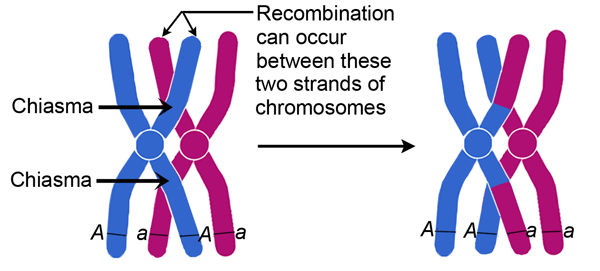
This image shows chromosomes during Prophase I. Which of the following correctly describes the process shown?
a)
segregation of sister chromatids
b)
condensation and segregation of alleles
c)
mutation in which the DNA content of the gene is altered
d)
crossing - over in which alleles are exchanged
109.
How many daughter cells are produced from meiosis?
a)
10
b)
6
c)
4
d)
2
110.
How many cells are produced during telophase I ?
a)
4
b)
8
c)
2
d)
0
111.
At the end of mitosis you have _____ cells
a)
2 genetically identical
b)
2 genetically different
c)
4 genetically identical
d)
4 genetically different
112.
How are your chromosomes inherited?
a)
most of your chromosomes from your mother
b)
most of your chromosomes from your father
c)
a random number of chromosomes from each parent
d)
half your chromosomes from your mother and half from your father.
113.
Human eggs and sperm are _____, and each has ____ chromosomes.
a)
diploid, 23
b)
diploid, 46
c)
haploid, 23
d)
haploid, 46
114.

Identify the phase.
a)
Metaphase I
b)
Metaphase II
c)
Prophase I
d)
Anaphase II
115.

Name the phase of Mitosis.
a)
Prophase
b)
Metaphase
c)
Anaphase
d)
Telophase
116.

When homologous chromosomes match up, they form a structure call a ___________.
a)
tetrad
b)
triad
c)
diploid
d)
gamete
117.
What is another reason we need meiosis?
a)
So the offspring has genes from both parents
b)
So the offspring has genes from one parent
c)
So the offspring has genes from neither parents
d)
So the offspring makes its own genes
118.
Chromosomes exchange genetic material during
a)
crossing over
b)
replication
c)
synthesis
d)
translation
119.

What phase is shown in the picture?
a)
anaphase 1
b)
anaphase 2
c)
metaphase 1
d)
telophase 1
120.

Which process and type of resulting cells are represented?
a)
mitosis, gametes
b)
mitosis, body cells
c)
meiosis, gametes
d)
meiosis, body cells
121.
A male shark has 40 chromosomes in each of its sex cells. How many would be present in its body cells?
a)
20
b)
40
c)
80
d)
160
122.

What phase is represented?
a)
metaphase 1
b)
metaphase 2
c)
anaphase 1
d)
anaphase 2
123.
Production of an offspring through the combination of egg and sperm
a)
sexual reproduction
b)
asexual reproduction
c)
diploid cell
d)
haploid cell
124.
A human being has a somatic cell that has 46 chromosomes. What is the haploid number found in a gamete?
a)
23
b)
46
c)
69
d)
92
125.

What is the name of the step found above?
a)
Interphase
b)
Prophase I
c)
Metaphase I
d)
Anaphase I
126.

What is the name of the step in the diagram above?
a)
Interphase
b)
Prophase I
c)
Metaphase I
d)
Anaphase I
127.

A skin cell has 2 copies of every chromosome. Which term means 1 copy of each chromosome?
a)
Meiosis
b)
Mitosis
c)
Haploid
d)
Diploid
128.

This term means that a cell has 2 of every chromosome, with 1 of each pair from the maternal parent and 1 of each pair from the paternal parent.
a)
homologous pairs
b)
replicated chromosomes
c)
haploid
d)
diploid
129.
Crossing over is important because....
a)
It prevents mutations from entering the gametes.
b)
It allows for even distribution of chromosomes in the gametes.
c)
It allows for more genetic diversity of gametes.
d)
It allows for genetic uniformity of gametes.
130.
Which processes DOES NOT increase genetic variation as part of sexual reproduction?
a)
Crossing over
b)
Independent assortment (due to random orientation
c)
Gene mutation
d)
Random fertilization
131.

The random way that mom and dad's chromosomes line up in metaphase I & II leads to ______________, which increases genetic variation.
a)
crossing over
b)
random fertilization
c)
independent assortment
d)
asexual reproduction
132.
The random distribution of mom and dad's chromosomes during meiosis is called
a)
independent assortment
b)
random fertilization
c)
crossing over
d)
asexual reproduction
133.
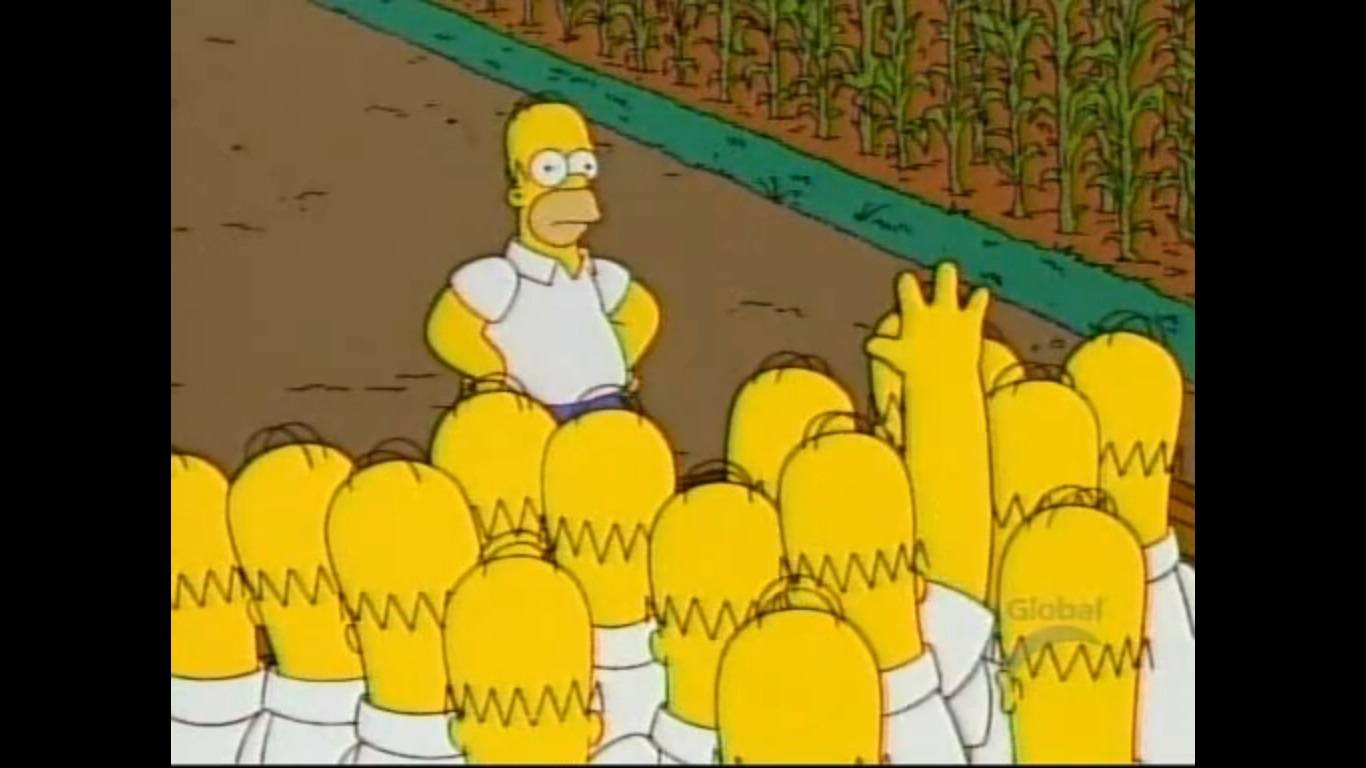
All of the offspring of an organism have the same genetic material, which is identical to the parent organism. From this, we can conclude that this organism -
a)
makes its own food
b)
is unicellular
c)
live in a marine habitat
d)
reproduces asexually
134.
A type of reproduction in which the genetic materials from two different cells combine, producing an offspring
a)
Asexual Reproduction
b)
Sexual Reproduction
135.
What is an advantage of sexual reproduction?
a)
Allows genetic variation
b)
Only needs one parent
c)
Happens very quickly
d)
Offspring are exact copies of parent
136.
Sexual reproduction requires _____ parents and asexual reproduction requires ___ parents
a)
1,1
b)
2,2
c)
2,1
d)
1,2
137.
When a starfish grows a new body off a broken arm, what kind of reproduction is this?
a)
Sexual
b)
Differentiation
c)
Asexual
d)
Specialization
138.
In asexual reproduction, all of the offspring are:
a)
Physically Identical
b)
Genetically Identical
c)
Physically and Genetically Identical
d)
Not Identical
139.
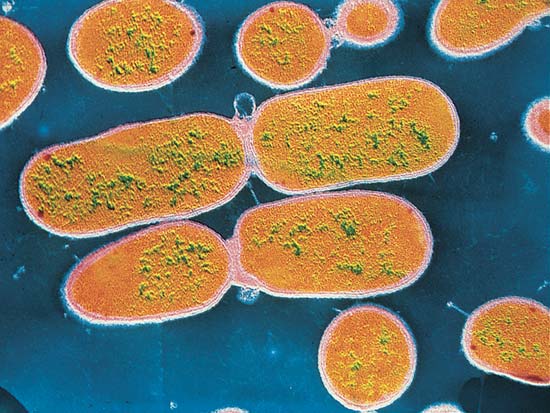
The offspring from asexually reproduced organisms are?
a)
Different than their parents
b)
Identical to parents
c)
Like a combination from both parents
d)
A different species
140.
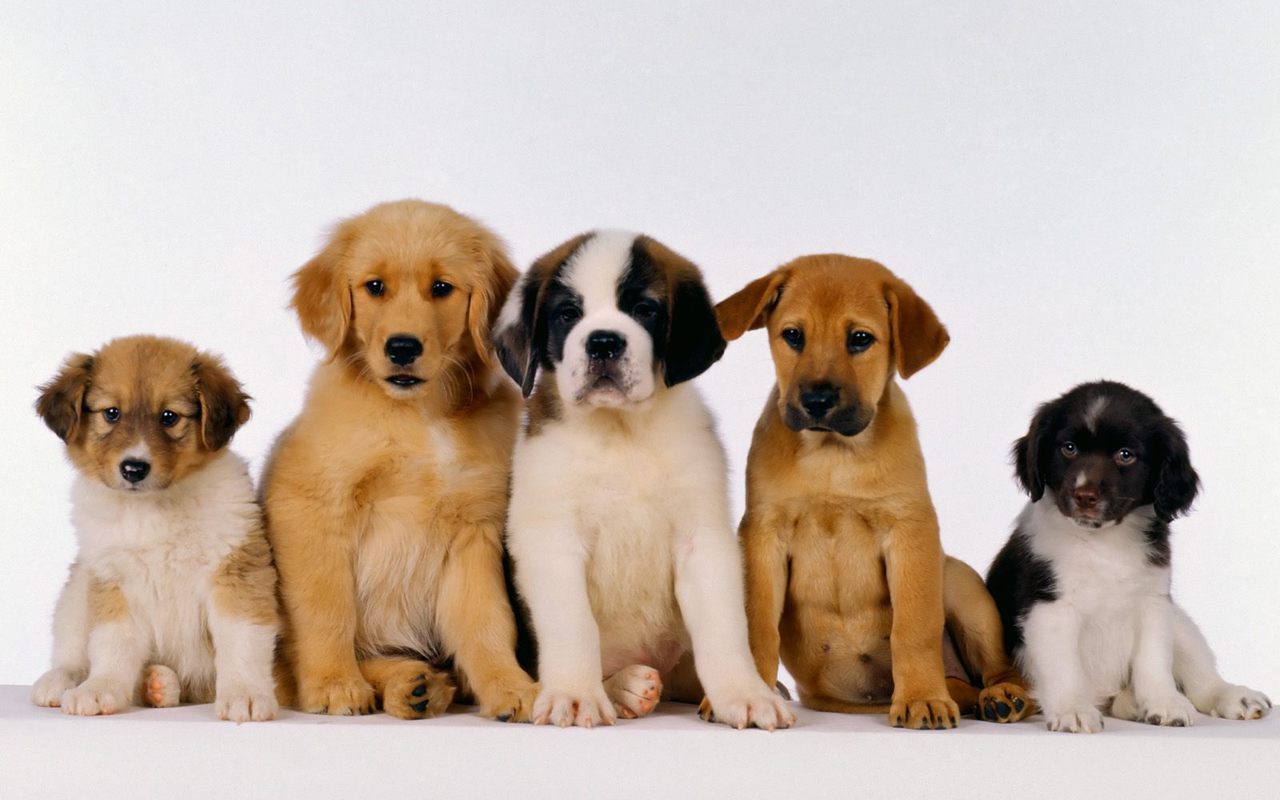
If two organisms reproduce sexually, then their offspring will exhibit a genetic makeup that is -
a)
identical to only one parent
b)
identical to all of its siblings
c)
a unique combination of traits
d)
the recessive traits of each parent
100 %

