Worksheets
Biology - Final Review S2
Total questions: 145
Worksheet time: 2hrs 2mins
The vertical (up and down) columns in the Periodic Table are called
groups
towers
periods
atomic numbers
Elements in a .................. have similar chemical properties.
period
group
row
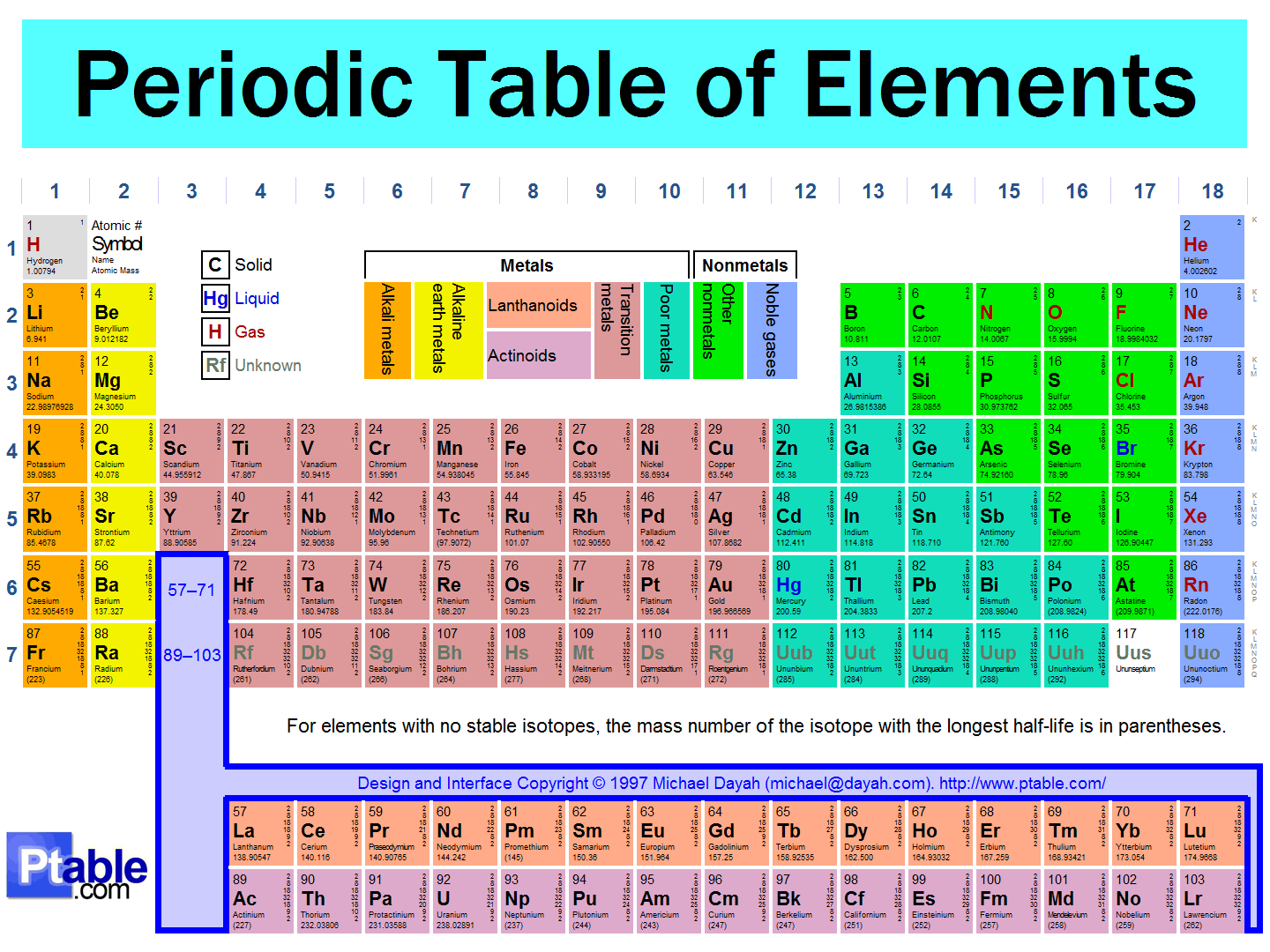

Which element is similar to Li?
Be
K
Which element is similar to Mg?
Ca
B

The blue elements (left side) are called
The yellow elements (right side) are called
What do the periods (rows) represent?
an additional energy level
an additional proton
an additional group
an additional electron
Element symbols have _____ capital letter(s).
1
2
3
4
Groups run:
up and down
left to right

Which two elements share common characteristics based on the periodic table?
Sodium and Magnesium
Chlorine and Sulfur
Argon and Neon
Calcium and Bromine
What is the chart called that organizes all of the elements found on Earth?
Element Chart
Table of Elements
Periodic Table of Elements
Atomic Mass equals the combined number of
Protons and Electrons
Electrons and Neutrons
Protons and Neutrons
The number of valence electrons ________ by 1 as you move across the period.
increases
decreases
Valence electrons are
the electrons in the outer most energy level
all the electrons in the atom
What is the charge of a proton?
Negative
Positive
Neutral
What particle number is equal to the atomic number Z
Protons
Electrons
Neutrons
What is the charge of a neutron?
Negative
Positive
Neutral
True or False:
Atoms are the basic building blocks of most of the matter around you.
true
false
Which of the following make up parts of an atom?
neutron
proton
electron
ultron
Which of the following parts of an atom can absorb or release energy in the form of heat, light, etc?
Proton
Neutron
Electron
A charged atom is called a(n)...
electron.
ion.
proton.
acid.

How many valence electrons does the pictured atom have?
20
3
2
4

The smallest particle of an element.
Element
Molecule
Atom
The center of an atom where its neutrons and protons are is called the _____________.
nucleus
electron cloud
center

The following subatomic particles are in the nucleus.
Protons and nucleus.
Protons and neutrons.
Protons and electrons
Neutrons and electrons
The abbreviation for an element:
element name
atomic number
chemical symbol
atomic symbol


Which elements are found in all four macromolecules?
Iron, Oxygen, and Phospohorous
Phosphorous, Nitrogen, and Sulfur
Carbon, Hydrogen, and Oxygen
Carbon, Hydrogen, and Nitrogen
Which represents the four macromolecules of life?
Carbohydrates, Lipids, Proteins, and Nucleic Acids
Monosaccharides, Fatty Acids, Amino Acids, and Nucleotides
Carbohydrates, Lipids, Proteins, and Nucleotides
Monosaccharides, Lipids, Proteins, and Nucleic Acids
Which end of the water molecule has a slightly positive charge?
The hydrogen end
The oxygen end
Both ends are slightly positive
Neither end is positive
What word describes when water is attracted to other substances?
Cohesion
Adhesion
Capillary action
Surface tension
When water molecules stick easily to other water molecules, this is called what?
Cohesion
Adhesion
Solution
Polar molecule
Water beads up on the surface of a penny because of what property?
Adhesion
High surface tension
Universal solvent
Changes in density
The fact that ice floats on liquid water is due to the fact that water's solid form is _____________ than its liquid form.
Less polar
More polar
Less dense
More dense
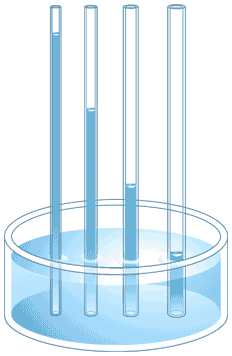
What is the term for water's ability to defy gravity and climb up a tube?
Capillary Action
Specific Heat
Universal Solvent
Magic
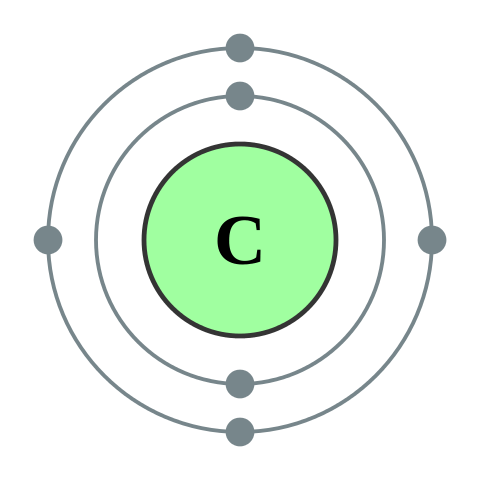
How many valence electrons does carbon have?
4
5
6
7

How many valence (outer) electrons does an Oxygen atom have?
2
6
8
16

What element is this?
Nitrogen
Chlorine
Argon
Phosphorous
Which Bohr model represents Be?


Is this a correct dot diagram for fluorine (F)
Yes
No
Use your Periodic Table to match the following.

Lithium

Phosphorus

Carbon

Neon

Bromine

"I predict this Ion would have a (a) charge because it has more (b) than (c) ."

"I predict this Ion would have a (a) charge because it has more (b) than (c) ."

What do 'plants' do with the carbon they receive?
They turn it into water
They don't need carbon
They turn it into food by photosynthesis
They keep it forever

How does carbon get from animals and back into the atmosphere? (CHOOSE ALL THAT APPLY)
Respiration (breathing)
After they die, they are broken down by decomposers
Photosynthesis
None of these

How do animals get carbon?
Photosynthesis
They absorb it from the atmosphere
The sun
They eat other plants and animals

What is CO2?
Air
Oxygen
Carbon Dioxide
Dioxide
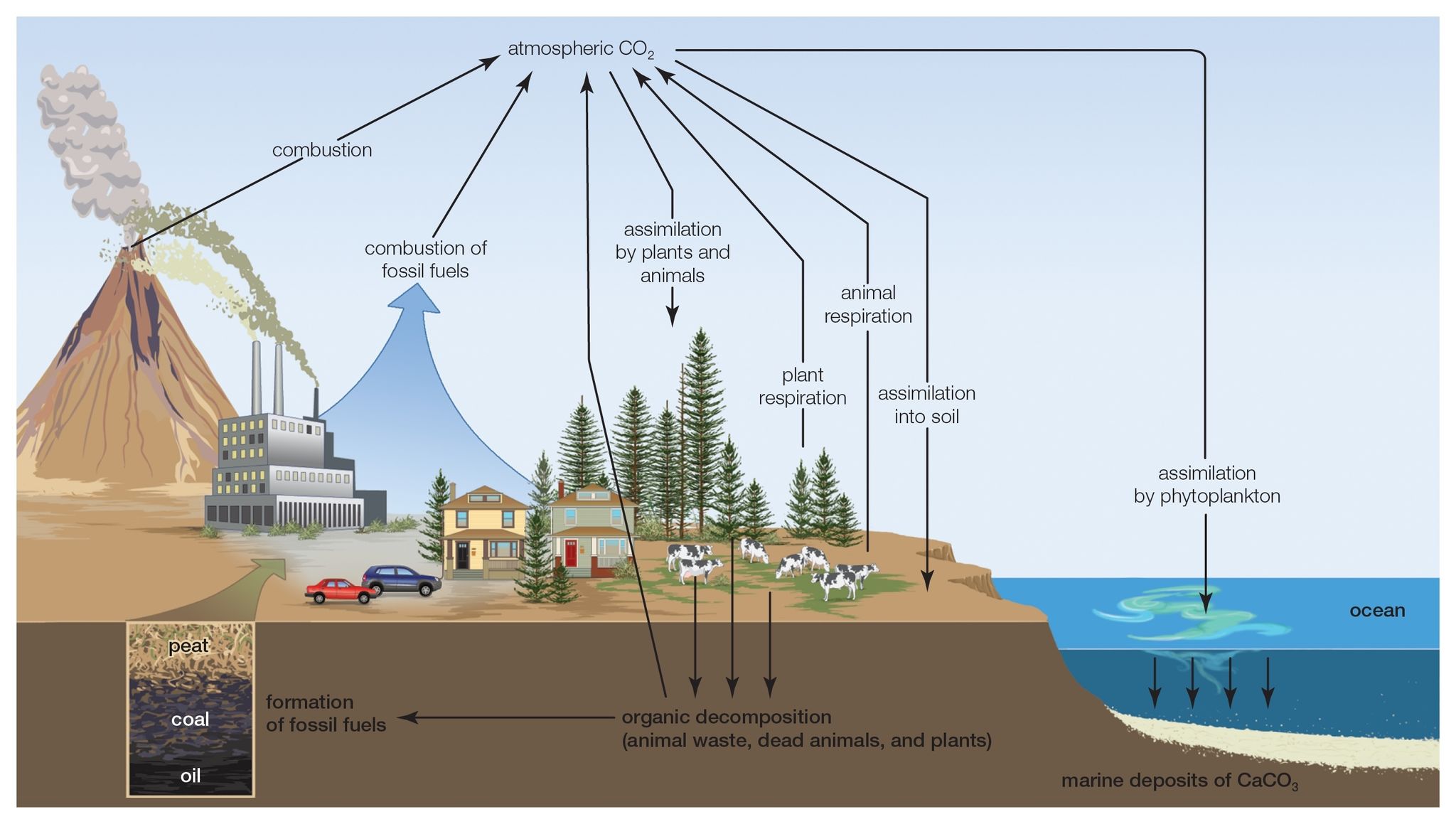
Which process contributes carbon dioxide to the atmosphere?
respiration
photosynthesis
tree farms
Which of the following is correct?
There is as much carbon on earth as when it was formed
Carbon is being created whenever it is recycled
Carbon is lost every time it is recycled
Carbon changes to different forms and is never recovered
All of the carbon in existence is continually recycled in the carbon cycle.
What are fossil fuels made from?
Plants and animals that are buried underground for millions of years.
They absorb it from the atmosphere.
Water
Wind
Which of the following converts food into energy for the cell?
vacuole
mitochondria
cytoplasm
cell membrane
The fluid that surrounds the organelles is...
chloroplast
cytoplasm
vacuole
cell wall

A Tree
alive
not alive

A River
alive
not alive

Animals cells and plant cells are exactly the same.
True
False
Most bacteria are unicellular organisms
True
False
Structures in cells that perform specific functions and are found in all Eukaryotic cells and some Prokaryotic cells.
cell
organelle
cell membrane
cytoplasm
Eukaryotic Cells have a nucleus
True
False
Prokaryotic cells do not have…….
membrane bound organelles
cell membrane
DNA or RNA
life
Bacteria is an example of a(n)
prokaryotic cell.
eukaryotic cell.
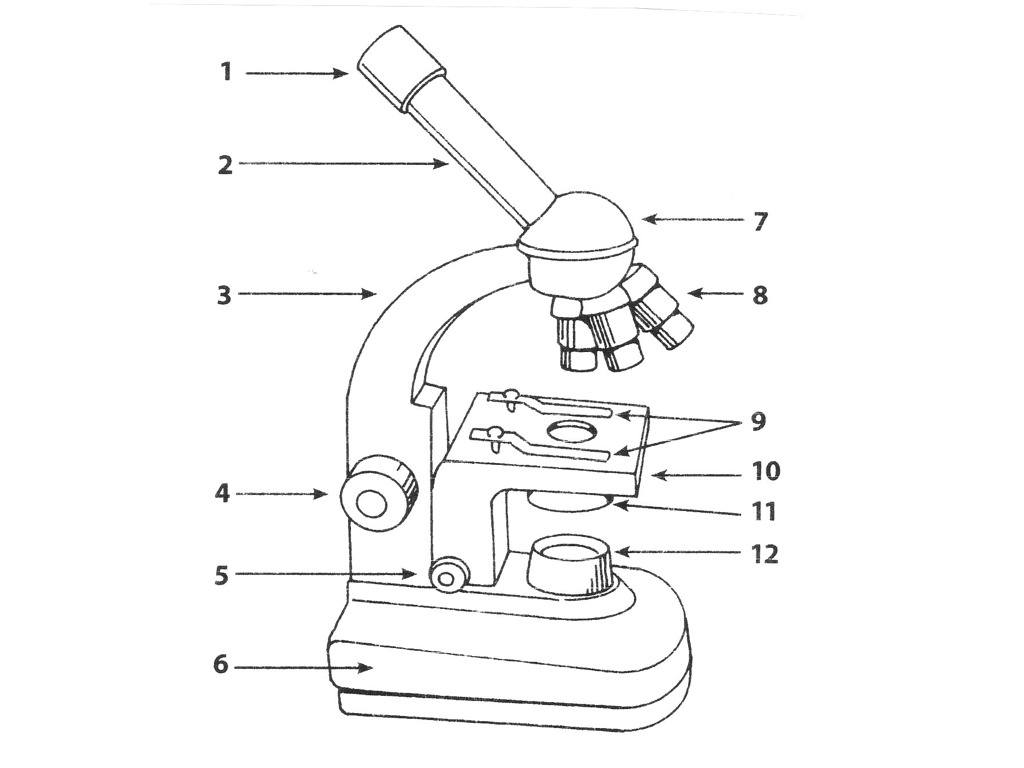


eye piece/ocular lens

DNA is related to
Carbohydrates
Photosynthesis
Cellular Respiration
Genetics
What is the complimentary sequence of the following sequence:
GATCAG
TGACAT
GACATG
CTAGTC
CGACTA

What do the dotted lines between the nitrogenous bases (A,T,C,G) represent in the image provided?
Covalent bonds
Ionic bonds
Peptide bonds
Hydrogen bonds
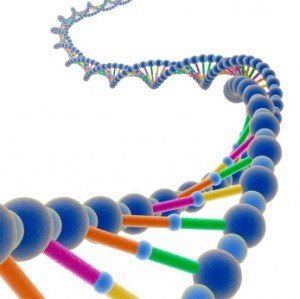
ribose, hydrogen, nitrogen base
deoxyribose, oxygen, nitrogen base
deoxyribose, phosphate, nitrogen base
ribose, phosphate, protein
What are the four bases found in DNA?
U, A, T, B
B, O, A, T
A, G, C, T
U, V, W, X
Which bases pair together?
A--> T, C--> G
A --> G, C --> T
A--> C, G --> T

What makes up the rungs (steps) of a DNA ladder?
sugars & phosphates
nitrogen bases
sugars
genes & chromosomes


Where is DNA located inside of cells?
cell membrane
vacuole
chloroplast
nucleus
DNA helicase
DNA ligase
DNA polymerase
all of these
What organelle is responsible for translation?
Ribosome
Cytoplasm
Golgi Apparatus
Smooth ER
Which RNA bases would pair with TACGAA in transcription?
AUGCUU
ATGCTT
GCATCC
GCAUCC
Which of these bases does not exist in RNA?
C
T
U
A
One difference between DNA and RNA is that....
Only RNA has the base Uracil
only RNA contains the base Thymine
only RNA contains the base Cytocine
only RNA contained the base Guanine
What is the product form transcription?
rRNA
tRNA
mRNA
DNA strand
what does mRNA do?
carry info from genes to ribosomes
carry amino acids to ribosomes
help with RNA splicing
make up ribosomes
What is the correct order to make a protein?
Protein, DNA, RNA
RNA, DNA, Protein
DNA, RNA, Protein
Protein, RNA, DNA
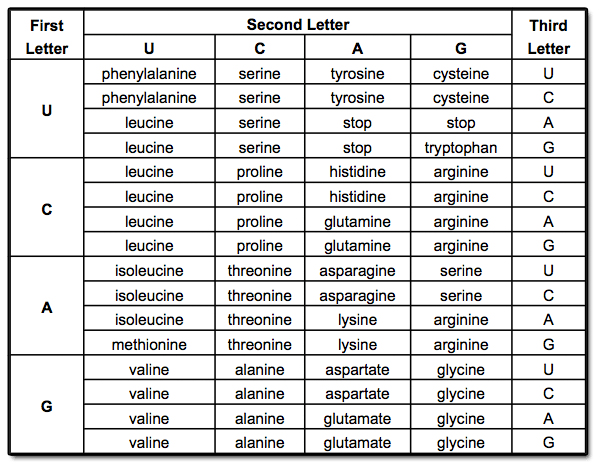
mRNA is created in the Nucleus
mRNA is decoded to form a protein
glucose molecules are made
is where lipids are synthesised
A codon consists of ___ nucleotides?
2
3
4
5
This is the process by which double stranded DNA produces single stranded RNA:
Photosynthesis
Translation
Pollination
Transcription
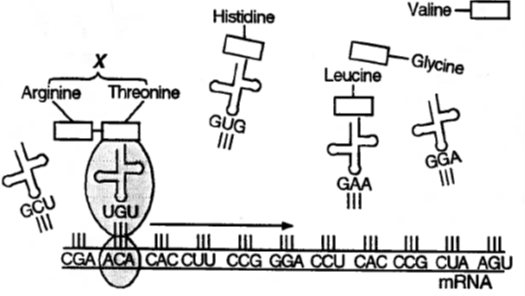
Transcription
Translation
Replication
All the above

Cleft chin (E) is dominant to smooth chin (e).
State the genotype(s) for smooth chin.
EE only
ee only
Ee only
Both Ee and ee

Homozygous dominant
FF
Ff
ff

Homozygous recessive
FF
Ff
ff

Heterozygous
FF
Ff
ff

Free earlobes (F) are dominant to attached earlobes (f).
State phenotype for FF.
free earlobes
attached earlobes

Free earlobes (F) are dominant to attached earlobes (f).
State phenotype for Ff.
free earlobes
attached earlobes

Free earlobes (F) are dominant to attached earlobes (f).
State phenotype for ff.
free earlobes
attached earlobes
Which of the following correctly describes PHENOTYPE?
A. The combination of genes an organism has
B. The physical traits an organism demonstrates
an observable characteristic
trait
personality
cell
DNA
Genetic traits are determined by one or more
genes
organelles
random chances
cells
A version or variation of a gene
trait
gene
allele
DNA
The alleles that an organism has/inherits are its
genotype
phenotype
chromosome
recessive

The passing of traits from parents to offspring is known as....
hierarchy
heredity
traits
genetics


In the Punnett square, what is the probability for white fur?