wayground logo

Free Printable Worksheets

Font size

S
M
L
XL
Worksheets

Bio 2nd Semester Final Review 2022

Total questions: 144

Worksheet time: 2hrs 12mins

Name
Class
Date
1.
The short-term condition of the atmosphere .
a)
Climate
b)
Weather
2.
Blizzards, Heatwaves, High winds are all examples of __________________ events.
a)
Climate
b)
Weather
3.
What is the difference between climate and weather?
a)
 Climate averages the weather conditions in a specific place over a long period of time, while weather describes the state of the atmosphere at a specific moment in time.
b)
 Weather averages the weather conditions in a specific place over a long period of time, while Climate describes the state of the atmosphere at a specific moment in time.
c)
Climate describes the weather conditions at night, while weather describes the conditions during the daytime.
d)
 There is not a difference between climate and weather.
4.

The thinning of the ozone layer is also known as the

a)

ozone hole

b)

ozone gap

c)

ozone space

d)

ozone void

5.

How many oxygen atoms does a molecule of ozone contain?

a)

1

b)

2

c)

3

d)

4

6.

The depletion in the Ozone layer is caused by:

a)

Carbon dioxide

b)

Nitrous oxide

c)

Methane

d)

Chlorofluorocarbon

7.

The ozone layer protects us from

a)

Increased atmospheric heat

b)

CFCs

c)

UV rays

d)

Decreased atmospheric heat

8.
The main human activity that releases greenhouse gases is...
a)
using bottled water
b)
burning fossil fuels
c)
texting on cellphones
d)
eating meat
9.
T/F: Water vapor is a greenhouse gas
a)
True
b)
False
10.
T/F: Some greenhouse gases are naturally present in the Earth's atmosphere
a)
True
b)
False
11.
The warming of the atmosphere by the trapping of heat being radiated to space is called
a)
evaporation
b)
condensation
c)
the greenhouse effect
d)
radiation
12.
Over the past 200 years, the level of carbon dioxide in the atmosphere has
a)
decreased slightly.   
b)
increased until recently, and then decreased.
c)
increased steadily.   
d)
stayed about the same.
13.
What is the greenhouse effect?
a)
The warming of a planet due to trapped radiation.
b)
The cooling of Earth due to air pollution.
c)
The heating of a solid, such as a rock.
14.
Which of the following are greenhouse gases?
a)
Carbon dioxide
b)
Methane
c)
Water vapor
d)
All answers are correct
15.
Without the Greenhouse Effect the Earth would be
a)
warm 
b)
cold
c)
dead
16.
What happens to the temperature if more greenhouse gases are released into the atmosphere?
a)
Temperature goes up
b)
Temperature goes down
17.
1.  Why is the Ozone important to life on Earth?
a)
A.   The Ozone reflects all the Ultra Violet radiation
b)
A.  The Ozone absorbs all the heat that come up from the Earth.
c)
The Ozone provides all the oxygen to Earth.
d)
The Ozone protects the Earth’ s atmosphere and the life on Earth from harmful radiant energy emitted by the sun   
18.
Consequences of climate change include:
a)
Stronger hurricanes
b)
Increased flooding
c)
Frequent droughts
d)
All of the above
19.

Which natural process removes carbon dioxide from the atmosphere?

a)

forest fires

b)

volcanic eruptions

c)

cellular respiration

d)

photosynthesis

20.
Combustion is another word for __________.
a)
Transportation
b)
Respiration
c)
Fossil Fuels
d)
Burning
21.
TRUE or FALSE?
All of the carbon in existence is continually recycled in the carbon cycle.
a)
True
b)
False
22.
Carbon can be found in...
a)
The atmosphere
b)
Soil
c)
Fossil fuels
d)
All of the above
23.
Respiration is the process by which animals take in _____ and release _____. 
a)
photosynthesis, air
b)
carbon, oxygen
c)
oxygen
d)
oxygen, carbon dioxide
24.
All living things get their energy from which of the following sources?
a)
food
b)
water
c)
sun
25.
Which of the following is an organism that eats only meat?
a)
herbivore
b)
carnivore
c)
omnivore
26.

What type of organism makes its own food?

a)

Autotroph

b)

Heterotroph

27.

Which category of organism cannot make its own food?

a)

Autotroph

b)

Heterotroph

28.

What type of organism uses sunlight to produce food?

a)

autotroph

b)

heterotroph

29.

Organisms that cannot make their own food and must get energy from eating other organisms are called...

a)

autotrophs

b)

heterotrophs

c)

plants

30.

__________________ are consumers that eat ONLY MEAT (other animals)?

a)

Omnivores

b)

Carnivores

c)

Producers

d)

Herbivores

31.

__________________ are consumers that eat BOTH Plants and Animals for food.

a)

Omnivores

b)

Producers

c)

Herbivores

d)

Carnivores

32.

What happens if a population grows past its carrying capacity?

a)

The population keeps growing

b)

The population starts to die off

c)

The entire species will go extinct

d)

The carrying capacity just increases

33.

Something that regulates the size of a population is called...

a)

a limiting measure

b)

a limiting factor

c)

carrying capacity

d)

biodiversity

34.

What are factors that affect carrying capacity?

a)

Biotic only

b)

Biotic and abiotic

c)

Depends on the ecosystem

d)

Abiotic only

35.

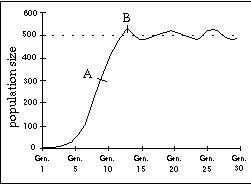
What is the carrying capacity of the graph?

a)

1000

b)

8000

c)

800

d)

600

36.

What is the carrying capacity of the graph?

a)

around 500

b)

more than 800

c)

less than 300

d)

around 700

37.
Which of the following would INCREASE the carrying capacity of an ecosystem?
a)
increase in predators
b)
disease
c)
increase in available food
d)
drought
38.
The primary consumer in this food chain is the ____________.
a)
Frog
b)
Eagle
c)
Grasshopper
d)
Python
39.
Which of the animals in this food web is a secondary consumer?
a)
Hawk
b)
Lizard
c)
Mouse
d)
Snake
40.
The largest part of an ecosystem is always the ________________.
a)
Primary Consumers
b)
Primary Producers
c)
Quarternary Consumers
d)
Secondary Consumers
41.
The smallest part of the ecosystem is always the ____________.
a)
Primary Producers
b)
Secondary Consumers
c)
Primary Consumers
d)
Tertiary Consumers
42.

What is an increase of biodiversity over time, after a natural or man made disturbance?

a)

ecological recession

b)

climax recession

c)

ecological succession

d)

climax succession

43.

What is the term that describes a steady and stable community?

a)

peak community

b)

turf community

c)

climax community

d)

disturbed community

44.

Which is faster: Primary or Secondary Succession?

a)

Primary Succession

b)

Secondary Succession

c)

Both Take The Same Amount of Time

45.

T or F: Succession increases biodiversity.

a)

True

b)

False

46.
An organism that lives by breaking apart dead organic matter into simpler parts is...
a)
scavenger
b)
consumer
c)
decomposer
d)
carnivore
47.
Which organism recieves the least amount of energy from the producer?
a)
Owl
b)
Grasshopper
c)
Lilypad
d)
Mouse
48.

What is another word for abiotic?

a)

Nonliving

b)

Living

c)

Breathing

d)

Aerobic

49.

An biotic factor is:

a)

Living

b)

Non-living

c)

Neither

50.
It is a biological community of interacting organisms and their physical environment.
a)
Ecosystem
b)
Biotic System
c)
Abiotic System
d)
None of the choices
51.
Biodiversity refers to
a)
extinct species
b)
the variety of species on Earth
c)
nonrenewable resources
d)
the rate of species decline
52.
When taken to a new habitat, non-native plants often threaten native plants of the new habitat.  Why do they do this?
a)
Non-native plants are able to mutate rapidly
b)
Non-native  plants cause native animals to relocate
c)
Non-native plants are able to be used for medicine
d)
Non-native plants compete with native plants for resources
53.
What effect will an invasive species have on the carrying capacity of an ecosystem?
a)
The carrying capacity will increase
b)
The carrying capacity for everyone will decrease
c)
The carrying capacity will only decrease for those in competition for same resource
d)
The carrying capacity for all animals will stay the same
54.
What is a native specie?
a)
A specie that is local and has lived in the same place
b)
A specie who has come from another state or country
c)
A specie that has no "home" and travels for its whole life
d)
None of the above
55.
Which symbols best describe mutualism?
a)
+,+
b)
+,-
c)
+,0
d)
-,0
56.
Which symbols best describe parasitism?
a)
+,+
b)
+,-
c)
+,0
d)
-,0
57.
Which symbols best describe commensalism?
a)
+,+
b)
+,-
c)
+,0
d)
0,0
58.

A cuckoo and a warbler are both birds. A cuckoo will find the nest of warbler instead of building her own, and she harms the warbler by knocking a warbler egg out of nest and laying her own. When the warbler mother returns, she isn’t aware of the switch. The warbler will then raise the baby cuckoo bird instead of her own baby. Which term best describes this relationship?

a)

Predation

b)

Parasitism

c)

Commensalism

d)

Mutualism

59.

Barnacles are sea creatures that create a home by attaching themselves to whales. The whales are unaffected by the barnacles. Which term best describes this symbiotic relationship?

a)

Commensalism

b)

Parasitism

c)

Predation

d)

Mutualism

60.

Ostriches and gazelles are two animals that live in Africa. They graze for food near each other because they help each other spot predators. The gazelle has excellent eyesight, but poor hearing, and the ostrich has excellent hearing, but poor eyesight. These two animals will alert one another when danger is near. Which term best describes this relationship?

a)

Predation

b)

Commensalism

c)

Mutualism

d)

Parasitism

61.
Mistletoe extracts water and nutrients from the spruce tree to the tree's detriment (harm). 
a)
Mutualsim 
b)
Parasitism 
c)
Commensalism 
62.
Barnacles create home sites by attaching themselves to whales. This neither harms nor benefits the whales.
a)
Mutualsim 
b)
Parasitism 
c)
Commensalism 
63.
Red-billed oxpeckers are birds that feed on parasites found on an impala. The impala gets rid of parasites and the red-billed oxpeckers get a yummy dinner. This is an example of _______.
a)
commensalism
b)
mutualism
c)
neutralism
d)
competition
64.
A tick and a dog have this type of relationship.
a)
mutualism
b)
commensalism
c)
neutralism
d)
parasitism
65.

The ecological role an organism performs in their specific environment is considered the organism's...

a)

Habitat

b)

Population

c)

Biome

d)

Niche

66.

"Organisms that have moved to a location that does not naturally support them."

a)

Invasive species

b)

Destructive species

c)

Unwelcomed species

d)

Infected species

67.
What effect does biodiversity have on a community?
a)
It makes destruction by insects impossible. 
b)
It makes primary succession more likely.   
c)
 It enables species to survive in a desert.
d)
It enables the community to withstand changes.
68.
Mutations are important because they bring about
a)
death of the organism in which they develop
b)
genetic variation needed for a population to evolve
c)
benefits for the individual, not for the population
d)
Hardey-Weinberg equilibrium within a population
69.
This scientist came up with the idea of natural selection.
a)
Jean Baptiste Lamarck
b)
Gregor Mendel
c)
Charles Darwin
d)
Thomas Malthus
70.
Inherited trait that helps an organism survive is a(n) __________.
a)
Fossil
b)
Adaptation
c)
Ancestor
d)
Natural selection
71.
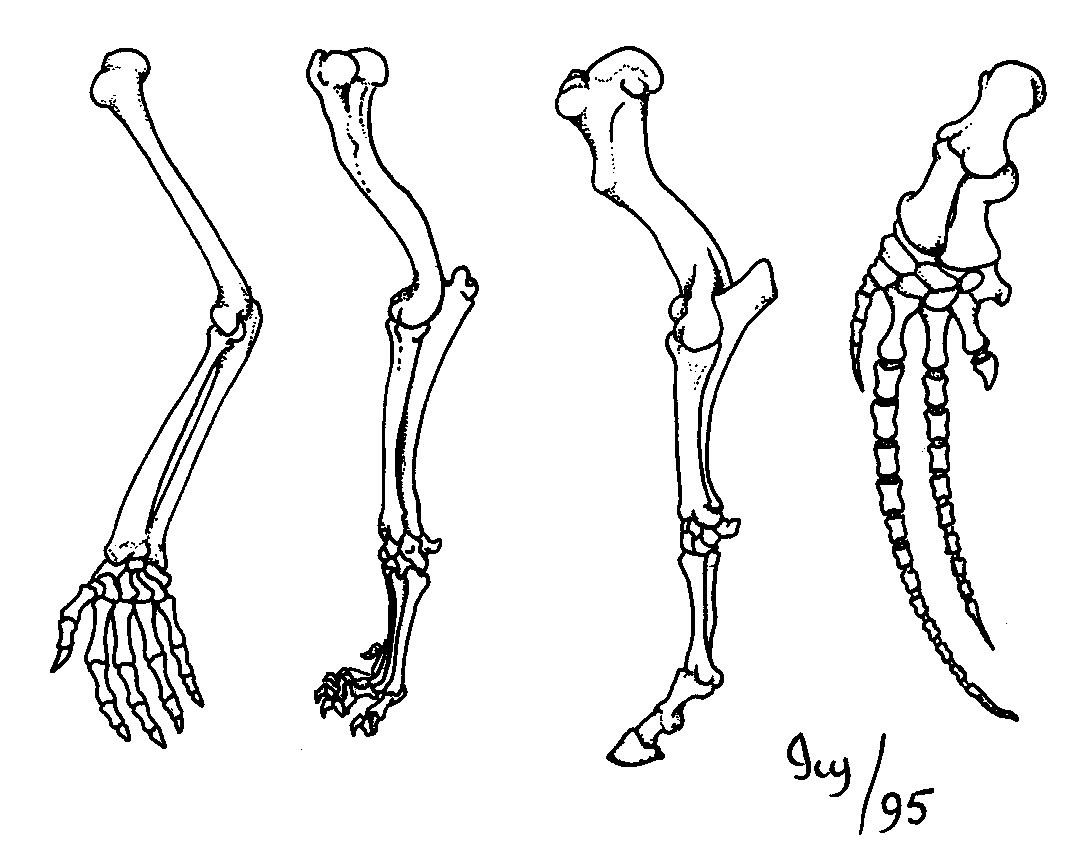
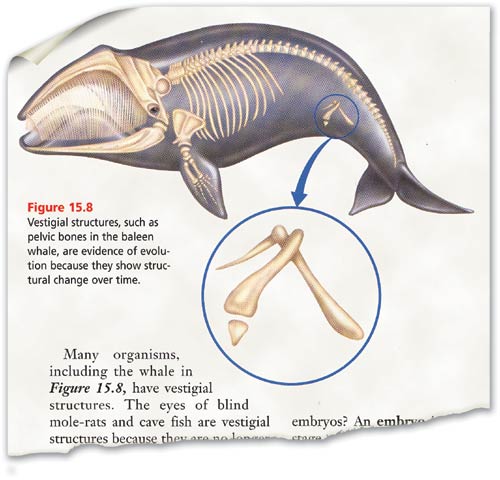
Structures with the same parts have different functions; suggests that organisms share a common ancestry
a)
vestigial structures
b)
homologous structures
c)
adaptive radiation
d)
fossil
72.
A remnant or trace of an organism from the past is called a _______.
a)
Ancestor
b)
Skeleton
c)
Fossil
d)
Imprints
73.
Which of the following is an example of a vestigial structure?
a)
the wings of a red-tailed hawk
b)
the hind limbs of a house cat
c)
the fins of sharks
d)
the tailbone of a human
74.
The ability of an organism to survive and reproduce in its specific environment 
a)
diversity.
b)
evolution
c)
adaptation
d)
 fitness
75.
Why are advantageous traits more likely to be passed onto offspring?
a)
Because they are more likely to survive and reproduce.
b)
Because they come from dominant alleles.
c)
Because they come from recessive alleles.
d)
Because the trait is an acquired phenotype.
76.

Natural selection results in change in a population's _____________ traits over time.

a)

inherited

b)

acquired

77.

Which of the following is NOT an example of natural selection?

a)

People selectively breeding hamsters for size.

b)

Insect populations developing resistance to certain pesticides.

c)

Bacteria becoming resistant to antibiotics.

d)

Male birds of certain species inheriting colorful feathers that are more attractive to females.

78.

Many different groups of organisms have wings, even though they do not share a recent common ancestor. This is because they evolved in environments with similar selective pressures. Wings are an example of a(n) ______________ structure.

a)

vestigial

b)

analogous

c)

homologous

79.

Which of these is an example of natural selection?

a)

The largest animal in a population will have more opportunities for reproduction.

b)

Several species of organisms work together so that they all succeed.

c)

One species takes all the resources in an environment leaving none for others.

d)

Organisms that are best suited to an environment tend to survive and reproduce more often.

80.

Why might it be helpful for a species to have a lot of variations?

a)

They can't be seen by predators

b)

If the environment changes, they might be better able to adapt

c)

It is helpful in asexual reproduction

d)

They don't recognize each other

81.

Humans selecting which traits are preferred in an organism, and then intentionally breeding organisms for those particular sets of characteristics is known as

a)

natural selection

b)

artificial selection

c)

adaptations

d)

macroevolution

82.

When thinking of natural selection, what happens to genes that hinder organisms' abilities to meet day to day needs?

a)

They become more prevalent in the population.

b)

Nothing. Genetic makeup is totally random.

c)

No one can say for sure.

d)

They will become less and less prevalent in the population.

83.

Which of the following is NOT an example of artificial selection?

a)

Farmers selecting particular cows to breed because they produce more milk.

b)

People choosing which dogs to breed because they are good scent hounds and good at tracking.

c)

Black mice increasing over time since they blend in with black rocks of the area and can hide from predators.

84.
Who is considered the "father of genetics"?
a)
Gregor Mendel
b)
Reginald Punnett
c)
James Watson
d)
Justin Bieber
85.
How many alleles (letters) do each person carry for a trait?
a)
1
b)
2
c)
3
d)
4
86.
How many alleles (letters) does a child get from each parent for each trait?
a)
1
b)
2
c)
3
d)
4
87.
T - tall and t = short
In the punnett square below, what belongs in the missing square
a)
tt
b)
Tt
c)
Bb
d)
TT
88.
Which of the following is homozygous dominant?
a)
Yy
b)
Y
c)
yy
d)
YY
89.
How many chromosomes are in a sex cell?
a)
46
b)
23
c)
26
d)
43
90.
The passing of physical characteristics from parent to offspring is __________.
a)
genetics
b)
heredity
c)
genes
d)
traits
91.
When a capital letter is used, what kind of allele is being represented?
a)
Recessive Allele
b)
Codominance
c)
Punnett Squares
d)
Dominant Allele
92.
When two identical alleles for a trait are in an organism, the organism is said to be ____________?
a)
Heterozygous
b)
Homozygous
c)
allele
d)
resseive
93.
The exact genetic makeup of an organism, such as RR, Tt, PP is its?
a)
phenotype
b)
dominance
c)
genotype
d)
trait
94.
TT,tt,PP,pp,SS,ss are examples of alleles that are?
a)
homozygous
b)
heterozygous
c)
different
d)
homologous 
95.
If "T" is the allele for tall and "t" is the allele for short, then Tt would produce?
a)
tall
b)
short
c)
medium
d)
not enough info
96.

Red (R) is dominant over white (r). How can a flower be white?

a)

It can have RR and be white.

b)

It has to have rr.

c)

It has to have rR

d)

There is no way it can be white until the third generation.

97.

Alternant or different genes that code for the same trait are called?

a)

chromosomes

b)

segments

c)

alleles.

d)

homozygous.

98.
Which of the following cell types is formed by meiosis?
a)
muscle cells
b)
skin cells
c)
sperm cells
d)
blood cells
99.
What is a phenotype?
a)
The expression of a trait; what you see.
b)
refers to the genetic makeup of an individual
c)
An organism that has the same genes for a trait (ex. TT or tt)
d)
the passing of traits from parent to offspring
100.
The inherited combination of alleles is known as the offspring's
a)
heredity
b)
phenotype
c)
genotype
d)
redigree
101.
If a heterozygous tall pea plant is crossed with a short pea plant, what are the possible genotypes of the future offspring?
a)
100% Tt
b)
50% Tt, 50% tt
c)
75%Tt, 25%tt
d)
25%TT, 50%Tt, 25%tt
102.

During meiosis, one parent cell gives rise to how many daughter cells?

a)

1

b)

2

c)

3

d)

4

103.

Human gametes contain how many chromosomes?

a)

46

b)

23

c)

12

d)

28

104.

When you cross two parents, each parent is responsible for passing _______ of their two alleles for each individual trait.

a)

1

b)

2

c)

3

d)

4

105.

Grey (G) fur is dominant to brown (g) fur in mice. What would be the genotype of a mouse that is homozygous dominant?

a)

GG

b)

Gg

c)

gg

d)

GGG

106.

Grey (G) fur is dominant to brown (g) fur in mice. What would be the genotype of a mouse that is heterozygous?

a)

GG

b)

Gg

c)

gg

d)

GGG

107.

In humans, the haploid number of chromosomes is ____.

a)

23

b)

46

c)

69

d)

92

108.

Which of the following is the best definition for MEIOSIS?

a)

the process of two haploid cells uniting

b)

the counting of chromosomes within a diploid cell

c)

a two-step process that reduces the number of chromosomes in half such that there is only one copy of all the chromosomes

d)

the equational division of a cell into two identical copies

109.

How many cells are formed at the end of Meiosis II?

a)

2

b)

3

c)

4

d)

8

110.

The products of MEIOSIS have _______ number of chromosomes.

a)

haploid

b)

diploid

111.
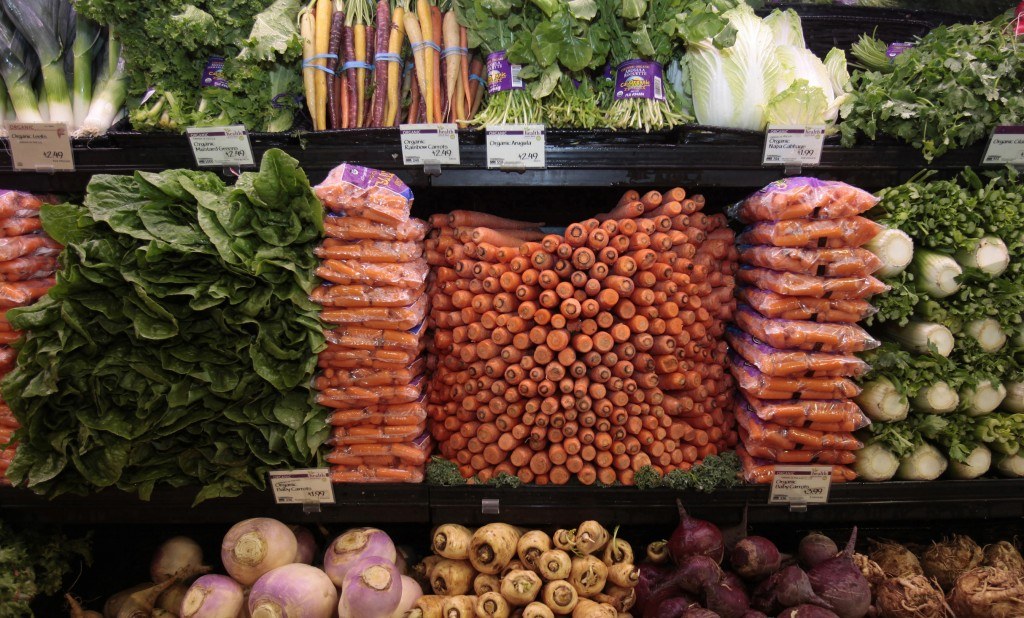
If the Diploid number of Carrots is 18, the haploid number is
a)
18
b)
9
c)
27
d)
36
112.

In a pedigree chart, men are represented by

a)

Circles

b)

Diamonds

c)

Squares

113.

In a pedigree chart, women are represented by

a)

Circles

b)

Diamonds

c)

Squares

114.

A chart that displays family relationships indicating traits or disorders

a)

Punnett square

b)

Pedigree

c)

Karyotype chart

115.

In a pedigree, individuals that are carriers are represented as shapes that are

a)

Not shaded

b)

Fully shaded

c)

Half shaded

116.

In a pedigree, individuals that are unaffected are represented as shapes that are

a)

Not shaded

b)

Fully shaded

c)

Half shaded

117.

In a pedigree, individuals that are affected are represented as shapes that are

a)

Not shaded

b)

Fully shaded

c)

Half shaded

118.
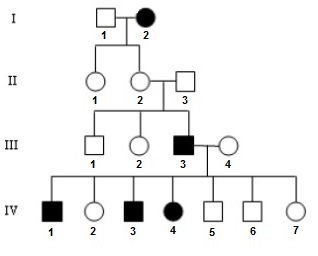
How many generations are shown in this pedigree?
a)
1
b)
2
c)
3
d)
4
119.
How many kids did the mother and father from the first generation have?
a)
2
b)
4
c)
5
d)
6
120.
This pedigree represents the inheritance of hemophilia in this family. How many of the females have the hemophilia trait?
a)
8
b)
5
c)
2
d)
3
121.
How many people in this whole pedigree have the trait/disease?
a)
2
b)
3
c)
4
d)
6
122.
How many females are in this pedigree?
a)
3
b)
4
c)
6
d)
7
123.
Give the genotype for person II-1, for this autosomal trait.
a)
GG
b)
Gg
c)
gg
d)
we cannot be 100% sure of the genotype
124.

An accurate definition of Sustainability is

a)

meeting population needs

b)

meeting the needs of the present without compromising the ability of future generations to survive

c)

meeting the needs of the future without worrying about todays

d)

meeting the food needs of animals

125.

The three areas of sustainability are

a)

Physical, Economical, Political

b)

Environmental, Social, Physical

c)

Economical, Environmental, Social

d)

Physical, Political, Social

126.
Your Ecological or Carbon Footprint is the ratio of 
a)
the amount of resources you use to the amount of resources available
b)
how many people there are on earth to how much space we have on earth
c)
people to cars
d)
robots available to robots needed
127.
what is a non renewable resource?
a)
water
b)
wind
c)
coal
d)
biomass
128.
Non-Renewable resources are also known as what?
a)
Fossil Fuels
b)
Renewable
c)
Solar Energy
d)
Hydroelectric Energy
129.
Where does most of earth`s energy come from?
a)
The sun
b)
Mars
c)
Wind
d)
Water
130.

Trees are renewable resources.

a)

True

b)

False

131.

Wind is a renewable resource.

a)

True

b)

False

132.

Oil is a renewable resource.

a)

True

b)

False

133.

What is resilience?

a)

The ability to recover from, or adjust easily to, misfortune or change.

b)

Giving up and not trying to make the situation better.

c)

Being inflexible and unwilling to change.

d)

Becoming sensitive and taking changes in the workplace personally.

134.

the presence in or introduction into the air of a substance, which has harmful or poisonous effects.

a)

biofuel

b)

air pollution

c)

solid waste pollution

d)

sanitation

135.

haze caused by the interaction of ultraviolet solar radiation with chemical fumes from automobile exhausts and other pollution sources.

a)

radioactive waste

b)

water pollution

c)

acid rain

d)

smog

136.

precipitations carrying large amounts of dissolved acids, which kills wildlife and damages buildings, forests, and crops.

a)

amog

b)

air pollution

c)

transportation

d)

acid rain

137.

the loss or destruction of forests, mainly for logging or farming.

a)

Deforestation

b)

Reforestation

c)

solid waste pollution

d)

water pollution

138.

the planting and cultivating of new trees in an effort to restore a forest where the trees have been cut down or destroyed

a)

Deforestation

b)

Reforestation

c)

Sanitation

d)

Aquaculture

139.

How does habitat fragmentation reduce genetic diversity in species?

a)

Habitat fragmentation makes nonnative species introduction possible.

b)

Habitat fragmentation opens migration routes.

c)

Habitat fragmentation isolates a large population into smaller groups.

d)

Habitat fragementation encourages open gene flow.

140.

the breaking of habitats into smaller pieces is called...

a)

habitat division

b)

habitat pollution

c)

habitat corruption

d)

habitat fragmentation

141.

What does monoculture mean?

a)

A game to acquire as much money and property as possible

b)

The growing of multiple crops in one particular area

c)

The growing of multiple types of animals in one particular area

d)

The growing of a single crop in one particular area

142.

clearing of trees in a forested area

a)

reforestation

b)

deforestation

c)

pollution

d)

biosphere

143.

planting trees to replace lost forestland

a)

deforestation

b)

reforestation

c)

ecology

d)

recycling

144.

Introduction of harmful materials into the environment

a)

reforestation

b)

fossil fuel

c)

pollution

d)

global warming