wayground logo

Free Printable Worksheets

Font size

S
M
L
XL
Worksheets

EOC Review

Total questions: 135

Worksheet time: 2hrs 59mins

Name
Class
Date
1.
What is a producer?
a)
an organism that gets energy from eating other organisms
b)
an organisms that uses sunlight to make its own food
c)
an organism that gets energy from eating dead organisms, non-living material or waste
d)
an organism that uses chemical energy to make its own food
2.
What is a herbivore?
a)
an animal that gets energy from eating other animals
b)
an organism that gets energy from eating only plants
c)
an animal that gets energy by eating both plants and other animals
d)
an animal that eats only herbs
3.
An organism that gets energy from eating other organisms is a ______________
a)
producer
b)
consumer
c)
decomposer
d)
prey
4.
An animal that is hunted and eaten for food is a 
a)
predator
b)
prey
c)
population
5.
An organism that gets energy from breaking down dead organisms, non-living material or waste
a)
producer
b)
consumer
c)
decomposer
d)
autotroph
6.
What is a carnivore?
a)
an animal that gets energy by eating other animals
b)
An animal that gets energy by eating only plants
c)
an animal that gets energy by eating both plants and animals
d)
an animal that makes its own energy through photosynthesis
7.
An animal that gets energy from eating both plants and animals is a 
a)
herbivore
b)
carnivore
c)
omnivore
d)
autotroph
8.
Which of the following is NOT a consumer
a)
grass
b)
dog
c)
shark
d)
fish
9.
The shrew provides energy for the _______?
a)
cricket
b)
grasshopper
c)
frog
d)
snake
10.
Which of the following is a herbivore?
a)
cricket
b)
frog
c)
hawk
d)
shrew
11.
Where do all life forms get their energy?
a)
Earth's Core
b)
Water
c)
Plants
d)
The Sun
12.
The hyenas and lions in The Lion King both want to eat all the antelope.  This is...
a)
Cooperation
b)
Competition
c)
photosynthesis
13.
An organism that must use other organisms for food, such as animals.
a)
Heterotroph
b)
Autotroph
c)
Primary producer
d)
Carnivore
14.
Directs all cell activities "Brain or Control Center of cell"
a)
Lysosomes
b)
Nucleus
c)
ribosomes
d)
Mitochondria
15.
Jelly-like substance found inside cell that acts as a medium for chemical reactions within the cell
a)
Nuclear Membrane
b)
Golgi Body
c)
Cytoplasm
d)
Ribosome
16.
"powerhouse of the cell" breaks down sugar molecules to release energy, site of cellular respiration, double membrane, self-replicating, contains own DNA, cristae
a)
Mitochondria
b)
Chloroplast
c)
Cell Wall
d)
Vesicle
17.
"Gatekeeper" Separates the cell from the rest of the environment and helps control what passes in and out of the cell.  Semi-permeable: allows some materials to pass through but not all
a)
Cell Wall
b)
Cytoplasm
c)
Mitochondria
d)
Cell Membrane
18.
Rigid outer layer made of cellulose that supports and protects the cell (plant, fungi, and bacterial cells)
a)
Nucleolus
b)
Golgi Body
c)
Cell Wall
d)
Cytoskeleton
19.
The organelle that uses the energy of sunlight to make food for the cell.
a)
Chloroplast
b)
Ribosome
c)
Mitochondria
d)
Nucleus
20.
Contains the Cell's DNA and is a part of the processes of growth, metabolism, and reproduction.
a)
Downy
b)
Nucleus
c)
Cell Wall
d)
Golgi Complex
21.
Organelles that convert food into energy that a cell can use
a)
Nucleus
b)
Mitochondria
c)
Chloroplast
d)
Stomach
22.
An organelle that makes proteins for a cell
a)
Nucleus
b)
Golgi Body
c)
Ribosome
d)
Endoplasmic Reticulum
23.
a relationship between two in which one species, the predator, feeds on the other species, the prey
a)
chemosynthesis
b)
predation
c)
cellular respiration 
d)
commensalism
24.
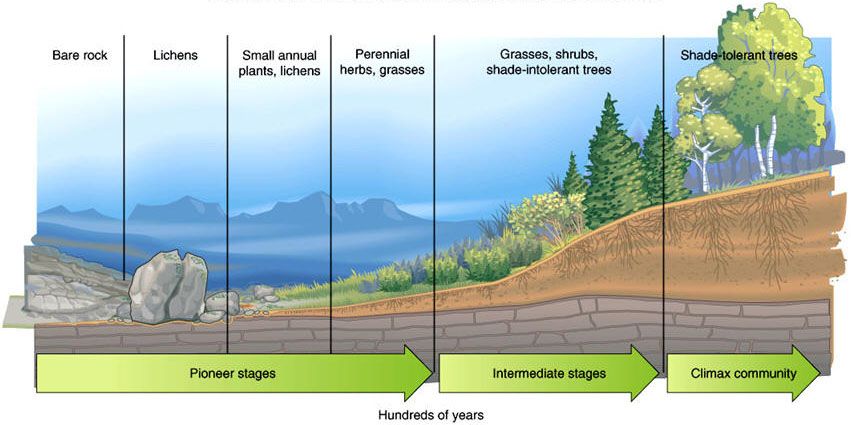
What type of succession is shown going from figure A to figure B?
a)
primary succession
b)
eutrophication
c)
secondary succession
d)
intermediate
25.
An organism that cannot adapt to changes in the environment will most likely - 
a)
produce more offspring
b)
die
c)
change its traits to survive
d)
store more food
26.
A student investigates how grasshoppers are affected by an environment changing due to drought conditions. Based on the data, which statement best predicts how subsequent populations of the grasshoppers may be affected by the changing environment?
a)
the body size of the brown grasshopper will decrease
b)
the population of green grasshoppers will increase
c)
the population of brown grasshoppers will increase
d)
the number of offspring of the green grasshoppers will increase
27.
Which of the following statements correctly identifies a predator-prey relationship in this food web? 
a)
the herring is the predator and the tuna is its prey
b)
the blue crab is the predator and the sea otter is its prey
c)
the shark is the predator and the tuna is its prey
d)
the baleen whale is the predator and the killer whale is its prey
28.
The picture shows what type of succession?
a)
primary
b)
secondary
c)
tertiary
d)
quadanary
29.
What system provides movement for the body?
a)
Skeletal
b)
Muscular
c)
Digestive I
d)
Excretory
30.
sexual reproduction produces offspring that is identical to the parents
a)
true
b)
false
31.
Production of an offspring through the combination of egg and sperm
a)
sexual reproduction
b)
fertilization
c)
diploid cell
d)
haploid cell
32.
What is the definition on Multi-cellular? 
a)
Many cells
b)
One cell
c)
No cell
d)
Too many cells
33.
What is the definition of Unicellular?
a)
Many cells
b)
One cell
c)
No cells
d)
To many cells
34.
True or false? 
a)
Prokaryote is a cell without a nucleus 
b)
Prokaryote is a cell with a nucleus
35.
A plant turning its leaves towards the sun is an example of a 
a)
response
b)
stimulus
c)
mirgration
d)
hibernation
36.
The basic unit of structure and function in living things is the
a)
nucleus
b)
membrane
c)
cell
d)
chloroplast
37.
When the parents are homozygous dominant and homozygous recessive, the offspring are 
a)
homozugous recessive
b)
heterozygous resessive
c)
homozygous dominant
d)
heterzygous dominant
38.
A dominant gene always shows itself over a
a)
homozygous gene
b)
heterzygous gene
c)
recessive gene
d)
sex-linked gene
39.
Differences among individuals in a species are called 
a)
adaptation
b)
mutation
c)
natural selection
d)
variations
40.
How does the amount of energy resulting from fermentation compare with that of aerobic respiration? 
a)
Aerobic respiration results in less energy.
b)
Aerobic respiration results in more energy.
c)
Each process results in equal amounts of energy.
d)
Each process results in variable amounts of energy.
41.
During which phase of the cell cycle is the cell growing and preparing for cellular division? 
a)
cytokinesis
b)
anaphase
c)
prophase
d)
interphase
42.
A freshwater plant is placed in a container of saltwater. What will most likely happen to the cells of the plant?
a)
They will swell because water will move into them.
b)
They will swell because salt will move into them
c)
They will shrink because water will move out of them.
d)
They will shrink because salt will move out of them.
43.
What type of organic molecules are enzymes? 
a)
carbohydrates
b)
lipids 
c)
nucleic acids
d)
proteins
44.
During what stage of cell division does the genetic material in the cell replicate.
a)
Prophase
b)
S-Phase
c)
G1-Phase
d)
G2-Phase
45.
What type of cells undergo mitosis?
a)
Sex Cells
b)
Gametes
c)
Egg cells
d)
Somatic Cells
46.
What type of cells undergo meiosis?
a)
Somatic Cells
b)
Plant Cells
c)
Sex Cells
d)
Body Cells
47.
How do viruses reproduce?
a)
They copy their own genetic material inside a protein coat.
b)
They kill a cell and reproduce inside it.
c)
They invade a living cell and use the cell's functions to replicate their genetic material.
d)
They do not reproduce because they are not technically living things.
48.
What is the capsid of a virus?
a)
the disease it causes
b)
the receptors to which it binds
c)
the genetic material
d)
its protein coat
49.
What is one way that a lysogenic infection differs from a lytic infection?
a)
A lysogenic virus does not act on bacteria as a lytic virus does.
b)
A lysogenic virus can remain in the host DNA for a longer period without becoming active.
c)
A lysogenic virus contains RNA instead of DNA.
d)
A lysogenic virus directs the production of new viruses right away.
50.
Which cell part is present in eukaryotic cells, but not in prokaryotic cells?
a)
cell membrane
b)
cell wall
c)
cytoplasm
d)
nucleus
51.
Cell have several mechanisms for regulating their internal environments.  Which of these mechanisms involved in maintaining homeostasis requires energy?
a)
osmosis
b)
diffusion
c)
active transport
d)
passive transport
52.
Which of the following is the only characteristic shared by living cells and viruses?
a)
the presence of carbohydrates
b)
the ability to reproduce
c)
the presence of the nucleic acid
d)
a cell membrane
53.
Which of the following correctly describes the reactants involved in cellular respiration?
a)
oxygen and carbon dioxide
b)
carbon dioxide and glucose
c)
glucose and water
d)
oxygen and glucose
54.
Which of the following best describes cellular respiration?
a)
external breathing
b)
the breakdown of sugar to release energy in cells
c)
the movement of water from outside a cell to inside the cell
d)
the removal of water from a cell
55.
What disease is likely to result if a cell begins to reproduce abnormally?
a)
HIV
b)
influenza
c)
cancer
d)
Tay-Sachs disease
56.
This cell is undergoing mitosis.  What stage of mitosis is shown?
a)
prophase
b)
metaphase
c)
anaphase
d)
telophase
57.
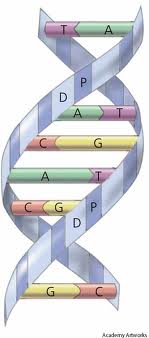
Name B.
a)
phosophate
b)
glucose
c)
deoxyribose
d)
nitrogen base
58.
Which of the following is true about the kingdom Bacteria?
a)
Bacteria are not motile.
b)
Bacteria have a cell wall.
c)
Bacteria reproduce sexually.
d)
Some bacteria have a nucleus.
59.
The flower of a plant is involved in reproduction.  Which parts are male and which are female?
a)
Male: style; female: filament
b)
Male: xylem; female: anther
c)
Male: stamen; female: pistil
d)
Male: ovary; female: stamen
60.
Which of the following is an example of a homozygous dominant genotype?
a)
BB
b)
Bb
c)
bB
d)
bb
61.
In natural selection, one variation which is present in ALL members of a population is a called a - 
a)
genotype
b)
speciation
c)
adaptation
d)
diversity
62.
Which symbiotic relationship is described by one individual benefiting and the other being neither harmed nor benefited?
a)
Mutualism
b)
Commensalism
c)
Parasitism
d)
Competition
63.
Fill in the blanks: Proteins are made of different ____________ which are arranged in different orders, or _________________.
a)
ribosomes, tRNAs
b)
polymers, monomers
c)
mRNA, bases
d)
amino acids, sequences
64.
A change in DNA is called a __________________.
a)
Nucleotide
b)
Mutation
c)
Radiation
d)
Transcription
65.
What is the purpose of seed adaptations?
a)
To get seeds to new lands.
b)
To make seeds buried deeper underground.
c)
To provide nutrients to seeds.
d)
To prevent water loss through stomata.
66.
What part of DNA holds the genetic information?
a)
the nitrogenous base
b)
the ribose sugar
c)
the phosphodiester bond
d)
the phosphate
67.
If a homozygous dominant (AA) individual is crossed to a homozygous recessive (aa) individual, what will the genotypes be of the offspring?
a)
50% AA, 50% aa
b)
25% AA, 50% Aa, 25% aa
c)
100% Aa
d)
50% AA, 50% Aa
68.
The human body has 23 homologous pairs of chromosomes.  How many chromosomes does a somatic cell have?
a)
12
b)
23
c)
46
d)
92
69.
What is meant by the term "genetic variation?"
a)
Some individuals have the same genes as others
b)
Some genes are multiplied in tetraploid organisms
c)
Some chromosomes are longer than others
d)
Some individuals have different genes than others
70.
How do molecules move during facilitated diffusion?
a)
With the concentration gradient, using energy
b)
Against the concentration gradient, without using energy
c)
With the concentration gradient, without using energy
d)
Against the concentration gradient, using energy
71.

The nucleus is the

a)

Power house of the cell

b)

Waste collector in the cell

c)

Control center of the cell

d)

protein factory in the cell

72.

It provides the cell with energy

a)

Vesicle

b)

Nucleus

c)

mitochondria

d)

Vacuole

73.
Which process is used to make mRNA from the DNA in the nucleus?
a)
transcription
b)
translation
c)
replication 
74.
Which RNA bases would pair with TACGAA in transcription
a)
AUGCUU
b)
ATGCTT
c)
GCATCC
d)
GCAUCC
75.
Where does transcription take place?
a)
nucleus
b)
cytoplasm
c)
ribosome
76.
What is occurring in this picture?
a)
Translation
b)
Replication
c)
Translocation
d)
Transcription
77.
What is the advantage of having different shaped beaks?
a)
To look different from other species.
b)
To be able to eat the food readily available in the environment.
c)
To protect itself against predators.
d)
To protect itself against prey.
78.
Cattle egrets forage (feed) in fields among cattle. The egret gets easy access to flying insects stirred up by the cattle, and the cattle don't care if they are there or not.
a)
mutualism
b)
commensalism
c)
competition
d)
parasitism
79.
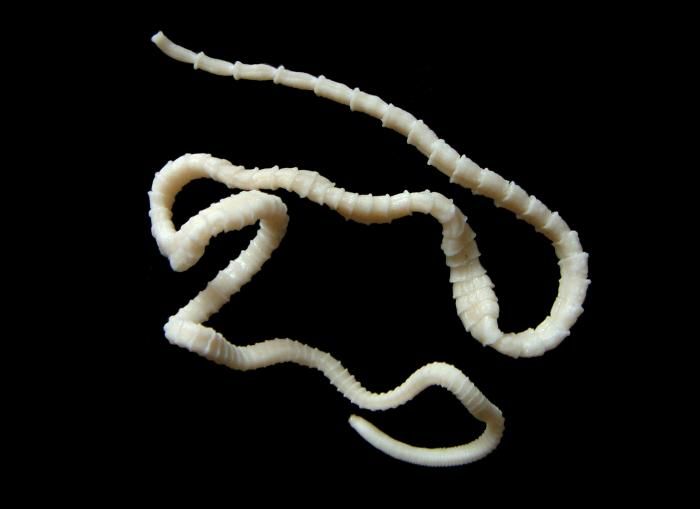
A tapeworm and a cat have this type of relationship.
a)
mutualism
b)
parasitism
c)
commensalism
d)
competition
80.
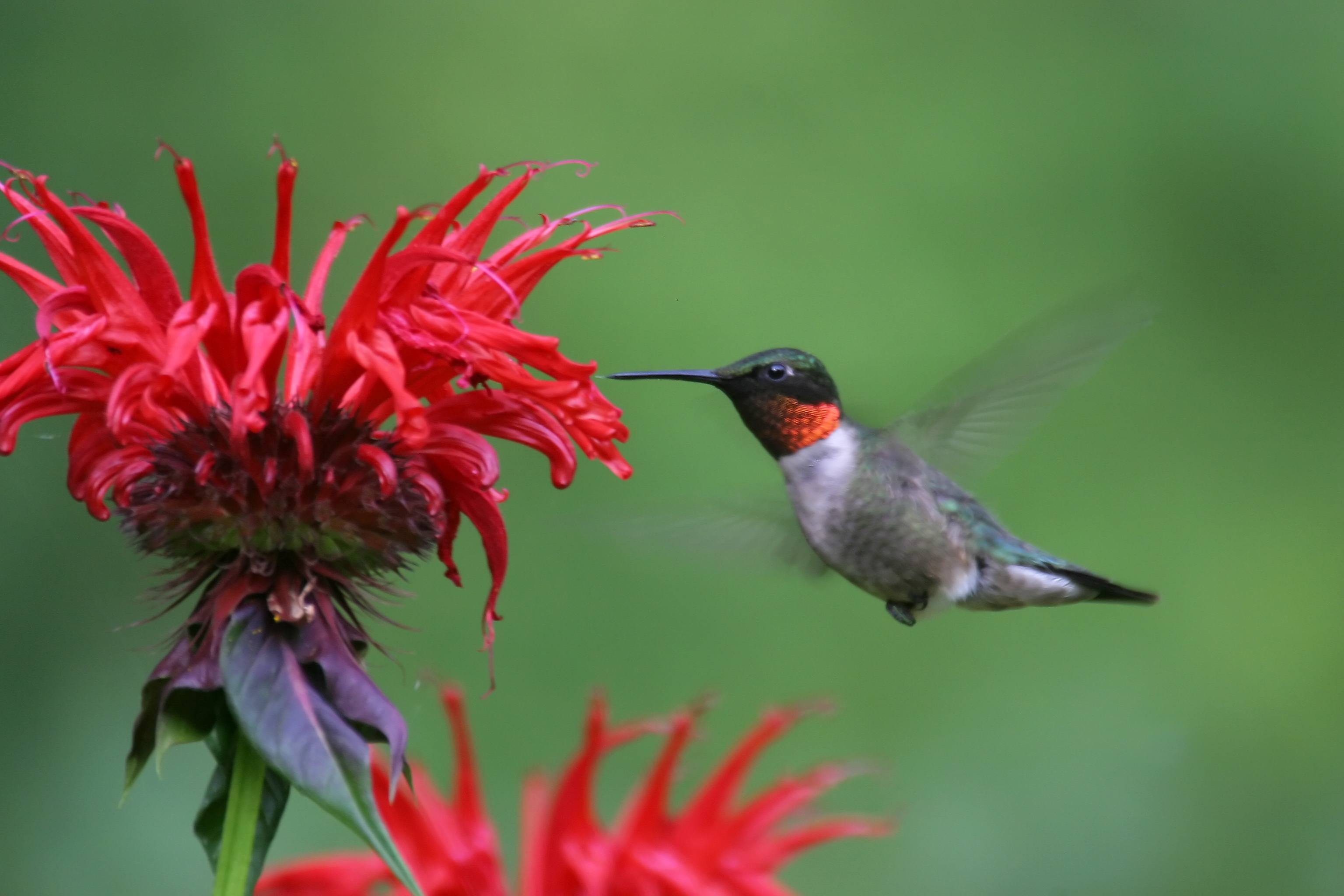
What type of symbiosis?  Hummingbirds feed on nectar from flowers.  The flowers are pollinated by hummingbirds as they move from flower to flower.
a)
commensalism
b)
mutualism
c)
parasitism
d)
predation
81.
Which type of cell has no nucleus?
a)
Eukaryote
b)
Prokaryote
c)
Animal
d)
Plant
82.
Which type of cell?
a)
Prokaryote
b)
Eukaryote
83.
Which type of cell?
a)
Prokaryote
b)
Eukaryote
c)
Mixed
84.
The amount of energy that usually transfers from one trophic level to the next...
a)
10%
b)
20%
c)
80%
d)
50%
85.

Which of the following converts food into energy for the cell?

a)

vacuole

b)

mitochondria

c)

cytoplasm

d)

cell membrane

86.
Active transport does not require energy.
a)
True 
b)
False 
87.
Which 2 molecules forms the sides (backbone) of the DNA ladder?
a)
deoxyribose and adenine
b)
deoxyribose and a hydrogen bond
c)
sugar and the nucleus
d)
deoxyribose (sugar) and phosphate
88.
Which best describes the function of enzymes?
a)
to speed up chemical reactions in a cell
b)
to produce cellular energy
c)
to produce proteins
d)
to speed up cell division
89.
What are the products of photosynthesis? 
a)
glucose and oxygen
b)
glucose and carbon dioxide
c)
glucose and water
d)
water, carbon dioxide, and energy
90.
An animal cell placed in a sugar solution is shown in the diagram. Which statement best describes how osmosis will affect this animal cell?  
a)
Water will move out of the cell and the cell will shrink
b)
Water will move into the cell and the cell will expand 
c)
Sugar will move out of the cell and the cell will expand 
d)
Sugar will move into the cell and the cell will expand
91.
A cell requires energy to move materials from an area of low concentration, across the cell membrane, to an area of high concentration.  This process is called ___. 
a)
Osmosis
b)
Active transport 
c)
Passive transport 
d)
Facilitative diffusion
92.
In active transport, carrier proteins ___.  
a)
Move substances across the cell membrane without the use of ATP.
b)
Move from low concentration to high concentration by diffusion
c)
Move small molecules through the cell membrane by osmosis 
d)
Move substances from a low concentration to high concentration through the use of energy.
93.
What is the diploid number of chromosomes in the above diagrams?   
a)
2
b)
4
c)
6
d)
8
94.
The diagrams show the stages of mitosis in random order.  What sequence correctly shows the stages of mitosis?             
a)
3-1-2-4
b)
1-3-4-2
c)
4-2-3-1
d)
2-1-4-3
95.
A daughter cell that resulted from a mitotic division has 24 chromosomes.  How many chromosomes did the parent cell have?   
a)
6
b)
12
c)
24
d)
48
96.
A bone cell of a goat contains 60 chromosomes.  How many chromosomes will be in each daughter cell after mitosis? 
a)
15
b)
30
c)
60
d)
120
97.
What must occur during the cell cycle to ensure proper division of the chromosomes?  
a)
The cell must grow in size
b)
The mitochondria must divide 
c)
The DNA of the cell must replicate
d)
The cell membrane must dissolve
98.
The main purpose of DNA replication is to ___.  
a)
Capture sunlight
b)
Store energy in the bonds of a glucose molecule
c)
Synthesize proteins 
d)
Copy genetic information 
99.
The diagram to the right shows the phase of mitosis when the centrioles are at opposite poles of the cell and the chromosomes are lined up midway between the centrioles. Which phase would be the next phase of mitosis?   
  
a)
anaphase
b)
prophase
c)
interphase
d)
telophase
100.
.  Which statement best describes the primary function of DNA replication?   
a)
To ensure daughter cells have a complete copy of the DNA
b)
To prevent mutations from occurring in cells 
c)
To provide genetic variation within specific organisms
d)
to allow prokaryotic cells to undergo meiosis
101.
Name the process in the picture.
a)
transcription
b)
mitosis
c)
translation
d)
replication
102.
Which letter is the active cycle of the virus?
a)
A
b)
B
103.
Which number contains the nucleic acid?
a)
1
b)
2
c)
3
104.
What process is occurring in the picture?
a)
DNA replication
b)
mitosis
c)
protein synthesis
d)
meiosis
105.
Name B.
a)
phosophate
b)
glucose
c)
deoxyribose
d)
nitrogen base
106.
Which cell part is present in eukaryotic cells, but not in prokaryotic cells?
a)
cell membrane
b)
cell wall
c)
cytoplasm
d)
nucleus
107.

The ability to maintain a stable internal environment is called ________________.

a)

Metabolism

b)

Mitosis

c)

Heterozygous

d)

Homeostasis

108.
What is the capsid of a virus?
a)
the disease it causes
b)
the receptors to which it binds
c)
the genetic material
d)
its protein coat
109.
What is one way that a lysogenic infection differs from a lytic infection?
a)
A lysogenic virus does not act on bacteria as a lytic virus does.
b)
A lysogenic virus can remain in the host DNA for a longer period without becoming active.
c)
A lysogenic virus contains RNA instead of DNA.
d)
A lysogenic virus directs the production of new viruses right away.
110.
Which of the following is a possible result of a disruption in the cell cycle?
a)
cancer
b)
photosynthesis
c)
cellular respiration
d)
protein synthesis
111.

Cell have several mechanisms for regulating their internal environments. Which of these mechanisms involved in maintaining homeostasis requires energy?

a)

osmosis

b)

diffusion

c)

active transport

d)

passive transport

112.
This cell is undergoing mitosis.  What stage of mitosis is shown?
a)
prophase
b)
metaphase
c)
anaphase
d)
telophase
113.
This diagram shows the cell cycle.

Which of the following activities occur in the S phase?
a)
Replication of the DNA
b)
Growth of the cell
c)
Formation of the mitotic spindle
d)
Breakdown of the nuclear membrane
114.
a)

Prophase

b)

Anaphase

c)

Telophase

d)

Interphase

115.
The diffusion of water through a semi-permeable membrane is called?
a)
Osmosis
b)
Cell wall
c)
Diffusion
d)
Respiration
116.

What are the three main parts of a nucleotide?

a)

carbon, hydrogen, and oxygen

b)

phosphate, sugar, and nitrogen base

c)

phosphate, sulfate, and nitrate

d)

adenine, thymine, and uracil

117.

In DNA, adenine pairs with _______, while guanine pairs with _______.

a)

uracil / cytosine

b)

thymine / uracil

c)

thymine / cytosine

d)

adenine / guanine

118.

What is the name of the sugar in DNA?

a)

deoxyribose

b)

ribose

c)

glucose

d)

galactose

119.

What is the name of the sugar in RNA?

a)

deoxyribose

b)

ribose

c)

glucose

d)

maltose

120.

Which nitrogen base does RNA have instead of thymine?

a)

adenine

b)

cytosine

c)

guanine

d)

uracil

121.

The process in which a section of DNA is used to produce a copy of mRNA is called:

a)

transcription

b)

translation

c)

mutation

d)

inheritance

122.

Use the chart to find to amino acid that corresponds to the codon GGA:

a)

Alanine

b)

Glutamic Acid

c)

Lysine

d)

Glycine

123.

What type of mutation is shown in the diagram?

a)

substitution

b)

insertion

c)

deletion

d)

no change

124.

What is the process shown in the diagram?

a)

transcription

b)

translation

c)

mutation

d)

transformation

125.
A photograph of a virus is shown.  The projections on the surface of the virus allow the virus to -
a)
move inside a host cell
b)
attach to a host cell
c)
control the host cell's DNA
d)
signal other viruses to infect the host cell
126.
Having a standard taxonomic system benefits the scientific community by allowing scientists from all over the world to do which of the following?
a)
Have a common system for the classification of locations containing fossils
b)
Use a similar system to classify the impact of removing species from ecosystems
c)
 Have a common understanding in the classification of organisms
d)
Understand how other scientists classify predator–prey relationships
127.
Which of these statements best explains the process of energy conversion that takes place in the mitochondria?
a)
Energy is required for carbon dioxide molecules to form six-carbon sugar molecules.
b)
Water molecules and radiant energy are necessary for anaerobic respiration to take place.
c)
Oxygen molecules release energy in the form of heat during combustion reactions.
d)
The energy in the bonds of glucose molecules is transferred to the phosphate bonds in ATP.
128.
Leaves are part of a plant’s shoot system. The xylem tissue in leaves transports —
a)
the bacteria needed for nitrogen fixation in root nodules
b)
the wax required to coat the surface of actively growing tissue
c)
 the water and minerals that are absorbed by the roots
d)
the oxygen that regulates the rate of carbohydrate production
129.
Some organisms have genes that improve their ability to survive and reproduce. If the genes also help their offspring survive and reproduce, then which of the following will most likely increase?
a)
The frequency of the genes in one individual
b)
The frequency of the genes in the population
c)
The number of genes in one chromosome
d)
The number of genes in the species
130.
The overgrowth of algae poses a major problem for coral reefs. Intensive fishing is one factor that contributes to algae overgrowth because it does which of the following?
a)
Allows more sunlight to be available to algae
b)
 Inhibits the spread of pathogens in algae colonies
c)
 Reduces the number of organisms that feed on algae
d)
Increases the competition between different algae species
131.
Enzymes are proteins that help increase the rate of chemical reactions inside cells. These proteins are composed of many simpler molecules called amino acids. Which of the following suggests that the shape of an enzyme determines the enzyme’s function?
a)
Enzymes are specific to a substrate
b)
 Enzymes can operate in a wide range of conditions.
c)
Enzymes are activated by neighboring molecules.
d)
Enzymes can be found in all life-forms.
132.
Which of the following correctly describes how a diagram of cellular respiration would differ from a diagram of photosynthesis?
a)
The cellular-respiration diagram would show electromagnetic waves as the final product.
b)
The cellular-respiration diagram would show glucose as the main source of energy.
c)
The cellular-respiration diagram would show energy stored in large protein molecules.
d)
The cellular-respiration diagram would show water as the main source of chemical energy.
133.
Which of the following are missing from the food web shown above?
a)
producers
b)
decomposers
c)
omnivores
d)
carnivores
134.
The concept of gene flow is demonstrated when a cow is driven off from its herd, joins another herd, and reproduces. When the cow contributes to the gene pool of the new herd, which of these most likely increases?
a)
natural selection
b)
genetic variation
c)
environmental fitness
d)
reproductive mutations
135.
 Proteins and polysaccharides are polymers. These polymers are formed by dehydration synthesis. Which statement correctly identifies a difference in the structure of proteins and polysaccharides?
a)
 Only polysaccharides are comprised of repeating units of cytosine, adenine, guanine, and thymine.
b)
Only proteins are formed from amino acids joined by peptide bonds.
c)
Only polysaccharides can be folded and twisted to very specific shapes. 
d)
Only proteins can be large molecules with thousands of subunits.