
 Worksheets
Biology Semester 2 Review
Total questions: 145
Worksheet time: 5hrs 26mins
Name
Class
Date
1.

The main source of energy for all life comes from ____.
a)
the Earth
b)
the moon
c)
the sun
d)
the food we eat/make
2.

Most plants appear green because chlorophyll
a)
absorbs green light.
b)
absorbs violet light.
c)
reflects green light.
d)
does not absorb violet light.
3.

The reactants of photosynthesis are
a)
sugar and water.
b)
sugar and oxygen.
c)
carbon dioxide and water.
d)
carbon dioxide and oxygen.
4.

What are the products of photosynthesis?
a)
Carbon dioxide and water
b)
Carbon dioxide and oxygen
c)
Glucose and oxygen
d)
Glucose and water
5.

What pigment absorbs sunlight for photosynthesis?
a)
chloroplast
b)
thylakoid
c)
grana
d)
chlorophyll
6.

Which of the following is the correct equation for PHOTOSYNTHESIS?
a)
6CO2 + 6H2O --> 6O2 + C6H12O6
b)
6CO2 + C6H12O6 + 6H2O --> O2
c)
6O2 + 6H2O --> 6CO2 + C6H12O6
d)
C6H12O6 + 6O2 ---> 6H2O + 6CO2
7.

What is the primary function of the light-dependent reactions of photosynthesis?
a)
To produce glucose
b)
To produce NADPH and ATP
c)
To use ATP
d)
To produce RuBP
8.

Which substance from the light-dependent reactions of photosynthesis is a source of energy for the light-independent reactions?
a)
ADP
b)
H2O
c)
NADPH
d)
pyruvic acid
9.

Which of the following best describes photosynthesis?
a)
Photosynthesis converts radiant energy into chemical energy.
b)
Photosynthesis produces carbohydrates.
c)
Plants need sunlight, carbon dioxide, water, nutrients, and chlorophyll to complete photosynthesis.
d)
Plants use chlorophyll, water, and carbon dioxide to make sugar.
10.

In which organelle does photosynthesis occur?
a)
mitochondria
b)
stomata
c)
xylem
d)
chloroplast
11.

Whch pigments absorbs green and blue light but reflects orange and red light?
a)
Carotenoids
b)
Chlorophylls
12.

Animal cells do not have chloroplasts.
a)
TRUE
b)
FALSE
13.
What is the purpose of photosynthesis?
a)
make glucose
b)
make ATP
c)
make light
d)
release carbon dioxide
14.
How can photosynthesis be related to cellular respiration?
a)
What's produced (made) by one is needed (the reactants) for the other
b)
They both produce the same products
c)
They both have the same reactants (need the same things)
d)
These 2 processes have nothing in common
15.
What is another term to describe a consumer?
a)
Autotroph
b)
Heterotroph
16.
What is another term to describe a producer?
a)
Autotroph
b)
Heterotroph
17.
Which type of organisms perform photosynthesis?
a)
Autotrophs
b)
Heterotrophs
18.
Which type of organisms are typically plants?
a)
Autotrophs
b)
Heterotrophs
19.
What is another name to describe a heterotroph?
a)
Consumer
b)
Producer
20.
What is another name to describe an autotroph?
a)
Consumer
b)
Producer
21.
What is another name to describe an autotroph?
a)
Consumer
b)
Producer
22.

a)
Grana
b)
Thylakoid
c)
Stroma
d)
Jelly Filling
23.

a)
Flapjack Stack
b)
Grana
c)
Thylakoid
d)
Stroma
24.

a)
Stroma
b)
Thylakoid
c)
Skittle
d)
Grana
25.
What does carbon combine with to form glucose?
a)
NADPH
b)
ATP
c)
RuBP
d)
G3P
26.
What happens to NADPH and ATP after they are used in the Calvin Cycle?
a)
they recycle back to the light reactions
b)
they are used to make G3P
27.
The two main stages of photosynthesis are the
a)
light reactions and respiration
b)
dark reactions and the Calvin cycle
c)
light reactions and the Calvin cycle
d)
dark reactions and fermentation
28.
TRUE or FALSE. The Calvin Cycle can happen during the day.
a)
True
b)
false
29.
True or False. The Calvin Cycle can happen at night.
a)
true
b)
false
30.
What is the name of the simple sugar that is produced in photosynthesis?
a)
Sucrose
b)
Dextrose
c)
Glucose
d)
Lactose
31.

What is the product of the Calvin Cycle?
a)
Rubisco
b)
Glyceraldehyde 3-Phosphate (G3P)
c)
Oxygen
d)
Starch
32.
Cacti and pineapples are examples of plants that carry out the _____ pathway in photosynthesis.
a)
CAM
b)
C4
c)
C3
33.
Corn and sugarcane are examples of plants that carry out the _____ pathway in photosynthesis.
a)
CAM
b)
C4
c)
C3
34.
Most plants carry out the _____ pathway in photosynthesis.
a)
CAM
b)
C4
c)
C3
35.
Where does glycolysis take place?
a)
Cytoplasm
b)
Stroma
c)
Thylakoid
d)
Mitochondria
36.
Where does aerobic respiration take place?
a)
Cytoplasm
b)
Mitochondria
c)
Stroma
d)
Thylakoid
37.
Which type of respiration occurs in the presence of oxygen?
a)
Aerobic
b)
Anaerobic
38.
Which type of respiration occurs without the presence of oxygen?
a)
Aerobic
b)
Anaerobic
39.
What are the two reactants of cellular respiration?
a)
C6H12O6 & 6CO2
b)
6 CO2 & 6H2O
c)
C6H12O6 & 6O2
d)
6CO2 & 6O2
40.
Glucose is broken down during which process?
a)
Calvin cycle
b)
Glycolysis
c)
Krebs Cycle
d)
Photosynthesis
41.
What are the two produces of aerobic respiration?
a)
Glucose & oxygen
b)
Carbon dioxide & water
c)
Lactic acid
d)
Carbon monoxide
42.
The overall goal of cellular respiration is to make:
a)
Glucose
b)
ATP
c)
Oxygen
d)
Water
43.
How does the amount of energy resulting from fermentation compare with that of aerobic respiration?
a)
Aerobic respiration results in less energy.
b)
Each process results in equal amounts of energy.
c)
Aerobic respiration results in more energy.
d)
Each process results in variable amounts of energy.
44.

The haploid number of human chromosomes is
a)
11
b)
12
c)
23
d)
46
45.
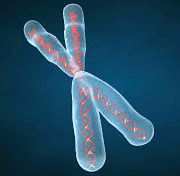
The diploid number of human chromosomes is
a)
23
b)
46
c)
92
46.
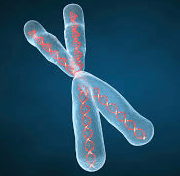
Each identical side of a chromosome is the
a)
centromere
b)
chromatin
c)
centriole
d)
chromatid
47.

When DNA is in its less coiled, "relaxed," state, between cell divisions, it is called
a)
autosomes
b)
chromatid
c)
chromatin
d)
centromere
48.
Autosomes are
a)
chromosomes found in autotrophs, only
b)
chromosomes that automatically correct all errors in the DNA
c)
chromosomes that determine traits other than sex
d)
chromosomes that determine the sex of the individual
49.

The structure that holds two chromosomes together until they separate for cell division is the
a)
chromatid
b)
chromatin
c)
centromere
d)
cytoplasm
50.
A pair of chromosomes that consists of XX is a __________________.
a)
Male
b)
Female
51.

The structures labeled B are
a)
centrioles
b)
chromatids
c)
centromeres
d)
chromopheres
52.

The structure labeled A is a(n)
a)
chromatid
b)
centriole
c)
centromere
d)
chromophere
53.
chromosomes that have the same sequence of genes and the same structure
a)
homologous chromosomes
b)
alleles
c)
phenotypes
d)
genotypes
54.
A cat has a total of 38 chromosomes in its body cells. How many in its gametes?
a)
38
b)
19
c)
76
d)
10
55.
What determines gender in humans?
a)
the X and Y chromosome
b)
chromosome 21
c)
codominance
d)
epistasis
56.
What are the 5 steps of the cell cycle?
a)
1. Cytokinesis
2. Mitosis
3. G1
4. G2
5. S
2. Mitosis
3. G1
4. G2
5. S
b)
1. G1
2. G2
3. S
4. Mitosis
5. Cytokinesis
2. G2
3. S
4. Mitosis
5. Cytokinesis
c)
1. S
2. G1
3. Mitosis
4. G2
5. Cytokinesis
2. G1
3. Mitosis
4. G2
5. Cytokinesis
d)
1. G1
2. S
3. G2
4. Mitosis
5. Cytokinesis
2. S
3. G2
4. Mitosis
5. Cytokinesis
57.
G1, S, and G2 are all steps in
a)
interphase
b)
prophase
c)
metaphase
d)
cytokinesis
58.
Step one in Mitosis is
a)
metaphase
b)
interphase
c)
prophase
d)
telophase
59.
Step two in mitosis is
a)
metaphase
b)
anaphase
c)
telophase
d)
prophase
60.

Identify this phase of Mitosis.
a)
prophase
b)
metaphase
c)
anaphase
d)
telophase
61.

Male or Female?
a)
Male
b)
Female
62.

Identify this phase of mitosis.
a)
prophase
b)
metaphase
c)
anaphase
d)
telophase
63.
What occurs during telophase?
a)
the cell splits in half
b)
two nuclei are formed at opposite poles of the cell
c)
the chromatids begin to pull apart
d)
nuclear envelope disappears
64.
What is cytokinesis?
a)
final division of the cytoplasm
b)
splitting of the cell into two new cells
c)
the final stage in the cell cycle
d)
all of the above
65.
Mitosis and meiosis are the same process.
a)
True
b)
False
66.
The cells produced via meiosis are called:
a)
sex cells
b)
somatic cells
c)
body cells
d)
skin cells
67.
This produces 2 identical cells.
a)
mitosis
b)
meiosis
68.
What is it called when a sperm and egg meet?
a)
meiosis
b)
fertilization
c)
cell division
d)
mitosis
69.

What phase is shown in the picture?
a)
anaphase 1
b)
anaphase 2
c)
metaphase 1
d)
telophase 1
70.
What causes genetic variation in meiosis?
a)
chromosomes lining up
b)
crossing over of chromosomes
c)
separation of chromosomes
d)
chromosomes pulling apart
71.

When an area of a chromatid is exchanged with the matching area on a chromatid of its homologous chromosome, _________________ occurs
a)
crossing over
b)
mutagenesis
c)
hybridization
d)
fertilization
72.
What kind of cells are made in MEIOSIS?
a)
Haploid Gametes
b)
Diploid Somatic Cells
c)
Skin Cells
d)
Liver Cells
73.
If the Diploid number of Carrots is 18, the haploid number is
a)
18
b)
9
c)
27
d)
36
74.
Goes through P.M.A.T two rounds
a)
Mitosis
b)
Meiosis
c)
Osmosis
d)
Transcription
75.
The process of crossing over occurs in what phase of meiosis?
a)
anaphase 1
b)
prophase 1
c)
prophase 2
d)
telophase 1
76.
The chromosomes that pair up during meiosis, are called __________ chromosomes.
a)
homozygous
b)
asexual
c)
homologous
d)
genes
77.
When homologous chromosomes match up, they form a structure call a ___________.
a)
tetrad
b)
triad
c)
diploid
d)
gamete
78.
Why do we need meiosis?
a)
To double the number of chromosomes going into sex cells
b)
To halve the number of chromosomes going into sex cells
c)
To triple the number of chromosomes going into sex cells
d)
To not change the number of chromosomes going into sex cells
79.
The result of meiosis is:
a)
two diploid cells
b)
two haploid cells
c)
four diploid cells
d)
four haploid cells
80.
How many daughter cells are produced at the end of meiosis?
a)
1
b)
2
c)
3
d)
4
81.

What phase is represented?
a)
metaphase 1
b)
metaphase 2
c)
anaphase 1
d)
anaphase 2
82.

What phase is represented?
a)
metaphase 1
b)
metaphase 2
c)
anaphase 1
d)
anaphase 2
83.
How do the daughter cells that are produced from Meiosis compare?
a)
Genetically identical
b)
Genetically different
c)
Genetically different but appear identical
d)
Genetically identical but appear different.
84.
How do daughter cells that are produced from Mitosis compare?
a)
Genetically different from each other
b)
Yankees > Mets
c)
Genetically identical to each other
d)
Genetically different from each other but appear identical
85.
more genetic diversity among offspring.
a)
sexual
b)
asexual
86.
offspring are identical to the parent.
a)
sexual
b)
asexual
87.
occurs in more simple organisms.
a)
sexual
b)
asexual
88.
occurs in more complex organisms.
a)
sexual
b)
asexual
89.
What percentage of chromosomes are handed down by a parent cell in asexual reproduction?
a)
75%
b)
25%
c)
50%
d)
100%
90.
A homozygous dominant dog with brown fur is crossed with a heterozygous dog with brown fur. What are the percentages of the possible genotypes?
a)
100% BB
b)
75% BB and 25%Bb
c)
50 % BB and 50% Bb
d)
50% Bb and 50% bb
91.

Genotype refers to the ...
a)
physical expression of the genes
b)
the possible combination of alleles in a gene
c)
whether an allele is dominant or recessive
d)
how an organism will appear
92.

Squidward has light blue skin, and his genotype for this trait is Bb. Would Squidward be considered a purebred or hybrid for light blue skin?
a)
Purebred
b)
Hybrid
93.

An offspring will receive how many alleles from each parent to determine a specific trait?
a)
one
b)
two
c)
three
d)
five
94.
Which of the following is a phenotype?
a)
BB
b)
Bb
c)
bb
d)
Blue eyes
95.
What is a phenotype
a)
The genetic make up (code)
b)
The physical trait
96.
the passing of genetic traits from parent to offspring.
a)
heredity
b)
trait
c)
gene
d)
allele
97.
having two of the same genes for the trait (sometimes called purebred).
a)
homozygous
b)
hetrozygous
c)
protein
d)
chromosome
98.
having two different genes for a trait (sometimes called hybrid).
a)
protein
b)
homozygous
c)
heterozygous
d)
genotype
99.
Two brown eyed parents (Bb) have a baby. What is the chance the baby is blue eyed?
a)
0 %
b)
25%
c)
50%
d)
75%
100.
G = green, g = yellow
The genotype for a yellow plant is...
The genotype for a yellow plant is...
a)
GG
b)
Gg
c)
gg
d)
all of the choices result in yellow
101.
An allele whose trait only shows up when no dominant allele is present.
a)
hidden allele
b)
dominant allele
c)
recessive allele
d)
present allele
102.
Two heterozygous (Tt) tall pea plants are crossed. Which describes their offspring?
a)
50% tall and 50% short
b)
75%tall and 25% short
c)
100%short
103.
when one allele is not completely dominant over the other - blending of two traits
a)
Codominance
b)
Complete dominance
c)
incomplete dominance
d)
none of these
104.
condition in which both alleles for a gene are expressed when present - both traits are visible
a)
Codominance
b)
Dominance
c)
Complete dominance
d)
Incomplete dominance
105.

this image is an example of
a)
codominance
b)
dominance
c)
incomplete dominance
106.

this image is an example of
a)
codominance
b)
dominance
c)
incomplete dominance
107.

inherited or acquired trait?
a)
inherited
b)
acquired
108.
Which sequence of DNA bases would pair with this partial strand
ATG TGA CAG
ATG TGA CAG
a)
ATG TGA CAG
b)
TAC ACT GTC
c)
GTA AGT GAC
d)
CAT TCA CTG
109.
Which of the following units are repeatedly joined together to form a strand of DNA?
a)
amino acids
b)
nucleotides
c)
fatty acids
d)
polysaccharides
110.
Adenine bonds with ______________.
a)
Guanine
b)
Thymine
c)
Cytosine
d)
Adenine
111.
Guanine bonds with ______________.
a)
Adenine
b)
Guanine
c)
Cytosine
d)
Thymine
112.
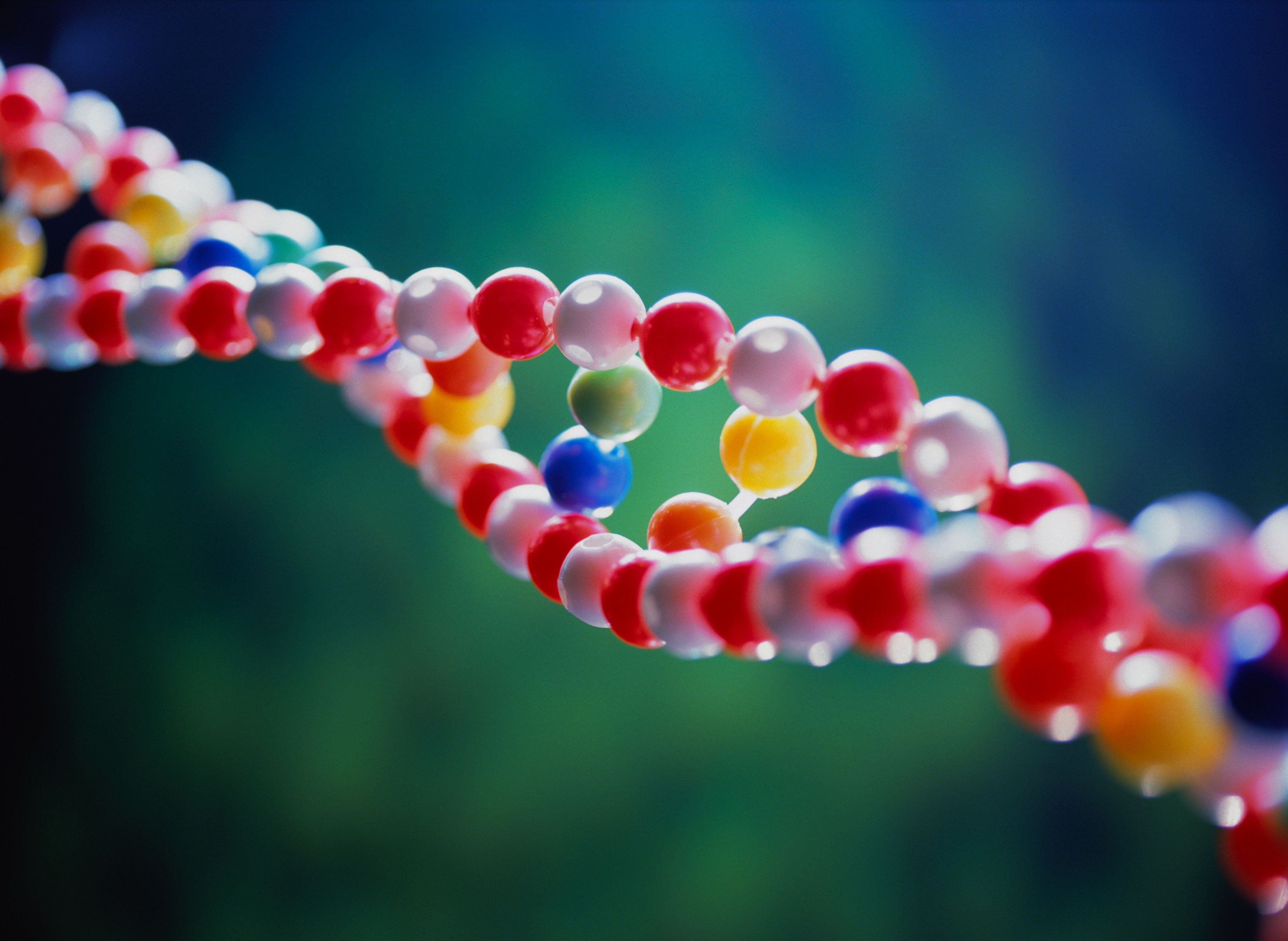
Why is DNA important?
a)
it is very small and very complicated
b)
it's in everything
c)
it serves as the blueprint for traits of all living things
d)
because we eat it every day for energy
113.
The enzyme that unzips the DNA to prepare for replication
a)
helicase
b)
replicase
c)
polymerase
d)
synthase
114.
What are the three components of a nucleotide?
a)
sugar, hydrogen, nitrogen base
b)
sugar, oxygen, nitrogen base
c)
sugar, phosphate, nitrogen base
d)
sugar, phosphate, protein
115.
Which of these are NOT the difference between DNA vs. RNA?
a)
DNA is a double helix - RNA is a single strand
b)
DNA has A,T,C,G - RNA has A,U,C,G
c)
DNA has deoxyribose RNA has a ribose
d)
DNA has a phosphate sugar and a base.
RNA has a phosphate sugar and a base
RNA has a phosphate sugar and a base
116.
mRNA stands for:
a)
Mr. RNA
b)
Meaningful RNA
c)
Much RNA
d)
Messenger RNA
117.
rRNA stands for:
a)
Reasonable RNA
b)
Ribosomal RNA
c)
Really RNA
d)
Right RNA
118.
tRNA stands for:
a)
Transfer RNA
b)
Transcription RNA
c)
Translation RNA
d)
Tippy Top RNA
119.
Transcription occurs in the....
a)
Ribosomes
b)
Nucleus
c)
Mitochondria
d)
Golgi bodies
120.
Translation occurs in the.......
a)
Ribosomes
b)
Nucleus
c)
Mitchondria
d)
Golgi bodies
121.
mRNA is made during:
a)
Transcription
b)
Translation
c)
Movie Time
d)
IDK?
122.
The process of when DNA copies itself is called:
a)
Transcription
b)
Translation
c)
Replication
d)
Nope
123.
Where is DNA found in a cell?
a)
Nucleus
b)
Cytoplasm
c)
Nucleus and cytoplasm
d)
Everywhere
124.
Where is RNA found in a cell?
a)
Nucleus
b)
cytoplasm
c)
Nucleus and cytoplasm
d)
Everywhere
125.
Which RNA bases would pair with TACGAA in transcription?
a)
AUGCUU
b)
ATGCTT
c)
GCATCC
d)
GCAUCC
126.
Which of these bases does not exist in RNA?
a)
C
b)
T
c)
U
d)
A
127.
In comparison to a DNA strand, a
a)
mRNA strand is shorter and single stranded
b)
mRNA strand is longer and single stranded
c)
mRNA strand is shorter and double stranded
d)
mRNA strand is longer and double stranded
128.

Nucleotides are made up of a sugar, phosphate, and..?
a)
nitrogenous base
b)
nucleic acid
c)
cholesterol
d)
fatty acid
129.
Who is the father of evolution?
a)
Darwin
b)
Mendel
c)
Newton
d)
Einstein
130.
What is another name for natural selection?
a)
survival of the smartest
b)
survival of the fastest
c)
survival of the biggest
d)
survival of the fittest
131.
What is a change in an organism that allows for it to survive in its environment?
a)
homologous
b)
vestigial
c)
variation
d)
adaptation
132.
When all of the organisms of a species have died it is called
a)
evolution
b)
extinction
c)
adaptation
d)
natural selection
133.
What is the study of organisms at the early stages of development?
a)
DNA studies
b)
embryology
c)
extinction
d)
fossil record
134.

What is this an example of?
a)
diversity of species
b)
variation
c)
vestigial structures
d)
DNA studies
135.
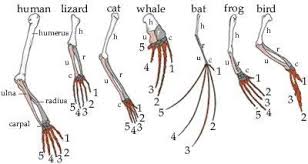
What is this an example of?
a)
vestigial structures
b)
embryology
c)
homologous structures
d)
fossil record
136.

Which layer is the oldest?
a)
1
b)
2
c)
3
d)
4
137.
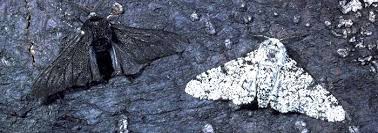
Predict which moth would increase in population
a)
light
b)
dark
138.
When the DNA of an organism is altered it is referred to as…
a)
Mutation
b)
Gene Flow
c)
Genetic Drift
d)
Sexual Selection
139.
When individuals choose traits possessed by the opposite sex it is called…
a)
Mutation
b)
Gene Flow
c)
Genetic Drift
d)
Sexual Selection
140.
The cause of artificial selection is…
a)
The environment
b)
Humans
c)
Mutation
d)
Gene Flow
141.
Which term refers to the process by which individuals that are better suited to the environment survive and reproduce therefore passing down their genes to their offspring?
a)
Evolution
b)
Variation
c)
Adaptation
d)
Natural Selection
142.
A remnant or trace of an organism from the past is called a _______.
a)
Ancestor
b)
Skeleton
c)
Fossil
d)
Imprints
143.
Inherited trait that helps an organism survive is a(n) __________.
a)
Fossil
b)
Adaptation
c)
Ancestor
d)
Natural selection
144.
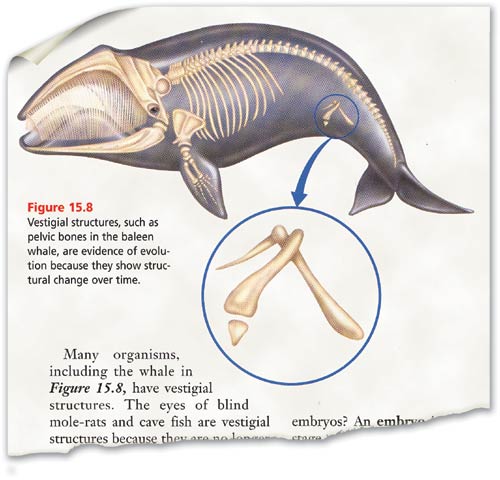
Which of the following is an example of a vestigial structure?
a)
the wings of a red-tailed hawk
b)
the hind limbs of a house cat
c)
the fins of sharks
d)
the tailbone of a human
145.

The gradual change in species over time is...
a)
Evolution
b)
Nucleotide
c)
Adaptation
d)
Natural Selection
100 %

