
 Worksheets
Biology EOC Practice 1st Semester
Total questions: 145
Worksheet time: 5hrs 56mins
Name
Class
Date
1.
When you step out into the cold, your body shivers in order to keep its temperature at 98.6F.
a)
All living things use energy
b)
All living things contain cells
c)
All living things maintain homeostasis
d)
All living things grow
2.
Green plants produce their own food through the process of photosynthesis.
a)
All living things use energy
b)
All living things contain cells
c)
All living things maintain homeostasis
d)
All living things grow
3.
A baby song bird hatches from its egg with both parent songbirds watching.
a)
All living things reproduce
b)
All living things maintain homeostasis
c)
All living things use energy
d)
All living things grow
4.
A camel has eyelashes that work to keep the dust and sand out of its eyes.
a)
All living things adapt to their environment
b)
All living things grow
c)
All living things have cells
d)
All living things use energy
5.
Maintaining a stable internal environment.
a)
Homeostasis
b)
Metabolism
c)
Stimulus
d)
DNA
6.
The basic unit of life is called a (n)
a)
atom
b)
compound
c)
cell
d)
energy
7.
A worm turns away from light is an example of a worm
a)
reproducing
b)
doing cellular respiration
c)
having cells
d)
responding to its environment
8.
Which of the following is NOT a characteristic of all living things?
a)
growth and development
b)
ability to move
c)
response to the environment
d)
ability to reproduce
9.
The pH scale is a range from:
a)
1-7
b)
0-14
c)
1-5
d)
1-20
10.
A(n) ______ is a substance with a pH less than 7
a)
Acid
b)
Alkaline
c)
Base
d)
Buffer
11.
A(n) _______ is a substance with a pH greater than 7.
a)
Base
b)
Acid
c)
Buffer
d)
Water
12.
If the [H3O+1] > [OH-1] the solution is...
a)
acidic
b)
basic
c)
neutral
13.
If the [H3O+1] < [OH-1] the solution is...
a)
acidic
b)
basic
c)
neutral
14.
An acid is a substance that releases
a)
H+ is water
b)
H- in water
15.
If a cell containing 5% salt is placed into a glass of water with 20% salt, the water is _______ compared to the cell.
a)
hypertonic-
b)
hypotonic
c)
isotonic
16.
If the volume of a cell increases when it is placed in a solution, that solution is said to be __________ to the cell
a)
hypertonic
b)
subatomic
c)
isotonic
d)
hypotonic
17.

The cell below is in a _________ solution.
a)
Hypotonic
b)
Hypertonic
c)
Isotonic
18.

The cell below is in a _____________ solution.
a)
Hypertonic
b)
Hypotonic
c)
Isotonic
19.

Which cell is placed into a hypotonic environment?
a)
A
b)
B
c)
C
d)
D
20.
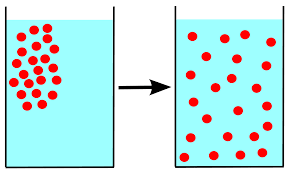
The picture below is an example of _________________.
a)
osmosis
b)
isotonic
c)
diffusion
d)
active transport
21.
Osmosis is the movement of _____ across a membrane.
a)
food
b)
energy
c)
oxygen
d)
water
22.
During osmosis
a)
water moves from high to low concentration
b)
large or oddly shaped molecules move across a cell membrane
c)
water moves when energy is used
d)
proteins are built
23.
Permeable means
a)
things can pass through
b)
the concentration levels are different
c)
it is permanent
d)
things are stuck
24.
When both inside and outside of a cell have the same amount of water it is said that the cell has reached a state of
a)
Osmosis
b)
Diffusion
c)
Equilibrium
25.
Passive transport requires no
a)
concentration gradients
b)
osmosis
c)
motion
d)
energy
26.
Enzymes are considered to be
a)
Lipids
b)
Carbohydrate
c)
Protein
d)
Nucleic Acid
27.
What is the purpose of an enzyme?
a)
give permission for the reaction
b)
raise activation energy
c)
speed up reactions
d)
control how many reactions occur
28.
Where do substrates bind on an enzyme?
a)
voltage-gated channels
b)
surface receptor
c)
calcium channels
d)
active site
29.
Enzymes are capable of increasing the rate of a chemical reaction within a living cell. Enzymes accomplish this through which of the following means?
a)
reducing the number of products
b)
reducing the activation energy
c)
increasing the temperature of the cell
d)
increasing the concentration of reactants
30.

What is structure A?
a)
Substrate
b)
Active site
c)
Enzyme
d)
Products
31.

What is structure D?
a)
Substrate
b)
Active site
c)
Enzyme
d)
Products
32.

What is structure C?
a)
Substrate
b)
Active site
c)
Enzyme
d)
Products
33.

What is structure E, F, G?
a)
Substrate
b)
Active site
c)
Enzyme
d)
Products
34.
What is a substance called if it speeds up a chemical reaction?
a)
reusable
b)
catalyst
c)
specific
d)
fragile
35.

The graph shows how enzymes affect reactions in cells. Which statement best summarizes the information shown in the graph?
a)
Enzymes increase the energy of the reactants.
b)
Enzymes decrease the energy level of the products.
c)
Enzyme decrease the activation energy of the reaction.
d)
Enzymes reverse the direction of the reaction.
36.
Which is NOT true?
a)
Enzymes speed up chemical reactions.
b)
Enzymes react best at a specific temperature.
c)
Enzymes only control ONE type of reaction.
d)
Enzymes are made of fatty acids.
37.
What is another name for enzymes?
a)
chemical catalysts
b)
microorganisms
c)
biological catalysts
d)
inorganic catalysts
38.
Which of the following is not a macromoleclue?
a)
Lipids
b)
Elements
c)
Protein
d)
Nucleic Acids
39.
One of the main function of lipids is to...
a)
provide energy
b)
pass on genetic material
c)
form cell membranes
d)
help create muscle
40.
Lipids are really good at..
a)
storing energy
b)
passing on DNA
c)
giving people energy
d)
giving organisms structure
41.
The monomer structure for lipids is..
a)
nucleotide
b)
sugar
c)
monosaccharide
d)
fatty acid and glycerol
42.
All of the following are polymers for lipids except...
a)
waxes
b)
polysaccharide
c)
triglycerides
d)
steriods
43.
The main function of carbohydrates is to...
a)
pass on DNA.
b)
be used as a main source of energy.
44.
The monomer structure for carbohydrates is called..
a)
nucleic acid
b)
monosaccharide
c)
fatty acid
d)
polysaccharide
45.
An example of a complex carbohydrate is...
a)
alcohol
b)
polysaccharide
c)
monomer
d)
nucleic acid
46.
All organic molecules contain...
a)
hydrogen
b)
carbon
c)
oxygen
d)
nucleic acids
47.
The function of nucleic acids is to...
a)
provide energy
b)
remain insoluble in water
c)
store energy
d)
store and transmit genetic information
48.
In nucleic acids, the monomer structure is a...
a)
nucleotide
b)
monosaccharide
c)
fatty acid
d)
nucleic acid
49.
Proteins main job is to..
a)
control reaction rates and cell processes
b)
provide and store energy
c)
pass on genetic information
50.
The monomer structure for protein is..
a)
monosaccharide
b)
amino acid
c)
DNA
d)
glycerol
51.
Do enzymes raise or lower the activation energy needed for a chemical reactions?
a)
raise
b)
lower
52.
When an enzyme is denatured then it will...
a)
work really well
b)
no longer work
53.
Macromolecules are formed when smaller subunits called ____________ are linked together.
a)
Monomers
b)
Moles
c)
Memes
54.
Saturated Fats are liquid at room temperature
a)
True
b)
False
55.
Unsaturated fats are liquid at room temperature?
a)
True
b)
False
56.
Saturated Fats have the maximum number of ________ atoms.
a)
Carbon
b)
Oxygen
c)
Hydrogen
d)
Nitrogen
57.
Unsaturated fats have at least one __________ double bond in its structure.
a)
Hydrogen
b)
Oxygen
c)
Nitrogen
d)
Carbon
58.
This organelle creates the energy for the cell
a)
mitochondria
b)
cell membrane
c)
ribosome
d)
endoplasmic reticulum
59.
The ____________ regulates what enters and leaves the cell.
a)
mitochondria
b)
cell membrane
c)
golgi bodies
d)
cytoplasm
60.
The _________ holds the dna for the cell
a)
vacuole
b)
smooth ER
c)
rough ER
d)
nucleus
61.
What creates the protein for the cell?
a)
Cytoplasm
b)
Nucleus
c)
Golgi bodies
d)
Ribosomes
62.
Jelly-like material that makes up most of the cell
a)
cytoskeleton
b)
cytoplasm
c)
cyclops
d)
cytoliquid
63.
What gives the cell its structure?
a)
cell membrane
b)
cytoskeleton
c)
cytoplasm
d)
vacuole
64.
_________ ship and package materials
a)
Golgi bodies
b)
Mitochondria
c)
Rough endoplasmic reticulum
d)
Smooth endoplasmic reticulim
65.
The _____________ carries the proteins though the cell.
a)
ribosomes
b)
nucleus
c)
smooth endplasmic reticulum
d)
rough endoplasmic reticulum
66.
This organelle is stores food, water and waste.
a)
Ribosome
b)
Cytoplasm
c)
Vacuole
d)
Mitochondria
67.
A specialized structure inside of the cell are known as _____________.
a)
organ
b)
items
c)
organelle
d)
excess materials
68.
What gives instructions to the cells?
a)
DNA
b)
PNA
c)
MBA
d)
NBA
69.
Energy that is usable by a cell is called ___________.
a)
ATP
b)
ASAP
c)
AVP
d)
JYU
70.

The Mitochondria is which number in the picture?
a)
1
b)
5
c)
9
d)
12
71.

The Cell Membrane is which number in the picture?
a)
7
b)
8
c)
9
d)
10
72.

The Lysosomes are indicated by which number?
a)
5
b)
6
c)
10
d)
11
73.

The Nucleus is which number?
a)
1
b)
5
c)
6
d)
7
74.

The Endoplasmic Reticulum is which number?
a)
5
b)
9
c)
12
d)
1
75.

Ribosomes are which number?
a)
4
b)
3
c)
6
d)
8
76.

The Golgi Apparatus is which number?
a)
12
b)
4
c)
10
d)
6
77.

The Nucleolus is which number?
a)
1
b)
2
c)
3
d)
4
78.

What type of cell is this?
a)
prokaryote
b)
animal
c)
bacteria
d)
plant
79.
What does the lysosome do?
a)
store nutrients
b)
break down cellular waste
c)
deliver proteins
d)
make ATP
80.
Which organelle is found in a plant cell and NOT an animal cell?
a)
vacuole
b)
lysosome
c)
cell wall
d)
cell membrane
81.
This organelle helps plants keep their rigid structure.
a)
Cell wall
b)
Cell membrane
c)
Chloroplast
d)
Nucleus
82.
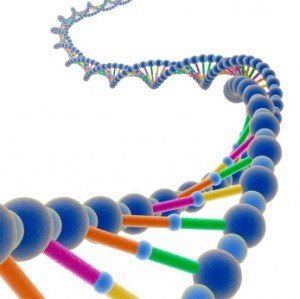
Which of the following best describes a DNA molecule?
a)
double helix
b)
contains ribose
c)
made of amino acids
d)
contains Uracil
83.
Which of the following units are repeatedly joined together to form a strand of DNA?
a)
amino acids
b)
nucleotides
c)
fatty acids
d)
polysaccharides
84.

In a molecule of double-stranded DNA, the amount of Adenine present is always equal to the amount of
a)
cytosine
b)
guanine
c)
thymine
d)
uracil
85.
Adenine bonds with ______________.
a)
Guanine
b)
Thymine
c)
Cytosine
d)
Adenine
86.
Guanine bonds with ______________.
a)
Adenine
b)
Guanine
c)
Cytosine
d)
Thymine
87.
Why is DNA important?
a)
it is very small and very complicated
b)
it's in everything
c)
it serves as the blueprint for traits of all living things
d)
because we eat it every day for energy
88.
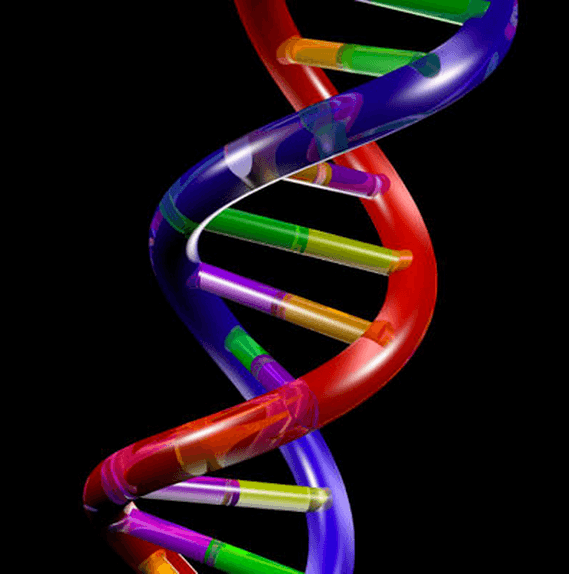
What determines the code, or information, of a DNA molecule?
a)
the shape (structure) of the nitrogen bases
b)
the order (sequence) of the nitrogen bases
c)
the color of the nitrogen bases
d)
the frequency (number) of nitrogen bases
89.
Which 2 molecules form the sides (backbone) of the DNA ladder?
a)
deoxyribose sugar and adenine
b)
deoxyribose sugar and a hydrogen bond
c)
deoxyribose sugar and the nucleus
d)
deoxyribose sugar and phosphate
90.
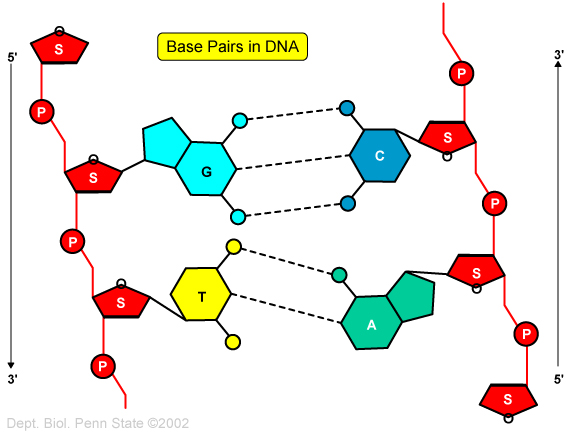
Nitrogenous bases are joined by which type of bond?
a)
polar bonds
b)
ionic bonds
c)
covalent bonds
d)
hydrogen bonds
91.

Replicate the following strand of DNA:
AATCATGGA
AATCATGGA
a)
AATCATGGA
b)
TTAGTACCT
c)
UUAGUACCU
d)
GGATAUCUA
92.
The enzyme that unzips the DNA to prepare for replication
a)
helicase
b)
replicase
c)
polymerase
d)
synthase
93.
DNA replication results in two DNA molecules,
a)
each one with two original strands
b)
each one with two new strands
c)
each one with one new strand and one original strand
d)
one with two new strands and the other with two original strands
94.
A process in which DNA has the unique ability to make an exact copy of itself.
a)
Replication
b)
Translation
c)
Transcription
95.
In what phase of the cell cycle does DNA replication take place?
a)
G1
b)
S
c)
G2
d)
M
96.
Translation takes place in the
a)
ribosome
b)
chloroplast
c)
nucleus
d)
mitochondria
97.
Brings the amino acids to the ribosome
a)
mRNA
b)
tRNA
c)
rRNA
d)
DNA
98.
What would be the tRNA anticodon for the mRNA codon CAG?
a)
GTC
b)
GUC
c)
CUG
d)
CAG
99.
What is the term for a three-nucleotide sequence that codes for an amino acid?
a)
base
b)
codon
c)
amine
d)
serine
100.
Which phrase best describes translation?
a)
converts mRNA into a polypeptide
b)
catalyzes bonds between amino acids
c)
produces RNA from DNA molecules
d)
recycles tRNA molecules for reuse
101.

Which phase of which process does this picture show?
a)
Transcription
b)
Translation
c)
Replication
102.
Which process is used to make mRNA from the DNA in the nucleus?
a)
transcription
b)
translation
c)
replication
103.
Which RNA bases would pair with TACGAA in transcription?
a)
AUGCUU
b)
ATGCTT
c)
GCATCC
d)
GCAUCC
104.
In DNA replication, which enzyme is responsible for building the new DNA strand?
a)
helicase
b)
polymerase
c)
ligase
d)
primase
105.
Where does transcription take place?
a)
nucleus
b)
cytoplasm
c)
ribosome
106.
How many amino acids are coded for by this sequence of nucleotides:
ATG GGA ACT CCA
ATG GGA ACT CCA
a)
4
b)
2
c)
6
d)
12
107.
When does DNA replication happen?
a)
Before Mitosis begins
b)
During prophase
c)
During metaphase
d)
During anaphase
108.

What is occurring in this picture?
a)
Translation
b)
Replication
c)
Translocation
d)
Transcription
109.
One difference between DNA and RNA is that....
a)
Only RNA has the base Uracil
b)
only RNA contains the base Thymine
c)
only RNA contains the base Cytocine
d)
only RNA contained the base Guanine
110.

What process is being shown here?
a)
Replication
b)
Translation
c)
Transcription
111.
what does mRNA do?
a)
carry info from genes to ribosomes
b)
carry amino acids to ribosomes
c)
help with RNA splicing
d)
make up ribosomes
112.
Which of these bases does not exist in RNA?
a)
C
b)
T
c)
U
d)
A
113.
The process by which the nuclear material is divided equally between two new cells
a)
mitosis
b)
cancer
c)
spindle
d)
centromere
114.

Structure (b) is a ____.
a)
chromosome
b)
chromatid
c)
centromere
115.

Structure (a) is a ____.
a)
chromosome
b)
chromatid
c)
centromere
116.

Structure (c) is a ____.
a)
chromosome
b)
chromatid
c)
centromere
117.

Name the phase:
a)
Anaphase
b)
Telophase
c)
Metaphase
d)
Prophase
118.

Name the phase:
a)
Anaphase
b)
Telophase
c)
Metaphase
d)
Prophase
119.

What is the next phase of mitosis?
a)
Prophase
b)
Metaphase
c)
Anaphase
d)
Telophase
120.

What is the next phase of mitosis?
a)
Prophase
b)
Metaphase
c)
Anaphase
d)
Telophase
121.

Name the phase:
a)
Prophase
b)
Metaphase
c)
Anaphase
d)
Telophase
122.

Name the phase:
a)
Prophase
b)
Metaphase
c)
Anaphase
d)
Telophase
123.

Name the phase:
a)
Prophase
b)
Metaphase
c)
Anaphase
d)
Telophase
124.

The stages of mitosis in order
a)
Metaphase, Anaphase, Prophase, Telophase
b)
Prophase, Anaphase, Metaphase, Telophase
c)
Prophase, Metaphase, Anaphase, Telophase
d)
Anaphase, Prophase, Telophase, Metaphase
125.
What kind of cells are made in MEIOSIS?
a)
Haploid Gametes
b)
Diploid Somatic Cells
c)
Skin Cells
d)
Liver Cells
126.

A human body (somatic) cell usually has how many chromosomes?
a)
6
b)
22
c)
4
d)
46
127.

When an area of a chromatid is exchanged with the matching area on a chromatid of its homologous chromosome, _________________ occurs
a)
crossing over
b)
mutagenesis
c)
hybridization
d)
fertilization
128.
If the Diploid number of Carrots is 18, the haploid number is
a)
18
b)
9
c)
27
d)
36
129.
The process of crossing over occurs in what phase of meiosis?
a)
anaphase 1
b)
prophase 1
c)
prophase 2
d)
telophase 1
130.
The cells produced via meiosis are called:
a)
sex cells
b)
somatic cells
c)
body cells
d)
skin cells
131.
If a somatic (body) cell in a butterfly contains 24 chromosomes, a butterfly egg would contain
a)
3
b)
6
c)
12
d)
24
132.
The result of meiosis is:
a)
two diploid cells
b)
two haploid cells
c)
four diploid cells
d)
four haploid cells
133.
What causes genetic variation in meiosis?
a)
chromosomes lining up
b)
crossing over of chromosomes
c)
separation of chromosomes
d)
chromosomes pulling apart
134.
The chromosomes that pair up during meiosis, are called __________ chromosomes.
a)
heterozygous
b)
asexual
c)
homologous pairs
d)
genes
135.
Which of the following is NOT a gamete (sex cell)?
a)
egg
b)
sperm
c)
skin cell
d)
all of the above are gametes
136.

What phase is represented?
a)
metaphase 1
b)
metaphase 2
c)
anaphase 1
d)
anaphase 2
137.

What phase is represented?
a)
metaphase 1
b)
metaphase 2
c)
anaphase 1
d)
anaphase 2
138.

What process, and which type of resulting cells are represented?
a)
mitosis, gametes
b)
mitosis, body cells
c)
meiosis, gametes
d)
meiosis, body cells
139.

What phase is shown in the picture?
a)
anaphase 1
b)
anaphase 2
c)
metaphase 1
d)
telophase 1
140.
Goes through P.M.A.T two rounds
a)
Mitosis
b)
Meiosis
c)
Osmosis
d)
Transcription
141.
When a sperm and egg cell meet they form?
a)
Zygote
b)
gamete
c)
daughter cell
d)
diploid
142.

a)
Prophase I
b)
Prophase II
c)
Telophase I
d)
Telophase II
143.

a)
Prophase I
b)
Prophase II
c)
Telophase I
d)
Telophase II
144.

a)
Prophase I
b)
Prophase II
c)
Telophase I
d)
Telophase II
145.

a)
Metaphase I
b)
Metaphase II
c)
Anaphase I
d)
Anaphase II
100 %

