wayground logo

Free Printable Worksheets

Font size

S
M
L
XL
Worksheets

Semester 1 Review (4's, 5's, 6's & 9's)

Total questions: 150

Worksheet time: 2hrs 2mins

Name
Class
Date
1.
Which is true of prokaryotic and eukaryotic cells?
a)
Prokaryotic cells are larger than eukaryotic cells.
b)
Eukaryotic cells do not have nuclei, and prokaryotic cells do have nuclei.
c)
Prokaryotic cells lack membrane-bound organelles, and eukaryotic cells contain membrane-bound organelles.
d)
Eukaryotic cells are simpler than prokaryotic cells.
2.

Which do BOTH prokaryotes and eukaryotes contain?

a)

nucleus

b)

mitochondria

c)

ribosomes

d)

cell wall

3.

Which does only eukaryotic cells contain?

a)

nucleus

b)

DNA

c)

cell membrane

d)

ribosomes

4.

Prokaryotic cells do not have…….

a)

membrane bound organelles

b)

cell membrane

c)

DNA or RNA

d)

life

5.

You can distinguish a prokaryote apart from a nucleus by--

a)

The presence of a ribosome

b)

The presence of a cell membrane

c)

The presence of DNA

d)

The presence of a nuclear membrane

6.
Which illustration of transport across the membrane requires energy?
a)
A
b)
B
c)
C
d)
D
7.
Which form of transport is being shown in the diagram.
a)
diffusion
b)
osmosis
c)
facilitated diffusion
d)
active transport
8.
Cells use energy to move materials across a membrane (low to high concentration).
a)
Active transport
b)
Passive transport
c)
Diffusion
d)
Osmosis
9.

When a cell forms a vesicle around unwanted particles and expels it OUT of the cell.

a)

Pinocytosis

b)

Endocytosis

c)

Receptor-mediated

d)

Exocytosis

10.

Which type of active transport uses a vesicle to allow a large molecule to exit the cell?

a)

Endocytosis

b)

Exocytosis

11.
A type of active transport that brings particles into a cell when the cell membrane encloses a particle to make a vesicle
a)
Diffusion
b)
Passive Transport
c)
Active Transport
d)
Endocytosis
12.
In this image, the cell is using which type of molecular transport?
a)
Osmosis
b)
Diffusion 
c)
Endocytosis
d)
Exocytosis 
13.
Facilitated diffusion is the movement of materials into and out of the cell
a)
with the use of energy
b)
with the use of proteins but no energy
c)
by moving water
d)
by using ATP
14.
The  movement of water from a high concentration to a low concentration is called
a)
diffusion
b)
osmosis
c)
facilitated diffusion
d)
active transport
15.
In this situation, where the solute is illustrated by red dots, predict if will WATER move into or out of the cell, and how that will affect the cell.
a)
Water will move into the cell and the cell will expand.
b)
Water will move into the cell and the cell will shrink.
c)
Water will move out of the cell and the cell will expand.
d)
Water will move out of the cell and the cell will shrink.
16.
Semi-permeable mean to allow
a)
all materials across the membrane
b)
only some materials across the membrane
c)
no material to cross the membrane
d)
to allow only water across the membrane
17.
What are the products of photosynthesis?
a)
water and carbon dioxide
b)
oxygen and glucose
c)
oxygen and carbon dioxide
d)
oxygen and water
18.
Which gas is removed from the atmosphere during photosynthesis?
a)
hydrogen
b)
oxygen
c)
nitrogen
d)
carbon dioxide
19.
What is the organelle that contains the chlorophyll used in photosynthesis ?
a)
mitochondria
b)
ribosome
c)
chloroplast
d)
nucleus
20.
The purpose of photosynthesis is ...
a)
to make glucose
b)
to break glucose
c)
to capture energy from the sun
d)
to change carbon dioxide
21.
The purpose of cellular respiration is to
a)
make glucose
b)
break glucose
c)
capture the energy in sunlight
d)
change carbon dioxide
22.
Cellular respiration happens in which 2 places?
a)
cytoplasm and mitochondria
b)
chlorplast and mitochondria
c)
chloroplast and stomata
d)
chloroplast and cytoplasm
23.
How are photosynthesis and cellular respiration related?
a)
They have opposite equations
b)
they have the same equation
c)
they both produce carbon dioxide
d)
they both produce oxygen
24.
What are the products in cellular respiration?
a)
water and carbon dioxide
b)
water and glucose
c)
carbon dioxide and oxygen
d)
glucose and oxygen
25.
This is the equation for...
a)
photosynthesis
b)
cellular respiration
26.

This is the equation is for? 6Co2 + 6H2O ----> C6 H12 O6 6O2

a)

photosynthesis

b)

cellular respiration

27.

In what part of the plant does photosynthesis occur?

a)

Xylem

b)

Root

c)

Stem

d)

Leaf

28.

Viruses are bacteria.

a)

True

b)

False

29.

Viruses are made up of cells.

a)

True

b)

False

30.

Viruses are living.

a)

True

b)

False

31.

Which of the following pictures is NOT a example of a virus?

a)

a

b)

b

c)

c

d)

d

32.

Observe the diagram of the two viruses.

Part C is the ______________

a)

Genetic material

b)

Capsid

c)

Ligand

d)

Envelope

33.

Observe the diagram of the two viruses.

Part B is the ______________

a)

Genetic material

b)

Capsid

c)

Ligand

d)

Envelope

34.

If a virus only passes its genetic material to the cell without making copies of itself this means the virus is _____________.

a)

active

b)

latent

c)

sleeping

35.

The three stages of the cell cycle are __________, mitosis, and

cytokinesis.

a)

interphase

b)

anaphase

c)

metaphase

d)

prophase

36.

Identical cells formed during cell division are called:

a)

daughter organelles

b)

daughter cycles

c)

daughter nucleus

d)

daughter cells

37.

____________ ensures that our bodies grow and repair

themselves.

a)

The cell growth

b)

The cell repair

c)

The cell recycle

d)

The cell cycle

38.

The process by which a cell nucleus divides is called:

a)

interphase

b)

mitosis

c)

cytokinesis

d)

cell cycle

39.
What does DNA Replication mean?
a)
DNA is made.
b)
DNA makes new cells. 
c)
DNA copies itself.
d)
DNA starts the cell cycle.
40.
What happens in the first part of Interphase?
a)
Mitosis
b)
Cell Growth
c)
DNA Replication
d)
Anaphase
41.
Which part of the Cell Cycle takes the longest?
a)
Interphase
b)
Mitosis
c)
Prophase
d)
Cytokinesis
42.
What is the cell cycle?
a)
The gradual development of something, especially from a simple to a more complex form.
b)
The study of heredity and the variation of inherited characteristics.
c)
The branch of biology that deals with the relations of organisms to one another and to their physical surroundings.
d)
The series of events that take place in a cell leading to its division and duplication of its DNA to produce two daughter cells.
43.
Put the following actions in order: DNA replicates, cell grows, cell divides, cell prepares for mitosis. 
a)
DNA replicates, cell grows, cell prepares for mitosis, cell divides
b)
cell grows, cell prepares for mitosis, DNA replicates, cell divides
c)
cell grows, DNA replicates, cell prepares for mitosis, cell divides
d)
DNA replicates, cell prepares for mitosis, cell grows, cell divides
44.
During what phase of the cell cycle does cell division occur?
a)
Interphase
b)
M phase
c)
S phase
d)
G2 phase
45.

What is the correct order of the phases of mitosis?

a)

Metaphase, Anaphase, Prophase, Telophase,

b)

Pelophase, Motophase, Anaphase, Trophase

c)

Prophase, Metaphase, Anaphase, Telophase

d)

Telophase, Anaphase, Prophase, Metaphase

46.

Why do cells go through mitosis?

a)

to make food from sunlight

b)

to get air into the cells

c)

to create proteins

d)

to reproduce, grow, and repair/replace cells

47.
Cell division is represented by what letter?
a)
A
b)
B
c)
C
d)
D
48.
Why would it be important to replicate DNA before a cell divides in mitosis or meiosis?
a)
In order for genetic information to be transferred into daughter cells.
b)
In order for the cell to be able to increase in size.
c)
In order for the DNA to be contained in the nucleus.
d)
In order for the cell to re-order the DNA sequencing in the new cells.
49.

_____ is the uncontrolled growth of cells, often resulting in a tumor or mass of abnormal cells

a)

Cancer

b)

Apoptosis

c)

Radiation

50.

Uncontrolled cell division which usually leads to tumors and disease is called:

a)

Metaphase

b)

Cytokinesis

c)

Cancer

d)

Diabetes

51.
In the S stage of interphase_______________
a)
the cell grows
b)
the nucleus divides
c)
the cell membrane divides
d)
the DNA is replicated
52.
Stem cells are
a)
cells that grow uncontrollably
b)
undifferentiated and can be any type of cell
c)
never go through cell division
d)
only found in embryos
53.
Which best explains why muscle cells are different from blood cells?
a)
Muscle cells are produced by the brain, but blood cells are produced by the heart. 
b)
Different genes are activated in muscle cells than in blood cells. 
c)
Muscles cells experience different environmental influences than blood cells. 
d)
A mutation occurs during the development of muscle cells but not in blood cells. 
54.
What is cell differentiation?
a)
Process by which cells produce more cells
b)
Process by which cells become specialized
c)
Process by which cells become unspecialized
d)
Process by which cells die
55.
What is one goal of cellular differentiation/specialization?
a)
To create specialized cells to help organism maintain homeostasis.
b)
To many cells.
c)
To make stem cells
d)
to make single celled organisms
56.

Specialized cells such as muscle, blood, or nerve cells are caused by cell differentiation led by

a)

DNA

b)

nucleus

c)

ribosomes

d)

plasma membrane

57.

What causes cells in our bodies to do different things?

a)

DNA

b)

nucleus

c)

ribosomes

d)

plasma membrane

58.

Cells differentiate to perform different functions because

a)

all genes are turned on inside that cell

b)

all genes are turned off inside that cell

c)

different genes are turned on inside that cell

d)

different genes are turned on or off inside that cell

59.

During the process of differentiation

a)

all sections of DNA are activated to determine the structure of a body cell

b)

ONLY ONE section of DNA are deactivated to determine the structure of a body cell

c)

only specific sections of DNA sequence are activated to determine the structure and functions of a body cell

60.
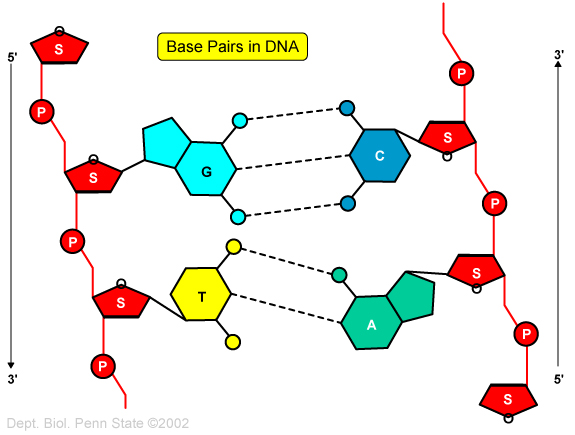
Which of the following best describes a DNA molecule?
a)
double helix
b)
contains ribose
c)
made of amino acids
d)
contains Uracil
61.
Which of the following units are repeatedly joined together to form a strand of DNA? (This is the MONOMER of DNA.) 
a)
amino acids
b)
nucleotides
c)
fatty acids
d)
polysaccharides
62.
Adenine bonds with ______________.
a)
Guanine
b)
Thymine
c)
Cytosine
d)
Adenine
63.
Guanine bonds with ______________.
a)
Adenine
b)
Guanine
c)
Cytosine
d)
Thymine
64.
Why is DNA important?
a)
it is very small and very complicated
b)
it's in everything
c)
it serves as the blueprint for traits of all living things
d)
because we eat it every day for energy
65.
What are the 4 nitrogen bases?
a)
adenine, thymine, cytoplasm, and guanine
b)
adenine, thymine cytosine, and guanine
c)
adenine, thymine, cytosine, and gylcerol
d)
adenine, thymine, cytosine, and glucose
66.
Which 2 molecules forms the sides (backbone) of the DNA ladder?
a)
deoxyribose and adenine
b)
deoxyribose and a hydrogen bond
c)
sugar and the nucleus
d)
deoxyribose (sugar) and phosphate
67.
Which enzyme is responsible for adding nucleotides?
a)
Topoisomerase
b)
DNA Polymerase
c)
Ligase
d)
Primase
68.
Which sequence of DNA bases would pair with this partial strand
ATG TGA CAG
a)
ATG TGA CAG
b)
TAC ACT GTC
c)
GTA AGT GAC
d)
CAT TCA CTG
69.
A process in which DNA has the unique ability to make an exact copy of itself.
a)
Replication
b)
Translation
c)
Transcription
70.
Nitrogenous bases are joined by which type of bond?
a)
polar bonds
b)
ionic bonds
c)
covalent bonds
d)
hydrogen bonds
71.
In what phase of the cell cycle does DNA replication take place?
a)
G1
b)
S
c)
G2
d)
M
72.

Which enzyme is responsible for unzipping or the DNA molecule when replication begins?

a)

Helicase

b)

DNA breakase

c)

Primase

d)

DNA polymerase

73.

Which enzyme is responsible for gluing together the Okasaki fragment on the lagging strand during DNA replication?

a)

Ligase

b)

Helicase

c)

Amaylase

d)

DNA polymerase

74.

Which part of a DNA molecule is responsible for the direct coding of specific traits in an organism?

a)

The number of hydrogen bonds that hold the strands of DNA together

b)

The number of carbons in the DNA molecule.

c)

The sequence of nucleotide bases in the DNA molecule

d)

The sequences of phosphates along each DNA strand

75.
order of replication
a)
3, 2, 1, 4
b)
2, 1, 4, 3
c)
2, 3, 1, 4
d)
3, 4, 1, 2
76.
What are the three components of a nucleotide?
a)
sugar, hydrogen, nitrogen base
b)
sugar, oxygen, nitrogen base
c)
sugar, phosphate, nitrogen base
d)
sugar, phosphate, protein
77.
Replicate the following strand of DNA: 
AATCATGGA
a)
AATCATGGA
b)
TTAGTACCT
c)
UUAGUACCU
d)
GGATAUCUA
78.

Which organelle is the location where protein is made?

a)

Ribosome

b)

Nucleus

c)

Cytoplasm

d)

Nucleotide

79.

During transcription, this type of ribonucleic acid is responsible for copying the DNA and brining it out of the nucleus.

a)

tRNA

b)

mRNA

c)

rRNA

d)

dRNA

80.

When these bond together, they form a protein

a)

Amino Acids

b)

Peptide Bonds

c)

Ribose

d)

Nucleotides

81.

mRNA occurs during this process

a)

Translation

b)

Transcription

c)

Replication

d)

Delivery

82.

Which of the following is the complementary mRNA sequence to this DNA strand: AACTGAA

a)

UUGACUU

b)

TTGACTT

c)

AACTGAA

d)

AACUGAA

83.
What is the term for a three-nucleotide sequence that codes for an amino acid?
a)
base
b)
codon
c)
amine
d)
serine
84.
The process to go from DNA to mRNA is _______
a)
translation
b)
transcription
c)
replication
85.
The process to go from mRNA to a protein is called ____
a)
transcription
b)
rRNA
c)
replication
d)
translation
86.
Genetic info flows in one direction. Which best represents this flow?
a)
DNA-protein-RNA
b)
Protein-RNA-DNA
c)
RNA-protein-DNA
d)
DNA-RNA-protein
87.
What is the location in the cell for transcription?
a)
nucleus
b)
cytoplasm
c)
ribosome
d)
mitochondria
88.

In what process is mRNA synthesized?

a)

Transcription

b)

Translation

c)

DNA Replication

d)

Mitosis

89.

Which organelle contains rRNA and reads the mRNA to synthesize a protein?

a)

Ribosome

b)

Nucleus

c)

Cytoplasm

d)

Nucleotide

90.

What brings the amino acids to the ribosome to assemble a protein?

a)
mRNA
b)
tRNA
c)
rRNA
d)

DNA

91.

How many nucleotides code for 1 amino acid?

a)

1

b)

2

c)

3

d)

4

92.

What is the location in the cell for translation?

a)

Cytoplasm

b)

Nucleus

c)

Lysosome

d)

Golgi apparatus

93.

Which of the following would result in a frameshift mutation?

(More than one correct answer)

a)

Insertions

b)

Substitutions

c)

Deletions

94.

What type of mutation is this?

a)

Substitution/Point

b)

Frameshift

95.

Genes carry our ______.

a)

traits

b)

jeans

c)

codon

d)

rna

96.

The Himalayan rabbit's habitat has cold, snowy winters and mild summers. The body is typically covered in white fur except for the nose, feet, tail, and ears, which are covered in black fur.

A scientist shaved an area of white fur on the back of a Himalayan rabbit and placed an ice pack over the shaved area . The shaved area grew black fur.

Which of these best explains why the hair that grew back where the Ice pack was placed was black and not white?

a)

The white hair mutated to black hair as the rabbit's body temperature decreased.

b)

The coat color changed from white to black with the age of the rabbit.

c)

The genes for black hair were activated by specific temperatures.

d)

White hair only grows during certain times of the year.

97.

CRISPR-Cas9 is a genetic modification technique that edits parts of the genome of an organism . Using this technique scientists can add, remove, or modify sections of the DNA sequence.

How can scientists use this technique to control gene expression?

a)

By determining the number of chromosomes in an organism

b)

By identifying how closely related one individual is to another

c)

By calculating the number of genes different organisms produce

d)

By activating or deactivating specific genes

98.

What is gene expression?

a)

The process by which information from a gene is used to create a functional product

b)

Large molecules made up of chains of amino acids that perform various functions

c)

To make a written or typed copy of something, in this case, DNA into RNA

d)

To control or manage something, in this case, the process of gene expression

99.

What is the role of gene expression in multicellular organisms?

a)

To make sure that each cell has the right proteins for its job

b)

To conserve energy and space in our cells

c)

To determine when and how our genes make proteins

d)

To regulate how much protein is made

100.

How is gene expression regulated?

a)

By turning the gene on or off

b)

By controlling how much protein is made

c)

By transcribing DNA into RNA

d)

By making a written or typed copy of something

101.

What is the importance of gene expression for all living things?

a)

To make sure that each cell has the right proteins for its job

b)

To conserve energy and space in our cells

c)

To determine when and how our genes make proteins

d)

To help organisms adapt to their environment and respond to changes

102.
Normal-
GAG-CTC-GAC-AGA
Mutant
GAG CTC-CAC-AGA
a)
no mutation
b)
substitution
c)
insertion
d)
deletion
103.
DNA molecule segment is : TTACGCAAG
The mutated DNA segment is TTCGCAAG. This is an example of ___ mutation.
a)
Substitution
b)
Deletion
c)
Insertion
d)
Inversion
104.
If you are missing or have an extra base  at the end of your mutated DNA . What type of mutation occurred?
a)
Substitution
b)
Frameshift
c)
Duplication 
d)
Insertion
105.
Original: ATC CAT
Mutation: ATC GCAT
What mutation occurred?
a)
deletion
b)
insertion
c)
silent
d)
transverse
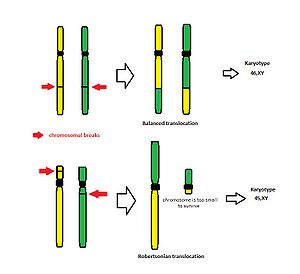
106.
What type of chromosomal mutation is this?
a)
Inversion
b)
Translocation
c)
Deletion
d)
Duplication
107.
What is the definition of DNA mutation? 
a)
The original DNA strand
b)
The strand with four pairs 
c)
A change in the DNA strand
d)
The strand in a double helix 
108.

Original DNA: CAT GAT CCA

New DNA: CAT TGA TCC A

What mutation occurred? (one has been added)

a)

deletion

b)

substitution

c)

tranverse

d)

insertion

109.
Identify the SUBSTITUTION mutation from the following DNA sequence: 
ATG CCA AAT
a)
ATG TCA AAT
b)
ATG CCT AAA T
c)
ATC CA  AT
d)
ATG CCA AAT
110.

In DNA, A goes with __ and C goes with __

a)

T, G

b)

G, T

c)

C, A

111.
What type of chromosomal mutation is this?
a)
Translocation
b)
Inversion
c)
Deletion
d)
Duplication
112.

Mendel also observed seed color in pea plants. In a study of several generations, yellow seeds appeared more frequently than green seeds. Which of the following is most likely the reason for this observation?

a)

Green seeds are dominant to yellow seeds.

b)

Yellow seeds are recessive to green seeds

c)

Green seeds are recessive to yellow seeds.

113.

Which of the following is correct?

a)

Yy is homozygous dominant.

b)

YY is heterozygous.

c)

yy is homozygous recessive.

d)

YY is homozygous recessive.

114.

Which of the following represents a heterozygous genotype?

a)

Aa

b)

AA

c)

aa

d)

Ab

115.

A recessive trait would appear in the phenotype of which of these?

a)

BB

b)

bb

c)

Bb

d)

Bf

116.
The dominant trait in this punnett square is
a)
yellow pea seeds
b)
green pea seeds
c)
there is no dominant seed
117.
A heterozygous long-tusked elephant is crossed with a homozygous recessive short-tusked elephant. What is the probability of the offspring having short tusks?
a)
0%
b)
25%
c)
50%
d)
75%
118.
Georgette wants to breed her pet phoenixes, but she isn't sure if the babies will burst into blue flames or red flames. Her documents show that her female phoenix is homozygous dominant for red flames, while her male phoenix is homozygous recessive for blue flames. What color flames will the babies have?
a)
Red
b)
Blue
c)
Purple
d)
50% Red, 50% Blue
119.
What gamete possibilities could come from this parent's genotype?
a)
AB, AB, aB, aB
b)
Ab, AB, Ab, ab
c)
Ab, Ab, Ab, Ab
d)
AB, aB, ab, aB
120.

What goes in box 3

a)

Aabb

b)

AABB

c)

AAbb

d)

aaBb

121.
Using the dihybrid cross and key provided, what is the probability of the offspring being tall and white?
a)
9
b)
2
c)
3
d)
6
122.
When does the process shown here happen?
a)
Prophase I
b)
Anaphase II
c)
Interphase II
d)
Telophase I
123.
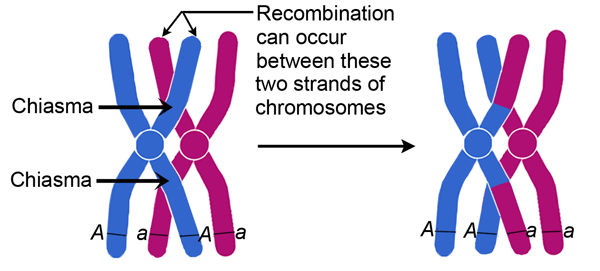
What process is shown here?
a)
Genetic Randomization
b)
Cross Over
c)
Allele Switching
d)
Cross Pollination
124.

CROSSING OVER INCREASES

a)

LIFE SPAN

b)

GENETIC VARIATION

c)

THE NUMBER OF OFF-SPRING

d)

ALL ARE TRUE

125.
This image shows chromosomes during Prophase 1. Which of the following correctly describes the process shown?
a)
segregation of sister chromatids
b)
condensation and segregation of alleles
c)
mutationin which the DNA content of the gene is altered
d)
crossing - over in which alleles are exchanged
126.

What is the function of carbohydrates?

a)

Perform cell's functions/tasks

b)

Fast energy

c)

Energy storage

d)

Alter other biomolecules

e)

Store information for cells

127.

What is the function of nucleic acids?

a)

Perform cell's functions/tasks

b)

Fast energy

c)

Energy storage

d)

Alter other biomolecules

e)

Store information for cells

128.

What is the function of lipids?

a)

Perform cell's functions/tasks

b)

Fast energy

c)

Energy storage

d)

Alter other biomolecules

e)

Store information for cells

129.
Which biomolecule is responsible for insulation and energy storage?
a)
Protein
b)
Nucleic Acid
c)
Lipid
d)
Carbohydrate
130.
All polymers are made up of...
a)
monosaccharides
b)
monomers
c)
proteins
d)
None of these
131.
What is the function of nucleic acids?
a)
Stores energy
b)
Stores genetic information
c)
Movement
d)
Physical structure
132.
What biomolecule do enzymes belong to? 
a)
Carbohydrate
b)
Lipid
c)
Nucleic Acid
d)
Protein
133.
Which biomolecule is a main source of quick energy?
a)
Nucleic Acid
b)
Protein
c)
Lipid
d)
Carbohydrate
134.
Which biomolecule is made of nucleotides and contain you DNA?
a)
Carbohydrate
b)
Lipids
c)
Protein
d)
Nucleic Acid
135.
What is the monomer for a protein?
a)
Monosaccharide
b)
Triglyceride
c)
Amino Acid
d)
Nucleotide
136.
Lipids are made up of which of the following?
a)
glycerol and fatty acids tails
b)
glycerol and monolipids
c)
fatty acids and phosolipids
d)
amino acids and nucleotides
137.
What is the monomer of nucleic acids?
a)
Glycerol
b)
Monosaccharides
c)
Amino Acids
d)
Nucleotides
138.
Which biomolecule has sugars and starches?
a)
Lipids
b)
Proteins
c)
Carbohydrates
d)
Nucleic Acid
139.

Enzymes are

a)

Lipids

b)

Protein

c)

Carbohydrates

d)

Nucleic Acids

140.

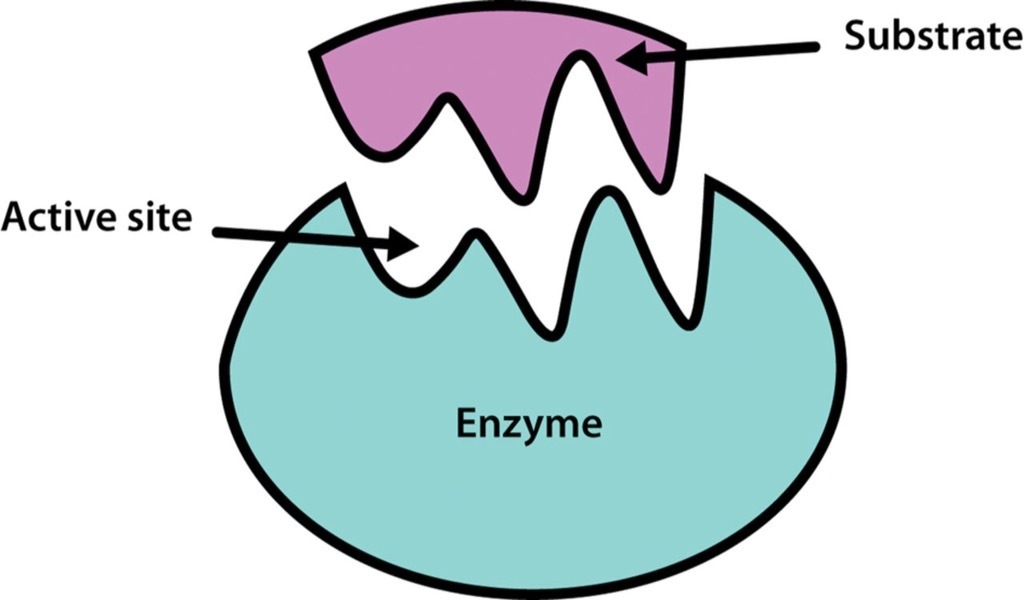
Enzymes are responsible for-

a)

Speeding up reactions

b)

Giving the body energy

c)

Slowing down reactions

141.

Which Graph shows that an enzyme works best at a pH of 4?

a)
b)
c)
d)
142.

Which Graph shows that an enzyme works best at a pH of 7?

a)
b)
c)
d)
143.

Which line shows that an enzyme works best at a pH pf 9?

a)

A

b)

B

c)

C

144.

Which Enzyme works best at a temperature of 37?

a)

Enzyme A

b)

Enzyme B

145.

Which Enzyme works best at a pH of 7.5?

a)

Enzyme A

b)

Enzyme B

146.

Which complementary (matching) sequence of DNA bases would pair with this partial strand

ATG TGA CAG

a)
ATG TGA CAG
b)
TAC ACT GTC
c)
GTA AGT GAC
d)
CAT TCA CTG
147.

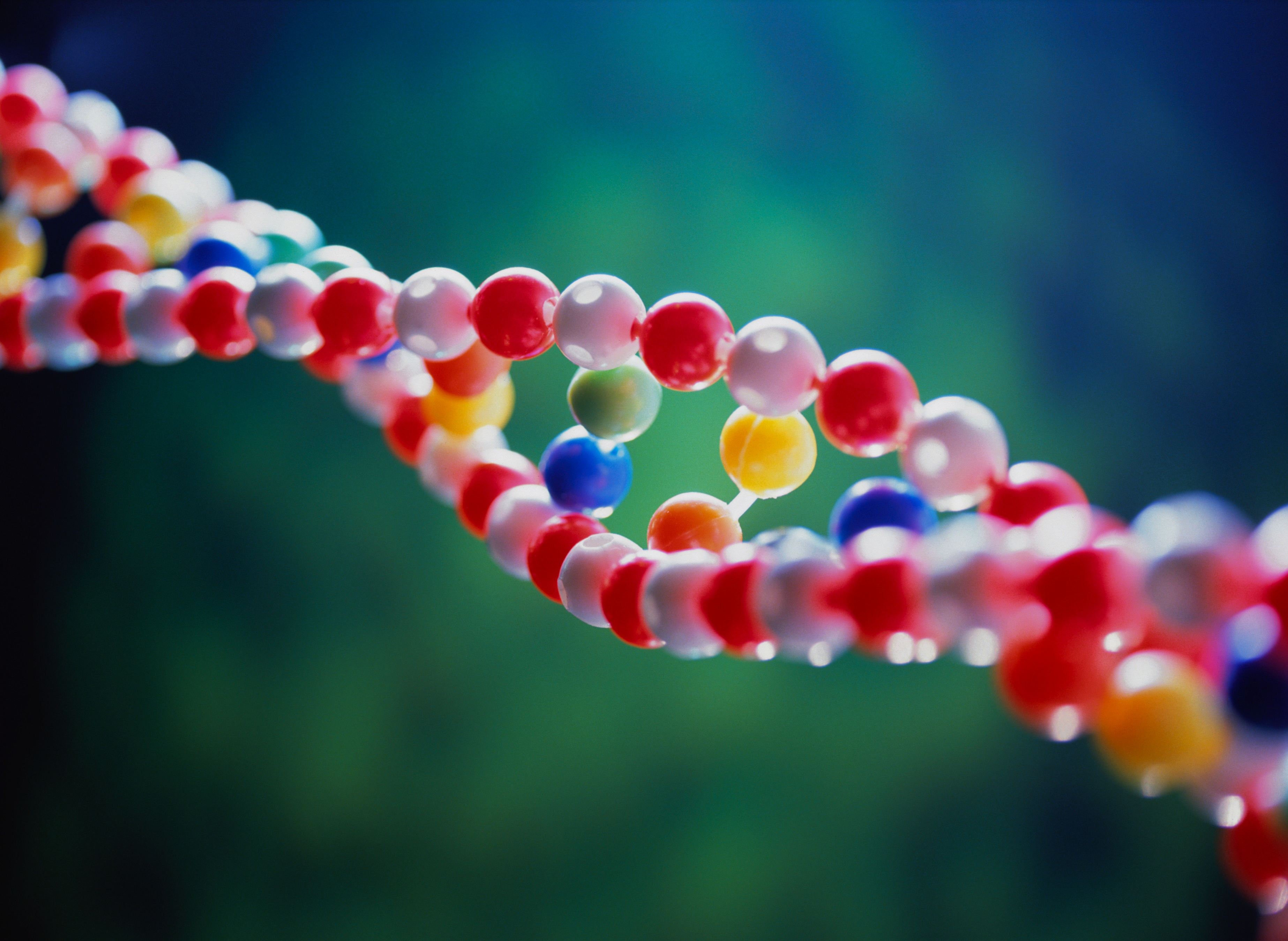
Name this structure

a)

double helix

b)

nucelotide

c)

twisted ladder

d)

hydrogen bond

148.

6A In 1952 Rosalind Franklin took the x-ray photograph shown, which gave the world its first look at DNA.


By studying this photograph, scientists gained knowledge about the —

a)

role of DNA in protein synthesis

b)

mutation of nucleotide sequences in DNA

c)

sequence of DNA that makes up the human genome

d)

double-helix structure of DNA

149.

What do organisms have in common?

a)

DNA sequence made of A,C,T,G

b)

DNA sequence is in the same order

c)

DNA sequence between organisms have nothing in common

d)

DNA sequence made of A,U,C,T,G

150.

What is "A"?

a)

Nucleotide

b)

Deoxyribose Sugar

c)

Nitrogenous base

d)

Phosphate