
 Worksheets
Bio final exam review
Total questions: 143
Worksheet time: 5hrs 46mins
what is evolutionary fitness?
the term used to describe the speed of evolution in an organism
the measure of how many friends an organism has
the ability of an organism to change its appearance at will
the ability of an organism to perform physical exercises
the ability of an organism to survive and reproduce in its environment, passing on its genes to the next generation.
The Venus flytrap plant lives in soil with few nutrients. The plant absorbs nutrients by trapping insects inside its leaves.
The ability of the Venus flytrap to trap insects is an example of which of the following?
Parasitism
Adaptation
Competition
Producer

A characteristic that you inherit from your parents.
selective breeding
trait
natural selection
adaptation
What is an example of artificial selection?
Letting dogs choose their own mate
Letting plants pollinate on their own
Crossing a labrador and a poodle to create a labradoodle
What is the main goal of Artificial Selection?
To prevent any changes in species
To allow species to evolve naturally
To create new species
To select for desirable traits in plants or animals
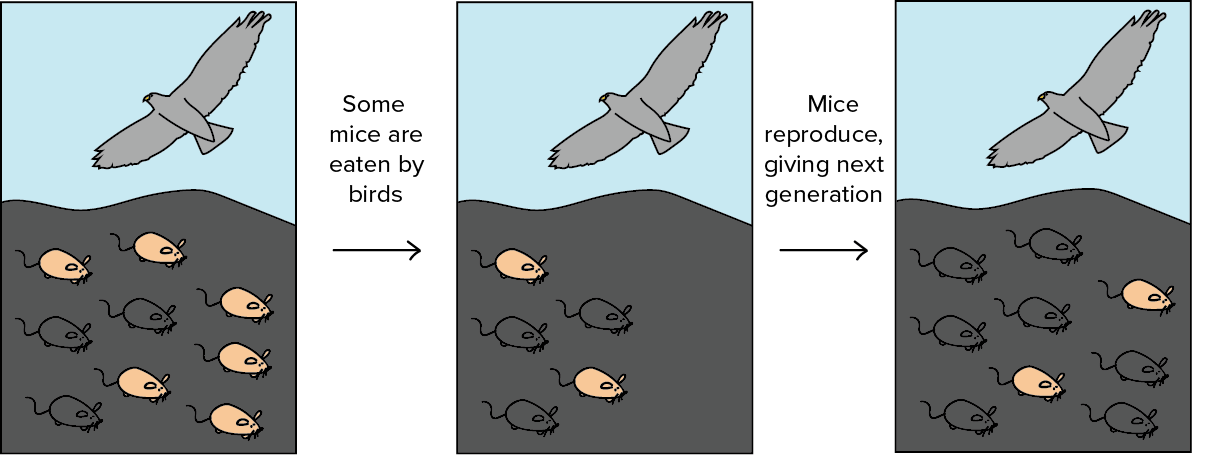
Individuals that are better able to cope with the challenges of their environment tend to
Increase in population over time.
Decrease in population over time.
Leave fewer offspring than those less suited to the environment.
Both (a) and (c)
The process in which organisms with traits well suited to an environment are more likely to survive and to produce offspring is
Natural selection.
Genetic principles.
Origin of species.
Trait mechanism.

Dyed purple hair
inherited trait
acquired trait
An 11-year-old girl with green eyes and red hair plays the piano. Which of the following characteristics is an example of a learned behavior?
Playing the piano
Having green eyes
Having red hair
Being 11 years old
Which of the following characteristics of a rabbit was most likely inherited from its parents?
Bent whiskers
Missing tooth
Long ears
Broken foot
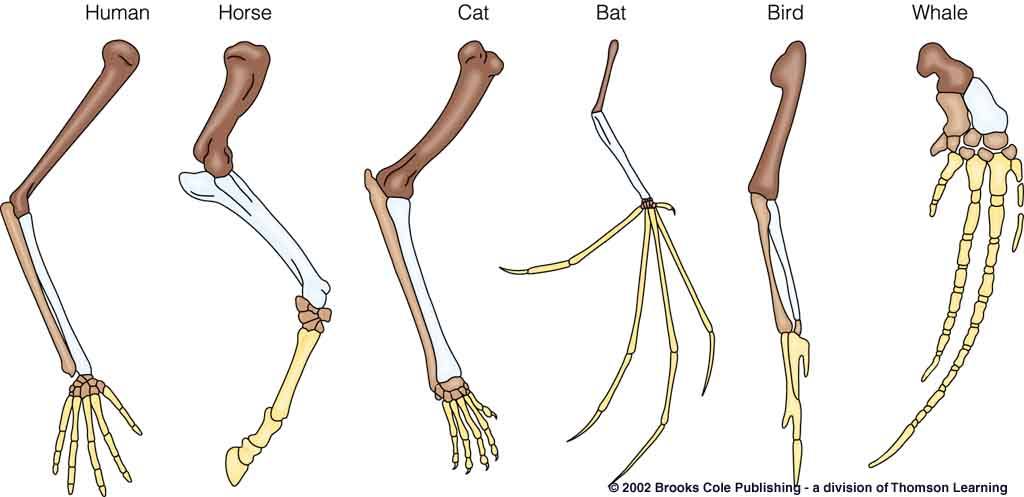
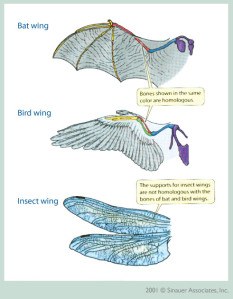
Evolved from the same ancestor, but have different functions
Homologous structures
Analogous structures
Vestigial structures
All of the above
An anatomical feature that no longer seams to have a purpose in the current form of an organism
Homologous structure
Analogous structure
Vestigial structure
None of the above

Whales have pelvic bones. What type of structure does this best represent?
Homologous structure
Analogous structure
Vestigial structure
None of the above
What do we call a change in a species over time?
Adaptation
Evolution
Extinction
Environmental influences
Which is the sequence by which natural selection works?
selection → adaptation → variation
selection → variation → adaptation
variation → adaptation → selection
variation → selection → adaptation

The porpoise is a marine mammal. As shown, the porpoise contains finger-like structures in its flippers. What does this information suggest?
All other mammals lived in the sea at some point.
The porpoise descended from mammals with hands.
The porpoise is a direct descendent of the elephant.
Marine mammals are able to grasp tools with their flippers.
Genetic diversity is increased through:
genetic drift
gene flow
The more genetic variation a population has,
the more likely it is for some individuals to
evolve
migrate
survive
mutate
Mutations are important because they bring about
death of the organism in which they develop
genetic variation needed for a population to evolve
benefits for the individual, not for the population
changes in genotype, but not phenotype
A doctor prescribes antibiotics and the patient only takes it for 7 of the 10 recommended days. What could happen to this patient?
They could develop an antibiotic resistant secondary infection
They could return the remaining medication and get some money back
They could experience an allergic reaction
They could develop a stomach ulcer
Which option correctly outlines the sequence of events once bacteria are exposed to antibiotics?
1. Non-resistant bacteria die.
2. Resistant bacteria exist due to variation.
3. Resistant bacteria survive, replicate and pass resistance to next generation.
1. Resistant bacteria die.
2.Non-resistant bacteria exist due to variation.
3. Non-resistant bacteria survive, replicate and pass resistance to next generation.
1. All bacteria die.
2. The person taking the antibiotic develops resistance to the antibiotic if used again.
Which taxa are used in a scientific name?
Domain
Genus
Phylum
Species
Class
What language is used to create scientific names?
English
Greek
Latin
French
Which is the correct way to write an organism's scientific name?
Ailuropoda Melanoleuca
ailuropoda melanoleuca
Ailuropoda melanoleuca
ailuropoda Melanoleuca
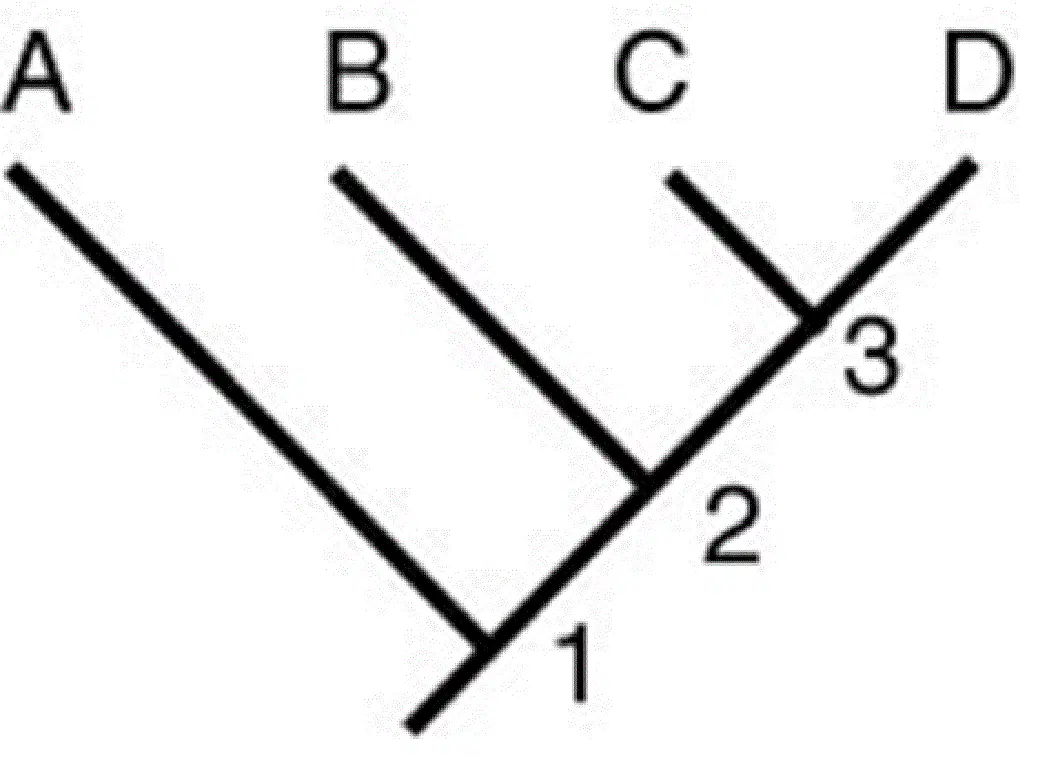

Which node represents the most recent common ancestor of taxa A and B?

Which taxon is B more closely relatedto, A or C?

A
B
C
D

A
B
C
D
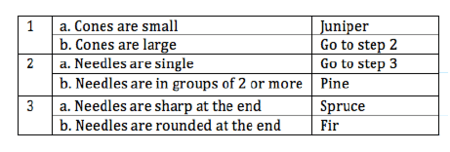

Based on the same dichotomous key, what is the butterfly shown below?
Papilio glaucus
Papilio polyxenes
Danaus plexippus
Colias philodice
What type of cell does cell respiration happen in?
Plant cells
Animal cells
Both

What organelle does cell respiration occur in?
Golgi body
nucleus
ribosome
mitochondria
Which of the following is a PRODUCT of cell respiration?
glucose
ATP (energy)
oxygen
water

Photosynthesis takes place in this organelle.
Mitochondria
Golgi Body
Chloroplast
Cell Wall
Which of these is a PRODUCT of photosynthesis?
Glucose
Water
Sunlight
Carbon Dioxide
What organelle uses light energy to make glucose during photosynthesis?
chloroplast
mitochondria
What is the source of energy for plants to make food?
other plants
the sun
the moon
animals
What do plants need to make food?
water & oxygen
water & carbon dioxide
oxygen & dirt
carbon dioxide & oxygen
Which gas do plants release during photosynthesis?
oxygen
carbon
helium
carbon dioxide
Which of the following lists components needed for photosynthesis to take place?
oxygen, carbon dioxide, and sugars
light energy and water
water and carbon dioxide
light energy, carbon dioxide, and water
Which of the following are reactants for respiration and products for photosynthesis?
Energy and H2O
C6H12O6 and O2
C6H12O6 and CO2
CO2 and H2O

Any living thing in the environment including animals and plants
biotic factor
abiotic factor

Non-living things in the environment
biotic factors
abiotic factors
Which of the following is NOT an abiotic factor?
rocks
temperature
sunlight
grass
Which of the following is NOT a BIOTIC factor?
sand
grass
bumblebee
dog

The arrows in a food chain or web represents what?
They point to the organism that is being eaten.
It shows how sunlight flows within an ecosystem.
They show the direction the energy is flowing between organisms.
They represent how water is transferred within a habitat.

In the food web above, what organism is a tertiary consumer?
Fox
Frog
Vole
Grass
What term describes the position of an organism on the food chain?
food web
energy levels
trophic levels
matter cycle


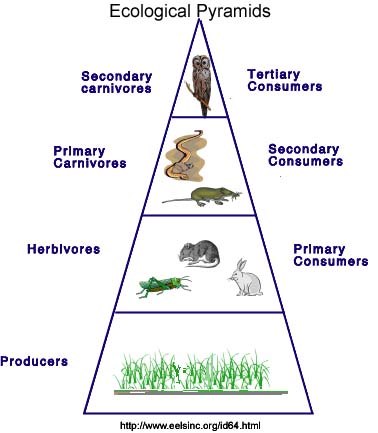
How much energy is available to be passed on to the next level in a food web?
100%
10%
50%
75%

If the average Bluefin Tun weighs 20 pounds, how many pounds of secondary consumers are needed in the third trophic level to support it?
20 pounds
200 pounds
2,000 pounds
20,000 pounds
What is a carnivore?
An organism that only eats plants for energy
An organism that eats animals for energy
An organism that eats both plants and animals for energy.
What is an herbivore?
An organism that only eats plants for energy
An organism that eats animals for energy
An organism that eats both plants and animals for energy.
What is a consumer?
Organism that makes its own energy
Organism that breaks down dead organisms
Organism that eats other organisms for food & energy

Which of the following is a food chain in the food web?
Rabbit, mountain lion, fox
Grass, grasshopper, frog, snake, hawk
Grass, caterpillar, robin, mountain lion
Tree, deer, mountain lion, fox
Which of the following is defined as a consumer that must get its food from a different source than itself?
Producer
Heterotroph
Autotroph
Homotroph
What is the purpose of a decomposer?
To break down dead materials and waste from consumers
Eat living organisms
Perform photosynthesis to make carbohydrates
Make carbohydrates using chemical energy.

Match the following:
Producer/Autotroph
Plant
Secondary Consumer
Bird
Tertiary Consumer
Snake
Apex Predator
Owl
Herbivore
Grasshopper

Which group is not represented in the food web?
producers
primary consumers
secondary consumers
decomposers

The diagram shows part of an aquatic food web for a stable lake ecosystem in Connecticut. What is the source of energy for the algae?
waves
sunlight
bacteria
rotifers, water fleas and tadpoles
The ecological role an organism performs in their specific environment is considered the organism's...
Habitat
Population
Biome
Niche
the differentiation of niches that enables similar species to coexist in a community
character displacement
climax community
resource partitioning
pioneer species

The ecological niches of three bird species are shown in the diagram. What is the advantage of each bird species having a different niche?
As more birds feed higher in the tree, available energy increases.
More abiotic resources are available for each bird.
Predators are less likely to feed on birds in a variety of locations.
There is less competition for food.

When put together, one organism outcompetes the other for resources. This is an example of:
competitive exclusion principle
speciation
biological niche
evolution
The relationship that exists between two organisms when they attempt to obtain the same resource.
Competition
Disturbance
Mimicry
Predation
Anything that is required for life, such as food, water, or light.
Community
Competition
Resource
Competitive Exclusion Principle
all different kinds of life (i.e. plants, bacteria, animals, and humans) that can be found in one area
population density
habitat
niche
biodiversity
two species cannot coexist in the same ecological niche for very long without one becoming extinct or being driven out because of competition for limited resources
predation
competitive exclusion principle
population density
biodiversity

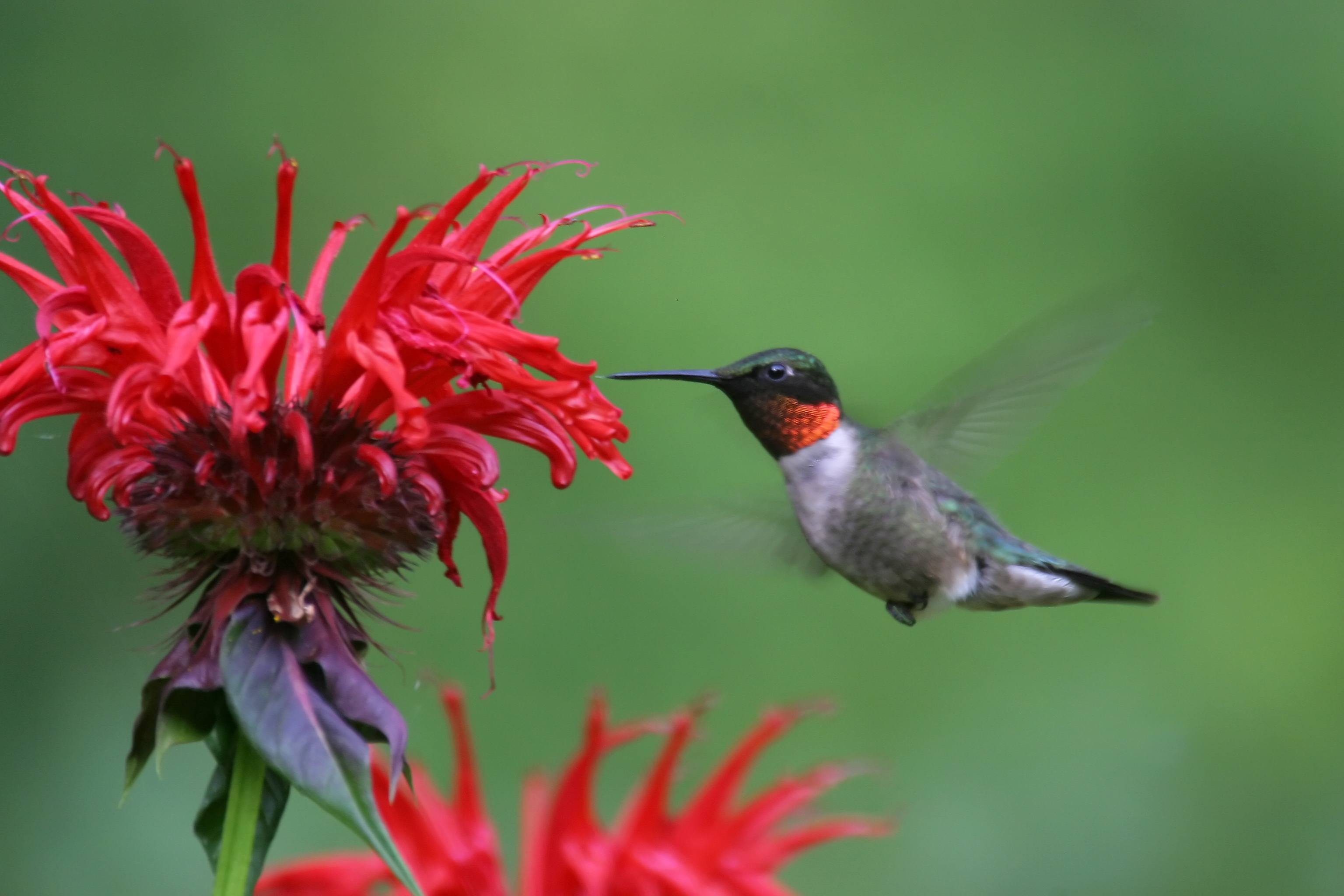
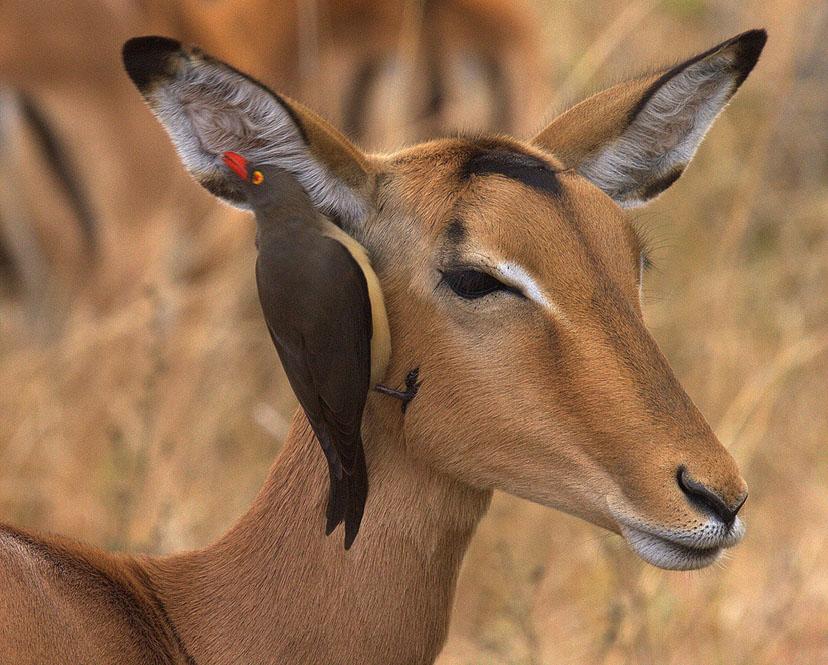


What type of symbiosis?
This is a tick on a human.
commensalism
mutualism
parasitism
A population of kangaroos grows briefly and then stabilizes. What does the leveling off indicate?
The population has reached the carrying capacity of the environment.
The population has exceeded the carrying capacity of the environment.
The population is affected by a density-independent limiting factor.
The population is no longer able to adapt to environmental changes.

Predator population lags behind prey population because......
Increase in predators leads to decrease in prey
Increase in predators leads to increase in prey
Increase in predators leads to decrease in producers
Increase in producers leads to increase in prey
What statement is TRUE about the graph?
The prey is the green line because there needs to be more prey than predators.
The prey is the red line because there needs to be more predators than prey.
The green line is the producers
The red line is the producers

A species that plays a critical role in the health, maintenance, growth, or definition of an ecosystem.
keystone
invasive
engineer
predator

A species that does not belong in a balanced ecosystem, comes in, and changes it (usually for the worse).
flagnship
umbrella
invasive
predator

A species that helps to manage prey populations, which in turn controls the ecosystem's producers (vegetation).
predator
keystone
engineer
mutualist
Why are bees considered a keystone species?
The honey they make supports the bear population
They pollinate flowers that produce fruit which supports the ecosystem
They sting when threatened
They live in hives
Why are some sharks considered a keystone species?
Because they are a top predator
They scare off smaller fish that may overgraze an area of sea grass
They are tertiary consumers
They are cartilaginous
Which one of the following keystone examples play a vital role in the health of coastal kelp forests?
starfish
sea otters
beavers
wolves
elephants
Which one of the following keystone examples is a keystone predator found in the tidal pools of northwestern North America and was the species that launched Robert Paine’s keystone species concept?
starfish
sea otters
beavers
wolves
elephants

Which is an invasive species
pisaster starfish
burmese python
gray wolf
red backed salamander
What type of species causes damage to its surrounding environment?
native
endemic
invasive
keystone
Which species type plays an extra important role in keeping the ecosystem healthy?
keystone
invasive
endemic
native
The zebra mussel is
invasive
native to PA
keystone
endemic
The european starling and the burmese python are examples of this species type
endangered
extinct
invasive
endemic
Keystone species include all EXCEPT
horseshoe crab
prairie dog
american passenger pigeon
african elephant
Invasive species --- [choose 3]
take over the habitat of other organisms.
increases the populations of native organisms.
decrease biodiversity.
increase biodiversity.
cause the populations of native organisms to decrease.
Why do the populations of invasive species grow so quickly?
Invasive Species are native to an area.
Invasive species are prey to many animals.
Invasive species have fewer limiting factors in their new environment
Invasive species keep the ecosystems in equilibrium.
What is a limiting factor?
Factors that always increase a population
Factors that always decrease a population
Resources that are unlimited
Factors/resources that limit how many organisms can live in an area at the same time
What is meant by the carrying capacity of an ecosystem?
How many organisms die in an ecosystem
The maximum number of organisms that an ecosystem can support
The smallest number of organisms that can live in an area
What happens if a population goes over its carrying capacity?
It will continue to grow
It will eventually decrease due to a lack of resources
It will die immediately
It will get unlimited resources
Organize these options into abiotic or biotic factors
Temperature
Water
Wind
Phytoplankton
Sunlight
Frog
Dragonfly
Flower
They affect a population regardless of its density, usually abiotic factors.
Density independent factors
Density dependent factors
What are some abiotic factors that affect a population regardless of its density?
Predation, competition, disease
Food availability, predation, migration
Habitat destruction, pollution, climate change
Temperature, sunlight, water availability, soil composition, and air quality
They affect population size differently depending on its density, usually biotic factors.
Density dependent factors
Density independent factors
What are some biotic factors that affect a population regardless of its density?
Predation, competition for resources, and disease.
Migration, climate change, and pollution.
Habitat destruction, invasive species, and genetic mutations.
Birth rate, immigration, and emigration.
What happens to the population of a species after it reaches its carrying capacity?
Increases linearly over time.
Increases exponentially over time.
Decreases to zero in a very short amount of time
Remains relatively the same.
What do limiting factors do?
Determine what organisms are predators and which are prey.
Regulate how many organisms live in an ecosystem.
Decide trophic levels of individuals.

