wayground logo

Free Printable Worksheets

Font size

S
M
L
XL
Worksheets

Quarter 3 Midterm Exam Practice Test

Total questions: 144

Worksheet time: 4hrs 30mins

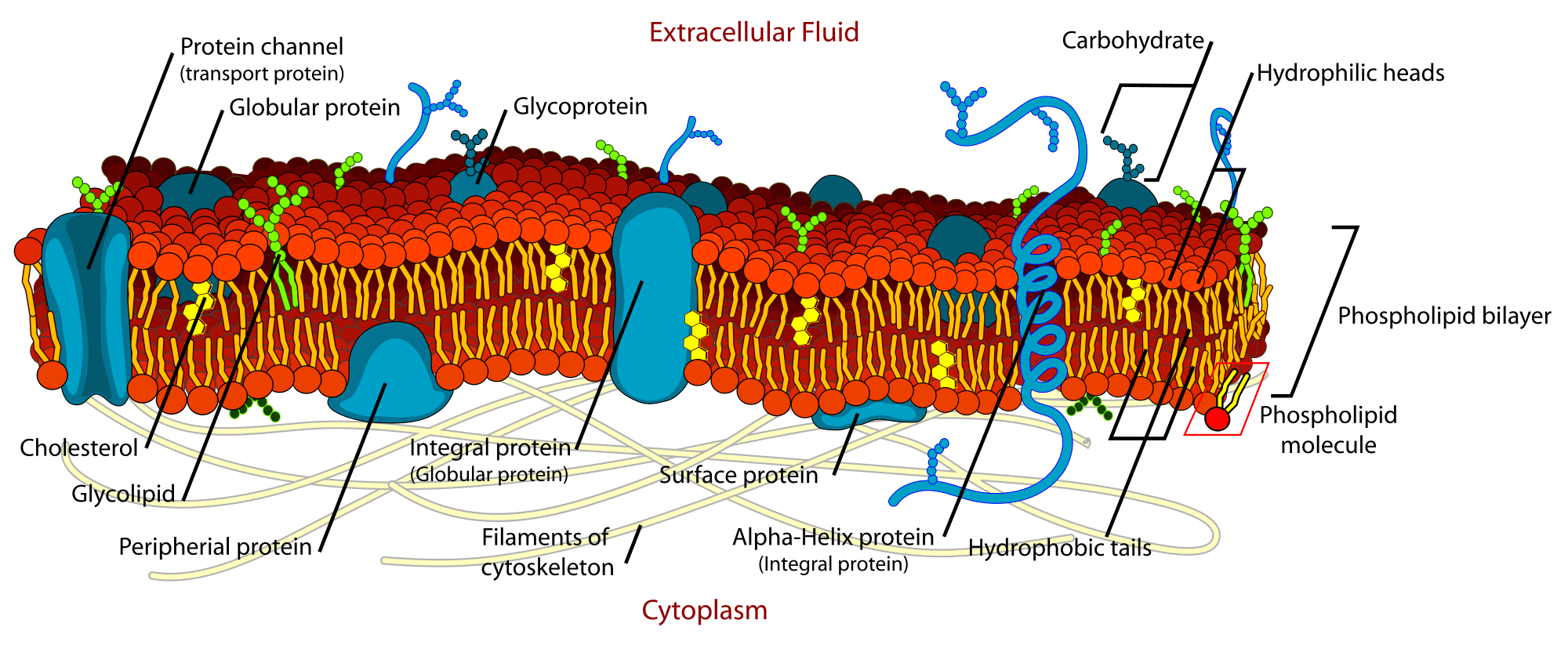
Name
Class
Date
1.

According to mosaic model, plasma membrane made up of_________

a)

Cellulose and hemicellulose

b)

Phospholipids and hemicellulose

c)

Phospholipids, cholestrol and membrane proteins.

d)

Phospholipids only

2.
The picture below is an example of _________________.
a)
osmosis
b)
isotonic
c)
diffusion
d)
active transport
3.

Ideally, your cells should be in a(n) _____ solution.

a)

isotonic

b)

hypertonic

c)

hypotonic

d)

hyperbaric

4.

In a solution of salt water, salt is considered the ____.

a)

Solvent

b)

Solute

c)

Solution

d)

Diffusion

5.

Which type of transport uses energy in the form of ATP to transport substances?

a)

Active transport

b)

Passive transport

6.

Which cell organelle helps maintain homeostasis by regulating what comes in and out of your cell?

a)

cell wall

b)

mitochondria

c)

lysosomes

d)

cell membrane

7.

Which of the following is the BEST definition for passive transport?

a)

Movement of substances through a cell membrane from a high to low concentration without the use of energy

b)

Movement of substances through a cell membrane from a low to high concentration requiring the use of energy

c)

Movement of substances through a cell membrane from a low to high concentration without the use of energy

d)

Movement of substance through a cell membrane from a high to low concentration requiring the use of energy

8.

Match the following

a)

phospholipids

1.

main component of the cell membrane

b)

membrane proteins

2.

allows large molecules to pass through membrane

c)

semipermeable

3.

some substances can go through the cell membrane and some can't

d)

passive transport

4.

does not require ATP; molecules move high to low

e)

active transport

5.

requires ATP; molecules move low to high

9.
Which of the following types of passive transport involves water molecules moving from a high concentration to a low concentration?
a)
osmosis
b)
simple diffusion
c)
filtration
d)
facilitated diffusion
10.
What type of transport is this?
a)
facilitated diffusion
b)
active transport
c)
diffusion
d)
osmosis
11.
What is this image?
a)
cell membrane
b)
mitochondria
c)
golgi apparatus
d)
endoplasmic reticulum
12.
In which direction will these molecules diffuse?
a)
from right to left
b)
from left to right
c)
they will not move at all
d)
they will move in both directions equally
13.
Which part of this phospholipid is hydrophobic?
a)
fatty lipid tails
b)
head
c)
all of it is hydrophobic
d)
none of it is hydrophobic
14.
Most active transport proteins use energy from the breakdown of:
a)
nucleus
b)
cell membrane
c)
ATP
d)
mitochondria
15.
When both inside and outside of a cell have the same amount of water it is said that the cell has reached a state of
a)
Osmosis
b)
Diffusion
c)
Equilibrium
16.

What type of solution will cause a cell to lose water and shrivel up?

a)

Hypotonic

b)

Isotonic

c)

Pure solution

d)

Hypertonic

17.

What is homeostasis?

a)

The process of making energy in a cell

b)

The process of maintaining an internal balance while responding to external changes

c)

The process of producing new and healthy cells

d)

The process of converting DNA code into proteins in a cell

18.
Gases like oxygen and carbon dioxide move across the cell membranes by:
a)
Endocytosis
b)
Ion Channels
c)
Diffusion
d)
Facilitated Diffusion
19.
Which organelle performs PHOTOSYNTHESIS?
a)
Chloroplast
b)
Mitochondria
20.
What is the ultimate ORIGINAL source of energy for living things
a)
Sugar
b)
Sun
c)
Moon
d)
Carbon Dioxide
21.
What is the pigment in chloroplasts that performs photosynthesis?
a)
Chlorosynthesis
b)
Chlorophyll
c)
ADP
d)
Electron Transport
22.
What are the products of photosynthesis?
a)
water and carbon dioxide
b)
oxygen and glucose
c)
oxygen and carbon dioxide
d)
oxygen and water
23.
After photosynthesis, plants store their energy as _________ .
a)
chlorophyll
b)
pigment
c)
glucose (sugar)
d)
Oxygen
24.
What gas goes into the plant before photosynthesis?
a)
Carbon Dioxide
b)
Carbon Monoxide
c)
Oxygen
d)
Nitrogen
25.

Where do the dark reactions (Calvin cycle) take place?

a)

thylakoid membrane

b)

lumen

c)

stroma

26.
What are the two products of the light reactions that are needed for the calvin cycle?
a)
NAD and NADPH
b)
NADP + and Glucose
c)
NADPH and ATP
d)
Oxygen and NADPH
27.
What is the main chemical compound that stores and releases energy?
a)
ATP
b)
Cytoplasm
c)
PTP
d)
Oxygen
28.
What do plants need for the photosynthesis process?
a)
a camera and tripod
b)
light, carbon dioxide, and water
c)
roots, flowers, and bees
d)
soil, air, and oxygen
29.
The stacks of disks in the chloroplast are called:
a)
Lamellae
b)
Grana
c)
Stroma
d)
Thylakoid
30.
The ____________ is the most photosynthetic part of a plant.
a)
leaf
b)
flower
c)
roots
d)
stem
31.
Glucose is a ...
a)
sugar
b)
carbohydrate
c)
source of quick energy
d)
all are correct
32.
The formula for glucose is...
a)
C12 H22 O11
b)
NaCl
c)
NaOH
d)
C6 H12 O6
33.
This is ...
a)
mitochondria
b)
chloroplast
c)
cell
d)
phloem
34.
Where do the light-dependent reactions occur? 
a)
thylakoid membrane
b)
stroma
c)
mesophyll
d)
mitochondria
35.
This image shows the process of _____.
a)
Respiration
b)
Photosystem I
c)
Dark Reactions
d)
Photosynthesis
36.
Most plants appear green because chlorophyll
a)
absorbs green light.
b)
absorbs violet light.
c)
does not absorb green light.
d)
does not absorb violet light.
37.
Does the Calvin Cycle require light?
a)
yes
b)
no
c)
depends on the amount of carbon dioxide
38.

Use the diagram to answer the question. Which molecule is an electron carrier?

a)

H2O

b)

carbon dioxide

c)

NADPH

d)

oxygen

39.
Which product is produced by the splitting of water during the light-dependent reactions of photosynthesis?
a)
NADPH
b)
oxygen
c)
glucose
d)
carbon dioxide
40.

How does water enter the plant?

a)

Through the roots of the plant.

b)

Through the top of the leaf.

c)

Through the pistil in the flower.

d)

Through the stomata in the underside of the leaf.

41.

Which of the following equations represents the overall chemical reaction for photosynthesis?

a)

6O2+ 6H2O → C6H12O6+ 6O2

b)

C6H12O6 + 6H2O→ 6O2+ 6O2

c)

6CO2+ 6H2O→ C6H12O6+ 6O2

d)

6O2 + 6H2O→ C6H12O6 + 6CO2

42.
Protons move into the thylakoid due to the
a)
concentration gradient in the stroma
b)
  Brownian motion of the protons.
c)
  peer pressure of the cool electrons in the stroma.  
d)
movement of electrons through the electron transport chain
43.
What happens to the remaining G3P molecules in the last step of the dark reactions?
a)
They are used to make glucose.
b)
They are reshuffled to make CO2 by adding ATP.
c)
They exit the cycle.
d)
They are reshuffled to make RuBP by adding ATP. 
44.
The two main stages of photosynthesis are the
a)
light reactions and respiration
b)
dark reactions and the Calvin cycle 
c)
light reactions and the Calvin cycle
d)
dark reactions and fermentation
45.

What are the reactants (taken into) of cellular respiration? (Mark all of them!)

a)

oxygen

b)

glucose

c)

carbon dioxide

d)

water

e)

energy

46.

Which of the following structure is where cellular respiration (Kreb's Cycle and Electron Transport Chain) occurs in the cell?

a)

nucleus

b)

cytoplasm

c)

mitochondria

d)

vacuoles

47.

What is the correct equation for cellular respiration?

a)

6O2 + C6H12O6 -> 6CO2 + 6H2O + Energy

b)

6O2 + C6H12O6 + Energy -> 6CO2 + 6H2O

c)

6CO2 + 6H2O -> 6O2 + C6H12O6 + Energy

d)

6CO2 + 6H2O + Energy -> 6O2 + C6H12O6

48.

Cellular Respiration's goal is to

a)

make water

b)

make ATP

c)

make glucose

d)

make oxygen

49.

What type of respiration requires oxygen?

a)

Aerobic

b)

Anaerobic

50.

How many ATP are produced in aerobic respiration?

a)

2

b)

33

c)

4

d)

36

51.
Where does the Krebs Cycle take place?
a)
mitochondria
b)
chloroplast
c)
cytoplasm
d)
nucleus
52.

What is the name of the energy produced during cellular respiration?

a)

ATP

b)

NADH

c)

FADH2

d)

glucose

53.

Where does Glycolysis occur inside the cell? (first step in the overall process)

a)

Cytoplasm

b)

Mitochondria

c)

Chloroplast

d)

Nucleus

54.

What are the products (what is released) of cellular respiration? (Mark all of them!)

a)

oxygen

b)

glucose

c)

carbon dioxide

d)

water

e)

ATP (energy)

55.

Which stage of the cellular respiration process produces the most ATP?

a)

Glycolysis

b)

Acetyl CoA

c)

Kreb's Cycle

d)

Electron Transport Chain

56.

Glucose is broken down into pyruvic acid during which process

a)
Krebs cycle
b)
Calvin cycle
c)
Glycolysis
d)
Photosynthesis
57.

What happens in the electron transport chain?

a)

NADH and FADH2 drop off hydrogens to form massive amounts of ATP

b)

pyruvic acid is formed from breaking down glucose

c)

CO2 is released and H2O and ATP

d)

glucose is broken down and ATP is formed

58.
What does it mean for something to be anaerobic?
a)
It requires CO2
b)
It does not require CO2
c)
It requires oxygen
d)
It does not require oxygen
59.
What is a disadvantage of fermentation as a process? 
a)
It produces too much ATP
b)
It only produces 2 ATP
c)
It occurs in the absence of oxygen
d)
It is only for quick bursts of energy
60.
What cells in the body may undergo lactic acid fermentation during exercise? 
a)
Muscle cells
b)
Fat cells
c)
Liver cells
d)
Skin cells
61.
Lactic acid fermentation occurs in your muscles after a workout because your cells are struggling to get
a)
Glucose
b)
Sunlight
c)
Oxygen
d)
Water
62.
Which of the following is true about anaerobic respiration?
a)
It is a fast process
b)
It allows organisms to live in places with little oxygen
c)
It evolved before aerobic respiration
d)
all of the above
63.

Is cellular respiration done by all organisms? Even Plants?

a)

Yes

b)

No

64.
Which of the following best describes why cells divide through the process of mitosis?
a)
To prevent cells from becoming too large.
b)
To make more of the same cells.
c)
For growth and repair of injuries.
d)
All of the above.
65.
True or False: Cells reproduce by a cycle of growing and dividing called the "cell cycle."
a)
True
b)
False
66.
True or False: The cell cycle is an orderly series of events in which a cell duplicates its contents and divides to produce two new daughter cells.
a)
True
b)
False
67.
True or False: All cells divide at the same rate.
a)
True
b)
False
68.
Which of the following best describes what takes place during interphase?
a)
The cell grows, carries out normal cell functions, DNA replicates.
b)
Nucleic division.
c)
Cutting of the cytoplasm.
d)
Chromosomes align in the middle of the cell.
69.
Which of the following best describes what takes place during cytokinesis?
a)
The cell grows, carries out normal cell functions, DNA replicates.
b)
Nucleic division.
c)
Cutting of the cytoplasm.
d)
Chromosomes align in the middle of the cell.
70.
What takes place during the G1 stage of Interphase?
a)
Cell grows and carries out normal functions.
b)
Replication of DNA.
c)
Cell performs final checkpoints prior to division.
71.
Put the following stages of Interphase in the correct order...
a)
G1, S, G2
b)
S, G1, G2
c)
G1, G2, S
d)
G2, S, G1
72.
True or False: Chromosomes are made up of condensed, or coiled up, chromatin (DNA).
a)
True
b)
False
73.
DNA normally exists in its long winding form known as ___________________.
a)
Chromatin
b)
Chromosomes
c)
Chromatids
d)
Centrioles
74.
Chromosomes are made up of two___________________ which are held together by a __________________.
a)
Chromatids ; Chromosome
b)
Chromatids ; Centromere
c)
Chromosomes ; Chromatids
d)
Centromeres ; Chromatin
75.
Put the following stages of the mitosis cell cycle in the correct order….
a)
Interphase -> Prophase -> Metaphase -> Anaphase -> Telophase -> Cytokinesis
b)
Prophase -> Telophase -> Cytokinesis -> Interphase -> Metaphase -> Anaphase
c)
Anaphase -> Telophase -> Interphase -> Metaphase -> Cytokinesis -> Prophase
d)
Metaphase -> Cytokinesis -> Anaphase -> Interphase -> Prophase -> Telophase
76.
When does the following take place: Chromosomes condense, the nucleus disappears, centrioles form and spindle fibers form.
a)
Prophase
b)
Interphase
c)
Anaphase
d)
Telophase
77.
When does the following take place: Spindle fibers attach to the centromeres of chromosomes and line them up along the middle of the cell.
a)
Metaphase
b)
Anaphase
c)
Prophase
d)
Telophase
78.
When does the following take place: Spindle fibers shorten, pulling the chromosomes apart so that chromatids travel to the opposite poles.
a)
Anaphase
b)
Metaphase
c)
Telophase
d)
Prophase
79.
________________ is the uncontrolled growth and division of cells.
a)
Cancer
b)
Apoptosis
c)
Cytokinesis
d)
Meiosis
80.
The image shows a cell undergoing...
a)
Prophase
b)
Metaphase
c)
Anaphase
d)
Cytokinesis
81.
The image shows a cell undergoing...
a)
Metaphase
b)
Anaphase
c)
Telophase
d)
Prophase
82.
The image shows a cell undergoing...
a)
Anaphase
b)
Telophase
c)
Interphase
d)
Metaphase
83.
The image shows a cell undergoing...
a)
Telophase
b)
Metaphase
c)
Interphase
d)
Prophase
84.
The image shows a cell undergoing...
a)
Cytokinesis
b)
Interphase
c)
Prophase
d)
Telophase
85.

How is cancer related to cell division?

a)

Mutations can cause uncontrolled cell division which causes cancerous cells to spread rapidly and take nutrients from healthy cells.

b)

Cancer stops cell division from happening.

c)

Cell division causes viruses that spread around the body and cause cancer.

d)

Cancer is not related to cell division.

86.

Cells spend most of their lives in which phase?

a)

Interphase

b)

Prophase

c)

Telophase

d)

Metaphase

87.

How many chromosomes does a human somatic (body) cell have?

a)

46

b)

23

c)

42

d)

26

88.

Juan brought home a tiny puppy. His puppy grew. Four weeks later, his puppy had grown to twice its original size. Which answer below best explains why Juan's puppy got bigger?

a)

The number of cells in the puppy’s body increased.

b)

The puppy’s body absorbed the food it ate.

c)

The puppy’s body cells grew larger as it got older.

d)

Parts of the puppy’s body stretched out more.

89.
In mitosis, the two resulting cells are
a)
different from the starting cell and identical to each other.
b)
different from the starting cell and different from each other.
c)
identical to the starting cell and different from each other.
d)
identical to the starting cell and identical to each other.
90.
Fruit fly body cells have 8 chromosomes. After mitosis, you would expect a resulting fruit fly daughter cell to have -
a)
16 chromosomes.
b)
46 chromosomes.
c)
8 chromosomes.
d)
4 chromosomes.
91.
The ___________ holds the replicated sister chromatids together.
a)
centriole
b)
chromosomes
c)
centromere
d)
cycles
92.

Why is DNA important

a)

it provides the instructions/blueprint for a cell

b)

it makes energy

c)

it stores wastes

d)

it is responsible for making food

93.

Daughter cells created by mitosis have

a)

half of the parents genetic material

b)

twice the parent cell's genetic material

c)

an exact copy of the parent cell

d)

have a brand new DNA structure

94.

What are chromosomes?

a)

They attach to the DNA and pull it to the sides

b)

They contain mitochondria

c)

They contain ribosomes

d)

DNA packaged into threadlike structures

95.

In the following structure, the circled item is a

a)

chromosome

b)

chromatid

c)

centromere

d)

chromatin

96.

Chromosomes that have the same sequence of genes and the same structure are ___________.

a)

homologous chromosomes

b)

alleles

c)

phenotypes

d)

genotypes

97.

Two identical copies of a single replicated chromosome that are connected by a centromere.

a)

Chromatin

b)

Homologous chromosomes

c)

Sister chromatid

d)

Centromere

98.

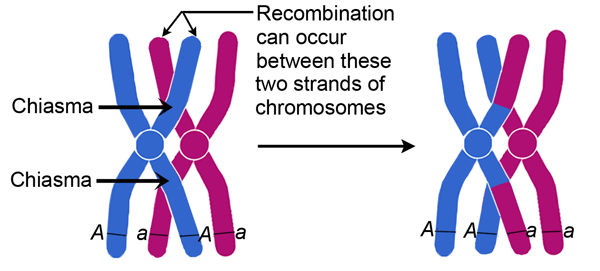
When an area of a chromatid is exchanged with the matching area on a chromatid of its homologous chromosome, _____ occurs.

a)

crossing over

b)

mutagenesis

c)

hybridization

d)

fertilization

99.

Unit of heredity which is transferred from a parent to offspring and is used to determine specific characteristics of the offspring.

a)

Gene

b)

Sister Chromatid

c)

Chromosome

d)

Crossing Over

100.

A two stage process that creates gametes by dividing the chromosomes in a diploid cell to create haploid gamete cells.

a)

Meiosis

b)

Mitosis

c)

Interphase

d)

Cell Cycle

101.

A cell that contains two copies of genetic material. Usually represented as 2n.

a)

Haploid

b)

Diploid

c)

Prokaryotic

d)

Bacteria

102.

A cell that contains only one copy of genetic material. Usually represented as n or 1n.

a)

Diploid

b)

Haploid

c)

Bacteria

d)

Prokaryotic

103.

A type of sex cell that contains only one set of chromosomes, or half the genetic material necessary to form a complete organism (i.e., haploid).

a)

Gamete

b)

Diploid

c)

Prokaryotic

d)

Unicellular

104.

Meiosis is a process that happens in organisms that reproduce ________________.

a)

asexually

b)

sexually

c)

binary fission

d)

fragmentation

105.

What two parts of meiosis create the genetic differences in the offspring of organisms that reproduce sexually.

a)

Crossing Over

b)

Independent Assortment

c)

Mitosis

d)

Cytokinesis

106.

A process that happens during Metaphase I where chromosomes randomly line up in the middle of the cell.

a)

Crossing Over

b)

Homologous Pair

c)

Independent Assortment

d)

Fertilization

107.

Identify all examples of cells that would be diploid/somatic cells.

a)

skin cells

b)

muscle cells

c)

cardiac cells

d)

sperm cells

108.

Identify the specific examples that would be haploid cells.

a)

Cardiac Cells

b)

Sperm Cells- male

c)

Egg Cells- female

d)

Muscle Cells

109.

The process of joining gametes.

a)

Fertilization

b)

Crossing Over

c)

Independent Assortment

d)

Mitosis

110.

When sperm (haploid) fertilizes this egg (haploid), the resulting cell is the ____________ (diploid).

a)

Zygote

b)

Egg

c)

Sperm

d)

Somatic Cell

111.

In a eukaryotic, multicellular organism where are chromosomes located?

a)

Nucleus

b)

Mitochondria

c)

Ribosome

d)

Cytoplasm

112.

_____________ is a process that creates haploid gametes: _____________ is a process that creates identical diploid cells for growth, repair and maintaining homeostasis.

a)

Meiosis; Mitosis

b)

Mitosis: Meiosis

c)

Fertilization: Mitosis

d)

Mitosis: Independent Assortment

113.

A human body (somatic) cell usually has how many chromosomes?

a)

6

b)

22

c)

4

d)

46

114.
If the Diploid number of Carrots is 18, the haploid number is
a)
18
b)
9
c)
27
d)
36
115.
The process of crossing over occurs in what phase of meiosis?
a)
anaphase 1
b)
prophase 1
c)
prophase 2
d)
telophase 1
116.
The cells produced via meiosis are called:
a)
sex cells
b)
somatic cells
c)
body cells
d)
skin cells
117.
If a somatic (body) cell in a butterfly contains 24 chromosomes, a butterfly egg would contain
a)
3
b)
6
c)
12
d)
24
118.
What causes genetic variation in meiosis?
a)
chromosomes lining up
b)
crossing over of chromosomes
c)
separation of chromosomes
d)
chromosomes pulling apart
119.

The chromosomes that pair up during meiosis, are called __________ chromosomes.

a)

heterozygous

b)

asexual

c)

homologous pairs

d)

genes

120.
How many daughter cells are produced at the end of meiosis?
a)
1
b)
2
c)
3
d)
4
121.
What phase is represented?
a)
metaphase 1
b)
metaphase 2
c)
anaphase 1
d)
anaphase 2
122.
What phase is represented?
a)
metaphase 1
b)
metaphase 2
c)
anaphase 1
d)
anaphase 2
123.
What process, and which type of resulting cells are represented?
a)
mitosis, gametes
b)
mitosis, body cells
c)
meiosis, gametes
d)
meiosis, body cells
124.
Meiosis makes sperm and egg cells. In humans, sperm and egg cells each have _____ chromosomes. Therefore a fertilized human egg cell (sperm and egg cell combined) would create a cell with _____ chromosomes.
a)
23, 46
b)
46, 23
c)
2, 4
d)
50, 100
125.
What is one of the advantages, why is it better to reproduce sexually versus asexually?
a)
survival of the fittest
b)
overproduction
c)
genetic variation
d)
cloning
126.
According to the chromosome theory of inheritance, what are carried from parents to their offspring on chromosomes?
a)
Genes
b)
Spindle Fibers
c)
Centrioles
d)
Cytoplasm
127.
Name the growth phase of the cell cycle for both Mitosis and Meiosis.
a)
metaphase
b)
telophase
c)
interphase
d)
anaophase
128.
This image shows chromosomes during Prophase 1. Which of the following correctly describes the process shown?
a)
segregation of sister chromatids
b)
condensation and segregation of alleles
c)
mutationin which the DNA content of the gene is altered
d)
crossing - over in which alleles are exchanged
129.
A human zygote should have _____ chromosomes inside.
a)
46
b)
23
c)
92
d)
64
130.
products of meiosis are genetically
a)
different
b)
identical
131.
This picture shows which process?
a)
mitosis
b)
meiosis
c)
the cell cycle
132.

homologous chromosomes pair up and form tetrad

a)

prophase 1

b)

anaphase 1

c)

telophase 2

d)

metaphase 2

133.
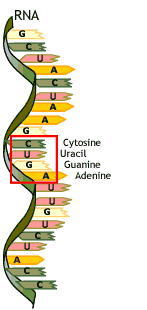
In RNA, Uracil pairs with ______. 
a)
cytosine
b)
adenine
c)
guanine
d)
thymine
134.
The process to go from DNA to mRNA is _______
a)
translation
b)
transcription
c)
replication
135.
The process to go from mRNA to a protein is called ____
a)
transcription
b)
rRNA
c)
replication
d)
translation
136.
What is the three base sequence of mRNA that codes for a single amino acid?
a)
Anticodon
b)
Codon
c)
Protein
137.
Does the order of amino acids in a protein matter?
a)
YES!
b)
NO!
138.
How many amino acids are coded for by this sequence of nucleotides:
ATG GGA ACT CCA
a)
4
b)
2
c)
6
d)
12
139.
Contains the bases adenine, uracil, cytosine and guanine
a)
DNA
b)
RNA
c)
Both
140.
Which would be considered a somatic cell?
a)
Sperm cell
b)
Egg Cell
c)
Skin Cell
d)
All of these
141.
What is the haploid number for this Karyotype?
a)
26
b)
27
c)
52
d)
54
142.
A diploid cell of a normal male human contains 
a)
22 autosomes and two Y-chromosomes.
b)
22 pairs of autosomes and two Y-chromosomes.
c)
22 pairs of autosomes, one X and one Y-chromosome
d)
22 autosomes and two X-chromosomes
143.
What would indicate a human male?
a)
XX
b)
X
c)
XY
d)
XXY
144.
A person with Turner syndrome has only one X chromosome. This means one of their gametes was missing a chromosome.
Which of the following is why gametes sometimes lack a complete chromosome?

a)
Incomplete dominance
b)
Nondisjunction
c)
Inversion mutation
d)
Substitution mutation