wayground logo

Free Printable Worksheets

Font size

S
M
L
XL
Worksheets

Fall Semester Test

Total questions: 136

Worksheet time: 2hrs 53mins

Name
Class
Date
1.
Every living organism is made up of one or more cells
a)
True
b)
False
2.
A cell is...
a)
the basic unit of structure and function in living organism
b)
an organism
c)
a basic part of everything that we see
d)
found only in animals, not plants
3.
Which of the following are NOT found in animal cells
a)
chloroplasts and cytoplasm
b)
chloroplasts and cell wall
c)
cell wall and cell membrane
d)
mitochondria and nucleus
4.
The nucleus is like the ____________ of the cell.
a)
foot
b)
hand
c)
stomach
d)
brain
5.

Which of the following converts food into energy for the cell?

a)

vacuole

b)

mitochondria

c)

cytoplasm

d)

cell membrane

6.

The fluid that surrounds the organelles is... (hint... "Try to pull a fast one and..."

a)

chloroplast

b)

cytoplasm

c)

vacuole

d)

cell wall

7.
What do vacuoles do? 
a)
They actually do not have an important role
b)
They protect the cell
c)
They are the brain of the cell
d)
storage area for cells; water storage in plants 
8.

Which organelle takes in "sun showers" and helps plants with the process or photosynthesis?

a)

Vacuole

b)

Mitochondria

c)

Cytoplasm

d)

Chloroplast

9.
Which of the following, found ONLY in plant cells, provides structure?
a)
cell wall
b)
chloroplast
c)
mitochondria
d)
vacuole
10.
Which of the following, found ONLY in plant cells, provides structure?
a)
cell wall
b)
chloroplast
c)
mitochondria
d)
vacuole
11.
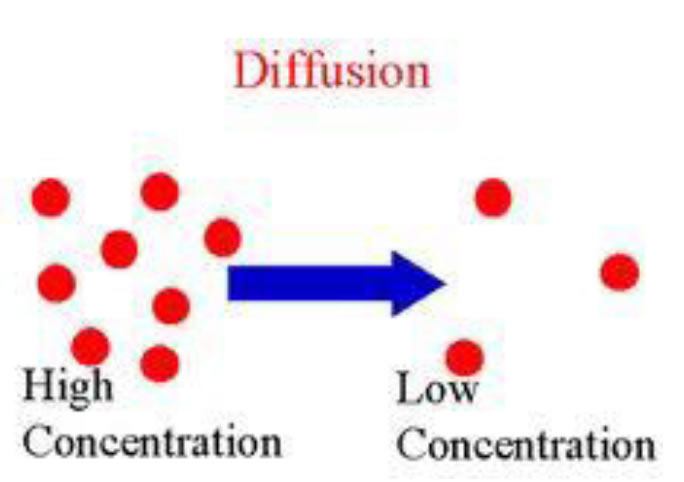
Movement of particles from high to low concentration. 
a)
Passive Transport
b)
Active Transport
12.
Osmosis is a form of ______________. 
a)
Passive Transport
b)
Active Transport
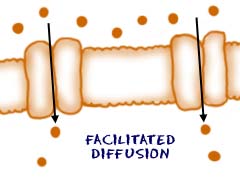
13.
a)
Passive Transport
b)
Active Transport
14.
This picture represents what type of cell transport?
a)
endocytosis
b)
exocytosis
c)
osmosis
d)
passive transport
15.
Osmosis is the movement of _____ across a membrane.
a)
food
b)
energy
c)
oxygen
d)
water
16.
Which is true about active transport?
a)
It requires energy
b)
it does not require energy
c)
It moves substances down the concentration gradient
d)
it moves material from high to low concentration
17.
This cell organelle helps organisms maintain homeostasis by controlling what substances may enter or leave cells.
a)
vacuole
b)
nucleus
c)
cell membrane
d)
cell wall
18.
The cell below is in a _________ solution.
a)
Hypotonic
b)
Hypertonic
c)
Isotonic
19.
The cell below is in a _____________ solution.
a)
Hypertonic
b)
Hypotonic
c)
Isotonic
20.
A cell in an isotonic solution will
a)
swell
b)
shrink
c)
stay the same size
d)
impossible to tell
21.
When a cell is placed in a hypertonic solution water
a)
moves from the inside of the cell to the solution
b)
moves from the solution to the inside of the cell
c)
moves equally in and out of the cell
d)
none of these
22.
A cell will __________________ in a hypotonic solution.
a)
swell and perhaps burst (lyse)
b)
shrink
c)
the size of the cell will not change
d)
the size of the cell will change from large to small and from small to large
23.
A cell will __________________ in a hypotonic solution.
a)
swell and perhaps burst (lyse)
b)
shrink
c)
the size of the cell will not change
d)
the size of the cell will change from large to small and from small to large
24.
Active transport requires _____ to move materials across the cell membrane.
a)
proteins
b)
sunlight
c)
oxygen
d)
energy
25.
When the concentration of particles inside of a cell is the same as the concentration of particles outside of the cell. 
a)
active transport
b)
concentration
c)
diffusion
d)
equilibrium
26.
Cell membrane surrounds a particle and encloses it (for large particles)
a)
Endocytosis
b)
Exocytosis
c)
Permeable
d)
In high concentration
27.
Particles are removed from a cell (pushed out).
a)
Endocytosis
b)
Exocytosis
c)
Permeable
d)
In high concentration
28.
Something is ___________ ____________
when some molecules can cross the membrane while others cannot. 
a)
Selectively (or Semi) Permeable 
b)
Totally Transparent
c)
Liquid Licorice 
d)
Heavily Patrolled 
29.
Dominant or recessive?
tt
a)
Dominant 
b)
Recessive
30.
Dominant or recessive?
Dd
a)
Dominant
b)
recessive
c)
neither
d)
homozygous
31.
Emily has brown hair. Which is most likely a true statement about Emily?
a)
Emily’s favorite color is brown.
b)
Emily has a parent with brown hair.
c)
Emily’s older brother has brown hair. 
32.
What should students use to identify the percent chance of a trait being passed down from a parent to its offspring?
a)
a graph
b)
a flow chart
c)
a data table
d)
a Punnett square
33.
Which statement best supports why many offspring look similar to their parents?
a)
Offspring inherit characteristics from one parent.
b)
Offspring inherit characteristics from both parents.
c)
Parents choose which characteristics to pass on to their offspring.
d)
Parents choose to change their appearance to match that of their offspring.
34.
Bob is a tall, slender young man with red hair and blue eyes. Which couple would most likely be Bob’s parents?
a)
a slender, red-haired father and a tall, blue-eyed mother
b)
a tall green-eyed father with long brown hair and a short, brown-haired mother
c)
a short, green-eyed, black-haired father and a tall, brown haired, brown-eyed mother
d)
a short, plump brown-haired father with freckles and a short, blue-eyed red-haired mother
35.
What are the possible combinations of a pea plant with the alleles PP and a male pea plant with the alleles pp.
P= purple
p= white
a)
all Pp
b)
all PP
c)
Pp,PP,Pp,PP
d)
all pp
36.
When the allele combination is a dominate and a recessive trait together which trait will be seen?
a)
Dominate
b)
Recessive
c)
none
d)
both
37.
Homozygous is when...
a)
the alleles are the same
b)
the alleles are different
c)
the alleles are absent
d)
the alleles are present
38.
B = brown fur  b = white fur
In the punnett square, what is the probability for white fur? 
a)
0%
b)
25%
c)
50%
d)
75%
39.
Aa is
a)
homozygous (purebred)
b)
heterozygous (hybrid)
40.
What is a phenotype?
a)
The expression of a trait; physical appearance.
b)
refers to the genetic makeup of an individual
c)
An organism that has the same genes for a trait (ex. TT or tt)
d)
the passing of traits from parent to offspring
41.
This means Different Gene
a)
Dominant
b)
Recessive
c)
Homozygous
d)
Heterozygous
42.
Homozygous or heterozygous?
BB
a)
Homozygous
b)
Heterozygous
43.
Which of the following is a phenotype?
a)
Aa
b)
red hair
c)
heterozygous
d)
DNA
44.
A process in which DNA has the unique ability to make an exact copy of itself.
a)
Replication
b)
Translation
c)
Transcription
45.
In what phase of the cell cycle does DNA replication take place?
a)
G1
b)
S
c)
G2
d)
M
46.
Adenine bonds with ______________.
a)
Guanine
b)
Thymine
c)
Cytosine
d)
Adenine
47.
Guanine bonds with ______________.
a)
Adenine
b)
Guanine
c)
Cytosine
d)
Thymine
48.
Why is DNA important?
a)
it is very small and very complicated
b)
it's in everything
c)
it serves as the blueprint for traits of all living things
d)
because we eat it every day for energy
49.
What are the 4 nitrogen bases?
a)
adenine, thymine, cytoplasm, and guanine
b)
adenine, thymine cytosine, and guanine
c)
adenine, thymine, cytosine, and gylcerol
d)
adenine, thymine, cytosine, and glucose
50.
What does DNA stand for?
a)
Deoxyribonucleic acid
b)
Denitrogenous acid
c)
Deribonucleic acid
d)
Diribonucleic acid
51.
Why would it be important to replicate DNA before a cell divides in mitosis or meiosis?
a)
In order for genetic information to be transferred into daughter cells.
b)
In order for the cell to be able to increase in size.
c)
In order for the DNA to be contained in the nucleus.
d)
In order for the cell to re-order the DNA sequencing in the new cells.
52.
Meiosis produces different types of cells than mitosis. If there was a "meiosis club," all of these cells could be included EXCEPT
(Which cell type is not produced in meiosis?)
a)
gametes
b)
body cells
c)
sperm cells
d)
egg cells
53.
Which organelle is DNA usually found in?
a)
cell membrane
b)
vacuole
c)
chloroplast
d)
nucleus
54.

What is this phase of Mitosis?

a)

Prophase

b)

Metaphase

c)

Anaphase

d)

Telophase

55.

What is this phase of Mitosis?

a)

Prophase

b)

Metaphase

c)

Anaphase

d)

Telophase

56.

Which is used to repair or grow cell?

a)

mitosis

b)

meiosis

c)

replication

d)

transcription

57.
Which of these phases of mitosis take place first?
a)
anaphase
b)
telophase
c)
prophase
d)
metaphase
58.

Meiosis is the _____.

a)

division of sex cells

b)

division of body cells

59.

Which of the following is a sex cell?

a)

sperm

b)

bone

c)

heart

d)

muscle

60.

At the end of Mitosis, how many cells are there?

a)

1

b)

2

c)

3

d)

4

61.

At the end of cell division, what happens after telophase?

a)

cytokinesis

b)

cytoplasm

c)

Indiana Jones wins the day!

d)

telophase 2

62.

Where does Mitosis take place?

a)

where growth and repair are happening

b)

in your hair cells only

c)

in your blood cells only

63.

What is this phase of mitosis? (hint: apart)

a)

Prophase

b)

Anaphase

c)

Telophase

d)

Metaphase

64.

What is this phase of mitosis?

a)

Prophase

b)

Anaphase

c)

Telophase

d)

Metaphase

65.

Different forms of a single gene.

a)

Genotype

b)

Chromosome

c)

Trait

d)

Allele

66.

Carry hereditary information, located in the nucleus.

a)

Alleles

b)

Gene

c)

Chromosome

d)

Offspring

67.

When 2 different dominant traits are inherited and they are both expressed.

a)

Incomplete Dominance

b)

Co-Dominance

c)

Recessive

d)

Punnett Square

68.

The trait that always appears in the offspring if it is present.

a)

Dominant

b)

Recessive

c)

Hybrid

d)

Incomplete Dominance

69.

Segments of DNA that carry hereditary information and are passed from parent to offspring.

a)

Chromosomes

b)

Probability

c)

Ressesive

d)

Genes

70.

The gene combination that is present in a cell or organism for a particular trait.

a)

Phenptype

b)

Hybrid

c)

Pure

d)

Genotype

71.

The passing of traits from parents to offspriing.

a)

Chromosomes

b)

Genes

c)

Heredity

d)

Alleles

72.

An organism or cell in which the pair of genes for a particular trait are different.

a)

Hybrid

b)

Heredity

c)

Pure

d)

Dominant

73.

Occurs when 2 dominant traits are present in an organisn but neither shows up in the organisms appearance.

a)

Co-Dominance

b)

Dominant

c)

Recessive

d)

Incomplete Dominance

74.

The result of sexual or asexual reproduction.

a)

Phenptype

b)

Offspring

c)

Probability

d)

Trait

75.

What an organism physically looks like.

a)

Genotype

b)

Phenotype

c)

Chromosomes

d)

Traits

76.

The chance that something will occur.

a)

Probability

b)

Phenotype

c)

Pure

d)

hybrid

77.

A special grid used to predict the possible outcomes of different crosses.

a)

Genotype

b)

Offspring

c)

Probability

d)

Punnett Square

78.

An organism or a cell in which the pair of genes for a particular trait are identical.

a)

Pure

b)

Hybrid

c)

Dominant

d)

Recessive

79.

A characteristic passed from parents to offspring.

a)

Probability

b)

Incomplete Dominance

c)

Punnett Square

d)

Trait

80.
A ________________________ is used to predict the possible genotype from certain parents
a)
Mendel Grid
b)
Genetic Tic Tac Toe
c)
Punnett Square
d)
Pedigree Plot
81.
_____________________ are cells that join to make offspring
a)
speed cells
b)
sex cells
c)
pea cells
d)
pedigree cells
82.

The egg cell can be found in

a)

female

b)

male

c)

offspring

d)

generations

83.

The sperm cell can be found in

a)

female

b)

male

c)

offspring

d)

generations

84.

How many chromosomes does a human have?

a)

46

b)

48

c)

23

d)

24

85.

How many chromosomes does each parent give to its offspring?

a)

23

b)

22

c)

46

d)

44

86.

Maternal chromosomes came from the

a)

father

b)

mother

c)

sister

d)

brother

87.
Responsible for creating sex cells are gametes called sperm and egg. 
a)
Meiosis
b)
Mitosis
c)
Metaphase I
d)
Photosynthesis
88.
What is the process shown in the diagram above? 
a)
mitosis
b)
cytokinesis
c)
prophase I
d)
Prophase II
89.
This produces 2 identical cells.
a)
mitosis
b)
meiosis
90.
What phase is  shown in the picture?
a)
anaphase 1
b)
anaphase 2
c)
metaphase 1
d)
telophase 1
91.
Meiosis makes sperm and egg cells. In humans, sperm and egg cells each have _____ chromosomes. Therefore a fertilized human egg cell (sperm and egg cell combined) would create a cell with _____ chromosomes.
a)
23, 46
b)
46, 23
c)
2, 4
d)
50, 100
92.
What causes genetic variation in meiosis?
a)
chromosomes lining up
b)
crossing over of chromosomes
c)
separation of chromosomes
d)
chromosomes pulling apart
93.
Goes through P.M.A.T two rounds 
a)
Mitosis
b)
Meiosis
c)
Osmosis
d)
Transcription
94.
If the Diploid number of Carrots is 18, the haploid number is
a)
18
b)
9
c)
27
d)
36
95.
If a somatic cell in a butterfly contains 24 chromosomes, a butterfly egg would contain
a)
3
b)
6
c)
12
d)
24
96.
When homologous chromosomes match up, they form a structure call a ___________.
a)
tetrad
b)
triad
c)
diploid
d)
gamete
97.
A male shark has 40 chromosomes in each of its sex cells. How many would be present in its body cells?
a)
20
b)
40
c)
80
d)
160
98.
Chromosomes exchange genetic material during 
a)
crossing over
b)
replication
c)
synthesis
d)
translation
99.

Which organelle is the site of photosynthesis?

a)

Cell Wall

b)

Chloroplasts

c)

Cytoplasm

d)

Cell Membrane

100.

Which organelle produces proteins?

a)

Ribosomes

b)

Lysosomes

c)

Nucleus

d)

Vacuoles

101.

Which cell parts are not present in animal cells?

a)

cell membrane & cytoplasm

b)

nucleus & chloroplasts

c)

cell wall & chloroplasts

d)

ribosomes & mitochondria

102.

Which is a characteristic of living things?

a)

They breathe.

b)

They have skin.

c)

They can move.

d)

They respond to their environments.

103.

Why do some people believe that viruses are living things?

a)

They have genetic material.

b)

They have cells.

c)

They have mitochondria.

d)

They cannot reproduce.

104.

What is a reason people think viruses are not living things?

a)

They must have host cells to reproduce.

b)

They can reproduce on their own.

c)

They have cells.

d)

They have DNA.

105.

Which organelle is the location of DNA (genetic material)?

a)

mitochondria

b)

ribosomes

c)

nucleus

d)

Endoplasmic Reticulum

106.

Which organelle is controls the activities of the cell?

a)

nucleus

b)

mitochondria

c)

cell membrane

d)

cytoplasm

107.

Which part of the cell provides structural support?

a)

Cell Membrane

b)

Cell Wall

c)

Cytoplasm

d)

Nucleus

108.

Which statement was NOT included in cell theory?

a)

All living things are composed of cells.

b)

Living cells come only from other living cells.

c)

Each cell contains a cell membrane, cytoplasm, nucleus, mitochondria, and endoplasmic reticulum.

d)

Cells are the smallest structure of living things that can perform the functions necessary for life.

109.

This early cell theory scientist looked in a microscope and discovered "animalcules" in the gunk from his teeth and pond water.

a)

Schleiden

b)

Leeowenhoek

c)

Hooke

d)

Virchow

e)

Schwann

110.

Who discovered and named cells while looking at cork?

a)

Captain Hook

b)

Robert Hooke

c)

Matthais Schleiden

d)

Rudolf Virchow

111.

What was Schleiden convinced of?

a)

All plants are made of cells

b)

All animals are made of cells

c)

All cells are prokaryotic

d)

None of the above

112.

Who noted that all animals are made of cells and helped write the first two parts of cell theory?

a)

Rudolf Virchow

b)

Anton van Leeuwenhoek

c)

Theodor Schwann

d)

Robert Hooke

113.

Who discovered that all cells come from other living cells and had research that lead to the last major principle of cell theory?

a)

Matthias Schleiden

b)

Theodore Schwann

c)

Robert Hooke

d)

Rudolf Virchow

114.

These three scientists together helped come up with the second part of the cell theory (all living things are made of one or more cells). CHOOSE 3 ANSWERS

a)

Schleiden

b)

Leeowenhoek

c)

Hooke

d)

Virchow

e)

Schwann

115.

Robert Hooke, Anton van Leeuwenhoek, Theodor Schwann, Rudolf Virchow, and Matthias Schliden were all responsible for what theory?

a)

The Theory of Gravity

b)

The Theory of Relativity

c)

The Cell Theory

d)

The Theory of Continental Drift

116.

All living things are made up of...

a)

cells

b)

tissues

c)

organ

d)

organ systems

117.

What is the basic structural and functional unit of all living things?

a)

atom

b)

cell

c)

bacteria

d)

animalcules

118.

All cells -----

a)

come from other dead cells

b)

come from other living cells

c)

crystallize out of the air

119.

Which of the following is heterozygous?

a)

MM

b)

Mm

c)

mm

120.

Which of the following is homozygous dominant?

a)

RR

b)

Rr

c)

rr

121.

Which of the following is homozygous recessive?

a)

PP

b)

Pp

c)

pp

122.

Which of the following is homozygous recessive?

a)

PP

b)

Pp

c)

pp

123.

What term denotes the physical expression of a gene?

a)

genotype

b)

phenotype

c)

appearance

d)

homologous

124.

Which term denotes the combination of genes an organism has?

a)

genotpye

b)

phenotype

c)

heterozygous

d)

homozygous

125.

Which of the following laws claims that alleles will separate during meiosis, one going to half the sex cells, the other allele going to the other half.

a)

Law of Domination

b)

Law of Segregation

c)

Law of Speciation

d)

Law of Genetics

126.

What are the chances that two white flower (pp) pea plants could produce a purple flower pea plant?

a)

0%

b)

25%

c)

50%

d)

75%

127.

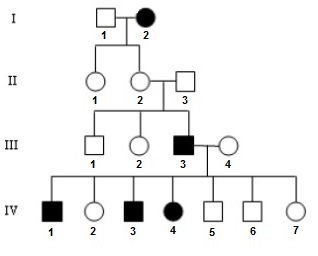
How many generations are shown in this pedigree?

a)

1

b)

2

c)

3

d)

4

128.

What does an open/unshaded circle represent?

a)

not affected male

b)

affected male

c)

not affected female

d)

affected female

129.

What does a filled square represent?

a)

not affected male

b)

affected male

c)

not affected female

d)

affected female

130.

Based on the pedigree shown, is the trait shown dominant or recessive?

a)

dominant

b)

recessive

131.

If this pedigree shows a recessive disorder, what MUST the genotype of individual 4 be?

a)

HH

b)

Hh

c)

hh

132.
This pedigree represents the inheritance of hemophilia in this family. How many of the females have the hemophilia trait?
a)
8
b)
5
c)
2
d)
3
133.

What is the genotype of both great-grandsons? (Individuals 13 and 16)

a)

AA

b)

Aa

c)

A_

d)

aa

134.
Identify the stage of mitosis. 
a)
interphase
b)
prophase
c)
anaphase
d)
cytokinesis
135.
Identify the stage of mitosis.
a)
interphase
b)
prophase
c)
metaphase
d)
anaphase
136.
Identify the stage.
a)
interphase
b)
metaphase
c)
anaphase
d)
telophase