wayground logo

Free Printable Worksheets

Font size

S
M
L
XL
Worksheets

2nd Semester Finals Review

Total questions: 142

Worksheet time: 5hrs 36mins

Name
Class
Date
1.
The cells produced via meiosis are called:
a)
sex cells
b)
somatic cells
c)
body cells
d)
skin cells
2.
What is it called when a sperm and egg meet?
a)
meiosis
b)
fertilization
c)
cell division
d)
mitosis
3.
Meiosis makes sperm and egg cells. In humans, sperm and egg cells each have _____ chromosomes. Therefore a fertilized human egg cell (sperm and egg cell combined) would create a cell with _____ chromosomes.
a)
23, 46
b)
46, 23
c)
2, 4
d)
50, 100
4.
What kind of cells are made in MEIOSIS?
a)
Haploid Gametes
b)
Diploid Somatic Cells
c)
Skin Cells
d)
Liver Cells
5.
Which process and type of resulting cells are represented?
a)
mitosis, gametes
b)
mitosis, body cells
c)
meiosis, gametes
d)
meiosis, body cells
6.
If a somatic (body) cell in a butterfly contains 24 chromosomes, a butterfly egg would contain
a)
3
b)
6
c)
12
d)
24
7.
What is another reason we need meiosis?
a)
So the offspring has genes from both parents
b)
So the offspring has genes from one parent
c)
So the offspring has genes from neither parents
d)
So the offspring makes its own genes
8.
Why do we need meiosis?
a)
To double the number of chromosomes going into sex cells
b)
To halve the number of chromosomes going into sex cells
c)
To triple the number of chromosomes going into sex cells
d)
To not change the number of chromosomes going into sex cells
9.
Which sex chromosomes would indicate a typical human male?
a)
XX
b)
X
c)
XY
d)
XXY
10.
What is cancer?
a)
The heart does not receive enough blood.
b)
Sudden disruption of blood flow to part of the brain.
c)
Blood filled weak spot.
d)
Uncontrolled growth and spread of abnormal cells.
11.

Which of the following would describe a cancerous tumor that has spread through the body?

a)

malignant

b)

biopsy

c)

benign

d)

infectious

12.
Which of the following would be a way to protect yourself from skin cancer?
a)
Use sunscreen and reapply as directed to protect the skin.
b)
Only tan in a tanning bed - they are safer.
c)
Use baby oil to keep your skin soft and moist.
d)
Use vaseline after tanning to seal in moisture.
13.
Cancer harms the body by destroying healthy body tissues.
a)
True
b)
False
14.
What cancer treatment involves stimulating the body's immune system to attack cancer cells?
a)
Immunotherapy
b)
Surgery
c)
Radiation Therapy
d)
Chemotherapy
15.
The removal of a malignant tumor is called:
a)
radiation therapy.
b)
chemotherapy.
c)
surgery.
d)
immunotherapy.
16.

which is heterozygous ?

a)

Tt

b)

TT

17.

Which is homozygous ?

a)

Zz

b)

SS

18.

the genetic makeup of an organism

a)

heterozygous

b)

punnet square

c)

genotype

19.

In dogs, brown fur is dominant to white fur. A homozygous dominant dog with brown fur is crossed with a heterozygous dog with brown fur. What are the percentages of the possible genotypes?

a)

100% BB

b)

75% BB and 25%Bb

c)

50 % BB and 50% Bb

d)

50% Bb and 50% bb

20.

Genotype refers to the ...

a)

physical expression of the genes

b)

the possible combination of alleles in a gene

c)

whether an allele is dominant or recessive

d)

how an organism will appear

21.

An offspring will receive how many alleles from each parent to determine a specific trait?

a)

one

b)

two

c)

three

d)

five

22.

having two of the same genes for the trait (sometimes called purebred).

a)

homozygous

b)

hetrozygous

c)

protein

d)

chromosome

23.
having two different genes for a trait (sometimes called hybrid).
a)
protein
b)
homozygous
c)
heterozygous
d)
genotype
24.

Two brown eyed parents (Bb) have a baby. What is the chance the baby is blue eyed? (Brown is dominant to blue)

a)

0 %

b)

25%

c)

50%

d)

75%

25.

G = green, g = yellow

This gene shows complete dominance. The genotype for a yellow plant is...

a)

GG

b)

Gg

c)

gg

d)

all of the choices result in yellow

26.

An allele whose trait only shows up when no dominant allele is present.

a)

hidden allele

b)

dominant allele

c)

recessive allele

d)

present allele

27.

Two heterozygous (Tt) tall pea plants are crossed. Which describes their offspring? (Tall is dominant to short)

a)

50% tall and 50% short

b)

75%tall and 25% short

c)

100%short

28.
B=brown eyes
b= blue eyes
What is true about two brothers that have brown eyes?
One has genotype BB the other Bb.
a)
they have same phenotype and genotype
b)
they have different genotypes and phenotypes
c)
they have same phenotype but different genotypes
d)
they have same genotype but different phenotypes
29.
What does heterozygous mean?
a)
An organism that has the same genes for a trait (TT or tt)
b)
An organism that has different genes for a trait (Tt)
c)
When neither gene is fully dominant; offspring is a mixture of both
d)
the different forms of a trait (hair color--> brown, blonde, red
30.

If a heterozygous tall pea plant is crossed with a short pea plant, what are the possible genotypes of the future offspring? (Tall [T] is dominant to short [t])

a)

100% Tt

b)

50% Tt, 50% tt

c)

75%Tt, 25%tt

d)

25%TT, 50%Tt, 25%tt

31.

This is an example of what?

a)

Complete dominance

b)

Incomplete dominance

c)

Codominance

d)

Sex-Linked Trait

32.

If T=Tall & t=short, what percent of the offspring will be tall?

a)

25%

b)

50%

c)

75%

d)

100%

33.

Two brown eyed parents (Bb) have a baby. What is the chance the baby is blue eyed? (brown is dominant to blue)

a)

0 %

b)

25%

c)

50%

d)

75%

34.

A corn plant heterozygous for tall sprouts mates with a corn plant with short sprouts. If tall sprouts are dominant, how many different phenotypes are possible in the offspring?

a)

1

b)

2

c)

3

d)

4

35.

Term for homozygous organisms that display two dominant phenotypes at the same time

a)

codominance

b)

incomplete dominance

c)

multiple alleles

d)

linked genes

36.

Red/green color blindness is a recessive, sex-linked trait. A woman who is a carrier for this allele marries a normal-vision male. What is the probability that they will have a child who is color blind?

a)

1/4

b)

1/2

c)

3/4

d)

1

37.

What percentage of the female offspring will be a carrier for this recessive disease?

a)

0%

b)

50%

c)

100%

d)

25%

38.

Which of the following genotypes belongs in the red box in the Punnett square?

a)

XBXB

b)

XbXb

c)

XbY

d)

XBY

39.

If a woman is a carrier for a sex linked recessive trait of hemophilia and her husband has hemophilia, which of the following is true?

a)

All sons will have hemophilia

b)

All daughters will have hemophilia

c)

50% of daughters and 50% of sons have hemophilia

d)

0% of sons have hemophilia but 100% of daughters are carriers

40.

If a trait shows up more commonly in men than women it is probably

a)

not inherited

b)

on the x chromosome and dominant

c)

on the x chromosome and recessive

d)

on a normal body chromosome

41.
What percentage of the female offspring will be a carrier for this recessive disease?
a)
0%
b)
50%
c)
100%
d)
25%
42.
What is another name for natural selection?
a)
survival of the smartest
b)
survival of the fastest
c)
survival of the biggest
d)
survival of the fittest
43.
What is a change in an organism that allows for it to survive in its environment?
a)
homologous
b)
vestigial
c)
variation
d)
adaptation
44.
What is an organism that has similar characteristics and can reproduce?
a)
species
b)
organism
c)
embryology
d)
vestigial 
45.
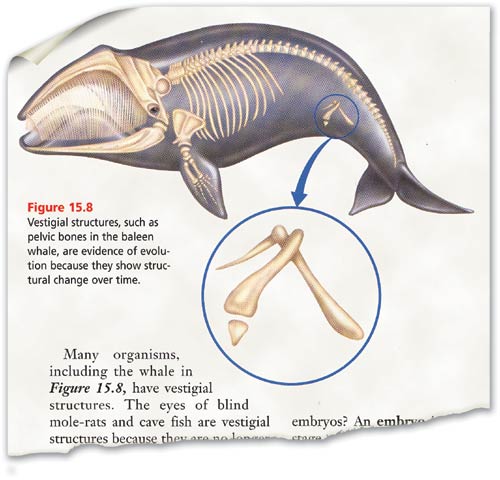
What is this an example of?
a)
diversity of species
b)
variation
c)
vestigial structures
d)
DNA studies
46.
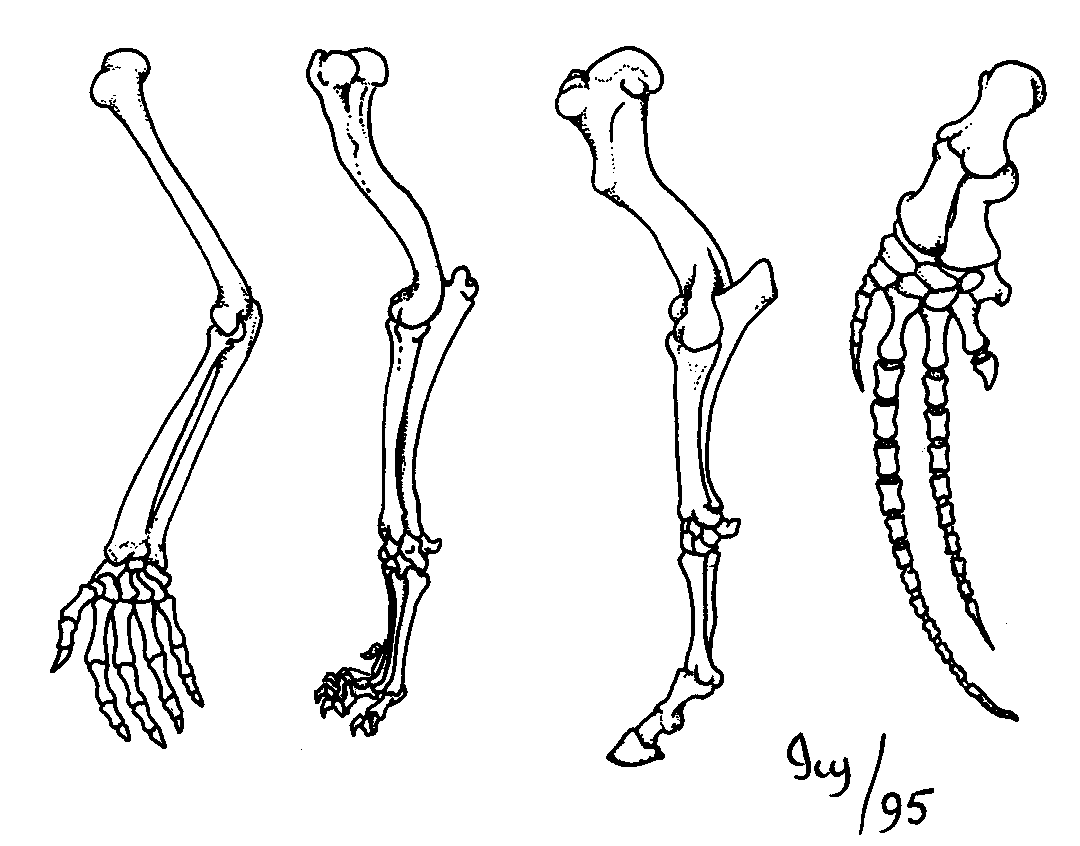
What is this an example of?
a)
vestigial structures
b)
embryology
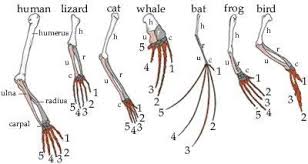
c)
homologous structures
d)
fossil record
47.

In which layer of dirt would you expect to find the oldest fossils?

a)

1

b)

2

c)

3

d)

4

48.

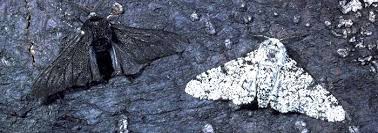
In this environment, which color of moth would you expect would increase?

a)

light

b)

dark

49.
When the DNA of an organism is altered it is referred to as…
a)
Mutation
b)
Gene Flow
c)
Genetic Drift
d)
Sexual Selection
50.
Darwin wrote that organisms with traits that are best suited to the environment will ________________
a)
increase in number
b)
become extinct
51.
Which of the following is NOT an example of natural selection? 
a)
People selectively breeding hamsters.
b)
Insect populations developing resistance to certain pesticides.
c)
Bacteria becoming resistant to antibiotics.
d)
Male birds of certain species developing colorful feathers to attract female mates.
52.
Which term refers to the process by which individuals that are better suited to the environment survive and reproduce therefore passing down their genes to their offspring? 
a)
Evolution 
b)
Variation 
c)
Adaptation
d)
Natural Selection 
53.
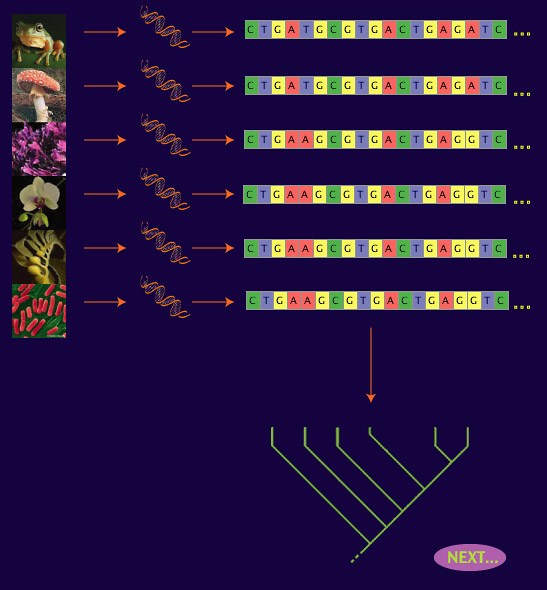
Which species’ DNA is most similar to the DNA of the toothed whale? 
a)
Hippopotamus 
b)
Baleen Whale
c)
Grazing Mammals
d)
Camels
54.
The environment around Manchester, England, changed during the Industrial Revolution.  How did this change affect peppered moths living in the area?
a)
Natural selection favored moths with dark wings because predators could not see them on the soot-colored trees.
b)
Natural selection favored moths with white wings that were easy for predators to see.
c)
Natural selection favored moths with white wings because predators could not see them on the soot-colored trees.
d)
Natural selection caused moths with white wings to become extinct.
55.
Two organisms that are closely related would have
a)
very similar DNA sequence
b)
exactly the same DNA sequences
c)
no proteins in common
d)
completely different DNA sequence
56.
A remnant or trace of an organism from the past is called a _______.
a)
Ancestor
b)
Skeleton
c)
Fossil
d)
Imprints
57.
Inherited trait that helps an organism survive is a(n) __________.
a)
Fossil
b)
Adaptation
c)
Ancestor
d)
Natural selection
58.
Structures with the same parts have different functions; suggests that organisms share a common ancestry
a)
vestigial structures
b)
homologous structures
c)
adaptive radiation
d)
fossil
59.
Which of the following is an example of a vestigial structure?
a)
the wings of a red-tailed hawk
b)
the hind limbs of a house cat
c)
the fins of sharks
d)
the tailbone of a human
60.
The diagram shows fossils in different rock layers. Which of these statements about the age of these fossils is most likely correct?
a)
Fossil A and C are the same age
b)
Fossil B is older than fossil C
c)
Fossils A is older than fossil B
d)
Fossil D is older than fossil C
61.
Which of the following is a term for a group of similar organisms that can reproduce fertile offspring?
a)
individual
b)
population
c)
species
d)
fossil
62.
Why are advantageous traits more likely to be passed onto offspring?
a)
Because they are more likely to survive and reproduce.
b)
Because they come from dominant alleles.
c)
Because they come from recessive alleles.
d)
Because the trait is an acquired phenotype.
63.
The ability of an organism to survive and reproduce in its specific environment 
a)
diversity.
b)
evolution
c)
adaptation
d)
 fitness
64.
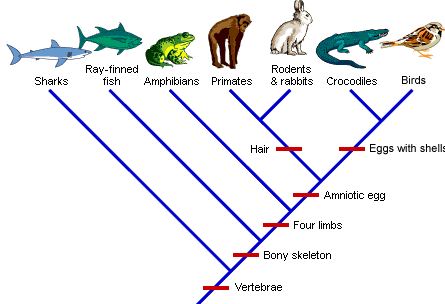
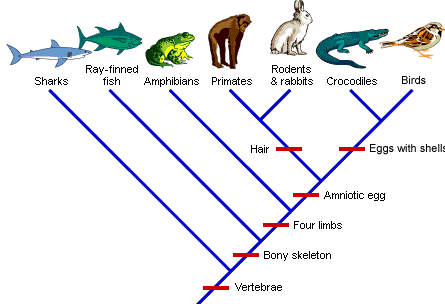
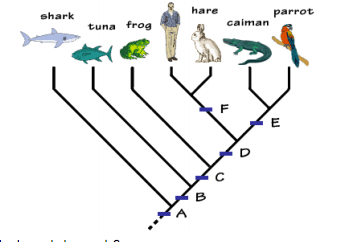
Which two orgainsms have hair? 
a)
Sharks & Ray Finned Fish
b)
Primates & Rodents
c)
Birds & Crocodiles
d)
Rabbits & Birds
65.

Which animal on this tree shares the fewest traits with the birds?

a)

Amphibians

b)

Sharks

c)

Ray Finned Fish

d)

Crocodiles

66.

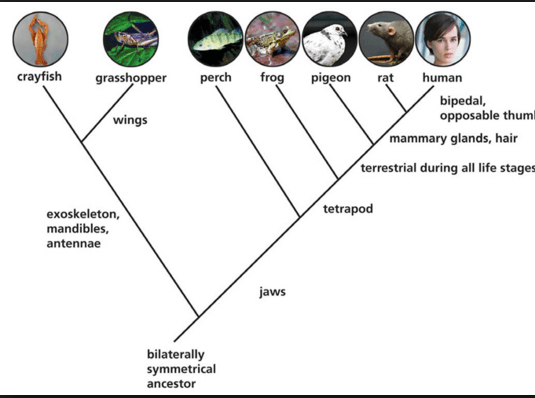
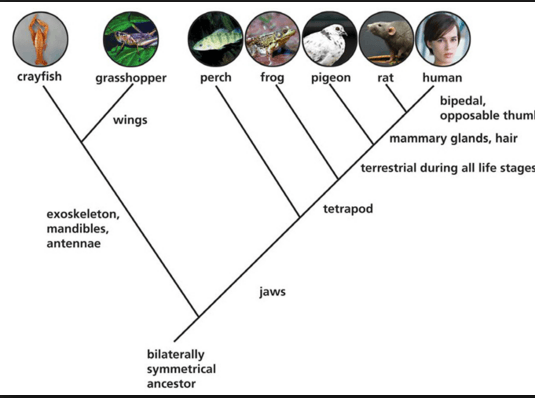
According to the cladogram, which organism is has the least traits in common with the human?

a)

crayfish

b)

pigeon

c)

perch

d)

frog

67.
Which trait do only humans have, according to the cladogram?
a)
jaws
b)
mammary glands & hair
c)
terrestrial during all life stages
d)
bipedal & opposable thumbs
68.
On the cladogram, which organism is the closest relative of the human?
a)
Frog
b)
Hare
c)
Caiman
d)
Parrot
69.
Individuals that are well adapted to their environment will survive and produce:
a)
Fewer mutations
b)
Stronger genes
c)
More offspring
d)
Better traits
70.
You look at two species and see very similar DNA. What does this likely tell you?
a)
These are the same animal.
b)
These animals have a common ancestor.
c)
These animals are not likely related.
d)
These animals are likely becoming one species.
71.
An inherited characteristic that increases an organisms ability to survive and reproduce in its specific environment is called a(n)
a)
vestigial structure
b)
speciation
c)
analogous structure
d)
adaptation
72.

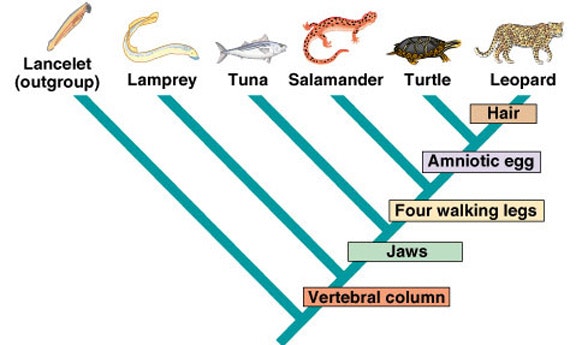
What trait separates lampreys from tuna on this cladogram?

a)

Hair

b)

Vertebral column

c)

amniotic egg

d)

jaws

73.

Which organism is most related to the leopard?

a)

turtle

b)

salamander

c)

tuna

d)

lancelet

74.

What separates a salamander from a turtle in this cladogram?

a)

four walking legs

b)

amniotic egg

c)

hair

d)

jaws

75.

What traits do the leopard and the turtle share? (Multiple choices)

a)

hair

b)

amniotic egg

c)

four walking legs

d)

jaws

76.

What trait separates amphibians from primates in this cladogram?

a)

amniotic egg

b)

four limbs

c)

egg with shells

d)

bony skeleton

77.

Which organism will have DNA most similar to the turtle?

a)

tuna

b)

lacelet

c)

leopard

d)

lamprey

78.

What number is the common ancestor of C and D

a)

1

b)

2

c)

3

d)

4

79.

What is the common ancestor of Letters A, B, C, D, E?

a)

1

b)

2

c)

3

d)

4

80.
True or False: Natural Selection acts on existing variation
a)
False
b)
True
81.
Transitional fossil forms are important evidence of evolution because they show
a)
how changes accumulate over time
b)
how animals behaved in their environments
c)
how the embryos of organisms develop
d)
molecular homologies
82.
Whales are aquatic mammals that contain a pelvis bone.  Even though it does not aid in its movement, the function must have been used by a common ancestor of the whale.  Thus, the pelvis is referred to as a(n)...
a)
vestigial structure
b)
analogous structure
c)
homologous structure
83.
In natural selection, the selective agent is the...
a)
humans
b)
mutations
c)
breeders
d)
environment
84.
What is suggested by the similarity of early embryos of different species of vertebrates?
a)
no evolutionary relationships between the groups
b)
recent common ancestry
c)
similar environments in the past
d)
evolution from a distant common ancestor
85.
Two organisms that are closely related would have...
a)
very similar DNA sequence
b)
exactly the same DNA sequences
c)
no proteins in common
d)
completely different DNA sequence
86.
If an organism has a vestigial structure, that structure likely once had a function in a(n)...
a)
close relative
b)
early ancestor
c)
unrelated organism
d)
embryological stage
87.
Protein sequences in one organism that resemble those of another suggest a... 
a)
coincidence
b)
lack of evolutionary relationship
c)
great number of mutations
d)
shared ancestry
88.
Genetic variation can arise from a random change in the DNA of a gene.  The change is called a(n)...
a)
mutation
b)
gene flow
c)
gene pool
d)
allele
89.
Which of the following is an example of natural selection?
a)
Bald Eagles are hunted until near extinction, population recovers.
b)
Small group of iguanas floats to an island, starts a new population.
c)
Red fox pups are more likely to survive in a snowy environment if they are born white.
d)
Farmer chooses seeds from largest apples to plant next year.  This results in larger apples from year to year.
90.
Natural selection states that organisms are best suited for their environment if they ____________ and ____________.
a)
Survive and Reproduce
b)
Survive and Predate
c)
Survive and Parasitize
d)
Survive and Adapt
91.
What does the image represent?
a)
Founder effect
b)
Bottleneck effect
c)
Natural Selection
d)
Mutations
92.
Cladograms are constructed by grouping organisms together based on their____________ characteristics.
a)
shared
b)
different
c)
varied
d)
opposite
93.
On the cladogram, which number represents the common ancestor of organisms B & D?
a)
1
b)
2
c)
3
d)
A
94.
Fossil record, molecular biology, comparative anatomy & embryology, biogeography - all are _____.
a)
Evidence of evolution
b)
Mechanisms of evolution
c)
Examples of evolution
95.

We discussed MRSA as an example of evolution. Which of these statements about evolution & MRSA is NOT true?

a)

MRSA is a bacteria resistant to many types of antibiotics

b)

Antibiotics kill most bacteria, but it mutates some to become MRSA

c)

Antibiotics provide selective pressure that favor bacteria that are already resistant through random chance

d)

Stopping your antibiotics early can help trigger the rise of antibiotic resistant bacteria like MRSA

96.

Can an organism choose how it will evolve?

a)

Yes-organisms will pick the best traits to allow them to survive and pass them to their offspring

b)

No-organisms that happen to have good traits will survive and pass their traits on, but they don't get to pick

97.
Vaccinations are used for
a)
Curing the illness
b)
Preventing the Illness
c)
Getting the illness
98.
What is the main purpose of the immune system?
a)
support the body through bones and muscles
b)
get rid of waste from the body
c)
protect the body from pathogens
d)
move blood through the body
99.
What do antibodies attach to on the pathogen?
a)
Anti inflammatory
b)
Antigens
c)
Antiseptic
d)
Antibodies
100.

Vaccines stimulate the body to produce...

a)

autoimmune diseases

b)

helper t-cells

c)

fever

d)

memory B cells

101.
Which one is a way the body defends against a pathogen?
a)
Fever
b)
Stomach Acid digesting
c)
White Blood Cells fighing
d)
All of these are correct
102.
Pathogens are recognized by their...
a)
antigens
b)
antibodies
c)
killer t-cells
d)
B-cells
103.
RNA is read in sections called:
a)
Triplets
b)
Genes
c)
Codons
d)
Genes
104.
Translation is a process in eurkaryotic cells takes place in the:
a)
Cytoplasm
b)
Nucleus
c)
Nucleolus
d)
Golgi Bodies
105.
When the Ribosome reaches ________________ the process of translation stops
a)
Stop Codon
b)
Okazaki Fragment
c)
Terminator
d)
taq Polymerase
106.
What is the name of this molecule?
a)
amino acid
b)
nucleotide
c)
monosaccharide
d)
triglyceride
107.
The diagram shows the structure of an amino acid. Which type of molecule is formed from amino acids?
a)
lipids
b)
proteins
c)
carbohydrates
d)
nucleic acids
108.
Proteins are made by...
a)
Ribosomes
b)
Nucleus
c)
Cytoplasm
d)
Mitochondria
109.
Enzymes are considered to be 
a)
Lipids
b)
Carbohydrate
c)
Protein
d)
Nucleic Acid
110.
What is the purpose  of an enzyme?
a)
give permission for the reaction
b)
raise activation energy
c)
speed up reactions
d)
control how many reactions occur
111.
Where do substrates bind on an enzyme?
a)
voltage-gated channels
b)
surface receptor
c)
calcium channels
d)
active site
112.
What is structure A?
a)
Substrate
b)
Active site
c)
Enzyme
d)
Products
113.
What is structure D?
a)
Substrate
b)
Active site
c)
Enzyme
d)
Products
114.
What is structure C?
a)
Substrate
b)
Active site
c)
Enzyme
d)
Products
115.
What is structure E, F, G?
a)
Substrate
b)
Active site
c)
Enzyme
d)
Products
116.
Once a new product leaves an enzyme, the enzyme is unchanged and ready for the next substrate.  What is this called?
a)
reusable
b)
catalyst
c)
specific
d)
fragile
117.
Any substance that is acted upon by an enzyme is called a(n)?
a)
Coenzyme
b)
Substrate
c)
Vitamin
d)
Polypeptide
118.
After the enzyme and substrate bind together and perform the reaction, what does the substrate become?
a)
a substrate
b)
an enzyme
c)
a product
d)
an active site
119.
The role of enzymes in the cell is best summarized by which of the following statements?  
a)
They control the reaction rate of processes within the cell. 
b)
Enzymes carry the blueprints for the entire cell. 
c)
They send signals through the bodies of multicellular organisms. 
d)
Enzymes protect the skin from harmful radiation.
120.
Enzymes are proteins that help increase the rate of chemical reactions inside cells. These proteins are composed of many simpler molecules called amino acids. Which of the following suggests that the shape of an enzyme determines the enzyme’s function?
 
a)
Enzymes are specific to a substrate.
b)
Enzymes can operate in a wide range of conditions.
c)
Enzymes are activated by neighboring molecules.
d)
 Enzymes can be found in all life-forms. 
121.
Which RNA bases would pair with TACGAA in transcription
a)
AUGCUU
b)
ATGCTT
c)
GCATCC
d)
GCAUCC
122.
How many amino acids are coded for by this sequence of nucleotides:
ATG GGA ACT CCA
a)
4
b)
2
c)
6
d)
12
123.
What is occurring in this picture?
a)
Translation
b)
Replication
c)
Translocation
d)
Transcription
124.
One difference between DNA and RNA is that....
a)
Only RNA has the base Uracil
b)
only RNA contains the base Thymine
c)
only RNA contains the base Cytocine
d)
only RNA contained the base Guanine
125.
The process represented in the diagram produces a molecule that is complementary to the template strand of DNA. What type of molecule is produced?
a)
New DNA
b)
Polypeptide
c)
Messenger RNA
d)
Carbohydrate
126.
A triplet of mRNA is called a
a)
codon
b)
anticodon
c)
amino acid
d)
peptide bond
127.
Translation takes place in the 
a)
ribosome
b)
chloroplast
c)
nucleus
d)
mitochondria
128.
The process of using an mRNA to make a protein is called
a)
Replication
b)
Transcription
c)
Translation
d)
Cell Division
129.
This cannot leave the nucleus
a)
DNA
b)
RNA
c)
Both
130.
What amino acid is represented by the codon CAG?
a)
Aspartic Acid
b)
Histidine
c)
Glutamine
d)
Methionine
131.
Which is the mRNA molecule that would be transcribed from this DNA template:
TGGCAAGTACGT
a)
ACCGTTCATGCA
b)
UGGCAAGUACGU
c)
UCCGUUCUUGCU
d)
ACCGUUCAUGCA
132.
What is the term for a three-nucleotide sequence that codes for an amino acid?
a)
base
b)
codon
c)
amine
d)
serine
133.
What is the correct amino acid sequence for the mRNA code AUGCCAGUAUGA
a)
Met-Pro-Ala-Val
b)
Met-Pro-Val
c)
Tyr-Gly-His
d)
Tyr-Gly-Arg-His
134.
Which of these is correct?
a)
DNA --> mRNA --> polypeptide chain
b)
DNA --> polypeptide chain --> mRNA
c)
mRNA --> DNA --> polypeptide chain
d)
polypeptide chain --> DNA --> mRNA
135.
which process is shown?
a)
diffusion
b)
repiration
c)
recombination
d)
translation
136.
Which is a difference between DNA and RNA
a)
RNA is double stranded
b)
RNA is not made of nucleotides
c)
RNA contains Uracil instead of Thymine
d)
RNA does not contain a sugar
137.
what does mRNA do?
a)
carry info from genes to ribosomes
b)
carry amino acids to ribosomes
c)
help with RNA splicing
d)
make up ribosomes
138.

Which enzyme glues DNA together?

a)

Ligase

b)

Polymerase

c)

Helicase

d)

Sucrase

139.

How do restriction enzymes "know" where to cut DNA

a)

A specific sequence of nucleotides

b)

They cut randomly

c)

Distance from the centromere

140.

Gel electrophoresis sorts DNA based on:

a)

fragment length

b)

fragement sequence

141.

During Gel electrophoresis, which substance acts like a filter?

a)

Gel

b)

Electricity

c)

Saline solution

142.

A circular piece of DNA, found in bacteria, is called:

a)

A plasmid

b)

mRNA

c)

Ribosome

d)

Nucleotide