
 Worksheets
Chemistry Paper 2 aqa
Total questions: 141
Worksheet time: 1hrs 14mins
What is a solvent
A Glue
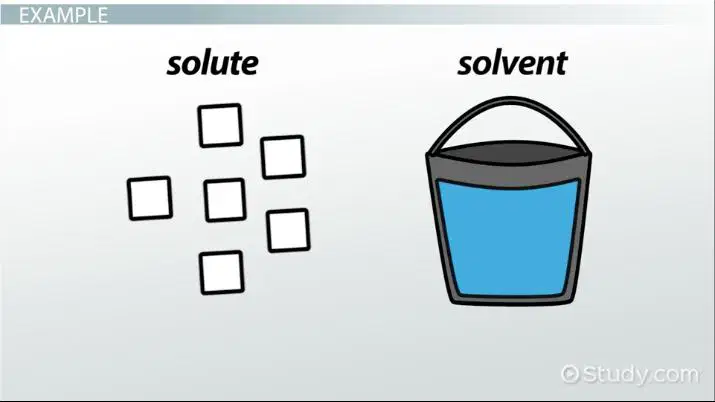
Whats a Solute?
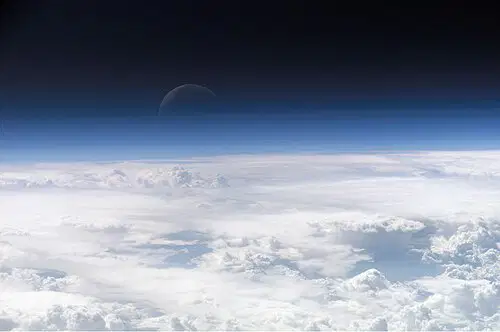
What percent of oxygen is in todays atmosphere
What percentage of Carbon dioxide is in todays atmosphere

What percent of nitrogen is in todays atmosphere

What was the early earth atmosphere like?
How does the reactivity series work?
What is the test for oxygen?
Draw a Hydrocarbon

What is cracking in chemistry?
What are the 7 types of chemical reaction
Test for hydrogen
How does a catalyst increase a reaction's rate?
It increases the energy of the reactants.
It provides a different pathway for the reaction that has a lower activation energy.
Which of these reactions would be faster?
Magnesium with concentrated hydrochloric acid.
Magnesium with dilute hydrochloric acid.
When a reversible reaction occurs in a sealed reaction vessel, when is equilibrium reached?
When the amounts of products and reactants are equal.
When the rates of the forward and reverse reactions are equal.
True or False? "The mean rate of reaction can be found by measuring the amount of reactant used over a period of time."
True
False
The rate of a reaction doesn't depend on the...
...frequency of collisions.
...volume of solution.
...temperature of the reactants.
True or False? "A reversible reaction can take in energy in both directions."
True
False
Increasing the concentration of a reactant in a solution means that the solution...
...contains more reactant particles.
...contains fewer reactant particles.
Which of the following is not a unit of reaction rate?
g/s
cm3/s
g/dm3
What is a reversible reaction?
A reaction where the products of the reaction can react to produce further products.
A reaction where the products of the original reaction can react to produce the original reactants.
Which of the following is a reason why increasing the temperature increases the rate of a reaction.
The reactant particles stick together more.
The reactant particles move faster so they collide more frequently.
What effect does adding a catalyst have on the overall energy change of a reaction?
It has no effect.
It decreases it.
In a reaction between marble and hydrochloric acid, using small marble chips instead of a large piece of marble will produce...
...no difference in the rate of reaction.
...a faster rate of reaction.
...a slower rate of reaction.
Which of the following can be measured to determine the rate of a reaction.
Change in temperature
Volume of gas produced.
True or False? "Collision theory says that the more particles that collide in a reaction, the hotter the reaction gets."
True
False
Which of the following makes the collisions between particles more energetic?
Increasing the gas pressure.
Increasing the temperature.
Halving the frequency of collisions in a reaction mixture...
...halves the reaction rate.
...doubles the reaction rate.
Crude oil is a...
...renewable resource.
...finite resource.
...infinite resource.
True or False? "Alkenes are more reactive than alkanes."
True
False
Why are longer hydrocarbons often cracked to make shorter ones?
To make more useful hydrocarbons.
To make less flammable hydrocarbons.
To make products like tar.
True or False? "the shorter the hydrocarbon, the more viscous it is."
True
False
What happens to the carbon and hydrogen in a fuel when it's burned?
They are oxidised.
They evaporate.
They react to form CH4.
Which technique is used to separate the components of crude oil?
Cracking
Filtration
Fractional distillation
Which of the methods below could be used to crack a long chain hydrocarbon?
Mix the hydrocarbon with water and add a cold platinum catalyst.
Mix the hydrocarbon vapour with steam and heat to a very high temperature.
What is the test for hydrogen?
It burns with a green flame.
It turns damp litmus paper white.
It burns with a pop.
When carbon dioxide is bubbled through limewater, the limewater turns...
...cloudy.
...green.
...yellow.
True or False? "During paper chromatography, the paper must remain fully submerged in solvent."
True
False
True or False? "Formulations are made for a specific purpose by mixing together exact amounts of different components."
True
False
You can check if a substance is pure by...
...testing its melting point.
...using universal indicator solution.
...shaking it with limewater.
In chemistry, what is a pure substance?
Any substance in its normal state.
A substance that only contains one compound or element.
True or False? "Oxygen will relight a glowing splint."
True
False
How many different phases are used in chromatography?
1
2
3
Why is sulfur often removed from fuels before they are burnt?
So the fuel produces less soot when it burns.
To reduce the cost of the fuel.
To reduce acid rain.
Which of these is not produced when a fuel undergoes complete combustion?
Carbon monoxide
Carbon dioxide
Water
Which of these is causing the average global temperature to rise?
An increasing amount of greenhouse gases in the atmosphere.
An increased amount of particles in the atmosphere from car exhausts.
It is difficult for scientists to be certain what the implications of global climate change will be because...
...the evidence has not been peer-reviewed.
...the Earth's climate is very complicated so is hard to model.
True or False? "Nitrogen oxides form when fuels burn slowly at low temperatures."
True
False
Which of the following is formed mainly from shells and skeletons of marine organisms?
Limestone
Coal
Which of these gases is not a greenhouse gas?
Water vapour
Methane
Oxygen
What percentage of the Earth's atmosphere is made up of oxygen?
About 80%
About 20%
Less than 1%
What do life cycle assessments look at?
The total environmental cost of the product.
The economic impact of a product.
Which process produces sewage sludge and effluent during sewage treatment?
Screening
Aerobic biological treatment
Sedimentation
Potable water is...
...water that is pure.
...water that is safe to drink.
...ground water.
Producing potable water from seawater...
...is not possible.
...requires a lot of energy.
...is the method used in the UK.
True or False? "Life cycle assessments are free from bias."
True
False
True or False? "Metals can be recycled but glass cannot be."
True
False
True or False? "Potable water must contain no dissolved salts."
True
False
Which of the following is an example of a renewable resource?
Copper
Wool
Nuclear fuel such as uranium
True or False? "Greenhouse gases in the atmosphere help to keep temperatures on Earth high enough to support life."
True
False
Which of these gases makes up the smallest proportion of our atmosphere?
Oxygen
Nitrogen
Carbon dioxide
Solid particles in the atmosphere block some sunlight from reaching the Earth's surface. What is this called?
Global warming
Global dimming
What is the effect of increasing the surface area of a solid reactant on the rate of a reaction?
It decreases the rate of the reaction.
It changes the color of the reaction.
It increases the rate of the reaction.
It has no effect on the rate of the reaction.
Explain how concentration affects the rate of a reaction using the collision theory.
A decrease in concentration leads to more frequent collisions between reactant particles, resulting in a lower rate of reaction.
An increase in concentration leads to fewer collisions between reactant particles, resulting in a higher rate of reaction.
Concentration has no effect on the rate of a reaction according to the collision theory.
An increase in concentration leads to more frequent collisions between reactant particles, resulting in a higher rate of reaction.
What is the role of a catalyst in a chemical reaction?
Speeds up the reaction by lowering activation energy
Has no effect on the speed of the reaction
Increases the activation energy of the reaction
Stops the reaction from occurring
What is the general formula for an alkane?
CnH2n-2
CnH2n
CnH2n+2
CnHn+2
What is the functional group of alcohols?
Carbonyl group (-C=O)
Amino group (-NH2)
Sulfhydryl group (-SH)
Hydroxyl group (-OH)
What is the process of fractional distillation used for in the petroleum industry?
Creating new compounds from crude oil
Separating crude oil into its components
Converting crude oil into natural gas
Mixing different types of crude oil together
How can flame tests be used to identify metal ions in a compound?
By tasting the compound
By observing the characteristic color of the flame when the compound is heated.
By measuring the compound's weight
By listening to the sound it makes when heated
Explain the greenhouse effect and its impact on the Earth's atmosphere.
The greenhouse effect cools the Earth's atmosphere, leading to an ice age.
The greenhouse effect has no impact on the Earth's atmosphere.
The greenhouse effect only affects the atmosphere of other planets, not Earth.
The greenhouse effect traps heat in the Earth's atmosphere, leading to global warming and climate change.
What are the main components of the Earth's atmosphere and their percentages?
Nitrogen (78%) and oxygen (21%)
Hydrogen (15%) and argon (10%)
Methane (5%) and water vapor (2%)
Carbon dioxide (10%) and helium (5%)
How does the ozone layer protect the Earth from ultraviolet radiation?
Creating a barrier to prevent ultraviolet radiation from entering the atmosphere
Attracting ultraviolet radiation towards the Earth's surface
Absorbing and blocking ultraviolet radiation
Reflecting ultraviolet radiation back into space
What is the test for water
What state of matter consists of tightly packed atoms?
Solid
liquid
gas
Liquid has a definite ___________, but no definite _____________.
shape, volume
mass, area
smell, taste
volume, shape


What are the three states of matter?
boxes, solids, and gases
square, circle and triangle
solids, liquids and gases
volume, density, mass

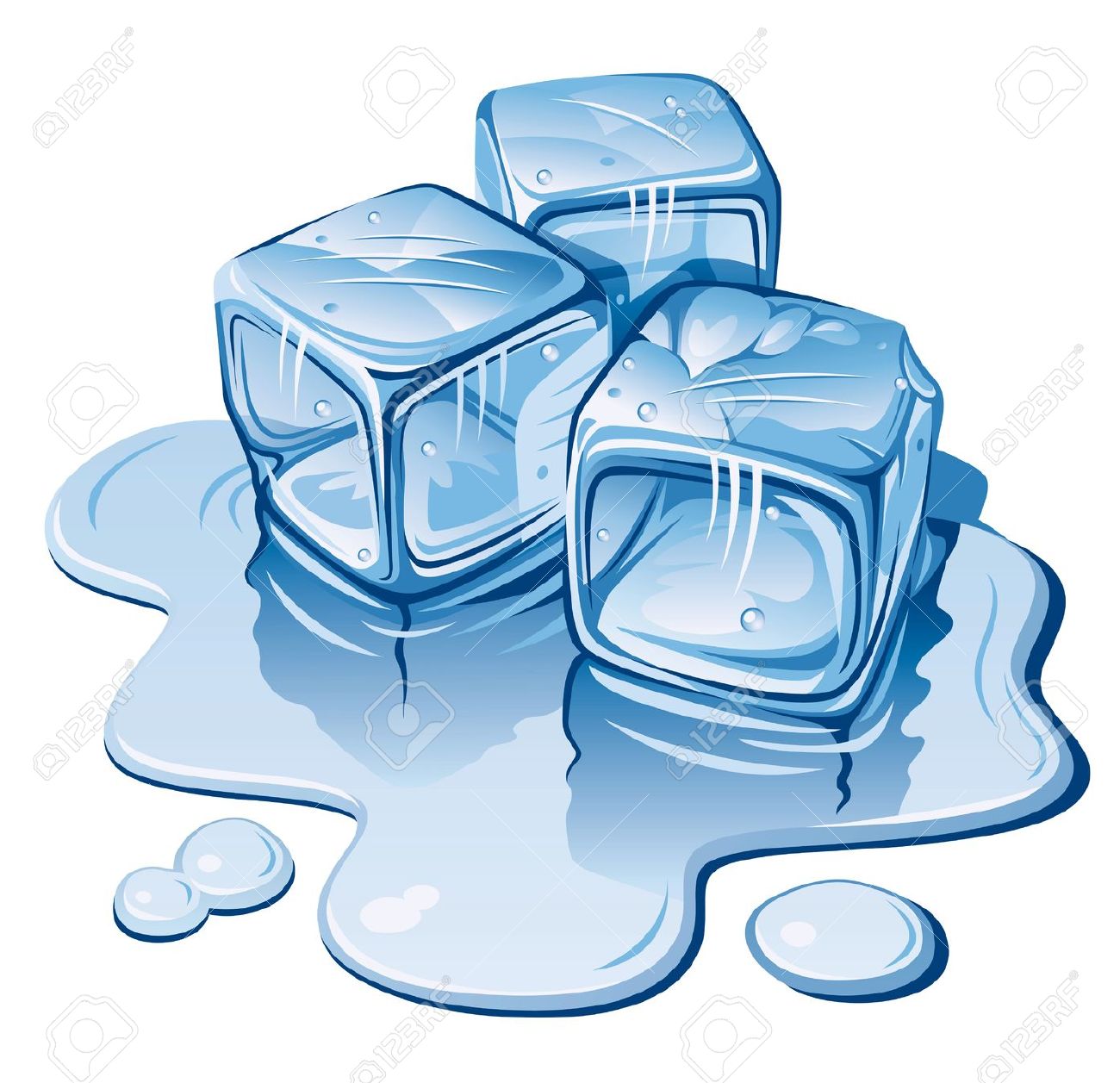
What type of energy is changing this solid to a liquid?
Light
Sound
Heat
Chemical
Molecules in a __________ have very little movement and the object keeps its shape and volume.
solid
liquid
gas
__________ is the amount of matter something has.
Mass
Volume
Density
The amount of space something takes up is called __________.
Mass
Volume
Density
____________ is based on how tightly matter is packed together.
Density
Volume
Mass
______ does not have a definite shape or volume.
Gas
Solid
Liquid
Which is not an example of a physical property
texture
odor
appearance
rate at which it burns
Which most often causes a change in state?
change in mass
change in color
change in volume
change in temperature
contains only 1 type of atom
element
compound
mixture
contains 2 or more elements that are chemically combined
element
compound
mixture
contains 2 or more substances that are physically combined
element
compound
mixture
carbon dioxide, CO2, is an example of a(n)
element
compound
mixture
gold, Au, is an example of a(n)
element
compound
mixture
chlorine gas, Cl2, is an example of a(n)
element
compound
mixture
bronze, an alloy of many different metals, is an example of a( n)
element
compound
mixture
Kool-aid is a example of a(n)
element
compound
mixture

diagram "a" is an example of a(n)
element
compound
mixture
diagram "b" is an example of a(n)
element
compound
mixture
diagram "c" is an example of a(n)
element
compound
mixture
diagram "d" is an example of a(n)
element
compound
mixture
The liquid form of fossil fuels is ___.
coal
petroleum
natural gas
gasoline
The gas form of fossil fuels is ____.
petroleum
natural gas
coal
heat
The solid form of fossil fuels is _______.
petroleum
crude oil
natural gas
coal
Which of the following is NOT TRUE of fossil fuels?
They are non-renewable.
They produce harmful pollution.
They can easily be replaced as they are used.
They are inexpensive.
Fossil fuels were formed from ____.
the remains of once living organisms.
the earth.
solids, liquids, and gases, made millions of years ago.
sun and water.
The gasoline used to power cars most likely comes from _____.
petroleum
natural gas
coal
hydroelectricity
The fossil fuel that most likely provides the electricity for your tablets is _____.
petroleum
natural gas
crude oil
coal
When you heat your home or cook on your stove, you are most likely using _____.
petroleum
crude oil
natural gas
coal

The fossil fuel represented in this picture is _____.
coal
petroleum
crude oil
natural gas

The fossil fuel represented in this picture is ____.
coal
natural gas
petroleum
crude oil

The fossil fuel represented in this picture is _____.
coal
petroleum
natural gas
nuclear
Why are fossils fuels so widely used?
They are renewable so they won't run out.
They pollution they produce is less compared to renewable energy sources.
They are easy to obtain and process.
They don't disrupt the environment when mined from the earth.
In addition to fossil fuels, another type of non-renewable energy source is _____.
biomass.
geothermal energy.
hydroelectricity.
nuclear energy.

For the last ............. .......... ........... the proportion of gases in the atmosphere has been much the same
200 million years
800 million years
1 billion years
200 billion years

The current proportion of gases is approximately
20% nitrogen, 80% oxygen and small proportions of various other gases.
80% nitrogen, 20% oxygen and small proportions of various other gases.
70% nitrogen, 30% oxygen and small proportions of various other gases.
30% nitrogen, 70% oxygen and small proportions of various other gases.

The early atmosphere of Earth contained gases due to ...
Plant life
Algae
Volcanic activity
Dinosaurs
The Early atmosphere of Earth was similar to that of ................... .... .............. today
Mars and Venus
Neptune and Mercury
Uranus and Mars
Venus and Jupiter

What was the composition of Earth's early atmosphere?
Mostly methane, little to no carbon dioxide
Mostly oxygen, little to no carbon dioxide
Mostly nitrogen, some oxygen
Mostly carbon dioxide, little to no oxygen

True or false. Volcanoes produced carbon dioxide, water vapour, methane and ammonia.
True
False

Oceans could only form when............
the boiling point of water changed
the melting point of water changed
the Earth cooled enough
photosynthesis began

The carbon dioxide in the early atmosphere reduced due to it .........
dissolving in oceans
forming carbonates in water
forming sedimentary rocks such as limestone
photosynthesising plants
All of the previous points

Oxygen in the atmosphere increased due to .....
Respiration
Photosynthesis
Distillation
Evaporation

Which is the correct equation for photosynthesis?
carbon dioxide + oxygen → glucose + water
carbon dioxide + water→ glucose + oxygen
carbon dioxide + glucose → water + oxygen

How did the evolution of plants change the composition of the atmosphere?
Increase carbon dioxide and decrease oxygen
Decrease carbon dioxide and increase oxygen

Why are greenhouse gases important?
They maintain temperature to support life
They maintain atmospheric pressure to support life
They maintain oxygen concentration to support life
All of the previous answers.

Which of the following are greenhouse gases?
Water vapour, oxygen and methane.
Oxygen, carbon dioxide and methane.
Water vapour, carbon dioxide and oxygen.
Water vapour, carbon dioxide and methane.

As humans, we contribute to global warming by burning fossil fuels and deforestation which releases ..............
Carbon dioxide
Methane

As humans, we contribute to global warming by over farming cattle and growing rice in paddy fields which releases ..............
Carbon dioxide
Methane

Greenhouse gases warm up the lower atmosphere by.......
Absorbing infrared radiation
Reflecting infrared radiation into space
Passing radiation of almost all wavelengths down to Earth
Define carbon footprint.
The carbon footprint is the total amount of carbon dioxide and other greenhouse gases emitted over a person's lifetime.
The carbon footprint is the total amount of carbon dioxide and other greenhouse gases emitted over a company's lifetime.
The carbon footprint is the total amount of carbon dioxide and other greenhouse gases emitted over the full life cycle of a product, service or event.
What two products are produced in incomplete combustion but not complete combustion?
Water and carbon dioxide
Carbon and carbon monoxide
Water and carbon monoxide
Water and carbon
The element ............... can be found as an impurity in fuels which can contribute to acid rain.
Carbon
Hydrogen
Nitrogen
Sulfur
Which of the following are properties of carbon monoxide?
Odourless, colourless and toxic
Odourless, black and toxic
Odourless, colourless and non-toxic
Odourless, black and non-toxic
Sulfur dioxides and nitrogen oxides
Cause respiratory problems
Cause acid rain
Both
Particulates cause ..............
Global warming
Global dimming
Global epidemics

