
 Worksheets
Atoms & Periodic Table
Total questions: 146
Worksheet time: 3hrs 41mins
What is the atomic number?
the number of protons in the nucleus
the number of protons and neutrons in the nucleus
the number of neutrons in the nucleus
the number of protons in the energy levels
What is the mass number?
the number of protons in the nucleus
the number of protons and neutrons in the nucleus
the number of neutrons in the nucleus
the number of protons and electrons in the atom
Thought that you would eventually end up with a particle that could not be cut
Aristotles
Democritus
He did not believe that such a particle could make up all substances found in nature
Aristotles
Democritus
Zeus
John Dalton
A greek philosopher who used the word atomos to describe these particles.
Democratus
Aristotles
JJ Thompson
John Delton
Which is smaller
a cell
a vein
an atom
Who said matter is made up of atoms
Dalton
Aristotle
Democratus
Niels Bohr
Atoms cannot be created, divided or destroyed
Aristotles
Dalton
Democratus
Rutherford
All atoms of a certain item are identical
Niels Bohr
Rutherford
Dalton
Aristotle
Every substance is made up atoms combined in certain ways
Dalton
Thompson
Bohr
Rutherford
Who developed the atomic theory
Dalton
Thompson
Bohr
Rutherford
Who developed the atomic theory
Dalton
Thompson
Bohr
Rutherford
He found particles within the atom that have a negative charge
Dalton
Thompson
Bohr
Rutherford
He found particles within the atom that have a negative charge
Dalton
Thompson
Bohr
Rutherford
Provided evidence that atoms are made up of even smaller particles
Dalton
Thompson
Bohr
Rutherford
Atoms have a nucleus
Dalton
Thompson
Bohr
Rutherford
Small dense center that has a positive charge and is surrounded by moving electrons
atoms
nucleus
protons
The positivity charged particles in the nucleus is called
atoms
nucleus
protons
Found out that the nucleus is made out of smaller particles
Dalton
Thompson
Bohr
Rutherford
His model helped scientist predict the chemical properties of elements
Dalton
Thompson
Bohr
Rutherford


Modern atomic theory is based on the work of many scientists. It keeps _______ideas that atoms are the basic unit of matter and that the atoms of each element are unique.
Dalton
Bohr
Hamilton
Thompson
Atoms are made of electrons and protons
Bohr
Thompson
Rutherford
Hamilton
The nucleus contains uncharged particles called...
electrons
protons
neutrons
atoms

What is the charge of a proton?
positive
negative
neutral

Where are the protons located?
Electron Cloud
Nucleus

What is the charge of an electron?
positive
negative
neutral
What is the charge of a proton?
positive
negative
neutral

What is the charge of a neutron?
positive
negative
neutral

Where are the electrons located?
Electron Cloud
Nucleus

Where are the neutrons located?
Electron Cloud
Nucleus

How can you tell how many neutrons are in an atom?
Atomic Number
Atomic Mass
Atomic Number - Atomic Mass
Atomic Mass - Atomic Number

Where is most of the mass of the atom located?
Electron Cloud
Nucleus

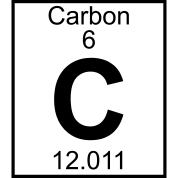
How many neutrons in this atom?
Atomic number = 6
Atomic mass - 12
12
4
6
8

How many protons in Phosphorus?
Atomic # = 15, Atomic Mass = 31
31
15
16
8

How many electrons in one atom of Iron?
56
30
26
36

How can you tell how many protons an atom has?
Atomic number
Atomic Mass
Atomic Number - Atomic Mass
Atomic Mass - Atomic Number
What is the overall charge of an atom?
positive
negative
neutral
orange

How many ELECTRONS in one atom of Lithium?
3
4
7
5

What is the atomic mass of aluminum?
13
27
26
14


Atoms have as many neutrons as they have protons
True
False
Why is an object, like a table, solid?
The atoms are touching
The nuclei are so close
There are so many atoms
The electrons are moving so fast they are everywhere at once.
It takes more than 1,800 electrons to equal the mass of one proton
False
True
The charge of a single electron is represented as 1
True
False

Fill in the blanks
Proton-nucleus
Electron cloud
Almost 0 u
Neutral = 0
Which of these statements is INCORRECT?
The number of protons determines the atomic number.
The atomic number and number of protons are the same.
An atomic number of 5 means there are 5 protons.
The number of neutrons is always the same as the number of protons.
An element with 3 protons in each atom has an atomic number of:
1
2
3
4
Which of these statements is INCORRECT?
The number of protons determines the atomic number.
The atomic number and number of protons are the same.
An atomic number of 5 means there are 5 protons.
The number of neutrons is always the same as the number of protons.
Which of these statements is CORRECT?
The number of protons determines the nucleus.
Atoms may not always have the same number of neutrons.
An atomic number of 8 means there are 5 protons.
The atoms of a certain element always have the same number of protons.
Isotopes of an element have a different number of...
Protons
Neutrons
Electrons
Mass
Who made the first periodic table?
Dimitri Mendelev
Dmitri Mendeleev
Dmitri Mendelev
Dimirti Mendeleev

Rows on the periodic table are called ___________.
Periods
Sentences
Fences

The columns in the periodic table are called ___________.
Towers
Herds
Groups
About 3⁄4 of the elements on the periodic table are ________.
metalloids
nonmetals
metals
gases
Elements on the periodic table are arranged in rows and columns according to their _________.
properties
categories
atomic number
boiling point
Elements with properties of metals and nonmetals are ___________.
metalloids
metals
nonmetals
gases
Group 1 metals that react quickly with other elements are ___________.
metals
alkaline earth metals
alkali metals
nonmetals
___________ are located on the left side of the periodic table.
Nonmetals
Gases
Metals
Metalloids
_________ are located on the right side of the periodic table.
Nonmetals
Metals
Metalloids
Gases
A one or two letter abbreviation for the element.
nickname
chemical symbol
initial
atomic symbol
The 18 columns in the periodic table are called?
rows
periods
categories
groups
Elements in the same group share similar:
characteristics
atomic numbers
mass
size
Which group contains the most reactive nonmetals?
lanthanides
alkaline earth
halogens
noble gases
Which group contains the least reactive nonmetals?
actinides
halogens
alkali metals
noble gases
Which element is the simplest, containing only one proton and one electron?
hydrogen
oxygen
aluminum
zinc
Atom size increases as you move them from left to right.
True
False
Osmium has the highest known density, and it is located a the center of the table
True
False
As you move from left to right within a period, the atomic number of each element increases by one.
True
False

Atoms that are held together by a chemical bond
atom
ion
molecule
A chemical change does create or destroy atoms
True
False
In order for atoms to be rearranged, chemical bonds have to be formed or broken
True
False
Protons are involved in chemical bonding
True
False

The outer most energy level is the energy level_______from the nucleus
Closest
Side to Side
Furthest
What are valence electrons?
The total number of electrons in an atom
The number of electrons in the outermost shell of an atom
The number of electrons in the second shell
The number of protons in the outermost shell
Elements that are shiny and conduct heat and electricity well and are the most of the periodic table
Metal
Nonmetal
Metalloid
Are poor conductors of heat and electricity. The elements to the right of the zigzag line are _______.
Metal
Nonmetal
Metalloid
Are elements that have some properties of metals and some of nonmetals. They border the zigzag line on the periodic table (6 elements)
Metal
Nonmetal
Metalloid
An______is a charged particle that forms when an atom loses or gains an electron.
metal
proton
ion
atom
A particle with a positive or negative charge. It forms when an atom gains or losses electrons from it's outer most energy level.
Electron
Ion
Molecule
Atom

1808
John Dalton
JJ. Thompson
Ernest Rutherford
Niels Bohr

1897
John Dalton
JJ. Thompson
Ernest Rutherford
Niels Bohr

1909
John Dalton
JJ. Thompson
Ernest Rutherford
Niels Bohr

1913
John Dalton
JJ. Thompson
Ernest Rutherford
Niels Bohr
Transfer of electrons from a metal to non metal
Sharing of electrons from a metal to nonmetal

Why do all bonds form?
so the number of protons equals the number of electrons
so an atom can become unstable
to fill the outermost energy level
When ions bond, they form a repeating three-dimensional pattern called
Brittleness
Crystal Lattice Structure
Electrical Conductivity
Solubility in Water
Solid ionic compound does not conduct electricity
True
False
Melted ionic compounds can conduct electric current. (Electrical Conductivity)
True
False
Properties ionic Compounds
Crystal Lattice Structure
Solubility in Water
Electrical Conductivity
Brittleness
Fluffyness
Name the type of bonding in which the electrons are shared.
Ionic bonding
Covalent bonding
Metallic bonding

Forms when atoms share one or more pairs of electrons.
True
False
Molecules that contain atoms of more than one element are called
covalent bond
covalent compound
Properties of covalent compounds
Low Solubility in Water
Low Melting and Boiling Points
Poor Electrical Conductivity
Brittlness
Forms between metal atoms when their outermost energy level overlap
Electrical Conductor
Ionic Compound
Ionic Bond
Metallic Bond
What is the basis of a metallic bond?
the attraction of neutral metal atoms.
the attraction between protons and neutrons.
the attraction between positive metal ions and interlocking electrons.
the attraction between positive metal ions and free moving electrons.
What do electrons do in a metallic bond?
They stay on the metal atom.
They are transferred from atom to atom.
They form a covalent bond with another atom.
They float around freely.

What do we call electrons that move freely in a metallic bond?
sea of electrons
lone electrons
unpaired electrons
covalent electrons
Properties of most metallic compounds
Good Electrical Conductors
Malleable and ductile
Solubility in Water

