wayground logo

Free Printable Worksheets

Font size

S
M
L
XL
Worksheets

6th / 8th Grade SOL Review

Total questions: 143

Worksheet time: 2hrs 55mins

Name
Class
Date
1.
What is the definition of orbit?
a)
the spinning of the earth on its axis
b)
when the lit part of the moon increases
c)
all of the planets, moon, and other space objects going around the sun
d)
the imaginary line that goes through the north and south poles that the earth spins on
2.
What is the center of our solar system?
a)
moon
b)
earth
c)
sun
d)
Jupiter
3.
What describes the earth going around the sun?
a)
rotation
b)
revolution
4.
Which one takes 24 hours?
a)
rotation
b)
revolution
5.
What does a waxing moon mean?
a)
when the lit part of the moon increases
b)
when the lit part of the moon decreases
c)
the pathway the earth takes around the sun
d)
all of the planets, moon, and other space objects going around the sun
6.
What causes day and night?
a)
rotation
b)
revolution
7.

What causes the seasons to change?

a)

rotation

b)

revolution

c)

the tilt of the earth as it revolves around the sun

8.
Which one takes one year?
a)
rotation
b)
revolution
9.
How does the moon get its light?
a)
it reflects the sun's light onto the earth
b)
it creates its own light, similar to a star
c)
it gathers light from earth during the day
d)
the moon is actually a yellow color, so it appears to be bright during the nighttime
10.
The order of the planets is:
a)
Mars,Venus,Earth,
Mercury,Saturn
Jupiter, Uranus, Neptune
b)
Earth,Venus,Mars
Jupiter, Neptune,
Mercury,Saturn,
Uranus
c)
Mercury,Venus,Earth
Mars,Jupiter,
Saturn,Uranus
Neptune
11.
Which planet is the largest?
a)
Jupiter
b)
Saturn
c)
Uranus
d)
Neptune
12.

The space race began in _____ when Russia launched the satellite Sputnik into space.

a)

1969

b)

1957

c)

2001

d)

1985

13.

Where is the asteroid belt located? Between the planets ___ and ____.

a)

Mercury and Venus

b)

Neptune and Pluto

c)

Earth and Mars

d)

Mars and Jupiter

14.
all matter is made of what 
a)
energy 
b)
atoms 
c)
electrons 
d)
compounds 
15.
The positive particles of an atom are 
a)
electrons 
b)
positrons 
c)
neutrons 
d)
protons 
16.
the central region of an atom where its neutrons and protons are is its 
a)
nucleus 
b)
electron cloud
c)
core 
d)
center 
17.
an atom with atomic number 6 would have how many protons 
a)
6
b)
12
c)
3
d)
cannot be determined 
18.
Particles in an atom that are neutral and have no charge are 
a)
negatrons 
b)
electrons 
c)
neutrons 
d)
protons 
19.
A particle that moves around the nucleus is a(n)...
a)
Proton
b)
Neutron
c)
Electron
d)
Quark
20.

What does the 1.00794 stand for?

a)

mass number

b)

atomic number

c)

average atomic mass

d)

number of protons

21.
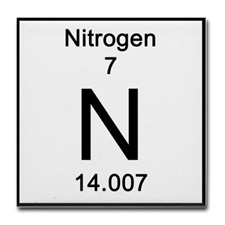
What is the number of protons that the element in this image contain?
a)
14
b)
7
c)
15
d)
18
22.

If an atom has 12 protons, which of the following must it also have to be considered a neutral atom?

a)

12 neutrons

b)

12 electrons

c)

12 protons

d)

24 protons and neutrons

23.
If an atom has 10 protons, 10 neutrons, and 10 electrons, what is the mass of the atom?
a)
10
b)
20
c)
30
24.

What charge does an atom have when it GAINS electrons?

a)

Positive

b)

Negative

c)

Neutral

25.

What two particles determine the mass number?

a)

Protons and electrons

b)

Electrons and neutrons

c)

Protons and neutrons

26.

When an atom loses an electron, it becomes a(n) _____________ ion.

a)

positive

b)

negative

c)

neutral

d)

polyatomic

27.

If the mass number of this chlorine atom is 36, how many neutrons does it have?

a)

17

b)

18

c)

19

d)

can't be determined

28.

What is the atomic number of this atom shown in the Bohr model?

a)

11

b)

12

c)

13

d)

can't be determined

29.

What is the mass number of the atom shown in the Bohr model?

a)

11

b)

12

c)

23

d)

Can't be determined

30.

Is this atom an ion? If so what would it's charge be?

a)

Yes, 1-

b)

No it is neutral

c)

Yes, 1+

d)

Can't be determined

31.

Most of the mass of an atom is found in the ______.

a)

nucleus

b)

proton

c)

electron cloud

d)

isotope

32.
An atom with an unequal number of protons and electrons is said to have (a) ___.
a)
no charge
b)
balance
c)
charge
d)
unbalance
33.
Two atoms of the same element but with different mass numbers are called________
a)
electrons
b)
isotopes
c)
variables
d)
electron cloud
34.

Which of the following energy transformations occur when a lamp that is plugged into a wall socket is functioning correctly?

a)

Chemical to radiant (light)

b)

Electrical to chemical

c)

Electrical to radiant (light)

d)

Chemical to electrical

35.
Which of the following shows an energy transformation from chemical energy to electrical to light energy?
a)
A bolt of lightning lights the night sky.
b)
A candle glows brightly in the dark.
c)
A fire in a fireplace lights up a room.
d)
A battery causes a flashlight to shine.
36.
What energy transformations take place when a battery-operated radio is in use?
a)
Electrical to chemical to light
b)
Sound to chemical to mechanical
c)
Chemical to electrical to sound
d)
Light to electrical to thermal
37.
People get energy from the food that they eat and transform that energy as they move. Which energy transformations occur as a student rapidly rubs the palms of his hands together?
a)
mechanical to thermal to electrical
b)
chemical to mechanical to thermal
c)
mechanical to chemical to sound
d)
chemical to sound to electrical
38.

Which of the following devices transforms electrical energy into the mechanical energy of an electric motor?

a)

An e-reader

b)

a fan

c)

a manual pencil sharpener

d)

ipod

39.
What two elements make up water?
a)
Helium and oxygen
b)
Hydrogen and oxygen
c)
helium and carbon
d)
oxygen and carbon
40.

A insect like a water strider can skate along the top of a pond because:

a)

covalent bonds result in water cohesion

b)

hydrogen bonds result in water cohesion (surface tension)

c)

low surface tension of water

41.
What word describes when water is attracted to other substances?
a)
cohesion
b)
adhesion
c)
capillary action
d)
surface tension
42.
Why does ice float?
a)
As water freezes, it expands and its density decreases.
b)
As water freezes, it takes up more hydrogen from the atmosphere, causing it to have a greater buoyancy.
c)
As water freezes, air becomes trapped between the hydrogen bonds of water molecules.
d)
As water freezes, it takes up more oxygen from the atmosphere, causing it to have a greater buoyancy.
43.

Water travels up from the roots of a tree to the top because of

a)

adhesion and cohesion combine in capillary action- causing water to be drawn up the narrow "tubes" in the xylem

b)

surface tension- water forms a "skin" on top as water molecules stick together

c)

specific heat capacity- water takes a lot of energy to heat up

d)

density of water compared to ice- ice floats because it's less dense than water

44.

Water droplets take a spherical shape (as pictured) because of ____________

a)

adhesion- water sticks to other objects

b)

cohesion- water molecules stick to other water molecules

c)

capillary action- water rises up a thin tube

d)

solubility- things dissolve in water

45.
A molecule with electrically charged areas is called a _______________.
a)
magnet
b)
polar molecule
c)
solution
d)
electrical molecule
46.
Water is a universal solvent because it...
a)
It can be found anywhere
b)
It freezes when it gets cold
c)
floats when frozen
d)
Dissolves most substances
47.

Select all ingredients a comet is composed (made) of

a)

Dust

b)

Iron

c)

Ice

d)

Small rocky particles

48.

Asteroids are found in a region called the

a)

Kuiper Belt

b)

Asteroid Belt

c)

Oort Cloud

d)

Earth's surface

49.

The asteroid belt is located between which 2 planets?

a)

Mercury and Venus

b)

Jupiter and Saturn

c)

Uranus and Neptune

d)

Mars and Jupiter

50.

Which object in space is larger?

a)

Asteroid

b)

Meteoroid

51.

Which object in space has a long, narrow orbit around the sun. We never see this object except once every 75 years!

a)

Asteroid

b)

Comet

c)

Meteor

d)

Meteorite

52.

A comet forms a tail when

a)

It is deep in outer space and begins to melt

b)

It gets close to the sun and begins to melt

53.

A small rock in space that is orbiting the sun. This object is similar to an asteroid, but it is smaller in size. It will become a meteor once it enters Earth's atmosphere

a)

Meteoroid

b)

Meteor

c)

Meteorite

54.

A _____________ bursts through Earth's atmosphere at amazingly fast speeds and appears as a "shooting star"

a)

Meteorite

b)

Meteor

c)

Meteoroid

55.

A meteor that does not burn up in Earth's atmosphere and reaches Earth's surface

a)

Meteorite

b)

Meteoroid

c)

Meteor

56.

The boundary around a watershed is called the

a)

watershed.

b)

divide.

c)

sub-watershed.

d)

transpiration.

57.

All water eventually empties into

a)

an ocean

b)

a river

c)

the ground

d)

a lake

58.

What is a body of water that combines freshwater from rivers and lakes with saltwater from the ocean?

a)

Estuary

b)

Floodplain

c)

Wetland

d)

Tributary

59.

What is a channel of water that flows into a larger one?

a)

Estuary

b)

Floodplain

c)

Wetland

d)

Tributary

60.

What is a land area that can be covered with water at various points throughout the year?

a)

Estuary

b)

Floodplain

c)

Wetland

d)

Tributary

61.

What is the flat area of land that has sediment deposited when water overflows from rivers?

a)

Estuary

b)

Floodplain

c)

Wetland

d)

Tributary

62.

Which watershed is the largest in the United States?

a)

Mississippi River Watershed

b)

Potomac River Watershed

c)

Shenandoah River Watershed

d)

James River Watershed

63.

Which larger watershed is the Potomac Watershed part of?

a)

Mississippi River Watershed

b)

Chesapeake Bay Watershed

c)

Pacific Northwest Watershed

d)

Great Lakes Watershed

64.

Which watershed is the largest in Virginia?

a)

York Watershed

b)

Shenandoah Watershed

c)

James River Watershed

d)

Albemarle Sound Watershed

65.

Which state is NOT included in the Chesapeake Bay Watershed?

a)

Virginia

b)

Maine

c)

New York

d)

Pennsylvania

66.

Select the 3 bodies of water that Virginia watersheds drain into.

a)

Chesapeake Bay

b)

Gulf of Mexico

c)

Lake Michigan

d)

Albemarle Sound

67.
This part of the experiment serves as a basis of comparison; the one variable being tested has been omitted. 
a)
experimental group
b)
control group
c)
data
d)
variables
68.
This variable in an experiment is the one being deliberately changed by the scientist. 
a)
dependent variable
b)
independent variable
c)
data
d)
control group
69.
What step does every scientific experiment begin with?
a)
hypothesis
b)
question/problem
c)
procedures
d)
conclusion
70.
An experiment is performed on plants to see how different liquids affect plant growth. Each plant in the experiment is given a different liquid; water, apple juice, or milk. Each plant has the same amount of soil, sunlight, and listens to the same music. In this investigation, the independent variable is ...
a)
The type of plant
b)
The amount of sunlight
c)
The type of music
d)
The type of liquid
71.
The summary at the end of an experiment that explains the results. 
a)
conclusion
b)
procedures
c)
materials
d)
responding variable
72.
Testing a hypothesis often involves a(n):
a)
answer
b)
experiment
c)
problem
d)
safety check
73.
A student wants to test the effects of type of exercise on heart rate.  What is the dependent variable?
a)
heart rate
b)
type of exercise
c)
amount of exercise
d)
time of day exercise occurs
74.
Observations made during an experiment are called:
a)
data
b)
problems
c)
conclusions
d)
questions
75.
On what axis should the independent variable always be?
a)
X
b)
Y
76.
An experiment is performed on plants to see how different liquids affect plant growth. Each plant in the experiment is given a different liquid; water, apple juice, or milk. Each plant has the same amount of soil, sunlight, and listens to the same music. In this investigation, what are the controlled variables?
a)
Type of plant, amount of music, and sunlight
b)
Water, apple juice, milk
c)
Plant growth
77.
An experiment is performed on plants to see how different liquids affect plant growth. Each plant in the experiment is given a different liquid; water, apple juice, or milk. Each plant has the same amount of soil, sunlight, and listens to the same music. In this investigation, the independent variable is ...
a)
The type of plant
b)
The amount of sunlight
c)
The type of music
d)
The type of liquid
78.
Which is NOT a step in the scientific method?
a)
Make observation
b)
Form a theory
c)
Collect data
d)
Form a hypothesis
79.
Any form of water that falls to Earth's surface from the clouds is called what?
a)
Evaporation
b)
Condensation
c)
Precipitation
d)
Sublimation
80.
The Gulf Stream is a current that brings warm ocean water from the south to the north. What type of heat transfer is this?
a)
conduction
b)
convection
c)
radiation
d)
Insolation 
81.

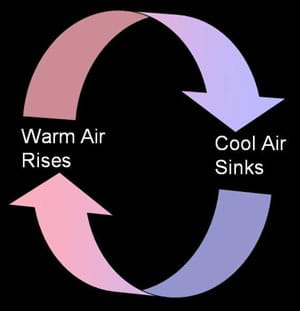
Near the ceiling of a room the air is warmer. The warm air rises because of

a)

conduction

b)

convection

c)

radiation

82.

When you use a microwave, what is the main way that heat is transferred?

a)

Convection

b)

Conduction

c)

Radiation

d)

insulation.

83.

The handle of a metal spoon warms up when it is placed in a hot bowl of soup because of

a)

Convection

b)

Conduction

c)

Radiation

d)

insulation.

84.

In heat transfer, heat always flows from the _______________ substance to the _______________ substance.

a)

Hotter to colder

b)

Colder to hotter

c)

Hotter to hotter

d)

Colder to colder

85.

You get sunburned due to __________ from the sun.

a)

conduction

b)

convection

c)

radiation

86.
A substance that does not conduct electricity and is not malleable
a)
Non-Metal
b)
Gold
c)
Metal
d)
Aluminum
87.
A substance that conducts heat and electricity well and is malleable
a)
Metal
b)
Non-Metal
c)
Element
d)
Malleable
88.
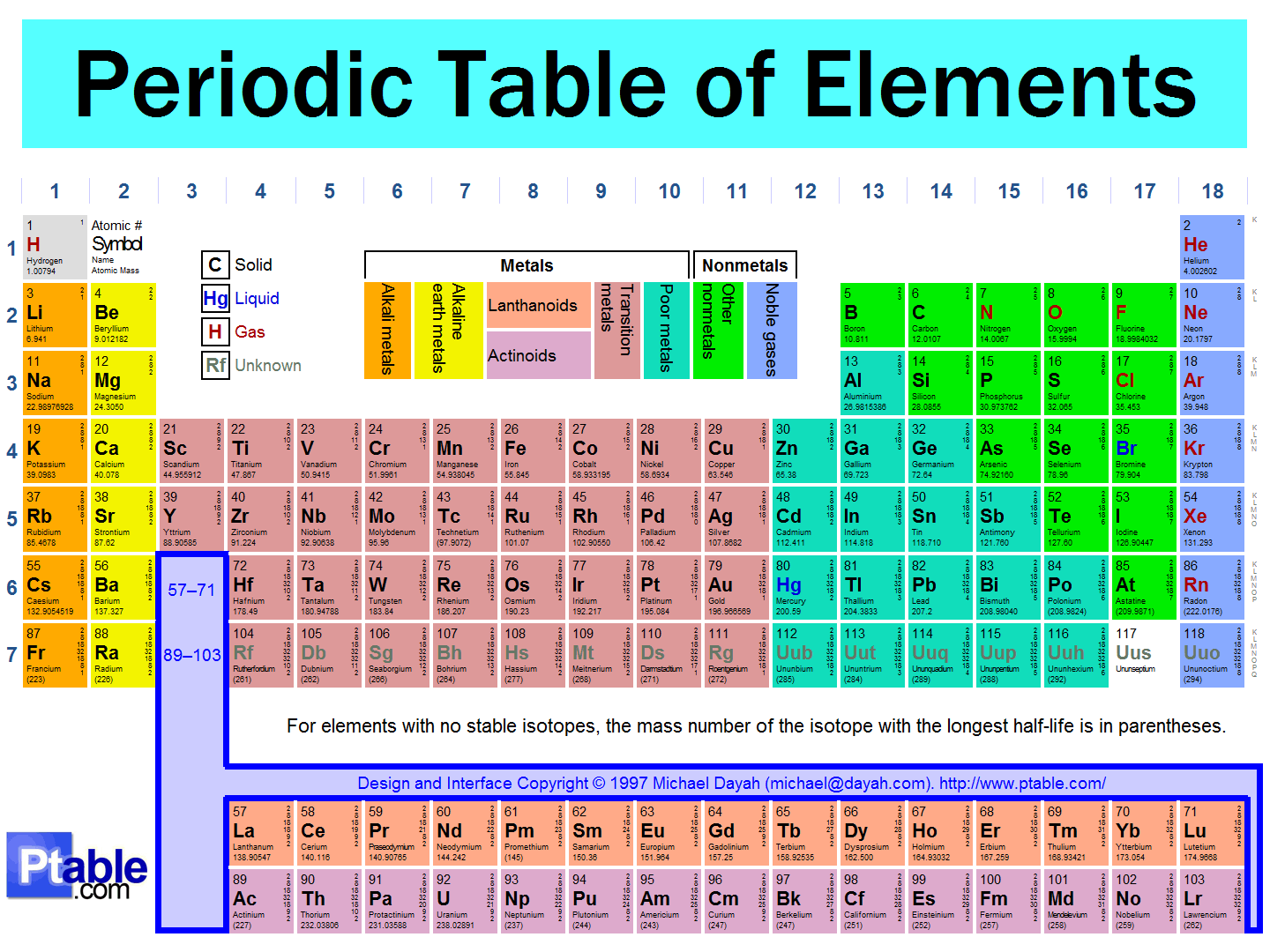
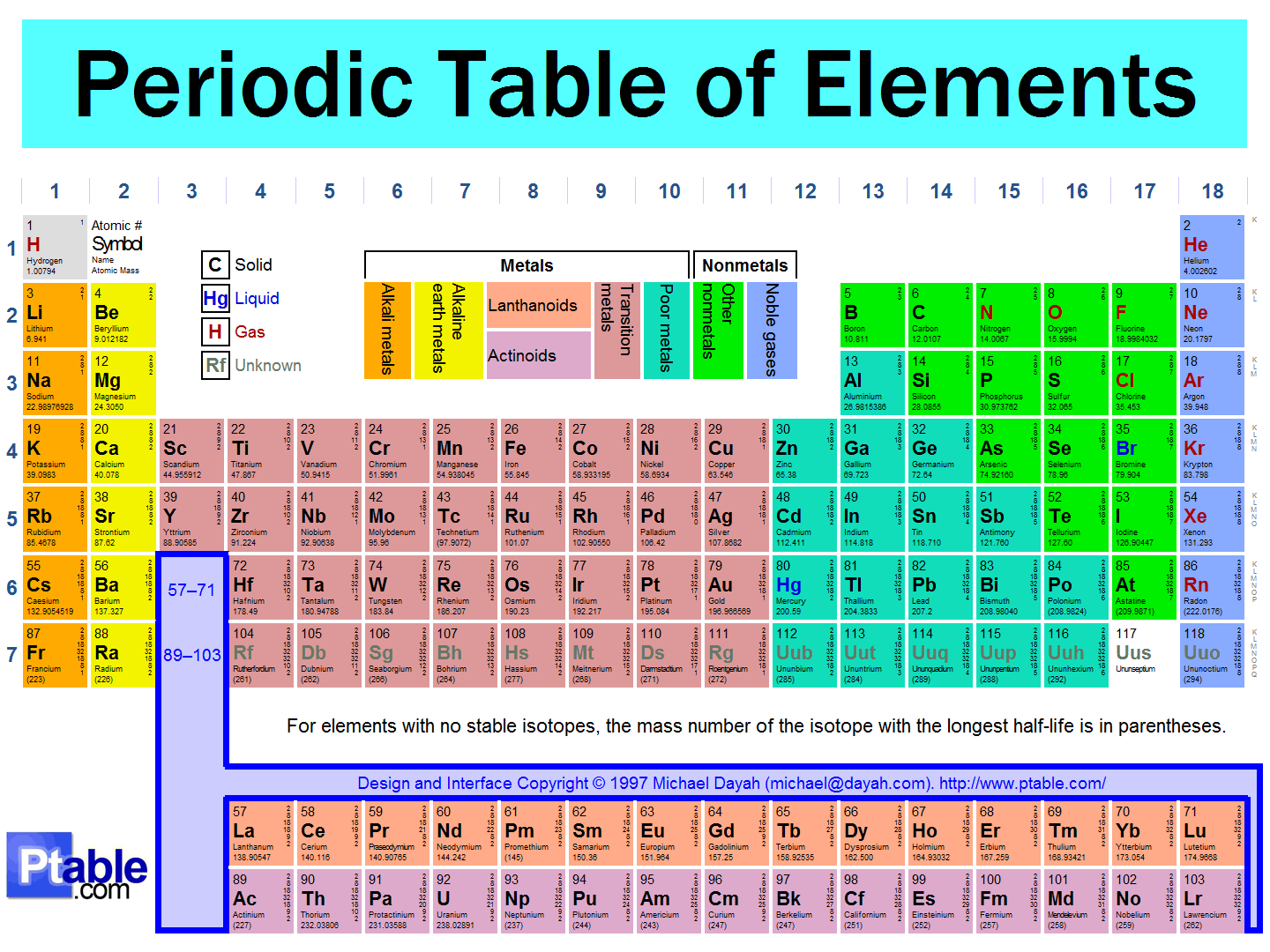
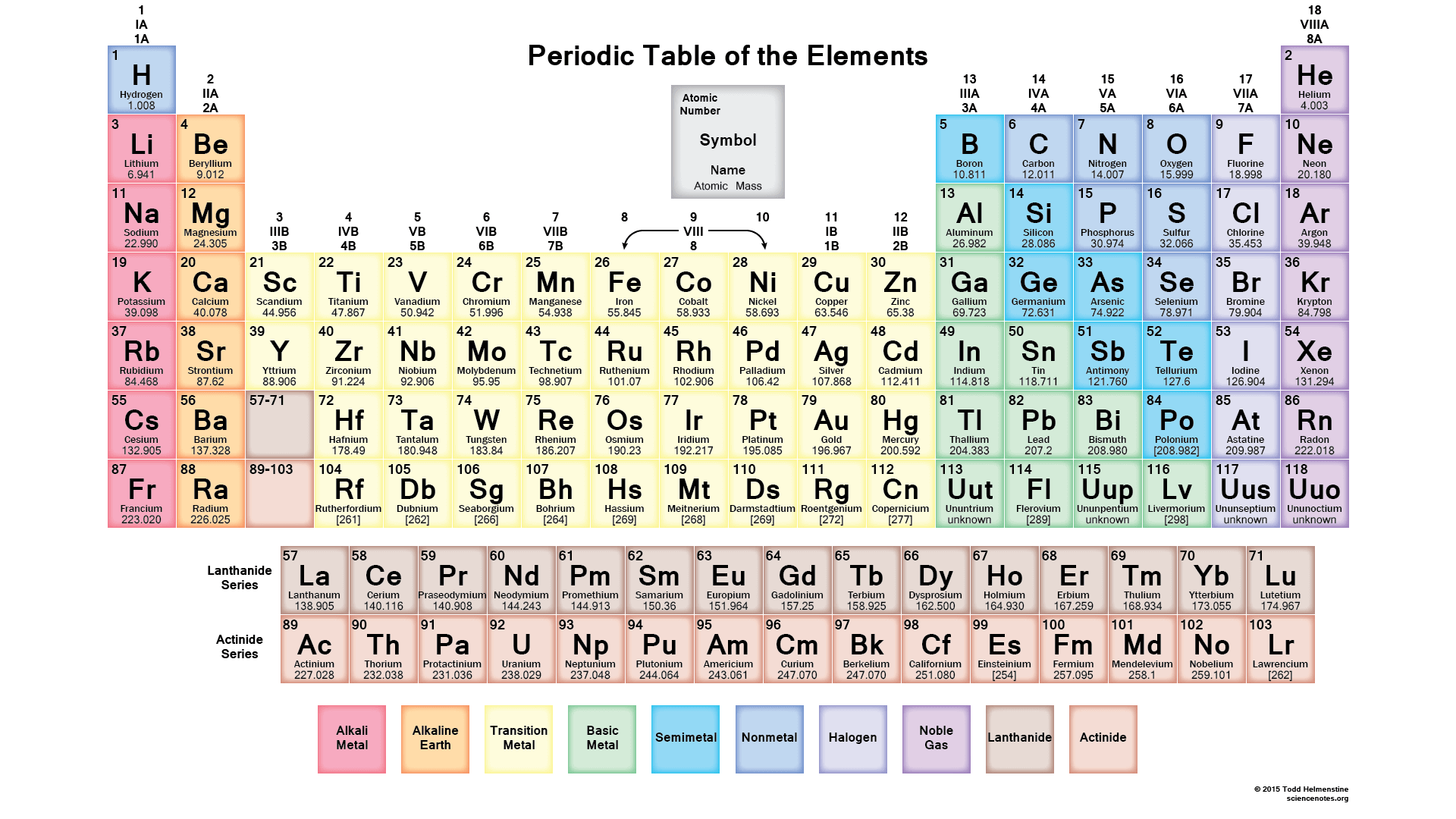
The Modern Periodic Table of Elements is arranged by
a)
atomic mass
b)
atomic number
c)
valence electrons
d)
number of isotopes
89.

The vertical (up and down) columns in the Periodic Table are called

a)

groups

b)

towers

c)

periods

d)

atomic numbers

90.

The horizontal (side to side) rows in the Periodic Table are called

a)

groups

b)

families

c)

periods

d)

atomic numbers

91.
Sodium (Na) is found in period 
a)
3
b)
2
c)
4
d)
1
92.
Sodium (Na) is found in group 
a)
1
b)
2
c)
3
d)
4
93.
The phases of the moon are __________ because they repeat in a pattern.
a)
periodic
b)
group
c)
awesome
d)
halogens
94.
The atomic number tells you what?  READ THE ANSWERS CAREFULLY
a)
only the number of electrons
b)
 only the number of protons
c)
only the number of neutrons
d)
the number of both electrons and protons in an atom.
95.
What does the atomic mass tell you? 
a)
Basically,the number of electrons and protons
b)
The number of neutrons
c)
Basically, the number of protons and neutrons
d)
The number of protons.
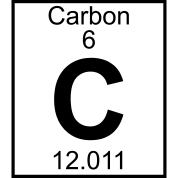
96.
What does the 6 represent?
a)
atomic mass
b)
atomic number
c)
element name
d)
chemical symbol 
97.
What does 12.011 represent?
a)
atomic mass
b)
atomic number
c)
element name
d)
chemical symbol 
98.
Anything that has mass and takes up space.
a)
volume
b)
matter
c)
solid
d)
temperature
99.
The amount of space something takes up.
a)
matter
b)
mass
c)
volume
d)
element
100.
The measure of the energy of motion in the particles of matter, which we feel as how hot or cold something is.
a)
matter
b)
gas
c)
temperature
d)
atomic theory
101.
The state of matter in which a substance has a definite volume but no definite shape.
a)
gas
b)
liquid
c)
solid
d)
matter
102.
The state of matter in which a substance has a definite shape and definite volume.
a)
solid
b)
gas
c)
atom
d)
liquid
103.
A change in which the form or shape of a substance changes but the chemical makeup of the substance remains the same.
a)
chemical change
b)
reaction
c)
physical change
d)
solution
104.
The state of matter in which a substance does not have a definite shape or volume.
a)
element
b)
compound
c)
gas
d)
liquid
105.
A change in one or more substances, caused by a reaction, that forms new and different substances.
a)
mixture
b)
physical change
c)
element
d)
chemical change
106.
A combination of two or more different substances in which the substances keep their identities. 
a)
reaction
b)
mixture
c)
solution
d)
atom
107.
The smallest unit into which an element can be divided and still retain all the properties of that element.
a)
atomic theory
b)
compound
c)
element
d)
atom
108.
Matter that is made of only one kind of atom.
a)
compound
b)
volume
c)
element
d)
atom
109.
A substance made of atoms of two or more elements that have combined chemically.
a)
compound
b)
matter
c)
volume
d)
chemical change
110.
What is the volume of the rock? The water level is displaced from 20 mL to 23 mL with the rock.
a)
3 mL
b)
23 mL
c)
20 mL
d)
43 mL
111.
The amount of matter in an object is a measure of the object's ________________.
a)
volume
b)
density
c)
mass
d)
solubility
112.
What would be the best way to measure the volume of a small rock?
a)
L x W x H with a ruler
b)
Put on triple beam balance
c)
Mass ÷ Volume
d)
Displacement method using graduated cylinder
113.
What is the formula for calculating density?
a)
Mass ∗ Volume
b)
Volume ∗ Mass
c)
Mass ÷ Volume
d)
Volume ÷ Mass
114.
Which statement is true?
a)
Oil is the most dense substance.
b)
Corn syrup is less dense than water.
c)
Oil is less dense than water.
d)
Oil and corn syrup have the same density but different masses.
115.
The boiling point of water is ______________.
a)
0° C
b)
50° C
c)
200° C
d)
100° C
116.
The volume of water in a beaker was 215 mL. After 5 days, the volume of the water was 200 mL. What best explains the change in volume?
a)
Some of the water absorbed the air. 
b)
Some of the water evaporated and escaped into the air as water vapor.
c)
Some of the water disappeared.
d)
Some of the water was released due to condensation.
117.
When a gas turns into a liquid, it is called ___________________.
a)
Condensation
b)
Evaporation
c)
Melting
d)
Freezing
118.
5 grams of salt was mixed with 50 mL of water to form a solution. In the solution, the water was which of the following?
a)
Solvent
b)
Saturate
c)
Solute
d)
Transparent
119.
What do magnets stick to?
a)
copper
b)
wood
c)
iron
d)
plastic
120.
Magnets have a north and a south ___________
a)
shape
b)
color
c)
pole
d)
region
121.
Two north poles will attract.
a)
True
b)
False
122.
Something we notice with our senses is called an _____________
a)
inference
b)
guess
c)
answer
d)
observation
123.
Which list includes only objects that are conductors?
a)
Paper clip, rubber, glass, copper penny
b)
Rubber, glass, wood, plastic
c)
Rubber, glass, copper penny, wood
d)
Paper clip, iron nail, copper penny, aluminum foil
124.
What is the volume of the rock? The water level is displaced from 20 mL to 23 mL with the rock.
a)
3 mL
b)
23 mL
c)
20 mL
d)
43 mL
125.
Which tools are used to measure volume?
a)
beaker, graduated cylinder, and ruler
b)
triple beam balance, pan balance
c)
thermometer
d)
stopwatch and timer
126.
What is weight?
a)
the amount of matter in an object
b)
the distance between one point to another
c)
how fast something travels
d)
the amount of gravity pulling on the mass of an object
127.
Which tool helps us to measure mass?
a)
scale
b)
triple beam
c)
ruler
d)
magnifying glass
128.
Which item is not made of matter?
a)
air
b)
water
c)
a pencil
d)
a shadow
129.
Which is true?
a)
Material A is a liquid
b)
Material C is a solid
c)
Material B is a gas
d)
Material B is  a liquid
130.
Waves move ___ through vibrations
a)
Energy
b)
Matter
c)
Mass
d)
Weight
131.
Transverse waves are ___.
a)
Parallel
b)
Perpendicular
c)
Weird
132.
Which is the wavelength?
a)
1
b)
2
c)
3
d)
4
133.
If the frequency gets higher, the wavelength gets 
a)
longer
b)
shorter
134.
The pitch of the sound depends on
a)
frequency
b)
amplitude
c)
wavelength
135.
If the wavelength gets longer, the frequency gets 
a)
higher
b)
lower
136.
The loudness of the sound depends on
a)
wavelength
b)
amplitude
c)
frequency
137.
Which EM wave is used to treat cancer?
a)
gamma
b)
radio
c)
xray
d)
infrared
138.
Which EM wave has the lowest frequency?
a)
radio
b)
xray
c)
gamma
d)
infrared
139.
Which EM wave has the longest wavelength?
a)
light
b)
radio
c)
ultraviolet
d)
red
140.
Is refracting light bending or bouncing?
a)
bending
b)
bouncing
141.
A blue tshirt looks blue because of ___.
a)
reflection
b)
refraction
c)
diffraction
142.
Which color has the lowest frequency?
a)
red
b)
green
c)
blue
d)
violet
143.
Which color has the highest frequency?
a)
blue
b)
yellow
c)
orange
d)
violet