wayground logo

Free Printable Worksheets

Font size

S
M
L
XL
Worksheets

Characteristics, Organelles and Cell Theory

Total questions: 130

Worksheet time: 2hrs 4mins

Name
Class
Date
1.

Choose the statement(s) TRUE for ALL organisms

a)

have cells

b)

can move

c)

grow or develop

d)

use sunlight to make food

e)

have features that help them adapt

2.

Any living thing is called a _____________.

a)

organism

b)

cell

c)

matter

d)

atom

3.

The basic unit of living things are known as ____________.

a)

cells

b)

matter

c)

atom

d)

organism

4.
A worm turns away from light is an example of a worm
a)
reproducing
b)
doing cellular respiration
c)
having cells
d)
responding to its environment
5.
Which of the following characteristics of living things best explain a cat having a litter of kittens?
a)
living things respond to their environment
b)
living things maintain homeostasis
c)
living things reproduce
d)
living things are based on a genetic code
6.
Which of the following characteristics of living things best explains why humans sweat when they get hot?
a)
maintaining a stable internal enviornment
b)
growth and development
c)
using energy
d)
ability to reproduce
7.

All living things ___ to the environment in order maintain homeostasis.

a)

grow

b)

respond

c)

consume

d)

evolve

8.

Regulating the body in order to keep a constant internal state

a)

stimuli

b)

irritability

c)

homeostasis

d)

survive

9.
Organisms that cannot make their own food and must obtain energy from external sources are called
a)
autotrophs
b)
heterotrophs
c)
thylakoids
d)
plants
10.

Which is NOT an example of adaptation?

a)

camels have humps that store water for the dry days

b)

night animals have special eyes to see in the dark

c)

fishes developed gills to breath underwater

d)

an elephant gives birth to one offspring

11.

Choose the statement(s) TRUE for ALL organisms

a)

have cells

b)

can move

c)

grow or develop

d)

use sunlight to make food

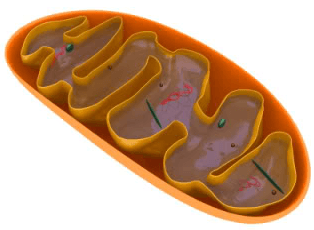
e)

have features that help them adapt

12.

which of these is not a characteristic of living things?

a)

can do respiration

b)

can do metabolic action

c)

able to adapt

d)

able to communicate

13.

An organism made of only one cell is called?

a)

unicelluar

b)

multicellular

c)

plantae

d)

animalia

14.

Which is NOT a characteristic of Living Things?

a)

Respond to their environment

b)

Has DNA

c)

Breathes

d)

Uses Energy

15.

Which is NOT a characteristic of Living Things?

a)

Made of cells

b)

Can Move

c)

Reproduces

d)

Grows and develops

16.

The roots of a plant grow towards a source of ground water.

a)

All living things respond to their environment (stimulus)

b)

All living things reproduce.

c)

All living things need energy.

d)

All living things contain cells.

17.

Over three years, Juan's height has increased from 5'4" to 5'11".

a)

All living things contain cells.

b)

All living things grow.

c)

All living things need energy.

d)

All living things respond to their environment (stimulus)

18.

The human body is made up of skin cells, blood cells, and bone cells.

a)

All living things need energy.

b)

All living things contain cells.

c)

All living things respond to their environment (stimulus)

d)

All living things reproduce.

19.
Which of the following characteristics of living things best explains why humans sweat when they get hot?
a)
maintaining a stable internal enviornment
b)
growth and development
c)
using energy
d)
ability to reproduce
20.
Which of the following characteristics of living things best explains why your legs and arms get longer and stronger as you get older? 
a)
living things respond to their environment
b)
living things maintain internal balance
c)
living things are made of cells
d)
living things grow and develop
21.
What is an organism that consists of more than one cell?
a)
unicellular
b)
multicellular
c)
nucleus
d)
Organelle
22.
When you shade your eyes (a response) from a bright light (a stimulus), you are demonstrating which characteristic
a)
Respiration
b)
Sensitivity
c)
Movement
d)
Growth
23.
A change in an organism's surroundings that causes it to react is called
a)
a stimulus.
b)
a response.
c)
development. 
d)
energy.
24.

Infants will often smile when they hear a parent’s voice. In this situation, the parent’s voice is considered

a)

stimulus

b)

response

c)

adaptation

d)

resource

25.
Which of the following characteristics of living things best explains why your legs and arms get longer and stronger as you get older? 
a)
living things respond to their environment
b)
living things maintain internal balance
c)
living things are made of cells
d)
living things grow and develop
26.
When you step out into the cold, your body shivers in order to keep its temperature at 98.6F.
a)
All living things use energy
b)
All living things contain cells
c)
All living things maintain homeostasis
d)
All living things grow
27.
A camel has eyelashes that work to keep the dust and sand out of its eyes.
a)
All living things adapt to their environment
b)
All living things grow
c)
All living things have cells
d)
All living things use energy
28.
YOU are a multi-celled organism but an amoeba is a single celled organism.
a)
All living things have cells
b)
All living things grow
c)
All living things use energy
d)
All living things respond to their environment
29.

Which of the following is an example of homeostasis?

a)

adapting to your environment

b)

maintaining an appropriate respiration rate

c)

the sum of all of your chemical reactions

d)

being composed of more than one cell

30.
Which of the following is NOT a characteristic that all living things share?
a)

all living things may reproduce

b)

all living things obtain and use energy

c)
all living things obtain water by drinking
d)

all living things adapt to the environment

31.
An example of a unicellular organism is a...
a)
bacteria
b)
animal
c)
plant
d)
fungi
32.

Responding to change helps an organism to survive. Which are a response to change in an environment? There are two correct choices.

a)

A cell reproduces asexually.

b)

You get hot and sweat.

c)

A cell only grows in a certain environment.

d)

Hummingbirds migrate to the south for the winter.

33.
Which one of these is NOT one of the characteristics of living things?
a)
All living things eat.
b)
All living things reproduce.
c)
All living things require energy for life processes.
d)
All living things respond to the environment/stimuli.
34.

The cell theory applies to all organisms, including the five shown. Which of the following statements describes how these organisms are an example of the cell theory?

a)

The organisms have cells that lack a nucleus.

b)

The organisms are made of one or more cells.

c)

The cells of the organisms undergo photosynthesis.

d)

The cells of the organisms are identical to each other.

35.
Which invention from the 17th century allowed for the development of modern cell theory?
a)

x-rays

b)

computers

c)

the light microscope

d)

the scanning electron microscope

36.
A plant and an animal are both living things. According to the Cell Theory, what can you conclude about these two very different organisms?
a)

Plants have cells but animals do not.

b)

They are both made of one or more cells. 

c)

They both come from the same kind of cell.

d)

They both come from a non-living organism.

37.
Using a microscope in the science lab, Jill observed two unknown cells: Cell 1 and Cell 2. Cell 1 she identified as a plant cell and Cell 2 as an animal cell. Her teacher told her she identified the cells correctly. What did Jill most likely observe to correctly identify the cells?
a)

Cell 2 had a cell membrane and Cell 1 did not.

b)

Cell 1 had a cell wall and Cell 2 did not.

c)

Cell 2 had a chloroplast and Cell 1 did not.

d)

Cell 1 had a nucleus and Cell 2 did not.

38.

Was the first person to see cells by looking at cork under a microscope and gave them their name

a)

Hooke

b)

Leeuwenhoek

c)

Virchow

d)

Schleiden

39.

Looked at living cells under a microscope he made

a)

Hooke

b)

Leeuwenhoek

c)

Virchow

d)

Schwann

40.

Proposed that all cells come from other cells

a)

Leeuwenhoek

b)

Schleiden

c)

Schwann

d)

Virchow

41.

Said that all plants are made of cells

a)

Hooke

b)

Virchow

c)

Schleiden

d)

Schwann

42.

Said that all animals are made of cells

a)

Hooke

b)

Virchow

c)

Schleiden

d)

Schwann

43.

Who looked at pond water and coined the term "animalcules"?

a)

Janssen

b)

Schleiden

c)

Leeuwenhoek

d)

Hooke

44.

The cell theory developed from the work of many different scientists. Which of the following statements is NOT part of the cell theory?

a)

All cells come from other living cells.

b)

The cell is the basic unit of all living things.

c)

All cells of living things have the same organelles.

d)

All living things are made up of one or more cells.

45.

The work of many different scientist:, led to the development of the cell theory. Which of the following statements is NOT part of the cell theory?

a)

All cells come from other living cells.

b)

The cell is the basic unit of all living things.

c)

The cell provides everything a living thing needs.

d)

All living things are made up of one or more cells.

46.

The cell theory applies to all organisms, including the two shown below. Which of the following statements describes how these organisms are examples of the cell theory?

a)

The organisms are made up of cells that make their own food.

b)

The cells of the organisms come from other living cells.

c)

The organisms are made up of more than one cell.

d)

The cells of the organisms have cell walls.

47.

Botanist that said all plants were made out of cells.

a)

Schleiden

b)

Schwann

c)

Virchow

d)

Einstein

48.

Has NO nucleus

a)

prokaryotic

b)

eukaryotic

c)

both

d)

none of these

49.

Considered to be a complex type of cell.

a)

prokaryotic

b)

eukaryotic

c)

both

d)

neither

50.

Contains a cell membrane.

a)

prokaryotic

b)

eukaryotic

c)

both

d)

neither

51.

Has a nucleus

a)

prokaryotic

b)

eukaryotic

c)

both

d)

neither

52.

Can be either single celled or multicellular

a)

prokaryotic

b)

eukaryotic

c)

both

d)

neither

53.

Contains NO membrane bound organelles.

a)

prokaryotic

b)

eukaryotic

c)

both

d)

neither

54.

Contains cytoplasm

a)

prokaryotic

b)

eukaryotic

c)

both

d)

neither

55.

This type of cells DNA is found in the cytoplasm

a)

prokaryotic

b)

eukaryotic

c)

both

d)

neither

56.

Contains DNA

a)

prokaryotic

b)

eukaryotic

c)

both

d)

NEITHER

57.

Are considered to be simple

a)

prokaryotic

b)

eukaryotic

c)

neither

d)

both

58.

Contains membrane bound organelles.

a)

prokaryotic

b)

eukaryotic

c)

neither

d)

both

59.

DNA found only in the nucleus

a)

prokaryotic

b)

eukaryotic

c)

both

d)

neither

60.

Which statement was NOT included in cell theory?

a)

All living things are composed of cells.

b)

Living cells come only from other living cells.

c)

Each cell contains a cell membrane, cytoplasm, nucleus, mitochondria, and endoplasmic reticulum.

d)

Cells are the smallest structure of living things that can perform the functions necessary for life.

61.
Robert Hooke, Anton van Leeuwenhoek, Theodor Schwann, Rudolf Virchow, and Matthias Schliden were all responsible for what theory?
a)
The Theory of Gravity
b)
The Theory of Relativity
c)
The Cell Theory
d)
The Theory of Continental Drift
62.
All cells come from___________ cells.
a)
pregnant
b)
pre-existing
c)
paternal
d)
pin size
63.
Who looked at cork and named the cell?
a)
Robert Hooke
b)
Van Leeuwenhoek
c)
Robert Brown
d)
Francesco Redi
64.
Which scientist did NOT contribute to the cell theory?
a)
Anton Van Leeuwenhoek
b)

Robert Hooke
c)
Albert Einstein 
d)

Matthias Schleiden
65.

Contains DNA

a)

nucleus

b)

mitochondria

c)

chloroplast

d)

endoplasmic reticulum

66.

Assembles proteins and lipids

—  Two types: Rough and Smooth

a)

nucleus

b)

mitochondria

c)

chloroplast

d)

endoplasmic reticulum

67.

Converts solar energy to chemical energy stored in food

a)

nucleus

b)

mitochondria

c)

chloroplast

d)

endoplasmic reticulum

68.

Powerhouse of the cell

a)

nucleus

b)

mitochondria

c)

chloroplast

d)

endoplasmic reticulum

69.
What did Leeuwenhoek examine?
a)
Cork
b)
Pond water
c)
Plant cells
d)
Animal fat
70.
Which of the following controls movement of materials in and out of a cell? 
a)
Cell wall
b)
Cell membrane
c)
Cytoplasm
d)
Nucleus
71.
The jellylike substance that contains proteins, nucleic acids, minerals, ions, and organelles is what?
a)
Prokaryote
b)
Nucleus
c)
Cytoplasm
d)
Eukaryote
72.
Which statement is a part of the cell theory?
a)
all cells come from preexisting cells
b)
bacteria are prokaryotic cells
c)
eukaryotic cells are complex
d)
humans are multicellular
73.
The Cell Theory states...
a)
atoms create all matter
b)
living things evolve
c)
the cell is the backbone of all matter
d)
cells are the basic unit of structure and organization of organisms
74.
All plants are made of cells.  This was discovered by....
a)
Matthias Schleiden
b)
Rudolf Virchow
c)
Robert Hooke
d)
Aristotle
75.
Which of the following is NOT a cell theory.
a)
All non-living things are made of cells
b)
All cells come from pre-existing cells
c)
Cells are the basic unit of structure and function of all living things
76.
Unlike eukaryotes, prokaryotes do not have:
a)
DNA
b)
cytoplasm
c)
cell walls
d)
a membrane bound nucleus
77.
Which invention from the 17th century allowed for the development of modern cell theory?
a)

x-rays

b)

computers

c)

the light microscope

d)

the scanning electron microscope

78.
The combined observations of Mattias Schleiden, Theodor Schwann and Rudolph Virchow resulted in the formation of the cell theory. Which of the following is not part of the cell theory?
a)
All cells contain a nucleus. 
b)
All cells come from other living cells.
c)
All living organisms are made of one or more cells
d)
 Cells are the basic unit of structure and function of all living things.
79.

What structures do all cells have in common?

a)

cytoplasm

b)

Ribosomes

c)

DNA

d)

cell membrane

e)

nucleus

80.

What do plant cells have that animal cells do not?

a)

Chloroplasts

b)

Cell wall

c)

Large vacuoles

d)

Nucleus

e)

ribosomes

81.

These three scientists together helped come up with the second part of the cell theory (all living things are made of one or more cells). CHOOSE 3 ANSWERS

a)

Schleiden

b)

Leeowenhoek

c)

Hooke

d)

Virchow

e)

Schwann

82.

Features of plant cells that clearly make them different from animal cells are -

a)

larger and fewer chromosomes.

b)

rigid cell wall and chloroplasts.

c)

more cytoplasm and smaller vacuoles.

d)

changing size and indefinite shape.

83.

Based upon what you just learned about the chloroplast and mitochondria, which do you believe is more important?

a)

Mitochondria because it actually makes the ATP (energy we can use).

b)

Chloroplast because it gets the energy from the sun (energy we can't use)

c)

Both are equally important because the chloroplast captures energy we can't use and sends it to the mitochondria to make ATP which is energy we can use.

84.
The Golgi apparatus _____.
a)
packages cell products for export
b)
eliminates waste
c)
stores DNA
d)
makes energy
85.
Which organelle is only found in a plant cell? 
a)
nucleus
b)
chloroplast
c)
mitochondria
d)
cell membrane
86.
This organelle creates energy.
a)
Nucleus
b)
Ribosome
c)
Mitochondria
d)
ER
87.
What is the fluid inside a cell called? 
a)
Endoplasimic Reticulum
b)
Orange Juice
c)
Water
d)
Cytoplasm
88.
Which of these is NOT a part of the Cell Theory?
a)
All cells are independent.
b)
Cells are the basic unit of living things. 
c)
All living things are one or more cells.
d)
Cells come from cells.
89.
This organelle helps plants keep their rigid structure. 
a)
Cell wall
b)
Cell membrane
c)
Chloroplast
d)
Nucleus
90.
This organelle turns the light energy into a simple sugar. 
a)
Mitochondria
b)
ER
c)
Chloroplast
d)
Nucleus
91.
This organelle makes proteins. 
a)
Cell membrane
b)
Nucleus
c)
Ribosome
d)
ER
92.

Which organelle controls what goes in and out of the cell?

a)

nucleus

b)

nucleolus

c)

cell membrane

d)

nuclear membrane

93.

This pigment is found in chloroplasts.

a)

rhodopsin

b)

chlorophyll

c)

thylakoid

d)

stroma

94.

Proteins are produced at this organelle.

a)

golgi body

b)

ribosome

c)

cytoskeleton

d)

cilia

95.

this organelle makes ATP.

a)

chloroplast

b)

mitochondria

c)

ribosome

d)

nucleolus

96.
The ____________ packages and processes material before it exports out of the cell.
a)
Vacuoles
b)
mitochondria
c)
Golgi apparatus 
d)
nucleus 
97.
Which of the following is an enzyme filled organelle that breaks down waste in the cell?
a)
lysosomes
b)
chloroplast
c)
mitochondria 
d)
Golgi apparatus 
98.
Which of the following is found inside a prokaryote?
a)
cytoplasm
b)
DNA
c)
ribosomes
d)
all of these
99.

Both Eukaryotic and Prokaryotic cells have __________.

a)

ribosomes

b)

nucleus

c)

ribosomes and a nucleus.

100.

Which organelle holds the DNA?

a)

Nucleus

b)

Cell membrane

c)

Cell wall

d)

Mitochondria

101.

Which organelle gives the cell structure and support?

a)

Vacuole

b)

Cell wall

c)

Nucleus

d)

Chloroplast

102.

Which organelle stores water?

a)

Vacuole

b)

Mitochondria

c)

Chloroplast

d)

Ribosome

103.

Which organelle is responsible for the process of photosynthesis?

a)

Ribosome

b)

Chloroplast

c)

Cell membrane

d)

Cell wall

104.

Which organelle is larger in plants than in animals?

a)

Vacuole

b)

Mitochondria

c)

Chloroplast

d)

Nucleus

105.

What organelle is present in all cells?

a)

Cell membrane

b)

Cell wall

c)

Mitochondria

d)

Chloroplast

106.

Which organelle is found only in plant cells?

a)

Cell wall

b)

DNA

c)

Cell membrane

d)

Chloroplast

107.

Which of the following organelles is found in all living cells?

a)

Mitochondria

b)

Chloroplasts

c)

Vacuoles

d)

Ribosomes

108.

Which of the following types of cells DO NOT have a nucleus?

a)

Prokaryotes

b)

Eukaryotes

c)

Plants

d)

Animals

109.

Prokaryotes are always...

a)

Plants

b)

Animals

c)

Bacteria

d)

Eukaryotes

110.

What are the function and fun way of remembering what the cell wall does

a)

Rigid outer layer of a plant cell

b)

"Im a brick wall"

c)

Rigid outer layer of an animal cell

d)

" Im a clay wall"

111.

Which organelle is found inside the nucleus and produces ribosomes

a)

Nucleolus

b)

Cell Membrane

c)

Lysosome

d)

Golgi Bodies

112.

What is a fun way to remember what lysosomes do?

a)

I clean things up!

b)

Make something sweet

c)

The control center

d)

Tin of information

113.

What is the function of the Vacuoles

a)

Store food, water and waste

b)

Receive proteins

c)

Assembles amino acids

d)

Found inside the nucleus

114.

Which organelle receives proteins and materials from the ER, packages them and distributes them

a)

Vacuoles

b)

Golgi Bodies

c)

Nucleus

d)

Chromatin

115.

Which organelle contains genetic material?

a)

Endoplasmic Reticulum

b)

Golgi Complex

c)

Nucleolus

d)

Nucleus

116.
Where does photosynthesis occur?
a)
mitochondria
b)
stomata
c)
xylem
d)
chloroplast
117.
I make proteins for the cell. What am I?
a)
ribosome
b)
mitochondria
c)
chloroplast
d)
lysosome
118.
What can only be found in plant cells?
a)
Cell membrane
b)
Vacuole
c)
Chloroplast
d)
Mitochondrion
119.
The two kinds of cells are Prokaryotes and Eukaryotes. How are they different?
a)
Prokaryotes have a nucleus.
b)
Eukaryotes have a nucleus.
c)
Prokaryotes are plant cells.
d)
There is no difference.
120.
Complex cell. Can be plant or animal. Contains membrane bound organelles. 
a)
Eukaryotic Cell
b)
Prokaryotic Cell
c)
Bacteria
d)
Blood cell
121.
This organelle takes food and turns it into ENERGY for plant and animal cells.
a)
Chloroplast
b)
Mitochondria
c)
Lysosome
d)
Ribosome
122.
Which of these is NOT a part of the Cell Theory?
a)
All cells are independent.
b)
Cells are the basic unit of living things. 
c)
All living things are one or more cells.
d)
Cells come from cells.
123.
This organelle eliminates waste. 
a)
Nucleus
b)
ER
c)
Vacuole
d)
Lysosome
124.

The outermost layer of a plant cell and animal cell is...

a)

Plant cell - cell membrane, animal cell - cell wall

b)

Plant cell - cell wall; animal cell - cell membrane

c)

Plant and animal cell - cell wall

d)

Plant and animal cell - cell membrane
125.
Amino acids link together to form proteins. In which organelle would this process occur?
a)
Lysosome
b)
Ribosome
c)
Centriole
d)
Mitochondria
126.
What are tiny organelles that convert glucose into ATP?
a)
Ribosomes
b)
Vesicles
c)
Cytoskeleton
d)
Mitochondria
127.
What is the difference between rough and smooth ER?
a)
There is no difference.
b)
Plants have rough ER, animals have smooth ER.
c)
What type of injuries the Doctors treat.
d)
Rough has ribosomes, smooth does not.
128.
Site of protein synthesis.
a)
nucleus
b)
mitochondria
c)
vacuole
d)
ribomsome
129.
Transports materials throughout the cell.  Acts as an assembly line for proteins.
a)
endoplasmic reticulum
b)
vacuole
c)
nucleus
d)
ribosome
130.
Transportation network for the cell, moves materials around in the cell
a)
Lysosome
b)
Nuclear Membrane
c)
Endoplasmic Reticulum
d)
Centriole