wayground logo

Free Printable Worksheets

Font size

S
M
L
XL
Worksheets

Physical Science Review For Final

Total questions: 125

Worksheet time: 4hrs 10mins

Name
Class
Date
1.
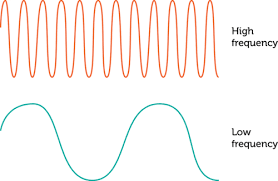
A wave with a large wavelength will have a ______ frequency and _____ energy
a)
high, low
b)
high, high
c)
low, high
d)
low, low
2.
Which section of the spectrum is the ONLY one we can see?
a)
X-rays
b)
Visible Light
c)
Gamma Rays
d)
Ultraviolet Rays
3.
As the frequency of an electromagnetic wave increases, the amount of energy in that wave...
a)
increases.
b)
decreases.
c)
stays the same.
4.
The height of the wave is known as the _____________.
a)
amplitude
b)
crest
c)
trough
d)
wavelength
5.
The blue section of the wave is measuring _________________.
a)
wavelength
b)
crest
c)
trough
d)
amplitude 
6.

Which of the following has the lowest energy?

a)

The color yellow

b)

The color blue

c)

The color indigo

d)

The color orange

7.

Which of the following is true for sound waves?

a)

They require a medium.

b)

They are unrelated to vibrations.

c)

They cannot travel through liquids

d)

They can travel in a vacuum

8.
Waves are a transfer of what?
a)
Heat
b)
Light
c)
Energy
d)
Food
9.

Which distance represents the wavelength?

a)

W

b)

X

c)

Y

d)

Z

10.

Which distance represents the amplitude?

a)

W

b)

X

c)

Y

d)

Z

11.

How many wavelengths separate point A and point B?

a)

1.5

b)

2.0

c)

2.5

d)

3.0

12.

Point A represents what?

a)

Trough

b)

Midpoint

c)

Crest

d)

node

13.
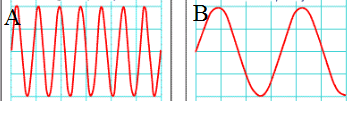
Which wave has a greater frequency?
a)
A
b)
B
14.

If a wave has a greater frequency, what happens to number of waves per second?

a)

increases

b)

decreases

c)

stays the same

15.
Which type of light has the highest energy of this group?
a)
red
b)
yellow
c)
green
d)
blue
16.
The frequency of infrared waves is..
a)
1012 Hz
b)
1020 Hz
c)
104 Hz
d)
1015 Hz
17.

The frequency of an x-ray is --

a)

1.41 x 10⁻¹⁰ Hz

b)

1.41 x 10¹⁸ Hz

c)

1.41 x 10¹⁰ Hz

d)

1.41 x 10⁻¹⁸ Hz

18.

Light always travels in_______.

a)

zig zags

b)

a straight line

c)

one direction

d)

back and forth motions.

19.
What three things may happen to light that strikes an object? 
a)
The light may be reflected, transmitted or absorbed.
b)
The light may be reflected and refracted.
c)
The light may be absorbed and transmitted.
20.

Which of the following is the best example of an object absorbing light?

a)

A black sweater in the sun.

b)

A clean window in the sun.

c)

A curved mirror in the sun.

d)

A long shadow in the sun.

21.
The bouncing of light off an object is ....
a)
a mirror
b)
absorption
c)
reflection
d)
refraction
22.

When light bounces of a mirror,it is

a)

Reflected

b)

Corrected

c)

Absorbed

d)

Refracted

23.

This is an example of

a)

Reflection

b)

Refraction

c)

Absorption

d)

None of the above

24.

What happen to the light as it passess from air to the transparent window

a)

Light changes speed but not direction

b)

All light is reflected

c)

Light changes speed and direction

d)

All light pass through

25.

During a thunderstorm, Sanjay saw lightning and then heard thunder 5s later.Why did he see the lightning before he heard the thunder

a)

Sound travel faster than light

b)

Light travel faster than sound

c)

He would have seen the thunder and lightning at the same time

d)

There is no reason

26.

This leaf will

a)

Reflect green light

b)

Absorb green light

c)

Reflect red light

d)

Reflect no light

27.

Which of these provides the best explanation for why the pencil appears broken?

a)

The pencil absorbs the light rays that hit it.

b)

Water reflects light rays away from the pencil.

c)

Light rays are bent by the water in the glass.

d)

The surface of the water reflects the light rays.

28.
Light bending when goes through different mediums is called ________.
a)
reflection
b)
absorbtion
c)
refraction
d)
mirage
29.
A material that absorbs or reflects the light that strikes it is ____________.
a)
transparent
b)
translucent
c)
opaque
30.
What happens when an object is opaque?
a)
all light is able to pass through
b)
no light is able to pass through
c)
some light is able to pass through
d)
it is black
31.

Which object is translucent?

a)

tissue paper

b)

air

c)

wood

d)

clear plastic

32.
Which describes a convex lens?
a)
triangular in shape
b)
more transparent in the middle
c)
thicker on the edges than in the middle
d)
thicker in the middle than on the edges
33.
Is a convex lens thicker or thinner in the middle?
a)
Thicker 
b)
Thinner 
34.

What type of lens is used in the shown instrument?

a)

concave lens

b)

convex lens

c)

reflection lens

d)

reduction lens

35.

Most eyeglasses use which type of lens?

a)

Concave

b)

Prismatic

c)

Objective

d)

Convex

36.

Concave lenses are thick in the middle and thin in the edges.

a)

TRUE

b)

FALSE

37.
Sound is a form of? 
a)
energy
b)
pitch
c)
volume
38.

Sound does not travel in space because

a)

Distance is too far away.

b)

There is no matter in space.

c)

It is too dark.

d)

Space has planets.

39.

Matter that carries sound waves is called a _________

a)

particle

b)

object

c)

medium

d)

matter

40.
Sound waves are what kind of wave?
a)
Longitudinal
b)
Transverse
c)
Surface
d)
Electromagnetic
41.

What are the two parts of a longitudinal wave?

a)

Crests and Troughs

b)

Compressions and Rarefactions

c)

Pressure and Time

d)

Hertz and Decibels

42.

How is the speed of sound affected by an increase in air temperature?

a)

As the temperature increases, the speed decreases.

b)

As the temperature decreases, the speed decreases.

c)

Temperature has no affect on the speed of sound in air.

43.
What is B?
a)
crest
b)
trough
c)
compression
d)
rarefaction
44.
All waves carry
a)
energy
b)
light 
c)
matter
d)
particles
45.
The part of a longitudinal wave where the particles of the medium are close together.
a)
rarefaction
b)
compression
c)
crest
d)
trough
46.
A particle that carries a negative electric charge is called a(n) ______.
a)
neutron
b)
atom
c)
proton
d)
electron
47.

What is an electrical circuit?

a)

a whole bunch of wires

b)

a broken path that electric charges can flow

c)

a circuit board

d)

a complete, unbroken path through which electric charges flow

48.

Describe a series circuit.

a)

a circuit that has multiple branches

b)

a circuit that has one path

c)

a circuit that dead ends after a light bulb

49.

What is a parallel circuit?

a)

a continuous loop

b)

a circuit with one path

c)

a circuit with multiple branches for each individual appliance or light

50.

Will the light bulbs light up in this image?

a)

Yes, both of them will

b)

Yes, but only the one on the right

c)

No, neither of them will

d)

Yes, but only the one on the left

51.

In this image is a...

a)

series circuit

b)

parallel circuit

52.

Is this a working circuit?

a)

Yes

b)

No

c)

I'm not sure, I would need to test it myself.

53.
The picture shows an electrical circuit. This circuit is a series circuit because: 
a)
It has 3 light bulbs.
b)
The same current flows through all three light bulbs.
c)
It uses a single battery.
d)
The electrical current is divided between the three light bulbs.
54.
What is one problem with using a series circuit? 
a)
It has a lot of series. 
b)
If one goes down, they all go down! 
c)
It doesn't work properly.
d)
There are no problems. 
55.
What is one benefits of using a parallel circuit?  
a)
It gets confusing.
b)
There are no problems.
c)
If one goes down, it does not affect the others. 
d)
Porque es para llelio. 
56.
In a parallel circuit if one of the light bulbs burns out the rest _________.
a)
stop the flow of electricity
b)
 can still light up
c)
 will go out
d)
of the light bulbs burn out also
57.

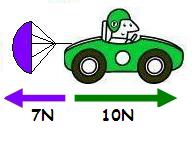
What is the net force?

a)

3 N

b)

3 N, right

c)

17 N, right

d)

3 N, left

58.
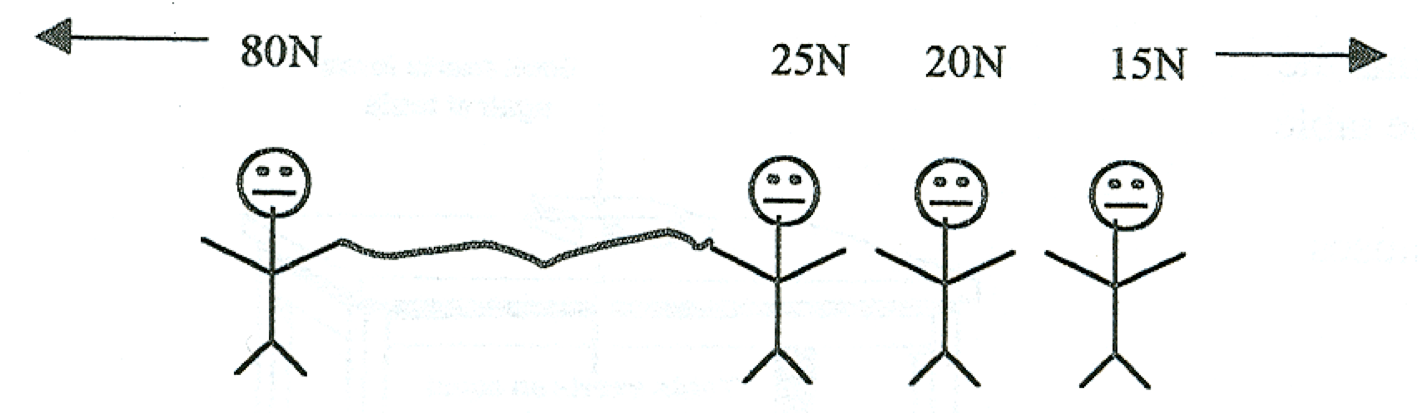
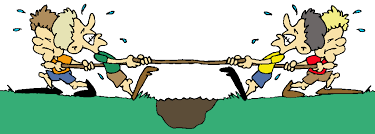
Who wins the tug of war with what net force?
a)
The person on the left with 20 N
b)
The person on the left with 80 N
c)
The people on the right with 20 N
d)
The people on the right with 100 N
59.
What is the net force?
a)
20 N 
b)
0 N 
c)
400 N 
d)
40 N 
60.

What is the unit to MEASURE force?

a)

Kilogram

b)

Meter

c)

Pounds

d)

Newton

61.

A ____________ is a push or a pull on an object.

a)

friction

b)

force

c)

magnet

d)

gravity

62.
If these teams are pulling with the same amount of force what will happen?
a)
The boy in blue will win.
b)
They will not move at all.
c)
The boy in red will win.
d)
Both will fall down.
63.
Balanced or unbalanced?
a)
balanced
b)
unbalanced
64.
The sum of all forces acting on an object.
a)
Contact Force
b)
Balanced Force
c)
Unbalanced Force
d)
Net Force
65.
What is a Force?
a)
The distance
b)
Mass
c)
A push or pull
d)
Give me a  failing grade 
66.
What force holds the planets in motion around the sun?
a)
Magnetic
b)
Electrical
c)
Gravitational
d)
Air Resistance
67.

Two factors that determine work are

a)

force

b)

acceleration

c)

mass

d)

distance

e)

velocity

68.

units of force are

a)

newtons

b)

grams

c)

joules

d)

meters

69.

if you push a cart with a force of 60 N for 2 m... how much work have you done

a)

120 J

b)

30 J

c)

120 N

d)

30 N

70.
What is the formula for work?
a)
Force = work x distance
b)
Distance = force x work
c)
Work = force x distance
d)
Work = force x mass
71.

At which point is potential energy greatest?

a)

W

b)

X

c)

Y

d)

Z

72.
What kind of energy is in a rock at the edge of a cliff?
a)
Potential
b)
Kinetic
c)
Both potential and kinetic energy
d)
none of the above
73.

At which point is potential energy greatest?

a)

W

b)

X

c)

Y

d)

Z

74.

The faster an object moves, the ________ kinetic energy it has.

a)

more

b)

less

c)

none of the above

d)

same

75.
What kind of energy is in a rock at the edge of a cliff?
a)
Potential
b)
Kinetic
c)
Both potential and kinetic energy
d)
none of the above
76.
Energy due to motion is ____________ energy. 
a)
Potential 
b)
Energy
c)
Kinetic
d)
Friction
77.
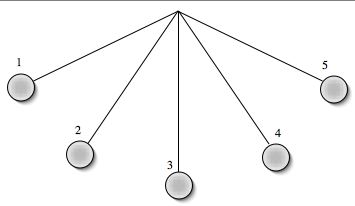
When a pendulum swings, at which point is kinetic energy highest?
a)
1
b)
2
c)
3
d)
4
78.
When a pendulum swings, at which point is potential energy at its greatest?
a)
1
b)
2
c)
3
d)
4
79.

Potential energy depends on the ________ and ________ of the object.

a)

Height (position)

b)

Mass

c)

Speed

d)

Friction

80.

Which point has the most potential energy?

a)

G

b)

F

c)

B

d)

A

81.

__________ is stored energy.

a)

Potential

b)

Kinetic

82.
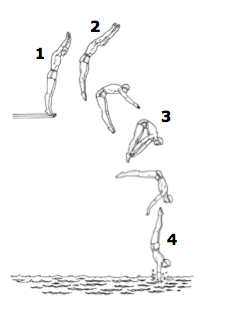
2. The diagram to the right represents a diver’s motion from the top of a high diving board into a pool of water. At what point does the diver have the greatest kinetic energy and the least potential energy?
a)
1
b)
2
c)
3
d)
4
83.

Conservation of energy means that

a)

energy can be created but not destroyed

b)

energy can be destroyed but not created

c)

energy can both be created and destroyed

d)

energy can neither be created nor destroyed

84.

Complete the following sentence. The ________________ an object moves, the more ____________________ energy it has.

a)

slower ... potential

b)

faster .... kinetic

c)

faster ... potential

d)

slower ... kinetic

85.
As a pendulum swings from its highest to lowest position, what happens to its kinetic and potential energy? 
a)
Both the potential energy and kinetic energy decrease
b)
The potential energy decreases while the kinetic energy increases 
c)
The kinetic energy decreases while the potential energy increases 
d)
Bothe the potential energy and kinetic energy increase 
86.
What energy is pulling an arrow back 
a)
kinetic energy
b)
potential energy
c)
energy
87.
A rubber band has been pulled backward but hasn’t been let go yet.
a)
Potential
b)
Kinetic
88.

The ability to do work by applying force is called

a)

work

b)

energy

c)

force

d)

net force

89.

Stored energy or energy due to its position is called

a)

mechanical energy

b)

potential energy

c)

kinetic energy

d)

thermal energy

90.

Which of the following statements about a skier skiing down a steep slope is true?

a)

His kinetic energy decreases and his potential energy increases

b)

His potential energy decreases and his kinetic energy increases

c)

His chemical energy increases

d)

Both his potential and kinetic energy increases
91.

The two types of energy listed under mechanical energy

a)

kinetic and nuclear

b)

potential and kinetic

c)

potential and nuclear

d)

wind and thermal

92.

Kinetic energy depends on_________ and _________.

a)

speed and mass

b)

speed and height

c)

height and mass

d)

energy and height

93.

Energy that transforms from potential to kinetic is neither_____ nor _______.

a)

created, force

b)

created, destroyed

c)

force,motion

d)

destroyed, law of conservation of energy

94.

When stored energy begins to move the object______ energy from _______ to _________.

a)

energy, force, motion

b)

transfers, kinetic, potential

c)

forces, mechanical, nuclear

d)

transfers, potential,kinetic

95.
a)
A & B
b)
B & C
c)
A & C
96.
Gravitational potential energy depends on the ________ and ________ of the object. 
a)
Height and mass
b)
Friction and movement
c)
Mass and Movement
d)
Height and Friction 
97.
As distance between two objects increase the pull of gravity 
a)
Increases
b)
Decreases
c)
Stays the same
98.
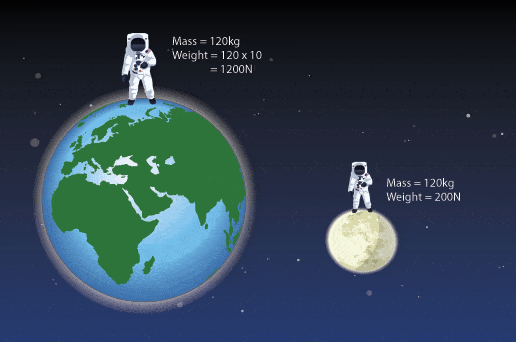
Which of the following will not change in different gravitational fields?
a)
weight
b)
force
c)
mass
d)
pounds
99.
Most of the Universe is _____
a)
filled with planets
b)
filled with stars
c)
filled with gas and dust
d)
pretty empty
100.

What two things determine the gravity of an object?

a)

mass & weight

b)

mass & distance

c)

density & mass

d)

volume & distance

101.

When will the gravity between two objects be the LEAST?

a)

when the masses of both objects is small and the objects are close together

b)

when the masses of both objects is small and the objects are far apart

c)

when the masses of both objects is large and the objects are close together

d)

when the masses of both objects is large and the objects are far apart

102.

When will the forces of gravity between two objects be the GREATEST?

a)

when the masses of both objects are small and the objects are far apart

b)

when the masses of both objects are large and the objects are close together

c)

when the masses of both objects are small and the objects are close together

d)

when the masses of both objects are large and the objects are far apart

103.

What two things determine the gravity of an object?

a)

mass & weight

b)

mass & distance

c)

density & mass

d)

volume & distance

104.
Which model has greater gravitational attraction (if any)
a)
Model A
b)
Model B
c)
Both Model A and Model B (same gravity)
105.
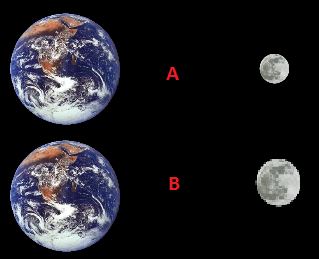
Which system has the greater gravitational attraction between the two objects (if any)?
a)
System A
b)
System B
c)
Same gravitational attraction fro System A and System B
106.

More mass equals:

a)

less gravity

b)

less distance

c)

more gravity

d)

more distance

107.

Less mass equals:

a)

less gravity

b)

less distance

c)

more gravity

d)

more distance

108.
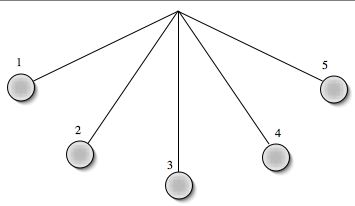
When a pendulum swings, at which point is potential energy at its greatest?
a)
1
b)
2
c)
3
d)
4
109.

Potential energy depends on the ________ and ________ of the object.

a)

Height (position)

b)

Mass

c)

Speed

d)

Friction

110.
2. The diagram to the right represents a diver’s motion from the top of a high diving board into a pool of water. At what point does the diver have the greatest kinetic energy and the least potential energy?
a)
1
b)
2
c)
3
d)
4
111.

Conservation of energy means that

a)

energy can be created but not destroyed

b)

energy can be destroyed but not created

c)

energy can both be created and destroyed

d)

energy can neither be created nor destroyed

112.

Which of the following statements about a skier skiing down a steep slope is true?

a)

His kinetic energy decreases and his potential energy increases

b)

His potential energy decreases and his kinetic energy increases

c)

His chemical energy increases

d)

Both his potential and kinetic energy increases

113.
Which of the following energy transformations occur when a lamp that is plugged into a wall socket is functioning correctly?
a)
Chemical to light
b)
Electrical to chemical
c)
Electrical to light
d)
Chemical to electrical
114.
A hairdryer converts -- 
a)
electrical energy into chemical
b)
electrical energy into thermal
c)
chemical energy into mechanical
d)
thermal energy into mechanical
115.

What kind of energy is represented in the picture?

a)

Thermal

b)

Chemical

c)

Sound

d)

Kinetic

116.

What type of energy is electrons flowing through a wire?

a)

Electrical energy

b)

Chemical energy

c)

Kinetic energy

d)

Mechanical energy

117.

What type of energy is stored in batteries or food?

a)

Potential energy

b)

Thermal energy

c)

Chemical energy

d)

Mechanical energy

118.

Energy that transfers heat is?

a)

Thermal energy

b)

Potential energy

c)

Mechanical energy

d)

Kinetic energy

119.

A solar calculator has to have light in order to work. What does the radiant light energy transform into?

a)

Radiant

b)

Mechanical

c)

Potential

d)

Chemical because of the battery.

120.

Which object shows an energy transformation from electrical to mechanical?

a)
b)
c)
d)
121.

When wood burn it changes from chemical energy to what 2 other forms of energy? Click the 2 other forms.

a)

Radiant (Light)

b)

Nuclear

c)

Heat

d)

Mechanical

122.
The diagram shows a complete circuit with a battery and a buzzer making noise. This circuit works by transforming -
a)
chemical energy to electrical to sound.
b)
electrical energy to thermal to light.
c)
sound energy to electrical to chemical.
d)
mechanical energy to electrical to sound.
123.
Which kind of energy change occurs when a candle is burning?
a)
Chemical to light.
b)
Light to electrical.
c)
Solar to heat.
d)
Chemical to electrical.
124.

What is nuclear energy?

a)

Energy in the nucleus of an atom

b)

Energy in the particles of an object

c)

Energy that is carried by electromagnetic waves

d)

Energy in a system of objects

125.

What is considered work in science?

a)

When someone puts a lot of effort into a task

b)

When an object moves in the direction of an applied force

c)

When force is applied but no movement occurs

d)

Work isn't used in science