wayground logo

Free Printable Worksheets

Font size

S
M
L
XL
Worksheets

Final Review

Total questions: 120

Worksheet time: 2hrs 38mins

Name
Class
Date
1.
Research Question: Does the type of gasoline put in a car effect how fast the car can drive. What is the independent variable?
a)
Type of gasoline
b)
which car the gas is put into
c)
how fast the car can drive
d)
how much gas is put into the car
2.
What would the INDEPENDENT variable be in an experiment testing which types of paper airplane goes furthest?
a)
the paper used
b)
the type of paper airplane
c)
the distance of each plane's flight
d)
how hard the plane is thrown
3.
When a thermometer is cooled, the red liquid inside the thermometer moves down. This is mainly because:
a)
Cold liquids sink 
b)
The glass of the thermometer gets cold 
c)
The molecules of the liquid move slower and get a little closer together 
d)
The red liquid is thick 
4.
Food coloring spreads out faster in hot water than in cold water. This is mainly because:
a)
The water molecules in hot water move more quickly
b)
The molecules in hot water are larger
c)
The food coloring molecules are small
d)
Hot water is less dense
5.
When you bring two drops of water near each other and allow them to touch, they combine immediately and become one drop. This is mainly because:
a)
Water molecules are made of atoms
b)
Water molecules are attracted to each other
c)
Water molecules are magnetic
d)
Water is a liquid
6.
Any sample of matter has mass and takes up space. The main reason for this is because...
a)
All matter is heavy
b)
Matter can be a gas
c)
Matter is made up of tiny particles that have mass and take up space
d)
The Earth is made of matter. 
7.

Which of the following describes what happens as a substance changes state?

a)

the type of molecules change

b)

the mass of the molecules change

c)

the shape of the molecules change

d)

the attraction between molecules change

8.

When molecules change from tightly packed together, to slightly more spread out which of the following change happens?

a)

gas to liquid

b)

liquid to gas

c)

solid to liquid

d)

liquid to solid

9.

Thermal energy is the measure of

a)

the motion of the atoms and molecules

b)

the shape of the atoms and molecules

c)

the size of the atoms and molecules

d)

the mass of the atoms and molecules

10.

Which of the following describes one way that solids are different from liquids?

a)

Solids have weights and liquids do not

b)

solids take up space and liquids do not

c)

solids have a definite shape and liquids do not

d)

solids have a definite volume and liquids do not

11.

If your teacher opens a can of food in the front of the classroom, soon the room will smell like this food. Which statement identifies a property of a gas that allows all of the students to smell the food?

a)

a gas has no mass

b)

a gas has a large mass

c)

a gas takes the shape of the container

d)

a gas keeps its shape when places in a container

12.

What happens as water boils?

a)

the molecules are destroyed

b)

the mass of the molecules decreases

c)

the molecules become separated from each other

d)

the molecules break down into hydrogen and oxygen atoms

13.
As molecule or particle motion increases, the space between molecules
a)
decreases
b)
increases
c)
stays the same
14.
Heating a substance___________ molecule motion. 
a)
increases
b)
does not affect
c)
decreases
15.
As molecule motion decreases, the space between molecules
a)
does not change
b)
increases
c)
decreases
16.
In the process of conduction
a)
Energy is transferred from a lower temperature substance to a higher temperature substance
b)
Energy is transferred from a higher temperature substance to a lower temperature substance
c)
Both substances get hotter
17.
In the process of conduction
a)
Slow-moving particles get smaller
b)
Fast-moving particles transfer energy to slower-moving particles
c)
Slow-moving particles transfer energy to faster-moving particles
18.

Causes molecules to speed up and spread out...

a)

heat

b)

cold

19.
What part of the water cycle does this picture show?
a)
condensation
b)
precipitation
c)
evaporation
20.
What is it called when plants give off water vapor as a waste product?
a)
condensation
b)
evaporation
c)
sublimation
d)
transpiration
21.
What type of reaction occurs in a hand warmer
a)
exothermic
b)
endothermic
22.
If a chemical reaction is EXOTHERMIC, the temperature would....
a)
Stay the same
b)
Increase
c)
Decrease
23.
When iron nails get rusty, heat is released.  What process is this?
a)
Exothermic
b)
Endothermic
24.
What happens to the bonds when 2 substances react
a)
They break so new bonds can form
b)
Nothing the bonds are too strong
c)
They change colour
25.
What happens to particles as they heat up?
a)
They slow down
b)
Nothing
c)
They don't move
d)
They speed up
26.
Is water melting a physical or chemical change?
a)
Physical
b)
Chemical
27.
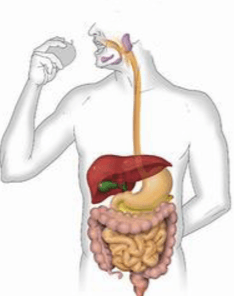
Is digesting your food a physical or chemical change?
a)
Physical
b)
Chemical
28.
Is melting iron a physical or chemical change?
a)
Physical
b)
Chemical
29.
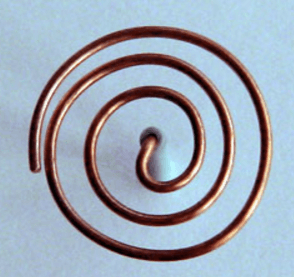
Is bending copper wire a physical or chemical change?
a)
Physical
b)
Chemical
30.
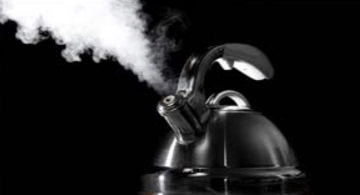
Is steam a physical or chemical change?
a)
Physical
b)
Chemical
31.
Is melting butter a physical or chemical change?
a)
Physical
b)
Chemical
32.
When baking soda and vinegar mix it creates a bubbly mess. Is this a chemical or physical change?
a)
Physical
b)
Chemical
33.
If a new substance is formed would this be a physical or chemical change?
a)
Physical
b)
Chemical
34.
What are the products of the chemical reaction pictured?
a)
CH4 and CO2
b)
CH4 and O2
c)
CO2 and H2O
d)
O2 and H2O
35.

Which of these pairs represents the reactants of photosynthesis?

a)

Oxygen and water

b)

Glucose and oxygen

c)

Water and glucose

d)

Carbon dioxide and water

36.

Which of these pairs represents the products of photosynthesis?

a)

Oxygen and water

b)

Glucose and oxygen

c)

Water and glucose

d)

Carbon dioxide and water

37.

Which of these enters the plant through pores called the stomata?

a)

Carbon dioxide

b)

Water

c)

Oxygen

d)

Glucose

38.

Which of these exits the plant through pores called the stomata?

a)

Carbon dioxide

b)

Water

c)

Oxygen

d)

Glucose

39.

In any chemical reaction, what is needed to break the bonds between the reactants?

a)

Energy

b)

Food

c)

Water

d)

Air

40.
Heat transfer always goes from-
a)
Cold to Hot
b)
Hot to Cold
c)
Heat doesn't transfer
d)
Freezing to Cold
41.
When plants convert the sun's energy into food, which type of energy is it?
a)
kinetic
b)
chemical
c)
thermal
d)
radiant
42.
Energy of motion is which type of energy?
a)
Potential
b)
Kinetic
c)
Sound
d)
Gravitational
43.
What kind of energy is represented in this picture?
a)
Thermal
b)
Potential
c)
Nuclear
d)
Mechanical
44.
What kind of energy does this device use?
a)
Chemical
b)
Electrical
c)
Thermal
d)
Chemical
45.
Wind turbines and windmills convert what energy to another?
a)
Kinetic to electric
b)
Gravitational potential to electric
c)
Mechanical to potential
d)
Thermal to sound
46.
What machine changes electrical energy into light and sound energy?
a)
battery
b)
lightbulb
c)
alarm clock
d)
apple
47.
The purpose of the panels is to change solar energy into ____________.
a)
light energy
b)
electrical energy
c)
chemical energy
d)
mechanical energy
48.

What is potential energy?

a)

The energy that is stored in a system or object.

b)

The energy an object has because of its motion.

c)

The balance of all energies in an object.

d)

The total energy in a system

49.

Kinetic energy can be transformed into????

a)

Heat energy

b)

Light energy

c)

Sound energy

d)

All of the above

50.
A chemical change
a)
doesn't really change much.
b)
creates a new substance
c)
is a change in the state of matter
51.
A physical change is...
a)
a change that doesn't change the identity
b)
a change that makes something new.
c)
a chemical reaction
52.

What is matter?

a)

Anything that has mass

b)

Anything that occupies space

c)

Both, anything that has mass and takes up space

d)

I don't know

53.

Which of the following is made up of matter?

a)

Music

b)

Light

c)

Love

d)

Air

54.

What are some characteristics of matter?

a)

It has mass

b)

It occupies space

c)

Living and non-living have it

d)

ALL of them

55.
Where does cellular respiration occur?
a)
Nucleus
b)
Mitochondria
c)
Vacuole
d)
Chloroplast
56.
What do plants give off after photosynthesis?
a)
Oxygen
b)
carbon
c)
nitrogen
d)
hydrogen
57.
Plants need ________from the air for photosynthesis
a)
oxygen
b)
soil
c)
carbon dioxide
d)
sugar
58.
The products of photosynthesis are
a)
water and carbon dioxide
b)
oxygen and water
c)
sugar and cabon dioxide
d)
oxygen and sugar (glucose)
59.
The main source of energy for all life comes from ____.
a)
the Earth
b)
the moon
c)
the sun
d)
the food we eat/make
60.
What are the reactants (what's needed) for photosynthesis?
a)
glucose and oxygen
b)
light, water, and carbon dioxide
61.

What is one of the reactants of cellular respiration?

a)

energy

b)

oxygen

c)

carbon dioxide

62.
What is the purpose of photosynthesis?
a)
make glucose
b)
make ATP
c)
make light
d)
release carbon dioxide
63.
What are the products (what's made) during photosynthesis?
a)
glucose and oxygen
b)
water, light, and carbon dioxide
64.
A producer?
a)
Eats other plants and animals
b)
Makes its own food
c)
Eats dead plants or animals
d)
Makes toys for kids
65.
A consumer?
a)
Makes its own food
b)
Eats dead plants and animals
c)
Eats plants and other animals for energy
d)
Buys toys for kids
66.
This organism draws its water from the ground, traps sunlight in its chlorophyll, and makes glucose (sugar) in broad green parts of its body. Is it a...
a)
Producer
b)
Consumer
c)
Decomposer
67.
Students react baking soda & vinegar.
Which of the following would provide the evidence that the number of atoms present before a chemical reaction is equal to the number of atoms present after the chemical reaction?
a)
The mass of the plastic bag, baking soda, and vinegar before the reaction was equal to the mass after the reaction.
b)
Bubbles were produced during the reaction, which meant that a gas was being produced.
c)
The plastic bag did not change in any way, indicating that it was not involved in the reaction.
d)
The mass of the baking soda was exactly equal to the mass of the vinegar used to create the chemical reaction.
68.
What will weigh more when a chemical change is complete?  The reactants before the chemical reaction, or the product after the reaction is complete?
a)
They both will weigh the same
b)
The product always weighs more than the reactant
c)
The reactant will weigh more than the product
d)
They both will loose mass after the reaction
69.
At the end of chemical reactions, what is the total mass of the reactants compared to the total mass of the products?
a)
the product is doubled
b)
the product is half the mass of the reactants
c)
the mass is the same
d)
the mass changes depending on the reaction
70.
An organism that is killed and eaten by another organism
a)
Predator
b)
Prey
c)
Competition
d)
Adaptation
71.
Barn owls hunt shrews. In this example what is a barn owl?
a)
Herbivore/Predator
b)
Carnivore/Prey
c)
Carnivore/Predator
72.
Which of the following would be considered to be prey?
a)
an animal that has to hunt for its food
b)
an animal that is eaten by another animal
c)
an organism that makes it own food
d)
an organism that feeds on the blood of another animal
73.

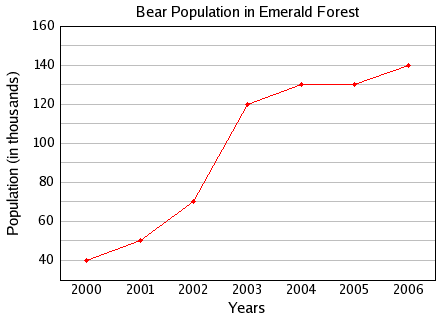
Between which two years did the bear population remain constant or the same?

a)

2004 and 2005

b)

2001 and 2002

c)

2005 and 2006

d)

2000 and 2001

74.
What was the overall trend on this graph?
a)
decreasing
b)
increasing
75.

What kind of graph shows change over time?

a)

bar graph

b)

line graph

c)

line plot

d)

pie graph

76.
A mushroom is a 
a)
producer
b)
consumer
c)
decomposer
77.
What two elements make up water?
a)
Helium and oxygen
b)
Hydrogen and oxygen
c)
helium and carbon
d)
oxygen and carbon
78.
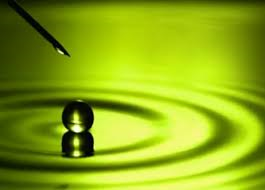
Water droplets take a spherical shape (as pictured) because of ____________
a)
adhesion
b)
cohesion
c)
capillary action
d)
solubility
79.

Why does water move from the roots to the leaves of plants?

a)

Water is pushed by solutes

b)

Capillary action (cohesion together and adhesion to the walls of the plant stem)

c)

Water is pulled by gravity

d)

Water’s cohesion causes it to “pull” towards the leaves

80.
If you poured 3 liquids that do not mix how could you tell which one is the most dense?
a)
The liquid on top
b)
The liquid in the middle
c)
The liquid at the bottom
81.

A bobber floats on the water because it is....

a)

more dense than the water

b)

less dense than the water

c)

the same density as the water

d)

to show you when you have a bite

82.
Which characteristic of water will allow a paperclip to remain floating on water when the paperclip is gently placed on top of the water?
a)
adhesion
b)
surface tension
c)
solvent properties
d)
nonpolar
83.
The process by which plants release water through the pores in their leaves is called...
a)
accumulation
b)
dormancy 
c)
photosynthesis 
d)
transpiration
84.
The transformation of water vapor back into liquid water by cooling is called...
a)
condensation
b)
evaporation
85.
Water vapor is the _______ form of water.
a)
solid
b)
liquid
c)
gaseous
86.
The higher water vapor rises in the atmosphere the _______ it gets.
a)
warmer
b)
colder
87.
Any form of water that falls from clouds and reaches Earth's surface as rain, snow, sleet, or hail is called...
a)
surface water
b)
precipitation 
c)
ground water
d)
runoff
88.
What collects in cracks and spaces in the rocks and sediments beneath Earth's surface?
a)
runoff
b)
surface water
c)
ground water
d)
water vapor
89.

Precipitation that did not get absorbed into the soil, or did not evaporate.

a)

Run off

b)

Groundwater

c)

Condensation

90.

What is a biotic factor?

a)

Living

b)

Non-living

c)

Both Living and Non-living

91.

What is an abiotic factor?

a)

non-living

b)

living

c)

both living and non-living

92.

________________ are consumers that eat ONLY PLANTS.

a)

Herbivores

b)

Carnivores

c)

Omnivores

d)

Producers

93.

__________________ are consumers that eat ONLY MEAT (other animals)?

a)

Omnivores

b)

Carnivores

c)

Producers

d)

Herbivores

94.

__________________ are consumers that eat BOTH Plants and Animals for food.

a)

Omnivores

b)

Producers

c)

Herbivores

d)

Carnivores

95.

A hot air balloon rises because

a)

the air is lighter and more packed.

b)

the air particles are cooler and closer together.

c)

the air particles are hotter, more spread out and therefore less dense than the surrounding air.

96.

Marisa left a freshly poured cup of hot chocolate on the table. If she leaves it there for a while, how cold could it get?

a)

If left for a long enough time, it will freeze.

b)

If left for a long enough time, it will be as cold as the room.

c)

If left for a long enough time, it will stay just as hot as when it was poured.

97.

The troposphere is coldest where?

a)

Higher up.

b)

Closer to the surface of the Earth.

98.

There are two air parcels. Air parcel 1 and air parcel 2 both have the same amount of water vapor. Which one will have more energy transferred out?

a)

Air Parcel 1

b)

Air Parcel 2

99.

There are two air parcels. Air parcel 1 and air parcel 2 have the same amount of water vapor. Which air parcel will have more rainfall?

a)

Air Parcel 1

b)

Air Parcel 2

100.

Energy is transferred from a _____ air parcel to the _____ surrounding air.

a)

cold, cold

b)

cold, warm

c)

warm, warm

d)

warm, cold

101.

When does energy stop transferring out of an air parcel?

a)

When the air parcel temperature is warmer than the surrounding air.

b)

When the air parcel temperature is even colder than the surrounding air.

c)

When the air parcel temperature is the same as the surrounding air.

102.

The air temperature in Jacksonville is higher than the air temperature in Terrytown. What is the main cause for this temperature difference?

a)

More energy is transferred to the surface in Jacksonville than in Terrytown. Then some energy transferred from the surface to the air.

b)

There is less wind in Jacksonville. Wind moves the energy away, therefore there is more energy in Jacksonville than in Terrytown.

c)

More energy is transferred directly to the air in Jacksonville than in Terrytown. Then some energy is transferred from the air to the surface.

103.

There were two rainstorms in Greenville last fall. Before Storm 1, Greenville's temperature was 9°C. Before Storm 2, the temperature was 26°C. Before both storms, the temperature of the surrounding areas was the same and wind was blowing toward Greenville. There was the same amount of water vapor before Storm 1 and Storm 2. Which storm likely had more rainfall?

a)

Storm 2. Wind pushed more water vapor out of the warmer air parcel.

b)

Storm 1. The cooler air parcel had less energy at the surface, so when wind pushed it higher, it gained more energy.

c)

Storm 2. Wind pushed the warmer air parcel even higher and the air parcel lost more energy.

d)

Storm 1. Wind caused cooler air from above the air parcel to move down, causing the air parcel at the surface to lose more energy.

104.

Chengdu is closer to the equator than Harbin. Which location has a colder air temperature and why?

a)

Harbin, because less energy is transferred from the sun directly to the surface, and then from the surface to the air.

b)

Harbin, because less energy is transferred from the sun directly to the air.

c)

Chengdu, because less energy is transferred from the sun directly to the surface, and then from the surface to the air.

d)

Chengdu, because less energy is transferred from the sun directly to the air.

105.
What is the major cause of surface currents?
a)
dolphins
b)
wind
c)
hurricanes
d)
tides
106.
True or False:  One half of the whole moon is ALWAYS illuminated.
a)
True
b)
False
107.
Which phase of the Moon is this?
a)
Full Moon
b)
First Quarter
c)
Last Quarter
d)
New Moon
108.
Based on the Earth's rotation, it can be concluded that:
a)
It is warmer in the nighttime than it is in the daytime.
b)
Daytime lasts longer than nighttime.
c)
Some parts of the world would never see the sunshine.
d)
It is always nighttime on some part of the Earth
109.
Name the phase of the moon for letter a
a)
First Quarter
b)
Last Quarter
c)
Waxing Gibbous
d)
Waning Gibbous
110.
Which type of eclipse occurs when the Moon comes directly between Earth and the Sun?
a)
Lunar eclipse
b)
Solar eclipse
111.
Which type of eclipse occurs when the Earth comes directly between the Sun and Moon?
a)
Lunar eclipse
b)
Solar eclipse
112.
Which body has the greater effect on Earth's tides?
a)
Sun
b)
Saturn
c)
Moon 
d)
Venus
113.
If tides alternate from high to low and there are two of each type of tide a day, about how many hours will generally be between each different tide?
a)
2 hours
b)
6 hours
c)
12 hours
d)
24 hours
114.
How many low tides and high tides happen in a day?
a)
1 low tide, 1 high tide
b)
4 low tides, 4 high tides
c)
3 low tides, 3 high tides
d)
2 low tides, 2 high tides
115.
Which season is taking place in the Northern Hemisphere in Position 1?
a)
Winter
b)
Spring
c)
Summer
d)
Fall
116.
Which season is taking place in the Northern Hemisphere in Position 3?
a)
Winter
b)
Spring
c)
Summer
d)
Fall
117.
If its ____ in the Northern hemisphere, then its summer in the Southern hemisphere. 
a)
spring
b)
summer
c)
fall
d)
winter
118.
What are the reasons for the season?
a)
Earth's tilt & rotation
b)
Earth's tilt & revolution
c)
Earth's rotation & size
d)
Earth's tilt & resolution
119.
What happens when the area in which you live tilts away from the sun?
a)
It is summer.
b)
It is spring.
c)
It is winter.
d)
It is fall.
120.
If its ____ in the Northern hemisphere, then its fall in the Southern hemisphere. 
a)
spring
b)
summer
c)
fall
d)
winter