
 Worksheets
🤗HW20: 11.02
Total questions: 125
Worksheet time: 1hrs 12mins

Match each of these organelles with its specific function (job).
Vacuole
Stores water, food and waste
Mitchondria
Converts cell food into cell energy (ATP)
Nucleolus
Location of MOST of cell DNA
Golgi Body
Packages and ships substances in and out of cell
Cell Wall
Provides rigid structure and maintains plant pressure

Match each term with its correct definition.
Thylakoids
Flat sacs inside chloroplast
Cristae
Zig-zag folds of the mitochondria
Photosynthesis
Process of converting sunlight to plant food
Cytoplasm
Jelly of cell; Maintains pressure and allows organelles to move
ATP
Cellular energy molecule
Match each of these organelles with its specific function (job).
Mitchondria
Converts cell food into cell energy (ATP)
Nucleus
Controls all cell activity
Golgi Vesicles
"Fedex Trucks". Shipper of the substances in and out of cell
Lysosome
Removes waste and toxins from cell
Plasma Membrane
Regulates which substances may come in and out of cell
Match each of these organelles with its specific function (job).
Mitchondria
Converts cell food into cell energy (ATP)
Nucleus
Controls all cell activity
Golgi Vesicles
"Fedex Trucks". Shipper of the substances in and out of cell
Lysosome
Removes waste and toxins from cell
Plasma Membrane
Regulates which substances may come in and out of cell


What is the Law of Conservation of Mass?
It states that no matter can be created or destroyed.
It states that no energy can be created or destroyed.
It states that matter can be created or destroyed.
It states that no sound can be created or destroyed.
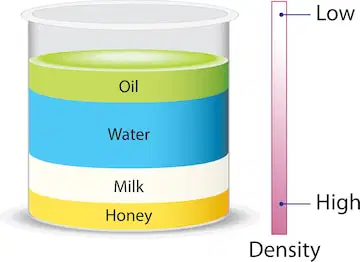
Density is a measure of ___.
Which statement is part of the cell theory?
All cells react to stimulus
The cell is the basic unit of all organisms
The cell can be large or small
The cell is either prokaryotic or eukaryotic
Which statement is part of the cell theory?
All cells can reproduce
All organisms are either unicellular or multicellular
All organisms are made of 1 or more cells
All cells grow and develop
Which statement is part of the cell theory?
All cells come from existing cells
All cells are prokaryotic or eukaryotic
All cells can make a tissue
All cells grow and develop

Match each of these organelles with its relatable role.
Lysosome
Trashman
Nucleus
Mayor
Vacuole
Ziploc Bag
Cell/ Plasma Membrane
Doorman
Golgi Body
Fedex Shipper
Match each of these organelles with its relatable role.
Ribosomes
Small Protein Factory
Cytoplasm
Jelly
SER
Factory for Lipids
Cell/ Plasma Membrane
Doorman
Golgi Body
Fedex Shipper
Labeling Plant Cell.
Place a DOT on the organelle.
Ribosomes
Cell Wall
Cell/Plasma Membrane
Central Vacuole
Chloroplast
Labeling the Animal Cell.
Place a dot on the organelle.
RER
SER
Nucleolus
Nucleus
Cytoplasm
Golgi Body
Labeling the Animal Cell.
Place a dot on the organelle.
RER
SER
Nucleolus
Nucleus
Cytoplasm
Golgi Body
Labeling the Animal Cell.
Place a dot on the organelle.
Plasma Membrane
Lysosome
Mitochondria
RER
SER
Nucleolus
Labeling the Animal Cell.
Place a dot on the organelle.
Plasma Membrane
Lysosome
Mitochondria
RER
SER
Nucleolus

What is the difference between a fungus and a plant?
Fungi are autotrophic and the plants are heterotrophic
Fungi are heterotrophic and the plants are autotrophic
Plants can move but fungi cannot move
Plants are multicellular and animals are unicellular
Labeling Plant Cell.
Place a DOT on the organelle.
Ribosomes
Cell Wall
Cell/Plasma Membrane
Central Vacuole
Chloroplast

Which of the following is a unique feature of Kingdom fungi ?
cell wall made up of chitin
cell wall made up of cellulose
autrotrophic mode of nutrition
autotrophic or heterotrophic mode of nutrition

This organism spends its day taking in carbon dioxide and releasing oxygen through its stomata. It never eats but can grow many meters tall.
Fungi
Plantae
Protista
Animalia

This rather soft, low-lying organism spends its day taking nutrients from a rotten log through its hyphae. It continues to undergo cell division and grow larger.
Plantae
Fungi
Archaebacteria
Animalia

This organism spends its day roaming through the forest in search of food. Its hunting techniques require use of its keen sense of smell and hearing.
Plantae
Archaebacteria
Fungi
Animalia

What kingdom does a fern belong to?
Kingdom Animalia
Kingdom Plantae
Kingdom Protista
Kingdom Fungi
Kingdom Eubacteria

What kingdom does a sea anemone belong to?
Kingdom Animalia
Kingdom Plantae
Kingdom Protista
Kingdom Fungi
Kingdom Eubacteria

What kingdom does yeast belong to?
Kingdom Animalia
Kingdom Plantae
Kingdom Protista
Kingdom Fungi
Kingdom Eubacteria

I am prokaryotic
I am found in extreme ecosystems
What kingdom do I belong to?
Kingdom Fungi


Biologist are continually looking at the variety of life on Earth and trying to determine the best way to group it based on different characteristics. Recently, biologists have divided all life into three main groups, called domains. What are the three domains?
plants, animals, bacteria
prokaryotic, eukaryotic, viral
Bacteria, Achaea, Eukarya
biotic, abiotic, viral

Plant cells and animal cells have similar characteristics. What characteristic do they share that classifies them both into the Eukarya domain?
They are both multicellular
They both have a cell wall
They both have a nucleus in the cells
They both produce their own food

The image shows an organism growing on the surface of the bread. Which kingdom would this organism belong to?
Kingdom Fungi
Kingdom Protista
Kingdom Animalia
Kingdom Plantae

Which kingdoms are prokaryotes?
Kingdom Eubacteria
Kingdom Archaebacteria
Kingdom Animalia, Kingdom Plantae
Both Eubacteria and Archaebacteria

Some bacteria are ______
Heterotrophs
Autotrophs
Unicellular
All of the above

Fungus are not
Autotroph
Multicellular
Heterotroph
Eukaryote

Animals are not
Autotroph
Multicellular
Heterotroph
Eukaryote

Protists can be
Autotrophs, Heterotrophs, unicellular, multicellular
A type of plant
A bacteria
Boring

The largest division used to classify living things
Class
Domain
Genus
Species

What are the kingdoms that are eukaryotic? (select all that apply)
animalia
Fungi
Protista
Plantae
Eubacteria

What kingdoms are prokaryotic?
animalia
fungi
eubacteria
archeabacteria

What are the six kingdoms of life?
Animals, Plants, Vertebrates, Invertebrates, Viruses, Fungi
Bacteria, Amoeba, Algae, Archaea, Protists, Nuclei
Archaea, Bacteria, Protists, Animals, Plants, Fungi
Archaea, Bacteria, Animals, Plants, Proteins, Fungi

Which of the following is not true about the Kingdom Animalia?
they are multicellular
they reproduce with a partner
they use photosynthesis to produce food
they can move from place to place

Which of these traits are not used to classify organisms?
Cell type (prokaryotic or eukaryotic)
How they create/obtain energy
The number of cells they have
How long they live

Pictured below is a chart containing characteristics of different kingdom classifications. What options correctly fill in the rest of the chart?
Many, Autotrophic, Sexual
One, Heterotrophic., Asexual
Many, Heterotrophic, Sexual
One, Autotrophic, Asexual

Some students used information they gathered from lab investigation to prepare a table. They entered the table in their lab notebook. Which statement identifies Cell 1 and Cell 2 based on the results?
Cell 1 is eukaryotic, and Cell 2 is Prokaryotic
Cell 1 is prokaryotic, and Cell 2 is Eukaryotic
Both Cell 1 and Cell 2 are Eukaryotic
Both Cell 1 and Cell 2 are Prokaryotic

This is a group of unicellular organisms. They do have a flagellum, a nucleus, and other membrane-bound organelles, including chloroplasts. How would this unicellular organism be classified?
Plantae
Fungus
Protist
Eubacteria

This is a microscopic image. Each snake-like shape is a chain of spherical shaped, single-celled organisms. These cells do not have a nucleus or membrane-bound organelles. How would this unicellular organism be classified?
Protist
Eubacterium
Yeast
Dinoflagellate

This is a microscopic image of an organism that is a heterotrophic decomposer. It is a eukaryote. Its cells have a cell wall made of chitin. How would this organism be classified?
Animalia
Protist
Fungi
Plantae

Which group of organisms contain peptidoglycan in their cell walls?
Archaebacteria
Eubacteria
Fungi
Protists


Which two species are most closely related?
Northern cricket frog and bullfrog
Northern leopard frog and bullfrog
Northern cricket frog and green treefrog
Northern leopard frog and green treefrog

This is an amoeba. What structures allow the amoeba to move and eat?
cilia
flagella
contractile vacuole
pseudopods

Which domain is capable of living in extreme environments like hot springs, geysers, or very salty waters?
Protists

What is the order of the taxonomic levels from least specific to most specific?
Kingdom, Family, Species, Order, Class, Phylum, Genus
Kingdom, Phylum, Class, Order, Family, Genus, Species
Species, Order, Kingdom, Family, Genus, Phylum, Class
Species, Genus, Family, Order, Class, Phylum, Kingdom

Match each of these terms with its definition.
Domain
Highest Taxonomic Ranking; Most Biodiversity
Kingdom
Taxonomic Ranking that comprises Domain
Genus
Taxonomic Ranking above Species; First part of Binomial Nomenclature
Species
Smallest Taxonomic Ranking; Least Biodiversity
Scientific Name
Two-Part Name; Provides each organism with unique name
What is the order of the taxonomic levels from least specific to most specific?
Kingdom, Family, Species, Order, Class, Phylum, Genus
Kingdom, Phylum, Class, Order, Family, Genus, Species
Species, Order, Kingdom, Family, Genus, Phylum, Class
Species, Genus, Family, Order, Class, Phylum, Kingdom

Match each term with its correct meaning.
Biodiversity
Numbers and kinds of Organisms in an area
Species
Taxonomic Ranking with members that are MOST related
Asexual Reproduction
Process of creating offspring alone - one organism
Binary Fission
When one cell splits into two - both are identical
Sexual Reproduction
Process of creating offspring with a partner - Two organisms

Which of these statements is true (Select all that apply)?
Scientific name has two parts.
Organisms in the same genus can mate and produce fertile offspring.
Scientific names are unique to each organism.
Scientific names are made of domain and kingdom.
Scientific names are made of genus and species.

Match each protist with its image.

Euglena

Ameba

Paramecium

Match the description with the protist.
Euglena
Plant-like Protist with flagella
Ameba
Protozoan with pseudopods.
Paramecium
Protozoan with cilia.
Match each protist with its image.
Euglena
Ameba
Paramecium

Match each image with its accurate kingdom.

Fungi

Plantae

Animalia

Protista

Archaebacteria

Wild cats (Felis silvestris) are most closely related to which of the following?
lion (Panthera leo)
bearcat (Arctictis binturong)
cheetah (Acinonyx jubatus)
lynx (Felis lynx)

Which of the following sets of protists would be the most closely related?
Protists in the same species
Protists in the same genus
Protists in the same family
Protists in the same class

Match each definition with its term.
Many populations.
community
Small part of a cell with a specific job.
organelle
Many cells working together.
tissue
Many biomes - everything on the planet.
biosphere
Many communities of organisms, interacting with non-living factors.l
ecosystem

Rank these hierarchy levels from, MOST to least organisms.
domain
phylum
family
gensus
species
Rank these hierarchy levels from, MOST to least organisms.
kingdom
class
order
family
species

Rank these hierarchy levels from, least to MOST organisms.
species
genus
family
class
phylum

Arrange these Levels of Organization, from HIGHEST level to smallest level.
biome
population
organ system
tissue
organelle
Arrange these Levels of Organization, from HIGHEST level to smallest level.
biosphere
ecosystem
community
population
organism
Rank these hierarchy levels from, MOST to least organisms.
domain
phylum
family
gensus
species
Rank these hierarchy levels from, MOST to least organisms.
kingdom
class
order
family
species
Rank these hierarchy levels from, least to MOST organisms.
species
genus
family
class
phylum
Rank these hierarchy levels from, least to MOST organisms.
genus
family
class
kingdom
domain
Arrange these Levels of Organization, from HIGHEST level to smallest level.
biome
population
organ system
tissue
organelle
Arrange these Levels of Organization, from HIGHEST level to smallest level.
biosphere
ecosystem
community
population
organism

Match each of these functions with its organelle.
Brain of the cell; controls all cellular functions.
Nucleus
Site of photosynthesis; process that converts carbon dioxide and water to glucose.
Chloroplasts
Detoxifiers of the cell; trashman.
Lysosomes
Jelly of the cell; maintains organelle motility and cellular shape.
Cytoplasm
Powerhouse of the cell; converts cellular food into cellular energy (ATP).
Mitochondria


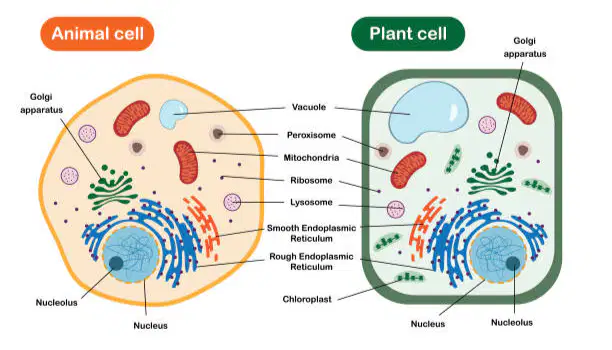


Which of statement best describes the function of the cell membrane?
It allows things to freely enter and exit the cell.
It controls which substances enter and exit the cell.
It prevents substances from entering the cell.
It prevents substances from leaving the cell.

Match each of these functions with its organelles.
Factory that prepares proteins for distribution throughout the cell.
Endoplasmic Reticulum
Located in the center of the nucleus; most concentrated area of DNA.
Nucleolus
Synthesizes proteins.
Ribosomes
Provides structure and supports cellular pressure.
Cell Wall
Flatten-sacs that are packaging agents; shipping proteins and lipids in and out of the cell.
Golgi Body

A rock with the mass of 60 g is broken into 2 pieces. What are possible masses for the two pieces of rock?

What is #1?
Golgi bodies
smooth endoplasmic reticulum
rough endoplasmic reticulum
Nucleus
Nucleolus

What is #10?
Cell wall
Cell membrane
Mitochondria
Chloroplast
Match each of these organelles with its specific function (job).
Mitchondria
Converts cell food into cell energy (ATP)
Nucleus
Controls all cell activity
Golgi Vesicles
"Fedex Trucks". Shipper of the substances in and out of cell
Lysosome
Removes waste and toxins from cell
Plasma Membrane
Regulates which substances may come in and out of cell
What is #6?
Plasma membrane
Ribosomes
Centriole
Chloroplast
Mitochondria

What is #5?
Cell wall
Cell membrane
Mitochondria
Chloroplast
Which is NOT part of cell theory?
all organisms are made of one or more cells
cells are the basic units of life
cells form from other cells
all organisms are made of multiple cells
Match each term with its correct definition.
Thylakoids
Flat sacs inside chloroplast
Cristae
Zig-zag folds of the mitochondria
Photosynthesis
Process of converting sunlight to plant food
Cytoplasm
Jelly of cell; Maintains pressure and allows organelles to move
ATP
Cellular energy molecule
What is #11?
Golgi bodies
smooth endoplasmic reticulum
rough endoplasmic reticulum
Nucleus
Nucleolus

Place these Hierarchical Levels in order, from MOST members to LEAST members.
Kingdoms
Phylum
Family
Genus
Species
The largest division used to classify living things
Class
Domain
Genus
Species
What is the order of the taxonomic levels from least specific to most specific?
Kingdom, Family, Species, Order, Class, Phylum, Genus
Kingdom, Phylum, Class, Order, Family, Genus, Species
Species, Order, Kingdom, Family, Genus, Phylum, Class
Species, Genus, Family, Order, Class, Phylum, Kingdom
Match each of these terms with its definition.
Domain
Highest Taxonomic Ranking; Most Biodiversity
Kingdom
Taxonomic Ranking that comprises Domain
Genus
Taxonomic Ranking above Species; First part of Binomial Nomenclature
Species
Smallest Taxonomic Ranking; Least Biodiversity
Scientific Name
Two-Part Name; Provides each organism with unique name
Match each protist with its image.
Euglena
Ameba
Paramecium
Match the description with the protist.
Euglena
Plant-like Protist with flagella
Ameba
Protozoan with pseudopods.
Paramecium
Protozoan with cilia.
Match each image with its accurate kingdom.
Fungi
Plantae
Animalia
Protista
Archaebacteria
Wild cats (Felis silvestris) are most closely related to which of the following?
lion (Panthera leo)
bearcat (Arctictis binturong)
cheetah (Acinonyx jubatus)
lynx (Felis lynx)
Which of the following sets of protists would be the most closely related?
Protists in the same species
Protists in the same genus
Protists in the same family
Protists in the same class
What are the six kingdoms of life?
Animals, Plants, Vertebrates, Invertebrates, Viruses, Fungi
Bacteria, Amoeba, Algae, Archaea, Protists, Nuclei
Archaea, Bacteria, Protists, Animals, Plants, Fungi
Archaea, Bacteria, Animals, Plants, Proteins, Fungi
Which of the following is not true about the Kingdom Animalia?
they are multicellular
they reproduce with a partner
they use photosynthesis to produce food
they can move from place to place
Which of these traits are not used to classify organisms?
Cell type (prokaryotic or eukaryotic)
How they create/obtain energy
The number of cells they have
How long they live
Some students used information they gathered from lab investigation to prepare a table. They entered the table in their lab notebook. Which statement identifies Cell 1 and Cell 2 based on the results?
Cell 1 is eukaryotic, and Cell 2 is Prokaryotic
Cell 1 is prokaryotic, and Cell 2 is Eukaryotic
Both Cell 1 and Cell 2 are Eukaryotic
Both Cell 1 and Cell 2 are Prokaryotic
This is a group of unicellular organisms. They do have a flagellum, a nucleus, and other membrane-bound organelles, including chloroplasts. How would this unicellular organism be classified?
Plantae
Fungus
Protist
Eubacteria
This is a microscopic image. Each snake-like shape is a chain of spherical shaped, single-celled organisms. These cells do not have a nucleus or membrane-bound organelles. How would this unicellular organism be classified?
Protist
Eubacterium
Yeast
Dinoflagellate
This is a microscopic image of an organism that is a heterotrophic decomposer. It is a eukaryote. Its cells have a cell wall made of chitin. How would this organism be classified?
Animalia
Protist
Fungi
Plantae
Which group of organisms contain peptidoglycan in their cell walls?
Archaebacteria
Eubacteria
Fungi
Protists
Match each of these organelles with its relatable role.
Ribosomes
Small Protein Factory
Cytoplasm
Jelly
SER
Factory for Lipids
Cell/ Plasma Membrane
Doorman
Golgi Body
Fedex Shipper

Which organelles are not present in an animal cell:
A. Cell membrane
B. Chloroplast
C. Cell wall
D. Mitochondria
A and B
B and C
A and D
B and D


Eukaryotic cells can include _______ (Select all that apply).
protists
plants
animals
fungi

Match each term with its correct definition.
Prokaryote
A single-celled organism that does not have a nucleus or membrane-bound organelles.
Eukaryote
Organism made of cells that have nucleus enclosed by membrane.
Cell
Basic building block of living things.
Organism
One individual living thing; anything that can carry out life processes independently.
Organelle
Tiny parts of a cell with a specific function.


