wayground logo

Free Printable Worksheets

Font size

S
M
L
XL
Worksheets

Quarter 2 Honors Post Test Review

Total questions: 130

Worksheet time: 2hrs 5mins

Name
Class
Date
1.

Spectroscopy can be used to find the _____________ within light sources

a)

elements

b)

colors

c)

wavelengths

d)

brightness

2.

Why do astronomers use several different types of telescopes

a)

to measure different wavelengths of electromagnetic radiation

b)

to measure different wavelengths of visible light

c)

to observe the same part of the electromagnetic spectrum

d)

to collect data from different ranges of electromagnetic radiation

3.

Declination is similar to ________.

a)

latitude

b)

elevation

c)

longitude

d)

amplitude

4.

Right Ascension is similar to __________.

a)

longitude

b)

latitude

c)

elevation

d)

amplitude

5.

When a light wave bounces off of a surface

a)

reflection

b)

refraction

c)

absorption

d)

transmission

6.

When light travels from one medium to another, changes speed, and bends.

a)

reflection

b)

refraction

c)

absorption

d)

transmission

7.

The only form of light we can see

a)

ultraviolet light

b)

visible light

c)

infrared light

d)

gamma rays

8.

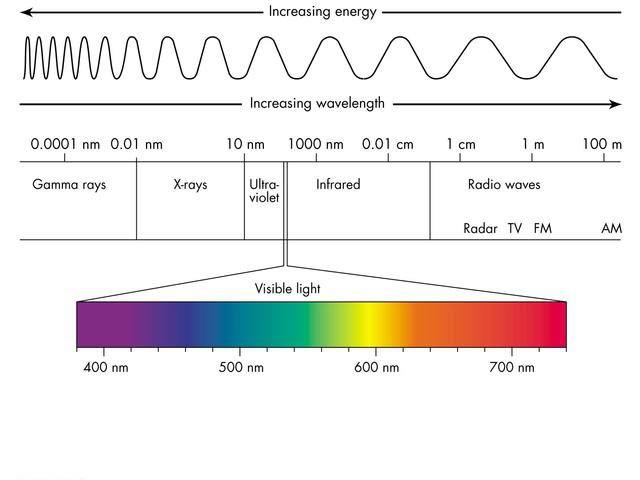
Shorter Waves have ____Energy,Longer Waves___Energy?

a)

Lower,Higher

b)

Higher,Lower

9.

What is the correct order of the visible light spectrum starting with the longer wavelength?

a)

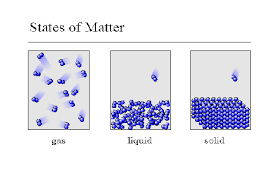
Red, yellow, orange, blue, violet, indigo

b)

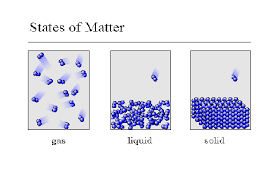
Violet, indigo, blue, green, yellow, orange, red

c)

Green, yellow, blue, indigo, red, orange

d)

Red, orange, yellow, green, blue, indigo, violet

10.
Which of the following has frequencies higher than ultraviolet rays?
a)
visible light
b)
infrared rays
c)
x-rays
11.
Which of the following has wavelengths longer than microwaves?
a)
Infrared waves
b)
Radio waves
c)
Visible light
12.
How much of the electromagnetic spectrum is made up of visible light?
a)
only a small portion
b)
a very l;arge portion
c)
about half
13.
For waves in any medium, as the wavelength decreases, what happens to the frequency?
a)
It also decrease
b)
It stays the same
c)
It increases
14.
________ is an EM wave that has the LEAST energy.
a)
radio
b)
gamma rays
c)
microwaves
d)
visible light
15.
Which type of EM wave has the highest frequency? 
a)
gamma ray
b)
radio waves
c)
microwaves
d)
infrared rays
16.
This type of EM wave shows a break in bones.
a)
gamma ray
b)
x-ray
c)
brokenometer
d)
radio wave
17.
EM waves with wavelengths between those of infrared and ultraviolet waves are _______.
a)
microwaves
b)
visible light
c)
x-rays
d)
gamma rays
18.
The higher the frequency the ______ the energy. 
a)
higher
b)
lower
c)
neither, stays the same
19.
All electromagnetic waves have _________ wavelengths and ________ frequencies.
a)
different, similar
b)
different, different
c)
similar, similar
d)
similar, different
20.
Nuclear weapons are examples of __________. 
a)
x-rays
b)
ultraviolet rays
c)
gamma rays
d)
infrared rays
21.
_______ carry the greatest amount of energy. 
a)
x-rays
b)
gamma rays
c)
infrared rays
d)
visible light
22.
Airport security is an example of _________.
a)
infrared rays
b)
radio waves
c)
x-rays
d)
gamma rays
23.
This wave has the second highest frequency on the spectrum. 
a)
microwaves
b)
visible light
c)
x-rays
d)
gamma ray
24.
This type of EM wave can cause skin cancer. 
a)
microwaves
b)
ultraviolet ray
c)
radio
d)
infrared
25.
The shortest wavelength in visible light is______.
a)
violet
b)
red
c)
blue
d)
yellow
26.
This wave also means "below red."
a)
microwaves
b)
infrared
c)
gamma ray
d)
X-Ray
27.
_____ have the longest wavelengths and lowest frequencies of all electromagnetic waves.
a)
microwaves
b)
radio waves
c)
gamma rays
d)
ultraviolet
28.

Wavelengths on the high energy side of the EM spectrum are ______________.

a)

short

b)

long

c)

average

29.

Wavelengths on the low energy side of the EM spectrum are __________.

a)

long

b)

short

c)

average

30.
EM waves _______ travel the same speed in a vacuum. 
a)
never
b)
sometimes
c)
always
d)
can
31.
EM waves ________ a medium.
a)
require
b)
don't require
c)
can have
d)
sometimes have
32.
______ waves are vibrations in electrical and magnetic fields. 
a)
Sound
b)
Mechanical
c)
Electromagnetic
d)
Compression
33.
Sound waves are NOT___________________________.
a)
EM Waves
b)
Waves
c)
Mechanical Waves
d)
Compression
34.
The orange line is measuring the _________________________.
a)
wavelength
b)
amplitude
c)
crest
d)
trough
35.
_____________________light is the only type of EM wave detected by the human eye.
a)
Red
b)
Gamma
c)
Microwave
d)
Visible
36.
The acronym (letters) used to remember visible light is____________
a)
KTPERRY
b)
ROYGBIV
c)
DOGPOUND
d)
ROMERO
37.
The blue section of the wave is measuring _________________.
a)
wavelength
b)
crest
c)
trough
d)
amplitude 
38.
EM waves________________travel through space.
a)
Never
b)
Cannot
c)
Can
d)
Wish they could
39.

Some cancer can be treated with_______________waves by killing cancer cells.

a)

Ultraviolet

b)

Radio

c)

Infrared

d)

Gamma

40.

______waves cause you to get sunburnt.

a)

Infrared

b)

Visible

c)

Gamma

d)

Ultraviolet

41.

Infrared waves are used in__________________.

a)

Radio Towers

b)

Cellphones

c)

Heat Lamps

d)

Tanning Beds

42.
________________ are waves used by cops to test the speed of your car with RADAR.
a)
Ultraviolet
b)
Infrared
c)
Radio
d)
Microwaves
43.
Cell phones use_____________waves.
a)
Microwaves
b)
Gamma
c)
XRays
d)
Radio 
44.

In the EM spectrum, ________ decreases as energy increases.

a)

Frequency

b)

Hertz

c)

Amplitude

d)

Wavelength

45.

In the image, the EM spectrum decreases from left to right in________________.

a)

Wavelength

b)

Frequency

c)

Amplitude

d)

Speed

46.

EM waves always____________

a)

travel at the same speed

b)

have the same energy

c)

have the same wavelength

d)

have the same frequency

47.
A large cloud of gas and dust in interstellar space; the predecessor to stars...
a)
Constellation
b)
Black hole
c)
Nebula
d)
Galaxy
48.
As a whole, Giants are considered hotter than White Dwarfs.
a)
True
b)
False
49.
In the diagram given, what happens as we move to the left?
a)
Stars Get Larger
b)
Stars get Colder
c)
Stars get hotter
50.
Which star is the coldest?
a)
Yellow Star
b)
Red Star
c)
Orange Star
d)
Blue Star
51.
Which category is our Sun located in?
a)
White Dwarfs
b)
Supergiants
c)
Main Sequence
d)
Giants
52.
The category that contains the most stars is...
a)
Main Sequence
b)
Supergiants
c)
Giants
53.
Blue stars are the _____________.
a)
hottest
b)
coolest
c)
smallest
54.
What is found on the x axis of an H-R diagram?
a)
Luminosity
(or brightness)
b)
Temperature
c)
Star Size
d)
Distance
55.
Which is an example of a Main Sequence star?
a)
Betelgeuse
b)
our Sun
c)
Sirius B
d)
Polaris
56.
Which star has the lowest temperature?
a)
A
b)
B
c)
C
d)
D
57.
Which of these shows an average star's life cycle in the correct order?
a)
protostar>
main sequence>
red giant >
white dwarf>black dwarfs
b)
protostar> 
main sequence> 
white dwarf> 
red giant
c)
main sequence> 
protostar> 
white dwarf> 
red giant
d)
protostar> 
red giant >
main sequence> 
white dwarf
58.
What stage of the life cycle of a star is this? 
a)
Main Sequence
b)
Red Giant
c)
Black Hole
d)
Neutron star
59.
This is an image of the formation of a star, also known as a .... 
a)
Main Sequence
b)
Planetary System
c)
Supernova
d)
Stellar Nebula
60.
What is the graph that shows the relations between a star's surface temperature and absolute magnitude?
a)
H-R Diagram
b)
Star Cluster Map
c)
Einstein's Diagram
d)
Newton's Chart of Stars
61.
Lightyear is used by scientist to measure what?
a)
Distance
b)
Time
c)
Energy
62.
Nebulae are considered "Stellar Nurseries" because...
a)
Planets are created from the gases
b)
Stars form from them
c)
Asteroids are formed from them
63.
The Hertzprung Russell Diagram consists of two axis that are labelled...
a)
Luminosity and Size
b)
Luminosity and Temperature
c)
Luminosity and Age
64.
Stars can take different paths due to having different _____________
a)
temperature
b)
mass
c)
brightness
d)
color
65.
All stars start as gas and dust in a(n)
a)
nebula
b)
black hole
c)
red giant
d)
black dwarf
66.
After the main sequence, a low mass star becomes a
a)
black dwarf
b)
protostar
c)
red giant
d)
supergiant
67.
After the main sequence, a high mass star becomes a
a)
black dwarf
b)
protostar
c)
red giant
d)
supergiant
68.
The final stage of a low mass star is a 
a)
neutron star
b)
nebula
c)
black hole
d)
black dwarf
69.
After a supergiant, a high mass star explodes and forms a
a)
supernova
b)
red giant
c)
black hole
d)
planetary nebula
70.
A high mass star can end as this stage, which is so dense that not even light can escape!
a)
black dwarf
b)
white dwarf
c)
supernova
d)
black hole
71.
What stage fills in the blank. Nebula --> Main sequence --> red giant --> ______________ --> white dwarf --> black dwaft
a)
supergiant
b)
planetary nebula
c)
black hole
d)
supernova
72.
When a nebula heats up, a "baby" star forms in the middle. It is called a
a)
supernova
b)
supergiant
c)
white dwarf
d)
protostar
73.
Which of the following is NOT a final stage of a star. 
a)
black hole
b)
black dwarf
c)
neutron star
d)
red giant
74.
A star is born when ________________ begins to happen.
a)
nuclear fusion
b)
nuclear abrasion
c)
crying
d)
nuclear fission
75.
The two forces battling it out are gravitational forces and ______________.
a)
tidal forces
b)
more gravitational forces
c)
bonding
d)
thermal forces
76.
Larger, cooler stars are called ___________.
a)
Blue Giants
b)
White Dwarfs
c)
Red Giants
d)
Yellow Giants
77.
The core of a Red Giant collapses and becomes a ___________________.
a)
White Dwarf
b)
Blue Supergiant
c)
Red Supergiant
d)
Black Hole
78.
When a massive star begins to cool and expand it is known as a _______________.
a)
Blue Supergiant
b)
Red Giant
c)
Red Supergiant
d)
White Dwarf
79.
When the core of a Red Supergiant collapses, a bright event known as a ___________ occurs.
a)
superdupernova
b)
supernova
c)
big bang
d)
black hole
80.
After a supernova, the core can collapse into a neutron star, or if massive enough even a ___________.
a)
Black Hole
b)
White Dwarf
c)
Brown Dwarf
d)
Black Dwarf
81.
When a Red Giant's outer atmosphere drifts away it is now known as a ____________.
a)
planetary cloud
b)
White Dwarf cloud
c)
planetary nebula
d)
expanding nebula
82.
One possible outcome that is left after a supernova is a super dense core called a _____________.
a)
neutron star
b)
Yellow Star
c)
Red Giant
d)
Black Dwarf
83.
A black hole is an object so dense with so much gravity that even ________ cannot escape.
a)
man
b)
bacon
c)
spaceships
d)
light
84.
Our sun is currently in what star stage?
a)
Protostar
b)
Nebula
c)
Main Sequence
d)
Red Giant
85.
______ is a force that causes dust particles to stick together in a nebula.
a)
nuclear fusion
b)
gravity
c)
hydrogen
d)
friction
86.

One of the colours below is associated with the lowest temperature. Which one?

a)

red

b)

blue

c)

green

d)

orange

87.

For a perfect blackbody, the peak radiation intensity emitted by the body is

a)

dependent on the radiation that falls on the blackbody

b)

characteristic of the temperature of the blackbody

c)

always varying for a given temperature

d)

the same regardless of the temperature of the blackbody

88.

Based on the H-R Diagram, what conclusion can be drawn about the relation between temperature and absolute magnitude of a star?

a)

A hotter star has a brighter absolute magnitude than a cooler star.

b)

Absolute magnitude is not related to the temperature of a star.

c)

Hotter stars will have a less bright value for absolute magnitude.

d)

Main sequence show no relationship between temperature and absolute magnitude, while other stars do.

89.

Which of the following statements best describes Nuclear Fusion?

a)

When two Hydrogen nuclei form a single Helium nucleus.

b)

When two Helium nuclei form one Hydrogen nucleus.

c)

When one Hydrogen nucleus splits in half to from Helium

d)

When one Helium nucleus splits in half to from Hydrogen

90.

Most of star A's electromagnetic radiation emissions are __________.

a)

ultraviolet

b)

x-ray

c)

visible light

d)

infrared

91.

A white dwarf will eventually cool down forming this hypothetical object.

a)

Black Dwarf

b)

Black Hole

c)

Red Dwarf

d)

Brown Dwarf

92.
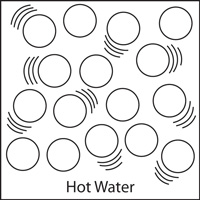
At higher temperatures
a)
particles in an object have less energy
b)
particles in an object move faster
c)
a gas contracts
93.
A gas
a)
has a definite shape but no definite volume
b)
has a definite volume but no definite shape
c)
has fast-moving particles
94.
Which state of matter has tightly packed molecules?
a)
solid
b)
liquid
c)
gas
95.
Particles of a liquid
a)
are tightly packed together and stay in a fixed position.
b)
have no viscosity.
c)
decrease in volume with increasing temperature.
d)
are free to move around one another but still touch.
96.
The speed of the molecules determines the _____.
a)
volume
b)
density
c)
pressure
d)
temperature
97.
The slower the particles in a substance move,
a)
the colder it is.
b)
the warmer it is.
c)
the more energy it has.
d)
the less energy it has.
98.
The sun shines down on this family as the play on the beach.
a)
conduction
b)
convection
c)
radiation
99.
A group of friends gather around a fire to stay warm.
a)
conduction
b)
convection
c)
radiation
100.
Walking on the warm sand sand with your bare feet.
a)
conduction
b)
convection
c)
radiation
101.
The man goes to take the hot pot off the stove with his bare hands.
a)
conduction
b)
convection
c)
radiation
102.
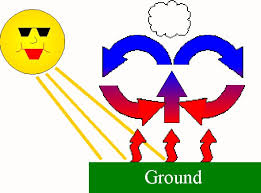
Warm air rises and the cool air sinks.
a)
conduction
b)
convection
c)
radiation
103.
The warm air from this heater creates a current when the warm air rises and the cold air sinks.
a)
conduction
b)
convection
c)
radiation
104.
Which direction will the heat flow while this person holds a hot cup of tea?
a)
from the cup to her hand
b)
from her hand to the cup
c)
no heat is transferred
105.
Which direction will the heat flow while this ice cap melts?
a)
there is no heat transfer
b)
from the icecap to the water
c)
from the water to the icecap
106.
Label part 1
a)
#1 Core
b)
#1 Radiation zone
c)
#1 Convection zone
d)
#1 Photosphere
107.
Label part 6
a)
#6 Prominences
b)
#6 Corona
c)
#6 Sunspots
d)
#6 Photosphere
108.
Label Part 3
a)
#3 Chromosphere
b)
#3 Radiation zone
c)
#3 Convection zone
d)
#3 Photosphere
109.
Label Part 2
a)
#2 Core
b)
#2 Radiation zone
c)
#2 Convection zone
d)
#2 Corona
110.
Nuclear fusion is when
a)
the nuclei of two atoms join to produce lots of energy
b)
the nuclus of a large atom splits to release lots of energy
111.
Nuclear fission is when
a)
the nuclei of two atoms join to produce lots of energy
b)
the nucleus of one large atom splits, releasing lots of energy
112.
Energy is created in the core when two _____________ atoms join together to form a ______________ atom.
a)
helium, hydrogen
b)
carbon, hydrogen
c)
nitrogen, helium
d)
hydrogen, helium
113.
The middle layer of the sun's interior that contains very tightly packed gas is called the _____________.
a)
photosphere
b)
chromosphere
c)
radiation zone
d)
convection zone
114.
In which area of the sun does gas rise as it heats up, then fall back down as it cools?
a)
the core
b)
the radiation zone
c)
the convection zone
d)
the corona
115.
What layer can be seen here?
a)
chromosphere
b)
corona
c)
photosphere
d)
core
116.
When we look at the sun, what layer are we viewing?
a)
photosphere
b)
chromosphere
c)
corona
d)
convection zone
117.
What is the sun mostly made up of
a)
Helium
b)
Core
c)
Carbon
d)
Hydrogen
118.
Where does nuclear fusion occur?
a)
Space
b)
Radiation Zone
c)
Photosphere
d)
The Core
119.
a brief burst of energy from the sun’s photosphere
a)
corona
b)
solar flare
c)
solar wind
d)
photosphere
120.
a dark spot on the photosphere of the sun
a)
corona
b)
solar flare
c)
sunspot
d)
magnitude
121.
the visible surface of the sun
a)
galaxy
b)
universe
c)
corona
d)
photosphere
122.
fast-moving stream of particles thrown into space by solar flares
a)
magnitude
b)
corona
c)
solar flare
d)
solar wind
123.
Identify part 5.
a)
photosphere
b)
chromosphere
c)
core
d)
radiation zone
124.
Identify part 4.
a)
photosphere
b)
convection zone
c)
core
d)
radiation zone
125.
Identify part 9.
a)
sunspot
b)
solar flare
c)
granules
d)
prominence
126.
Identify part 7.
a)
sunspot
b)
solar flare
c)
corona
d)
radiation zone
127.
It's loops are seen extending from the photosphere. 
a)
Flares
b)
Corona
c)
Prominences
128.
The temperature inside the sun's core can reach about:
a)
15,000 degrees fahrenheit
b)
15,000,000 degrees fahrenheit
c)
15,000,000 degrees celsius
d)
15,000,000,000 degrees celsius
129.
The number of sunspots on the sun varies in a cycle that is about how long?
a)
6-8 years
b)
10-11 years
c)
12-15 years
d)
365 days
130.
How long does it take energy to pass through the radiation zone?
a)
12 minutes
b)
100 year
c)
10,000 years
d)
100,000 years