
 Worksheets
G7 Science: Summer holiday work (optional) July 2022
Total questions: 132
Worksheet time: 2hrs 36mins

Ink can be separated by a method of -----------------------------------------------
distillation
filtration
chromatography
sedimentation
Which of the following is correct about chromatography?
It separates those solutes that dissolve in the same solvent.
It separates those solutes that dissolve in different solvents.
It separates a solute that dissolves in a solid solvent.
It separates gaseous solutes from liquid solvents.
The part where the gas condenses during the distillation process is called
(a)

What process is occurring at the point labelled X?
The process by which the substance changes from liquid to vapor.
The process by which the substance changes from gas to liquid.
A process where it separates two soluble liquid with a significant difference in their boiling point.
The process where solid changes to vapor.

What process is occurring at the point labelled Y?
Evaporation
Condensation
Sublimation
Crystallization
Which of these is needed for filtration?
Wire gauze
Burner
Funnel
Round-bottom flask

What is filtration?
A method used to separate a solid from a liquid that dissolves in the liquid
A separating technique used to separate a mixture of a solid and liquid where the solid does not dissolve in the liquid

Sara heats a salt solution. What is the name of the process happening at X?
boiling
evaporation
freezing
What is a solvent
A liquid that will dissolve a solid solute
Another word for solution
A thing that make drinks change colour
Usually the solid about to be dissolved
The ___ is the thing being dissolved.
solute
solvent
mixture
solution
Define the term insoluble.
Can dissolve in water.
Cannot dissolve in water.
Partially dissolves in water.


When 20 grams of KNO3 is dissolved at 80 ºC, the solution can be described as
Saturated
Unsaturated
Supersaturated
None
Which would NOT increase the rate at which a sugar cube dissolves?
Reducing the amount of solvent
Crushing the sugar cube
Stirring the solution
Heating the solvent

Three 10 g samples of sugar are represented below.
Sample A dissolves in water more slowly than sample B.
Sample B dissolves more slowly than sample C.
Which of the following best explains why sample A dissolves more slowly than the other two?
It has the most volume.
It has the smallest surface area to volume ratio per cube.
It has the largest number of sugar molecules.
It has the fewest bonds between sugar modules.
Which of the following techniques could be used to separate a heterogeneous mixture?
Filtration
Chromatography
Magnetic separation
Seiving

Name the separation technique
Centrifuge
Bunsen burner
Distillation
Evaporation
What are the units for measuring heat energy?
newtons
degrees Celsius
joules
degrees Fahrenheit
If you leave a cup of hot tea standing in the kitchen for a whole day, what will happen?
No energy will be transferred.
It will gain energy from the air in the kitchen.
Energy will be transferred from the tea to the air until the tea is the same temperature as the air.
Energy will be transferred from the tea to
the air in the kitchen, so the tea will end up colder than the air in the kitchen.
Which statement is correct?
Temperature is a form of energy.
Heat describes how hot or cold something is.
Thermal energy is the same as temperature.
Temperature describes how hot or cold something is.
The amount of heat energy in an object depends on three things. Which of these things does it not depend on?
its mass
its colour
its temperature
the material it is made from
Which of these materials is a good conductor of heat?
copper
air
water
glass
When one end of a piece of metal is heated:
the particles vibrate less and so the particles get closer together.
the particles vibrate more and the vibrations are passed from particle to particle.
the heat does not move through the metal.
the particles get bigger.
Solids are better heat conductors than liquids or gases because:
the particles are closer together in gases.
the particles are closer together in liquids.
the particles are closer together in solids.
the particles in a solid cannot move.
Why do solids expand when they are heated?
The particles get bigger.
The particles vibrate more and take up more space.
The particles vibrate more and get closer together.
The particles stick together.
Which substances can heat travel through by convection?
solids and liquids
solids and gases
only liquids
liquids and gases
What happens to a fluid when it is heated?
The particles get bigger.
The particles get smaller.
The particles move around more and take up more space.
The fluid gets denser.

Which drawing shows how the water will move in the beaker?
A
B
C
D

Why does the cold air near the ice lolly move downwards?
It is colder and denser than the air near it.
It is warmer and denser than the air near it.
It is colder and less
dense than the air near it.
It is warmer and less dense than the air near it.
When liquid water changes into steam it is:
condensing.
evaporating.
melting.
dissolving.
What happens to the temperature of the water in a beaker when it is boiling?
It goes up.
It stays the same.
It goes down.
It all depends on how hot the water was to start with.
When molten wax is freezing and turning back into a solid, what happens to the temperature of the wax?
It goes up.
It stays the same.
It goes down.
It all depends on how hot the wax was to start with.

Jo heats a beaker of water and draws a graph to show how its temperature changes. Which sentence explains the shape of the graph at point X?
The particles in the solid are breaking apart and absorbing energy.
The liquid is giving out the energy needed to break the bonds between particles.
The energy is breaking the bonds between the particles in the gas instead of making the gas hotter.
The energy is breaking the bonds between
the particles in the liquid instead of making the liquid hotter.
How does heat energy travel from the Sun to the Earth?
by radiation
by conduction
by convection
by radiation and conduction
Infrared radiation can travel through:
transparent objects only.
opaque objects only.
empty space only.
empty space and transparent objects.
Which statement does not describe a similarity between light and infrared radiation?
They can both be focused.
They are both visible.
They can both be reflected.
They can both travel through empty space.
Which material would reflect infrared radiation the best?
white and dull
black and shiny
white and shiny
grey and dull
The weaker the intermolecular forces of a substance the _____________ the boiling point
higher
lower

Cavity wall insulation stops air from moving. It reduces....
convection
conduction
Radiation
Evaporation

What does double glazing reduce?
Conduction
Convection
Both conduction and convection
radiation

Which graph line, A or B, would be the house with the greatest temperature rise?
(a)

Would the house with the greatest temperature rise be the house with the insulation?
(a)

Explain why the rod expands as it is heated.
Which scenario would result in NO flow of thermal energy?
When a hot and cold item are placed next to each other, touching.
When two items at the same temperature are placed next to each other, touching.
When a hot object is placed inside a cold room.
When a hot object is placed inside a room.
Amy wraps her doll in a blanket but can’t understand why it doesn’t warm up. Why is this?
The blanket she uses was probably a poor thermal insulator
The blanket she used was probably a good thermal conductor
The doll doesn’t have its own thermal energy to be kept in by the blanket
The doll lost thermal energy through other locations, like its head
Stomata are present on underside of
flower
leaf
fruit
seed
Main task of stomata is to
Intake of carbon dioxide and the release of oxygen
Intake of carbon dioxide
Release of oxygen
release of carbon di oxide
What do you call the process of water loss in plants?
Transpiration
Demoisturization
water dehydration
Stomata is present in all of these regions EXCEPT
leaf
stem
roots
epidermis
Distribution of stomata varies from plant to plant
true
false
The stomata is surrounded by a pair of specialized cells called
nucleus
guard cell
epidermal tissues

The arrows in the picture below show several ways heat is transferred from the Sun as it strikes sand on the surface of a beach. Which arrow shows convection?
1
2
3
4
If you walk barefoot on hot asphalt, energy is transferred by which process?
Convection
Radiation
Conduction
Reflection

Throughout the day, Matthew and Mei measure the temperature of lake water as it is warmed by the sun. The following table shows their data at four different times.
At what time was the thermal energy of the lake water the greatest?
9 a.m.
11 a.m.
3 p.m.
5 p.m.
When energy from the sun reaches the air above land, the air warms and rises. Along a coastline, cooler air above the ocean flows toward the land to replace this rising air.
Which of the following best describe these processes?
Conduction and convection
Radiation and convection
Conduction, convection, and radiation
Radiation and conduction

Vivian placed an ice cube in a tray of warm water. The following picture shows her investigation. Which statement describes the energy transfer that happens in Vivian’s investigation?
Energy in the form of heat is transferred from the ice cube to the water by radiation.
Energy in the form of heat is transferred from the water to the ice cube by radiation.
Energy in the form of heat is transferred from the ice cube to the water by conduction.
Energy in the form of heat is transferred from the water to the ice cube by conduction

Kumar is studying how Earth is warmed by sunlight. The following illustration shows his model of the sun and Earth.
Which process is mostly responsible for warming the soil in Kumar’s model?
Conduction between the lamp and the soil causes the soil to warm.
Convection currents between the lamp and the soil cause the soil to warm.
Expansion of particles in the soil causes the soil to warm.
Radiation from the lamp reaches the soil and causes the soil to warm.
Sarah is investigating the transfer of energy in the form of heat. One process that transfers energy between two objects is conduction.
Which statement is NOT true about conduction?
It involves a transfer of energy in the form of heat.
It can transfer energy through empty space.
It requires direct contact between the objects.
It results in a change of temperature in both objects.

The following diagram shows water in contact with an ice cube and warmer air.
Which way will energy flow?
From the air to the water
From the water to the air
From the ice cube to the air
From the ice cube to the water
A warm rock is in direct contact with the cooler ground.
Which of the following will happen?
Energy in the form of heat will flow from the rock to the ground, and the temperature of the rock will increase
Energy in the form of heat will flow from the ground to the rock, and the temperature of the rock will increase
Energy in the form of heat will flow from the rock to the ground, and the temperature of the rock will decrease.
Energy in the form of heat will flow from the ground to the rock, and the temperature of the rock will decrease.
If you visit the beach on a hot summer day you will probably feel a sea breeze coming off the water onto the land.
Which of the following causes this sea breeze?
During the day, solar radiation warms the land more than the water.
The water is warmer than the land during the day.
Earth is tilted toward the Sun, causing air to move inland from the water.
Hurricanes that form in the oceans blow air into the shore.
Energy is transferred as heat between two objects of ___________ temperatures.
differing
same
The measure of average kinetic energy of all the particles within an object is called ____________.
temperature
conduction
radiation
heat


A piece of cheese that melts as heat is transferred from the meat to the cheese is an example of what?
Radiation
Conduction
Convection

Taking a hot air balloon ride is an example of what?
Radiation
Conduction
Convection

Taking a trip to the beach and falling asleep under the sun, resulting in a sunburn is an example of what?
Radiation
Conduction
Convection
True or False
Heat transfer is the transfer of heat from cooler objects to warmer objects.
True
False
Conduction is how heat passes through objects by...
Fluids
Direct Contact
Empty Space
Convection is how heat transfers through...
Fluids
Direct Contact
Empty Space
Radiation is how heat transfers through...
Fluids
Direct Contact
Empty Space

What is the circular motion of hot air rising and cold air sinking?
Radiation
Convection Currents
Electromagnetic Waves
Conduction
True or False
The hotter the temperature the faster the molecules move around.
True
False
What is the measure of how hot or cold something is?
Thermometer
Temperature
Thermal Energy

Boiling Water
Conduction
Convection
Radiation

Curling Iron
Conduction
Convection
Radiation
1. They collide more vigorously with neighbouring particles
2. Particles at the heated end gain kinetic energy and vibrate vigorously.
3. Particles at cooler end vibrate vigorously.

Heat transfer by convection is caused by differences in what two things:
Thickness and material
Weight and electricity
Temperature and density
Convection can take place in _________________.
solids only
liquids only
liquids and gases only
solids, liquids and gases
Liquids and gases are together called ___________.
Fluids
Matter
Solvent
None of the above

The diagram shows some rice being boiled in a pan. What is the main methods by which thermal energy is transferred (i) through the metal pan and
(ii) through the water?
(i) conduction (ii) conduction
(i) convection (ii) convection
(i) conduction (ii) convection
(i) convection (ii) conduction
Convection can sometimes occur in solids. True or False .
(a)
Which of the following is NOT an application of convection currents ?
Sea breeze and Land Breeze
Ventilators of the room
Handle of cooking vessels
Chimneys

Weather Patterns
Conduction
Convection
Radiation

Sun Bathing
Conduction
Convection
Radiation

Mantle
Conduction
Convection
Radiation

Feet on Hot Sand
Conduction
Convection
Radiation

Lava Lamp
Conduction
Convection
Radiation

Hot Air in a Toaster
Conduction
Convection
Radiation

Microwaving Food
Conduction
Convection
Radiation

Heat Lamps
Conduction
Convection
Radiation

Cold Pack on Person
Heat is transferred from the cold pack to the person.
Heat is transferred from the person to the cold pack
The cold pack is getting warmer. The person is getting colder.
The cold pack is getting colder. The person is getting warmer.

Hand Warmer in a Hand
Heat is being transferred from the hand warmer to the hand.
Heat is being transferred from the hand to the hand warmer.
The hand is getting warmer. The hand warmer is getting cooler.
The hand warmer is getting warmer. The hand is getting cooler.

A small cork is attached to a metal plate with wax. An electric heater is placed close to the plate. After a time, the wax melts and the cork drops off. How does heat reach the cork?
A by conduction only.
B by convection only
C by conduction and convection
D by conduction and radiation.
Which types of surfaces are the best absorber and the best emitter of infra-red radiation?
A best absorber: black and dull;
best emitter: black and dull
B best absorber: black and shiny;
best emitter: white and dull
C best absorber: white and dull;
best emitter: black and shiny
D best absorber: white and shiny;
best emitter: white and shiny.

The diagram shows a vacuum flask and an enlarged view of a section through the flask wall.
The main reason for the silvering is to reduce heat transfer by
A conduction.
B radiation only.
C conduction and convection.
D convection and radiation.

A slice of bread is placed under a red-hot electric grill to make toast. How does the heat energy reach the bread?
A by conduction
B by conduction and convection
C by convection and radiation
D by radiation only
A copper plate is heated in air to 1000C and then allowed to cool. It cools by emitting.
A beta-particles
B gamma-rays
C infra-red radiation
D ultraviolet radiation
Which surface is the best emitter of heat radiation.
A dull black
B dull white
C shiny black
D shiny white.

A long copper pipe is attached to a metal sheet, as shown below. Cold water is passed through the pipe. When the apparatus is placed in sunlight, the water is warmed.
(a) What colour should the apparatus be painted to make the water as hot as possible? [1]
(b) Explain your answer to (a) [1]

Fig. 15.1 shows a thermometer used to measure the increase in temperature of cold water in a metal can placed near an infra-red heater.
(i) State the main method by which heat energy is transferred through the air to the can. [1]
(ii) State the method by which heat energy is transferred through the metal of the can. [1]
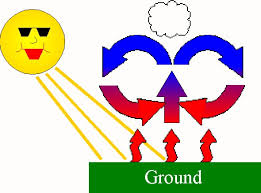
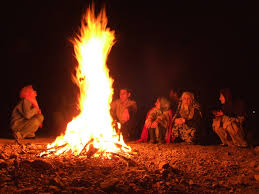

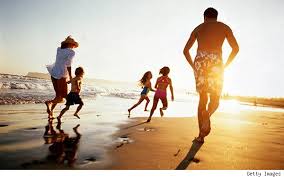
A snowball in your hand is what heat transfer?
Convection
Conduction
Law of Conservation of Energy
Radiation
In which direction does heat transfer?
Freezing to HOT
Hot to Warm
Hot to Cold
Cold to Hot

