
 Worksheets
air planes
Total questions: 128
Worksheet time: 2hrs 32mins
The wheels of a plane are called the
landing gear
wheels
fuselage
The body of the plane is called the
flaps
fuselage
landing gear
The________________ are hinged on the wings and move downward to push the air down and make the wing tilt up.
flaps
fuselage
ailerons
The ______________ at the rear of the plane provides stability
tail
rudder
flaps
The _______________ moves left and right to control the left or right movement of the plane
rudder
tail
fin
The controlling surface that regulates an aircraft's roll.
Aileron
Rudder
Wing
Flaps
The major horizontal surface on an airplane that provides lift.
Aileron
rudder
wing
Flaps
An ____________is a vehicle for traveling through the air, and includes lighter-than-air vehicles such as balloons and also vehicles without fixed wings, such as helicopters.
Aircraft
Aerodynamic
Aerostatic
Airlift
The _______________ is the main body of an airplane.
cockpit
window
emmpennage
fuselage
The __________is a part of an airplane that produces much of an airplane’s total lift when air flows over it.
aileron
wing
elevator
rudder
The horizontal stabilizer, vertical stabilizer, rudder and elevator together are called the “_______________.”
flaps
empennage
wings
fuselage
The _____________ is used to make the nose of the airplane yaw left or right.
rudder
elevator
ailerons
flaps
The controlling surface that regulates an aircraft's roll.
Aileron
Rudder
Wing
Flaps
The major horizontal surface on an airplane that provides lift.
Aileron
rudder
wing
Flaps
part on a plane's tail that makes the plane go up and down
Elevators
propeller/turbine engine
fuselage
cockpit
the main body of an aircraft
fuselage
propeller/turbine engine
Elevators
cockpit
compartment where the pilot sits while flying the aircraft
Elevators
propeller/turbine engine
cockpit
fuselage
An airfoil (usually at the back of an airplane) that resists left and right changes in motion.
cockpit
Horizontal Stabilizer
fuselage
Vertical Stabilizer

What is part A?
Wing
Winglet
Cockpit
Spoiler
What is part C?
Horizontal Stabilizer
Vertical Stabilizer
Rudder
Elevator
What is part D?
Horizontal Stabilizer
Vertical Stabilizer
Rudder
Elevator
What is part E?
Horizontal Stabilizer
Vertical Stabilizer
Rudder
Elevator
What is part F?
Horizontal Stabilizer
Vertical Stabilizer
Rudder
Elevator
What is part H?
Flaps
Aileron
Spoiler
Slats
What is part J?
Flaps
Aileron
Spoiler
Slats
What is part K?
Fuselage
Cockpit
Turbine Engine
Slats
What is part L?
Fuselage
Cockpit
Turbine Engine
Slats
What is part A?
Wing
Winglet
Cockpit
Spoiler
What is part C?
Horizontal Stabilizer
Vertical Stabilizer
Rudder
Elevator
What is part D?
Horizontal Stabilizer
Vertical Stabilizer
Rudder
Elevator
What is part E?
Horizontal Stabilizer
Vertical Stabilizer
Rudder
Elevator
What is part F?
Horizontal Stabilizer
Vertical Stabilizer
Rudder
Elevator
What is part H?
Flaps
Aileron
Spoiler
Slats
What is part J?
Flaps
Aileron
Spoiler
Slats
What is part K?
Fuselage
Cockpit
Turbine Engine
Slats
What is part M?
Fuselage
Cockpit
Turbine Engine
Slats

What is the name of part 1?
Vertical Stabilizer
Horizontal Stabilizer
Elevator
Rudder

What is the name of part 2?
Rudder
Vertical Stabilizer
Elevator
Empennage

Where is the elevator located?
1
2
3
4

Part 5 represents the:
Trim Tab
Elevator
Tail
Empennage

Identify the Landing Gear
11
12
15
16

Which number represents the wings?
2
5
9
10

Identify the Horizontal Stabilizer:
5
9
10
11

Which part is the cockpit?
6
11
13
16

Which part is the spinner?
12
13
14
15

What is part is shown by 14?
Trim Tab
Engine Cowling
Spinner
Propeller
The ____________ is powered by an engine (usually just behind the propeller) and the propeller blades create __________to move an airplane forward.
thrust, propeller
lift,drag
propeller, thrust
thrust, drag
The __________is a part of an airplane that produces much of an airplane’s total lift when air flows over it.
aileron
wing
elevator
rudder
Newton’s First Law of Motion is often called “the law of _____________.”
inertia
momentum
F=MA
Newton’s Second Law of Motion is also known as “the law of _________________.”
inertia
reaction
momentum
The four forces of flight considered in the design of airplane parts are lift, __________, thrust and __________.
gravity, drag
drag, gravity
lift, drag
The horizontal stabilizer, vertical stabilizer, rudder and elevator together are called the “_______________.”
flaps
empennage
wings
fuselage
The elevator controls “_____________,” or the up-and-down motion of the airplane’s nose.
flaps
lift
pitch
yaw
The three main control surfaces on an airplane are the ailerons, _____________ and elevator.
rudder
flaps
landing gear
tail-fin
The flaps move up or down together, in the same direction at the _________ time.
different
consecutive
offbeat
same
Jet engines allow airplanes to fly faster and at higher altitudes than propeller airplanes.
lower, and slower
faster and higher
faster and lower
lower and faster
The left wing position light on an airplane is __________; the right wing position light is _________.
red, blue
blue, red
red, green
red, white
The “artificial horizon” instrument in the cockpit gives the pilot information about both pitch and _________.
pitch
yaw
bank
roll
Pulling the yoke back makes the nose of the airplane of go _____________.
left
down
up
right
How many forces act on an airplane while flying?
2
4
6
8
Which force acts OPPOSITE to weight?
Drag
Thrust
Lift
Bernoulli
This is the main body of the airplane
Cockpit
Empennage
Fuselage
Horizontal Stabilizer
Where the plane controls are, as well as where the pilot sits.
Pitot Tube
Cabinet
Fuselage
Cockpit
Which part of the plane provides lift?
Aileron
Elevator
Rudder
Wing
Which part of the plane provides lift?
Aileron
Elevator
Rudder
Wing
This part of the plane is the vertical section of the tail that controls yaw (side-to-side movement)
Vertical Stabilzer
Rudder
Aileron
Elevator
The use of this part of the plane causes it to climb or descend (pitch)
Elevator
Flaps
Fuselage
Horizontal Stabilizer
An increase in drag will make the plane
Go faster
Go slower
Go up
Go down
Force that attracts the plane towards the ground
Lift
Drag
Thrust
Gravity

Which picture is correct?
A
B
C
D
Which picture is correct?
A
B
C
D

What word describes the following shape?
Airway
Airfoil
Aeron
Airflow
What word describes the following shape?
Airway
Airfoil
Aeron
Airflow
What word describes the following shape?
Airway
Airfoil
Aeron
Airflow
What word describes the following shape?
Airway
Airfoil
Aeron
Airflow
What word describes the following shape?
Airway
Airfoil
Aeron
Airflow
What word describes the following shape?
Airway
Airfoil
Aeron
Airflow
What word describes the following shape?
Airway
Airfoil
Aeron
Airflow


The angle formed between the relative wind and the chord line is called the
Washout
Angle of Incidence
Angle of Attack
Pitch Attitude
The angle formed between the relative wind and the chord line is called the
Washout
Angle of Incidence
Angle of Attack
Pitch Attitude

The airflow hits this part of the airfoil first
Chord
Trailing Edge
Span
Leading edge
The airflow hits this part of the airfoil first
Chord
Trailing Edge
Span
Leading edge
The airflow hits this part of the airfoil first
Chord
Trailing Edge
Span
Leading edge
The distance from wingtip to wingtip
Chord
Trailing Edge
Span
Leading edge
The distance from wingtip to wingtip
Chord
Trailing Edge
Span
Leading edge

Flies without an engine
Glider
Camber
Angle of attack
Stall
The scientific principle that describes why planes can fly is called ______ .
the Fly Principle
the Lift Principle
the Airplane principle
Bernoulli's Principle

Which airplane motion is controlled by the elevators?
Roll
Pitch
Yaw

Which airplane motion is controlled by the rudder?
Roll
Pitch
Yaw

Which airplane motion is controlled by the ailerons?
Roll
Pitch
Yaw

This surface controls pitch about the lateral axis of the aircraft
Ailerons
Elevators
Rudder
Flaps

This surface controls yaw about the vertical axis of the aircraft
Ailerons
Elevators
Rudder
Flaps
The up or down motion of the nose of the aircraft.
aileron
roll
infer
pitch
Generates thrust on an aircraft
Elevators
propeller/turbine engine
fuselage
cockpit
part on a plane's tail that makes the plane go up and down
Elevators
propeller/turbine engine
fuselage
cockpit
the main body of an aircraft
fuselage
propeller/turbine engine
Elevators
cockpit
compartment where the pilot sits while flying the aircraft
Elevators
propeller/turbine engine
cockpit
fuselage
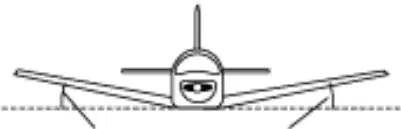
______________ refers to how two wing halves come together at an angle instead of flat.
angle of attack
chord
dihedral
airfoil
______________ refers to how two wing halves come together at an angle instead of flat.
angle of attack
chord
dihedral
airfoil
______________ refers to how two wing halves come together at an angle instead of flat.
angle of attack
chord
dihedral
airfoil
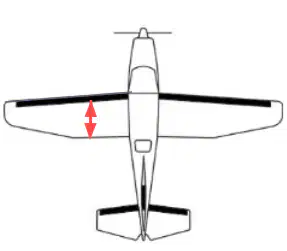
The _____________ refers to the length from the front to the back of the wing.
angle of attack
chord
dihedral
airfoil

The _________________ is the angle that the wing is pointed into oncoming air.
angle of attack
chord
dihedral
airfoil
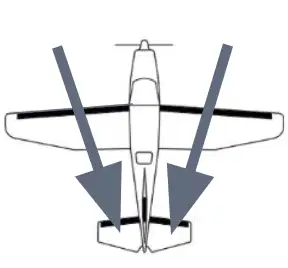
The arrows are pointing to which of the following?
fuselage
horizontal stabilizer
vertical stabilizer
wing
The arrows are pointing to which of the following?
fuselage
horizontal stabilizer
vertical stabilizer
wing

The gray arrow is pointing to which of the following?
fuselage
horizontal stabilizer
vertical stabilizer
wing
The gray arrow is pointing to which of the following?
fuselage
horizontal stabilizer
vertical stabilizer
wing
The gray arrow is pointing to which of the following?
fuselage
horizontal stabilizer
vertical stabilizer
wing

The arrow is pointing to which of the following?
fuselage
horizontal stabilizer
vertical stabilizer
wing

The edge of the wing that is highlighted in yellow is called?
leading edge
trialing edge
chord line
center of gravity
The edge of the wing that is highlighted in red is called?
leading edge
trialing edge
chord line
center of gravity


This images shows
roll
pitch
yaw
lift
thrust

This image shows
roll
pitch
yaw
lift
thrust
This image shows
roll
pitch
yaw
lift
thrust
This images shows
roll
pitch
yaw
lift
thrust

This image shows
roll
pitch
yaw
lift
thrust
This image shows
roll
pitch
yaw
lift
thrust
This images shows
roll
pitch
yaw
lift
thrust
This image shows
roll
pitch
yaw
lift
thrust
This image shows
roll
pitch
yaw
lift
thrust
This images shows
roll
pitch
yaw
lift
thrust
This image shows
roll
pitch
yaw
lift
thrust

