wayground logo

Free Printable Worksheets

Font size

S
M
L
XL
Worksheets

Semester 2 Final Review

Total questions: 135

Worksheet time: 3hrs 33mins

Name
Class
Date
1.
What is the outermost layer of earth?
a)
inner core
b)
outer core
c)
mantle
d)
crust
2.
Which layer is made of the most solid rock?
a)
inner core
b)
outer core
c)
mantle
d)
crust
3.
Which layer is made of solid iron & nickel?
a)
inner core
b)
outer core
c)
mantle
d)
crust
4.
What is the outer core made of?
a)
solid rock
b)
solid metal
c)
melted rock
d)
melted metal
5.
Which layer has the coolest temperatures?
a)
outer core
b)
inner core
c)
mantle
d)
crust
6.
Which layer has the hottest temperatures?
a)
inner core
b)
outer core
c)
mantle
d)
crust
7.
Which layer is the least dense?
a)
inner core
b)
outer core
c)
mantle
d)
crust
8.

Which word best describes the lithosphere?

a)

liquid

b)

rigid

c)

bendable

d)

metal

9.
What kind of crust do we live on?
a)
oceanic crust
b)
continental crust
10.
Which statement is correct?
a)
As you move up through the layers, the pressure increases.
b)
As you move down through the layers pressure increases.
c)
As you move down through the layers, pressure decreases.
d)
As you move up down through the layers, pressure remains the same.
11.
What happens to temperature as you move down through the layers?
a)
it remains the same
b)
it increases then decreases
c)
it increases
d)
it decreases
12.

Two plates come together or collide at what boundary?

a)

Convergent

b)

Divergent

c)

Transform

13.

Two plates spread or move apart at what boundary?

a)

Convergent

b)

Divergent

c)

Transform

14.

Two plates slide past each other at what boundary?

a)

Covergent

b)

Divergent

c)

Transform

15.

What two crustal features occur near every subduction zone?

a)

Volcanoes and Trenches

b)

Rift Valleys and Mid Ocean Ridges

c)

Volcanoes and Rift Valleys

d)

Mid Ocean Ridges and Trenches

16.

A divergent boundary on land creates what feature?

a)

Mid Ocean Ridge

b)

Rift Valley

c)

Subduction Zone

d)

Deep Ocean Trench

17.

A divergent boundary in the ocean creates what feature?

a)

Mid Ocean Ridge

b)

Rift Valley

c)

Deep Ocean Trench

d)

Subduction Zone

18.

When two continental plates converge (collide) what type of crustal feature is formed?

a)

Mid Ocean Ridge

b)

Subduction Zone

c)

Rift Valley

d)

Folded Mountains

19.

The process that occurs at a divergent oceanic boundary that creates new crust (sea floor) is called?

a)

Subduction

b)

Seafloor Spreading

c)

Continental Drift

d)

Volcanism

20.

What is the only event associated with transform boundaries?

a)

Volcanoes

b)

Subduction Zones

c)

Tsunamis

d)

Earthquakes

21.

The only type of crust that will subduct if two plates converge is...

a)

Oceanic

b)

Continental

22.
What geologic feature/event you be most likely to find at a transform boundary?
a)
Earthquakes
b)
Volcanoes
c)
Mountains
d)
Rift Valleys
23.
What geologic feature/event would you most likely to find at a divergent boundary between two pieces of oceanic crust?
a)
Rift Valley
b)
Mid-Ocean Ridge
c)
Island Arc
d)
Flat land
24.
What geologic feature/event would you most likely to find at a divergent boundary between two pieces of continental crust?
a)
Mid-Ocean Ridge
b)
Mountain
c)
Rift Valley
d)
Island Arc
25.
What geologic feature/event would you most likely to find at a convergent boundary between two pieces of continental crust?
a)
Volcano
b)
Mountain
c)
Rift
d)
Island Arc
26.
A subduction zone is formed...
a)
when one tectonic plate sinks below another
b)
at every type of convergent plate boundary
c)
at every type of divergent plate boundary
d)
at transform boundaries
27.
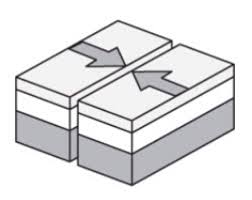
Name the boundary
a)
convergent boundary
b)
divergent boundary
c)
transform boundary
d)
sergent boundary
28.
Name the boundary
a)
convergent boundary
b)
divergent boundary
c)
transform boundary
d)
sergent boundary
29.
In which type of boundary do the plates move away from each other?
a)
convergent
b)
normal
c)
divergent
d)
transform
30.
The area where two or more plates meet is called a __________________.
a)
fault
b)
plate boundary
c)
plate edge
d)
ring of fire
31.
The layer that lies beneath the mantle and surrounds the inner core. 
a)
mantle
b)
outer core
c)
inner core
d)
crust
32.
The driving force of the tectonic plates are convection currents, where can these be found?
a)
inner core
inner core
b)
crust
c)
mantle
d)
outer core
33.
According to the law of superposition, the oldest fossils are found 
a)
At the top of the rock layers
b)
Near the bottom of the rock layers
c)
In the middle of the rock layers
d)
Somewhat near the surface
34.
Which rock layer in the diagram seems to be the oldest?
a)
F
b)
E
c)
B
d)
A
35.
According to the law of superposition, which layer is the youngest?
a)
A
b)
B
c)
C
36.

What is the absolute age of a rock?

a)

The age determined by the things around it.

b)

The age of an igneous rock.

c)

The age determined by radioactive dating.

d)

The time it takes for 1/2 of the radioactive atoms to decay in an element.

37.

What is the relative age of a rock?

a)

The age determined by the things around it.

b)

The age of an igneous rock.

c)

The age determined by radioactive dating.

d)

The time it takes for 1/2 of the radioactive atoms to decay in an element.

38.
The number of years that have passed since the rock formed is the rock's
a)
relative age
b)
law of superposition
c)
absolute age
d)
index fossil
39.
Which best describes a fossil that helps determine the relative age of a rock layer?
a)
trace fossil
b)
index fossil
c)
radioactive fossil
d)
unconformity fossil
40.
By which method have scientists determined that the Earth is about 4.5 billion years old?
a)
plate tectonics
b)
relative dating
c)
radioactive dating
d)
law of superposition
41.
The index fossil of a type of trilobite is discovered in layer A of a set of rock layers found at three different sites of a field investigation. Which conclusion can be made about the rocks in layer A at all three sites?
a)
The rocks are all different ages
b)
The rocks are all about the same age
c)
The rocks were formed from melting magma
d)
The rocks were formed during a catastrophic event
42.
Which type of rock replaces bone and other hard organic materials to create rock molds of fossils?
a)
metamorphic
b)
sedimentary
c)
extrusive igneous
43.
Fossil remains of a trilobite are most likely to be found in which type of rock?
a)
igneous
b)
volcanic
c)
sedimentary
d)
metamorphic
44.
What role do faults play in the Law of Superposition?
a)
Faults create new types of rock.
b)
Faults are younger than the layers they cut through.
c)
Faults are the same age as the layers they cut through.
45.
Which statement best describes the Law of Superposition?
a)
Each sedimentary layer of rock represents 1,000 years of Earth's age, much like the rings of a tree.
b)
In undisturbed layers of sedimentary rocks, the upper rock layers are older than the lower rock layers.
c)
In undisturbed layers of sedimentary rock, the lowest layers contain the older rocks.
d)
Rocks that form near volcanoes are older than surrounding rock.
46.
T/F: Geologist use radioactive dating to find the absolute age of rocks
a)
True
b)
False
47.
What is the most popular hypothesis of the formation of the moon? 
a)
The moon passed very close to the earth and was caught in its gravitational pull.
b)
The moon formed the same time as the earth.
c)
The moon formed when a small planet smashed into the newly formed earth sending debris into space which formed the moon.
48.

Scientist think the Earth is ___ years old.

a)

4,500

b)

45,000

c)

4.5 million

d)

4.6 billion

49.
__________________is the time it takes for half of the radioactive atoms in an element to decay.
a)
dating range
b)
half life
50.
What is Half-life?
a)
The amount of time it takes for some of the nuclei in a sample of the isotope to decay
b)
The amount of time it takes for half the electrons in a sample of the isotope to decay
c)
The amount of time it takes for half the nuclei in a sample of the isotope to decay
d)
the amount of time it takes to double the nuclei in a sample of the isotope to decay
51.
A rock formed from fragments of other rocks is a(n)
a)
Metamorphic Rock
b)
Sedimentary Rock
c)
Extrusive Rock
d)
Igneous Rock
52.
An igneous rock containing large crystals is most likely a(n)
a)
Chemical Rock
b)
Foliated Rock
c)
Extrusive Rock
d)
Intrusive Rock
53.
You find a rock in which the grains are arranged in parallel bands of white and black crystals.  The rock is probably a(n)
a)
Igneous rock
b)
Sedimentary rock
c)
Metamorphic rock
d)
Extrusive rock
54.

What must happen to a sedimentary rock in order for it to change into an igneous rock?

a)

It must be weathered and eroded.

b)

It must melt, then cool and harden.

c)

It must become cemented to other rocks.

d)

It must be put under pressure until new minerals form in it

55.

Which of the following processes is most necessary to form sedimentary rocks? 

a)

cooling

b)

subduction

c)

deposition

d)

metamorphism

56.

Granite is a rock formed from the cooling of magma. When granite is exposed to elements such as wind and water, it weathers and erodes and the particles are deposited. Pressure causes these and other particles to form sandstone at Earth's surface. What type of change occurs in this process?

a)

Sedimentary rock becomes igneous rock

b)

Igneous rock becomes sedimentary rock

c)

Sedimentary rock becomes new sedimentary rock

d)

Igneous rock becomes new igneous rock.

57.
Which type of rock results from melting and cooling of magma?
a)
Igneous
b)
Metamorphic
c)
Sedimentary
d)
Extrusive
58.
Which type of rock forms from extreme heat and pressure?
a)
Igneous
b)
Sedimentary
c)
Organic
d)
Metamorphic
59.
A metamorphic rock changes into an igneous rock by what two processes?
a)
Melting and cooling
b)
Extreme heat and pressure
c)
Compaction and cementation
d)
Weathering and erosion
60.
Wind, water, and ice breaking down rock is called
a)
Erosion
b)
Deposition
c)
Compaction
d)
Weathering
61.
What is the MAIN way rocks are classified?
a)
Their color and shapes
b)
How they form
c)
Mineral bands
d)
Where they form
62.
The process in which dissolved minerals crystallize and glue sediment together.
a)
compaction
b)
deposition
c)
organic rock
d)
cementation
63.
When sediments are pressed together tightly, this is called ____________.
a)
Compaction
b)
Cementation
c)
Weathering
d)
Erosion
64.
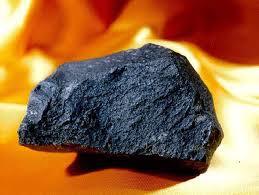
This rock was found near the mouth of a volcano. What type of rock is this?
a)
Sedimentary
b)
Igneous
c)
Metamorphic
65.
What are the 3 major types of rocks?
a)
Igneous, Metamorphic, Sedimentary
b)
Metamorphic, Igneous, Cementation
c)
Brown, Red, Gray
d)
Streak, Hardness, Breakage
66.
Fossils are often found in ____________ because it is formed from the remains of once living things.
a)
metamorphic
b)
magma
c)
igneous
d)
sedimentary
67.
The name rock is given when it is broken down into smaller pieces.
a)
texture
b)
weathering
c)
sediment
d)
erosion
68.
What does it mean for a rock to be extrusive
a)
Have layers
b)
Have Rounded Edges
c)
Form from Lava
d)
Form By Sediment
69.
A metamorphic rock changes into an igneous rock by what two processes?
a)
Melting and cooling
b)
Extreme heat and pressure
c)
Compaction and cementation
d)
Weathering and erosion
70.
True/False: Igneous rocks can only turn into metamorphic rocks.
a)
True
b)
False
71.
This rock started as lava that cooled and then was heated and put under pressure over time. What type of rock is this?
a)
Sedimentar
b)
Igneous
c)
Metamorphic
72.

What is heredity?

a)

A kind of genetic disorder

b)

The way DNA divides

c)

A trait you inherit from your parents

d)

The passing down of traits from parents to children

73.
What is the relationship between DNA and chromosomes?
a)
Chromosomes are made of DNA
b)
DNA is made of chromosomes
c)
DNA and chromosomes are the same thing.
d)
All of the above are correct
74.
How many pairs of chromosomes exist in each of your cells?
a)
10
b)
12
c)
23
d)
46
75.
Why are your chromosomes arranged in pairs?
a)
Scientists have no idea
b)
Because you get one from your mom and one from your dad
c)
Because pairs can divide easier
d)
Because DNA is awesome
76.
Which statement is true?
a)
Your DNA is the same as your siblings.
b)
Your set of DNA is identical to your mothers.
c)
Your set of DNA is identical to your fathers.
d)
Your DNA is unique to you.
77.
Which of your body cells contain DNA?
a)
Only your reproductive cells, like egg or sperm
b)
Only your blood cells
c)
Only your bone cells
d)
Most all of the cells in your body
78.
Are recessive traits shown with capital or lowercase letters? 
a)
Capital
b)
Lowercase
79.
The physical appearance or the way a gene looks is known as it's....
a)
genotype
b)
allele
c)
gene
d)
phenotype
80.
The different forms of genes are known as
a)
environment
b)
probability
c)
traits
d)
alleles
81.
An allele or gene that always shows is
a)
recessive
b)
dominant
c)
hidden
d)
present
82.
Two of the same genes for a trait (sometimes called purebred). BB or bb
a)
homozygous
b)
hetrozygous
c)
protein
d)
chromosome
83.
Two different genes for a trait (sometimes called hybrid). Bb
a)
protein
b)
homozygous
c)
heterozygous
d)
genotype
84.
What would the ratio for genotypes be for this Punnett Square?
a)
2Bb:2bb
b)
2BB:2Bb
c)
1BB:2Bb:1bb
d)
4Bb
85.
T - tall and t = short
In the punnett square below, what belongs in the missing square
a)
tt
b)
Tt
c)
Bb
d)
TT
86.
A ________________________ is used to predict the possible genotype from certain parents
a)
Mendel Grid
b)
Genetic Tic Tac Toe
c)
Punnett Square
d)
Pedigree Plot
87.
Heredity is the passing of traits from _____________________ to _____________________
a)
predators to prey
b)
water to rain
c)
parents to offspring
d)
fungi to protists
88.
___________________________ is the field of science that studies of how traits are passed on, or inherited.
a)
dominant traits
b)
ratio
c)
phenotype
d)
genetics
89.
What is a genotype? 
a)
The genetic make up (code)
b)
The physical trait
90.
Tall is dominant to short. What is the phenotype of this organism?
Tt
a)
tall
b)
short
91.

Squidward has light blue skin, and his genotype for this trait is Bb. Which of the following would describe Squidward?

a)

Purebred

b)

Hybrid

c)

Homozygous

d)

Sex-linked

92.
Which of the following is a phenotype?
a)
BB
b)
Bb
c)
bb
d)
Blue eyes
93.
the passing of genetic traits from parent to offspring.
a)
heredity
b)
trait
c)
gene
d)
allele
94.
Two brown eyed parents (Bb) have a baby. What is the chance the baby is blue eyed?
a)
0 %
b)
25%
c)
50%
d)
75%
95.
G = green, g = yellow
The genotype for a yellow plant is...
a)
GG
b)
Gg
c)
gg
d)
all of the choices result in yellow
96.
What determines the code, or information, of a DNA molecule?
a)
the shape (structure) of the nitrogen bases
b)
the order (sequence) of the nitrogen bases
c)
the color of the nitrogen bases
d)
the frequency (number) of nitrogen bases
97.
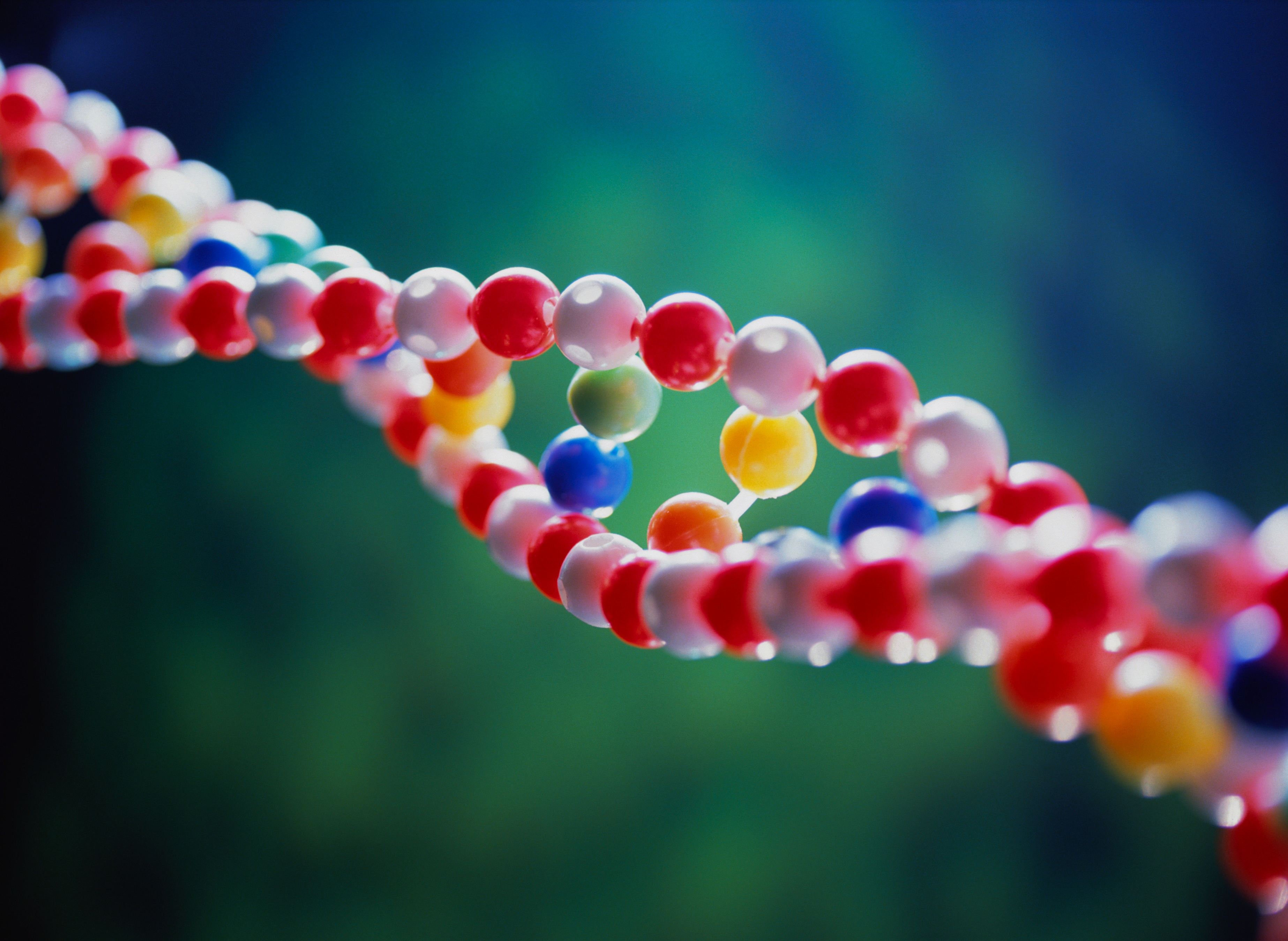
The drawing shows the structure of what molecule?
a)
A DNA molecule
b)
A lipid molecule
c)
A carbohydrate molecule
d)
A protein molecule
98.
What are the three components of a nucleotide?
a)
sugar, hydrogen, nitrogen base
b)
sugar, oxygen, nitrogen base
c)
sugar, phosphate, nitrogen base
d)
sugar, phosphate, protein
99.
Who was given credit for determining the shape of DNA? 
a)
Avery
b)
Watson and Darwin
c)
Watson and Crick
d)
Franklin and Crick
100.
Adenine bonds with ______________.
a)
Guanine
b)
Thymine
c)
Cytosine
d)
Adenine
101.
Guanine bonds with ______________.
a)
Adenine
b)
Guanine
c)
Cytosine
d)
Thymine
102.
Why is DNA important?
a)
it is very small and very complicated
b)
it's in everything
c)
it serves as the blueprint for traits of all living things
d)
because we eat it every day for energy
103.
Which organelle is DNA usually found in?
a)
cell membrane
b)
vacuole
c)
chloroplast
d)
nucleus
104.
The chromosomes that pair up during meiosis, are called __________ chromosomes.  
a)
homozygous 
b)
asexual
c)
homologous
d)
genes
105.
Meiosis makes sperm and egg cells. In humans, sperm and egg cells each have _____ chromosomes. Therefore a fertilized human egg cell (sperm and egg cell combined) would create a cell with _____ chromosomes.
a)
23, 46
b)
46, 23
c)
2, 4
d)
50, 100
106.
How many daughter cells does Meiosis create?
a)
2
b)
4
c)
8
d)
1
107.

Mitosis makes sure that all daughter cells are _____.

a)

genetically identical, diploid

b)

genetically identical, haploid

c)

genetically diverse, diploid

d)

genetically diverse, haploid

108.
Which of the following produces identical nuclei in cells?
a)
fertilization
b)
osmosis
c)
mitosis
d)
pollution
109.
Which of the following cell types is formed by meiosis?
a)
skin cells
b)
sperm cells
c)
blood cells
d)
muscle cells
110.

Evolution is best defined as:

a)

the process which organisms die.

b)

the process which organisms change over time.

c)

the process which organisms that are extinct become revived.

d)

the process which non-living things fossilize.

111.

The solidified remain or imprint of a once living thing are called:

a)

Fossils

b)

Homologous Structures

c)

Vestigial Structures

d)

DNA

112.

What type of evidence is represented in the picture above:

a)

Fossils

b)

Vestigial Structures

c)

DNA

d)

Homologous Structures

113.

Adaptations are:

a)

physical or behavioral tendencies.

b)

physical or behavioral characteristics that help an organisms survive and reproduce.

c)

physical or behavioral characteristics that do not help the organism in any way.

d)

genetic mutations that have gone wrong.

114.

The homologous structures in the diagram provide evidence that---

a)

The organisms shown lived in the same natural envionrment

b)

The organisms shown may have developed from a common ancestor

c)

The organisms shown have the same genetic diseases

d)

All vertebrate species have identical forelimbs

115.

A species is defined as:

a)

a group of organisms that are extremely different.

b)

a group of organisms that have similar characteristics and always live in the same place.

c)

a group of organisms with similar characteristics and can reproduce to make fertile offspring.

d)

any two organisms to make a hybrid.

116.
Charles Darwin came up with this theory 
a)
Natural Selection
b)
Mutation
117.
To adjust to a changing environment
a)
Mutation
b)
Adapt
118.
Darwin wrote that organisms with traits that are best suited to the environment will ________________
a)
increase in number
b)
become extinct
119.
Another word for adapt is ____________.
a)
change
b)
create
120.
Which of the following is NOT an example of natural selection? 
a)
People selectively breeding hamsters.
b)
Insect populations developing resistance to certain pesticides.
c)
Bacteria becoming resistant to antibiotics.
d)
Male birds of certain species developing colorful feathers to attract female mates.
121.
What characteristic did Darwin observe about the finches on the Galapagos Islands?
a)
Their feathers 
b)
Genotypes 
c)
Their beaks
d)
Their body sizes
122.
Which term refers to the process by which individuals that are better suited to the environment survive and reproduce therefore passing down their genes to their offspring? 
a)
Evolution 
b)
Variation 
c)
Adaptation
d)
Natural Selection 
123.
The environment around Manchester, England, changed during the Industrial Revolution.  How did this change affect peppered moths living in the area?
a)
Natural selection favored moths with dark wings because predators could not see them on the soot-colored trees.
b)
Natural selection favored moths with white wings that were easy for predators to see.
c)
Natural selection favored moths with white wings because predators could not see them on the soot-colored trees.
d)
Natural selection caused moths with white wings to become extinct.
124.
When an organism completely dies out, it is called.....
a)
Adaption
b)
Extinction
c)
Fossilization
d)
Mutation
125.
Who was Charles Darwin?
a)
A naturalist who came up with the theory of evolution
b)
A scientist who studied plants
c)
A geologist who looked at rocks and fossils
d)
A paleontologist who studied dinosaurs
126.

What most likely caused the finches on the Galapagos Islands to have beaks that were different from the finches on the mainland?

a)

There were different types of predators on the island.

b)

There were different types of food available on the island.

c)

The finches had no water to drink.

d)

The finches on the mainland could not fly high enough.

127.
Where humans have bred organisms together based on traits we like.
a)
Evolution
b)
Natural Selection
c)
Extinction 
d)
Artificial Selection
128.
The evolution of dogs from wolves is due to:
a)
Natural Selection
b)
Sexual Selection
c)
Artificial Selection
d)
Vestigial Structures
129.

What is biodiversity?

a)

natural selection

b)

evolution

c)

number of species in an area

d)

competition

130.

What is mimicry

a)

Taking the background and copying it

b)

copying another animal or thing to survive

131.

What is Camouflage

a)

Taking the background and copying it

b)

copying another animal or thing to survive

132.
By determining the age of fossils, scientists can reconstruct the history of life on Earth
a)
True
b)
False
133.
The millions of fossils that scientists have collected are called
a)
The Geologic Time Scale
b)
The Origin of Species
c)
The Fossil Record
d)
A really neat fossil collection
134.
How do fossils provide evidence that evolution has happened on Earth?
a)
Fossils show how the sizes of certain animals has changed drastically over millions of years
b)
Fossils show that some species have gone extinct
c)
Fossils show how life forms present today are different than those from the past
d)
Different sedimentary rock layers provide evidence for how the environment has changed over time
135.
What is found only in one layer of rock that indicates a geologic age?
a)
Cast fossil
b)
Index fossil
c)
Mold Fossil
d)
Geologic Rock