
 Worksheets
Biology EOC Evolution
Total questions: 130
Worksheet time: 3hrs 36mins

All dogs have the common ancestor, the wolf. This is an example of -
divergent evolution
convergent evolution

Which of the following is an example of a vestigial structure?
the wings of a red-tailed hawk
the hind limbs of a house cat
the fins of sharks
the wings of an ostrich

Some organisms that share a common ancestor have features that have different functions, but similar structures. These are known as
vestigial structures
analogous structures
homologous structures
fossil structures

Two organisms that are closely related would have
very similar DNA sequences
exactly the same DNA sequences
no proteins in common
completely different DNA sequences

The hind leg bones in a whale are examples of
homologous structures
analogous structures
fossils
vestigial structures

Remains of ancient organisms are called
Extinctions
Fossils
Mutations
Variations

Darwin’s finches is an example of this type of evolution.
Divergent
Coevolution
Convergent
Artificial

Wings of a bat and wings of an insect are examples of this...
Homologous Structure
Analogous Structure
Vestigial Structure
None of the above

What does it mean when organisms share a common ancestor?
They evolved from one species that lived in the past
They are the same species
The organisms have exactly the same traits
The organisms are very different from one another


Evolution is a THEORY and is subject to change if new evidence is found.
True
False

Using the CLADOGRAM, which letters represent the closest in evolution?
A and B
B and E
C and D
C and E

Male birds of paradise have extremely long, showy tail feathers. Which of the following statements best describes a selective advantage for having this trait?
The bird attracts more females and therefore mates more frequently.
The bird is easier for predators to spot.

In this image, the yellow shaded bones all appear similar in structure. However, their functions differ. Which describes the function of the yellow bones in the bat?
Fingers to grasp objects
Leg to walk on
Wing for flying
Fin for swimming

In this image, the yellow shaded bones all appear similar in structure. However, their functions differ. Which describes the function of the white bones in the whale?
Fingers for grasping objects
Legs for walking
Wings for flying
Fins for swimming
A category of structures that have a similar function, but are structurally different.
Homologous structures
Analogous structures
Vestigial structures
Common core structures

What type of structure does this image illustrate?
Homologous structures
Analogous structures
Vestigial structures

Select all that apply to the image displayed.
Has wings
Has feathers
Has bones
Can fly
An example of analogous structures
What are the most important characteristics of analogous structures?
Structures that perform the same function
Structurally different
Structurally the same
Structures that perform different functions
A type of structure that is physically present, but does not seem to serve a significant function for an organism.
Homologous structure
Analogous structure
Vestigial structure
Standard structure
The appendix, tailbone, and wisdom teeth are all examples of what type of structure in humans?
Homologous
Analogous
Vestigial
Modern

Observe the two fish in the image. The cave fish and minnow are genetically related to each other and are similar in many ways. The cave fish lives very deep in the ocean where there is no light. It has only the remnants of eyes and is blind. Minnows live in shallow waters where the water has light. Their eyesight is important for their survival. Which statement below best describes these two fish?
The DNA of the cave fish has changed over time to differ from the minnow. Since there is no light where the cave fish lives, it was not necessary to have working eyes. Over time, mutations occurred which proved to improve the survival of the cave fish, which is why they are now blind and have only physical remnants of eyes.
The DNA has not mutated over time and despite all of the evidence that suggests these two are genetically similar, one has eyes and the other does not so they must not be related.
Cave fish must have been attacked by predators, which is why they only have the remnants of eyes.

Does the presence of homologous structures in genetically different animals suggest common ancestry?
Yes
No

Scientists have found evidence that about 2.4 million years ago, a gene regulating jaw muscles mutated and may have led to the more graceful human jaw we see today. The diagram below shows the skulls of 3 hominid species. Which statement below most closely explains the link between jaw size and hominid evolution?
The jaws of hominids evolved to be smaller and less protruding over time, as did the skull.
The jaws of hominids evolved to be larger and more protruding over time.
There appears to be no change in the jaws of hominids over time.
The jaws of hominids changed over time due to a change in brain size.

Based on the illustration to the right, what do the similarities between human and chimpanzee hands and feet suggest about the different organisms?
Chimpanzees and humans both have hands and feet adapted for walking upright, showing they have identical DNA.
Chimpanzees and humans both have similar hands for grasping, proving they make and use complex tools.
Humans and chimpanzees both developed five digits on their hands and feet, suggesting they have a common ancestor.
Humans and chimpanzees both have thumbs, proving they eat similar foods like meat, nuts, and vegetation.
How is the scientific theory of evolution supported by the comparison of the skulls and skeletons of modern humans and extinct hominids?
By making the hip, spine, and skull comparisons, the age of different hominid specimens can be determined.
Comparison of skull and skeletons provides evidence that humans and different hominid species interacted.
Similarity in skull shapes, hands, and hips between extinct hominids and humans supports a common ancestry.
Skull and skeleton comparisons can explain why hominids were inferior and became extinct while humans evolved.
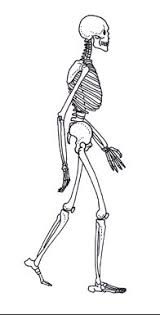
The ability to walk upright on two legs is called:
bipedalism
quadropedalism
bicyclepedalism
tripedalism
Humans breed dogs for certain traits. What is this practice called?
variation
adaptation
natural selection
artificial selection
Which of these descriptions is an example of an unused body structure?
a bat’s wing that enables it to fly
the tiny leg bones found in snakes that have no legs
the front legs of a dog that supports its weight as it walks and runs
the tentacles of an octopus that aid it in movement and catching prey
What is artificial selection?
Humans breed organisms for certain characteristics.
Individuals that are better adapted to their environment.
Inherited traits in a population change over generations.
Charles Darwin noted the differences among finches.
Which of the following best describes the tiny legs whales have?
structures that grow and improve in function as they are used
structures that function at certain times of the year
structures that will become adaptations when the environment changes
structures that have lost all or most of their function over time
What type of evidence was most likely used to reach the conclusion that species with similar DNA are closely related?
fossil evidence
structural evidence
genetic evidence
evidence from developmental patterns
Which of these answers correctly pairs a scientific discovery with the type of evidence for evolution that it represents
DNA comparison, embryological evidence
fossilized bones, genetic evidence
unused hind limbs, structural evidence
developmental patterns, fossil evidence
Which of these answers best describes the relationship between a human's forearm and a bat's wing?
similar physical structures with similar functions
different physical structures with similar functions
similar physical structures with different functions
different physical structures with different functions
The accumulation of heritable changes experienced by organisms and populations to adapt to variations in the environment and survive is known as:
None of the above.
Speciation.
Biodiversity.
Adaptation.
____ is when members of a species that are best suited for their environment survive and reproduce at a higher rate than other members of the species.
natural selection
artificial selection
speciation
adaptation
In a cold environment what would be some adaptive traits? Sellect all that apply.
thick blubber
thick fur
thin fur
strong muscles

The figure shows how natural selection of a single-trait gene affects lizard survival.
Which of the following most likely causes the changes in allele distribution?
The allele for light gray coloration disappears from the population. This may be because light gray lizards are more visible to predators and therefore they might be less likely to survive and reproduce.
The allele for black coloration decreases fitness and becomes less common. This may be because black coloration keeps the lizards cool during hot summer temperatures.
Medium gray coloration in lizards appears to be a neutral mutant allele that allows the lizards to hide better from predators. This leads to increases in phenotype and allele frequency of gray coloration.
Because black and medium gray lizards are less visible to predators, these alleles are neutral to natural selection and therefore will not disappear from the population of lizards.
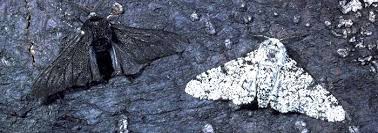
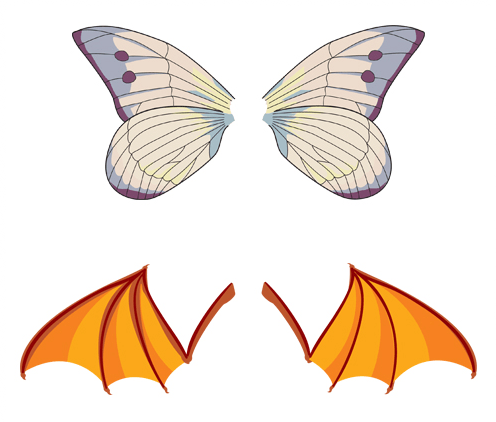
What is this an example of?
Homologous structure
Analogous structure
Vestigial organs
Functional adaption

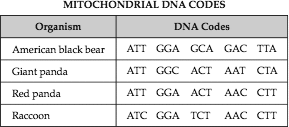
What conclusions can be made based on this table shown?
the American black bear and the giant panda are most closely related
the giant panda and the red panda are most closely related
the red panda and the racoon are the most closely related
the giant panda and the racoon are most closely related
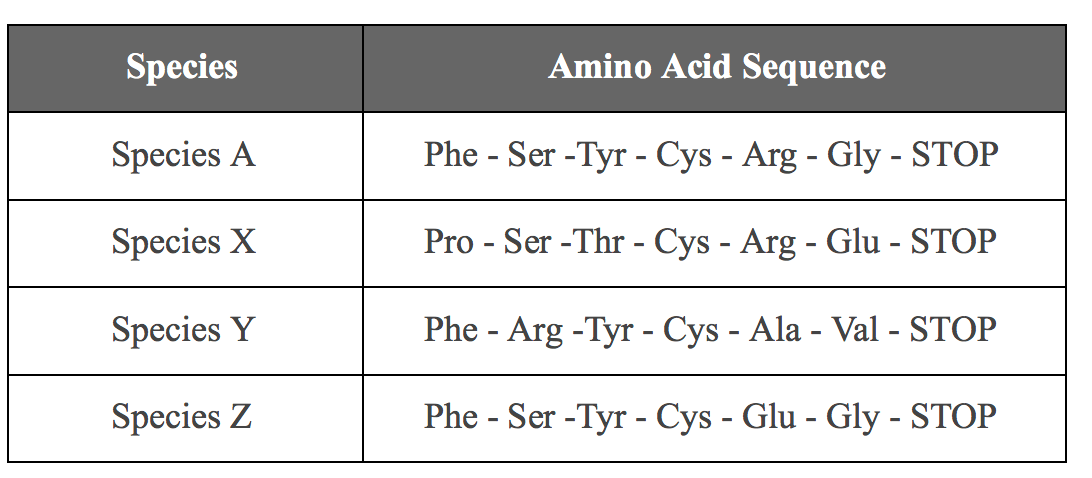
A scientist compares DNA taken from four different living species. Which of the following statements is true?
Species X evolved from Species Y.
Species A and Z share a recent common ancestor.
Species A and Species Y are the same.
Species Y and Species Z can interbreed.
When looking at two birds of the same species, you notice that one has darker feathers than the other one. You also notice that one has a beak that is just a little longer. These slight differences within members of the same species are called.....
Fossils
Extinction
Meiosis
Variations

Which term means that only the best suited organisms will survive and reproduce?
geographic isolation
extinction
natural selection
evolution
Structures are similar in function but not in anatomical structure
Vestigial
Homologous
Analogous Structures
Embryonic

Which process of evolution is demonstrated below?
Comparative anatomy
Homologous structures
Comparative embryology
Vestigial structures

What type of evidence of evolution is being demonstrated?
Fossil record
Vestigial structures
Homologous structures
Comparative DNA
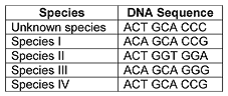
According to this data, the unknown species is most closely related to ...
Species I
Species II
Species III
Species IV
The human gene for muscle protein differs from the muscle protein in monkeys in 4 places. It differs from chickens in 25 places. According to this information, which organism is more closely related to humans?
Monkeys are more closely related because their proteins have fewer differences.
Chickens are closer to humans because there are more genes.
Monkeys are closer to humans because they both have the exact same genes.
Neither organism is related to humans.

The large ground finch obtains food by cracking seeds. Its short, strong beak is an example of
a vestigial structure
an analogous structure
an adaptation
a mutation

Charles Darwin traveled to the Galapagos Islands and studied a variety of species including tortoises, finches, and mockingbirds. Which type of evidence was he NOT able to use to form and support his theory?
DNA (Biochemistry) evidence
Comparative Anatomy
Biogeography (where organisms live)
Fossil evidence
A. comparative embryology
B. molecular biology
C. biogeography
D. fossil records

A. That invertebrate fossils are only found in sediments.
B. That modern forms of life may have evolved from earlier forms of life.
C. The fossils formed in layer B were formed before the fossils found in layer A.
D. The fossils found in layer A must be more complex than those found in layer B

A. Pigs evolved from reptiles.
B. Reptiles evolved from birds.
C. These organisms occupy the same niche.
D. These organisms share a common ancestor.
A. the idea that organisms change over time
B. the idea that organisms share common ancestors
C. the idea that organisms best adapted to their environment tend to survive and reproduce
D. the idea that organisms pass on acquired characteristics during their lifetime to offspring
A. Mountain skinks will migrate to milder climates.
B. Coastal skinks will give live birth more frequently.
C. Coastal skinks will no longer mate with mountain skinks.
D. Mountain skinks will outcompete coastal skinks to extinction.
A. Fossils can provide evidence about the behaviors of organisms.
B. Fossils can provide evidence about the creation of planet Earth.
C. Fossils can provide evidence about the types of organisms that lived in the past.
D. Fossils can provide evidence about ancient climates and environmental conditions.

A. Modern whales have larger bones in the hind legs.
B. Whales evolved before animals with two pairs of legs.
C. Ancient whales had larger brains than modern whales.
D. Whales evolved from animals that had two pairs of legs.

A. The table provides evidence that some species are more fit than others.
B. The table provides evidence that a single structure can develop diverse forms.
C. The table provides evidence that a species has become more diverse over time.
D. The table provides evidence that plant structures develop from similar embryos.
A. coevolution
B. biogeography
C. vestigial structures
D. analogous structures
A. The different species of giant tortoise were dispersed randomly on each island as a result of genetic drift.
B. The different species of giant tortoise were a product of Lamarkian evolution and developed adaptations as a result.
C. The different species of giant tortoise were descended from South American giant tortoises with developed adaptations.
D. The different species of giant tortoise were originally located on the mainland with specific physical traits for particular
habitats.
A. embryological similarities
B. newly discovered fossils
C. comparative anatomy
D. learned behaviors

A. Both organisms have the same diet.
B. Both organisms live in a marine environment.
C. Both organisms are able to breed with each other.
D. Both organisms evolved from a common ancestor.
Which of the following is the correct definition of natural selection?
The idea that organisms less equipped for their environment tend to survive longer
The idea that organisms more well equipped for their environment tend to survive longer
The idea that organisms more well equipped for their environment tend to not survive
None.
Which of the following represents genetic drift?


Which of the following represents migration?


Which of the following represents gene flow?


the movement of genes into or out of a population
Gene Flow
Random chance; small population
Genetic Drift
A sudden change in one or more characteristics due to a change in a gene
Mutation
Occurs due to physical difference as a result of a genetic difference
Non-Random Mating
The movement of organisms from one place to another
Migration

Which of the following best describes what the image represents?
Natural Selection
Artificial Selection
Mutation
Genetic Drift
Which of the following does not show genetic drift?


Which of the following is an example of artificial selection?
Gorillas are in the wild and have a baby gorilla.
A group of ants in an ant pile are exterminated by an exterminator.
A black speckled rabbit is a new favorite among children, a white and black rabbit are picked to make black and white baby bunnies.
Wolves in the wild have pups.

White tigers are becoming extinct, to overcome this a male and female white tiger are paired together in captivity to help their population continue to grow. This is an example of:
Natural Selection
Gene Flow
Artificial Selection
Genetic Drift

Blue catfish are going extinct. A dam in a lake full of blue catfish bursts due to poor engineering and kills some of the blue catfish. This is an example of:
Natural Selection
Gene Flow
Mutation
Genetic Drift

Green rhinocerous beetles are some of the biggest beetles to exist on Earth. A green rhinocerous beetle leaves its group and wonders over to another group that only has red rhinocerous beetles and mates with the red beetles. This is an example of:
Gene Flow
Genetic Drift
Mutation
Migration
Extinction
When ALL members of a species die
Homologous Structure
Traits similar in two different species
Vestigial structure
Leftover traits that no longer have a purpose
Whales and dolphins both descended from a dog-like creature. What would we call the dog-like creature?
Great-Grandparent species
Old Species
A common ancestor
A common descendant
In the phrase "survival of the fittest," the term "fittest" refers to:
The best-adapted organisms
The biggest organisms
The smartest organisms
The fastest organisms
When nature "selects" a variation, that means that the trait:
Gets passed along from generation to generation
Causes the population to shrink
Has brought about a new species
Helps prey escape predators
What word describes a trait that helps an organism survive in its environment?
natural selection
mutation
camouflage
adaptation
Mutations are a change in what?
DNA
tRNA
protein
rRNA
If a new trait DOES help an organism survive, what may happen to it?
It dies and its DNA is not passed on
It survives and its DNA is passed on
It changes its traits to adapt and survive
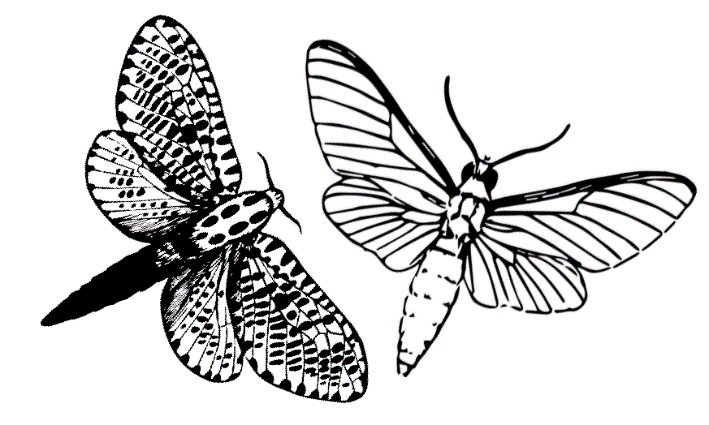
According to natural selection, light colored tree trunks would favor
light colored moths
dark colored moths
red colored moths
red and light colored moths
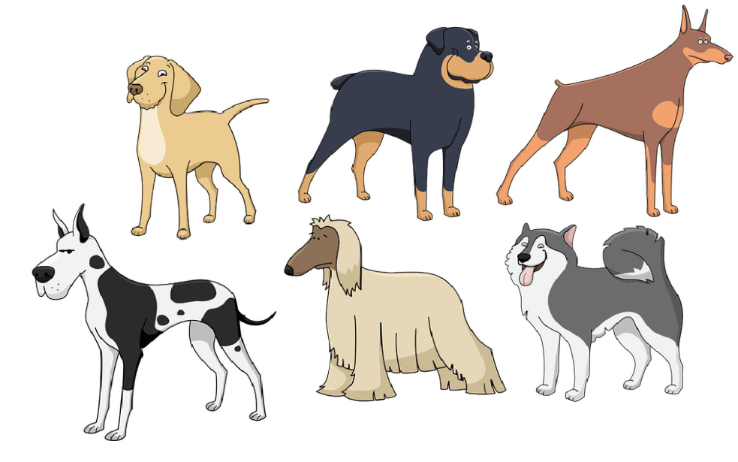
Genetic diversity in a species makes long term survival of some members
impossible
improvable
more likely
less likely
Natural Selection is driven by a change in the environment and survival of the
Earth
Fastest
Fittest
Biggest
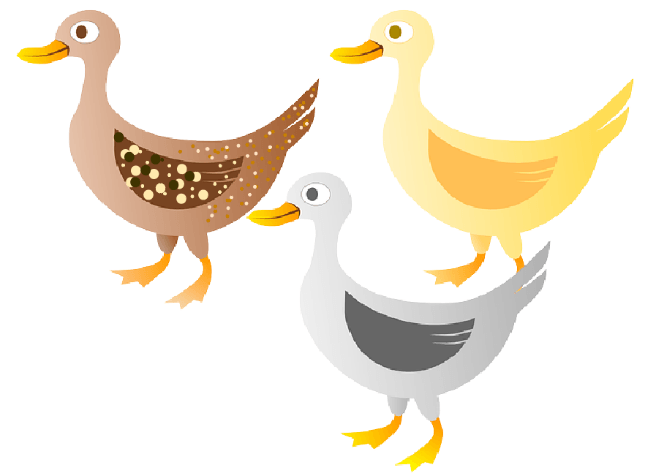
All the possible gene combinations in a population.
allele
gene pool
genome
mitosis
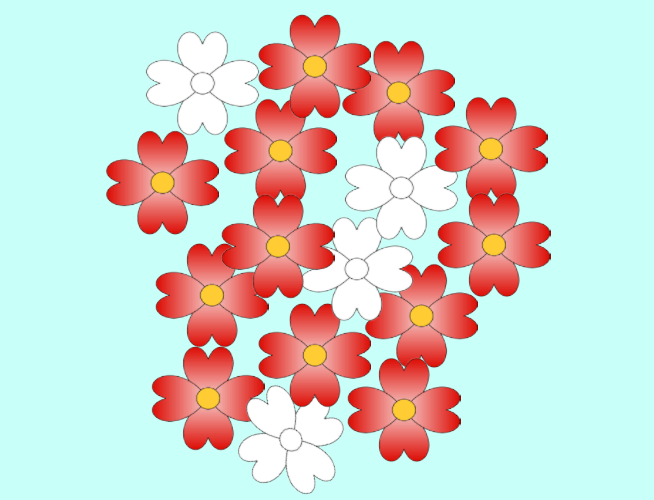
The frequency that single genes (alleles) for a trait appear in a population.
Genome
Gene frequency
Genetic Drift
Population Frequency
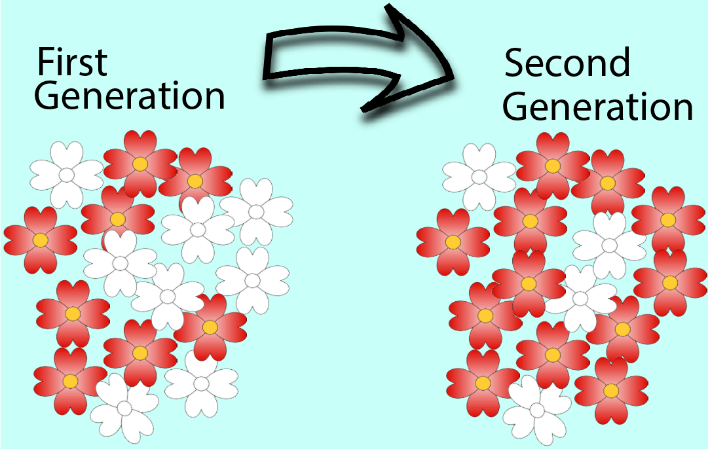
Changes in the gene pool over time.
Mitosis
Genetic Variation
Gene Pool
Genetic Drift
Organisms of the same species can no longer interbreed therefore creating two species.
Gene Pool
Genetic Drift
Gene Frequency
Speciation

Evolution toward different traits in related species.
This occurs when related species adapt to different environment.

Convergent evolution

Divergent evolution

Coevolution
Hominid evolution, or the evolution of bipedal primates has been characterized by various trends over the last 7 million years. Place the trends in their correct column.
Reorder the following hominid fossils from from most primitive (old) to modern (new)


Reorder the following hominid fossils from from most primitive (old) to modern (new)


Reorder the following hominid fossils from from most primitive (old) to modern (new)


Reorder the following trends in hominid evolution
bipedalism
increased in cranial capacity
ability to use language and tools
A human arm and a whale fin have similar bone structure but the whale fin is used for swimming and the arm is used for reaching and grabbing. What type of structures are these? (a) s?
A bat wing and a butterfly wing are both used for flying but they are made differently. What type of structure is this? (b)
When comparing the DNA of two different organisms, the more differences in the DNA base pairs the more (c) they are.
A (d) has apparent function and appear to be residual parts from a past ancestor. Examples include the human appendix, the pelvic bone of a snake, and the wings of flightless birds.
Similarities in homologous structures and embryonic development can be used to infer
Evolution is the process by which species changes over time. There are several ideas proposed to explain how such changes occur.
Evolution toward similar traits in unrelated species.
This occurs when unrelated species adapt to similar environment.
Convergent evolution
Evolution toward different traits in related species.
This occurs when related species adapt to different environment.
Divergent evolution
Evolution where two or more species change in close association with each other.
Coevolution
Analogous Structure
Same function but different structure (wings of a buttrfly and a bird)
Homologous Structure
Same structure different function (a whale fin and a human arm)
Comparative Embryology
Comparing embryological development of different species
Molecular biology
Comparing DNA and amino acid sequences of different species
Vestigial Structures
Structures remaining in the body of an organism that no longer have a function (whale hip)
Evolution is the process by which species changes over time. There are several ideas proposed to explain how such changes occur.
A shark is a fish, a dolphin is a mammal, they have a very distant common ancestor. However, they have evolved very similar body types to swim in the ocean.
Convergent evolution
All species of Galapagos finches descended from a recent common ancestor. As they colonized different islands, they developed different physical traits.
Divergent evolution
The shape of the of the flower and the beak of the Hawaiian honeycreeper fit precisely.
The bird can draw nectar more efficiently than the other bird species. During nectar feeding most honeycreepers provide pollination service.
Coevolution
what can be concluded about the jaw size and brain size of hominids as they evolve?
The jaw size decreased while the brain size increased
The jaw size increased while the brain size decreased
Both jaw size and brain size increased
Both jaw size and brain decreased
Species in the family that includes humans, but not great apes are called hominids. The first hominids appeared between 6 and 7 million years ago. Since then, several species of hominids have evolved. As the brain size of hominids increased, which of the following also occurred?
The teeth became larger
The browridges became smaller
The jaws became larger
The pelvis became narrower
Modern humans are classified as hominids. Several other hominid species evolved and died out in the past. Which of the following occurred last in hominid evolution?
The development to walk upright
an increased in the size of the brain
The development of spoken language
a decreased in size of teeth and jaw

What type of evidence is represented in the picture above:
Analogous structures
DNA
Vestigial structures
Homologous structures

According to this data, the unknown bacterial species is most closely related to:
Species I
Species II
Species III
Species IV
Humans belong to the hominid group, most of which are now extinct. One of the earliest hominids was Australopithecus afarensis. The bones of this species suggest that it walked upright on two legs (bipedalism) and had a brain about the size of a modern chimpanzee. What inference can be made from this observation?
Australopithecus afarensis had a large brain and made tools
Bipedalism evolved before hominid cranial capacity increased
The ability to make tools evolved along with bipedalism
Australopithecus afarensis was about as tall as later hominids
For many years, whole or fragmented hominid skulls have been excavated. Some of these skulls date from as early as 6 million years ago. By comparing these skulls with other archeological findings, scientists are able to determine when major accomplishments were successfully achieved. Which of the following statements correctly states the evolutionary progression of hominids?
Hominids first developed tools, then language. The brain increased in size.
Hominids first developed language, then tools for farming. The size of the brain increased.
Hominids first developed language, then tools. Brain size decreased.
Hominids first developed tools, then language. The brain got smaller.
Which of the following statements makes an accurate correlation between stages of hominid evolution?
The brain increased in size which resulted in hominids developing tools.
The brain decreased in size allowing for hominids to use tools.
As the brain decreased in size the skull increased in size.
Language developed as a result of increasing the size of the skull.

The illustrations below represent different stages of hominid skull evolution.
What is the correct order of the evolution of the skull beginning with the earliest example?
D,C,B,A
C,A,D,B
A,C,B,D
B,D,A,C
Many changes have occurred throughout hominid evolution. Modern humans have traits and abilities that were not apparent in their ancestors six million years ago. What is the correct progression of hominid development?
The size of the brain did not begin to change until after language evolved.
The brain grew larger as language began to develop.
The manufacture of tools did not occur until after language surfaced.
The jaw bone grew larger as the brain grew larger.

Scientists have found evidence that about 2.4 million years ago a gene regulating jaw muscles mutated and may have led to the more graceful human jaw we see today. The diagram below shows the skulls of 3 hominid species.
Which statement below most closely explains the link between jaw size and hominid evolution?
The jaws of hominids changed over time due to a change in brain size.
There appears to be no change in the jaws of hominids over time.
The jaws of hominids evolved to be larger and more protruding over time.
The jaws of hominids evolved to be smaller and less protruding over time.
What advantage did the development of bipedalism most likely confer to early hominids?
It allowed them to evolve a complex social structure
It allowed them to move and hold objects at the same time
It allowed them to evolve an opposable thumb
It allowed them to see with binocular vision

