wayground logo

Free Printable Worksheets

Font size

S
M
L
XL
Worksheets

Chem Review

Total questions: 126

Worksheet time: 2hrs 46mins

Name
Class
Date
1.

How many calcium atoms in NaCl?

a)

1

b)

2

c)

0

2.

How many atoms are in C3H6O?

a)

10

b)

9

c)

1

d)

18

3.

CHALLENGE QUESTION: How many atoms in (CH3)2CO?

a)

1

b)

10

c)

8

d)

None of the above

4.

How many atoms of carbon are in 2C2H6?

a)

1

b)

2

c)

4

d)

6

e)

12

5.

How many atoms of carbon are in 3C3H8?

a)

3

b)

8

c)

9

d)

14

e)

24

6.

How many molecules: 3C3H8?

a)

3

b)

9

c)

24

d)

11

e)

33

7.

How many total atoms: 3C3H8?

a)

3

b)

9

c)

24

d)

11

e)

33

8.
Which of the following is NOT a characteristic of most metals?
a)
Brittle
b)
Good conductor
c)
Ductile
d)
Malleable
9.
One metal that is liquid at room temperature is 
a)
Magnesium
b)
Manganese
c)
Mercury
d)
Sodium
10.

The family/group on the periodic table that contains the most reactive metals is the_______

a)

Alkaline Earth Metals (2nd column)

b)

Metalloids (staircase)

c)

Alkali Metals (1st column)

d)

Noble Gases (last column)

11.
Shiny
a)
Metal
b)
Nonmetal
12.
Good conductor of heat
a)
Metal
b)
Nonmetal
13.
Metals...
a)
all have similar physical properties
b)
some have similar physical properties
c)
don't similar physica properties
d)
very few have similar physical properties
14.

Able to be drawn into wire is

a)

malleable

b)

insulator

c)

luster

d)

ductile

15.

Able to be beaten or hammered into shapes

a)

luster

b)

malleable

c)

brittle

d)

insulator

16.
Each column in the periodic table is called a 
a)
period
b)
group
c)
cluster
d)
unit
17.
The atomic number tells you what?
a)
number of electrons
b)
number of protons
c)
number of neutrons
d)
both electrons and protons in an atom.
18.
Which group of the periodic table is composed of inert (not reactive)  gases?
a)
alkali metals
b)
alkaline earth metals
c)
halogens
d)
noble gases
19.
Elements which are shiny, conduct electricity and heat are called
a)
metal
b)
nonmetal
c)
metalloid
d)
nonexistent
20.
The atoms along the staircase are called 
a)
metals
b)
nonmetals
c)
metalloids
d)
noble gases
21.
How many neutrons are in a Gold atom?
a)
79
b)
196
c)
118
d)
275
22.
Particles in an atom that are neutral and have no charge are 
a)
negatrons 
b)
electrons 
c)
neutrons 
d)
protons 
23.
The electrons of an atom are found...
a)
in the outer "cloud" surrounding the atom.
b)
in the nucleus of the atom.
c)
in the cloud and in the nucleus.
24.
The positive particles of an atom are 
a)
electrons 
b)
positrons 
c)
neutrons 
d)
protons 
25.
What does the 1.00794 stand for?
a)
Hydrogen
b)
atomic number
c)
atomic mass
d)
atomic explosion
26.
The subatomic particle with a negative charge is the
a)
electron
b)
proton
c)
neutron
d)
nucleus 
27.
What is the atomic mass equal to?
a)
the number of protons
b)
the number of protons and neutrons
c)
the number of neutrons
d)
the number of protons and electrons
28.
In the modern periodic table elements are arranged by:
a)
atomic mass
b)
atomic number
c)
valence electrons
d)
number of isotopes
29.
Two elements chemically bonded form
a)
element
b)
compound
c)
mixture
d)
solutions
30.
What element is will have the most similar physical and chemical properties to the element Sulfur (S)?
a)
Carbon (C)
b)
Phosphorous (P)
c)
Oxygen (O)
d)
Neon (Ne
31.
What element is will have the most similar physical and chemical properties to the element Lithium (Li)?
a)
Sodium (Na)
b)
Magnesium (Mg)
c)
Beryllium (Be)
d)
Calcium (Ca)
32.
What element is will have the most similar physical and chemical properties to the element Bromine (Br)?
a)
Fluorine (F)
b)
Carbon (C)
c)
Krypton (Kr)
d)
Selenium (Se)
33.
What element is will have the most similar physical and chemical properties to the element Nitrogen (N)?
a)
Phosphorous (P)
b)
Carbon (C)
c)
Oxygen (O)
d)
Sulfur (S)
34.
Periods on the periodic table are __________.
a)
Horizontal Rows
b)
Vertical Columns
35.
Groups on the periodic table are __________.
a)
Horizontal Rows
b)
Vertical Columns
36.

How do you calculate the number of neutrons? *

a)

Mass = Atomic number - Neutrons

b)

Mass - Atomic number = Neutrons

c)

Atomic number = Neutrons

37.

What is the name of the element? (Periodic table will be needed)

a)

sodium

b)

magnesium

c)

vanadium

38.

How many protons and electrons does nickel have?

a)

28

b)

58.69

39.

what is the biggest group on the table

a)

metals

b)

nonmetals

c)

metaloids

d)

halogens

40.

where are the metaloids found

a)

far left, vertical

b)

stair step/diagonal

c)

far right horizontal

d)

at the bottom

41.

what is the small group of elements called that include C,N,O

a)

metals

b)

nonmetals

c)

metaloids

d)

noble gases

42.

symbols must have at least

a)

1 cap. letter

b)

2 cap. letters

c)

2 lower case letters

d)

any letter you want

43.
__________ would have some characteristics of metals and some characteristics of nonmetals.
a)
Gold
b)
Sodium
c)
Arsenic
d)
Bismuth
44.

the positively charged subatomic particle contained in the nucleus of an atom

a)

proton

b)

neutron

c)

electron

d)

matter

45.

a subatomic particle, contained in the nucleus of an atom, having the same mass as a proton but no electrical charge

a)

proton

b)

neutron

c)

electron

d)

matter

46.

one or two letters that represent the name of an element

a)

element name

b)

element symbol

c)

atomic number

d)

atomic mass

47.

a unique number for each element that equals the number of protons in an atom of that element

a)

element name

b)

element symbol

c)

atomic number

d)

atomic mass

48.

one of several forms of a single element, which contains the same number of protons, but different numbers of neutrons

a)

isotope

b)

ion

c)

orbital

d)

nucleus

49.

an atom or group of atoms that has gained or lost one or more electrons and is now either positively or negatively charged

a)

isotope

b)

ion

c)

orbital

d)

nucleus

50.
GOLD
a)
Al
b)
Ag
c)
Ar
d)
Au
51.
CHLORINE
a)
C
b)
Ca
c)
Cl
d)
Cu
52.
CALCIUM
a)
C
b)
Ca
c)
Cu
d)
Cl
53.
CARBON
a)
C
b)
Ca
c)
Cl
d)
Cu
54.
COPPER
a)
C
b)
Ca
c)
Cu
d)
Cl
55.
How many different elements are in this chemical formula: C2H2ClK3
a)
6
b)
8
c)
2
d)
4
56.
Which of the following atomic symbols for bromine is written correctly?
a)
bR
b)
BR
c)
Br
d)
br
57.
Which of the following chemical formulas represents a compound? 
a)
C3
b)
O2
c)
CH3CHO
d)
H2
58.
What is the symbol for Potassium?
a)
P
b)
K
c)
Pb
d)
Pd
59.
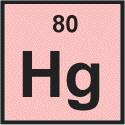
What is the name of this element?
a)
Helium
b)
Rubidium
c)
Hydrogen
d)
Mercury
60.
Which one of these is not a noble gas?
a)
Helium
b)
Radon
c)
Iodine
d)
Krypton
61.
What is the atomic number of Rubidium?
a)
37
b)
44
c)
45
d)
86
62.
What is the atomic number of Oxygen?
a)
6
b)
7
c)
8
d)
9
63.
Silicon is a 
a)
Metal
b)
Nonmetal
c)
Metalloid
d)
Halogen
64.
What element is this?
a)
Silver
b)
Silicon
c)
Sulfur
d)
Selenium
65.

The diagram shows you a Helium symbol in periodic table. What is electron number of Helium?

a)

6

b)

4

c)

2

66.

The fluorine atom has an atomic number (proton number) of

a)

19

b)

9

c)

10

67.

How many neutrons are there in one atom of magnesium?

a)

12

b)

6

c)

24

68.

ALL atoms of the same element have:

a)

same number of proton

b)

same number of nucleon

c)

different number of neutron

d)

different number of electron

69.

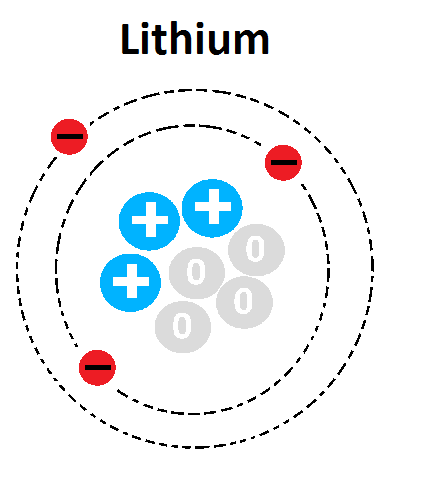
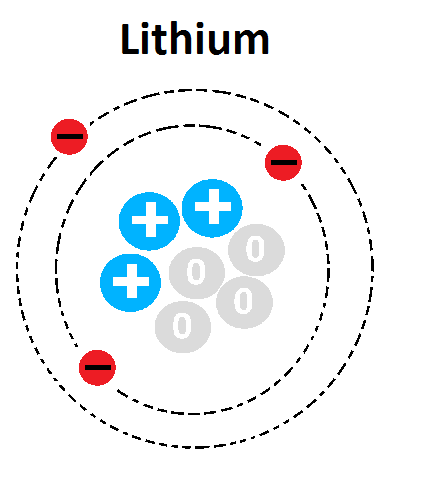
What is the number of protons in an atom in this diagram?

a)

10

b)

7

c)

3

d)

4

70.
What is the atomic number of this atom?
a)
1
b)
3
c)
4
d)
7
71.

What is the mass number of this atom?

a)

1

b)

3

c)

4

d)

7

72.

X atom has 10 proton and 11 neutron. How many electron does it have?

a)

10

b)

11

c)

12

d)

13

73.

Which part of the atom stores the protons and neutrons

a)

proton cloud

b)

neutron cloud

c)

electron coud

d)

The nucleus

74.

Atoms that have a different amount of electrons than protons

a)

covalent bonds

b)

isotopes

c)

ionic bonds

d)

ions

75.

Atoms with the same number of protons but different number of neutrons.

a)

covalent bonds

b)

isotopes

c)

ionic bonds

d)

ions

76.

What charge does the nucleus have?

a)

Negative

b)

Postitive

c)

Neutral

d)

Visa/Amex

77.

Which subatomic particles are the smallest?

a)

Neutrons

b)

Protons

c)

Electrons

d)

Atoms

78.

Which subatomic particles have the least mass?

a)

Neutrons

b)

Protons

c)

Electrons

d)

Atoms

79.

:What is letter “A.”pointing to?

a)

Proton

b)

Neutron

c)

Electron

d)

Atom

80.

What is letter “B” pointing to?

a)

Neutron

b)

Proton

c)

Electron

d)

Atom

81.

What is letter “C”. pointing to?

a)

Neutron

b)

Proton

c)

Electron

d)

Atom

82.

How many protons does krypton have?

a)

84

b)

36

c)

48

d)

8

83.

How many electrons does oxygen have?

a)

8

b)

16

c)

2

d)

15

84.

How many neutrons does lithium have?

a)

3

b)

4

c)

6

d)

7

85.

How many neutrons does beryllium have?

a)

4

b)

5

c)

9

d)

13

86.

The number of protons in an atom ALWAYS equals the

a)

atomic number

b)

mass number

c)

mass number minus atomic number

d)

number of electrons

87.

What is the atomic number of Cu?

a)

25

b)

26

c)

27

d)

29

88.

Atomic number 26 is

a)

Fe

b)

Cr

c)

Si

d)

Cl

89.

Atomic number 28 is

a)

chromium

b)

iron

c)

nickel

d)

phosphorus

90.

An element has the mass number 12 and atomic number 6. The number of neutrons in it is:

a)

6

b)

10

c)

4

d)

8

91.

Atoms of the same element which have a different number of neutrons are called _________________.

a)

ions

b)

isotopes

c)

quarks

d)

molecules

92.

If an atom has 10 electrons, how many protons does it have?

a)

0

b)

1

c)

10

d)

5

93.

How many electrons are in an atom with an atomic number of 50?

a)

5

b)

8

c)

50

d)

2

94.
Isotopes are atoms of the same element that have the same number of __________ but different number of __________ . Therefore, isotopes of the same element have different masses. 
a)
protons, neutrons
b)
protons, electrons
c)
neutrons, protons
d)
electrons, protons
95.

What is the mass number and atomic number ?

a)

Mass number = 7, atomic number = 14

b)

Mass number = 14, atomic number = 7

96.

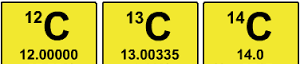
What do these isotopes of carbon all have in common? (ignore the top number! only look at the fact that it's Carbon and the bottom number)

a)
neutrons & mass number
b)
atomic number and neutrons
c)
atomic number and electrons
d)
protons, atomic number, and mass number
97.

Which letter represents the element's name?

a)

a

b)

b

c)

c

d)

d

98.

Which letter represents the element's atomic number?

a)

a

b)

b

c)

c

d)

d

99.

Which letter represents the element's atomic mass?

a)

a

b)

b

c)

c

d)

d

100.

Which letter represents the element's symbol?

a)

a

b)

b

c)

c

d)

d

101.

Which subatomic particle determines an atom's identity?

a)

Proton

b)

Neutron

c)

Electron

d)

Nucleus

102.

What is illustrated in this photo?

a)

Metals

b)

Nonmetals

c)

Metalloids

d)

Noble Gasses

103.

Elements that are normally in a gas form, that are dull, brittle, and poor conductors

a)

Metals

b)

Nonmetals

c)

Metalloids

d)

Solids

104.

The elements located to the left of the stair-step

a)

Metals

b)

Nonmetals

c)

Metalloids

d)

Gases

105.

Usually solid elements that are good conductors, malleable, ductile, and shiny

a)

Metals

b)

Nonmetals

c)

Metalloids

d)

Semimetals

106.

The elements located along the stair-step

a)

Metals

b)

Nonmetals

c)

Metalloids

107.

Elements that can be lustrous or dull, malleable or brittle, and conductivity varies

a)

Metals

b)

Nonmetals

c)

Metalloids

d)

Noble gases

108.

The majority of the periodic table is made up of

a)

Metals

b)

Nonmetals

c)

Metalloids

d)

Noble gases

109.
Silicon is a semiconductor and has properties of both metals and nonmetals. What type of element is Silicon? 
a)
Metal
b)
Nonmetal
c)
Metalloid
d)
Pretty
110.
Iron is a good conductor, malleable and magnetic. What type of element is Iron? 
a)
Metal
b)
Nonmetal
c)
Metalloid
d)
Pretty
111.

Which element is a metalloid?

a)

H

b)

Re

c)

Ne

d)

B

112.

How many valence electrons do the elements in the Noble Gases group have?

a)

18

b)

7

c)

17

d)

8

113.

Valence electrons are the

a)

outer most electrons in an atom

b)

total electrons in an atom

114.

The _____ the element is in determines the number of valence electrons it has.

a)

period

b)

group

115.

How many valence electrons does Hydrogen have?

a)

4

b)

1

c)

8

d)

2

116.
How many valence electrons are found in atoms of Calcium?
a)
4
b)
5
c)
2
d)
3
117.
How many valence electrons are found in atoms of Iodine?
a)
4
b)
7
c)
9
d)
1
118.
How many valence electrons are found in atoms of aluminum?
a)
6
b)
3
c)
13
d)
16
119.
a)
12
b)
7
c)
8
d)
14
120.
a)
7
b)
8
c)
9
d)
10
121.

Which element is this?

a)

Nickel

b)

Neon

c)

Sodium

d)

Nitrogen

122.

Name this element.

a)

Argon

b)

Chlorine

c)

Aluminum

d)

Boron

123.

Name this element.

a)

Neon

b)

Magnesium

c)

Sodium

d)

Manganese

124.

What is the atomic number of this atom?

a)

2

b)

4

c)

6

d)

8

125.

What is this element?

a)

Beryllium (atomic #4)

b)

Boron (atomic #5)

c)

Carbon (atomic #6)

d)

Nitrogen (atomic #7)

126.
What's a valence electron?
a)
electrons in the second energy level
b)
electrons in the outermost energy level
c)
the atomic number
d)
electrons in the first level