wayground logo

Free Printable Worksheets

Font size

S
M
L
XL
Worksheets

Ecology Ohio Eoc

Total questions: 122

Worksheet time: 1hrs 21mins

Name
Class
Date
1.
What do we call the non-living part of the environment?
a)
Biotic
b)
Population
c)
Abiotic
d)
Antibiotic
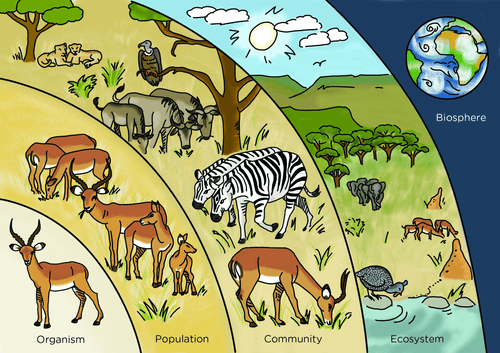
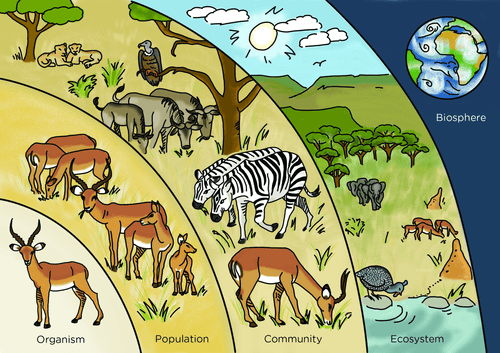
2.
What do we call several different populations interacting in some way?
a)
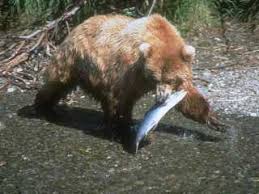
Population
b)
Community
c)
Ecosystem
d)
Biome
3.
The study of how living things interact with their environment and abiotic factors is the study of ____________________.
a)
Astrology
b)
Microbiology
c)
Ecology
d)
Geology
4.
How can abiotic factors change in an ecosystem?
a)
Flooding
b)
Forest fires
c)
drought
d)
All of the above
5.
Where do plants get their energy?
a)
Powerade
b)
5 hour energy drinks
c)
candy
d)
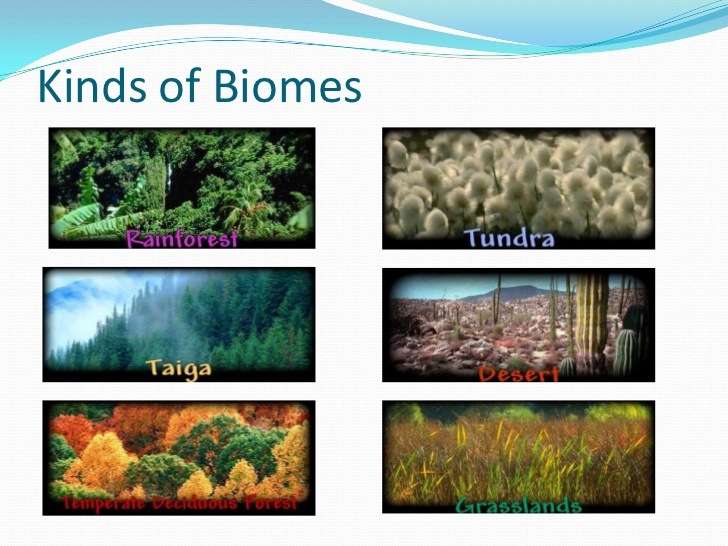
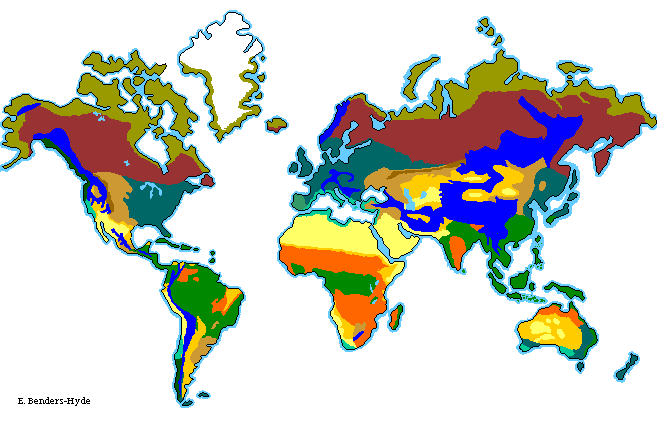
sun
6.
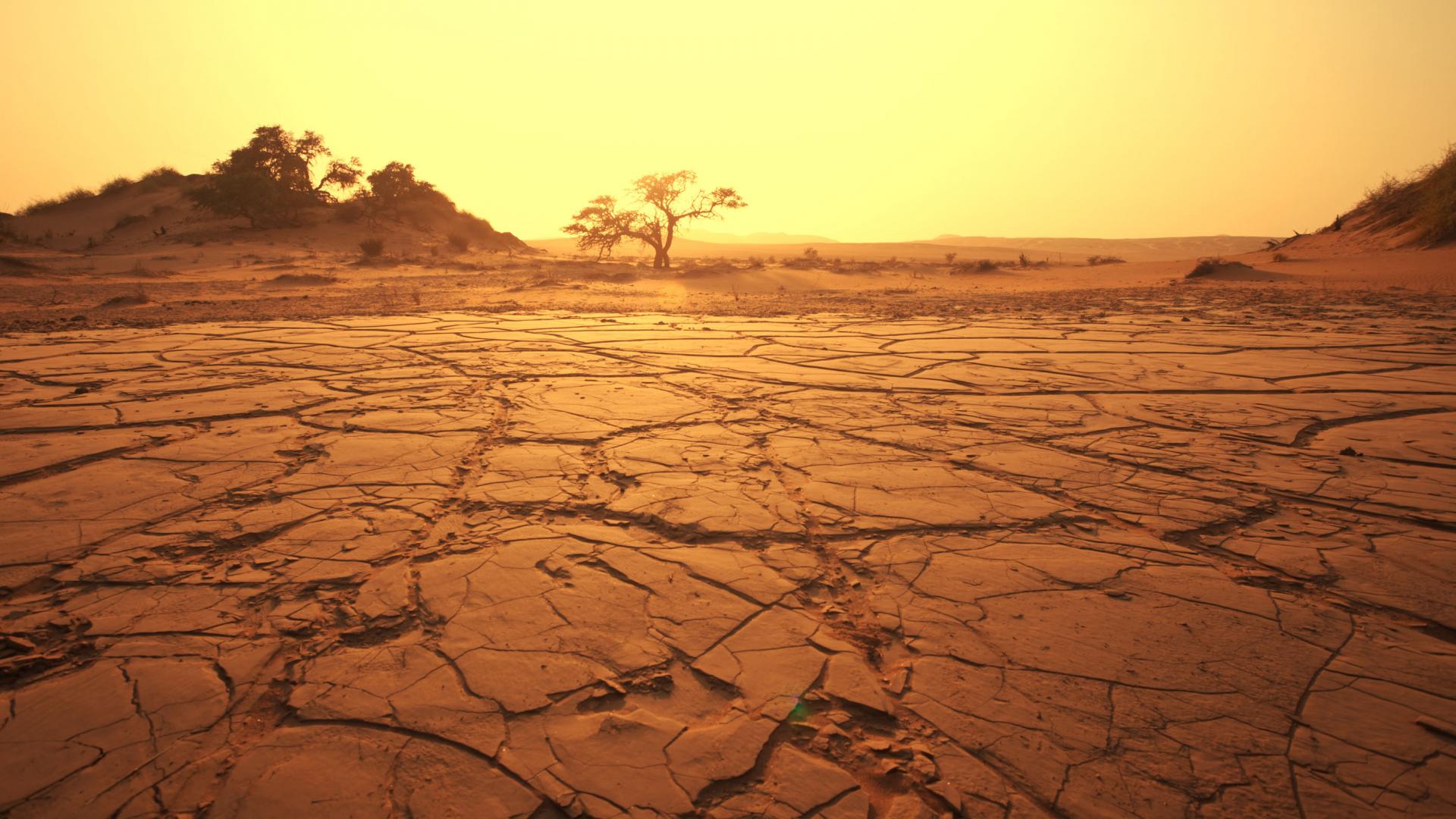
If one species in an ecosystem is destroyed, what would happen to the other species?
a)
benefit
b)
die
c)
thrown out of balance
d)
are unaffected
7.

What is the lowest level of ecological organization?

a)

Biosphere

b)

ecosystem

c)

community

d)

organism

8.
What is the level of organization where the community is interacting with abiotic factors?
a)
community
b)
ecosystem
c)
population
d)
biome
9.
Abiotic factors in the environment are all __________. 
a)
living
b)
nonliving
10.
Lions, birds, snakes and trees are all __________.
a)
abiotic factors
b)
biotic factors
c)
part of a niche
d)
in the same food chain
11.
Algae, grasses and trees are all __________. 
a)
decomposers
b)
consumers
c)
autotrophs/producers
d)
pyramids
12.
The portion of Earth that supports life is the __________
a)
individual
b)
community
c)
biosphere
d)
environment
13.
Which level has the least amount of energy?
a)
producer
b)
decomposer
c)
primary consumer
d)
secondary consumer
14.
The ecosystem is comprised of both ____ and _____factors.
a)
rain and shine
b)
biotic and abiotic
c)
earth and environment
15.
What is the source of energy that flows through most of the food chains on Earth?
a)
plants
b)
the sun
c)
temperature
d)
wind
16.

Ecology is the study of .

a)

life

b)

Interactions among organisms and their environments

c)

interactions among organisms

d)

how traits are passed from parents to offspring

17.

Which of the following is abiotic?

a)

A tree in a forest.

b)

Wood from the tree on the forest floor.

c)

A termite on the tree.

d)

The soil the tree is growing in.

18.

Which of the following is biotic?

a)

Food

b)

Water

c)

Air

d)

Light

19.

What is made up of all the populations in an area?

a)

Habitat

b)

Niche

c)

Community

d)

Ecosystem

20.

Some limiting factors that affect populations include lack of food, lack of water, lack of living space, and the spread of disease.

a)

True

b)

False

21.

Tell if the item is an abiotic factor or biotic.....

TREE

a)

Abiotic

b)

Biotic

22.

Tell if the item is an abiotic factor or biotic.....

Water

a)

Abiotic

b)

Biotic

23.

An organism’s habitat is where it lives.

a)

True

b)

False

24.

The living world is organized in levels. Biotic and abiotic factors also can be arranged into levels of biological organization. Put the words below in order from the least complex to the most complex

a)

Community, Organism, Biome, Population, Biosphere, Ecosystem

b)

Organism, Population, Community, Ecosystem, Biome, Biosphere

c)

Organism, Biome, Population, Community Biosphere, Ecosystem

25.

In the country of Georgeville there is an average of 4.5 births for every 3.3 deaths. That means the population of Georgeville is most likely

a)

Increasing

b)

Decreasing

c)

Staying the same

26.

If there are not enough predators and too many prey, the prey population may eventually starve.

a)

True

b)

False

27.

Which of the following is a predator/prey relationship?

a)

Owls eating mice

b)

Bunnies eating shrubs

c)

Bears eating berries

d)

Worms eating decaying matter

28.

What is the ultimate source of energy in an ecosystem?

a)

The sun

b)

Producers

c)

Glucose

d)

Decomposers

29.

Which of the following is a heterotroph?

a)

Mushroom

b)

Wheat grass

c)

Phytoplankton

d)

Spider

30.

What belongs at the bottom of an energy pyramid?

a)

Producer

b)

Predator

c)

Consumer

d)

Decomposer

31.

__________ is an organism that can make it's own food.

a)

Heterotroph

b)

Consumer

c)

Autotroph

d)

Decomposer

32.

What is the formula for photosynthesis?

a)

Oxygen + Water = Carbon Dioxide + Glucose

b)

Water + Light = Carbon Dioxide + Glucose + Oxygen

c)

Carbon Dioxide + Water + Light = Glucose + Oxygen

d)

Carbon Dioxide + Light + Glucose = Water + Oxygen

33.

What type of factors represent the living organisms in an environment?

a)

Abiotic

b)

Biotic

c)

Viruses

d)

Natural Disasters

34.

What type of factors represent the nonliving aspects of an environment?

a)

Abiotic

b)

Biotic

c)

Bacteria

d)

Protists

35.

Which of the following determines the carrying capacity of an ecosystem?

a)

the most limited resources required for survival

b)

the amount of disease affecting organisms in the ecosystem

c)

the amount of rainfall the habitat receives

d)

the number of predators in the area

36.

Which of the following determines an environment's carrying capacity?

a)

The most necessary resource that runs out first

b)

The average rainfall of an ecosystem

c)

The daily temperature of an ecosystem

d)

The carnivores preying on the population

37.

Which of the following represent abiotic factors that affect an environment?

a)

Fish, mangroves, and bacteria

b)

Alligators, ferns, and cattails

c)

Precipitation, wind, and soil type

d)

Sunlight, mushrooms, and protists

38.
Limiting factors are sometimes helpful because they can keep the population from getting too large.
a)
True
b)
False
39.
A snake is eaten by a hawk. The hawk is the _______.
a)
prey
b)
parasite
c)
predator
d)
all of these
40.
Food, water, sunlight, shelter, and space are resources that are  __________.
a)
limiting factors
b)
wet
c)
messy
d)
found in rocks
41.
If the population of a certain predator increases, there is often _______ its prey
a)
a decrease the population of
b)
an increase of the population of 
c)
great news for its prey of
d)
no  impact found on
42.
If there is more food than usual in an ecosystem, then...
a)
Populations will stay the same
b)
Populations will decrease
c)
Populations will increase
43.
Any thing or organism that regulates the size of a population of another organism is known as __________.
a)
a limiting measure
b)
a limiting factor
c)
factorization
d)
materialization of precipitation
44.
If a disease destroying barley plants in a field swept through an ecosystem, what would happen to the barley eating bird population in the the field ?
a)
The bird population would stay the same
b)
The bird population would infinitely increase
c)
The bird population would decrease
45.
Releasing a pet rabbit into the wild will cause no harm on the environment. True or false?
a)
True
b)
False
46.
All members of one species in a certain area.
a)
Population
b)
Limiting Factors
c)
Immigration
d)
Birth Rate
47.
If the birth rate is _________ than the death rate then the population will ____________.
a)
Greater/Increase
b)
Greater/Decrease
48.
The largest number of organisms that the environment can support. 
a)
Carrying Capacity
b)
Limiting Factor
49.

In the graph to the right, what is the population of deer at the carrying capacity of the environment?

a)

3

b)

7

c)

70

d)

40

50.

In a forest ecosystem, which of the following is NOT an example of a limiting factor that would greatly affect a rabbit population?

a)

a rainy season

b)

a disease that causes rabbits to die

c)

grass available to eat

d)

the population of hawks that eat rabbits

51.

When a population grows past the ecosystem's carrying capacity, what happens to the population?

a)

It continues to grow higher and higher.

b)

The population starts to die off and returns to the carrying capacity.

c)

The population will go extinct due to lack of resources.

52.

The graph to the right shows the interaction of the wolf and moose populations on Isle Pekie. If the moose population continues to increase, the wolves' food supply will increase. What will most likely happen to the wolf population as a result?

a)

It will decrease.

b)

It will increase.

c)

It will remain the same.

53.

The picture to the right represents a sunny, dry desert.

Which factor most likely limits the desert’s carrying

capacity for plant life?

a)

the number of animals that eat plants

b)

the amount of sunlight

c)

the availability of space to grow

d)

the availability of water

54.

The reason that organisms cannot produce populations of unlimited size is that

a)

Populations always stay exactly the same.

b)

The resources of Earth are limited.

c)

There is no carrying capacity for the whole Earth.

d)

Species rarely compete with each other for food.

55.

Which factor that limits a population’s size is important especially when population numbers become large and dense?

a)

seasonal changes

b)

extreme weather

c)

competition for food

d)

sea level height

56.

In a large Maine forest with many animals and lots of space, there are only a small number of bears. Which of these most likely limits the population of bears in the forest?

a)

cloud cover in the atmosphere

b)

space

c)

supply of food

d)

types of trees in the area

57.

A population of salamanders that live in a river require clear, fresh water to survive. New housing developments have caused tons of sediment to muddy the river. Which

of these most likely will happen to the salamander population?

a)

The salamanders go live on land.

b)

The salamanders will move across land to another river.

c)

The salamanders will quickly adapt to living in the muddy water.

d)

The salamanders will decrease in number because of the water quality.

58.

A scientist was studying a population of fish in a pond over a period of 10 years. He observed that

the population increased each year for 3 years, and then remained nearly constant for the rest of

the study. The best explanation for this observation is that the population had

a)

stopped reproducing

b)

reached carrying capacity

c)

mutated into a different species

d)

run out of food and all died

59.

One species of Galapagos finches, the cactus finch, eats insects off cactus plants. A disease kills off most of the cacti in the Galapagos Islands.


Which of these most likely would happen to the carrying capacity of the island?

a)

It would increase a small amount since the insect population would decrease.

b)

It would remain about the same since the finches would change to a different diet.

c)

It would decrease a lot because there is less to eat.

60.

Mice produce a large number of offspring all year long, yet the number of mice within a given population changes very little from year to year. The stability of the population size is most likely the result of

a)

mice continuing to reproduce when its population is large

b)

the survival of more female mice than male mice

c)

the development of mutations in young mice

d)

limiting factors that keep the population in check

61.

Ten breeding pairs of mink are introduced onto an island with no natural predators and a good supply of water and food. What will most likely happen to the mink population?

a)

It will remain relatively constant due to equal birth and death rates.

b)

It will die out.

c)

It will increase until it exceeds carrying capacity.

d)

It will decrease and then increase forever.

62.

A sample of bacteria was added to a culture dish containing a limited food supply. (Culture dishes are designed to help bacteria grow.) The dish was kept in an incubator for two weeks, where temperature that bacteria prefer to live in was kept constant. The graph to the right shows changes that occurred in the bacterial population over the two weeks.


Which statement provides the best explanation for the population increase then decrease?

a)

The bacteria were unable to reproduce until day 8.

b)

The bacteria ate all of the available food.

c)

The bacteria could not grow at all in the provided temperatures.

d)

The bacteria could not grow at all with the provided food type.
63.
A large ecosystem is called a ______
a)
Ecosystem
b)
Habitat
c)
Biome
d)
Niche
64.
What is the main factor that separates the biomes?
a)
Land
b)
Water
c)
Climate
d)
Longitude
65.
Which biome is the driest?
a)
Desert
b)
Tundra
c)
Taiga
d)
Rainforest
66.
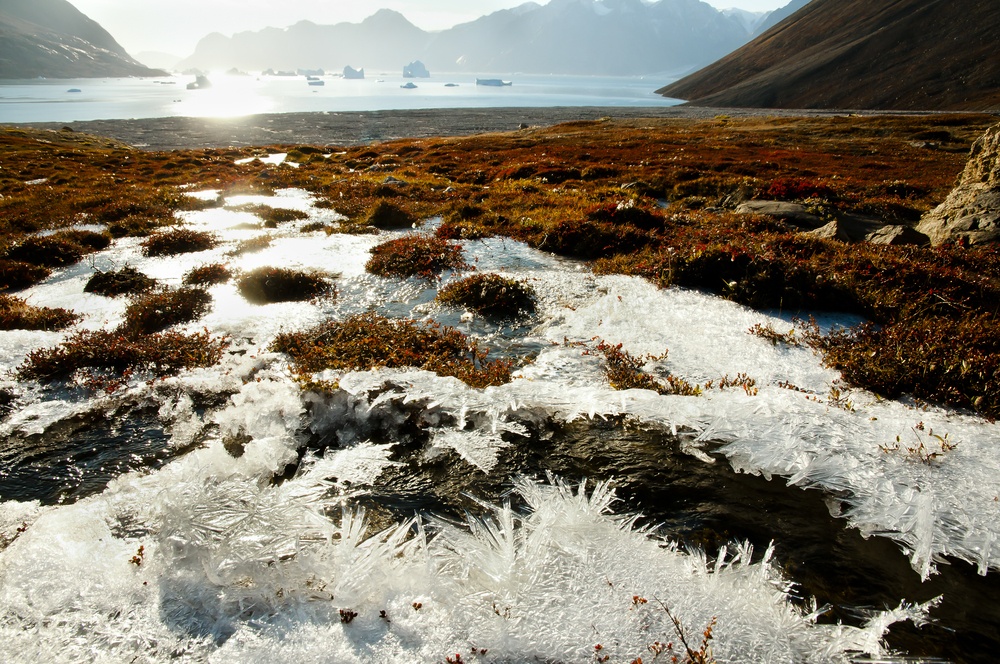
Which Biome has permafrost?
a)
Temperate Forest
b)
Rainforest
c)
Taiga
d)
Tundra
67.
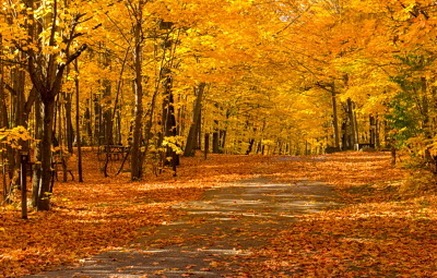
Which biome has deciduous trees (which lose their leaves)?
a)
Temperate Forest
b)
Rainforest
c)
Grasslands
d)
Taiga
68.
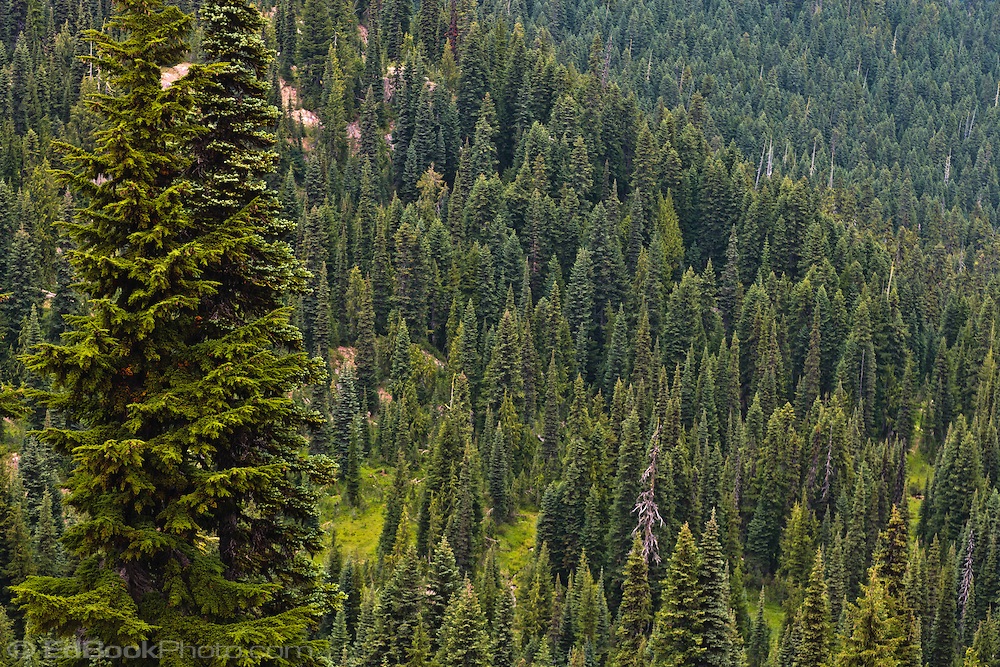
Which biome has coniferous trees (which don't lose their leaves)?
a)
Taiga
b)
Temperate Forest
c)
Tundra
d)
Grasslands
69.
Which biome has wide-open fields of grass?
a)
Taiga
b)
Grasslands
c)
Temperate Forest
d)
Rainforest
70.
Which biome has the most variety of plants and animals?
a)
Temperate Forest
b)
Rainforest
c)
Tundra
d)
Grasslands
71.
Which biome has 4 seasons?
a)
Taiga
b)
Tundra
c)
Grasslands
d)
Temperate Forest
72.
In which 2 biomes can only plants/animals with adaptations survive?
a)
Taiga/Temperate Forest
b)
Grasslands/Desert
c)
Tundra/Desert
d)
Rainforest/Tundra
73.
Which biome is home to lions, zebras, wildebeests, giraffes, and elephants?
a)
Grasslands
b)
Tundra
c)
Rainforest
d)
Temperate Forest
74.
Which biome is home to cacti, scorpions, coyotes, kangaroo rats, and lizards?
a)
Desert
b)
Grasslands
c)
Temperate Forest
d)
Taiga
75.

Which biome is Ohio in?

a)

Grasslands

b)

Taiga

c)

Rainforest

d)

Temperate Forest

76.
Which biome is Canada in?
a)
Tundra
b)
Taiga
c)
Temperate Forest
d)
Desert
77.
Which biome is home to jaguars, anacondas, leopards, gorillas, and poisonous tree frogs?
a)
Grasslands
b)
Temperate Forest
c)
Rainforest
d)
Tundra
78.
Which biome could an animal who hibernates in the winter to survive the cold live in?
a)
Grasslands
b)
Taiga
c)
Desert
d)
Rainforest
79.
In which biome does an organism have to be able to conserve water to survive?
a)
Rainforest
b)
Taiga
c)
Desert
d)
Temperate Forest
80.

Which biome has the least amount of biodiversity? (the least different kinds of organisms)

a)

tropical rain forest

b)

savanna

c)

grassland

d)

desert

81.

Which biome is the driest? It receives less than 10 inches of rain a year.

a)

desert

b)

grassland

c)

deciduous forest

d)

tropical rain forest

82.

In which biome would you find giraffes and elephants?

a)

desert

b)

deciduous forest

c)

savanna

d)

tundra

83.

In which biome would you find permafrost? This is the layer of soil that is frozen all the time.

a)

coniferous forest (taiga)

b)

desert

c)

tundra

d)

grassland

84.

In which biome would you find the best soil? It is called the “Breadbasket of the United States.

a)

grassland

b)

tundra

c)

desert

d)

tropical rain forest

85.

Which biome has a dry season and a wet season?

a)

tundra

b)

tropical rain forest

c)

desert

d)

savanna

86.

Which biome is the largest land biome?

a)

coniferous forest (taiga)

b)

desert

c)

tundra

d)

tropical rain forest

87.

Which biome has the worst soil because so much vegetation grows there that are the nutrients are in the trees and plants?

a)

tundra

b)

desert

c)

tropical rain forest

d)

grassland

88.

Which biome gets the most amount of rain every year?

a)

decidious forest

b)

tropical rain forest

c)

desert

d)

tundra

89.

Which biome has trees that lose their leaves in the fall and regrow them in the spring?

a)

deciduous forest

b)

coniferous forest (taiga)

c)

tropical rain forest

d)

desert

90.

Which biome is the coldest?

a)

tundra

b)

desert

c)

grassland

d)

savanna

91.

Which biome has conifer trees or evergreens? These trees have needles that are coated in a waxy substance and drop cones.

a)

deciduous forest

b)

desert

c)

coniferous forest (taiga)

d)

tropical rain forest

92.

Which biome is found around the equator where it is warm all year long?

a)

tundra

b)

tropical rain forest

c)

grassland

d)

coniferous forest (taiga)

93.

In which biome would I find prairie dogs, is also known as “Tornado Alley”, and is flat with lots of grasses?

a)

desert

b)

grassland

c)

tundra

d)

tropical rain forest

94.

Which biome has NO trees because much of the ground is frozen all the time?

a)

tundra

b)

desert

c)

savanna

d)

coniferous forest (taiga)

95.

Which biome has all four seasons and they are distinct? (you can tell which season it is)

a)

tropical rain forest

b)

desert

c)

deciduous forest

d)

grassland

96.

Which biome is the warm and very wet forest?

a)

tundra

b)

tropical rain forest

c)

coniferous forest (taiga)

d)

deciduous forest

97.
The smallest unit of life that can sustain itself is called...
a)
an organism.
b)
the biosphere.
c)
a population.
d)
a community.
98.
What is it called when a group of the same organisms living together in the same place at the same time?
a)
An organism
b)
A population
c)
A community
d)
A biome
99.
What are groups of different populations living togther in the same place at the same time called?
a)
An organism
b)
A population
c)
A community
d)
A biosphere
100.
What is it called when you have groups of different populations along with their abiotic factors?
a)
An organism
b)
A population
c)
A community
d)
An ecosystem
101.
When all the ecosystems on Earth are combined it is called...
a)
a community.
b)
a biome.
c)
a biosphere.
d)
an Earthsphere.
102.
The temperate decisuous forest, the tropical rain forest, the desert, and the tundra are all examples of...
a)
the biopshere.
b)
biomes.
c)
ecosystems.
d)
communities.
103.
A duck, a dragonfly, a morel mushroom and a bobcat are all examples of...
a)
organisms.
b)
populations.
c)
communties.
d)
ecosystems.
104.
Andrea is on the grils cross country tream. She is heading out for a run when she comes across 20 Canadian geese.  What level of organization is this group of Canadian geese?
a)
organism
b)
population
c)
community
d)
biome
105.
Jacob is going out to his grandparents fram.  On the farm is a stream that he likes to fish at. When he is fishing he sees many differernt speacies of fish as well as maple and oak trees and dragonflies.  What Jacob is seeing is an example of what level of organization?
a)
organism
b)
population
c)
community
d)
ecosystem
106.
Abby is walking to school with her best friend Jaylyn. They begin talking about everything they see including the ash trees, grass, weeds, ants, and people. They also notice how cold it is, how there are several large puffy clouds out, and how the sun is just starting to come up.  What level of organization are they discussing?
a)
community
b)
ecosystem
c)
biome
d)
biosphere
107.
What is a group of ecosystems that share similar climates and types of organisms called?
a)
A community
b)
A biome
c)
An ecosystem
d)
A biosphere
108.
Antonio and Javier are astronauts in space looking back at Earth and discussing how all the life on Earth interacts with each other as well as the nonliving things. What level of organization are they discussing?
a)
A community
b)
A biome
c)
An ecosystem
d)
A biosphere
109.
All of the student, faculty and staff at Hazelwood West high school are considered what level of organization?
a)
A population
b)
A community
c)
A biome
d)
An ecosystem
110.
What are the ecological levels of organization from smallest to the largest?
a)
organism, population, community, ecosystem, biome, biosphere
b)
organism, community, population, ecosystem, biome, biosphere
c)
organism, population, community, biome, ecosystem, ecosphere.
d)
organism, community, population, biome, ecosystem, ecosphere
111.
What term best describes this group of bison?
a)
Species
b)
Community
c)
Ecosystem
d)
Population
112.
What term best describes all the plants and animals in this image?
a)
Species
b)
Population
c)
Ecosystem
d)
Community
113.
How many different animal populations are in this image?
a)
1
b)
6
c)
17
d)
26
114.
This image shows both living and non living things in an area.  What term best describes this?
a)
species
b)
community
c)
population
d)
ecosystem
115.
Which term best describes this baobab tree?
a)
Autotroph
b)
Heterotroph
c)
Herbivore
d)
Omnivore
116.
Which term best describes these golden tamarin monkeys?
a)
Abiotic
b)
Producer
c)
Biotic
d)
Community
117.
One individual living thing
a)
organism
b)
population
c)
community
d)
ecosystem
118.
All of the same organism in an area
a)
organism
b)
population
c)
community
d)
ecosystem
119.
All of the living things in an area
a)
organism
b)
population
c)
community
d)
ecosystem
120.

All of the living and nonliving things in an area.

a)

organism

b)

population

c)

community

d)

ecosystem

121.
Living parts of an ecosystem
a)
Abiotic
b)
biotic
c)
life-forces
d)
ecology
122.
Non-Living parts of an ecosystem
a)
Abiotic
b)
biotic
c)
life-forces
d)
ecology