
 Worksheets
Inheritance and Adaptations
Total questions: 126
Worksheet time: 2hrs 45mins
Which of the following is an inherited trait?
Learning to play piano
Having brown eyes
Getting a tattoo
Speaking Spanish
A parrot loses a claw in an accident. Will its offspring be born missing a claw?
Yes, because the parent lost it
No, because injuries are not inherited
Yes, if both parents lose a claw
It depends on the environment
How many chromosomes are in a normal human body cell?
23 chromosomes
46 chromosomes
92 chromosomes
100 chromosomes
What is the relationship between genes and chromosomes?
Chromosomes are made of genes
Genes are made of chromosomes
Genes are segments of DNA on chromosomes
They are the same thing
Flamingos are born white but turn pink as adults. What causes this color change?
A genetic mutation
The food they eat
The temperature of water
Exposure to sunlight
Which of these is NOT an example of environmental influence on phenotype?
A plant growing taller in full sunlight
A person’s blood type
A queen bee growing larger due to special diet
Desert locusts changing color in crowds
A blue lobster appears due to a genetic mutation. For this mutation to be passed to offspring, where must it occur?
In any cell in the lobster’s body
Only in the lobster’s egg or sperm cells
In the lobster’s shell cells
In cells damaged by the environment
Which statement about mutations is TRUE?
All mutations are harmful
Mutations always help organisms survive
Most mutations occur randomly
Mutations can be acquired through practice
In a population of beetles, brown beetles survive better than yellow beetles because birds can't see them as easily. What will happen over many generations?
All beetles will become yellow
The population will have more brown beetles
Yellow and brown beetles will stay equal
All beetles will die out
Which is the correct sequence by which natural selection works?
Selection → adaptation → variation
Adaptation → variation → selection
Variation → selection → adaptation
Variation → adaptation → selection
A woodpecker has a long, thin beak for finding insects in tree bark. What type of adaptation is this?
Behavioral adaptation
Functional adaptation
Structural adaptation
Environmental adaptation
Bears hibernate during winter by slowing their heart rate and lowering their body temperature. What type of adaptation is hibernation?
Structural adaptation
Behavioral adaptation
Functional adaptation
Both behavioral and functional
A walking stick insect looks like a twig. Is this camouflage or mimicry?
Mimicry, because it looks like another organism
Camouflage, because it blends with its environment
Neither, it's a behavioral adaptation
Both camouflage and mimicry
The harmless hoverfly has yellow and black stripes like a bee. What is the main survival benefit of this adaptation?
It helps the fly find food
Predators avoid it thinking it can sting
It attracts mates more easily
It helps maintain body temperature
A population of rabbits lives in a snowy environment. Most rabbits are white, but a few are brown. A forest fire destroys the area, leaving it covered in dark soil. What will likely happen to the rabbit population?
White rabbits will still have an advantage
Brown rabbits will have a survival advantage
All rabbits will change color immediately
The population will die out completely
Which scenario demonstrates that a trait cannot be passed to offspring?
A tall parent has tall children
A musician's children are musical
A bodybuilder's muscles are not inherited
Blue-eyed parents have blue-eyed children
Scientists studying a species of fish notice that over 50 years, the average size of the fish has decreased. What most likely explains this change?
Individual fish are shrinking
Fishing practices select for smaller fish
The water temperature changed
Fish learned to be smaller
A plant growing in low light develops smaller leaves than the same plant species growing in bright light. The plant in low light reproduces. What will its offspring's leaves be like?
Definitely small like the parent
Definitely large like plants in bright light
Depends on the light conditions they grow in
Medium-sized, averaging the two conditions
Which statement correctly describes the relationship between mutations, variations, and adaptations?
Adaptations cause variations which cause mutations
Mutations cause variations which can become adaptations
Variations cause mutations which become adaptations
All three are the same thing
Cheetahs have become faster over time, and so have the gazelles they hunt. This is an example of:
Selective breeding
Acquired traits
Co-evolution through natural selection
Environmental influence on phenotype

(a) are always expressed when the connected allele is dominant, even if only one copy of the dominant trait exists. (b) are expressed only if both the connected alleles are recessive.
Dominant traits
Recessive traits

The passing of physical characteristics from parents to offspring is called (a)
heredity
dominant
recessive
traits
(a) is the transfer or passing of traits from one generation to the next generation.
Heredity
Dominant
Recessive
DNA
Gene
(a) is the PASSING of (b) from parents to offspring. (c) is WHAT is passed down through generations. (d) is the study of (e) .
Heredity
Genetics
heredity
Inheritance
traits
Match the following
Gene
passed from parent to offspring
Allele
two or more versions of a gene
Frequency
how many times it happens or appears
Trait
a specific characteristic
Adaptation
Change in organism. Promotes fitness.
A method of reproducing where offspring get half their genes from each parent at random.
Sexual Reproduction
A group of organisms that are physically similar and can reproduce with each other to produce offspring.
Species
A group of organisms of a species living in the same environment over time.
Population
A characteristic of an organism; many traits are inherited (genetic).
Trait
Variables in the environment such as food and water availability, water quality, temperature, air quality, topography, habitat, and natural hazards.
Environmental Conditions
Pedigree
diagram that shows the occurrence of a genetic trait in several generations of a family
Sex-linked trait
trait that is determined by a gene found on one of the sex chromosomes
Incomplete dominance
condition in which a trait in an individual is intermediate between the phenotype of the individual
Codominance
a condition in which both alleles for a gene are fully expressed
karyotype
number and visual appearance of the chromosomes in the cell nuclei of an organism or species.

Match the requirement to the example.
Pelicans can be born with thin beaks or deep beaks.
Variation
Parents with deep beaks have offspring with deep beaks.
Inheritance
Pelicans with deep beaks can meet their need for food.
Pelicans with thin beaks starve to death.
Selection
In the future, more pelicans have deep beaks than thin beaks.
Adaptation

camoflouge
The ability to blend in with your surroundings
antibiotics
A medicine that kills disease causing bacteria
variation
A difference among species that allows some to better survive
Darwin
The first person to recognize genetic variations
mutation
A change in an organisms DNA

Plants need light for photosynthesis. If a seedling grows quickly it can reach the sunlight more easily. Over time, the number of fast growing seedlings will (a) and the number of slow growing seedings will (b) .
increase
decrease
stay the same

This shows the process of (a) because over time, all of the giraffes will have (b) since they will survive, reproduce, and (c) . Over many generations, this (d) will spread until all individuals have it. This is because of (e) .
variation
selecting agent
evolution
long necks
pass on the trait to their offspring
adaptation
natural selection
live
eat more food
Which moth is going to have the reproductive advantage?
Which moth will do better in an environment with soot covered trees?

Process by which individuals that are better suited to their environment survive and reproduce most successfully; also called natural selection. (a)
Survival of the Fittest
Extinction
Derived trait
Artificial Selection

The change in animals and plants over time is called evolution. The main way evolution happens is through (a) .
natural selection
time
new species
Which part of the diagram represents a gene?
Which part of the diagram represents a Chromosome?
(a) is the PASSING of (b) from parents to offspring. (c) is WHAT is passed down through generations. (d) is the study of (e) .
Heredity
Genetics
heredity
Inheritance
traits
Dominant
An allele that will show its effect when there is only one present
Recessive
an allele that will not show its effect when there is only
one present
Heterozygous
Have two different alleles for the same gene
Genotype
The genetic makeup of an organism
Homozygous
Have two identical alleles for same gene
Natural Selection
Process where traits and organisms that are best adapted to the environment survive and reproduce.
Adaptation
A variation in a plant or animal that increases it chance of survival in its environment.
Development
The process by which animals and plants grow and develop.
Diversity
The variation of life forms present in different ecosystems.
Species
Organisms that can reproduce, have similar characteristics, and have a common gene pool.

Diversity

Natural Selection

Adaptation

Species

Development
Match the following terms with their correct example

Complete Dominance

Incomplete Dominance

Codominance

Multiple Alleles

Sex-Linked Traits
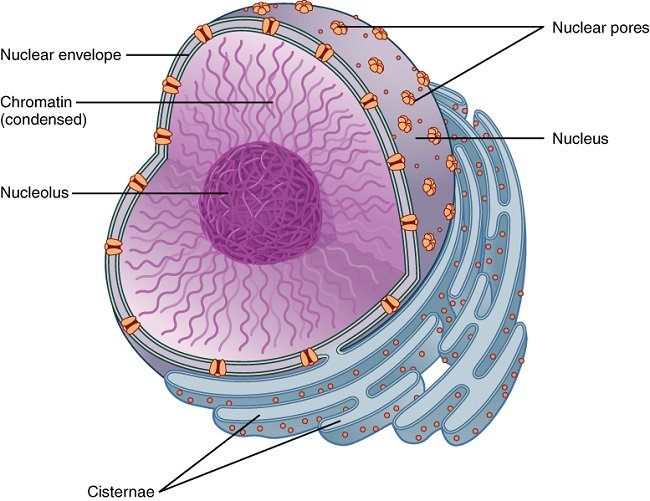
The control center of the cell.
cytoplasm
nucleus
nucleoplasm
chromatin
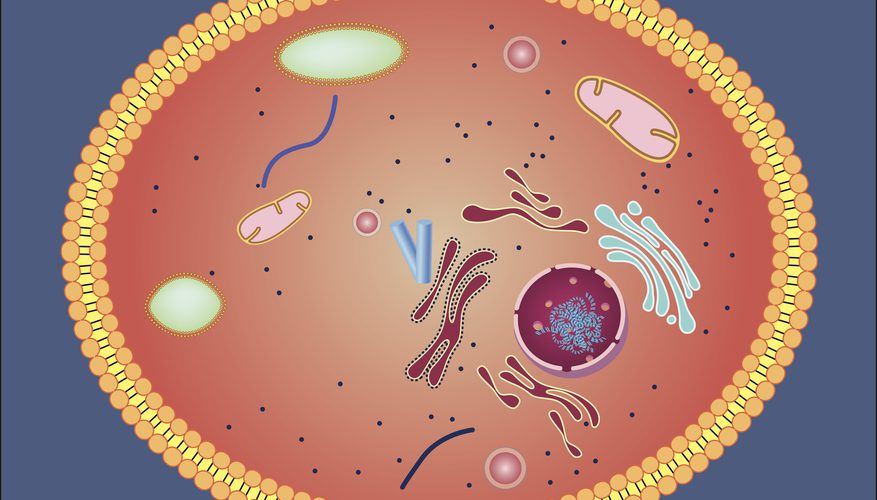
A jelly-like fluid that lls all the empty space in the cell, giving it shape and keeping everything in place.
chromatin
cytoplasm
nucleus
nucleoplasm
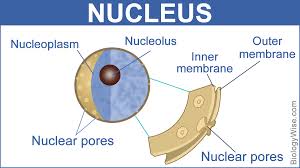
Tiny holes in the nuclear membrane that allow different cellular materials to come in and go out of the cell.
nucleus
nucleoplasm
nucleolus
nuclear pores
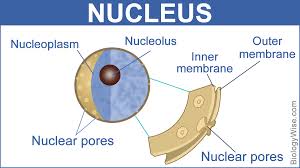
Made up of two layers (an inner and an outer), this acts like a cushiony outer shell of protection.
nucleoplasm
nuclear pores
nuclear membrane
nucleolus
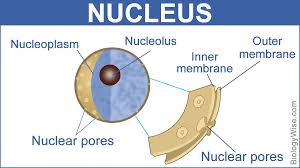
A gel-like fluid that holds things in place and helps to give the nucleus shape.
nuclear pores
nucleoplasm
nucleolus
nuclear membrane
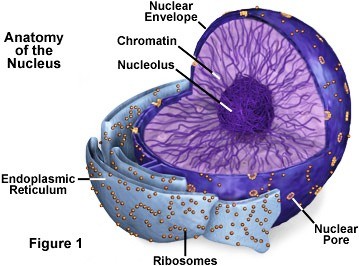
In the middle of each nucleus. Main job is to make ribonucleic acid (RNA), which makes proteins that are essential to life.
nuclear membrane
nuclear pores
nucleoplasm
nucleolus
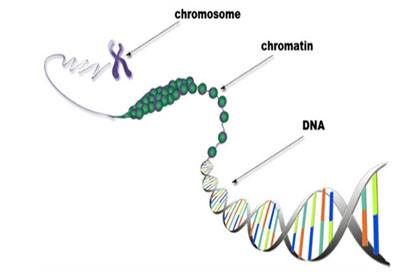
String-like structures inside the nucleus made up of proteins and deoxyribonucleic acid, better known as DNA.
cytoplasm
ribosomes
mitochondria
chromatin

What is a cell?
A place where criminals live.
The smallest structural and functional unit of an organism.
Small circles on top of your body.

A cell that contains a nucleus and membrane bound organelles
Eukaryote
Ribosome
Organelle
Centriole

structure in an animal cell that helps to organize cell division
Cell Wall
Centriole
Organelle
Eukaryote

organelle found in cells of plants and some other organisms that captures the energy from sunlight and converts it into chemical energy
Organelle
Chromosome
Chloroplast
Mitochondrion

Cell organelle that converts the chemical energy stored in food into compounds that are more convenient for the cell to use
Mitochondrion
Lysosome
Organelle
Vacuole

This cell is a(n)
prokaryote
eukaryote

Which organelle is represented in the image?
Golgi apparatus
Nucleus
Mitochondria
Chloroplast

Which organelle is represented in the image?
Nucleus
Rough endoplasmic reticulum
Golgi apparatus
Smooth endoplasmic reticulum

Which organelle is represented in the image?
Golgi apparatus
Smooth endoplasmic reticulum
Mitochondria
Rough endoplasmic reticulum

Which organelle is represented in the image?
Nucleus
Golgi apparatus
Rough endoplasmic reticulum
Smooth endoplasmic reticulum

Which organelle is represented in the image?
chloroplast
nucleus
cell membrane
mitochondria

This structure is only found in plants and prokaryotes (Gives it a rigid shape)
cell wall
cytoplasm
centriole
nucleus

Sac within the cytoplasm that STORES fluid, plants have a larger one that stores food and water.
vacuole
lysosome
cell wall
ribosome

Elevated (raised of the ground) houses built near flood zones or places with high tides are examples of...
Modification
Adapation
Non Example

The Inca's used terraces to farm better because it allowed for better irrigation (watering) of their fields.
Modification
Adaptation
Non Example

Why are eyes that are placed further apart a helpful trait for an alligator?
looks cooler
see more predators
better for swimming
helps balance
Which is the sequence by which natural selection works?
selection > adaptation > variation
selection > variation > adaptation
variation > adaptation > selection
variation > selection > adaptation
Organism's pass inherited traits to their offspring in 2 ways depending on how they reproduce. Which type of reproduction produces offspring that are similar, but not identical to the original organism?
asexual reproduction
sexual reproduction
Organism's pass inherited traits to their offspring in 2 ways depending on how they reproduce. Which type of reproduction produces offspring that are identical to the original organism?
asexual reproduction
sexual reproduction
This type of trait is developed or learned during the lifespan of an organism.
inherited
acquired
This type of reproduction requires DNA from an egg cell and a sperm cell.
asexual reproduction
sexual reproduction
What are distinct segments of DNA?
traits
genes
DNA
RNA
This is looks like a "twisted zipper" and is made up of DNA strands that contain genes.
chromosomes
nucleus
In humans, there are a total of chromosomes in a single cell. (Looking for a two digit number and please note it did not ask for pairs.)
23
46
There is a special process by which egg cells and sperm cells are formed. What is this process called?
mitosis
meiosis
What happens when an egg cell and a sperm cell unite?
mitosis
meiosis
fertilization
Which of the following is a physical factor that can affect phenotype?
sun light, special diet, or amount of water
color, body structure, or behavior
Which of the following is a social factor that can affect phenotype?
sun light, special diet, or amount of water
color, body structure, or behavior
The Scarlet King snake looks almost identical to the poisonous coral snake. What form of adaptations is this?
Camouflage
Mimicry
Functional
Behavioral
The three main categories of adaptations include...
Functional, Natural, Structural
Structural, Behavioral, Selective
Functional, Selective, Natural
Behavioral, Structural, Functional

The image shows a male peacock spider lifting two of its legs and its colorful tail flap up in the air.
Why does the male peacock spider display this kind of behavior?
to attract suitable mates
to hook and catch its prey easily
to warn other spiders about predators
to get rid of excessive heat from its body

This male peacock sure looks spiffy. How do his elaborate tail feathers help him?
They help him fly to migrate north.
They scare off competitors for food.
They attract a potential mate.
They sense danger.

A white cat had a litter of kittens that were orange, grey, and black and white spotted. Is this the result of sexual or asexual reproduction? And how would you characterize the offspring listed above?
Sexual reproduction with uniform offspring
Asexual reproduction with diverse offspring
Sexual reproduction with diverse offspring
Asexual reproduction with uniform offspring

The seasonal movement of an organism from one place to another
camouflage
migration
hibernation
function
_______________ is when an animal blends into its environment.
camouflage
mimicry
warning coloration

The possible cause for the finches on the Galapagos Islands to have beaks that are different from the finches living on the south american mainland?
mainland finches built different nests.
there were different types of food available on the island
all the different types of predators living on the island
some were salt water finches
What does cell theory state?
It states that organisms are composed of one or more cells
It describes that cells are the basic unit of structure and function
It states that cells come from preexisting cells
All of the statements are a part of cell theory
Which type of cell does not have a nucleus?
Eukaryotic
Prokaryotic
plant
animal
Which choice describes the organization of plants and animals from the smallest unit to the largest unit?
Tissues, organs, organ systems, cells, organism
Organism, organs, organ systems, tissues, cells
Cells, organs, tissues, organ systems, organism
Cells, tissues, organs, organ systems, organism

Look at the image. Many species of plants and animals have structures whose functions help them survive in certain environments.
Analyze the structures of the organisms and choose the explanation that could describe how these adaptations would help them survive in a desert environment.
Kangaroo rats use their long feet and front paws to dig burrows in the sand for shelter from the sun.
Desert coyotes have thick coats in the winter to protect them during cold desert nights that they shed in the summer.
Desert coyotes and kangaroo rats have camouflaged fur that helps them blend into their environment.
All of the above are correct.

Animals have both instinctual behaviors they are born with and learned behaviors they acquire.
Sea turtle hatchlings emerge from the nest and immediately move toward the brightest horizon. The brightest horizon is usually over the ocean.
Which statement best describes this trait?
It is an instinctual trait that increases survival by helping the hatchlings find food and resources.
It is a learned behavior that increases the chance of survival by helping the hatchlings find food and resources.
It is an instinctual trait that decreases the chance of survival by putting the hatchlings in the path of predators.
It is a learned behavior that puts the hatchlings in the path of predators.
Animals have both instinctual behaviors they are born with and learned behaviors they acquire that increase their chances of survival.
Orcas hunt in groups called pods. Hunting strategies are taught to the younger generation by the older generations. Choose the best explanation as to why these learned behavioral traits will help the species.
Hunting strategy is something orcas are born with because they depend on groups to hunt for food.
Hunting strategy is something orcas are born with because they hunt in large groups to prevent predators from attacking.
Hunting strategy is a learned behavior because orcas can communicate with each other to teach the younger generation how to hunt.
Hunting strategy is a learned behavior because each generation of orcas does not have to relearn hunting tricks.
Monarch butterflies can be toxic to some predators. Some predators avoid eating them so that they do not get sick. There are other butterfly species that over time have come to look like monarch butterflies. Which choice best describes how this variation may have become an adaptation?
The variation was an advantage for the butterfly species in its environment.
The variation was a disadvantage for the butterfly species in its environment.
The variation helped the butterfly species succeed in a new environment.
The variation helped the monarch butterflies and the other butterfly species survive in their environment.
Which scenario is an example of artificial selection?
Anteaters with longer snouts and tongues have better access to ant colonies.
Birds with longer talons catch more field mice than those with shorter talons, resulting in more offspring with that trait.
Giraffes with longer necks survive a dry season by eating leaves from the tops of trees. Those giraffes breed more successfully that year.
A farmer crossbreeds two types of apples to produce a species that stays fresher longer and tastes sweeter.
The Belgian Blue cow is an animal bred over hundreds of years by artificial selection. These animals are bred by humans for a trait in their genes that allows the animals to grow very large and muscular.
Which statements are most likely true based on this information? Choose two answers.
Artificial selection can produce traits that are not necessarily to the benefit of the species.
Human breeding of animals is an example of natural selection, not artificial selection.
Artificial selection of these animals helped the animals avoid predators due to their large size.
Artificial selection of these animals can increase the amount of beef produced for human consumption.
What is a characteristic of a heterotroph?
Can make its own food
Must reproduce asexually
Can move on its own
Must consume food for energy

The differences among a species, like different bird beaks, are called _______
Variation
Inheritance
competition
Genes
In which type of cell can you find ribosomes?
Prokaryotic cells
Unicellular Cells
All of types of cells
Eukaryotic cells
How many sub units does a ribosome have?
1
4
2
3
What are the two things that ribosomes are composed of?
Carbohydrates and nucleotides
Deoxyribonucleic acid (DNA) and lipids
Ribosomal RNA (rRNA) and proteins
Lipids and amino acids
What is the main role of ribosomes?
Protein synthesis
Waste removal
Cell division
Energy production
Why is protein in our bodies important?
Label the parts of the ribosome
Large Subunit
Small Subunit

What do you know about the cell membrane?

What are the three main things that makes up the cell membrane?

Why use the term "mosaic"?
What do you think will happen to the cell
membrane when poked with a fine needle?
The cell membrane will simply part around the needle
The cell membrane will turn into a liquid.
The cell membrane will disappear completely.
The cell membrane will become stronger and more resilient.
Label the parts of the phospholipid
Fatty Acid Tail 1
Fatty Acid Tail 2
Phosphate-liked head

What does the term "bilayer" mean?

The head portion of the phospholipid is (a)
hydrophilic
amphiphatic
hydrophobic

The tail portion of the phospholipid is (a)
hydrophobic
hydrophilic
amphiphatic

The whole structure of a phospholipid is (a)
amphipathic
hydrophobic
hydrophilic
With these barriers, can water enter the membrane?
Yes
No
Sometimes

What phospholipid structure is this?
Liposome
Micelle
Inverted micelle
Phospholipid Trilayer

A ribosome can be best described as...
a protein factory
a trash collector
the powerhouse of the cell
the brain of the cell

Which letter is a picture of a ribosome?
E
F
G
H
Proteins produced by a ribosome are made of small units called...
amino acids
transfer RNA (tRNA)
messenger RNA (mRNA)
a tiny cell structure that carries out a specific function within the cell
mitochondria
ribosome
organelle
endoplasmic reticulum

State Function
control center of the cell
captures energy from sunlight
found in plant and animal cells

organelles made of microtubules that function during cell division in animal cells
centrioles
lysosomes
ribosomes
chloroplasts

sacs produced by the Golgi apparatus; letter AD in diagram
vacuole
vesicle
lysosome
ribosome

organelles which capture light energy and convert it into chemical energy; #13 in diagram
mitochondria
nucleolus
chloroplasts
ribosomes

Thick, rigid mesh of fibers that protects the cell and provides support; #1 in diagram
cell membrane
cell wall
endoplasmic reticulum
nucleus

aid in locomotion and feeding as well as to sweep substances across the cell surface; letter A in diagram
cilia
flagella
Golgi apparatus
ribosomes

projections that aid in locomotion and feeding; letter B in diagram
cilia
flagella
centrioles
cytoskeleton

What is the difference between rough and smooth ER?
There is no difference.
Plants have rough ER, animals have smooth ER.
What type of injuries the Doctors treat.
Rough has ribosomes, smooth does not.

