
 Worksheets
4th QTR Periodical Exams Reviewer in Science 6
Total questions: 130
Worksheet time: 1hrs 25mins

These are remains of dead plants or animals preserved in rock.
Glaciers
Dinosaurs
Bones
Fossils
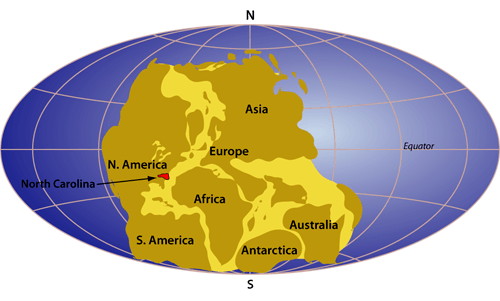
What does the word Pangea mean?
supercontinent
old land
big land mass
all of the above
About 120 million years ago, the Pangaea had split into two major continents named ___________.
Eurasia and India
Australia and Antartica
South America and Africa
Laurasia and Gondwanaland


Which of the following describes a fault?
An energy released from the inside of the Earth.
A movement in the Earth’s crust.
A break in the Earth’s crust.
A rock layer.
What occurs when faults move?
volcanic eruption
earthquake
landslide
drought
Why is it that not all movements along faults produce earthquakes?
It is because the energy of the Earth that causes the rocks to move is very strong enough.
It is because the friction between rocks was not overcome by the energy of the Earth.
It is because there is no friction present between the rocks.
It is because the layers of rocks were not broken.
Fault movement is always associated with earthquakes. Arrange the following events how fault movements generate earthquakes. I. Once friction is overcome, the rocks suddenly slip. II. Ground suddenly moves and an earthquake occurs. III. Energy from inside the Earth is necessary to make the ground move. IV. The rocks are stuck together due to friction.
I, II, III, IV
II, IV, I, III
III, IV, I, II
IV, II, I, III
How do faults produce earthquakes?
Energy from inside the Earth makes the ground move, once friction is overcome, a fault slips producing an earthquake.
Rock materials from underneath go out along faults produces earthquakes
Magma spreads beneath the rock layers producing faults.
Tectonic plates collide producing earthquakes.
Which of the following describes a normal fault?
both blocks slide past another
both blocks of rock move upward
one block of rock does not move while the other moves upward
one block of rock does not move while the other moves downward
Which of the following refers to the type of fault in which two blocks slide horizontally past each other in the opposite direction?
strike-slip fault
reverse fault
normal fault
landslide

Which of the following types of faults is shown in the picture?
strike-slip fault
reverse fault
normal fault
lateral fault
Which of the following DOES NOT show fault movement?


In which direction the block of rock layer will move if it shows reverse fault?
upward
to the left
to the right
downward
How can you relate fault movements with earthquakes?
Every time there is an earthquake this all due to fault movements.
Every time there is an earthquake, rock layers move causing faults to move as well.
Every time fault moves and friction between rocks is overcome this will result in an earthquake.
Every time fault moves even though friction between rocks has not overcome, this will result in an earthquake.
Why do earthquakes occur?
The crust suddenly moves as Earth rotates around its axis.
The Earth is attracted by a nearby planet
The Earth is suddenly hit by a meteor.
The fault suddenly moves.
Which of the following could be the effect on the things above the Earth’s surface when faults move?
trees will grow taller
soil becomes thicker
sea water level rises
soil cracks
Which government agency is responsible for studying the movements of faults and earthquakes?
DOH
DepEd
PAGASA
PHIVOLCS
For instance, your house is near a fault, which of the following are you going to consider doing?
inform your parents about it and evacuate immediately
inform the PHIVOLCS to monitor your house daily
tell your parents to construct a big house
take a selfie of the fault
1. Prepare an emergency bag or backpack to contain a first aid kit, flashlight, batteries, battery-powered radio, whistle (for communicating with other people) and bottled water.
Before
During
After
2. Seek information about the members of your family. Check if they are safe.
Before
During
After
3. If you are outdoors, stay away from any building, electric post, tree, etc.
Before
During
After
4. Plan with your family what to do during an earthquake.
Before
During
After
5. Get under a table. Wait for the shaking to stop.
Before
During
After
6. Listen to the radio for emergency instructions.
Before
During
After
7. In getting out of a building, do not use an elevator. Be sure that your feet are protected from broken glass.
Before
During
After
8. Cover your nose and mouth with a mask or with a wet hand towel to protect yourself from ash fall.
Before
During
After
9. If your family lives in the danger zone, be ready to leave once PHIVOLCS announces the need for immediate evacuation.
Before
During
After
10. Help the rest of the family in removing the ash and other volcanic debris that fell on your place.
Before
During
After
A volcano that has had at least one eruption during the past 10,000 years.
Active Volcano
Dormant Volcano
Erupting Volcano
Extinct volcano
An active volcano that is having an eruption.
Active Volcano
Dormant Volcano
Erupting Volcano
Extinct volcano
An active volcano that
is not erupting but supposed to erupt again.
Active Volcano
Dormant Volcano
Erupting Volcano
Extinct volcano
A volcano which has not erupted in the past 10,000 years .It no longer has a lava supply.
Active Volcano
Dormant Volcano
Erupting Volcano
Extinct volcano

A volcano formed by the accumulation of lava that oozes out from the volcano. Since non-viscous lava can flow freely, a broad, slightly domed structure that resembles a warrior’s shield is formed. An example of this type is the
Mauna Loa in Hawaii.
Shield Volcano
Composite cones or stratovolcanoes
Cinder
A vent or fissure in the planet's crust through which lava, ash, rock and gases erupt.
(a)

An active volcano in the Philippines that erupted last January 2020
(a)

An active volcano in the Philippines known as the "perfect cone"
(a)

Are large, nearly perfect sloped structure formed from alternate solidification of both lava and pyroclastic deposits. One perfect example
of this type of cone is our Mayon Volcano
Shield Volcano
Composite cones or stratovolcanoes
Cinder

They have a steep slope, wide crater and are the most abundant of the three major volcano
types. One example
of this type is the
Paricutin in Mexico.
Shield Volcano
Composite cones or stratovolcanoes
Cinder
An _________________ volcano is one that has erupted in the last 10 000 years and there is a possibility that it may erupt soon.
Inactive
Extinct
Dormant
Active
A ___________________ volcano is one that has not erupted in the last 10 000 years but may still erupt in the future.
Inactive
Extinct
Dormant
Active
An _________________ volcano is one that erupted thousands of years ago and will no longer erupt in the future.
Inactive
Extinct
Dormant
Active
A ________________ is a mountain that has an opening to allow lava, hot vapor, and gas to escape from the pool of magma below
Volcano
Vulcan
Cinder cones
Composite
What volcanic materials are pieces less than 2 mm in diameter, floats and can be carried away by the wind?
Ash
Tephra
Lava
Magma
Lahar
What do you call the mudflow which is a combination of volcanic material, water and other debris?
Ash
Tephra
Lava
Magma
Lahar
What volcanic material is the extremely hot liquid and semi-liquid rock located under Earth’s surface?
Ash
Tephra
Lava
Magma
Lahar
Magma emerging as liquid in Earth’s surface is called ______________.
Ash
Tephra
Lava
Magma
Lahar
__________________ are scientists who study volcanoes.
Vulcanizers
Volcanologists
Volcanoneers
Volcanographers
Which of the following does not show precautionary measures when
volcanic eruption occurs?
A. Stay in a safe place.
B. Prepare flashlight.
C. Remove ash deposits from roofs.
D. Store water in an open container.
Which of the following are precautionary measures to be done when you
live near an active volcano?
I. Stay clear of hot lava, flying rocks, and debris.
II. Wear protective boots and gloves.
III. Know your evacuation route.
IV. Wear light-colored clothes.
A. I and II only
B. I, II, and III only
C. II, III and IV only
D. II only
How should you behave during an earthquake?
A. Keep calm.
B. Rush to an overcrowded exit.
C. Listen to radio for the latest update.
D. A, B and C are correct.
A volcano shows signs of eruption. What should people living in a
volcanic region do to lessen the destructive effects of an eruption?
A. Ignore the radio broadcast about volcanic eruption.
B. Follow instructions given by authorities.
C. Observe precautionary measure.
D. Both B and C are correct.
5. Which should you observe before an earthquake?
A. Participate in earthquake drills regularly.
B. Avoid touching live electrical wires
C. Stay under a sturdy table
D. Stay away from cliffs
Which of the following precautionary measures should be done after a
volcanic eruption?
A. Stay inside the house.
B. Keep food and water covered.
C. Wait for further news or announcements.
D. Evacuate to places away from volcano.
Which of these precautionary measures should be done before and after volcanic eruption?
A. Wait for further news or announcement
B. Evacuate to places far away from volcano
C. Stay inside the house
D. None of them
Why is it important to keep calm during volcanic eruption?
A. To be able to save lives and properties.
B. To be able to rest.
C. To avoid accident.
D. Both A and C are correct.
Your family is going evacuate. You are told to bring along only few things. Which of these will you bring?
A. pets, toys and books
B. food, water and clothes
C. chairs, table and closets
D. laptop, cellphone, tablet
10.Earthquakes happen without any notice. Which is the best way to
protect yourself during an earthquake?
A. Run as fast as you can.
A. Run as fast as you can.
B. Drop, cover and hold.
C. Go in the basement.
D. Stand near building.
The rain starts to fall frequently. Farmers begin to plant their crops. People prefer to wear thick clothes and eat warm foods. What season do these events indicate?
spring season
winter season
dry season
wet season
Which season is characterized by frequent rainfall?
dry season
wet season
fall season
winter season
Which is characterized by infrequent rainfall and warm temperature?
wet season
fall season
dry season
winter season
Which are the causes of seasons being experienced by people on certain parts of the Earth?
the Earth’s rotation and shape
the Earth’s revolution and tilt on its axis
the Earth’s rotation and gravity
the continents and water bodies surrounding the place
This prevailing wind is warm and moist. It blows from the southwest portion of the country and brings moderate to heavy rains along the western section of the Philippines. What is it?
Trade winds
Hanging Amihan
Hanging Habaga
Northeast Monsoon
Which season takes place in the Philippines from December to May?
dry season
wet season
cold season
summer season
Which is also known as Hanging Amihan?
Eastwest Monsoon
Northeast Monsoon
Southwest Monsoon
Northsouth Monsoon
Which season in the Philippines is the best time for farmers to dry their crops?
dry season
wet season
spring season
autumn season
Which is influenced by the Northeast Monsoon?
wet season
dry season
winter season
summer season
Which can be experienced during wet season?
warm temperature
hot cloudless days
shortage of water supply
heavy rainfall and frequent typhoons
How many seasons does the Philippines have?
1
2
3
4

How do the seasons happen?
Earth's distance away from the sun
Earth's distance towards the sun
Earth's tilted axis
The Philippines experiences two seasons only because it is located near the __________.
equator
temperate region
North Pole
South Pole
the _______ disasters are earthquakes, volcanoes, hurricanes, floods, and fires.
Man-made disasters
Natural disasters
Between January and May, the climate is usually dry with occasional rain showers.
Dry Season
Wet Season
is a national institution tasked by the government to monitor and provide typhoons, warnings, public weather forecasts, and advisories.
PAG-ASA
PHIVOLCS
DEPeD
PAR stands for __________.
Philippine Area of Responsibility
Philippine Altitude of Responsibility
Philippine Area of Relocation

__________ is the movement of the earth around the sun in a fixed path or orbit.
Revolution
Rotation
Circle
Movement

__________ is the movement of the earth on its axis. The move
Revolution
Rotation
Circle
Movement
Season changes on the earth due to __________ of earth.
Rotation
Gravitation
Revolution
Day and night occurs on the earth due to __________ of earth.
Rotation
Gravitation
Revolution

How long does it take for the earth to rotate
day
week
hour
month
In leap year how many days will be there in one year
366 days
365 days
24 days
The fixed elliptical path along which the earth revolves is called
Axis
Tilt
Orbit
Radius
What are large chunks of rocks and metal in space?
Earth
comet
asteroids
gibbous
The fourth planet from the Sun; also known as the "red planet."
Neptune
Mercury
Earth
Mars
These are the 4 planets (Mercury, Venus, Earth, Mars) are known as
terrestrial planets
gas giants
dwarf planets
solar planets
These are the four planets the Sun; Jupiter, Saturn, Uranus, and Neptune are classified as
terrestrial planets
gas giants
solar planets
the best planets
Where is the Asteroid Belt located in the Solar System?
near Neptune
between Mercury and Venus
between Mars and Jupiter
around the Sun
A galaxy is a huge collection of gas, dust, and billions of stars and their solar systems. A galaxy is held together by gravity.
TRUE
FALSE
In what galaxy does the Solar System belong?
Andromeda Galaxy
Milky Way Galaxy
Canis Major Dwarf Galaxy
Magelanic Clouds
The Solar System has (a) planets.
What is a comet?
burning rocks
a huge ball of hot gasses
cosmic snowballs of frozen gases, rock, and dust that orbit the Sun.
huge collection of gas, dust, and billions of stars and their solar systems, all held together by gravity.
When meteoroids enter Earth's atmosphere (or that of another planet, like Mars) at high speed and burn up, the fireballs or “shooting stars” are called _______.
meteorites
meteoroids
meteor shower
meteors
A____________ is a solid piece of debris from an object, such as a comet, asteroid, or meteoroid, that originates in outer space and survives its passage through the atmosphere and reach the surface of a planet or moon
Meteors
Meteorites
Meteoroids
Comet
A meteor shower happens when Earth passes through the path of a comet. When this happens, the bits of comet debris, most no larger than a grain of sand, create streaks of light in the night sky as they burn up in Earth's atmosphere.
True
False
Where can you find the asteroid belt?
Between Mercury and Venus
Between Earth and Mars
Between Jupiter and Saturn
Between Mars and Jupiter
Sun is a huge ball of hot molten rocks.
True
False
What is the other term for asteroids?
planets
stars
planetoids
comets
What is the main characteristic of Jovian planets?
covered with solid surfaces
covered with hot burning gasses
no atmosphere
have gaseous surfaces
___________ are considered as Jovian planets.
Mercury, Venus, Uranus, Mars
Mercury, Venus, Earth, Mars
Jupiter, Saturn, Uranus, Neptune
Jupiter, Saturn, Earth, Neptune
___________ are considered as terrestrial planets.
Mercury, Venus, Uranus, Mars
Mercury, Venus, Earth, Mars
Jupiter, Saturn, Uranus, Neptune
Jupiter, Saturn, Earth, Neptune
The hottest planet in the Solar system
Mercury
Venus
Mars
Jupiter
What is the main characteristic of terrestrial planets?
covered with solid surfaces and have a metal core
covered with hot burning gasses
no atmosphere
have gaseous surfaces
the smallest planet in the Solar System
Mercury
Venus
Earth
Mars
Base on revolution, what planet considered as the fastest planet?
Mercury
Venus
Earth
Mars
What is the main gas in Venus which causes the high temperature in the atmosphere?
Oxygen
Methane
Carbon monoxide
Carbon Dioxide
The morning and evening star
Mercury
Venus
Earth
Mars
Which planet takes the shortest to rotate
Jupiter
Saturn
Uranus
Neptune
How many moons does Mars have?
2
3
4
5
What is the ancient name of the Earth's moon?
Lyka
Lunatic
Luna
Luna-Luna
The red planet
Jupiter
Mars
Venus
Neptune
The coldest planet
Jupiter
Saturn
Uranus
Neptune
The largest volcano in the Solar System found on Mars
Venu's Pancake Volcanoes
Mar's Tharsis Mantes
Maat Mons of Venus
Mar's Olympus Mons

