wayground logo

Free Printable Worksheets

Font size

S
M
L
XL
Worksheets

8.6E Law of Conservation of Mass

Total questions: 135

Worksheet time: 3hrs 46mins

Name
Class
Date
1.

What does the number 3 represent in 4NH3?

a)

Subscript

b)

Superscript

c)

Coefficient

2.

What does the number 4 represent in 4NH3?

a)

Subscript

b)

Superscript

c)

Coefficient

3.

How many Nitrogen (N) atoms are in 4NH3?

a)

4

b)

1

c)

3

d)

12

4.

How many Hydrogen (H) atoms are in 4NH3?

a)

4

b)

1

c)

3

d)

12

5.

In the equation shown, what are the reactant(s)?

a)

N2 + H2

b)

NH3

6.

In the equation shown, what are the product(s)?

a)

N2 + H2

b)

NH3

7.

Is this equation balanced?

a)

Yes

b)

No

8.

Is this equation balanced?

a)

Yes

b)

No

9.

Is this equation balanced?

a)

Yes

b)

No

10.

To balance an equation you should:

a)

ONLY change subscripts.

b)

ONLY change coefficients.

c)

Change BOTH subscripts and coefficients.

11.
Is this equation balanced?
a)
yes
b)
no
c)
Not enough information
12.
Question Image

Match the following

a)

Reactant

Element

1.

2C2

b)

Reactant

Compound

2.

CH4

c)

Product

Compound

3.

CO2

13.

P4O10 had a mass of ​12g , and H3PO4 has a mass of 90g, accroding t the law of conservation of mass what is H2O mass? ​ ​ (a)  

Choose from the below words
78g
102
102g
90g
12g
14.
How many elements does PbNO3 have?
a)
2
b)
3
c)
4
d)
5
15.
How many nitrogen atoms does NH3 have?
a)
1
b)
2
c)
3
d)
4
16.
A chemical equation tells us 
a)
the reactants and the products.
b)
the elements that make up the reactants and the products.
c)
the number of atoms that make up the reactants and the products.
d)
All of the above.
17.
What is the reactant in the following equation?
2NaHCO3  -> Na2CO3  +  CO2  + H2O
a)
NaHCO3
b)
Na2CO3
c)
CO2
d)
H2O
18.
Which of the following describes the law of conservation of mass?
a)
In a reaction, atoms are created or destroyed.
b)
In a reaction, atoms are not lost or made.
c)
In a reaction, the mass of the product may be more or less than the reactants.
d)
In a reaction, mass never stays the same.
19.
For the equation:
2H2 +  O2 --> 2H2O
How much H2O will be produced if we react 4g of H2 and 32g of O2?
a)
4g
b)
32g
c)
36g
d)
28g
20.
Which  of the following is a balanced equation?
a)
Na   +   Cl2   -->  NaCl
b)
H2  +  O2  --> H2O
c)
Ca   +   Br  -->  CaBr2
d)
Na   +  F  -->  NaF
21.

The number to the lower side of an element is a  (H2O)

a)
Subscript
b)
Superscript
c)
Coefficient
d)
Charge
22.

The number in front of a compound or element is a  (3H2O)

a)
Subscript
b)
Coefficient
c)
Superscript
d)
Charge
23.

In the chemical formula C12H22O11C_{12}H_{22}O_{11}  , how many elements are there?

a)

1

b)

2

c)

3

d)

4

24.

In the chemical formula C12H22O11C_{12}H_{22}O_{11}  , how many C atoms are there?

a)

12

b)

22

c)

11

d)

45

25.

In the chemical formula C12H22O11C_{12}H_{22}O_{11}  , how many O atoms are there?

a)

12

b)

22

c)

11

d)

45

26.

In the chemical formula C12H22O11C_{12}H_{22}O_{11}  , how many H atoms are there?

a)

12

b)

22

c)

11

d)

45

27.

What is the TOTAL number of atoms in the chemical formula C12H22O11C_{12}H_{22}O_{11}  ?

a)

12

b)

22

c)

11

d)

45

28.

Which of the following substances CANNOT be broken down into simpler substance? ?

a)

NaNa  

b)

H2OH_2O  

c)

C6H12O6C_6H_{12}O_6  

d)

COCO  

29.

How does a balanced chemical equation satisfy the Law of Conservation of Mass?

a)

During a chemical reaction, matter is destroyed.

b)

During a chemical reaction, the total number of atoms increases.

c)

 During a chemical reaction, one or more new substances are formed.

d)

During a chemical reaction, the total amount of matter stays the same.

30.

What happens to the total mass of the substances after a chemical reaction?

a)

It decreases.

b)

It increases.

c)

 It remains the same.

d)

It increases then decreases.

31.

In a chemical reaction, the number of atoms in the products will always equal which amount?

a)

the number of atoms in the reactants

b)

half of the number of atoms in the reactants

c)

twice the number of the atoms in the reactants

d)

thrice the number of the atoms in the reactants

32.

Jin bought a heat pack that weighs 15 g. He shook it so it would release heat to warm his hands. The release of heat indicates a chemical reaction took place in a closed system. What would be the mass of the heat pack after the chemical reaction?

a)

5 g

b)

10 g

c)

12 g

d)

15 g

33.

The chemical formula for baking soda is NaHCO3NaHCO_3   . How many O atoms does it have?

a)

1

b)

2

c)

3

d)

4

34.
Matter can not be created nor destroyed: it can only be
a)
Destroyed a little bit
b)
Invisible
c)
Transformed, changed
d)
None of the above
35.
The number to the lower side of an element is a 
a)
Subscript
b)
Superscript
c)
Coefficient
d)
Charge
36.
The number in front of a compound or element is a 
a)
Subscript
b)
Coefficient
c)
Superscript
d)
Charge
37.
A chemical reaction is balanced when
a)
both sides have the same elements
b)
Both sides have the same  number of atoms
c)
Same subscripts
d)
Same coefficients
38.
If reaction starts with 20g of reactants it should produce 
a)
a total of 40g of products
b)
a total of 10g of products
c)
a total of 80 g of products
d)
a total of 20g of products
39.
What is the Law of Conservation of mass?
a)
Mass is created in a chemical reaction
b)
Mass is created in a physical change
c)
New chemicals formed from a chemical reaction have a larger overall mass than the original reactants
d)
Mass is never created or destroyed
40.
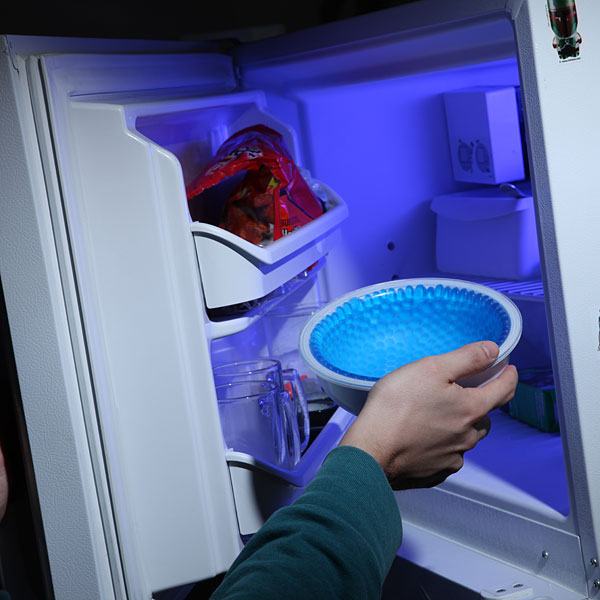
Maria fills a bowl with 200 g of water. She puts the bowl of water in the freezer, and the water freezes. Which will most likely be the mass of the frozen water?
a)
50 g
b)
100 g
c)
200 g
d)
400 g
41.

How many atoms do you have in the compound 2MgCl2?

a)

2 atoms

b)

4 atoms

c)

6 atoms

d)

8 atoms

42.

How many Ca (Calcium) atoms are found in Ca(OH)2?

a)

5 atoms

b)

3 atoms

c)

2 atoms

d)

1 atom

43.
Matter can not be created nor destroyed: it can only be
a)
Destroyed a little bit
b)
Invisible
c)
Transformed, changed
d)
None of the above
44.

A student mixes 125 grams of sugar, 250 grams of water and 5 grams of flavoring. The solution weighs...

a)

250 grams

b)

380 grams

c)

375 grams

d)

400 grams

45.
If reaction starts with 20g of reactants it should produce 
a)
a total of 40g of products
b)
a total of 10g of products
c)
a total of 80 g of products
d)
a total of 20g of products
46.
What will weigh more when a chemical change is complete?  The reactants before the chemical reaction, or the product after the reaction is complete?
a)
They both will weigh the same
b)
The product always weighs more than the reactant
c)
The reactant will weigh more than the product
d)
They both will loose mass after the reaction
47.

________ are the starting substances in a chemical equation.

a)

Reactants

b)

Producer

c)

Reaction

d)

Products

48.
In a reaction A + B ----> C,  reactant A has 5g and product  C has 9g. How many grams does reactant B should have? 
a)
4g
b)
5g
c)
9g
d)
14g
49.
If a reaction starts with a total 75g of reactants it should produce 
a)
a total of 40g of products
b)
a total of 75g of products
c)
a total of 180 g of products
d)
None of the above
50.
In the reaction AB-----> A + B reactant AB has 12g and product B has 5g. How many grams should product A have?
a)
17g
b)
2g
c)
7g
d)
None of the above
51.
In a reaction A + B ----> C,  reactant A has 5g and product  C has 9g. How many grams should reactant B have? 
a)
4g
b)
5g
c)
9g
d)
14g
52.
A chemical reaction is balanced when
a)
both sides have the same elements
b)
Both sides have the same  number of atoms
c)
Same subscripts
d)
Same coefficients
53.
A chemical reaction between Hydrogen and Oxygen produces water. If 2g of Hydrogen and 4g of Oxygen react together, how much water is produced?
a)
2g
b)
4g
c)
6g
d)
Not enough information to answer
54.
12g of Carbon react with 16g of Oxygen, how much carbon monoxide (CO) is formed? 
a)
28 g
b)
4g
c)
30g
d)
12g
55.

4 grams of hydrogen and 32 grams of oxygen will combine to form:

a)

36 grams of water

b)

28 grams of hydroxide

c)

32 grams of oxygen

d)

36 grams of deuterium

56.
What is the Law of Conservation of mass?
a)
Mass is created in a chemical reaction
b)
Mass is created in a physical change
c)
New chemicals formed from a chemical reaction have a larger overall mass than the original reactants
d)
Mass is never created or destroyed
57.
In a reaction A + B ----> C,  reactant A has 5g and product  C has 9g. How many grams does reactant B should have? 
a)
4g
b)
5g
c)
9g
d)
14g
58.
In a reaction A + B ----> C,  reactant A has 5g and product  C has 9g. How many grams does reactant B should have? 
a)
4g
b)
5g
c)
9g
d)
14g
59.
The number in front of a compound or element is a 
a)
Subscript
b)
Coefficient
c)
Superscript
d)
Charge
60.
The number to the lower side of an element is a 
a)
Subscript
b)
Superscript
c)
Coefficient
d)
Charge
61.
Matter can not be created nor destroyed: it can only be
a)
Destroyed a little bit
b)
Invisible
c)
Transformed, changed
d)
None of the above
62.
Which is Chemical Equation is Balanced?
a)
CH₄+O₂------CO₂+2H₂O
b)
H₂+O₂-----2H₂O₄
c)
4Al+3O₂-----2Al₂O₃
63.
How many nitrogen atoms does NH3 have?
a)
1
b)
2
c)
3
d)
4
64.
Is this equation balanced or unbalanced? 
2Fe2O3 + 3C --> 4Fe + 3 CO2
a)
balanced
b)
unbalanced
65.
How many oxygen atoms are in this chemical formula?
a)
6 oxygen atoms
b)
2 oxygen atoms
c)
3 oxygen atoms
d)
4 oxygen atoms
66.
Which Chemical Equation is Balanced?
a)
CH₄+O₂------CO₂+2H₂O
b)
H₂+O₂-----2H₂O₄
c)
4Al+3O₂-----2Al₂O₃
67.
Bob puts 200 grams of ice into a pitcher with 900 grams of water. He gets distracted and comes back later to find that the ice has melted in the water. How many grams of water does Bob now have in the pitcher?
a)
200 g
b)
700 g
c)
1,100 g
68.
24 g of magnesium reacts with 38 g of fluorine to produce _____ g magnesium fluoride
a)
62 
b)
38
c)
24
d)
14
69.
What is the law of conservation of mass?
a)
The amount of matter changes when reacted or changed.
b)
The mass of all reactants are changed during a physical or chemical change
c)
The mass of the reactants equals the mass of the products
d)
The mass of the products is different than the mass of the reactants.
70.
Students react baking soda & vinegar.
Which of the following would provide the evidence that the number of atoms present before a chemical reaction is equal to the number of atoms present after the chemical reaction?
a)
The mass of the plastic bag, baking soda, and vinegar before the reaction was equal to the mass after the reaction.
b)
Bubbles were produced during the reaction, which meant that a gas was being produced.
c)
The plastic bag did not change in any way, indicating that it was not involved in the reaction.
d)
The mass of the baking soda was exactly equal to the mass of the vinegar used to create the chemical reaction.
71.
When CaCO3 is heated, it forms CaO and CO2. Which of these statements best describes the mass of the products if 100 g of CaCO3 is heated?
a)
The difference in the products’ masses is equal to the mass of the CaCO3
b)
The sum of the products’ masses is less than the mass of the CaCO3
c)
The mass of each product is equal to the mass of the CaCO3
d)
The sum of the products’ masses equals the mass of the CaCO3
72.
Molecule
a)
A group of atoms bonded together
b)
Basic unit of a chemical element
c)
Coefficient
d)
Subscript
73.
Suppose a reaction were to happen in an open container in a lab.  During the reaction, the scientist observes the chemicals bubble, and produce a gas.   During the analysis the scientist notices that the reactants weighed 20 g when he started, and the product weighed 18 g.  Explain what happened.  
a)
His chemical reaction defied the law of conservation of mass
b)
The product destroyed mass during the reaction
c)
The reactants created matter during the reaction
d)
The gas that was produced was not able to be weighed since the container was open.  
74.
If four hydrogen atoms react with two hydrogen atoms, how many atoms will be in the product?
a)
6
b)
4
c)
8
d)
2
75.
10 g of a solid chemical reacts with a 10 g of a liquid chemical, the reaction bubbles and changes the color of the liquid.  The colored liquid weighs 13 g, what can be concluded?
a)
The gas produced from the bubbles weighed 5 g
b)
The bubbles were evidence of 7 g of matter being destroyed
c)
The gas produced weighed 7 g
d)
The gas produced weighed 13 g
76.

40 grams of calcium reacts with 71 grams of chlorine to produce _______ g of calcium chloride.

a)

31

b)

101

c)

100

d)

111

77.

______ g of potassium reacts with 16 g of oxygen to produce 94 g of potassium oxide.

a)

88

b)

110

c)

50

d)

78

78.

14 g of lithium reacts with _____ g of sulfur to produce 46 g of lithium sulfide.

a)

32

b)

60

c)

25

d)

10

79.

24 g of magnesium reacts with 38 g of fluorine to produce ______ g of magnesium fluoride.

a)

10

b)

24

c)

14

d)

62

80.

88 g of strontium reacts with 160 g of bromine to produce _______ g of strontium bromide.

a)

72

b)

240

c)

248

d)

80

81.

______ g of hydrogen reacts with 32 g of oxygen to produce 34 g of hydrogen peroxide.

a)

2

b)

3

c)

66

d)

64

82.

Is the chemical equation following the Law of Conservation of Mass?

3 H2 + N2 → 2 NH3

a)

Yes, it is following the Law

b)

No, it is not following the Law

83.

Is the chemical equation following the Law of Conservation of Mass?

Na2O + 2 CO2 → 2 Na2CO3

a)

Yes, it is following the Law

b)

No, it is not following the Law

84.

How many atoms in TOTAL make up the chemical equation below?

6 CO2 + 6 H2O → C6H12O6 + 6 O2

a)

18 atoms total

b)

72 atoms total

c)

36 atoms total

d)

12 atoms total

85.

How many oxygen atoms in TOTAL make up the chemical equation below?

6 CO2 + 6 H2O → C6H12O6 + 6 O2

a)

18 atoms total

b)

6 atoms total

c)

36 atoms total

d)

2 atoms total

86.

How many atoms do you have in the compound 2MgCl2?

a)

2 atoms

b)

4 atoms

c)

6 atoms

d)

8 atoms

87.

How many Ca (Calcium) atoms are found in Ca(OH)2?

a)

5 atoms

b)

3 atoms

c)

2 atoms

d)

1 atom

88.

How many atoms do you have in the chemical formula 3H2O2?

a)

7 atoms

b)

12 atoms

c)

4 atoms

d)

6 atoms

89.

How many atoms do you have in the chemical formula 2Mg(ClO3)2?

a)

2 atoms

b)

7 atoms

c)

9 atoms

d)

18 atoms

90.

Law of conservation of mass states the amounts of atoms in the reactants and the products...

a)

Increase

b)

Decrease

c)

Stay the same

d)

No correct answer

91.

Does the equation H2+O2 →H2O follow the Law of Conservation of Mass?

a)

Yes, because the atoms are equal.

b)

No, because more info is needed.

c)

No, because there are more atoms in the product.

d)

No, because there are more atoms in the reactant.

92.

The Law of Conservation of Mass means that...

a)

The Mass of the reactants & products are equal.

b)

The Atoms of the reactants & products are equal.

c)

No mass or atoms is gained or lost during a chemical reaction.

d)

All the states are correct.

93.

In this reaction, how much CO2 is produced?

a)

42 g

b)

24 g

c)

23 g

d)

No grams produced

94.

In this reaction, how much O2 is produced?

a)

12 g

b)

22 g

c)

42 g

d)

No grams are produced

95.

In a reaction A + B C, reactant A has 5 g and product C has 9 g. How many grams does reactant B should have?

a)

4 g

b)

5 g

c)

9 g

d)

14 g

96.

Does this equation follow the Law of Conservation of Mass?

2Fe2O3 + 3C → 4Fe + 3 CO2

a)

No, because there are more reactants than products.

b)

No, because there are more products than reactants.

c)

Yes, because the reactants equal the products.

d)

Yes, because the reactants do not equal the products.

97.

If a reaction starts with a total 75 g of reactants it should produce

a)

a total of 40 g of products

b)

a total of 75 g of products

c)

a total of 180 g of products

d)

No correct answer

98.

If there are 4 Hydrogen atoms on the reactant side, how many Hydrogen atoms will be on the product side?

a)

More information is needed to answer

b)

6 atoms

c)

4 atoms

d)

2 atoms

99.

What is the part of the chemical equation in green called?

Fe + S → FeS

a)

Reactants

b)

Products

c)

Yield

d)

Chemical equation

100.

What is the right part of a chemical equation called...

2H2 + O2 2H2O

a)

Reactants

b)

Products

c)

Yield

d)

Chemical Equation

101.
The Law of Conservation of matter states that the total amount of matter ______________ after it undergoes change.
a)
disappears
b)
stays the same
c)
weighs less
d)
explodes
102.
An oreo cookie weighs 20 grams.  It gets crushed into crumbs for a recipe.  How much do its crumbs weigh?
a)
15 grams
b)
25 grams
c)
20 grams
103.
What is the Law of Conservation of mass?
a)
Mass is created in a chemical reaction
b)
Mass is created in a physical change
c)
New chemicals formed from a chemical reaction have a larger overall mass than the original reactants
d)
Mass is never created or destroyed
104.
The coefficient in  3H2O is
a)
6
b)
2
c)
3
d)
5
105.

Which of the following are Subscripts in this Chemical Formula: 3Fe2O4

a)

3,4

b)

3,2

c)

2,4

d)

6

106.
How many nitrogen atoms does NH3 have?
a)
1
b)
2
c)
3
d)
4
107.

How many oxygen atoms are in this chemical formula?

a)

6 oxygen atoms

b)

2 oxygen atoms

c)

3 oxygen atoms

d)

4 oxygen atoms

108.

Which Chemical Equation is Balanced?

a)

Fe4+O2------4FeO2+O2

b)

2H2+O2-----2H2O

c)

3Cr+4O₂-----2Cr₂O₃

109.

Which Chemical Equation is Balanced?

a)

4O2 + 2H2 + S2------ 2H2SO4

b)

4H2+O2-----2H2O2

c)

3Cr+4O₂-----2Cr₂O₃

110.
How many Sodium (Na) are in 6NaCl?
a)
1
b)
12
c)
6
111.

40 grams of calcium reacts with 71 grams of chlorine to produce _______ g of calcium chloride.

a)

31

b)

101

c)

100

d)

111

112.

Is the chemical equation following the Law of Conservation of Mass?

3 H2 + N2 → 2 NH3

a)

Yes, it is following the Law

b)

No, it is not following the Law

113.

Is the chemical equation following the Law of Conservation of Mass?

Na2O + 2 CO2 → 2 Na2CO3

a)

Yes, it is following the Law

b)

No, it is not following the Law

114.
What is the Law of Conservation of mass?
a)
Mass is created in a chemical reaction
b)
Mass is created in a physical change
c)
New chemicals formed from a chemical reaction have a larger overall mass than the original reactants
d)
Mass is never created or destroyed
115.
In a reaction A + B ----> C,  reactant A has 5g and product  C has 9g. How many grams does reactant B should have? 
a)
4g
b)
5g
c)
9g
d)
14g
116.
The number in front of a compound or element is a 
a)
Subscript
b)
Coefficient
c)
Superscript
d)
Charge
117.
The number to the lower side of an element is a 
a)
Subscript
b)
Superscript
c)
Coefficient
d)
Charge
118.
How many nitrogen atoms does NH3 have?
a)
1
b)
2
c)
3
d)
4
119.
How many oxygen atoms are in this chemical formula?
a)
6 oxygen atoms
b)
2 oxygen atoms
c)
3 oxygen atoms
d)
4 oxygen atoms
120.
24 g of magnesium reacts with 38 g of fluorine to produce _____ g magnesium fluoride
a)
62 
b)
38
c)
24
d)
14
121.
Students react baking soda & vinegar.
Which of the following would provide the evidence that the number of atoms present before a chemical reaction is equal to the number of atoms present after the chemical reaction?
a)
The mass of the plastic bag, baking soda, and vinegar before the reaction was equal to the mass after the reaction.
b)
Bubbles were produced during the reaction, which meant that a gas was being produced.
c)
The plastic bag did not change in any way, indicating that it was not involved in the reaction.
d)
The mass of the baking soda was exactly equal to the mass of the vinegar used to create the chemical reaction.
122.

The Law of Conservation of Mass states Matter is NEITHER created nor destroyed.

a)

True

b)

False

123.
The number in front of a compound or element is a 
a)
Subscript
b)
Coefficient
c)
Superscript
d)
Charge
124.

The Coefficient (3) in the Chemical Formula, 3H2O, tells you how many _____________ there are.

a)

Atoms of Hydrogen

b)

Atoms of Oxygen

c)

Atoms of Water

d)

Molecules of Water

125.
The number to the lower side of an element is a 
a)
Subscript
b)
Superscript
c)
Coefficient
d)
Charge
126.

How many oxygen atoms are in this chemical formula?

a)

6 oxygen atoms

b)

2 oxygen atoms

c)

3 oxygen atoms

d)

4 oxygen atoms

127.
A chemical reaction is balanced when
a)
both sides have the same elements
b)
Both sides have the same  number of atoms
c)
Same subscripts
d)
Same coefficients
128.

In the chemical formula C12H22O11C_{12}H_{22}O_{11}  , how many elements are there?

a)

1

b)

2

c)

3

d)

4

129.

In the chemical formula C12H22O11C_{12}H_{22}O_{11}  , how many C atoms are there?

a)

12

b)

22

c)

11

d)

45

130.

What is the TOTAL number of atoms in the chemical formula C12H22O11C_{12}H_{22}O_{11}  ?

a)

12

b)

22

c)

11

d)

45

131.

Which of the following substances CANNOT be broken down into simpler substance? ?

a)

NaNa  

b)

H2OH_2O  

c)

C6H12O6C_6H_{12}O_6  

d)

COCO  

132.

How does a balanced chemical equation satisfy the Law of Conservation of Mass?

a)

During a chemical reaction, matter is destroyed.

b)

During a chemical reaction, the total number of atoms increases.

c)

 During a chemical reaction, one or more new substances are formed.

d)

During a chemical reaction, the total amount of matter stays the same.

133.

What happens to the total mass of the substances after a chemical reaction?

a)

It decreases.

b)

It increases.

c)

 It remains the same.

d)

It increases then decreases.

134.

In a chemical reaction, the number of atoms in the products will always equal which amount?

a)

the number of atoms in the reactants

b)

half of the number of atoms in the reactants

c)

twice the number of the atoms in the reactants

d)

thrice the number of the atoms in the reactants

135.
Matter can not be created nor destroyed: it can only be
a)
Destroyed a little bit
b)
Invisible
c)
Transformed, changed
d)
None of the above