wayground logo

Free Printable Worksheets

Font size

S
M
L
XL
Worksheets

Quarter 1 Review ES 22-23

Total questions: 136

Worksheet time: 2hrs 45mins

Name
Class
Date
1.
What type of galaxy is this?
a)
Spiral
b)
Elliptical
c)
Irregular 
d)
Irrational
2.

What Galaxy is Earth located?

a)

Andromeda

b)

Milky Way

c)

Sagittarius

d)

Snickers

3.

The distance light can travel in one year is ______________

a)

15,000 kilometers

b)

1 light-year

c)

15 Astronomical Units

d)

6,000 miles

4.
What are galaxies held together by?
a)
Gravitational Attraction
b)
Stars
c)
Other galaxies
d)
Dust and Gas
5.
What are the the 3 types of galaxies?
a)
Spiral Galaxies, Regular Galaxies, and Lliptical Galaxies
b)
Spiral Galaxies, Irregular Galaxies, and Elliptical Galaxies
c)
 Milky Way, Elliptical Galaxies, and Spiral Galaxies
d)
Milky Way, Elliptical Galaxies, and Irregular Galaxies
6.

Most scientists believe the Big Bang Theory explains which of the following questions?

a)

How our planets and moons formed

b)

How our universe began

c)

How the sun turns hydrogen into helium

d)

How fast light travels through space

7.

Which statement is true?

a)

The galaxies are moving toward us.

b)

The galaxies are moving away from us.

c)

The universe remains static or unchanged in motion.

d)

None of the above

8.
How old do scientists think the Universe is?
a)
13.8 billion years old
b)
4.5 billion years old
c)
24,000 years old
d)
5 years old
9.
What does the Big Bang theory suggest?
a)
The universe was just there
b)
The Milky Way is the only solar system
c)
The universe is continually expanding
d)
The universe is collapsing in toward a single point
10.
What were the original two elements in our universe?
a)
Lithium and Carbon
b)
Hydrogen and Neon
c)
Helium and Chlorine
d)
Hydrogen and Helium
11.

As galaxies move away from our galaxy

a shift on the electromagnetic spectrum is noticed. This phenomena is

called _____________.

a)

redshift

b)

blueshift

12.

What instrument has allowed us to look deep into space to observe things far away that give us hints to the past?

a)

The Hubble telescope

b)

The Eiffel Tower

c)

Binkley's barometer

d)

The Smith Space Balloon

13.
Which of the following is evidence of the Big Bang Theory?
a)
Cavemen heard a loud bang at the beginning of time.
b)
The universe isn't moving
c)
The universe is expanding
d)
The universe is getting smaller
14.

If something that makes light is moving AWAY from you, it spreads the wavelengths of light out. This application of the Doppler effect is known as ___.

a)

blue shift

b)

green shift

c)

red shift

d)

black shift

15.

A galaxy showing BLUE SHIFT is ___.

a)

very cold

b)

moving TOWARDS OR TO us

c)

dying

d)

about to supernova

16.

The reaction in the core of a star that makes them shine is called

a)

nuclear fission

b)

supernova

c)

hydrostatic equilibrium

d)

nuclear fusion

17.

Which of the following is the most abundant element in the Sun?

a)

Hydrogen

b)

Helium

c)

Carbon

d)

Oxygen

18.

In comparison to other stars in the sky, the Sun appears brighter because it is–

a)

Bigger

b)

Smaller

c)

Nearer

d)

Further

19.
A student notices that the moon looks larger than the stars.  Why?
a)
The moon is reflecting light from the sun
b)
The moon is closer to Earth then the stars
c)
The moon is much larger than the stars
d)
The moon is much larger than Earth
20.
The brightness of a star as seen from Earth is its 
a)
apparent brightness.
b)
absolute brightness.
c)
parallax.
d)
reflective brightness.
21.
A very bright star can seem to be dimmer because it is 
a)
further away
b)
cooler in temperature
c)
very close
d)
batteries are dying
22.

The rings of Saturn are made of...

a)

Gases

b)

Ice

c)

Plasma

d)

Rainbows

23.

Knows as the dwarf planet...

a)

Neptune

b)

Pluto

c)

Venus

d)

Mercury

24.

Mercury is the ____________ planet from the sun.

a)

first

b)

second

c)

third

d)

fourth

25.

Mars is the ____________ planet from the sun.

a)

first

b)

second

c)

third

d)

fourth

26.

Saturn is the only planet with a ring system.

a)

True

b)

False

27.

Which to things affect the strength of gravitational pull?

a)

Distance and Weight

b)

Heat and Density

c)

Mass and Distance

d)

Gas and Dust

28.
The ______________ is a natural satellite that travels around the Earth.
a)
Moon
b)
Star
c)
Sun
d)
Comets
29.
___________ spins slowly and in an opposite direction from the other planets.
a)
Mars
b)
Venus
c)
Earth
d)
Mercury
30.

Which planet is not a gas planet?

a)

Jupiter

b)

Neptune

c)

Uranus

d)

Mercury

31.
Which is the largest object in our solar system?
a)
Sun
b)
Jupiter
c)
Earth
d)
Pluto
32.

What is the final stage of a low mass star?

a)

White Dwarf

b)

Black Hole

c)

Red Giant

d)

Neutron Star

33.

What is the final stage of a high mass star?

a)

White Dwarf

b)

Black Dwarf

c)

Red Giant

d)

Neutron Star

34.

What is the final stage of a very high mass star?

a)

White Dwarf

b)

Black Hole

c)

Red Giant

d)

Neutron Star

35.

Which star is likely to be the hottest? Use the H-R diagram

a)

Type B Star

b)

White Dwarf

c)

Red Giant

d)

Type G Star (Sun)

36.

Which mass of star will have the shortest life span?

a)

Low Mass Star

b)

Medium Mass Star

c)

High Mass Star

d)

Very High Mass Star

37.

Which stage of life is the sun currently in?

a)

White Dwarf

b)

Planetary Nebula

c)

Main Sequence

d)

Red Giant

38.

What is the name of the cosmic cloud of dust and gas that is the first stage in the birth of a star?

a)

Protostar

b)

Spiral Galaxy

c)

Quasar

d)

Stellar Nebula

39.

A stellar nebula will eventually condense into a hot ball of mostly hydrogen called a __________. At this point, nuclear fusion has not yet started but it will soon.

a)

Protostar

b)

White Dwarf

c)

Brown Dwarf

d)

Main Sequence

40.

In a low-medium mass star, at the end of the red giant stage, the red giant's atmosphere expands outward to create a...

a)

White Dwarf

b)

Planetary Nebula

c)

Supernova

d)

Neutron Star

41.

In a low-medium mass star, after the end of the red giant phase, a hot inner core of the star is left over. This core is a called a __________. There is no longer nuclear fusion happening at this stage.

a)

White Dwarf

b)

Planetary Nebula

c)

Supernova

d)

Neutron Star

42.

In a high mass star, at the end of the red giant phase, the gravity causes the star to rapidly collapse. This collapse causes a massive explosion called a __________

a)

White Dwarf

b)

Planetary Nebula

c)

Supernova

d)

Neutron Star

43.

In a very high mass star, a supernova triggers the formation of a __________ which has a gravitational pull so strong that even light cannot escape.

a)

White Dwarf

b)

Neutron Star

c)

Stellar Nebula

d)

Black Hole

44.

Which elements are found in a main sequence star?

a)

Hydrogen (H)

b)

Helium (He)

c)

Carbon (C)

d)

Oxygen (O)

45.

Which is one of the heaviest element found in a red giant star?

a)

Nitrogen (N)

b)

Iron (Fe)

c)

Sulfur (S)

d)

Magnesium (Mg)

46.

Stars are born inside of...

a)

Nebulas

b)

Supernovas

c)

Black Holes

d)

Singularities

47.

In Nuclear Fusion....

a)

Hydrogen is converted into Helium

b)

Protons are converted into Electrons

c)

Gas is converted into Dust

d)

White Dwarves are converted into Red Giants

48.
After the main sequence, a high mass star becomes a
a)
black dwarf
b)
protostar
c)
red giant
d)
supergiant
49.
What stage fills in the blank. Nebula --> Main sequence --> red giant --> ______________ --> white dwarf --> black dwaft
a)
supergiant
b)
planetary nebula
c)
black hole
d)
supernova
50.

A stellar nebula is made up of...

a)

clouds of gas

b)

clouds of gas and dust

c)

stars

d)

planets

51.
Which category is our Sun located in?
a)
White Dwarfs
b)
Supergiants
c)
Main Sequence
d)
Giants
52.

The H-R diagram classifies stars based on what factors?

a)

Temperature and luminosity

b)

Number of planets

c)

What constellation they're in

d)

Temperature and fusion

53.

Our sun is what kind of star?

a)

Blue giant

b)

Red giant

c)

Main sequence

d)

White dwarf

54.

Compared to a red giant star, a blue supergiant is...

a)

Hotter and brighter

b)

Hotter and not as bright

c)

Colder and brighter

d)

Colder and not as bright

55.

Which star has a longer life, a main sequence star or a blue giant?

a)

Main sequence star

b)

Blue giant

56.
Red stars are the _____________.
a)
hottest
b)
coolest
c)
biggest
d)
brightest
57.
Which star has the lowest temperature?
a)
A
b)
B
c)
C
d)
D
58.
About 90 percent of stars on the H-R diagram are ____ stars.
a)
red giant
b)
main sequence
c)
luminosity
d)
supergiants
59.

What type of star is Sirius B

a)

A dim white dwarf

b)

A bright white dwarf

c)

A white Star in the Main Sequence

d)

A red supergiant

60.

A stellar nebula will eventually condense into a hot ball of mostly hydrogen called a __________. At this point, nuclear fusion has not yet started but it will soon.

a)

Protostar

b)

White Dwarf

c)

Brown Dwarf

d)

Main Sequence

61.
A star forming nebula is...
a)
birthplace of stars
b)
made up of gas and dust
c)
contracts due to gravity to begin forming a star
d)
All are correct
62.

What is the final stage of a low mass star?

a)

White Dwarf

b)

Black Hole

c)

Red Giant

d)

Neutron Star

63.

What is the final stage of a high mass star?

a)

White Dwarf

b)

Black Dwarf

c)

Red Giant

d)

Neutron Star

64.

What is the final stage of a very high mass star?

a)

White Dwarf

b)

Black Hole

c)

Red Giant

d)

Neutron Star

65.

Which star is likely to be the hottest? Use the H-R diagram

a)

Type B Star

b)

White Dwarf

c)

Red Giant

d)

Type G Star (Sun)

66.

Which mass of star will have the shortest life span?

a)

Low Mass Star

b)

Medium Mass Star

c)

High Mass Star

d)

Very High Mass Star

67.

Which stage of life is the sun currently in?

a)

White Dwarf

b)

Planetary Nebula

c)

Main Sequence

d)

Red Giant

68.

What is the name of the cosmic cloud of dust and gas that is the first stage in the birth of a star?

a)

Protostar

b)

Spiral Galaxy

c)

Quasar

d)

Stellar Nebula

69.

A stellar nebula will eventually condense into a hot ball of mostly hydrogen called a __________. At this point, nuclear fusion has not yet started but it will soon.

a)

Protostar

b)

White Dwarf

c)

Brown Dwarf

d)

Main Sequence

70.

In a low-medium mass star, at the end of the red giant stage, the red giant's atmosphere expands outward to create a...

a)

White Dwarf

b)

Planetary Nebula

c)

Supernova

d)

Neutron Star

71.

In a low-medium mass star, after the end of the red giant phase, a hot inner core of the star is left over. This core is a called a __________. There is no longer nuclear fusion happening at this stage.

a)

White Dwarf

b)

Planetary Nebula

c)

Supernova

d)

Neutron Star

72.

In a high mass star, at the end of the red giant phase, the gravity causes the star to rapidly collapse. This collapse causes a massive explosion called a __________

a)

White Dwarf

b)

Planetary Nebula

c)

Supernova

d)

Neutron Star

73.

In a very high mass star, a supernova triggers the formation of a __________ which has a gravitational pull so strong that even light cannot escape.

a)

White Dwarf

b)

Neutron Star

c)

Stellar Nebula

d)

Black Hole

74.

Which elements are found in a main sequence star?

a)

Hydrogen (H)

b)

Helium (He)

c)

Carbon (C)

d)

Oxygen (O)

75.

Which is one of the heaviest element found in a red giant star?

a)

Nitrogen (N)

b)

Iron (Fe)

c)

Sulfur (S)

d)

Magnesium (Mg)

76.

Stars are born inside of...

a)

Nebulas

b)

Supernovas

c)

Black Holes

d)

Singularities

77.

In Nuclear Fusion....

a)

Hydrogen is converted into Helium

b)

Protons are converted into Electrons

c)

Gas is converted into Dust

d)

White Dwarves are converted into Red Giants

78.
After the main sequence, a high mass star becomes a
a)
black dwarf
b)
protostar
c)
red giant
d)
supergiant
79.
What stage fills in the blank. Nebula --> Main sequence --> red giant --> ______________ --> white dwarf --> black dwaft
a)
supergiant
b)
planetary nebula
c)
black hole
d)
supernova
80.

A stellar nebula is made up of...

a)

clouds of gas

b)

clouds of gas and dust

c)

stars

d)

planets

81.
Which category is our Sun located in?
a)
White Dwarfs
b)
Supergiants
c)
Main Sequence
d)
Giants
82.

The H-R diagram classifies stars based on what factors?

a)

Temperature and luminosity

b)

Number of planets

c)

What constellation they're in

d)

Temperature and fusion

83.

Our sun is what kind of star?

a)

Blue giant

b)

Red giant

c)

Main sequence

d)

White dwarf

84.

Compared to a red giant star, a blue supergiant is...

a)

Hotter and brighter

b)

Hotter and not as bright

c)

Colder and brighter

d)

Colder and not as bright

85.

Which star has a longer life, a main sequence star or a blue giant?

a)

Main sequence star

b)

Blue giant

86.
Red stars are the _____________.
a)
hottest
b)
coolest
c)
biggest
d)
brightest
87.
Which star has the lowest temperature?
a)
A
b)
B
c)
C
d)
D
88.
About 90 percent of stars on the H-R diagram are ____ stars.
a)
red giant
b)
main sequence
c)
luminosity
d)
supergiants
89.

What type of star is Sirius B

a)

A dim white dwarf

b)

A bright white dwarf

c)

A white Star in the Main Sequence

d)

A red supergiant

90.

A stellar nebula will eventually condense into a hot ball of mostly hydrogen called a __________. At this point, nuclear fusion has not yet started but it will soon.

a)

Protostar

b)

White Dwarf

c)

Brown Dwarf

d)

Main Sequence

91.
A star forming nebula is...
a)
birthplace of stars
b)
made up of gas and dust
c)
contracts due to gravity to begin forming a star
d)
All are correct
92.
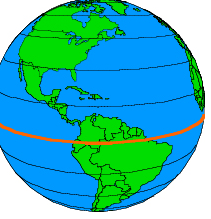
0 degrees latitude; an imaginary line that runs around the middle of Earth, like a belt
a)
Tropic of Cancer
b)
Equator
c)
Prime Meridian
d)
Tropic of Capricorn
93.
0 degrees longitude; an imaginary line that runs up and down through the United Kingdom
a)
Prime Meridian
b)
Equator
c)
International Date Line
94.
180 degrees longitude; an imaginary line that runs up and down through the Pacific Ocean
a)
International Date Line
b)
Equator
c)
Time Zone Line
d)
Prime Meridian
95.
What is the approximate location of letter B?
a)
80oN, 0o
b)
0o, 80oW
c)
80oS, 0o
d)
0o, 80oE
96.
Which letter would you find at 15oS, 60oW?
a)
A
b)
C
c)
L
d)
H
97.
What is the map symbol (darker lines)?
a)
roads
b)
index contour
c)
contour interval
d)
waves
98.
Contour lines that are very close together indicate the land is _______________
a)
gentle/gradual
b)
a forest
c)
steep
d)
a swamp
99.
In which direction is Bird Creek flowing?
a)
West
b)
North
c)
South
d)
East
100.

Which locations have the same elevation?

a)

A and C

b)

B and E

c)

C and I

d)

F and G

101.

Points A, B, X, and Y are locations on a map. Elevations are shown in feet.


Which diagram best represents the topographic profile along a straight line from point A to point B?

a)
b)
c)
d)
102.
Map that shows detailed shapes of Earth's surface, along with its natural and human made features
a)
topographical map
b)
elevation
c)
contour line
103.
The height above sea level of any point on Earth's surface
a)
contour interval
b)
elevation
c)
slope
104.
Lines on a topographic map that connect points of equal elevation
a)
contour lines
b)
topography lines
c)
index lines
105.
The number of satellites needed to triangulate your position on Earth
a)
one
b)
three
c)
27
106.
The angular distance measured in degrees North or South of the equator is called ___.
a)
elevation
b)
relief
c)
latitude
d)
longitude
107.
The difference in elevation between contour lines on a topographic map is called ___.
a)
contour line
b)
contour interval
c)
relief
d)
scale
108.
How many time zones are there in the world?
a)
24
b)
12
c)
6
d)
48
109.
California is in Pacific time zone and Boston is in Eastern time zone. If it is 10:00 A.M. in Boston, what time is it in California?
a)
1:00 P.M.
b)
7:00 A.M.
c)
12:00 P.M.
d)
11:00 A.M.
110.
a)
The map shows lines of longitude.
b)
The map shows lines of latitude.
111.
Primary unit used to measure latitude and longitude.
a)
nanosecond
b)
feet
c)
liters
d)
degrees
112.
One-half of the sphere that makes up Earth's surface
a)
hemisphere
b)
half-circle
c)
demiglobe
d)
quadrant
113.

What direction is on the number 2?

a)

north

b)

east

c)

south

d)

west

114.
Which way is the compass facing?
a)
South
b)
West
c)
South East
d)
South West
115.

The cinema is ______________ of the zoo.

a)

Southeast

b)

North

c)

West

d)

Northwest

116.

Which direction is missing?

a)

North

b)

Northwest

c)

Southeast

d)

Northeast

117.
What force keeps all the planets in orbit and is the strongest force in our solar system
a)
Jedi Force
b)
Inertia
c)
Sun's gravitational force
d)
Acceleration force
118.
The Inner Planets are called "terrestrial planets" b/c they're.....
a)
small, rocky, and solid
b)
small, gaseous, solid
c)
big, rocky, and liquid
d)
big, rocky, and solid
119.
This planet is also known as the "Red Planet" 
a)
Venus
b)
Pluto
c)
Mercury
d)
Mars
120.
This Solar System object is made of gas, dust, and ice (a "dirty snowball"). It also orbits the Sun in an oval pattern
a)
asteroid
b)
meteor
c)
comet
d)
meteorite
121.
Why is a meteor different from a  meteorite 
a)
the -ITE
b)
meteors are found between Earth and Mars
c)
meteorites are found between Venus and Earth
d)
meteorites hit Earth surface
122.
Where is the Asteroid Belt found
a)
between Mars and Saturn
b)
between Jupiter and Saturn
c)
between Saturn and Uranus
d)
between Mars and Jupiter
123.
Ceres, Pluto, and Makemake are classified as what
a)
outer planets
b)
dwarf planets
c)
meteors
d)
asteroids
124.
The smallest Inner Planet is?
a)
Earth
b)
Venus
c)
Mars
d)
Mercury
125.
Venus is considered the hottest planet because
a)
the thick clouds trap the suns heat causing a greenhouse effect
b)
it is the closest planet to the sun and revolves fast
c)
 the inside is very similar to Earth
d)
the planet rotates from east to west
126.
The Sun's energy is produced by
a)
its rotation and revolution
b)
Nuclear Fusion
c)
sunspots
d)
corona
127.
The largest planet in the Solar System is
a)
Jupiter
b)
Saturn
c)
Neptune
d)
Uranus
128.
Which Outer Planet has a swirling storm called the Great Red Spot
a)
Uranus
b)
Neptune
c)
Jupiter
d)
Saturn
129.
All the planets rotate on their axis at the same speed
a)
true
b)
i don't know
c)
who cares
d)
false
130.
Which of these planets is considered "Earth's twin"
a)
Mars
b)
Mercury
c)
Venus
131.
The Outer Planets are known as "gas giants". What two gases make up most of these planets?
a)
oxygen and nitrogen
b)
hydrogen and helium
c)
helium and neon
d)
chlorine and argon
132.
Earth and Mars have seasons.  Why?
a)
Their proximity to the Sun.
b)
They are both tilted on their axes.
c)
They both have retrograde motion.
d)
Due to their moons.
133.
Which two planets have a unique rotation (either backwards or on its side)
a)
Mars and Venus
b)
Jupiter and Uranus
c)
Venus and Uranus
d)
Mercury and Neptune
134.
Which planet is covered in craters, like our moon>
a)
Mercury
b)
Venus
c)
Saturn
d)
Uranus
135.
Which planet was discovered by mathematical predictions?
a)
Venus
b)
Earth
c)
Uranus
d)
Neptune
136.
Which planet orbits the sun the fastest? (Hint: the closer the sun, the stronger the gravitational pull!)
a)
Mercury
b)
Earth
c)
Jupiter
d)
Neptune