wayground logo

Free Printable Worksheets

Font size

S
M
L
XL
Worksheets

LakeVille Middle School Exit Exam

Total questions: 138

Worksheet time: 1hrs 12mins
Name
Class
Date
1.
Rank the states of matter from slowest to fastest particle speed.
a)
gas, solid, liquid
b)
solid, liquid, gas
c)
gas, liquid, solid
d)
solid, gas, liquid
2.
What are the three phases of matter most common on earth?
a)
Water, metal, glass
b)
Liquid, water, air
c)
Solid, metal, glass
d)
Liquid, solid, gas
3.
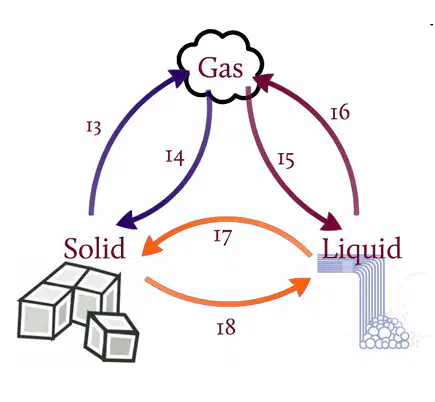
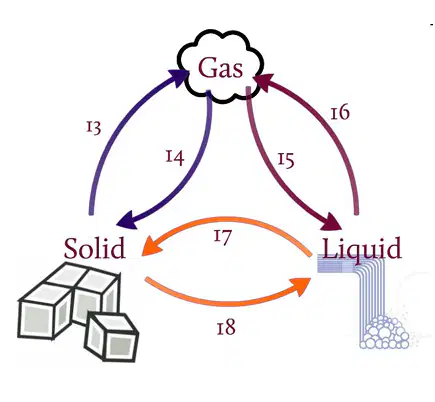
What process is does the arrow labeled #17 represent?
a)
melt
b)
evaporation
c)
condensation
d)
freeze
4.
What process is does the arrow labeled #13 represent?
a)
depostion
b)
condensation
c)
evaporation
d)
sublimation
5.
What is kinetic energy?
a)
The energy of moving things
b)
The stored energy of water
c)
The energy of light
d)
The particles of water
6.
What is temperature?
a)
The flow of energy from one object to another
b)
The total amount of energy based on how fast the particles are moving and how many of them there are.
c)
The average kinetic energy of a substance
d)
The amount of mass in a given amount of space.
7.
What is thermal energy?
a)
The flow of energy from one object to another
b)
The total amount of energy based on how fast the particles are moving and how many of them there are.
c)
The average kinetic energy of a substance
d)
The amount of mass in a given amount of space.
8.
What is heat?
a)
The flow of energy from one object to another
b)
The total amount of energy based on how fast the particles are moving and how many of them there are.
c)
The average kinetic energy of a substance
d)
The amount of mass in a given amount of space.
9.
Conduction, convection, and radiation ALL _______________________________
a)
occur most easily in solids.
b)
can transfer heat without particles.
c)
require direct contact.
d)
transfer thermal energy from high to low temperatures.
10.
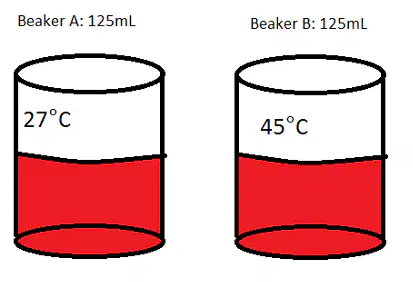
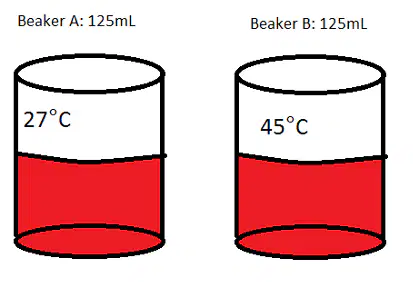
The beakers both contain the same substance. The beaker in Figure 2 with the greater AVERAGE kinetic energy is
a)
A
b)
B
c)
the both have the same average kinetic energy
11.
An ice cube (50mL and 0C) is placed inside each beaker (Fig 2). The greatest amount of thermal energy will GAINED by ___________________.
a)
The fluid in beaker A
b)
The fluid in beaker B
c)
The ice in beaker A
d)
The ice in beaker B
12.
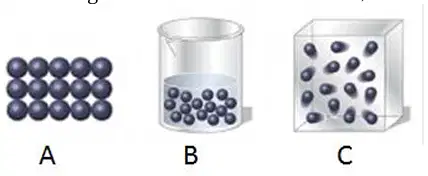
If enough heat was REMOVED from B, it would change into ____________.
a)
A
b)
B
c)
C
d)
stay the same
13.
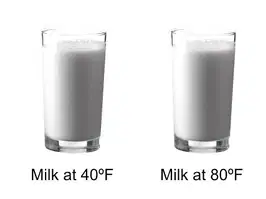
A student has two identical glasses of milk except that the temperature of the milk in one glass is 40ºF and the temperature of the milk in the other glass is 80ºF. The milk at which temperature has more thermal energy?
a)
The milk at 40 degrees F
b)
The milk at 80 degrees F
c)
They have the same thermal energy
14.
What are the smallest parts of matter?
a)
Elements
b)
Atoms
c)
Neutrons
d)
electrons
15.
What are the different types of atoms?
a)
Elements
b)
Atoms
c)
Neutrons
d)
electrons
16.
What do the arrangement of the protons, neutrons and electrons and electrons give atoms?
a)
physical properties
b)
Chemical properties
c)
Both physical and chemical properties
17.
What are the major groups of atoms?
a)
Metals, non-metals, metalloids
b)
Liquid, solids, gasses
c)
Reactive, non-reactive, inert
d)
Metals, inert, gas
18.
What are the characteristics of metals?
a)
Dull, poor conductors of heat and electricity
b)
Shiny, good conductors of heat and electricity
c)
Dull, poor conductors of heat and electricity and Shiny, good conductors of heat and electricity
d)
Liquid at room temperature
19.
Select all that apply about the image below.
a)
pure substance
b)
element
c)
mixture
d)
compound
e)
homogenous mixture
20.
Select all that apply about the image below.
a)
pure substance
b)
compound
c)
mixture
d)
element
e)
homogenous mixture
21.
What are the rows on the periodic table called?
a)
Groups
b)
Families
c)
Periods
d)
diagonals
22.
What are the columns on the periodic table called?
a)
Groups
b)
Families
c)
Periods
d)
diagonals
23.
What is pressure?
a)
The force that pulls objects toward each other
b)
The force that resists motion
c)
The amount of force needed to move
d)
The amount of force in a given area
24.
How do atoms become stable?
a)
They gain or lose protons
b)
They gain or lose neutrons
c)
They gain or lose electrons
25.
What do atoms with opposite charges do?
a)
Repel
b)
Attract
c)
Nothing
26.
What is the smallest part of a compound called?
a)
Atom
b)
Proton
c)
Neutron
d)
molecule
27.
What is a compound?
a)
A single atoms
b)
Two atoms in the same place
c)
Two or more atoms bonded together
d)
A gas with different types of molecules
28.
What are physical properties?
a)
Properties that cannot be observed
b)
Properties that can be observed without changing the substance.
29.
Which of the following is a physical property?
a)
Combustibility
b)
State of matter
30.
What is a physical change?
a)
A change that takes place creating a new substance
b)
A change that takes place that does not create a new substance
31.
Which is an example of a physical change?
a)
Rust
b)
evaporation
32.
What are the two main categories of matter?
a)
Matter and energy
b)
Atoms and elements
c)
Pure and mixed
d)
Heterogeneous and homogeneous
33.
What are mixtures?
a)
A combination of substances and are chemically combined
b)
A combination of substances that are not chemically combined
34.
What are the two types of mixtures?
a)
Matter and energy
b)
Atoms and elements
c)
Pure and mixed
d)
Heterogeneous and homogeneous
35.
Milk is an example of which of the following?
a)
A mixture that looks the same throughout
b)
A pure substance
c)
A mixture that you can see the different parts of it
d)
A combination of substances that are chemically combined
36.
What is a chemical change?
a)
A change that takes place creating a new substance
b)
A change that takes place that does not create a new substance
37.
Which of the following is NOT a sign of a chemical change?
a)
Production of bubbles
b)
Change in odor
c)
Change in state of matter
d)
Change in temperature
38.
What are the layers of the earth?
a)
Crust, mantle, inner core, outer core
b)
Transform, convergent, divergent
c)
Metals, metalloids, non-metals
d)
Continental and oceanic
39.
What are the types of crust?
a)
Crust, mantle, inner core, outer core
b)
Transform, convergent, divergent
c)
Metals, metalloids, non-metals
d)
Continental and oceanic
40.
What are the three types of heat transfer?
a)
Conduction, convection, temperature
b)
Thermal, temperature, heat
c)
Conduction, radiation, convection
d)
Thermal, heat, radiation
41.
Which type of heat transfer is responsible for the convection currents in the mantle?
a)
Convection
b)
Radiation
c)
Conduction
42.
What is the evidence for continental drift?
a)
Fossils
b)
Pillow lava
c)
Magnetic stripes on the ocean floor
43.
What is the evidence for seafloor spreading?
a)
Fossils
b)
Pillow lava
c)
Magnetic stripes on the ocean floor
44.
What is made when the ocean floor sinks below the continental crust?
a)
Mountains
b)
Trenches
c)
Volcanoes
d)
ridges
45.
What is the place where two tectonic plates meet called?
a)
Earthquake
b)
Boundary
c)
Edge
d)
Volcanoes
46.
What happens when the plates slide past each other?
a)
Convergent and subduction
b)
Convergent and mountains are made
c)
Transform and faults occur
d)
Divergent and rift valleys are made
47.
What happens when two continental plates collide?
a)
Convergent and subduction
b)
Convergent and mountains are made
c)
Transform and faults occur
d)
Divergent and rift valleys are made
48.
What landforms are made by compression?
a)
Mountains, ocean trenches and volcanic arcs
b)
Transform faults, and fault zones
49.
What are volcanoes?
a)
Cracks the ground from tectonic movement
b)
Weak spots in the crust where magma can come up
c)
Measured by s waves
d)
The San Andreas fault is an example of one.
50.
What causes volcanoes to form?
a)
Subduction of one oceanic plate under another
b)
Subduction of one oceanic plate under a continental plate
c)
Two continental plates converging
d)
Two continental plates slide past each other
51.
What is weathering?
a)
When sediment stops moving
b)
When sediment moves
c)
When sediment is created
52.
What is erosion?
a)
When sediment stops moving
b)
When sediment moves
c)
When sediment is created
53.
What is deposition?
a)
When sediment stops moving
b)
When sediment moves
c)
When sediment is created
54.
Which of the following is an example of erosion caused by glaciers?
a)
Fast flowing water carries sediments away from where they were originally deposited
b)
they scrape away the surface of the land
c)
Light particles are moved by air
d)
Water freezes in rock and breaks it apart
55.
Which of the following is an example of how wind erodes?
a)
Fast flowing water carries sediments away from where they were originally
b)
they scrape away the surface of the land
c)
Light particles are moved by air
d)
Water freezes in rock and breaks it apart
56.
Which of the following is an example of how water erodes?
a)
Fast flowing water carries sediments away from where they were originally
b)
the scrape away the surface of the land
c)
Light particles are moved by air
d)
Water freezes in rock and breaks it apart
57.
What is an igneous rock?
a)
A rock formed from heat and pressure
b)
A rock formed from compaction and cementation
c)
A rock formed formed from melted rock cooling
58.
What are metamorphic rocks?
a)
A rock formed from heat and pressure
b)
A rock formed from compaction and cementation
c)
A rock formed formed from melted rock cooling
59.
What are sedimentary rocks?
a)
A rock formed from heat and pressure
b)
A rock formed from compaction and cementation
c)
A rock formed formed from melted rock cooling
60.
What is different about sedimentary rocks than metamorphic and igneous rocks?
a)
How they form
b)
Where they form
c)
Why they form
61.
True or False: A sedimentary rock can become a different form of a sedimentary rock.
a)
True
b)
False
62.
True or False: A sedimentary rock can become an igneous rock.
a)
True
b)
False
63.
Geologists organized the geologic time scale based on _____.
a)
rock record
b)
evenly spaced time segments
c)
fossil record
d)
both rock and fossil record
64.
What percent of life has to disappear in order for it to be considered a mass extinction?
a)
65-95
b)
75-90
c)
85-100
d)
95-100
65.
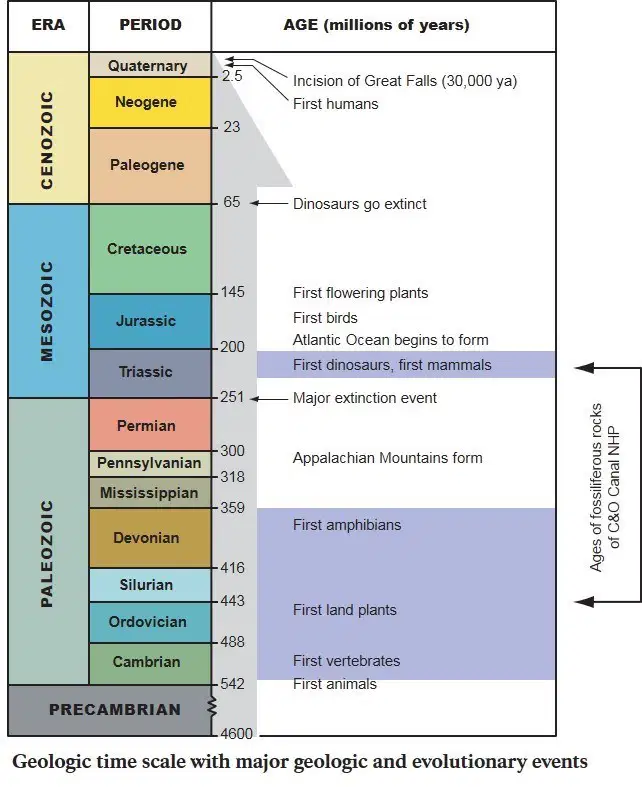
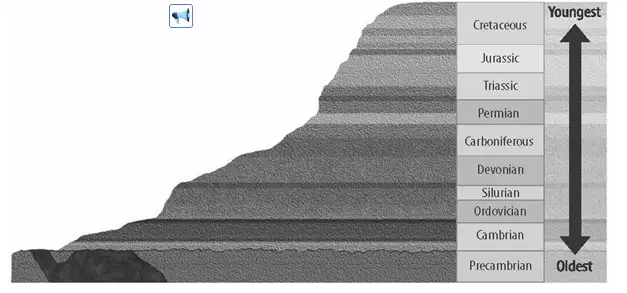
In the chart below, eras are subdivided into periods.
a)
True
b)
False
66.
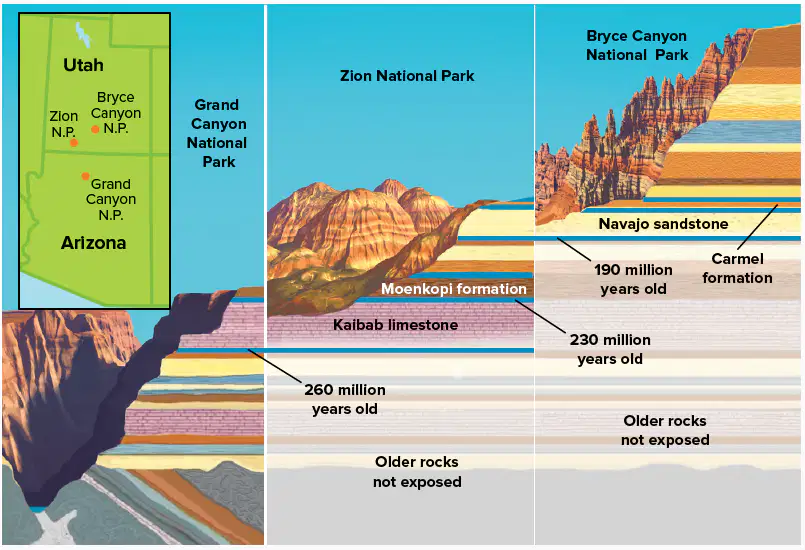
a)
The layer below the Kaibab layer at Zion National Park would likely be the same layer that is immediately above the Kaibab layer at Bryce Canyon National Park.
b)
The layer below the Kaibab layer at Zion National Park would likely be the same layer that is immediately above the Kaibab layer at the Grand Canyon National Park.
c)
The layer below the Kaibab layer at Zion National Park would likely be the same layer that is immediately above the Navajo layer at Bryce Canyon National Park.
d)
The layer below the Kaibab layer at Zion National Park would likely be the same layer that is immediately below the Navajo layer at Grand Canyon National Park.
67.
A difference in beak shape among members of the same finch species is an example of variation. ____________________
a)
True
b)
False
68.
A mutation cannot be inherited.
a)
True
b)
False
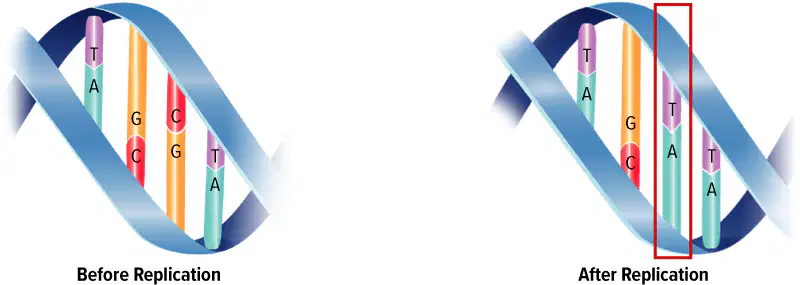
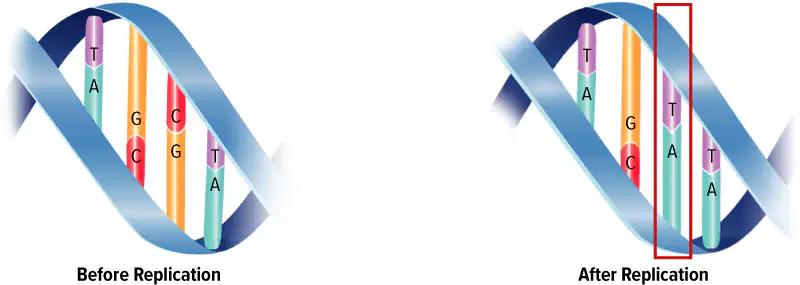
69.
The diagram above shows a segment of DNA before and after replication. Which could have occurred as a result of this change in structure? .
a)
changes to the genotype of the organism
b)
changes to the traits of the organism
c)
changes to the proteins of the organism
d)
all of these
70.
The mutation shown above resulted in muscle disease. The effect of this mutation is that muscles become progressively weaker. What type of mutation is this?
a)
positive
b)
negative
c)
neutral
d)
none of these
71.
Small changes in traits that cause variation are frequently caused by _____.
a)
natural selection
b)
competition
c)
mutations
d)
migration
72.
No two tigers have the same stripe pattern. Such slight differences in inherited traits among individual members of a species occur through mutations. Which term best identifies these differences?
a)
mimicry
b)
natural selection
c)
adaptation
d)
variation
73.
Which of the following is a behavioral adaptation?
a)
blue whales migrating to mate and give birth
b)
tree frogs having long, sticky tongues
c)
alligators’ eyes being on top of their heads to help them see above the water
d)
hedgehogs having stiff spines sticking out of their bodies
74.
Which of the following is an inherited trait that increases an organism’s chance of survival and reproduction?
a)
adaptation
b)
mutation
c)
natural selection
d)
selective breeding
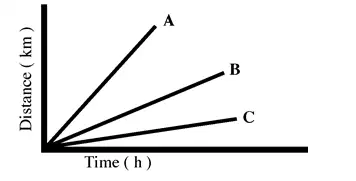
75.
Which line represents travel at the fastest speed?
a)
A
b)
B
c)
C
d)
D
76.
Acceleration depends on which two factors?
a)
mass and position
b)
net force and mass
c)
mass and velocity
d)
position and net force
77.

Lizzie is pushing Alex on a scooter. Lizzie is pushing with 75 N of force to the left, and Alex is helping with 20 N to the left. What is the net force on the scooter?
a)
95 N, to the right
b)
95 N, to the left
c)
55 N, to the right
d)
55 N, to the left
78.
The statement "for every action, there is an equal but opposite reaction" is a statement of ____.
a)
95 N, to the right
b)
95 N, to the left
c)
55 N, to the right
d)
55 N, to the left
79.
Which shows the divisions of the geologic time scale from least to greatest?
a)
epoch, period, eon, era
b)
epoch, period, era, eon
c)
eon, era, period, epoch
d)
epoch, era, period, eon
80.
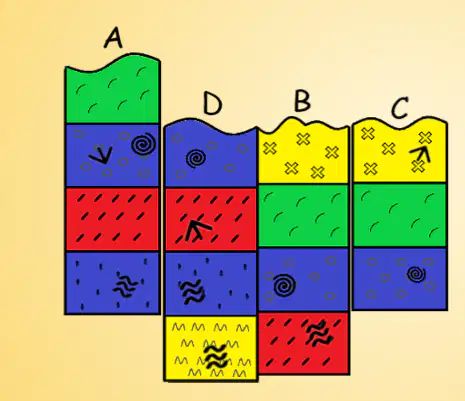
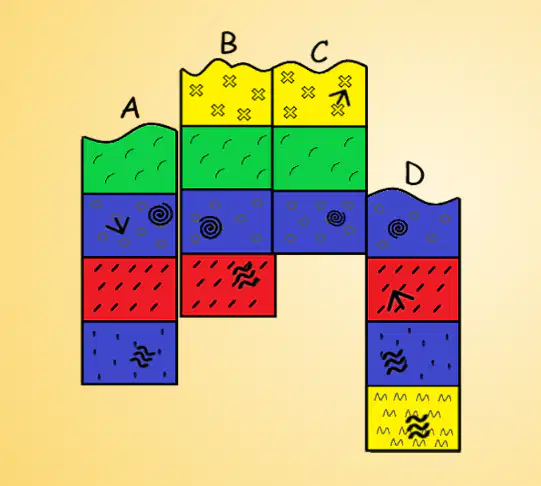
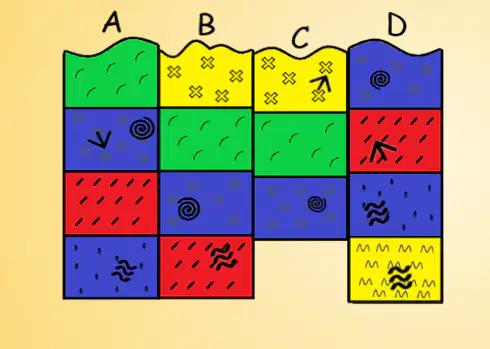
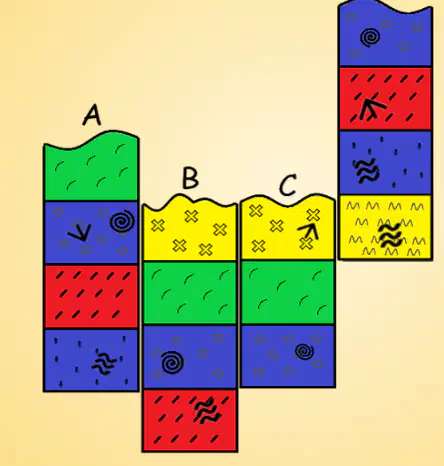
Which of these shows the rock outcrops is correlated properly?
a)
Option 1
b)
Option 2
c)
Option 3
d)
Option 4
81.
Which is true of the rock layers shown below?
a)
Only older rock contains fossils of complex life forms.
b)
Only younger rock contains fossils of simple life forms.
c)
Both older and younger rocks contain fossils of the most complex life forms.
d)
Only younger rock contains fossils of complex life forms.
82.
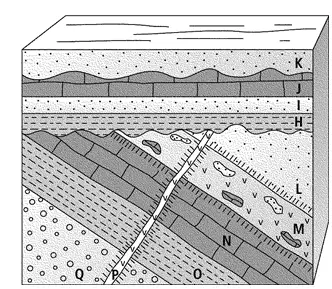
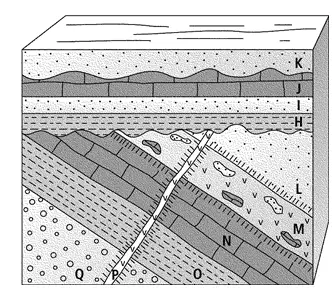
Layer J is ____________ Layer N.
a)
older than
b)
the same age as
c)
younger than
d)
denser than
83.
According to the principle of ____________, Event P is younger than Event M.
a)
igneous intrusion
b)
cross-cutting relationships
c)
original horizontality
d)
subduction
84.
Knowing an object’s position requires which of the following?
a)
speed
b)
time
c)
displacement
d)
reference point
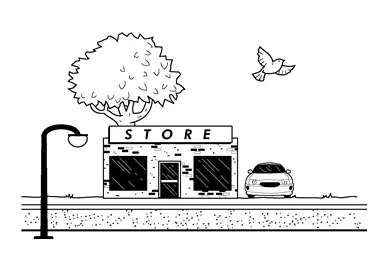
85.
Which of the following is the least useful object to use as a point of reference for describing the location of the parked car?
a)
tree
b)
store
c)
car
d)
bird
86.
Two people are pulling on a chain in opposite directions with forces of 500 N and 600 N. The forces would best be described as ____.
a)
balanced forces
b)
unbalanced forces
c)
action-reaction forces
d)
gravitational forces
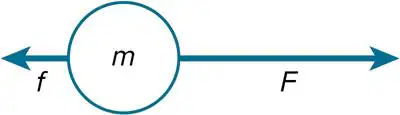
87.
An object has a force acting on it to the right and friction acting on it to the left. What change in motion will result from the forces modeled?
a)
There will be no change in motion because the forces are in opposite directions.
b)
The object will slow down because of the friction force.
c)
The object will accelerate to the right.
d)
The object will accelerate to the left.
88.
A test booklet is sitting at rest on a desk. Which force prevents the booklet from passing through the desk?
a)
gravitity
b)
friction
c)
normal
d)
contact
89.
The acceleration of an object is always in the direction of the net force acting on it
a)
true
b)
false
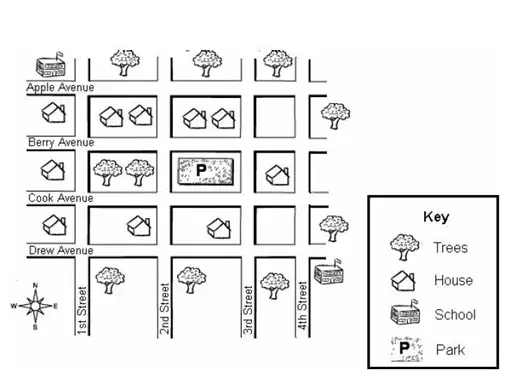
90.
What is shown two blocks west of the park?
a)
two trees
b)
a house
c)
a school
d)
nothing
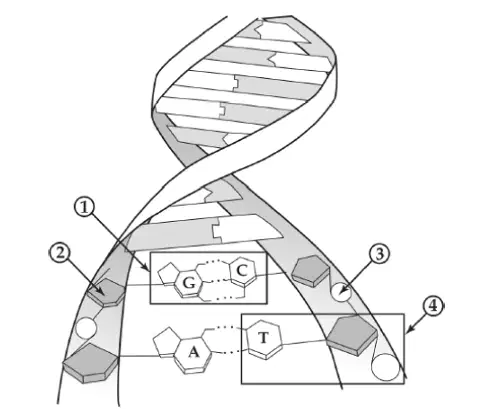
91.
Which of these is a sugar?
a)
1
b)
2
c)
3
d)
4
92.
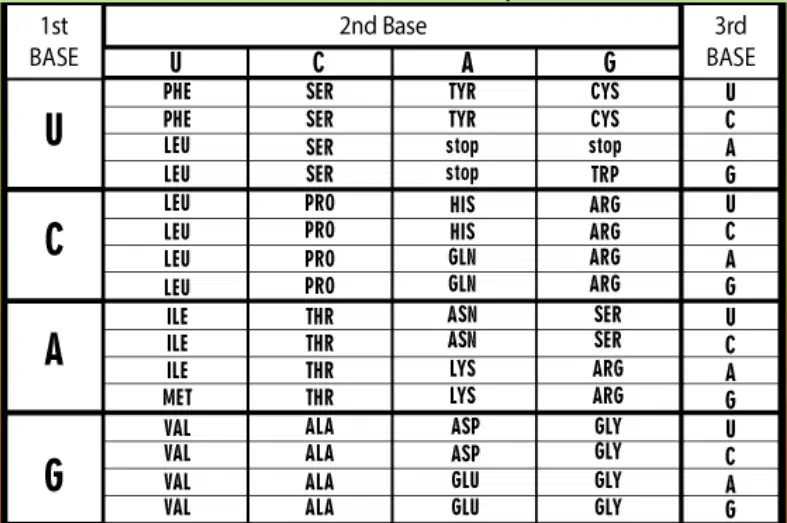
What would the = DNA sequence AAT code for according to the chart below?
a)
PHE
b)
LEU
c)
SER
d)
STOP
93.
Why does it take longer for cars to stop on pavement that is covered with ice than on pavement that is dry?
a)
The ice makes the friction between the tires less
b)
The ice makes the friction between the tires more
c)
The ice makes the temperature of the pavement
d)
The ice makes the temperature of the air lower.
94.
Kara pushes her big brother on a swing at the playground. After he gets off the swing, her little brother gets on. Kara finds that it is easier to push her little brother than it was to push her big brother. What is the MOST LIKELY reason for this?
a)
A smaller mass always moves faster than a larger mass.
b)
A larger mass always moves faster than a smaller mass.
c)
Less force is needed to move a larger mass the same distance.
d)
More force is needed to move a larger mass the same distance.
95.
How old is the earth?
a)
460,000 years old
b)
4,600,000 years old
c)
46,000,000 years old
d)
4,600,000,000 years old
96.
What do genes control?
a)
mutations
b)
the sequence of dna
c)
the production of specific nutrients
d)
the production of specific proteins
97.
Deletion of a base, insertion of a base, and substitution of a base are all types of what?
a)
genetic adaptations
b)
genetic evolutions
c)
genetic chromosomes
d)
genetic mutations
98.
A lion's legs, a seal's flippers, a bats' wings, and a human arm are all made from bone but have a different function. What type of structures are they?
a)
Vestigial
b)
Analogous
c)
Homologous
d)
Embryonical
99.
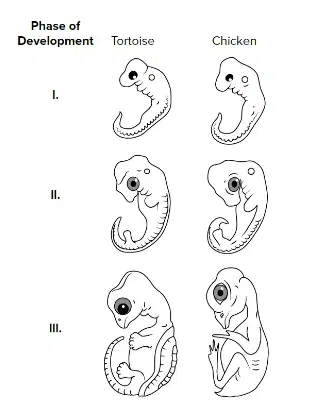
Which conclusions are best supported by the embryo diagram? Select all that apply.
a)
Organisms develop at similar rates because they share a common ancestor.
b)
Organisms appear similar in early development because they share a common ancestor.
c)
Organisms that share certain embryonic structures, such as pharyngeal pouches and tails, share a common ancestor.
d)
Organisms that share a common ancestor develop differently through the three phases of development.
e)
Organisms that are more closely related develop faster than other organisms due to sharing a common ancestor.
100.
Third eyelids, appendices, and tailbones in humans are all structures that once had a functions and no do not, what type of structures are these?
a)
Vestigial
b)
Analogous
c)
Homologous
d)
Embryonical
101.
Mutations can be helpful, harmful or
a)
have no effect
b)
are invisible
c)
advantageous
d)
deleterious
102.
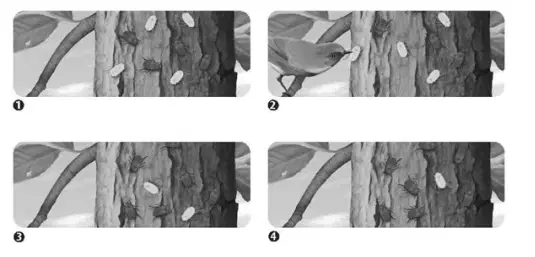
What does this sequence show?
a)
how variation results in an adaptation
b)
how camouflage results in variation
c)
how selective breeding results in an adaptation
d)
how mimicry results in variation
103.
If a drought occurs on the Galapagos Islands and the finches can't adapt quickly enough to the drought conditions, what would most likely happen to the finches?
a)
they would go extinct
b)
they would find a new food sources
c)
they would start migrating to a place where there is food
d)
they would adapt to be able to store water
104.
True or False: Mutations are random and permanent changes to an organisms DNA.
a)
True
b)
False
105.
What determines the gravitational pull on an object on the surface of the Moon?
a)
The mass of the moon.
b)
The distance from the moon to the earth.
c)
The surface features of the moon.
d)
The atmosphere of the moon.
106.
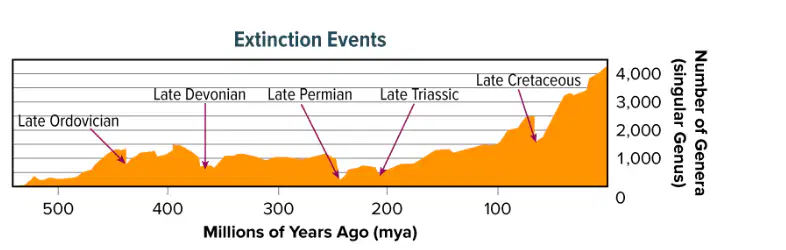
The graph shows the timeline of the five mass extinction events that occurred during the history of life on Earth. Select two statements that are supported by the data from the graph.
a)
It takes millions of years until the next peak of biodiversity is reached after a mass extinction.
b)
These data were collected only from organisms that live today.
c)
The first mass extinction event occurred about 450 million years ago.
d)
The mass extinction of dinosaurs in the Late Cretaceous was caused by fallout from the impact of an asteroid.
107.

Every living organism is made up of one or more cells

a)

True

b)

False

108.

Animals cells and plant cells are exactly the same.

a)

True

b)

False

109.

Only ____________ cells have a cell wall instead of a cell membrane.

a)

plant

b)

animal

c)

white blood

d)

living

110.

Genes are made of the molecule ______________________.

a)

hydrogen

b)

DNA

c)

oxygen

d)

chromosome

111.

Which of the following have you inherited completely from your parents? Choose the best answer.

a)

The shape of your blood cells

b)

Your intelligence

c)

Your personality

d)

Your weight

112.

When two pea plants with Tt genotypes are cross-bred, how many short (tt) plants will there most likely be in the new generation

a)

1 out of 4

b)

1 out of 2

c)

1 out of 6

d)

1 out of 8

113.

What did Gregor Mendel and Reginald Punnett have in common?

a)

They were both monks

b)

They both lived during the 20th century

c)

They both experimented with pea plants

d)

They both lived in Germany

114.

__________________________ is the process of transporting the male gamete from the male flower parts to the female flower parts.

a)

Asexual reproduction

b)

Pollination

c)

Photosynthesis

d)

Vasculation

115.

Which type of reproduction tends to be a longer process?

a)

Sexual

b)

Asexual

c)

They occur at the same rate

d)

Both are slow processes

116.

Sexual, Asexual, or Both?

a)

Sexual

b)

Asexual

c)

Both

d)

Neither

117.

What effect does the sun have on surface water?

a)

It causes it to boil

b)

It causes it to rain

c)

It causes it to sink

d)

It causes it to evaporate

118.

What is precipitation?

a)

Sweat from our bodies on hot days

b)

Warm rain but not cold snow or sleet

c)

Gas that we use in furnaces or ovens

d)

Any form of water that falls from the sky

119.
The water cycle has
a)
a beginning and an end. 
b)
no beginning an no end. 
c)
only a beginning. 
d)
only an end. 
120.

How does cellular respiration contribute to the process of evaporation?

a)

When organisms perform cellular respiration, they exhale water vapor, which contributes to evaporation.

b)

When organisms perform cellular respiration, they inhale water vapor, which contributes to evaporation.

c)

When organisms perform cellular respiration, they exhale carbon dioxide, which contributes to evaporation.

d)

When organisms perform cellular respiration, they inhale oxygen, which contributes to evaporation.

121.

This severe weather is a...

a)

tornado

b)

hurricane

c)

storm surge

d)

thunderstorm

122.

The sound created by lightning because the air is so hot and getting larger...

a)

lightning

b)

thunder

c)

storm surge

d)

thunderstorm

123.

What causes storm clouds to develop?

a)

Dry air rising and cooling

b)

Humid air rising and cooling

c)

Dry air descending and warming

d)

Humid air descending and warming

124.
In the winter, Continental polar air masses bring what type of air to North America?
a)
dry and warm
b)
humid and cold
c)
dry and cold
d)
humid and warm
125.
Which type of air mass brings cool, humid weather to the West Coast of the United States?
a)
maritime tropical
b)
continental tropical
c)
maritime polar
d)
continental polar
126.
Which of the following is NOT a Natural Resource?
a)
Coal
b)
Paper
c)
Solar
d)
Wind
127.

Nonrenewable resources

a)

can be replenished.

b)

cannot be replenished.

c)

are not limited.

d)

are not fossil fuels.

128.

How does population growth affect natural resources?

a)

The more people on the planet, the less natural resources that are available for each person.

b)

The less people on the planet, the less natural resources that are available for each person.

c)

The more people on the planet, the more natural resources that are available for each person.

129.
What is the top of a wave?
a)
trough
b)
crest
130.
When you yell under water, what is the medium that sound travels through?
a)
air
b)
water
131.

What is the process called for how rainbows are formed?

a)

Reflection

b)

Refraction (bending)

c)

Transmission

d)

Scattering

132.

What happens to all of the light when it hits this object?

a)

reflection

b)

absorption

c)

transmission

133.

When light passes through a prism, why do you see different colors?

a)

Each color has a different wavelength, so they all bend at different angles

b)

Because Stone Cold said so

c)

Because the prism is magical and allows you see the colors

d)
134.

The elasticity of a substance describes how fast or slow its particle bounce back-and-forth as ______ move through the object.

a)

vibrations

b)

chemicals

c)

electrons

d)

surface waves

135.

The amount of energy a sound wave carries per sound through a unit of area is its ____.

a)

pitch

b)

amplitude/intensity

c)

loudness

d)

frequency

136.

True or False: Amplitude can increase or decrease wavelength

a)

True, amplitude can increase or decrease wavelength

b)

False, frequency can increase or decrease wavelength

c)

False, crests can increase or decrease wavelength

137.

Longitudinal waves move:

a)

at a right angle compared to the direction the wave is traveling

b)

in a circle compared to the direction the wave is traveling

c)

matter

d)

in the same direction as the wave is traveling

138.

What is the amplitude of this wave?

a)

3

b)

-3

c)

6

d)

4