
 Worksheets
CPS 2024 Final Exam Practice
Total questions: 132
Worksheet time: 3hrs 7mins
John drove his car from his home to a nearby city. The city is 150 kilometers away and it took him 3 hours to reach. Can you calculate the average speed of John's car using the speed formula (Speed = Distance/Time)?
45 km/h
50 km/h
55 km/h
60 km/h
John participated in a local marathon. He completed the 5 km race in 0.42 hours. Can you calculate his average speed in km/h using the speed formula (Speed = Distance/Time)?
10 km/h
12 km/h
15 km/h
20 km/h
A bus is traveling from city A to city B. The distance between the two cities is 240 km. If the bus completes the journey in 4 hours, can you calculate the average speed of the bus?
50 km/h
60 km/h
70 km/h
80 km/h
A race car driver completes a lap of 200 meters in 20 seconds during a practice session. Using the speed formula (Speed = Distance/Time), can you calculate the driver's average speed in meters per second (m/s)?
8 m/s
10 m/s
12 m/s
15 m/s
Which of the following are examples of velocity?
a) 50 mph
b) 24 mph North
c) 24 mph Northeast
d) 30 mph West
All but (d)
All are velocity except (a)
Only (b)
None are velocity
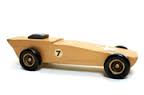
A car travels 90 meters due north in 15 seconds. Then the car turns around and travels 40 meters due south. What is the magnitude and direction of the car's displacement?
40 meters, South
50 meters, South
50 meters, North
40 meters, North


The clown walked 27 feet in 9 seconds. what was his velocity?
18 feet/sec
243 feet/sec
36 feet/sec
3 feet/sec
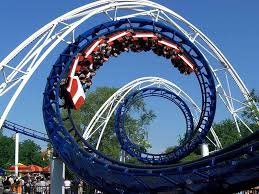
A bicycle accelerates from 3 m/s to 6 m/s in a distance of 1.5 m. What is the acceleration of the bike?
2 m/s/s
9 m/s/s
-2 m/s/s
-9 m/s/s

A 20 kg frog leaps with an acceleration of
2 m/Second square
what is its force?
10 N
40 m/s
10 m/s
40 N

As the car crashes into the pole, the driver with a mass of 160 g was thrown from the car with a force of 800 N
What was the acceleration of his body as it was thrown from the car?
800 m/s2
128,000 m/s2
640 m/s2
5 m/s2

What is the mass of a baseball with an acceleration of 30m/s2
and the force of 60 N?
2 kg
2 N
180 g
90 kg
In Newton's 3rd law: A bat hits a ball with a force of 100 N. What is the force and its direction exerted by the ball on the bat?
100 Newtons, same direction
100 Newtons, opposite direction
200 Newtons, opposite direction
200 Newtons, same direction

What is the force on a 1000 kg elevator that is falling freely at 9.8 m/sec2
102.04 n
9,800 n
980 n
103 n

A girl weighs 300 N what is her mass here on Earth?
40.8 kg
41 kg
30.6 kg
300 N
If the mass of a rhino is 1,080 kilograms on Earth , what is its weight?
2,400 Newtons
10,800 kg
10,800 Newtons
10,584 kg
Find the weight of a 20g object
200N
20g
0.2N
0.02kg
What is the weight of a 456g object?
456g
0.456kg
4.56N
456N
Find the weight of a 5kg rock on Mercury with a gravitational pull of 3.59m/s/s.
5kg
17.95N
1.39N
0.718N
It takes 20 N of force to move a box a distance of 10 m. How much work is done on the box in Joules?
200 J
20.0 J
100 J
10 J
You do work only when you exert a force on an object and move it

Lilly's cat ran through your yard. The cat has a mass of 5 kg. He is running at a speed of 3 m/s. What is the kinetic energy of the cat as he runs?
8.5 J
45 J
7.5 J
22.5 J

Ty lifts a set of 1250kg weights a vertical distance of 2m in a weight lifting contest. What Potential Energy do the weights now possess?
12,789 Joules
24,500 Joules
4,500 Joules

Calculate the potential energy of a car with a mass of 2,500 kg that is on a hill 100 meters above sea level. (g = 10 Nkg-1)
250,000 J
2,500,000 J
25,000,000 J
250 J

Alice kicks a soccer ball with a mass of 2.1 kg. The ball leaves the ground moving 30 meters per second. What is the kinetic energy of the soccer ball? (KE = 1/2mv2)
567 J
900 J
945 J
30 J


A cyclist does 900 Joules of work in 60 seconds. What is the cyclist's power output?
15 Watts
150 Watts
1.5 Watts
90 Watts
A machine does 1500 Joules of work in 3 seconds. What is the power of the machine?
450 Watts
500 Watts
4500 Watts
50 Watts
How much work is done by a 100 Watt light bulb that has been on for 60 seconds?
6000 Joules
600 Joules
60 Joules
1000 Joules
A car engine does 24000 Joules of work in 8 seconds. What is the power of the engine?
3000 Watts
200 Watts
300 Watts
2000 Watts
What is the efficiency of an object that has 4000 J of work put into it, but only produces 3000 J of useful work.
75%
125 %
25 %
None of these.
You input 100 J of work to a machine that gives 50 J of work output. What is the machine's efficiency?
150%
50%
2%
5000%
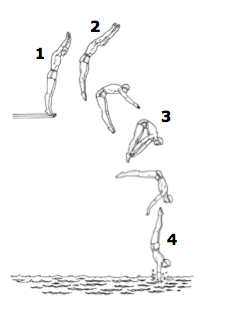
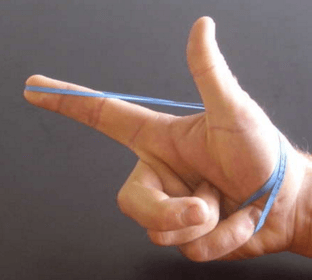
A stretched rubber band has ____________ energy.
Potential
Kinetic
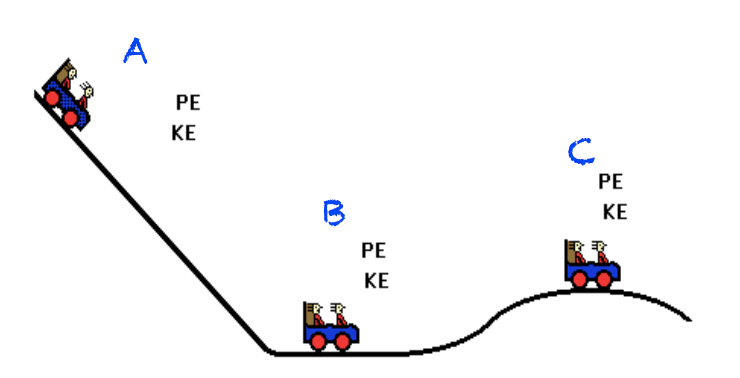
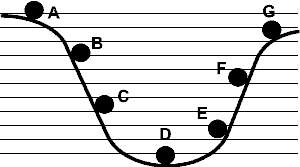
The coaster at B is at -
Maximum PE, Minimum KE
Minimum PE, Minimum KE
Minimum PE, Maximum KE
Maximum PE, Maximum KE

A football, which has a mass of 0.45 kg is thrown with a velocity of 10m/s. The ball has (a) J of KE.
Alice kicks a soccer ball with a mass of 2.1 kg. The ball leaves the ground moving 30 meters per second. What is the kinetic energy of the soccer ball?
567 J
900 J
945 J
30 J
Water surface waves are
longitudinal and perpendicular waves.
transverse and horizontal waves.
longitudinal and transverse waves.
vertical and horizontal waves.
Sound waves from a radio generally travel in which medium?
air
earth
light
water
Our eyes can detect light only within a range of _____ called visible light.
frequencies
speeds
mediums
periods
The _____ is the distance between two crests of a wave.
amplitude
wavelength
frequency
period
The speed of a sound wave
depends on wavelength.
depends on the medium.
depends on amplitude.
None of the above
Sound waves
require a medium.
are unrelated to vibrations.
are not mechanical waves.
can travel in a vacuum.
Light waves
require a medium.
cannot travel through solids.
cannot travel through liquids.
are electromagnetic waves.
Light waves are
transverse waves.
longitudinal waves.
rotation waves.
circular waves.
Sounds waves are
transverse waves.
longitudinal waves.
circular waves.
polarized waves.
What is the highest point on the wave?
Crest
Parveena
Trough
Amplitude
What is the Amplitude?
The rarefaction of a wave
The distance between the equilibrium point and the crest
The distance between the equilibrium point and the trough
The distance between the medium and the wavelength
What is the medium
The motion of the wave
The space the wave is passing through
The material the wave is passing through
Where the wave passes through the equilibrium poinT
Find the Wave Speeds....
Wavelength - 7m
Frequency - 25hz
180m/s
120m/s
215m/s
175m/s
What is the relationship between frequency and energy?
frequency increases, energy decreases
frequency increases, energy increases
frequency decreases, energy increases
there is no relationship between frequency and energy
What is the relationship between frequency and wavelength?
frequency increases, wavelength increases
frequency decreases, wavelength decreases
frequency increases, wavelength decreases
there is no relationship between frequency and wavelength
Which of the following would EM waves moves the FASTEST through?
solid
liquid
gas
How do MECHANICAL waves travel?
they transfer energy through particles that are touching each other
they transfer energy between electric & magnetic fields
they increase their amplitude to make waves travel faster
they increase their frequency to make waves travel faster
How do ELECTROMAGNETIC waves travel?
they transfer energy through particles that are touching each other
they transfer energy between electric & magnetic fields
they increase their amplitude to make waves travel faster
they increase their frequency to make waves travel faster

Which radiation type has the highest energy?
gamma rays
x rays
microwaves
radio waves
Which radiation type has the lowest energy?
gamma rays
x rays
microwaves
radio waves
Which radiation type has the highest frequency?
gamma rays
x rays
microwaves
radio waves
Which radiation type has the lowest frequency?
gamma rays
x rays
microwaves
radio waves
Which radiation type has the shortest wavelength?
gamma rays
x rays
microwaves
radio waves
Which radiation type has the longest wavelength?
gamma rays
x rays
microwaves
radio waves

What does point C represent?
Amplitude
Trough
Crest
Wavelength

All waves carry ________ as they travel from one place to another.
matter
space
energy
water

In a longitudinal wave, a ____ is an area where the particles are spread apart and a ____ is an area where the particles are close together.
crest, trough
compression, rarefaction
rarefaction, compression
trough, crest

Examples of ________ waves include visible light, xrays, ultraviolet, and radio waves.
transverse
longitudinal
1. A rocket launching in the Ukraine accelerates upwards from rest to a speed of 12 km/s in 8 seconds. Its acceleration is...?
96 m/s
96 m/s2
1.5 m/s2
1.5 m/s
If a car accelerates from 0 to 60 km/h in 5 seconds, what is its acceleration?
12 km/h 2
12 m/s 2
3 km/h 2
3 m/s 2
If a runner increases their speed from 2 m/s to 10 m/s in 4 seconds, what is their acceleration?
2 m/s 2
4 m/s 2
8 m/s 2
3 m/s 2
Match the following description of one of Newton's Laws to the name of the law.
Newton's First Law
Objects in motion stay in motion, and objects at rest stay at rest unless a force acts upon them.
Newton's Second Law
The force needed to move an object is equal to the mass of the object times acceleration.
Newton's Third Law
For every action, there is an equal & opposite reaction.
N
Newton

Newton's 1st Law

Newton's 2nd Law

Newton's 3rd Law

Impulse
Match the following Law of motion with the correct example
Newton's 1st law of motion
Roll a ball across smooth/rough surfaces. The ball rolls faster on smooth because less fiction
Newton's 2nd law of motion
Hit a ball with 2 different forces, the ball will have greater acceleration due to larger force
Newton's 3rd of motion
Bouncing the ball on the court is the action, the floor pushing the ball back up is the reaction
According to Newton's Third Law of Motion, if you push on a wall, the wall pushes back on you with:
Less force.
More force.
The same amount of force.
No force at all.
Which of the following best describes inertia?
The tendency of an object to resist changes in its velocity.
The rate of change of momentum of an object.
The quantity of motion of a moving body, measured as a product of its mass and velocity.
The gravitational pull on an object.
If the action is a force of 5 N to the left, what is the reaction?
5 N to the left
5 N to the right
10 N to the left
10 N to the right
Which law explains why it is harder to stop a heavy truck than a small car moving at the same speed?
First Law of Motion
Second Law of Motion
Third Law of Motion
Law of Universal Gravitation
In a Force diagram, if the forces are on opposite sides and equal, what do we know?
Velocity is changing
Forces are balanced
The total force is 0
Forces are unbalanced

Steve runs 20 m North in 4 seconds. What is his velocity
5 m/s
4 m/s south
5 m/s south
5 m/s north
Which of the following is a contact force?
Magnetic force
Gravitational force
Frictional force
Electric force
What type of force is gravity?
A contact force
A non-contact force
A mechanical force
An electromagnetic force
What force opposes the motion of objects through the air?
Gravity
Friction
Air resistance
Tension
What type of force is exerted by a stretched or compressed spring?
Gravitational force
Elastic force
Magnetic force
Electric force

During which interval is the object speeding up?
A to B
B to C
D to E
E to F
During which interval is the object speeding up?
A to B
B to C
D to E
E to F
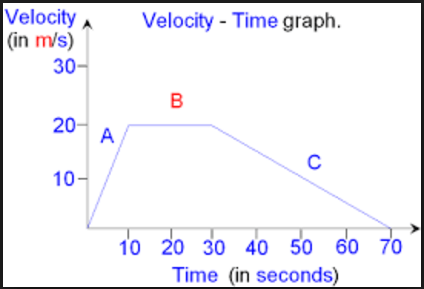


What is happening in this graph from point B to C? This is a SPEED-TIME GRAPH !! Look CAREFULLY !
(a)
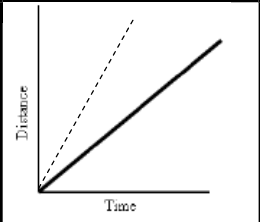
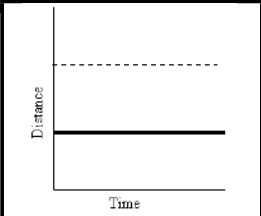

Describe the motion in the graph:
Constant Speed (positive slope)
Stopped (at rest)
Acceleration (increasing speed)
Return Home (negative slope)
Choose the graph that matches the story. A car travels at a constant speed of 70 km/hr for 15 minutes. The car decreases its speed from 70 to 40 km/hr over the next two minutes and then continues to travel at a constant speed of 40 km/hr for the next 5 minutes.


A leftward force is applied to a crate to push it across the floor at a constant speed. Which is the correct force diagram?


A rightward force is applied to a dresser to accelerate it to the right across the bedroom floor.


Which way is the object moving?
it's either not moving or moving at a constant speed due to balanced forces
to the right
to the bottom
up


A doorknob is an example of a _______.
wheel and axle
inclined plane
pulley
wedge

An example of a lever is a ________.
car wheels
drill
staircase
hammer

A simple machine that splits an object apart is a _______.
inclined plane
fulcrum
wedge
lever
The fixed point around which a lever rotates is know as the
wheel.
fulcrum.
input force.
output force.
a rigid bar resting on a pivot (the fulcrum) used to make moving objects easier, consist of an effort force, load, and fulcrum
wheel and axle
lever
pulley
is a wheel and axle that support a cable or belt along the wheel’s circumference; pulleys are used to transfer force or speed and lift loads.
inclined plane
screw
pulley
consists of a flat surface at an incline (angle) that is used to move heavy objects to a higher level.
wheel and axle
lever
inclined plane
a triangular shaped tool; tapers to a thin edge that functions as a moving inclined place, effort is applied to the top of the height.
screw
pulley
wedge
an inclined plane wrapped around a cylinder or a wheel and axle used to create rotary motion; used as a threaded fastener; can change a rotary motion into a linear motion
inclined plane
screw
lever

Using the back of a hammer makes it much easier to remove a nail from a wooden board. What kind of simple machine would the hammer be classified as if you are using it for this purpose?
Wedge
Lever
Pullye
Inclined Plane

A seesaw is what simple machine?
lever
inclined plane
pulley
gear
A wave that has the vibration parallel to the direction of the wave is called:
Longitudinal
Transverse
A wave that has the vibration perpendicular to the direction of the wave is called:
Longitudinal
Transverse
Which term means the number of waves that pass a point in 1 second?
Amplitude
Frequency
Wavelength

Which section of the electromagnetic spectrum is the ONLY part humans can see?
X-Rays
Gamma Rays
Visible Light
Ultraviolet Rays

Which electromagnetic waves are used by doctors to detect broken bones inside your body?
X-Rays
Gamma Rays
Ultraviolet Rays
Infrared Rays
Which has the SHORTEST wavelength and therefore the highest frequency/most energy? Hint: These waves are also used in cancer treatments.
Gamma Rays
Radio Waves
Ultraviolet Rays
X-rays

Which wave has a low frequency, a long wavelength, and low energy?
A
B
Not enough information to determine

Which wave has a high frequency, a short wavelength, and high energy?
A
B
Not enough information to determine

