wayground logo

Free Printable Worksheets

Font size

S
M
L
XL
Worksheets

Interim Review

Total questions: 128

Worksheet time: 6hrs 30mins

Name
Class
Date
1.

Carbohydrates such as the pasta in the picture are used by living organisms for what purpose?

a)

Storing energy

b)

Genetic Information

c)

Main energy source

d)

Speeding up chemical reactions

2.

Which of the following is a correct DNA base pair?

a)

Adenine-Thymine

b)

Guanine-Adenine

c)

Cytosine-Thymine

d)

Guanine-Thymine

3.

The diffusion of water is known as:

a)

Endocytosis

b)

Exocytosis

c)

Hypertonic

d)

Osmosis

4.

DNA Replication is vital for cell division because:

a)

Cells need DNA to function

b)

Without DNA, chemical reactions would be too slow

c)

DNA is specific to a substrate

d)

It is not, cells can survive without DNA

5.

What is the biggest function of the muscular system?

a)

to help digest food

b)

to help us move

c)

to help us breathe

d)

to help us remove waste

6.

What is the biggest function of the respiratory system?

a)

to pump blood

b)

to help us digest food

c)

to take in oxygen and release carbon dioxide

d)

to help us fight disease and infection

7.

Which of the following statements describes the function of the heart?

a)

The heart produces white and red blood cells.

b)

The heart controls the nervous system.

c)

The heart makes oxygen and carbon dioxide.

d)

The heart pumps blood throughout the body.

8.

Which system in the human body functions primarily to supply the blood with oxygen and remove carbon dioxide?

a)

excretory

b)

immune

c)

respiratory

d)

cardiovascular

9.

Which two body systems are primarily responsible for gas exchange between the body and the environment?

a)

skeletal and muscular

b)

circulatory and respiratory

c)

circulatory and digestive

d)

respiratory and excretory

10.

How does the circulatory system depend on the respiratory system in order to function?

a)

The respiratory system removes bacteria from the circulatory system.

b)

The respiratory system produces circulatory system cells.

c)

The respiratory system delivers oxygen to the circulatory system.

d)

The respiratory system provides protection to the circulatory system.

11.

How does the circulatory system depend on the skeletal system?

a)

The skeletal system removes carbon dioxide from the circulatory system.

b)

The skeletal system produces blood cells in the bone marrow.

c)

The skeletal system is responsible for voluntary movement.

d)

The skeletal system helps to digest food for the circulatory system.

12.

Which two systems are responsible for voluntary movement?

a)

circulatory and excretory

b)

digestive and circulatory

c)

skeletal and muscular

d)

skeletal and circulatory

13.

What is the most important function of the excretory system?

a)

Break down food

b)

Pump blood

c)

Remove waste

d)

Voluntary movement

14.

How do the circulatory and excretory systems work together?

a)

The circulatory system brings nutrients and oxygen so our cells can produce energy.

b)

The circulatory system brings blood to the kidneys to filter and remove waste.

c)

The circulatory system bring white blood cells around the body to fight infection and disease.

d)

The circulatory system helps the excretory system digest food.

15.

How does the immune system depend on the circulatory system in order to function?

a)

The circulatory system produces antibodies used by the immune system.

b)

The circulatory system sends bacteria and viruses to the immune system.

c)

The circulatory system transports immune system cells throughout the body.

d)

The circulatory system protects the immune system from diseases.

16.

Which of the following statements describes the function of bones?

a)

Bones store food for later use.

b)

Bones destroy foreign cells.

c)

Bones protect organs in the body.

d)

Bones send instructions to body parts.

17.

Which two systems work together to remove wastes?

a)

digestive and excretory

b)

respiratory and skeletal

c)

skeletal and circulatory

d)

digestive and respiratory

18.

The 3 parts of the Cell Theory are...?

a)

All living things are composed of cells

Cells are the basic units of structure and function in living things

All cells are produced from other cells

b)

All living things are composed of cells

Cells are the basic units of dance and vibes in living things

All cells are destroyed from other aliens

c)

All living things are composed of Jell-O

Cells are the basic units of structure and function in living things

All cells are produced from factories in Canada

d)

All living things are composed of cells

Cells do karate and practice eating whole pies in their free time

All cells are produced from other cells

19.

These foods contain A LOT of which Bio-molecule that our body LOVES to use for Energy?

a)

Protein

b)

Nucleic Acids

c)

Baconidis

d)

Carbohydrates

20.

Our bodies use this Bio-molecule as it's building material. Often found in meats, eggs, and dairy products.

a)

Carbohydrates

b)

Proteins

c)

Lipids

d)

Baconidis

21.

I am the Bio-molecule responsible for mapping out everything. I am like a blue print to a living organism.

a)

Nucleic Acids

b)

Lipids

c)

Proteins

d)

Carbohydrates

22.

I am the Bio-molecule responsible for storing unused energy and can be used by living organisms as long term, slow energy.

a)

Proteins

b)

Lipids

c)

Carbohydrates

d)

Baconidis

23.

Cellular Respiration occurs within me and I am in BOTH plant and animal cells. I am a....

a)

Nucleus

b)

Golgi Body

c)

Cytoskeleton

d)

Mitochondria

24.

I like to be thought of as the "storage bubble" for both plant and animal cells. I am a...

a)

Cell Membrane

b)

Cytoskeleton

c)

Vacuole

d)

Endoplasmic Reticulum

25.

The Golgi Apparatus/Body is responsible for doing what within a cell?

a)

gathers simple molecules

b)

gathers simple molecules and combines them to make lysosomes

c)

gathers simple molecules and combines them to make molecules that are more complex

d)

gathers simple molecules and combines them to make molecules that are more fun than others

26.

I am the "brain" of the cell or the "control center" for everything happening within the cell. I am a...

a)

Golgi Body/Apparatus

b)

Nucleus

c)

Ribosome

d)

Lysosome

27.

Photosynthesis takes place within me. I am a...

a)

Mitochondria

b)

Cell Wall

c)

Chlorine

d)

Chloroplast

28.

I am often referred to as the "packaging system" within a cell. I "package" proteins and ship them to the Golgi Body. I am a...

a)

Cytoplasm

b)

Endoplasmic Reticulum

c)

Baconidis

d)

Golgi Body

29.

I am the "waste removal expert" within a cell, removing unwanted material. Like a garbage man, I am a...

a)

Waste Management

b)

Nucleus

c)

Ribosome

d)

Lysosomes

30.

I decide what goes in and out of the cell. I am fluid like and found in BOTH plant and animal cells. I am a...

a)

Cell Wall

b)

Cell Membrane

c)

Cytoplasm

d)

Golgi Apparatus

31.

I provide plant cells their rigid shape. I am the...

a)

Basketball that Nic Quarne left in Mr. Woller's room last week

b)

Cytoskeleton

c)

Cell Membrane

d)

Cell Wall

32.

Plant Cells can perform which reactions? Check ALL that apply.

a)

Photosynthesis

b)

Rock and Roll

c)

Cellular Respiration

d)

Surprised reactions

33.

Animal and Plant Cells are...

a)

Shopkoytes

b)

Eukaryotes

c)

Prokaryotes

d)

The building blocks of non-living things

34.
What organelle of the cell produces energy?
a)
Mitochondria 
b)
Golgi Body 
c)
Vesicle 
d)
Vacuole 
35.
What kind of transport does not require energy?
a)
Active 
b)
Vacuole 
c)
Passive 
d)
Na/K Pump 
36.
What is something that prokaryotic and eukaryotic cells have in common?
a)
They have a nucleus. 
b)
They are multi-cellular. 
c)
They have DNA. 
d)
They have organelles that are membrane-bound.
37.
What is facilitated diffusion?
a)
Transport that uses proteins to help move molecules across the membrane. 
b)
Movements of substances through a membrane. 
c)
When molecules spread from High to Low concentration on their own. 
d)
When pressure pushes something through a membrane. 
38.
Which of the following is the best example of osmosis? 
a)
NA/K Pump 
b)
Water moving though the cell membrane 
c)
Kidneys 
d)
Photosynthesis 
39.
What is the significance of the cell membrane? 
a)
Provides protection 
b)
Maintains homeostasis 
c)
Give a cell hydrophobic ends
d)
Provides cholesterol 
40.
Movement of materials through a vesicle into the cell that requires energy is 
a)
exocytosis
b)
endocytosis 
c)
osmosis 
d)
simple diffusion 
41.
What are the 2 parts of a phospholipid? 
a)
Hydrophobic head, hydrophilic tails 
b)
Hydrophobic heads, hydrophobic tails 
c)
Hydrophilic heads, hydrophobic tails 
d)
Hydrophilic heads, hydrophilic tails 
42.
What is an isotonic solution?
a)
When solutions are in equilibrium 
b)
When the solution has more solute 
c)
When the solution has less solute 
d)
Has a greater pressure 
43.
Active transport does not require energy.
a)
True 
b)
False 
44.
Molecules using simple diffusion move from 
a)
high to low concentrations 
b)
low to high concentrations 
c)
no concentrations  
d)
both concentrations  
45.
Osmosis is the movement of... 
a)
salt 
b)
sugar 
c)
water 
d)
none of these 
46.
What characteristic defines this organism as prokaryotic?
a)
Ability to move
b)
Ability to respond
c)
Shape and size
d)
Lacking of membrane-bound organelles
47.

Prokaryote means

a)

true nucleus

b)

before a nucleus

c)

with a nucleus

d)

two nuclei

48.

Eukaryote means

a)

two nuclei

b)

before a nucleus

c)

true nucleus

49.

This cell is a(n)

a)

prokaryote

b)

eukaryote

50.

This cell is a(n)

a)

prokaryote

b)

eukaryote

51.
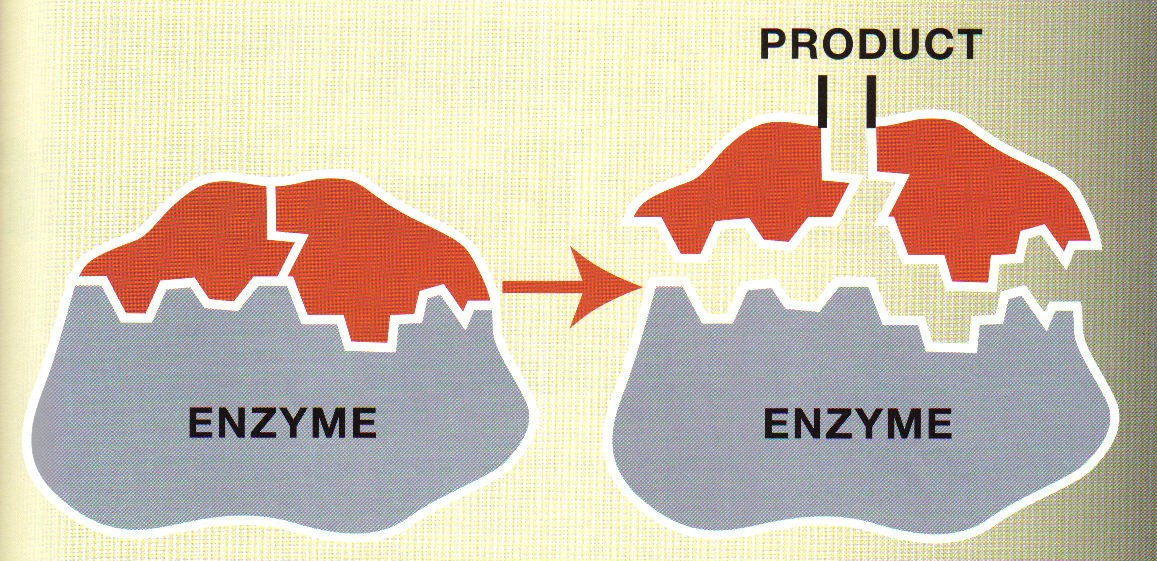
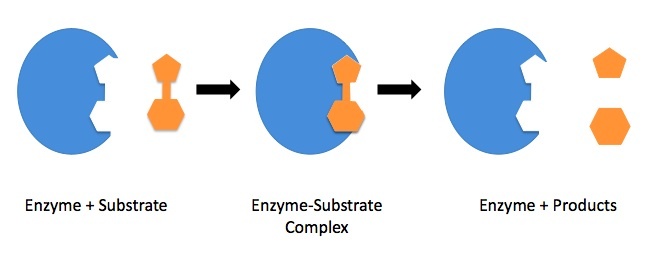
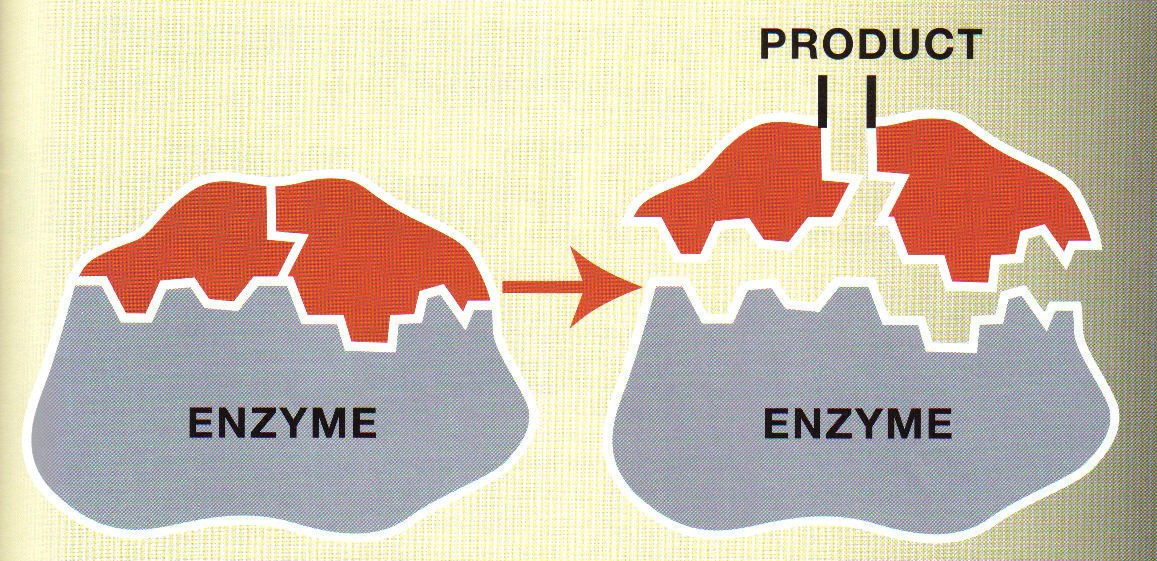
The area that the substrate fits into on the enzyme is called the:
a)
Active Site
b)
Allosteric Site
c)
DiSulphide Bridge
d)
β-Pleated Sheet
52.
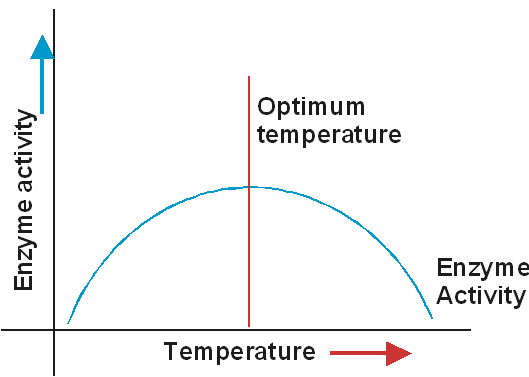
At high temperatures enzyme activity declines because of:
a)
Denaturation
b)
Decreased Kinetic Motion
c)
Increased H-Bonding
d)
Dissociation of Ionic Compounds
53.
At low temperatures enzyme activity declines because of:
a)
Denaturation
b)
Decreased Kinetic Motion
c)
Increased H-Bonding
d)
Dissociation of Ionic Compounds
54.
Most enzymes have the ending:
a)
-ase
b)
-ose
c)
-ic acid
d)
-ate
55.
The molecule an enzyme is working on is called the:
a)
Substrate
b)
Solvent
c)
Allosteric Inhibitor
d)
CoEnzyme
56.
What is a substance called if it speeds up a chemical reaction?
a)
reusable
b)
catalyst
c)
specific
d)
fragile
57.

In which part of Interphase are the chromosomes replicated?

a)

G0

b)

G1

c)

S

d)

G2

58.

During which stage of the cell cycle does the nucleus divide?

a)

interphase

b)

mitosis

c)

endocytosis

d)

cytokinesis

59.

Which stage of the cell cycle is MOST critical for ensuring that daughter cells are identical?

a)

G1

b)

S

c)

Prophase

d)

G2

60.

Which is not a phase of the cell cycle?

a)

Interphase

b)

Mitosis

c)

Cytokinesis

d)

Duplication

61.

Select all stages of interphase?

a)

G1

b)

S

c)

G2

d)

Mitosis

62.

In which stage of the cell cycle does the cell split into two?

a)

Mitosis

b)

G1

c)

Cytokinesis

d)

S

63.

_____ is the uncontrolled growth of cells, often resulting in a tumor or mass of abnormal cells

a)

Cancer

b)

Apoptosis

c)

Radiation

64.
Put the following actions in order: DNA replicates, cell grows, cell divides, cell prepares for mitosis. 
a)
DNA replicates, cell grows, cell prepares for mitosis, cell divides
b)
cell grows, cell prepares for mitosis, DNA replicates, cell divides
c)
cell grows, DNA replicates, cell prepares for mitosis, cell divides
d)
DNA replicates, cell prepares for mitosis, cell grows, cell divides
65.
Which part of the Cell Cycle takes the longest?
a)
Interphase
b)
Mitosis
c)
Prophase
d)
Cytokinesis
66.
What happens in the first part of Interphase?
a)
Mitosis
b)
Cell Growth
c)
DNA Replication
d)
Anaphase
67.
What does DNA Replication mean?
a)
DNA is made.
b)
DNA makes new cells. 
c)
DNA copies itself.
d)
DNA starts the cell cycle.
68.
What phase is this cell in?
a)
Cytokinesis
b)
Mitosis
c)
Prophase
d)
Metaphase
69.
What phase is this cell in?
a)
Mitosis
b)
Interphase
c)
Anaphase
d)
Telophase
70.
What phase is this cell in?
a)
Mitosis
b)
Cytokinesis
c)
Prophase
d)
Telophase
71.
What phase is this cell in?
a)
Mitosis
b)
Interphase
c)
Prophase
d)
Telophase
72.
What part of the cell cycle is this cell in?
a)
Mitosis
b)
Interphase
c)
Telophase
d)
Cytokinesis
73.
In what phase do the chromosomes line up in the middle of the cell?
a)
Cytokinesis
b)
Metaphase
c)
Prophase
d)
Telophase
74.
In what phase do the organelles disperse out into the daughter cells, and the cell prepares for cytokinesis?
a)
Prophase
b)
Interphase
c)
Mitosis
d)
Telophase
75.
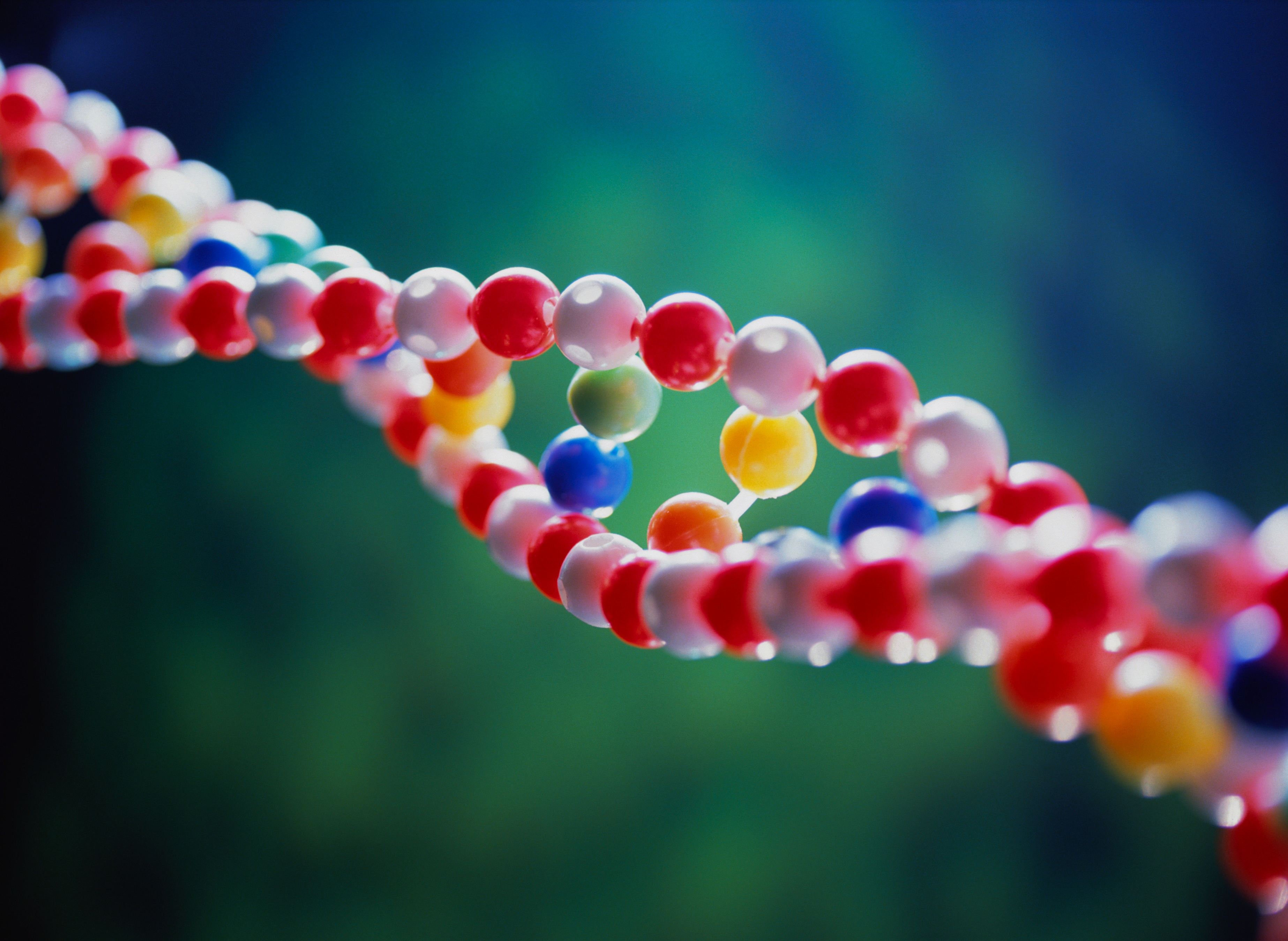
What are the nucleotides made of?
a)
Sugar, Phosphate, nitrogen base
b)
Phosphate, Adenine, nitrogen base
c)
Thymine, Adenine, Cytomine
d)
Phosphate, Nitrogen, Adenine
76.
Adenine bonds with ______________.
a)
Guanine
b)
Thymine
c)
Cytosine
d)
Adenine
77.
Guanine bonds with ______________.
a)
Adenine
b)
Guanine
c)
Cytosine
d)
Thymine
78.
Why is DNA important?
a)
it is very small and very complicated
b)
it's in everything
c)
it serves as the blueprint for traits of all living things
d)
because we eat it every day for energy
79.
Which sequence of DNA bases would pair with this partial strand
ATG TGA CAG
a)
ATG TGA CAG
b)
TAC ACT GTC
c)
GTA AGT GAC
d)
CAT TCA CTG
80.

In eukaryotes, which organelle is DNA usually found in?

a)

cell membrane

b)

vacuole

c)

chloroplast

d)

nucleus

81.
The sugar in DNA is ?
a)
sucrose
b)
glucose
c)
deoxyribose
d)
fructose
82.
Which of the following monomers are repeatedly joined together to form a strand of DNA?
a)
amino acids
b)
nucleotides
c)
fatty acids
d)
polysaccharides
83.
What determines the code, or information, of a DNA molecule?
a)
the shape (structure) of the nitrogen bases
b)
the order (sequence) of the nitrogen bases
c)
the color of the nitrogen bases
d)
the frequency (number) of nitrogen bases
84.
Which 2 molecules form the sides (backbone) of the DNA ladder?
a)
deoxyribose sugar and adenine
b)
deoxyribose sugar and a hydrogen bond
c)
deoxyribose sugar and the nucleus
d)
deoxyribose sugar and phosphate
85.
The two strands of nitrogenous bases in DNA are joined by which type of bond?
a)
polar bonds
b)
ionic bonds
c)
covalent bonds
d)
hydrogen bonds
86.
What do we call the process of turning DNA into mRNA?
a)
Replication
b)
Transcription
c)
Translation
d)
Cloning
87.
When DNA is transcribed to RNA.... 
a)
A pairs with U
b)
G pairs with U
c)
C pairs with T
d)
A pairs with C
88.
Which phase of which process does this picture show?
a)
Transcription
b)
Translation
c)
Replication
d)
Cloning
89.
What is the correct sequence?
a)
RNA --> DNA --> Protein
b)
Protein --> RNA --> DNA
c)
DNA --> RNA --> Protein
d)
DNA --> Protein --> RNA
90.
Three mRNA bases that are read together are known as what?
a)
Codon
b)
Anticodon
c)
Triplet
d)
Amino acid
91.
What stops the process of translation?
a)
DNA polymerase stops adding bases at a random time
b)
mRNA transcript falls apart
c)
A stop codon is reached
d)
The ribosome moves on to another protein
92.
Which process occurs in the ribosome?
a)
Transcription
b)
Translation
c)
Replication
d)
All of these
93.
The diagram shows the process of
a)
Transcription
b)
Translation
c)
Replication
d)
Mitosis
94.
Amino acids are the building blocks of... 
a)
DNA
b)
RNA
c)
Atoms
d)
Proteins
95.
What process is occurring in this photo?
a)
Transcription
b)
DNA unwinding
c)
Translation
d)
Transfer RNA is creating bases
96.
What process is occurring in this photo?
a)
Transcription
b)
Translation
c)
mRNA is matching with amino acids
d)
tRNA is transcribing the DNA
97.

What mutation has occurred here?

T-G-A-C-C-A

T-G-A-G-C-A

a)

Substitution

b)

Deletion

c)

Insertion

d)

Frameshift

98.
Any change in the sequence of DNA is...
a)
transgenic shift
b)
Single Genotype
c)
Monohybrid Trait
d)
Mutation
99.

ATT-TGA-GCC- Original

ATT-GAG-CC - Mutated

The example above is an example of a

a)

Insertion- Frameshift

b)

Deletion- Substitution

c)

Deletion -Frameshift

d)

All of the above

100.

DNA molecule segment is : TTA-CGC-AAG

The mutated DNA segment is TTC-GCA-AG. This is an example of ___ mutation.

a)

Substitution

b)

Deletion

c)

Insertion

d)

Inversion

101.

Original DNA: CAT GAT CCA

New DNA: CAT TGA TCC A

What mutation occurred?

a)

deletion

b)

substitution

c)

tranverse

d)

insertion

102.
Are all mutations bad?
a)
Yes
b)
No
c)
Maybe?
103.

What do gene mutations change?

a)

DNA

b)

RNA

c)

Proteins

d)

Lipids

104.
the genetic code for the gene
a)
phenotype
b)
genotype
c)
homozygous
105.
when you have two different genes
a)
heterozygous
b)
dominant
c)
homozygous
106.
when you have two of the same genes
a)
heterozygous
b)
recessive
c)
homozygous
107.
phenotypes that shows both traits
a)
semi-dominant
b)
heterozygous
c)
codominance
108.
A single cross such as flower color.
a)
mono hybrid
b)
dihybrid
c)
crossing over
d)
homozygous
109.
What type of "square" helps us solve genetic problems?
a)
carpenter square
b)
Mendel square
c)
Punnett square
d)
genetic square
110.
TT,tt,PP,pp,SS,ss are examples of alleles that are?
a)
homozygous
b)
heterozygous
c)
different
d)
homologous 
111.
What do viruses need to reproduce?
a)
they need genetic material
b)
They need a host cell
c)
They need  bacteria
d)
They need insulin
112.
Antibiotics kill viruses
a)
True
b)
False
113.
Which of the following occurs after a virus attaches to a host cell in the viral reproduction process?
a)
The host cell dies
b)
The virus dies
c)
The virus inserts its genetic information into the host cell
d)
copies of the virus are immediately released from the host
114.
The smallest and simpliest forms of life are called
a)
bacteria
b)
virus
c)
fungi
d)
protozoa
115.
During the lytic infection by a virus, the host cell is-
a)
destroyed
b)
copied
c)
passed on to the lysogenic cycle
d)
not affected
116.
What process is this?
a)
phagocytosis
b)
lytic cycle
c)
lysogenic cycle
d)
formation of antibodies
117.
What is shown here?
a)
Lysogenic Cycle
b)
Lytic Cycle
c)
Binary Fission
d)
Conjugation
118.
A scientific name consists of 
a)
Genus and Order
b)
Genus and Domain
c)
Genus and species
d)
Kingdon and Phylum
119.
The most specific of the classifications is?
a)
class 
b)
order 
c)
genus 
d)
species
120.
Mushrooms are an example of this Kingdom?
a)
Animalia
b)
Protista 
c)
Archea 
d)
Fungi
121.
The 2 kingdoms that make up Prokaryotes are?
a)
Animals and Plants 
b)
Protists and Fungi
c)
Archea and Bacteria
122.
Kingdom, Phylum, Class, _______
a)
Family 
b)
Order
c)
Genus 
d)
Species
123.
Which of the following organisms are LEAST closely related?
a)
organisms that share a domain
b)
organisms that share a family 
c)
organisms that share a genus 
d)
organisms that share a species 
124.
The 8 levels of classification, most broad to most specific.
a)
Domain, Genus, Family, Order, Class, Phylum, Kingdom, Species
b)
Domain, Species, Kingdom, Genus, Phylum, Family, Class, Order
c)
Domain, Kingdom, Phylum, Class, Order, Family, Genus, Species
d)
Order, Kingdom, Species, Domain, Phylum, Family, Class, Genus
125.
Which is a function of the roots?
a)
absorb sunlight
b)
start photosynthesis
c)
pull nutrients from the soil
d)
turn gray when they get old
126.
Which is a function of the stem?
a)
to be green
b)
to support the plant
c)
to absorb nutrients from the soil
d)
to talk about science, technology, engineering, and math
127.
Which is a function of the leaves?
a)
to provide shade
b)
to attract pollinators
c)
to make food through photosynthesis
d)
to absorb nutrients
128.
Which is a function of the flower?
a)
attract pollinators and produce seeds for reproduction
b)
to make food through photosynthesis
c)
to be pretty
d)
to absorb nutrients from the soil