wayground logo

Free Printable Worksheets

Font size

S
M
L
XL
Worksheets

Biology STAAR Review

Total questions: 130

Worksheet time: 1hrs 26mins

Name
Class
Date
1.

What is the function of carbohydrates?

a)

provides quick energy

b)

stores energy

c)

helps with growth and repair of tissues

d)

stores genetic information

2.

What is the function of lipids?

a)

provides quick energy

b)

stores energy

c)

helps with growth and repair of tissues

d)

stores genetic information

3.

What is the function of proteins?

a)

provides quick energy

b)

stores energy

c)

helps with growth and repair of tissues

d)

stores genetic information

4.

What is the function of nucleic acid?

a)

provides quick energy

b)

stores energy

c)

helps with growth and repair of tissues

d)

stores genetic information

5.

What is the monomer for carbohydrates?

a)

Monosaccarides

b)

Fatty Acids

c)

Amino Acids

d)

Nucleotides

6.

What is the monomer for proteins?

a)

Monosaccarides

b)

Fatty Acids

c)

Amino Acids

d)

Nucleotides

7.

What is the monomer for nucleic acid?

a)

Monosaccarides

b)

Fatty Acids

c)

Amino Acids

d)

Nucleotides

8.
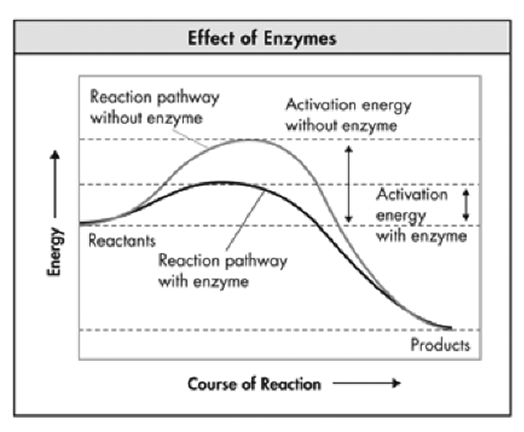
The graph shows how enzymes affect reactions in cells. Which statement best summarizes the information shown in the graph?
a)
Enzymes increase the energy of the reactants.
b)
Enzymes decrease the energy level of the products.
c)
Enzyme decrease the activation energy of the reaction.
d)
Enzymes reverse the direction of the reaction.
9.
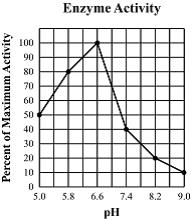
Which of the following conclusions can be drawn from this graph?
a)
The optimum pH of the enzyme is 6.6.
b)
The optimum pH of the enzyme is 5.8
c)
The enzyme’s activity increases as pH increases 5.0 to 9.0
d)
The enzyme’s activity is greater around pH of 8.0 .
10.
What is the function of an enzyme?
a)
enzymes break themselves into small pieces
b)
enzymes slow down chemical reactions
c)
enzymes speed up chemical reactions
d)
enzymes combine products to form reactants 
11.
which is the correct order of the levels of organization from simple to complex?
a)
organism, population, community, ecosystem
b)
ecosystem, community, population, organism
12.
One example of a prokaryote is a...
a)
fungus
b)
bacteria
c)
animal
d)
plant
13.
Where is the DNA found in a prokaryotic cell? 
a)
floating around in the cytoplasm 
b)
in the nucleus 
c)
in the ribosomes
d)
attached to the cell membrane
14.
Where is the DNA found in a eukaryotic cell? 
a)
floating around in the cytoplasm 
b)
in the nucleus 
15.
Has membrane bound organelles
a)
Prokaryote
b)
Eukaryote
c)
both
16.
What part of a virus is the protein capsule that houses the genetic material (DNA/RNA)?
a)
tail
b)
nucleus
c)
capsid
d)
glycoprotein
17.
Which viral life cycle allows viral genetic material to lay dormant while the host cell reproduces?
a)
lytic
b)
mitosis
c)
lysogenic
d)
S phase
18.
Is a virus considered living or non-living?
a)
Living
b)
Non-Living
c)
Neither
19.
What is the first step of the virus reproduction cycle?
a)
The viruses genetic material (DNA) starts to take over the functions of the cell
b)
The host cell bursts open, releasing the new viruses
c)
The virus injects its genetic material into the cell
d)
A virus attaches to the surface of a host cell
20.
What is a way to become immune to a disease without first having the disease?
a)
antibiotics
b)
Anti-retroviral drugs
c)
Vaccinations
d)
Exposure Therapies
21.
Which can be treated with antibiotics?
a)
Virus
b)
Bacteria
c)
Mutagen
d)
Parasite
22.
What do viruses need to reproduce?
a)
they need genetic material
b)
They need a host cell
c)
They need  bacteria
d)
They need insulin
23.
Diffusion is the movement of particles
a)
from low to high concentration
b)
from  high to low concentration
c)
from equilibrium to areas of high concentration
d)
all of the above
24.
What is the diffusion of water through a selectively permeable membrane?
a)
active transport
b)
osmotic pressure
c)
facilitated diffusion
d)
osmosis
25.
Moving from areas of LOW concentration to areas of HIGH concentration is called?
a)
Passive Transport
b)
Active Transport
c)
Diffusion
d)
Osmosis
26.
A solute traveling DOWN its concentration gradient using a protein channel does this by ________ diffusion.
a)
Facilitated
b)
Active
c)
Osmosis
d)
Endocytosis
27.
Which way is the water moving in this cell?
a)
Water will move out of the cell
b)
Water will move into the cell
28.
What are the products of photosynthesis?
a)
water and carbon dioxide
b)
oxygen and glucose
c)
oxygen and carbon dioxide
d)
oxygen and water
29.
Which gas is removed from the atmosphere during photosynthesis?
a)
hydrogen
b)
oxygen
c)
nitrogen
d)
carbon dioxide
30.

Oxygen (O2) is a reactant material of which process?

a)

Photosynthesis

b)

Cellular Respiration

31.
What are the nucleotides made of?
a)
Sugar, Phosphate, nitrogen base
b)
Phosphate, Adenine, nitrogen base
c)
Thymine, Adenine, Cytomine
d)
Phosphate, Nitrogen, Adenine
32.
What are the 4 nitrogen bases?
a)
adenine, thymine, cytoplasm, and guanine
b)
adenine, thymine cytosine, and guanine
c)
adenine, thymine, cytosine, and gylcerol
d)
adenine, thymine, cytosine, and glucose
33.
Which sequence of DNA bases would pair with this partial strand
ATG TGA CAG
a)
ATG TGA CAG
b)
TAC ACT GTC
c)
GTA AGT GAC
d)
CAT TCA CTG
34.
Which of the following monomers are repeatedly joined together to form a strand of DNA?
a)
amino acids
b)
nucleotides
c)
fatty acids
d)
polysaccharides
35.
What determines the code, or information, of a DNA molecule?
a)
the shape (structure) of the nitrogen bases
b)
the order (sequence) of the nitrogen bases
c)
the color of the nitrogen bases
d)
the frequency (number) of nitrogen bases
36.
The two strands of nitrogenous bases in DNA are joined by which type of bond?
a)
polar bonds
b)
ionic bonds
c)
covalent bonds
d)
hydrogen bonds
37.
Identify #2.
a)
nitrogen base
b)
phosphate group
c)
deoxyribose sugar
d)
nucleotide
38.
A long chain of amino acids is a/an
a)
protein
b)
nucleic acid
c)
tRNA
d)
mRNA
39.
DNA replication turns one strand of DNA into two new strands of DNA. What percent of each new strand is the old strand?
a)
Half of each new DNA is the old DNA
b)
The old strand of DNA was digested, so none
c)
The new DNA is entirely made up of the old DNA
d)
About every sixth base comes from the old DNA
40.

What best explains the role of cellular division?

a)

to grow, develop, and repair tissue

b)

to eliminate unneeded cells

c)

to produce egg and sperm cells

d)

to eliminate waste from your body

41.
What is cell differentiation?
a)
Process by which cells produce more cells
b)
Process by which cells become specialized
c)
Process by which cells become unspecialized
d)
Process by which cells die
42.
Term for a group of more than 100 diseases in which abnormal cells divide without control.
a)
biopsy
b)
epiodemiology
c)
cancer
d)
mortality
43.
Cancer is
a)
a premature stop in the cell cycle.
b)
uncontrolled mitosis.
c)
programmed cell death.
44.

In what process is mRNA synthesized?

a)

Transcription

b)

Translation

c)

DNA Replication

d)

Mitosis

45.

Where does TRANSCRIPTION occur?

a)

Nucleus

b)

Ribosome

c)

Cytoplasm

d)

Mitochondria

46.

TRANSCRIBE this DNA sequence: TACGTTACT

a)

AUGCAAUGA

b)

ATGCAATGA

c)

AUGGATUGA

d)

TACGTTACT

47.

Which organelle is the location where protein is made?

a)

Ribosome

b)

Nucleus

c)

Cytoplasm

d)

Nucleotide

48.

When these bond together, they form a protein

a)

Amino Acids

b)

Peptide Bonds

c)

Ribose

d)

Nucleotides

49.
The process to go from mRNA to a protein is called ____
a)
transcription
b)
rRNA
c)
replication
d)
translation
50.
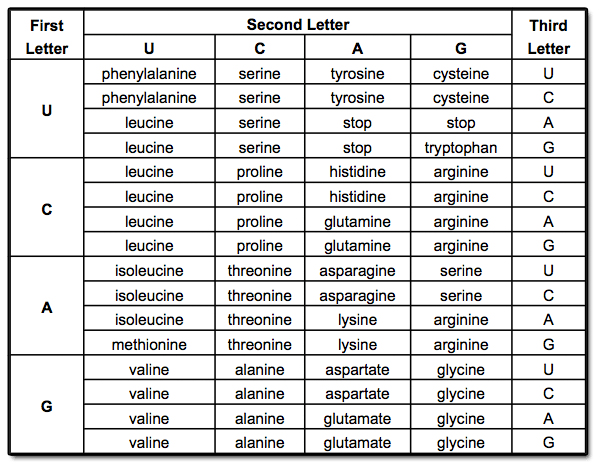
What amino acid is represented by the codon UUA?
a)
Phenylalanine
b)
Tyrosine
c)
Leucine
d)
Stop codon
51.
What are somatic cells?
a)
body cells
b)
sex cells
52.
What are gametes?
a)
sex cells
b)
body cells
c)
human cells
d)
plant cells
53.
What is the purpose of mitosis?
a)
to grow, replace, and repair cells
b)
to create sex cells
c)
to create 2 different cells
d)
to create haploids
54.
In meiosis what is crossing over? 
a)
the exchange of genetic material of homologous chromosomes
b)
homologous chromosome separate
c)
homologous chromosome stay identical to each other
d)
homologous chromosome walk across each other
55.
Mitosis forms 
a)
4 identical daughter cells
b)
2 identical daughter cells
c)
4 different daughter cells
d)
2 different daughter cells
56.

Which process produces 4 cells?

a)

Mitosis

b)

Meiosis

57.

Which process produces 2 cells?

a)

Mitosis

b)

Meiosis

58.

Which process produces cells that are unique / different from each other?

a)

Mitosis

b)

Meiosis

59.

Which process produces diploid cells?

a)

Mitosis

b)

Meiosis

60.

Which process produces haploid cells?

a)

Mitosis

b)

Meiosis

61.

A cell has 10 chromosomes. It undergoes mitosis. How many chromosomes will each of the new cells have?

a)

5

b)

10

c)

15

d)

20

62.

A cell has 10 chromosomes. It undergoes meiosis. How many chromosomes will each of the new cells have?

a)

5

b)

10

c)

15

d)

20

63.

What mutation has occurred here?

T-G-A-C-C-A

T-G-A-G-C-A

a)

Substitution

b)

Deletion

c)

Insertion

d)

Frameshift

64.

Which of the following would result in a frameshift mutation?

a)

Insertions only

b)

Substitution only

c)

Deletion only

d)

Insertions and Deletions

65.

DNA molecule segment is : TTACGCAAG

The mutated DNA segment is TTCGCAAG. This is an example of ___ mutation.

a)

Substitution

b)

Deletion

c)

Insertion

d)

Inversion

66.

A mutation is defined as:

a)

A change in the cell's structure

b)

Anything that changes in an embryo

c)

Any change in the physical features of a human

d)

A change in the DNA sequence

67.
Are all mutations bad?
a)
Yes
b)
No
68.

Grey (G) fur is dominant to brown (g) fur in mice. What would be the genotype of a mouse that is homozygous dominant?

a)

GG

b)

Gg

c)

gg

d)

GGG

69.

Grey (G) fur is dominant to brown (g) fur in mice. What would be the genotype of a mouse that is heterozygous?

a)

GG

b)

Gg

c)

gg

d)

GGG

70.

What is aa

a)

Homozygous Dominant

b)

Heterozygous

c)

Homozygous Recessive

d)

Heterozygous dominant

71.

The genetic makeup of an organism. Example BB

a)

genotype

b)

phenotype

c)

Dominant

d)

Recessive

72.

The physical look or the organism, such as brown eyes

a)

genotype

b)

phenotype

c)

Dominant

d)

Recessive

73.
A heterozygous long-tusked elephant is crossed with a homozygous recessive short-tusked elephant. What is the probability of the offspring having short tusks?
a)
0%
b)
25%
c)
50%
d)
75%
74.
If you cross a black guinea pig with a white guinea pig and the offspring are gray, what type of dominant trait would that be.
a)
incomplete dominance
b)
codominance
c)
codependant
d)
cooperative
75.

B=Brown fur

b=tan fur

What percent of the offspring would be tan when you cross BbxBb?

a)

75%

b)

25%

c)

50%

d)

100%

76.
 One dog carries homozygous, long-haired traits (SS), and its mate carries homozygous short-haired traits (ss). Use a Punnett square to determine the probability of one of their offspring having long hair.
a)
100%
b)
75%
c)
50%
d)
25%
77.
The 8 levels of classification, broadest to most specific.
a)
Domain, Genus, Family, Order, Class, Phylum, Kingdom, Species
b)
Domain, Species, Kingdom, Genus, Phylum, Family, Class, Order
c)
Domain, Kingdom, Phylum, Class, Order, Family, Genus, Species
d)
Order, Kingdom, Species, Domain, Phylum, Family, Class, Genus
78.

The scientific name for an organism is made from the:

a)

class and family name

b)

genus and species name

c)

domain and kingdom name

d)

kingdom and phylum name

79.

What is the genus name here:

Canis lupus

a)

Canis

b)

lupus

80.
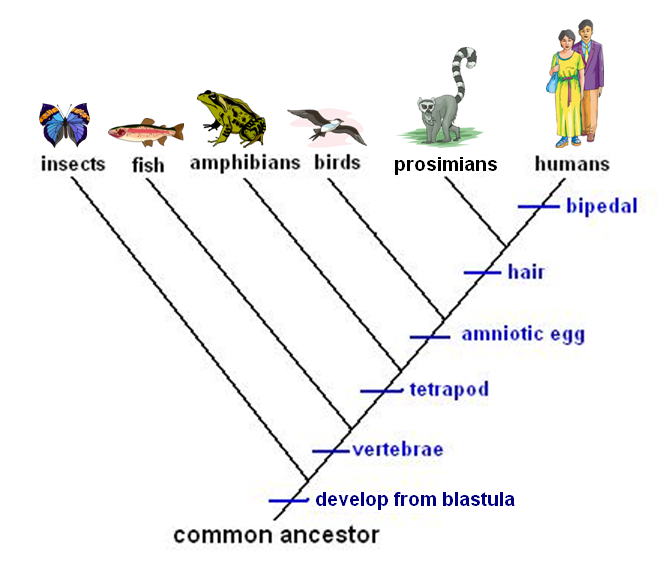
Which organisms pictured on the cladogram have hair?
a)
prosimians only
b)
prosimians and humans
c)
humans only
d)
prosimians and birds
81.

Which of the following is NOT a unicellular kingdom?

a)

Prokaryotes

b)

Protists

c)

Archaea

d)

Fungi

82.

You find a species that seems to be unicellular and is eating smaller cells around it. It has organelles and a nucleus. Which kingdom is it MOST likely a part of?

a)

Fungi

b)

Bacteria

c)

Protists

d)

Plants

83.

Which is NOT a eukaryote?

a)

Plants

b)

Animals

c)

Archaea

d)

Protists

84.
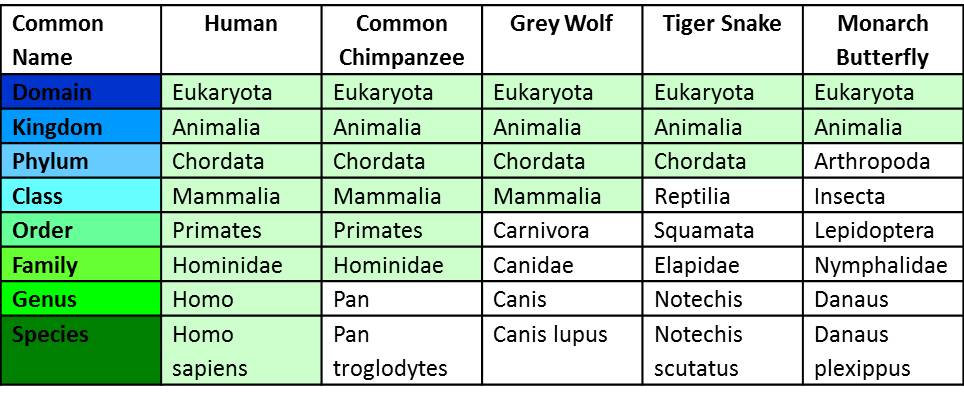
Which organism in the table is least closely related to the chimpanzee?
a)
human
b)
grey wolf
c)
tiger snake
d)
monarch butterfly
85.
Which organism in the table shown is most closely related to the common dolphin?
a)
human
b)
killer whale
c)
giant kelp
d)
bat star
86.

A phenotype that improves an organism’s chance of survival in their environment is considered a(n) ____________.

a)

natural selection

b)

adaption

c)

speciation

87.

What is speciation?

a)

combining of two species to form one with different traits

b)

Intentional breeding designed to maintain a desired trait

c)

timing of mating that prevents normal sexual selection

d)

A population splits and accumulates different genes in the new groups

88.

How does a species change over time?

a)

by adapting to the environment

b)

changes in the gene frequencies in a population

c)

acquiring new traits

d)

they do not change

89.

The forelimbs of mammals have similar anatomy because these groups descended from a recent common ancestor. Their bone structure is an example of a(n) ______________ structure.

a)

vestigial

b)

analogous

c)

homologous

90.

Many different groups of organisms have wings, even though they do not share a recent common ancestor. This is because they evolved in environments with similar selective pressures. Wings are an example of a(n) ______________ structure.

a)

vestigial

b)

analogous

c)

homologous

91.
Mutations are important because they bring about
a)
death of the organism in which they develop
b)
genetic variation needed for a population to evolve
c)
benefits for the individual, not for the population
d)
Hardey-Weinberg equilibrium within a population
92.
Survival of the fittest or when favorable adaptations reproduce faster is called what?
a)
Evolution
b)
Adaptation
c)
Natural selection
d)
Fossilization
93.
The ability of an organism to survive and reproduce in its specific environment 
a)
diversity.
b)
evolution
c)
adaptation
d)
 fitness
94.
Why are advantageous traits more likely to be passed onto offspring?
a)
Because they are more likely to survive and reproduce.
b)
Because they come from dominant alleles.
c)
Because they come from recessive alleles.
d)
Because the trait is an acquired phenotype.
95.
What is formed during primary succession that doesn't need to be formed during secondary succession?
a)
pioneer species
b)
soil
c)
climax community
d)
lichens
96.
What type of succession is shown going from figure A to figure B?
a)
primary succession
b)
eutrophication
c)
secondary succession
d)
intermediate
97.
After a forest fire, an ecosystem would start regrowth through -
a)
primary succession
b)
secondary succession
c)
climax community
d)
limiting factors
98.
Which catastrophic event will most likely have the effect of returning an ecosystem to primary succession?
a)
A tornado
b)
A volcanic eruption
c)
A flood
d)
A drought
99.
succession that occurs in an area with no soil
a)
ecological succession 
b)
primary succession 
c)
secondary succession
d)
pioneer speciles
100.
Cattle egrets forage (feed) in fields among cattle. The egret gets easy access to flying insects stirred up by the cattle, and the cattle don't care if they are there or not.
a)
mutualism
b)
commensalism
c)
competition
d)
parasitism
101.
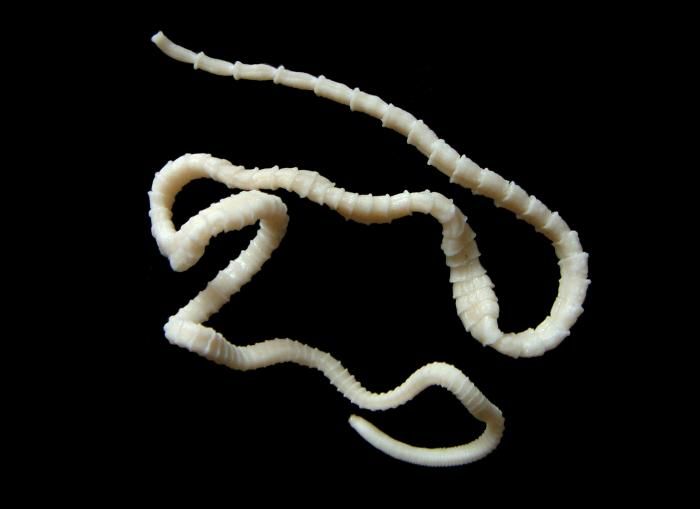
A tapeworm and a cat have this type of relationship.
a)
mutualism
b)
parasitism
c)
commensalism
d)
competition
102.
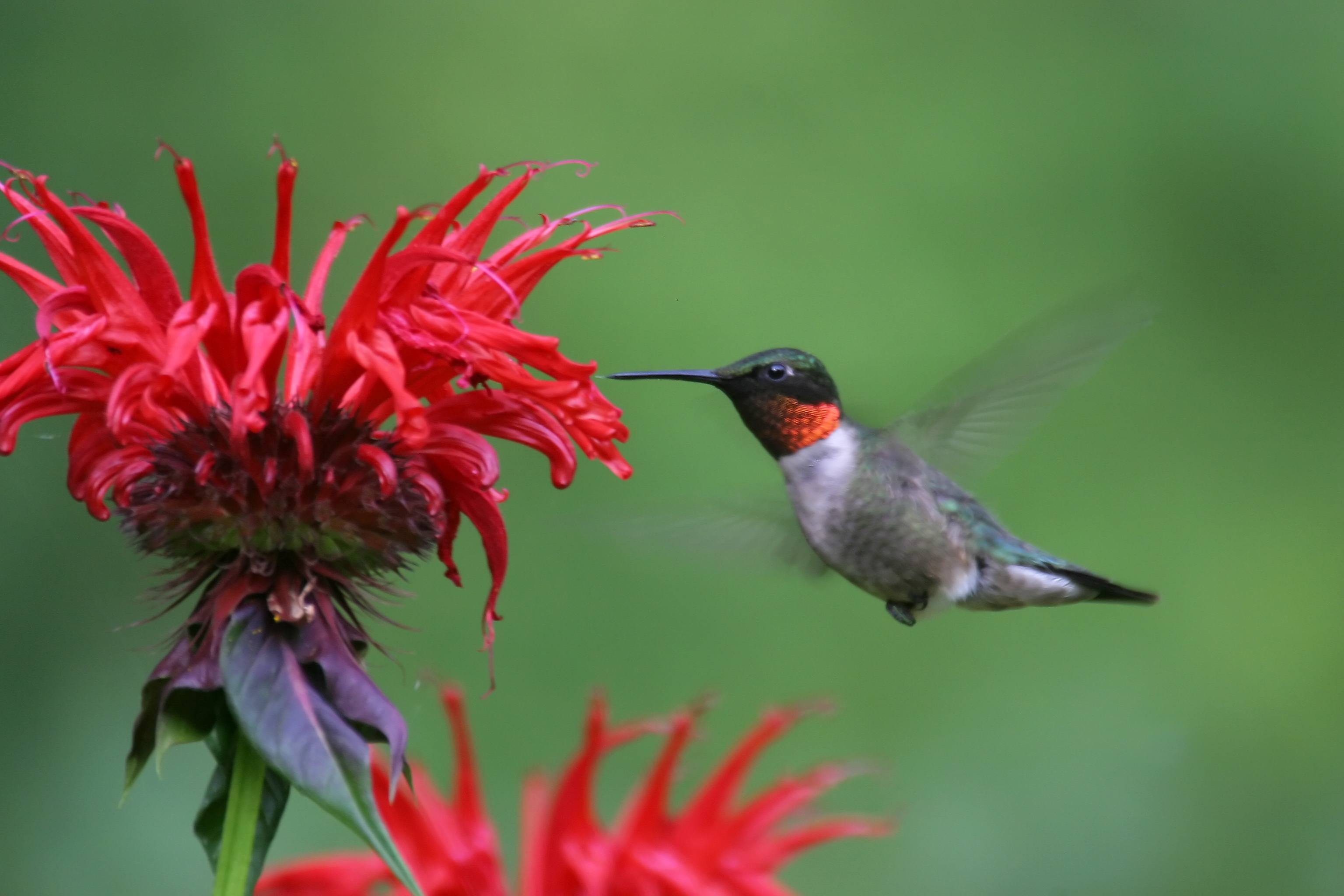
What type of symbiosis?  Hummingbirds feed on nectar from flowers.  The flowers are pollinated by hummingbirds as they move from flower to flower.
a)
commensalism
b)
mutualism
c)
parasitism
d)
predation
103.

Aphids are tiny insects that live on and eat the leaves of plants, removing vital nutrients from the plants.

a)

Predation

b)

Parasitism

c)

Commensalism

d)

Mutualism

104.

An organism that is capable of performing photosynthesis, transforming energy from the Sun, and using carbon dioxide and water to make food

a)

Primary Consumer

b)

Secondary Consumer

c)

Producer

d)

Decomposer

105.

An organism that must consume other organisms for nutrients

a)

Producer

b)

Consumer

c)

Autotroph

d)

Cannibal

106.

An animal that eats the secondary consumers.

a)

Primary Consumer

b)

Tertiary Consumer

c)

Producer

d)

Autotroph

107.

An animal that eats the primary consumers

a)

Producer

b)

Secondary Consumer

c)

Heterotroph

d)

Tertiary Consumer

108.

Organisms, such as bacteria and fungi, that break down the remains of dead plants and animals without need for internal digestion

a)

Carnivore

b)

Frugivore

c)

Omnivore

d)

Decomposer

109.

In the food web shown, the population of which

organisms would contain the lowest amount of biomass?

a)

Hawks

b)

Mice

c)

Corn

d)

Cricket

110.

Which of the following pairs of organisms could both be

classified as omnivores in the food web?

a)

Hawks and lizards

b)

Mice and birds

c)

Moths and crickets

d)

Birds and crickets

111.
Which of the following removes carbon from the atmosphere?
a)
Combustion
b)
Respiration
c)
Photosynthesis
d)
Death
112.

Which of these nitrogen cycle processes converts atmospheric nitrogen to a soil form of nitrogen that is usable by plants?

a)

nitrogen fixation

b)

nitrification

c)

denitrification

d)

ammonification

e)

assimilation

113.
A community is concerned about the water quality of a nearby lake. Increased sedimentation in the lake is endangering the native habitat. The increased sedimentation is most likely caused by which of the following?
a)
trees planted along the shore of the lake
b)
construction of homes along the lake
c)
the amount of sunlight on the lake
d)
the amount of fish in the lake
114.
A strip mining company wants to lease some land that is currently part of a national park. They promise to reclaim the land should any minerals be mined from the area, and they are willing to pay top dollar for the rights. As an ecologist, what factors would you raise with the local government?
a)
the threat to local biodiversity
b)
management of the land after the company leaves
c)
the new jobs that would be created
d)
the increased traffic in the area
115.
The diagram shows the carbon cycle.  If many trees are removed from a forest by logging, what is the most immediate effect on the carbon cycle in that forest?
a)
 increase in the rates of decomposition
b)
increase in the rates of atmospheric carbon dioxide
c)
decreased combustion of fossil fuel
d)
 increase production of organic compounds
116.
Moves water UP
a)
Xylem
b)
Phloem
117.
Moves sugar from leaves to roots
a)
Xylem
b)
Phloem
118.
Xylem and Phloem are both __.
a)
Transpiration
b)
Absorption
c)
Photosynthesis
d)
Vascular tissue
119.
Opening that allows gas exchange
a)
Stomata
b)
Leaves
c)
Roots
d)
Vascular tissue
120.
The part of the plant that makes food.
a)
stem
b)
leaves
c)
roots
d)
flower
121.

Pollen grains are produced by ?

a)

the anther

b)

the stigma

c)

the flowers

d)

the leaves

122.
Which of the following is an example of homeostasis?
a)
taking out the trash
b)
drinking water
c)
sweating on a hot day
d)
taking a shower
123.
Which body system gets oxygen from the environment and removes carbon dioxide and other wastes from the body?
a)
Circulatory
b)
Respiratory
c)
Digestive
d)
Skeletal
124.
Which system transports materials from the digestive system and respiratory system to the cells?
a)
circulatory
b)
respiratory
c)
digestive
d)
skeletal
125.
Which of these 3 systems work together to get the body the oxygen and sugar that it needs to make ATP(energy)?
a)
Digestive - Cardiovascular -Urinary
b)
Cardiovascular - Respiratory - Reproductive
c)
Respiratory - Digestive - Lymphatic
d)
Cardiovascular - Digestive - Respiratory
126.

What 2 systems: Absorb and deliver the digested nutrients to the cells

a)

Digestive and muscular

b)

Muscular and lymphatic

c)

Digestive and circulatory

d)

Nervous and skeletal

127.

The protective covering of the body.

a)

respiratory system

b)

cardiovascular system

c)

integumentary system

d)

endocrine system

128.

Removes wastes from blood.

a)

excretory system

b)

lymphatic system

c)

endocrine system

d)

digestive system

129.

Makes chemical messages that regulate conditions inside the body.

a)

circulatory system

b)

respiratory system

c)

endocrine system

d)

muscular system

130.
Which is the main organ of the nervous system?
a)
lung
b)
kidney
c)
heart
d)
brain