
 Worksheets
Quiz #4 Review (Chapters 7&8)
Total questions: 133
Worksheet time: 4hrs 34mins

Which electromagnetic waves have the highest frequencies and the shortest wavelengths?
microwaves
visible light
gamma rays
x-rays

Which electromagnetic waves are used in ovens and cell phone communications?
microwaves
infrared rays
gamma rays
ultraviolet rays

A wave with a large wavelength will have a ______ frequency and _____ energy
high, low
low, high
high, high
low, low

Which type of waves are used in broadcasting?
infrared rays
X-rays
radio waves
gamma rays

Electromagnetic waves that help your body produce vitamin D are called?
Ultraviolet rays
X-rays
Radio waves
Gamma rays
How are electromagnetic waves different from other waves?
They have very short wavelengths
They transmit energy instead of matter
They can travel through empty space
They can change direction by reflection

Which section of the spectrum is the ONLY one we can see?
Ultraviolet Rays
Gamma Rays
X-Rays
Visible Light

High frequency waves have _________ wavelengths.
varying
long
the same
short

How much of the electromagnetic spectrum is visible?
All of it
None
Only a small part
Most of it

Which electromagnetic waves are used in devices such as heat lamps & TV remote controls?
Ultraviolet Rays
Microwaves
Infrared Rays
Gamma Rays


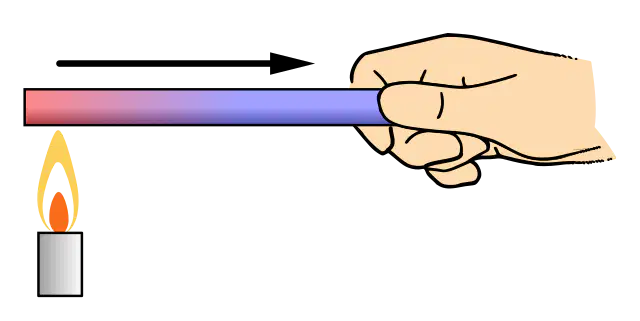
What type of heat transfer occurs through solids?
Conduction
Convection
Radiation
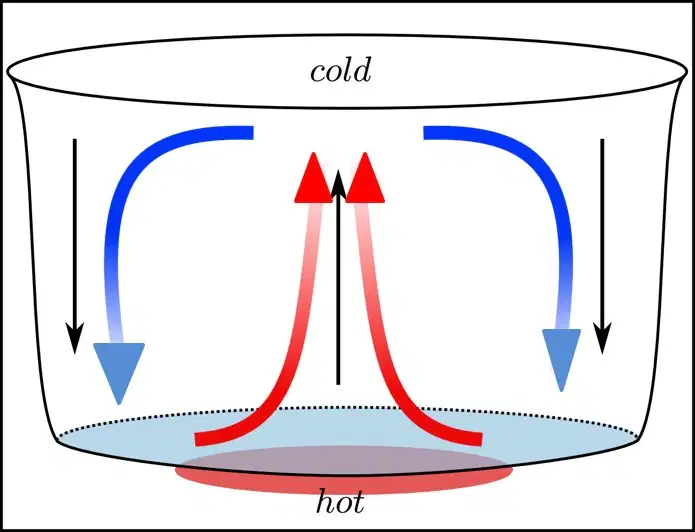
What type of heat transfer occurs through fluids (gas and liquid)?
Conduction
Convection
Radiation

This type of heat transfer is the driving force behind plate tectonics.
Conduction
Convection
Radiation
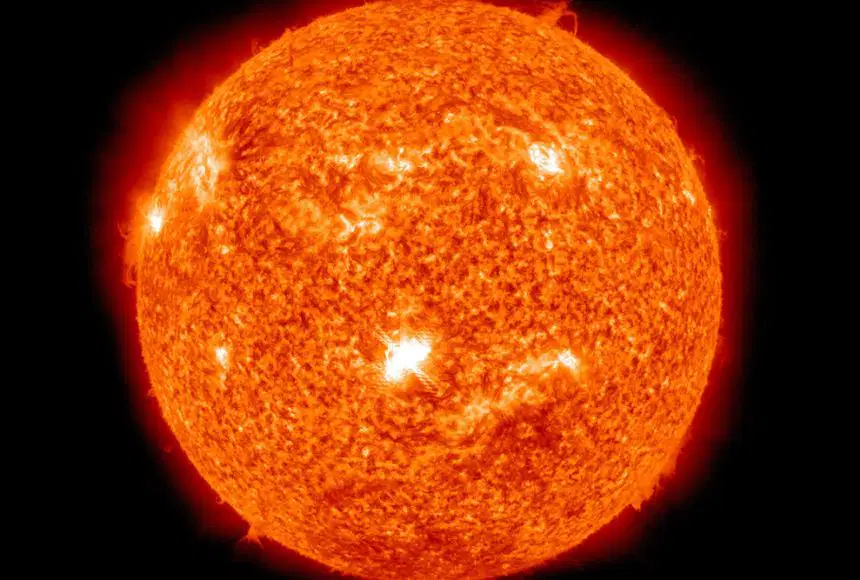
This type of heat transfer travels in electromagnetic waves.
Conduction
Convection
Radiation
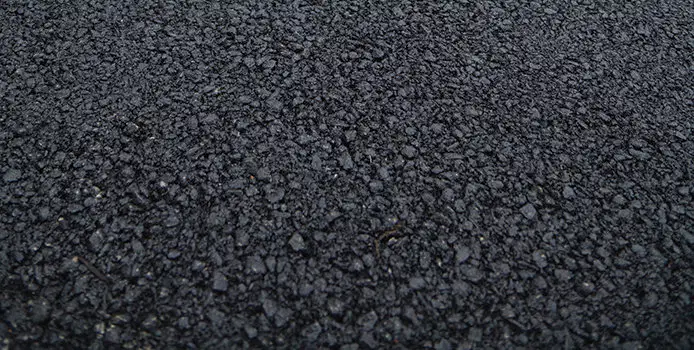
Dark, Rough and Dull surfaces are good at...
Absorbing
Refracting
Reflecting
Scattering
Dark, Rough and Dull surfaces are good at absorbing. They are also good at
Scattering
Refracting
Reflecting
Radiating
Shine, Light and Smooth surfaces are good at...
Absorbing
Refracting
Reflecting
Scattering

Which will heat up slower?
water
lead
granite
iron

Which will heat up faster?
copper
granite
iron
basalt
Which of the following best explains why the sand at the beach is hotter than the water?
Sand has a higher specific heat than water.
Sand has a lower specific heat than water.
There is more water than sand at the beach.
There is more sand than water at the beach.


Liquid to Gas
melting
vaporization
condensation
sublimation
Gas to liquid
vaporization
melting
condensation
sublimation
Solid to liquid
freezing
melting
sublimation
condensation
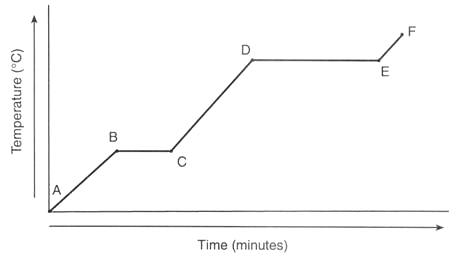
Are the particles moving faster or slower as time goes on?
Faster
Slower
What is happening to the particles in the substance between points A and B?
Melting
Freezing
Speeding Up
Slowing Down

On which parts of the graph does the temperature remain the same?
Between C and D
Between D and E
At C, D, or E
On both flat sections
What phase of matter exists in part C of the graph?
Gas
Liquid
Solid
Plasma
What phase of matter exists in part D of the graph?
Gas
Liquid
Solid
Plasma
What phase of matter exists in part E of the graph?
Gas
Liquid
Solid
Plasma
What phase change occurs when you start at D and end at E?
Freezing
Melting
Condensing
Vaporization
What phase change occurs when you start at D and end at C?
Freezing
Melting
Condensing
Vaporization
What phase change occurs when you start at E and end at D?
Freezing
Melting
Condensing
Vaporization
What phase change occurs when you start at C and end at D?
Freezing
Melting
Condensing
Vaporization
The burner of a hot air balloon start heating the air inside the envelope. This continues heating the air, until the balloon inflates all the way & starts to lift off the ground. What happens to the pressure of the balloon as it is being inflated?
Increases
Decreases
You accidentally leave a can of soda in the car on a hot summer day. What will happen to the volume of the carbon dioxide ( CO2 ) in the soda?
Increase
Decrease
You release propane from a tank so you can start heating up the grill. When you do this, the pressure inside the tank decreases. As the pressure decreases, what happens to the temperature inside the tank?
Increase
Decrease

The diagram below shows a very cold air mass moving over a large, warm lake.
When cold air in the winter passes over large bodies of warm water, moisture is picked up. As the air rises rapidly over land,
lightning generally occurs.
precipitation generally occurs.
cold fronts become warm fronts.
hurricanes are formed.

A high-pressure system (H) is moving to the southeast as shown on the weather map. Cold air is usually found north and west of a high-pressure system. Warm air is to the south and east of the front. Continental air is drier while oceanic air has more moisture.
Based on this information, what is the BEST prediction for weather on the day after the system passes the point marked X?
wet air with cooler temperatures
drier air with cooler temperatures
wet air with warmer temperatures
drier air with warmer temperatures

The arrow on the map below shows the location of an air mass over the Gulf of Mexico.
Which are the MOST likely characteristics of this air mass?
cool and dry
cool and humid
warm and humid
warm and dry

Convection currents are formed in the atmosphere when cold air pushes warm air upward.
Which property of the air is MOST responsible for the formation of convection currents?
chemical composition
thermal conductivity
density differences
specific heat

A world map with lines of latitude and longitude is shown.
At which location would a tropical air mass MOST likely form?
20° N, 120° W
40° N, 70° W
60° S, 30° E
80° S, 10° E
High-pressure systems stop air from rising into the colder regions of the atmosphere where water can condense. What will MOST likely result if a high-pressure system remains in an area for a long period of time?
fog
rain
drought
tornado
Which has the greatest influence on wind speed?
differences in the density of adjacent air masses
differences in atmospheric nitrogen concentrations
differences in atmospheric carbon dioxide concentrations
differences in ozone levels in the stratosphere
Which is most often a result of a warm air mass moving over a cooler air mass?
a decrease in wind speed
a decrease in cloud cover
an increase in precipitation
an increase in air pressure
How does air pressure change as you climb a mountain?
it decreases (less air pressure)
it increases (more air pressure)
stays the same
the temperature gets warmer
What protects Earth from ultraviolet rays from the sun?
ozone layer
mesosphere
air pressure
troposphere
Troposphere -
stratosphere -
?????
What gas makes up the majority of the atmosphere?
oxygen
nitrogen
water vapor
carbon dioxide
Which describes the troposphere? (Select all that apply)
lowest layer
uppermost layer
temperature decreases as altitude increases, and pressure decreases as altitude increases
temperature increases as altitude increases, and pressure decreases as altitude decreases
Which describes the stratosphere? (select all that apply)
contains the ozone layer
pressure increases as altitude increases
temperature increases as altitude increases
density increases with altitude
The ozone layer is in the...
trophosphere
stratosphere
mesosphere
ionosphere
Concentration of nitrogen in the atmosphere
21%
55%
78%
95%
Concentration of oxygen in the atmosphere
15%
21%
78%
95%

What will happen to air pressure as you climb up a mountain?
stays same
increase
decrease
none of above
As altitude increases, air pressure....
Increases
Decreases
Stays the same
Goes up and down
Which best describes the changes to the atmosphere over Earth's history?
The amount of oxygen has increased over time.
The amount of carbon dioxide has decreased in modern times.
The amount of oxygen has decreased over time.
The amount of water vapor has decreased over time.

The step of the hydrologic cycle in which the sun's rays cause water to change from liquid to gas form:
condensation
evaporation
precipitation
runoff

The step of the hydrologic cycle in which water vapor changes back to liquid form (often as clouds).
evaporation
condensation
precipitation
accumulation

Water released from clouds in the form of rain, sleet, hail, or snow is generally known as:
condensation
evaporation
precipitation
leeward

The two main reasons we have seasons on Earth is because of:
rotation and latitude
tilt and rotation
tilt and revolution
latitude and longitude

When the Sun's rays hit directly on the Equator on March 21st and September 21st, this is known as a(n):
solstice
equinox
tropic
tilt

On December 21st, the Sun's rays are directly hitting _________ and this is the start of ________ in the Northern Hemisphere.
the Equator, Spring
the Tropic of Capricorn, Winter
the Tropic of Cancer, Winter
the Tropic of Capricorn, Summer

On June 22nd, the Sun's rays are directly hitting the __________ and this is the start of ________ in the Northern Hemisphere.
the Equator, fall
the Tropic of Cancer, summer
the Tropic of Capricorn, winter
the Tropic of Cancer, winter

Based on this climate graph (temperatures are measured in Celsius), what type of climate do you think Cairo is in?
arid
tropical humid
tundra
tropical wet and dry

What happens to temperatures as elevation rises?
temperature falls because air is less dense
no change
temperature rises because you're closer to the sun

As clouds rise in elevation when they approach mountain ranges, they _____________.
cool and drop their precipitation
warm and pick up more water
cool and continue to evaporate
warm and fall

Because clouds drop most of their moisture on the windward side of mountains, the leeward side experiences a ________________.
tsunami
oragami
rain shadow
monsoon

The leeward side is also known as the:
wet side
rainy side
arid side

The windward side of the mountain is __________
Wetter and colder
Drier and hotter
Wetter and Hotter
Drier and colder

As the wind flows down the leeward side of the mountain, the air becomes
colder and drier
wetter and colder
warmer and drier

Which side of the mountain has more rain?
Windward
Leeward
Mountain
Ocean

The primary factor that controls the climate zones
elevation
solar time
latitude
longitude

As altitude increases, temperature
increases
decreases
stays the same

Why does NY have a lower average temperature than Miami?
Miami is close to the water
Miami has a high elevation
Miami has a lower latitude
Local winds blow over:
short distances
long distances
the poles
the equator


What is the name of the weather instrument that measures air pressure?
Barometer
Thermometer
Psychrometer
Anemometer

clear, sunny skies
high pressure
low pressure

Air in a low pressure system moves
clockwise
counterclockwise

Air in a low pressure system moves
outward
inward

stormy weather (clouds and precipitation)
high pressure
low pressure

Air in a high pressure system moves...
clockwise
counterclockwise
Air in a high pressure system moves...
outward
inward
If the air pressure reading is falling
a storm is approaching
the weather is improving

tornado
extreme high pressure
extreme low pressure

dry air
high pressure
low pressure

humid air
high pressure
low pressure
Choose the locations likely to have a tropical air mass (2 correct answers)
New York
Florida
Texas
Massachusetts
Which of the following is NOT a maritime air mass?
New York
North Carolina
Montana
Virginia
How would you correctly write a Maritime Polar Air Mass?
mP
MP
Mp
mp
Most weather comes from -
water
temperature
air masses
very large area
The word that means water is ___________ .
polar
tropical
continental
maritime
The word that means land is -
polar
tropical
continental
maritime
Continental air is very -
moist (humid)
dry


Middle-latitude cyclones last:
a few days to more than a week
one day at most
a few hours
at least a month
Cyclones are centers of __________ pressure.
High
Low
Warm
Cold
MLC s always move from ......
West to East
East to West
North East to South West
North to South

