
 Worksheets
AP Bio Unit 3 Test Review
Total questions: 123
Worksheet time: 2hrs 53mins
Enzymes are an example of
Lipids
Carbohydrate
Protein
Nucleic Acid
Most chemical reactions in the body rely on enzymes. Why are enzymes are necessary for many cellular reactions?
The reactions are too slow to meet the needs of the cell if enzymes are missing
The reactions take up too much space in the cell if enzymes are missing
Enzymes change reactants from solid to liquid during the reactions.
Enzymes supply the oxygen necessary for the reactions.
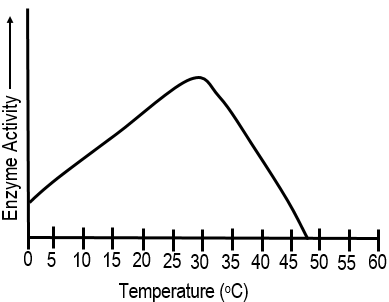
The human body maintains a temperature of around 98.6 degrees at all times. Enzymes are involved in almost every chemical reaction in the body. Which of the following describes the connection between these two statements?
The body is kept relatively warm to prevent too much enzyme action.
The body needs to be warm to prevent hypothermia.
Enzymes function best at a specific temperature.
There is no connection between the two statements.

The amount of energy needed for a reaction to occur is called the (a) ?
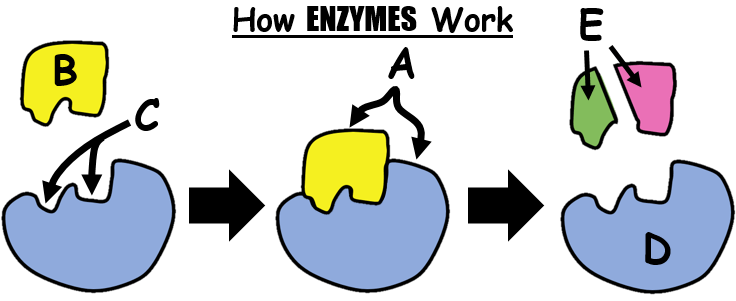
What does an enzyme do?
Decreases the activation energy of a reaction
Increases the activation energy of a reaction
Does not change the activation energy of a reaction
Makes the reaction last longer
How does an enzymes shape relate to its function?
the shape of the enzyme has no relation to its function
the enzyme is shaped specially for certain substrates to perform a specific reaction
the enzyme shape acts as a receptor to certain products
the enzyme shape can fit into specific substrates to cease a reaction

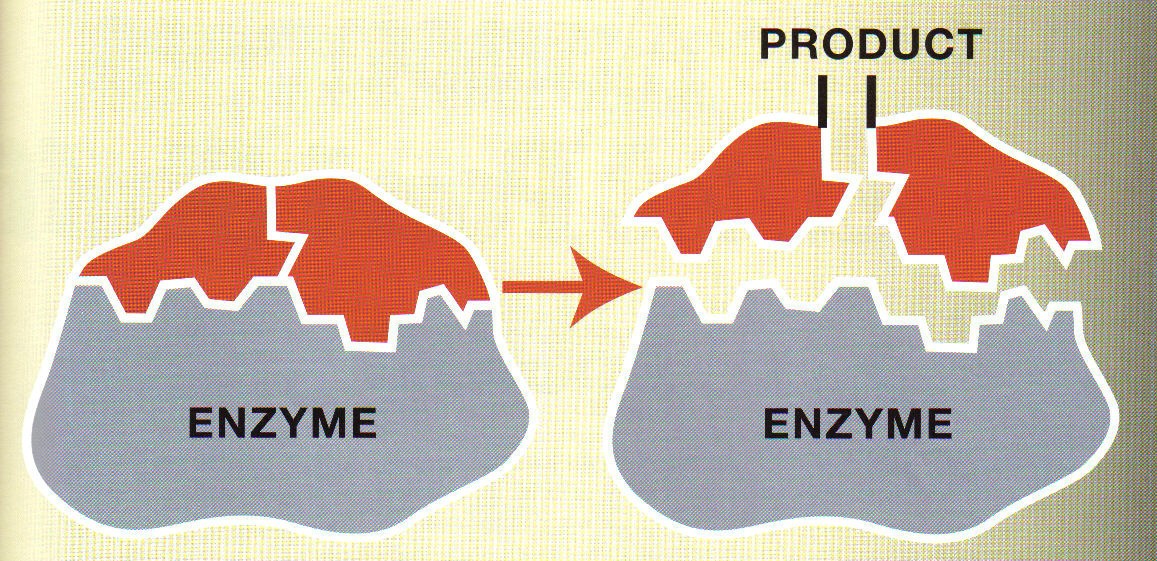
What's going on in this picture?
The enzyme is taking the red substrate and turning it blue
The enzyme's active site is blocked by a competitive inhibitor
The enzyme can't function if too many substrates are trying to bind
This is an example of an anabolic enzyme reaction
An activor or inhibitor binding place that is not the active site, causing the enzyme to change conformation (shape) is an example of ...
competative inhibition
allosteric control
optimum conditions
induced fit
Enzymes are an example of
Lipids
Carbohydrate
Protein
Nucleic Acid
Most chemical reactions in the body rely on enzymes. Why are enzymes are necessary for many cellular reactions?
The reactions are too slow to meet the needs of the cell if enzymes are missing
The reactions take up too much space in the cell if enzymes are missing
Enzymes change reactants from solid to liquid during the reactions.
Enzymes supply the oxygen necessary for the reactions.
The human body maintains a temperature of around 98.6 degrees at all times. Enzymes are involved in almost every chemical reaction in the body. Which of the following describes the connection between these two statements?
The body is kept relatively warm to prevent too much enzyme action.
The body needs to be warm to prevent hypothermia.
Enzymes function best at a specific temperature.
There is no connection between the two statements.
The amount of energy needed for a reaction to occur is called the (a) ?
What does an enzyme do?
Decreases the activation energy of a reaction
Increases the activation energy of a reaction
Does not change the activation energy of a reaction
Makes the reaction last longer
How does an enzymes shape relate to its function?
the shape of the enzyme has no relation to its function
the enzyme is shaped specially for certain substrates to perform a specific reaction
the enzyme shape acts as a receptor to certain products
the enzyme shape can fit into specific substrates to cease a reaction
What's going on in this picture?
The enzyme is taking the red substrate and turning it blue
The enzyme's active site is blocked by a competitive inhibitor
The enzyme can't function if too many substrates are trying to bind
This is an example of an anabolic enzyme reaction
An activor or inhibitor binding place that is not the active site, causing the enzyme to change conformation (shape) is an example of ...
competative inhibition
allosteric control
optimum conditions
induced fit
Which enzyme breaks down hydrogen peroxide to water and oxygen gas?
sucrase
lactase
catalase
peroxidase
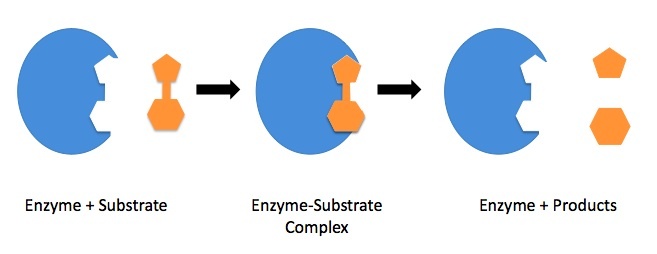
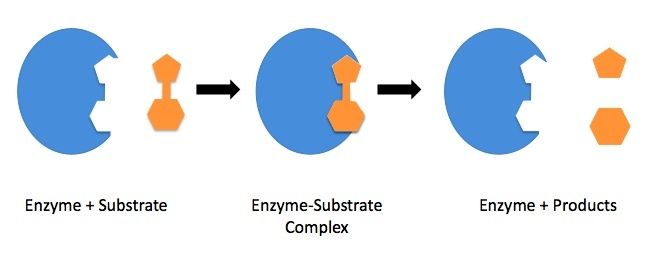
A receptor site that a molecule can bind to that changes the shape of the active site is called a(n):
Allosteric Site
Active Site
Activation site
Reactant site
Molecules that bind to enzymes and enhance an enzyme's ability are called:
CoFactors
Competitive Inhibitors
Allosteric Inhibitors

What is being represented by the letter B in the image?
Substrate
Enzyme
reactants
Product
When you have a severe fever, what grave consequence may occur if the fever is not controlled?
destruction of your enzymes' primary structure
removal of amine groups from your proteins
change in the tertiary structure of your enzymes
removal of the amino acids in the active sites of your enzymes
Succinate dehydrogenase catalyzes the conversion of succinate to fumarate. The reaction is inhibited by malonic acid, which resembles succinate but cannot be acted upon by succinate dehydrogenase. Increasing the ratio of succinate to malonic acid reduces the inhibitory effect of malonic acid.
Based on this information, which of the following is correct?
Succinate dehydrogenase is the enzyme, and fumarate is the substrate.
Succinate dehydrogenase is the enzyme, and malonic acid is the substrate.
Succinate is the substrate, and fumarate is the product.
Fumarate is the product, and malonic acid is a noncompetitive inhibitor.
A substance that loses an electron has been...
reduced
oxidized
negatived
positived
Which of the following are products of the light reaction that are required for the Calvin Cycle?
H2O & CO2
O2 & ATP
ATP & NADPH
ADP & Pi
In the Calvin Cycle, ATP provides energy. What does NADPH provide?
It provides protons
It provides hydrogen
It provides energy
It provides electrons
Which reactions in photosynthesis produces glucose?
The Calvin cycle reactions
The light reactions
Glycolysis
ATP hydrolysis
Glycolysis (literally the breaking down of glucose) results in...
the release of energy.
the production of ATP
the production of pyruvic acid
the production of NADPH
Which of the following organisms undergo cellular respiration?
Animals
Plants
Fungi
Protists
Carbohydrate-synthesizing reactions of photosynthesis directly require
Light
Products of the light reactions
Darkness
Chlorophyll and CO2
H2O & O2

The image depicts an...
endergonic reaction
exergonic reaction
enzyme-catalyzed reaction
endothermic reaction

This image depicts...
Metabolism
Catalbolism
Enzyme catalysis
Anabolism
What type of molecule is responsible for changing glucose into the numerous other molecules in the process of glycolysis?
Carbohydrates
Enzymes
Nucleic acids
Proteins
Lipids
ADP is converted into ATP by...
An enzyme removing a phosphate group.
An enzyme adding a phosphate group.
An enzyme changing the charge of ADP.
The spontaneous addition of a phosphate group.
Which of the following statements about mitochondrial chemiosmosis is NOT true?
A proton gradient is established across the inner membrane of the mitochondrion.
The potential energy released from the mitochondrial proton gradient is used to produce ATP.
The mitochondrial proton gradient provides energy for muscle contraction.
Proteins embedded in the inner mitochondrial membrane play an important role in ATP synthesis.
Heat energy is required to establish the electron transport chain.
Which step is anaerobic?
Glycolysis
Krebs Cycle
Oxidative Phosphorylation
Where does glycolysis take place?
Chloroplast
Cytosol
Mitochondria
Nucleus
Fermentation synthesizes ATP…
True
False
Where does Krebs Cycle take place?
Cristae
Cytosol
Intermembrane space
Matrix
Where does the electron transport chain of cellular respiration occur?
Cristae
Cytosol
Intermembrane space
Matrix
ATP is synthesized in the electron transport chain…
True
False
Which side has the high proton concentration?
Cristae
Cytosol
Intermembrane space
Matrix
What is the first step of cellular respiration?
Glycolysis
Krebs Cycle
Oxidative Phosphorylation
What is the second step of cellular respiration?
Glycolysis
Krebs Cycle
Oxidative Phosphorylation
How many of the 2 carbons from acetyl CoA remain after Krebs Cycle?
0
1
2
3
Which enzyme in the cristae adds the P to ADP?
ADP Phosphorylase
ATP Synthase
Kinase
Phosphatase
Which process precedes fermentation?
Calvin Cycle
Glycolysis
Krebs Cycle
Oxidative Phosphorylation
Prokaryotes perform an electron transport chain on their plasma membrane
True
. False
Which is the pathway of the electron through cellular respiration?
CO2 > NADH > NADPH
Glucose > NADH > O2
NADH > O2 > Glucose
Water > ATP > NADPH
What is the final electron acceptor in cellular respiration?
ATP
NADH
Oxygen
Water
What donates the electron in photosynthesis?
ATP
NADH
Oxygen
Water
Where are the electrons pumped during the electron transport chain in the mitochondria?
Cytosol
Stroma
Matrix
Intermembrane space
Krebs cycle: products?
ATP, NADH, FADH2, CO2
ATP, 2 NADH, 2 FADH2, CO2
ATP, 3 NADH, FADH2, 2 CO2
2 ATP, NADH, FADH2, 2 CO2
A researcher claims that the synthesis of ATP from ADP and inorganic phosphate (Pi) is essential to cellular function. Which of the following statements best helps justify the researcher’s claim?
ADP is a small molecule that some cells release into their environment as a way of communicating with other cells.
ATP hydrolysis is an energy-releasing reaction that is often coupled with reactions that require an input of energy.
Inorganic phosphate (Pi) is a substance that cells typically acquire from their environment.
ATP synthase is a mitochondrial enzyme that catalyzes the conversion of ADP and Pi to ATP.
Pyruvate dehydrogenase is an enzyme that converts pyruvate to acetyl-CoA. Acetyl-CoA is further metabolized in the Krebs cycle. A researcher measured the accumulation of acetyl-CoA in a reaction containing pyruvate and pyruvate dehydrogenase under several different conditions. Which of the following best describes the cellular location where pyruvate dehydrogenase is most likely active?
The cytosol
The lysosomes
The nucleus
The mitochondrial matrix

The figures illustrate the similarities between ATP synthesis in mitochondria and chloroplasts. The figures can best assist in answering which of the following questions?
Do electron transport chains create a gradient so that ATP synthase can generate ATP molecules?
What are the sources of energy that drive mitochondrial and chloroplast electron transport systems?
What is the optimal temperature at which ATP synthase chemically converts ADP and a phosphate group into one molecule of ATP?
What is the evolutionary relationship between the ATP synthase in mitochondria and the ATP synthase in chloroplasts?

Scientists were interested in testing the effects of rotenone, a broad-spectrum pesticide, on a cell culture. Cell culture AA was used as a control, while culture BB was treated with rotenone. After a period of time, the scientists measured the concentration of several metabolites in the mitochondria of cells in both cultures. Their results are shown in the table. Based on the data in the table, which of the following best explains the effects of rotenone on cellular respiration?
Rotenone acts as an inhibitor of the enzymes in the Krebs cycle.
NADH, produced during glycolysis, is not able to enter the mitochondria because transport proteins are blocked from entering.
Treated cells are not able to break down NADH because certain enzymes of the electron transport chain are inhibited.
Rotenone acts as an allosteric inhibitor of glycolytic enzymes, thus inhibiting cellular respiration.
What is chemiosmosis?
The diffusion of water down an electrochemical gradient that drives ATP synthesis.
A proton gradient that drives the oxidation-reduction reactions of electron transport.
The kinetic energy of diffusing protons that drives the synthesis of ATP.
An ATP synthase enzyme that pumps protons across the inner mitochondrial membrane.

Refer to the Figure. If one acetyl CoA molecule is fed into the cycle, how many ATP molecules are made in total by substrate-level phosphorylation?
1
2
11
12

The figure shows an organelle typically found in eukaryotic cells. Which of the following best describes the function of the double membrane system of this organelle?
The outer membrane allows the transport of all molecules into the intermembrane space, while the inner membrane serves as the regulatory boundary.
The inner membrane has specialized proteins that create a hydrogen ion concentration gradient between the intermembrane space and the matrix.
The outer membrane contains transport proteins that establish a sodium ion concentration gradient used for ATP production, while the inner membrane contains transport proteins that establish a hydrogen ion concentration gradient used for glucose production.
The toxins and wastes entering a cell cross the outer membrane and are detoxified by digestive enzymes stored within the intermembrane space.
Which of the following steps of cellular respiration could be described as “the breakdown of 1 glucose molecule by enzymes into 2 3-carbon pyruvate molecules, which releases energy”?
Glycolysis
Link Reaction
Krebs/Citric Acid Cycle
Electron Transport Chain and Chemiosmosis
In glycolysis, _____ is oxidized and _____ is reduced.
glucose, NAD+
pyruvate, NAD+
glucose, NADH
pyruvate, NADH
Which of the following DO NOT contain carbon atoms that were originally present in glucose at the start of cellular respiration?
pyruvate
citrate
carbon dioxide
none of these are correct

The H+ concentration gradient is formed to
make NADPH
split a water molecule
generate ATP
form water
Rubisco is important in which step of photosynthesis
energizing the electrons in chlorophyll
carbon fixation when CO2 is connected to RUBP during calvin cycle
regeneration phase as RUBP is made during calvin cycle
reduction of the carbon chain during the calvin cycle
If the proton (H+) pump in the thylakoid was not working which molecule could not be made during the light reaction?
NADPH
ATP
Water
Oxygen gas
ATP is made during the light reaction using all of the following EXCEPT
proton pump
hydrogen ion gradient
electron energy from photosystem II
NADPH donating electrons

_________________ are the products of the light-dependent reactions.
chloroplast and light
water and sugars
ATP, NADPH and OXYGEN
The electrons travel though the ___________, a series of electron carrier proteins.
stroma
electron transport chain
chloroplasts
ATP Synthase is a membrane protein, through which excess __________ escape the thylakoid in a process that makes ATP.
water ions
NADPH ions
Hydrogen ions
T or F: In photosynthetic cells, the electron transport chains are located in the thylakoid membrane.
True
False

Which of the following is NOT one of the stages of the Calvin Cycle?
Regeneration of RuBP
Carbon Fixation
Reduction
G3P Production
Which molecule is responsible for carbon fixation in the calvin cycle?
RuBP
Rubisco
NADPH
Reductase
During the light reactions, what is the purpose of passing electrons during the electron transport chain?
To create a proton gradient
To split water
To produce sugar
To produce oxygen gas
When a substace gains electrons, it has been ___.
Reduced
Oxidized
Electrified
Which of the following molecules REDUCES other molecules?
NADPH
ATP
RUBISCO
G3P
The calvin cycle produces ____ molecules of G3P per turn, but only ___ is considered a net gain.
5, 1
6, 1
4, 1
3, 1
Which of the following is the sugar molecule DIRECTLY produced during the calvin cycle?
Glucose
ATP
G3P
RuBP

