
 Worksheets
Zoology Final Review
Total questions: 135
Worksheet time: 34hrs 45mins

Choose the characteristics that animals must possess in the Animal Kingdom.
multicellular
eukaryotic and multicellular
eukaryotic, multicellular, heterotroph
eukaryotic, multicellular, autotroph
Which of the following animals is an invertebrate?
Cat
Dog
Spider
Fish
This group makes the biggest fraction of invertebrates
arthropods
molluscs
worms
sponges
You are a
chordate
echinodermata
arthropod
annelid
The smallest level of organization in an animal body is the _________.
Cell
Organ
Tissue
Organ System
Animals get energy from
excersing
food
water
oxygen

Reproduction that only involves one parent and all offspring are identical; for example, binary fission of bacteria or amoebas.
Asexual
Sexual
Division
Addition
Reproduction that involves two cells from different parents unite to produce the first cell of a new organism.
Asexual
Sexual
Budding
Division

Identify this stage in early embryology.
zygote
morula
blastula
gastrula
Which term refers to the lack of a central point or axis?
Symmetry
Asymmetry
Phylogeny
Ecology

Identify the body plan type
Asymmetry
Radial symmetry
Bilateral symmetry
Which animal is an example of an organism with radial symmetry?
Sponges
Sea anemone
Flatworm
Human

Identify the body plan type
Asymmetry
Radial symmetry
Bilateral symmetry
The period of geologic time when the biodiversity of life on the planet increased dramatically was
Jurassic
Triassic
Permian
Cambrian

What is this a picture of?
Pedigree
Cladogram
Family Tree
Oak Tree

Sponges feed by filtering _____________ out of the water column as it passes through the spongocoel.
small fish
oxygen
macro algae
plankton

Name for the stinging organelles with a coiled thread, found in the tentacles which are used to capture prey or defend against predators
cnidocytes
nematocytes
choanocytes
pinacocytes
The concentration of sense organs, nervous control, etc., at the anterior end of the body, forming a head and brain, both during evolution and in the course of an embryo's development.
metamorphosis
segmentation
torsion
cephalization
Segmentation is
a way we group animals in the animal kingdom
a series of sections that are exactly alike
when animals have multiple distinct body parts
a way animals distinguish themselves from others

Worms are ____ because they produce eggs and sperm in the same body.
sexual
asexual
hermaphrodites
The nematodes are also called _________________.
flatworms
roundworms
tapeworms
earthworms
What is a parasite?
The nutrition a worm needs to survive.
An organism that relies on worms to spread diseases.
An organism that is dependent on its host for its life functions.
A symptom of a disease that causes body aches and fever.

Identify this worm
Roundworm
Riceworm
Hookworm
Tapeworm

I have a soft-body, a hard shell, and live on land and water. What am I?
Mollusc
Arthropod
Echinoderm
Cnidarian
Gastropods can twists the body round so that the anus, reproductive organs, mantle cavity and gills all point forward. What it is called?
Fusion
Torsion
Excretion
Respiration
Which TYPE of mollusc has two shells?
Bivalve
Gastropod
Cephalopod
What are filter feeders?
A large pile of living organisms and the animals that live among them.
An organism that attaches onto another organism and feeds off of it.
Animals that feed by removing tiny bits of food from the water.
Animals that use sunlight to obtain nutrients.

I have a hard exoskeleton, a segmented body, pairs of jointed appendages, and live on land and water. I am a crab. What is my phylum?
Mollusc
Arthropod
Echinoderm
Cnidarian

Which of the following are the main body parts of an arachnid?
Abdomen
Cephalothorax
Head
Thorax

Which of the following are the main body parts of an insect?
Abdomen
Cephalothorax
Head
Thorax

I am spiny, have a water vascular system with tube feet, radial symmetry, and am called a brittle star.
Mollusc
Arthropod
Echinoderm
Cnidarian

Earthworms belong to Phylum______________
Platyhelminthes
Annelida
Nematoda
Mollusca

External bristles are also known as ___________.
coelom
septa
setae
parapodia

Which of the following is a thickened segment of the earthworm’s body is used in reproduction? (#2)
Septa
Setae
Clitellium
Ganglia

Name the structure identified by the letter I.
Intestine
Mouth
Gizzard
Aortic Arches

What structure is labeled L?
Gizzard
Brain
Intestine
Septa

What is the function of structure L?
To absorb nutrients
To grind food
To produce eggs
To bring in food
Which structures do all chordates have at some point during their life time?
Notochord, Hollow Nerve chord, Pharyngeal slits, Tail
Notochord, Gill slits, Tail
Hollow nerve chord, notochord, legs, wings
Pharyngeal slits, Head, Thorax, Tail
On which side of the body is the Hollow Nerve chord located?
Ventral
Anterior
Posterior
Dorsal
Nonvertebrate chordates include...
tunicates and lancelets
lampreys and lancelets
tunicates and tuataras
lampreys and lungfish
Which of the following chordates are also vertebrates?
Fish, Amphibians, Lancelets
Fish, Birds, Reptiles, Mammals
Tunicates, Sea squirts, Lancelets
Lampreys, Lancelets, Amphibians
Which type of fish is the most primitive?
Jawless
Cartilaginous
Bony
Fresh water
Which of these are considered fish?
Crayfish
Sharks
Rays
Jellyfish
Goldfish
An example of jawless fish is ____
Sharks
Lamprey
gold fish
Jawless fihses, sharks and rays have _____
bones
tongue
cartilage
The flap of tissue covering a bony fish's gills:
Operculum
Caudal fin
Dorsal fin
Lateral line
Where do amphibians live?
water
land
both

Most amphibians go through a changing process called...
Conversion
Transmutation
Metamorphosis
Transformation
Why do amphibians need to live near water even though they have lungs to live on land?
they need to get food and oxygen
they need water to reproduce
the need water to excrete waste
none of these
True or False: Amphibians have amniotic eggs
True
False
Which is NOT a characteristic of a reptile?
Warm Blooded
Scaly skin
Has lungs
Lays shelled eggs
What kind of skin do reptiles usually have?
scales
feathers
leather
How did reptiles make a complete transition to land?
by laying eggs that have a protective shell
by going to the water and laying their eggs
by developing lungs so they could breath
Are all snakes venomous?
Yes
No

Fossil of an animal that shows both reptile and bird characteristics
Archaeopteryx
Pterasaurs
Pteradacyla
Lobe-finned fish

A bird's feathers are very similar to a reptile's scales. They are both made of this substance.
Dentin
Spicules
Keratin
Cartilage
Which terms means warm blooded?
Ectotherm
Endotherm
Exotherm
What was the first mammal like?
Tree-dwelling, shrew-like, insect eater
land dwelling, lion-like, carnivore
Tree-dwelling, shrew-like, herbivore
land-dwelling, rhino-like, omnivore
What structure in mammals provides nourishment for mammals after they are born?
Mammary Glands
Plancenta
Claspers
Cloaca
Which group is an egg-laying mammal?
Marsupial
Monotreme
Placental
Organisms that live in a pouch until they are mature are known as....
Placentals
Monotremes
Marsupials
What type of birth is typical for most mammals?
Egg-Laying
Placental
Pouch
What type of teeth would be prominent in an herbivore?
Incisors
Canines
Molars

These monkeys have prehensile tails
Old World
New World
Prosimians
apes
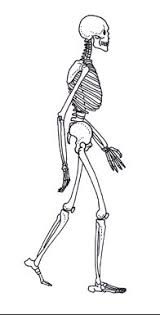
The ability to walk upright on two legs is called:
bipedalism
quadropedalism
bicyclepedalism
tripedalism
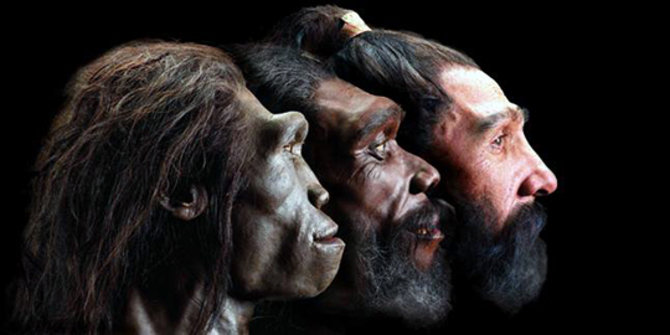
Homo sapiens and other species of humans belong to the same group called:
hominins
primates
homo sapiens
Lucy

This feature allowed hominins to work in groups, communicate, solve problems, and create new things.
large brain
color vision
smaller teeth
bipedalism

What is the structure the arrow is pointing to?
Arms
Tentacles
Fins
Fingers

What is the structure the arrow is pointing to?
Arms
Tentacles
Fins
Fingers

What is the structure the arrow is pointing to?
Eye
Siphon
Mouth
Mantle

Which region of the
insect's body is specialized for sensory functions?
Head
Thorax
Abdomen
Wings

Which region of the insect's body is specialized for movement?
Head
Thorax
Abdomen
Wings
What class does a crayfish belong to?
Crustacea
Arthropoda
Animalia
Decapoda

What is the name of the structure indicated?
swimmerets
gills
carapace
maxilipeds
Where is the crayfish anus located?
It is also it's mouth
On its cephalothorax
On the Telson
On the Uropod
Animals that use modified gills or other structures as nets that remove food items out of water
carnivores
scavengers
filter feeders
fluid feeders

Organism that eats only plants for energy.
Carnivore
Herbivore
Omnivore
Terivore

Organism that eats only meat for energy.
Omnivore
Borivore
Herbivore
Carnivore
Extracellular digestion
The simplest animals, such as sponges, digest food inside specialized cells that pass nutrients to other cells by diffusion.
Process in which food is broken down outside cells in a digestive system and then absorbed.
Digestive chamber with a single opening
Solid waste eliminated by an animal's digestive system.
feces
urine
mucus
bile
Meat-eating animals, such as lions and tigers, use their ______ for tearing flesh.
long, sharp teeth
wide, flat teeth
proboscis
beak
Plant-eating animals use their ________ for chewing grass.
long, sharp teeth
wide, flat teeth
proboscis
beak
When ruminants "chew the cud", they are
regurgitating food to chew it again
belching to release gas from fermenting food
passing gas
regurgitating food they don't want
The movement by diffusion of oxygen and carbon dioxide across a membrane
Ventilation
Breathing
Gas exchange
Osmosis
Fish have organs called _______ that enable oxygen to diffuse into their bodies and carbon dioxide to diffuse out.
tracheal tubes
spiracles
gills
lungs
Which animal can breathe through their skin?


What is the purpose of circulation?
Supply O2 and nutrients, remove cellular waste
break down the food
get oxygen into the lungs
remove solid waste
The two types of circulatory systems are...
open and closed
open and shut
pulmonary and closed
pulmonary and systemic
Humans have
an open circulatory system
a closed circulatory system
no circulatory system
an external circulatory system
Insects and mollusks have
an open circulatory system
a closed circulatory system
no circulatory system
an external circulatory system
System that eliminates waste products, including ammonia, from the body in order to maintain homeostasis
respiratory
excretory
integumentary
digestive
Many animals - including most terrestrial vertebrates - use ____ to remove nitrogen wastes, excess water, salts, toxins, and sugar.
skin
feces
kidneys
lungs
What organ system does the neuron belong to?
respiratory system
digestive system
muscular system
nervous system
Brain evolution in vertebrates follows a general trend of ____ size and complexity.
no change in
decreasing
increasing
shrinking
Which is NOT used to provide an animal with structural support?
endoskeleton
exoskeleton
hydrostatic skeleton
nerve net
Which term describes a protective support structure found on the outside of certain organisms?
endoskeleton
exoskeleton
cartilage skeleton
hydrostatic skeleton
How many parents are needed for asexual reproduction?
1
2
3
4
Which type of reproduction is faster?
Asexual
Sexual
Which type of reproduction results in greater genetic diversity?
Asexual
Sexual
is the development of an egg into an individual without being fertilized by a sperm cell
cloning
parthenogenesis
binary fission
budding
Fertilization that occurs inside the body
Internal Fertilization
External Fertilization
Fertilization that takes place in the water (aquatic animals) is
Viviparous without fertilization
Oviparous with External fertilization
Viviparous with external fertilization
Oviparous with internal fertilization

These animals develop inside the mother's womb
viviparous
ovoviviparous
oviparous
Using past learned experiences to respond to a new situation or challenge
insight
reflex
instinct
circadian rhythm
Any biological behavior/process that functions on a 24 hour cycle.
hibernation
migration
estivation
circadian rhythm
A period of inactivity that some animals experience in winter that allows them to survive on stored body fat.
pheromone
dormancy
submission
estivation
The interaction between animals of the same species, generally involving some form of communication.
innate behavior
response
reflex
social behavior

What is the lateral line of the perch?
the kidney
the intestine
a line of nerve tissure sensitive to movement
liver
How does a perch obtain oxygen?
lungs
gills
kidnesy
liver

The bony plates covering a bony fish's gills (A in the picture):
Operculum
Caudal fin
Dorsal fin
Lateral line
Adaptation of frog feet for swimming in water
hind legs
webbed feet
toes
teeth


Name this organ...(these were more yellow in our frogs)
Fatty bodies
Liver
Small Intestine
Pancreas


