wayground logo

Free Printable Worksheets

Font size

S
M
L
XL
Worksheets

Biology Fall Final Review

Total questions: 134

Worksheet time: 3hrs 37mins

Name
Class
Date
1.
A researcher did an investigation to see if corn seeds would sprout at different times depending on the temperature of the water in which they were placed.  What is the independent variable?
a)
How long to sprout
b)
type of seed used
c)
water temperature
d)
how much water used
2.
A study was done to see if different tire treads affect the braking distance of a car.
What is the dependent variable?
a)
Tire treads
b)
Braking distance
c)
Road conditions
d)
Model of car
3.
The higher the temperature in an oven, the faster a cake will bake.
What is the independent variable?
a)
Cake flavor
b)
Temperature
c)
Time
d)
Type of oven
4.
I believe the number of lemons produced by a lemon tree increases when the tree receives more water.
This statement is 
a)
A hypothesis
b)
A law
c)
A variable
d)
A conclusion
5.
Bees have been dying at an unprecedented rate for the last decade.  Scientists believe it is due to a family of chemicals called neonicotinoids which has seen increasing use recently.
How would you classify the first statement above?
a)
A hypothesis
b)
A law
c)
An observation
d)
Quantitative data
6.

An investigation found that more potatoes would be produced on a farm if the soil was fertilized more.

What is a controlled variable or constant in this experiment?

a)

Number of potatoes

b)

Amount of fertilizer

c)

Science

d)

The location of the farm

7.
Students measured the temperature of the water at different depths in Lake Skywalker and found that the temperature varied.
What was the dependent variable?
a)
Time
b)
Temperature
c)
Student taking the measurement
d)
Water depth
8.

Identify the INDEPENDENT VARIABLE: You experiment to see if a bouncy ball or a tennis ball bounces higher.

a)

Type of ball

b)

Same drop height

c)

Height of bounce

d)

Same surface

9.

Identify the DEPENDENT VARIABLE: You experiment to see if the type of liquid changes how fast it can drain out of the tornado tube

a)

Amount of liquid

b)

Type of liquid

c)

Technique of swirl

d)

Speed to drain

10.
Joseph and Caitlin were choosing the players for their teams. It was Caitlin's turn to choose, and only Jason was left. Caitlin said, "Jason."

We can infer that…
a)
Jason was the best player.
b)
Caitlin wanted Jason on her team.
c)
Jason was not a very good player.
d)
Caitlin had a hard time choosing a team member.
11.
Which option correctly answers all of the questions according to the picture?
a)
broken window; entertained; falling star; the dog
b)
broken window; sad; soccer ball; the boy
c)
broken window; scared; baseball; the boy
d)
TV; entertained; a honey bee; bee catcher
12.
Can you infer the cause of this picture?
a)
He was not looking where he was going.
b)
He was in a hurry and was peddling too fast.
c)
His backpack was too heavy.
d)
He was trying to drive the bike in the rain while holding an umbrella and lost his balance.
13.
Which one is confused and why?
a)
Both of them because they forgot the bases.
b)
Red shirt because he forgot his hat.
c)
Blue shirt because he forgot his glove.
d)
Red shirt because this is not a hockey rink or puck.
14.
Can you infer what has happened in this picture?
a)
airing out stinky feet
b)
foot fungus
c)
ant bite
d)
sunburn and blister
15.
These kind of observation use your senses to observe results.
a)
Qualitative
b)
Quantitative
c)
Scientific
16.
These kind of observations are made using instruments such as rulers, balances and thermometers.
a)
Qualitative
b)
Quantitative
c)
Scientific
17.

The binder feels smooth.

a)

Qualitative

b)

Quantitative

18.

Sugar is sweet.

a)

Qualitative

b)

Quantitative

19.
The leaf is 5mm wide.
a)
Qualitative
b)
Quantitative
20.
The temperature of the room is decreasing by 4 degrees Celsius.
a)
Qualitative
b)
Quantitative
21.
The plant has grown 4 cm since yesterday.
a)
Qualitative
b)
Quantitative
c)
Both
d)
Neither
22.
A _____ is something in the environment that causes an organism to respond.
a)
stimulus
b)
response
c)
cause
d)
effect
23.
Which of these is not true about all organisms?
a)
all living things have many cells
b)
all living things need water
c)
all living things respond to stimuli
d)
all living things reproduce
24.
Which of these statements is true about plants?
a)
they are producers
b)
they need water and carbon dioxide
c)
they need sunlight
d)
all of these statements are true
25.
Most single-celled organisms...
a)
reproduce asexually
b)
reproduce sexually
c)
have complex tissues
d)
can be seen without a microscope
26.
When a baby kitten becomes an adult cat, this is an example of...
a)
energy metabolism
b)
growth and development
c)
response to stimuli
d)
having cells
27.
Your body shivers when you are cold. This is because of the concept of...
a)
homeostasis
b)
heredity
c)
energy metabolism
d)
cellular organization
28.

Living things are made up of units called

a)

DNA

b)

Cells

c)

Homeostasis

d)

Seeds

29.

If an organism is made entirely of one cell it is called...

a)

Multicellular

b)

Prokaryotic

c)

Unicellular

d)

Eukaryotic

30.

Reproduction that only involves one parent and all offspring are identical; for example, binary fission of bacteria or amoebas.

a)

Asexual

b)

Sexual

c)

Division

d)

Addition

31.

Reproduction that involves two cells from different parents unite to produce the first cell of a new organism.

a)

Asexual

b)

Sexual

c)

Budding

d)

Division

32.

Living things are based on a universal genetic

code. What molecule is responsible for that code?

a)

RNA

b)

Lipid

c)

Protein

d)

DNA

33.

For single-celled organisms, _____ is

mostly an increase in size.


Multicellular organisms go through a

process called __________, where cells

divide and differentiate into different

kinds of cells.

a)

Evolve, respond to stimulus

b)

Expansion, progress

c)

Growth, development

d)

Production, evolution

34.

The combination of chemical reactions through

which an organism builds up or breaks down

materials as it carries out its life processes is called ...

a)

absorption

b)

metabolism

c)

digestion

d)

consumption

35.
Green plants produce their own food through the process of photosynthesis.
a)
All living things use energy
b)
All living things contain cells
c)
All living things maintain homeostasis
d)
All living things grow
36.
Rocks are not living because
a)
they never move
b)
they aren't needed for humans
c)
they are not made of cells
d)
they don't break down
37.
Which one is NOT an example of a decomposer?
a)
mushroom
b)
leaves
c)
mold
d)
worm
38.
Examples of a producer
a)
frog
b)
algae
c)
worm
d)
mouse
39.
A tree is a ....
a)
composer
b)
decomposer
c)
producer
40.
What is a herbivore?
a)
an animal that gets energy from eating other animals
b)
an organism that gets energy from eating only plants
c)
an animal that gets energy by eating both plants and other animals
d)
an animal that eats only herbs
41.
What is a carnivore?
a)
an animal that gets energy by eating other animals
b)
An animal that gets energy by eating only plants
c)
an animal that gets energy by eating both plants and animals
d)
an animal that makes its own energy through photosynthesis
42.
An animal that gets energy from eating both plants and animals is a 
a)
herbivore
b)
carnivore
c)
omnivore
d)
autotroph
43.
The shrew provides energy for the _______?
a)
cricket
b)
grasshopper
c)
frog
d)
snake
44.
Which of the following is a herbivore?
a)
cricket
b)
frog
c)
hawk
d)
shrew
45.
Where do all life forms get their energy?
a)
Earth's Core
b)
Water
c)
Plants
d)
The Sun
46.
What is this called?
a)
Food Web
b)
Food Chain
c)
Abiotic Factors
47.
What is this called?
a)
Food Web
b)
Food Chain
c)
Abiotic Factors
48.
A producer is a (n) ______________.
a)
heterotroph
b)
omnitroph
c)
autotroph
d)
oscartroph
49.
All food chains begin with a ____________.
a)
primary consumer
b)
secondary consumer
c)
producers
d)
scavengers
50.
Which best describes what a food chain shows you?
a)
Energy flow through an ecosystem
b)
Food flowing through an ecosystem
c)
Consumers going into other consumers
d)
Who eats who
51.
Another name for a consumer is a
a)
heterotroph
b)
autotroph
c)
producer
d)
plant
52.

Which of the following is producer/autotroph?

a)

rabbit

b)

frog

c)

tree

d)

worm

53.

Using the food web which of the following is a primary consumer?

a)

butterfy

b)

snake

c)

fox

d)

frog

54.

Using food web which of the following is a secondary consumer?

a)

snake

b)

worm

c)

butterfy

d)

squirrel

55.

Using the food web which of the following is a tertiary consumer?

a)

frog

b)

bird

c)

eagle

d)

worm

56.

Using the food web what would happen if the eagle became extinct?

a)

The frog population would decrease.

b)

The frog population would increase.

c)

The butterfly population would increase.

d)

The snake population would decrease.

57.

If fish were poisoned which organism would be affected?

a)

algae

b)

phytoplankton

c)

clams

d)

octopus

58.

Which organism is on the 2nd trophic level?

a)

clam

b)

algae

c)

octopus

d)

shark

59.

Using food web which organism is the top predator?

a)

octopus

b)

shark

c)

clam

d)

lobster

60.

Using food web what is the highest trophic level?

a)

1

b)

2

c)

3

d)

5

61.

Using the food web how many organisms only eat producers?

a)

2

b)

3

c)

4

d)

5

62.

The number of organisms at the top of the energy pyramid are usually smaller because the hawk

a)

needs more energy

b)

has more predators

c)

have more offspring

d)

eat producers

63.

What % of energy is passed from organism to organism?

a)

100%

b)

10%

c)

5%

d)

25%

64.

Which two animals below are primary consumers

a)

moth and ant

b)

mushroom and moth

c)

ant and hawk

d)

spider and mouse

65.

In a food web the arrow always points to

a)

the consumer

b)

the prey

c)

producer

d)

autotroph

66.
Proteins are made of monomers called ___________
a)
Nucleotides
b)
Monosaccharides
c)
Amino Acids
d)
Glycerol and fatty acids
67.
DNA and RNA are examples of 
a)
Carbohydrates
b)
Lipids
c)
Proteins
d)
Nucleic Acids
68.
Nucleotides are monomers of
a)
Carbohydrates
b)
Lipids
c)
Proteins
d)
Nucleic Acids
69.
Monosaccharides are monomers of
a)
Carbohydrates
b)
Lipids
c)
Proteins
d)
Nucleic Acids
70.
Waxes, oils and fats are examples of
a)
Carbohydrates
b)
Lipids
c)
Proteins
d)
Nucleic Acids
71.
Which macromolecule is shown?
 View Figure 1 (if not visible)
a)
lipid
b)
protein
c)
nucleic acid
d)
carbohydrate
72.
What is the function of nucleic acids?
a)
store genetic information
b)
store energy (long-term)
c)
store energy (short-term)
d)
build skin, hair, nails, muscles
73.
Which of the following organic compounds is the main source of energy for living things?
a)
carbohydrates
b)
lipids
c)
nucleic acids
d)
proteins
74.
Which macromolecule stores energy, insulates us, and makes up the cell membrane?
a)
lipids
b)
proteins
c)
carbohydrates
d)
nucleic acids
75.
Lipids can be digested into what smaller subunits?
a)
nucleic acids
b)
amino acids
c)
fatty acids
d)
glucose
76.
Which group of biomolecules provide quick energy to organisms?
a)
proteins
b)
carbohydrates
c)
lipids
d)
nucleic acids
77.
All polymers are made up of...
a)
monosaccharides
b)
monomers
c)
proteins
d)
None of these
78.
All organic compounds contain the element
a)
carbon
b)
nitrogen
c)
phosphorus
d)
sulfur
79.
Building blocks of the body, hair , muscles etc.
a)
protein
b)
nucleic acid
c)
lipids
d)
carbohydrates
80.
Is found in the cell membrane as a bilayer. 
a)
lipids
b)
protein
c)
nucleic acid
d)
carbohydrate
81.
Enzymes are..
a)
nucleic acids 
b)
carbohydrates 
c)
lipids 
d)
proteins 
82.
What type of macromolecule is being represented in this image? 
a)
carbohydrate
b)
lipid
c)
protein
d)
nucleic acid
83.
What are the building blocks of proteins?
a)
amino acid
b)
fatty acid
c)
nucleotide
d)
lipid
84.

Which macromolecule is shown?

a)

lipid

b)

protein

c)

nucleic acid

d)

carbohydrate

85.
Carbohydrates are made of... 
a)
C H O
b)
C H O N
c)
C H O N P
d)
C H O N S
86.
Lipids are made of... 
a)
C H O
b)
C H O N
c)
C H O N P
d)
C H O N S
87.
Proteins are made of... 
a)
C H O
b)
C H O N
c)
C H O N P
d)
C H O N S
88.
What is diffusion?
a)
when molecules move 
b)
when molecules move from a high concentration to a low.
c)
no movement 
d)
molecules move everywhere
89.
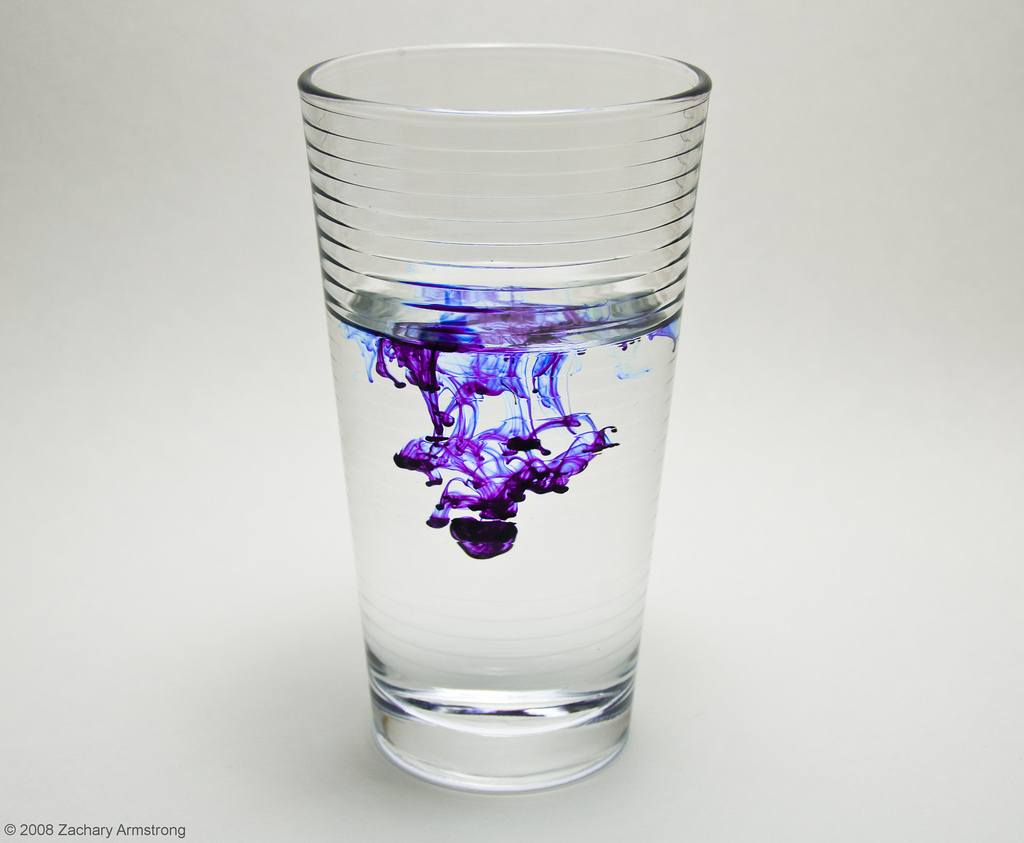
Where is there a low concentration of dye?
a)
at the bottom of cup
b)
in the color
c)
at the top of cup 
d)
no concenteraion gradient
90.
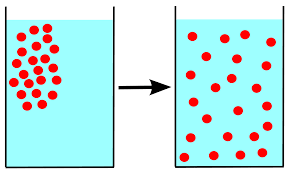
The picture below is an example of _________________.
a)
osmosis
b)
isotonic
c)
diffusion
d)
active transport
91.
Osmosis is the movement of _____ across a membrane.
a)
food
b)
energy
c)
oxygen
d)
water
92.
During osmosis
a)
water moves from high to low concentration
b)
large or oddly shaped molecules move across a cell membrane
c)
water moves when energy is used
d)
proteins are built
93.
Permeable means
a)
things can pass through
b)
the concentration levels are different
c)
it is permanent
d)
things are stuck
94.
Where is there a low concentration of perfume?
a)
in the bottle
b)
on the hand
c)
in the room
d)
in the top
95.
What is the definition of  Selective Permeability?
a)
The movement of materials across the cell membrane that requires NO ENERGY from the cell.
b)
The movement of materials through (or across) the cell membrane
c)
The ability of the cell membrane to allow some things to pass through while preventing other things from passing through.
d)
The movement of molecules from an area of high concentration to a area of low concentration 
96.
What a cell needs to transport particles by active transport?
a)
Sun
b)
Wind
c)
Energy
d)
Channels
97.
A person would never have pure water put into their veins in a hospital because their cells would...
a)
Shrink/Dehydrate
b)
Expand
98.
If there is 5 percent water inside a cell and 5 percent water outside a cell
a)
more water will move inside the cell
b)
more water will move outside the cell
c)
There will be no movement of water cells
99.
Passive transport requires no
a)
concentration gradients
b)
osmosis
c)
motion
d)
energy
100.
The movement of molecules against a concentration gradient
a)
simple diffusion
b)
facilitated diffusion
c)
active transport
d)
osmosis
101.
What are the products of photosynthesis?
a)
water and carbon dioxide
b)
oxygen and glucose
c)
oxygen and carbon dioxide
d)
oxygen and water
102.
What molecule absorbs sunlight for photosynthesis?
a)
chloroplast
b)
thylakoid
c)
grana
d)
chlorophyll
103.
Use the diagram to answer the question. Between which parts of the molecule must the bonds be broken to form an ADP molecule?
a)
A and B
b)
A and C
c)
B and C
d)
C and D
104.
Most plants appear green because chlorophyll
a)
absorbs green light.
b)
absorbs violet light.
c)
does not absorb green light.
d)
does not absorb violet light.
105.
Where do the light-dependent reactions occur? 
a)
thylakoid membrane
b)
stroma
c)
mesophyll
d)
mitochondria
106.
Where does the Calvin Cycle occur?
a)
thylakoid
b)
stroma
c)
lumen
d)
mitochondria
107.
Where does the Calvin Cycle occur?
a)
thylakoid
b)
stroma
c)
lumen
d)
mitochondria
108.
True or False.   The calvin cycle can happen at night.
a)
true
b)
false
109.
Which term is the part of photosynthesis when light energy is captured and transferred to a molecule, such as ATP?
a)
light- independent reactions
b)
cellular respiration
c)
light- dependent reactions
d)
 photosynthesis
110.
What is the output of photosynthesis?
a)
ATP
b)
Glucose
c)
CO2
d)
light
111.
Aerobic respiration occurs in which organelle?
a)
chloroplast
b)
mitochondrion
c)
ribosome
d)
nucleus
112.
Which statement best compares aerobic and anaerobic respiration? 
a)
Less ATP is generated during anaerobic respiration than during aerobic respiration. 
b)
More water is generated during anaerobic respiration than during aerobic respiration. 
c)
More oxygen is generated during anaerobic respiration than during aerobic respiration. 
d)
Less lactic acid is generated during anaerobic respiration than during aerobic respiration. 
113.
What is the function of the organelle identified by #3?
a)
produce sugars
b)
direct protein synthesis
c)
produce energy
d)
trap sunlight
114.
Aerobic respiration occurs in the presence of ______________.
a)
nitrogen
b)
carbon dioxiide
c)
oxygen
d)
carbon monoxide
115.
This organelle could likely be found in 
a)
plant cells only.
b)
animal cells only.
c)
prokaryotes only.
d)
plant and animal cells.
116.
Muscle cells that are used during heavy exercise often do not receive enough oxygen for energy production.  What waste product builds up in muscle cells resulting in soreness?
a)
water
b)
alcohol
c)
carbon dioxide
d)
lactic acid
117.
Which of the following is the correct equation for aerobic cellular respiration?
a)
6CO2 + 6H2O     --->   C6H12O6 + 6O+ ATP
b)
6O2 + C6H12O6  ---> 6H2O + 6CO+ ATP
c)
C6H12O+ 6H2O ---> 6CO2 + 6O+ ATP
d)
6O2 + 6H2O ---> C6H12O6 + 6CO+ ATP
118.
What gas is causing the balloons to inflate?
a)
oxygen
b)
nitrogen
c)
carbon dioxide
d)
carbon monoxide
119.
What energy-yielding process is occurring in the test tube with the orange balloon filled with yeast, water, and sugar?
a)
lactic acid fermentation
b)
alcoholic fermentation
c)
aerobic respiration
d)
photosynthesis
120.
Cells spend 90% of their time in this stage of the cell cycle. This is the reason you would see most cells in this stage if viewed under a microscope.
a)
Prophase
b)
Metaphase
c)
Anaphase
d)
Interphase
121.
Cell division occurs to allow for 
a)
Growth
b)
Reproduction
c)
Repair
d)
All of the above
122.
Cell division occurs to allow for 
a)
Growth
b)
Reproduction
c)
Repair
d)
All of the above
123.
The sister chromatids of each chromosome are separated (come apart) and move to opposite ends of the cell. Name that Stage!
a)
Prophase
b)
Metaphase
c)
Anaphase
d)
Telophase
124.
The cytoplasm is divided between the cells splitting the cell into two. Name that Stage!
a)
Cytokinesis
b)
Interphase
c)
Prophase
d)
Metaphase
125.
DNA is copied in the S part of this stage. Name that Stage!
a)
Interphase
b)
Prophase
c)
Metaphase
d)
Anapahse
126.
Nucleolus and nuclear membrane start to disappear, chromatin condenses into chromosomes, and spindle fibers start to form. Name that Stage!
a)
Interphase
b)
Prophase
c)
Metaphase
d)
Anaphase
127.
The chromosomes start to line up in the middle of the cell.
a)
Prophase
b)
Metaphase
c)
Anaphase
d)
Telophase
128.
How many chromosomes do human body cells have?
a)
23
b)
46
c)
92
d)
None of these
129.
What do the cells look like at the end of mitosis?
a)
different from original cell
b)
similar to the original cell
c)
identical to the original cell
d)
none of these
130.
Identify the stage of the cell cycle while looking at the picture.
a)
Prophase
b)
Metaphase
c)
Anaphase
d)
Telophase
131.
Identify the stage of the cell cycle while looking at the picture.
a)
Interphase
b)
Telophase
c)
Metaphase
d)
Cytokinesis
132.
Identify the stage of the cell cycle while looking at the picture.
a)
Prophase
b)
Metaphase
c)
Anaphase
d)
Telophase
133.
*Identify the stage of the cell cycle while looking at the picture.
a)
Prophaese
b)
Metaphase
c)
Anaphase
d)
Telophase
134.
Identify the stage of the cell cycle while looking at the picture.
a)
Early Prophase
b)
Late Prophase