
 Worksheets
Convection, Conduction and Radiation
Total questions: 127
Worksheet time: 1hrs 13mins
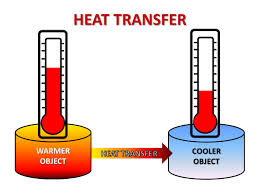
Which of the following is not a method for heat transfer
Radiation
Insulation
Conduction
Convection
In which of the following state are the particles closest together?
Fluid
Gas
Liquid
Solid
How does heat energy reach the Earth from the Sun
Convection
Radiation
Conduction
Insulation
The transfer of energy by waves or particles is called
conduction
convection
radiation
insulation
A material that reduces the flow of heat is a(n)
conductor
insulator
metal
radiator
All of the following are good conductors of heat EXCEPT
Copper
Iron
Plastic
Aluminum

Density is...
how many particles there are
how heavy the particles are
how much space the particles take up
how close together the particles are to each other
how big the particles are

Hot particles...
are more dense and rise
are less dense
and rise
are less dense
and sink
are more dense and rise

The movement of particles in a circle due to differences in density is called...
radiation
conduction
convection
currents

The best place to put a furnace is...
in the basement because heat rises
in the basement because heat sinks
on the top floor because heat rises
on the top floor because heat sinks

Convection happens in...
solids
liquids
gases
fluids
all of the above

Cold air is _____ because the particles have_____
more dense;
more energy
more dense;
less energy
less dense;
less energy
less dense;
more energy

If there is a fire and you need to get out of a smoky room, the best way to get out is:
jumping as high as possible to get above the fire
crawling along the floor because the hot smoke will rise to the ceiling

More dense particles are:
heavier
bigger
farther apart
closer together
Transferring heat through the movement of
hot and cold particles to new physical locations is called____
radiation
convection
conveyor
conduction
Convection will stop when____:
the temperatures are very different
the temperatures are a little different
the temperatures are the same
convection never stops
Heat is also known as .....
thermal energy
power
gravitational potential energy
elastic potential energy
Thermal energy is transferred from ________ temperature to _____________ temperature.
lower, higher
higher, lower
same, same
higher, higher
Which of the following is NOT a means of thermal energy transfer?
conduction
boiling
radiation
convection
If a material conducts heat well, it is known as a _______
conductor
insulator
generator
incubator
In conduction, when one part of the object is heated, the particles ________
vibrate more vigorously, collide with adjacent particles and transfer energy
vibrate more slowly and transfer energy
expand due to the heat and allow the hotness to flow.
flow from one of the object to other.
When the objects in contact are in __________________, there is no heat transfer.
thermal equilibrium
stable equilibrium
unstable equilibrium
neutral equilibrium
Metals are better conductors because they have the following mechanisms of conduction:
molecular vibration
free electron diffusion
molecular vibration & free electron diffusion
In a liquid, the main method of thermal energy transfer is ....
conduction
convection
radiation
Conduction is a process through which thermal energy is transferred ________.
through the collisions of adjacent particles
through electromagnetic radiation
through movement of the medium
Convection is a process through which thermal energy is transferred ________.
through the collisions of adjacent particles
through electromagnetic radiation
through movement of the medium
Radiation is a process through which thermal energy is transferred ________.
through the collisions of adjacent particles
through electromagnetic radiation
through movement of the medium
When heated, warmer fluids _________.
increase volume, become less dense and rise.
decrease volume, become more dense and sink.
don't change.
When cooled, fluids _________.
increase volume, become less dense and rise.
decrease volume, become more dense and sink.
don't change.
Where should air-con be placed to ensure maximum cooling effect for a room?
on the floor
near the ceiling
at eye level
at waist level
Where should a heating element be placed to ensure maximum heating of a kettle?
at the base of the kettle
at the sides of the kettle
at the top of the kettle
How does heat move?
In many directions
from warm places to cooler places
from cold places to warm places
Both B and C
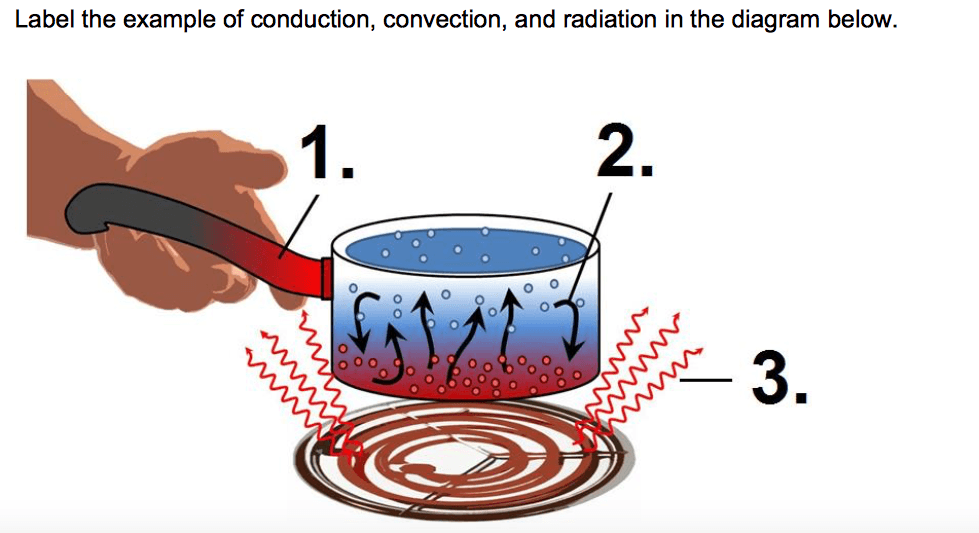
What type of thermal energy transfer is number 1 pointing to?
Convection
Conduction
Radiation
Insulation

What type of thermal energy transfer is number 2 pointing to?
Convection
Conduction
Radiation
Insulation

What type of thermal energy transfer is number 3 pointing to?
Convection
Conduction
Radiation
Insulation
Food cooking in a pan on a stove
Conduction
Convection
Radiation
How does heat energy reach the Earth from the Sun
Convection
Radiation
Conduction
Insulation

Conduction
Convection
Radiation

Conduction
Convection
Radiation

Which of the following is not a method for heat transfer
Radiation
Insulation
Conduction
Convection

Conduction
Convection
Radiation

Conduction
Convection
Radiation

Conduction
Convection
Radiation

Conduction
Convection
Radiation
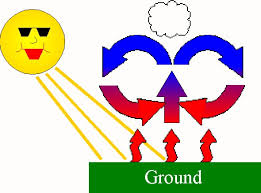
Warm air rises and the cool air sinks

Conduction
Convection
Radiation

Conduction
Convection
Radiation

EQ: What are the methods of thermal energy transformation?
What is conduction?
<- (Example)
heat or electricity is directly transmitted through a substance
use energy electromagnetc (waves sun)
have tempratures warms/high temperatures
all are correct

What is truth about radiation energy?
(chose one)
<- (Example of waves of sun)
requiers direct
touch
have temperatures
warms
only ocucurs in solds
use rays or electromagnectic
waves (sun)

Which of these is Covection?
<- (example)
is warm and dennse
use electromagnetic waves
only occurs in solds
does not requiers matter or air

What kind of heat transfer is occurring when the sun warms the sand?
Conduction
Convection
Radiation
Density

Which of the following is an example of convection?
A hair dryer is drying up your hair.
Boiling spaghetti noodles in water
When a car engine turns hot after being turned on.
When the AC or heater changes the temperature

What heat transfer happens when you burn your finger by touching a fire?
Convection
Radiation
Conduction
Gravity

When a frying pan is touching a stove that is on, what heat transfer is happening?
Radiation
Conduction
density
Convection

Hot air balloons rise because the heated air is less dense than cold air, so as the warm rises as the molecules spread out. The cold air is pushed downward, where it is also heated and rises. This swirling movement of air is called...
convection
radiation
insulation
conduction

The baby chickens kept warm from a heat lamps demonstrates this type of heat transfer.
conduction
radiation
convection
density

Warm air rises and the cool air sinks demonstrates this type of heat transfer.
conduction
radiation
convection
Insolation

Walking on the warm sand with your bare feet demonstrates this type of heat transfer.
conduction
radiation
convection
insolation

A group of friends gather around a fire to stay warm.
What type or energy is?
conduction
radiation
convection
waves
(sun)

Transfer of thermal energy through "space" how is it's call?
conduction
convection
radiation
density

Transfer of thermal or heat energy through "touch"
conduction
convection
radiation
waves
(sun)

Near the ceiling of a room the air is warmer. The warm air rises because of...
conduction
radiation
convection
gravity

Which describes what can happen as a result of radiation?
<- (Exaple on the left)
a piece of woood burns in a fire
a shirt is hot after having been ironed🔥
a can of sup is heated in a pot on a stove
a car's inside temerature rises to over 100 degrees on a sunny day ☀️🌡️

The type of heat transfer that creates currents in water is called ________.
conduction
radiation
convection
density

A pot is placed directly on a stove. The pot gets hot due to ________.
<- Photo of example
conduction
radiaton
convection
gravity

The transfer of electrical waves or particles is called?
conduction
radiation
radiation
insolation

How is heat transferred when boiling a pot of water on the stove?
<- ( example of a photo)
conduction
convection
radiation
gravity

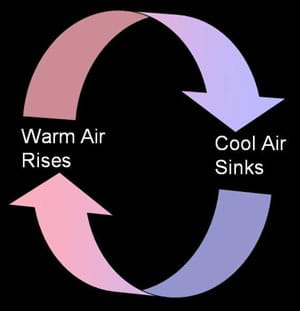
Near the ceiling of a room the air is warmer. The warm air rises because of
conduction
convection
radiation
Heat transfer by convection is caused by differences in what two things:
Thickness and material
Weight and electricity
Temperature and density
Can convection currents occur in a solid?
No.
just in a liquid and gas.
Yes.
In a solid, liquid, and gas.
What is an example of a convection current?
Touching a hot spoon that was in a soup bowl.
Feeling the suns rays on a nice summer day.
Touching an iron skillet after cooking and feeling the heat.
Movement of gas in a hot air balloon.
What is the relation between convection heat transfer coefficients of natural convection and forced convection?
convection heat transfer coefficient of natural convection is lower than the convection heat transfer coefficient of forced convection
convection heat transfer coefficient of natural convection is more than the convection heat transfer coefficient of forced convection
convection heat transfer coefficients in both natural and forced convection are the same for same system
unpredictable
What is the ratio of the buoyancy force to the viscous force acting on a fluid called? (answer Grashof number)
Prandtl number (Pr)
Reynolds number (Re)
Nusselt number (Nu)
Grashof number (Gr)
In natural convection, the Nusselt number (Nu) depends on (answer is Gr and Pr)
Pr and Re
Gr and Re
Gr and Pr
none of the above
The average energy of motion of an object’s particles.
Heat
Thermal Energy
Convection
Radiation
While on vacation, Carine rides in a hot-air balloon. To make the balloon rise, the pilot turns on a flame to warm the air inside the balloon. How does the air change?
The temperature of the air decreases.
The air particles move closer together.
The motion of the air particles increases.
The air changes to a different state of matter.
Thermal energy being transferred from one place to another.
Radiation
Convection
Heat
Conduction
•The movement of heat or electricity through matter by direct contact is called_________.
convection
radiation
thermal heat
conduction
Which of the following answer choices IS NOT an example of conduction?
Touching a metal spoon in a cup of hot liquid
Holding a chocolate bar in your hand then it starts to melt
•Hot air rising in the atmosphere, cold sinking
Putting a heating pad on your back
Which of the following describes the transfer of thermal energy that occurs as a piece of ice in her hand?
Thermal energy is transferred from her hand to the ice cube.
Thermal energy is transferred from the ice cube to her hand.
Thermal energy is transferred back and forth from her hand to the ice cube
Thermal energy does not transfer between to objects at different temperatures.
•The transfer of thermal energy though a fluid (gas or liquid) is called_________.
convection
conduction
radiation
thermal radiation
Which of the following answer choices accurately describes thermal transfer conduction?
The transfer of heat through solids, liquids, or gases
The transfer of thermal heat through liquids or gases.
The transfer of heat through touching(mostly metals) solids in particular.
The transfer of heat through open space or waves.

Which type of thermal energy transfer is represented in the picture?
radiation
temperature
conduction
convection
Which of the following answer choices is NOT an example of thermal transfer convection?
Lava lamp rising and sinking
Hot air balloon ride elevating for take off
Hot water rising in the oceans, cold sinking
Feeling the warmth from a fireplace
As a spoon in a bowl of hot soup becomes warmer, by which process is energy being transferred to the spoon?
convection
conduction
radiation
direct contact

What type of heat transfer is shown in the picture?
heat option
radiation
conduction
convection
What is the rolling motion of boiling water an example of?
convection
conduction
insulation
radiation
What is transfer of heat through a material(solids) is called?
thermal insulation
thermal conduction
thermal radiation
thermal convection
Hot air is seen rising from the pavement on a hot summer day. Which of the following is this an example of?
thermal conduction
thermal insulation
convection
radiation
Energy transmitted in waves or a stream of particles or travels through open space is called_____.
direction convection
conduction
convection
radiation

What type of heat transfer is denoted in the picture?
conduction
convection
radiation
none of the above

What type of heat transfer is in this picture?
electromagnetic
convection
Thermal energy
conduction
Which of the following is the transfer of energy as heat by the movement of a liquid or gas?
radiation
emission
convection
conduction
Which of the following answer choices IS NOT an example of radiation?
Placing a hand on top of a basket of hot rolls
•Holding your hand over a burning match without touching it
Holding your hands over a light bulb
Laying out in the sun at a beach

What type of heat transfer is occurring in the picture?
conduction
convection
heat transfer
radiation
A cold block of metal is placed in contact with a warm block of metal. Which type of energy will be transferred between the blocks?
thermal energy
chemical energy
electrical energy
mechanical energy

The circular motion occurring in the mantle is the result of _______.
convection currents
radiation
conduction contact
lithosphere

What type of thermal transfer is show in the photo?
conduction
radiation
convection
thermal picture

What type of heat transfer is occurring in the picture?
Convection
Conduction
Radiation
Heat
Which of the following is NOT an example of radiation?
Warm and cold air circulating in the living room
Laying out in the sun on the beach
Feeling the warmth from a fireplace in the winter
Microwaving food for lunch at work

What type of heat transfer is on display in the photo?
convection
conduction
heat
radiation
How does heat move?
In many directions
from warm places to cooler places
from cold places to warm places
Both B and C
What type of thermal energy transfer is number 1 pointing to?
Convection
Conduction
Radiation
Insulation
What type of thermal energy transfer is number 2 pointing to?
Convection
Conduction
Radiation
Insulation
How does heat energy reach the Earth from the Sun
Convection
Radiation
Conduction
Insulation
Which of the following is not a method for heat transfer
Radiation
Insulation
Conduction
Convection
Warm air rises and the cool air sinks
This is a form of energy that causes materials to become warmer or hotter.
Temperature
Heat
Thermometer
This measures how hot or how cold a material is
Temperature
Heat
Thermometer
Which of the following statements is true?
The faster the particles move, the lower the temperature.
The faster the particles move, the higher the temperature.
The slower the particles move, the higher the temperature.
This is an instrument that measures temperature
Thermometer
Heat
Temperature
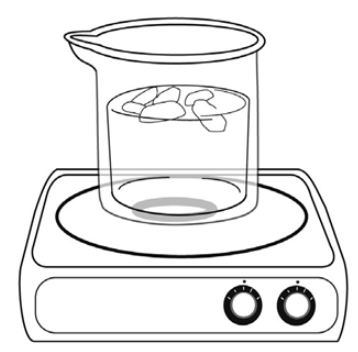
Emerson places a beaker of water on a hotplate and turns the hotplate on. The temperature in the room is 25 ºC. After the water heats to 75 ºC, she adds pieces of ice to the beaker.
Which of the following describes a transfer of heat energy that occurs during this experiment?
from the air to the water
from the ice to the beaker
from the water to the ice
from the water to the hotplate

