wayground logo

Free Printable Worksheets

Font size

S
M
L
XL
Worksheets

Earth Assessment Practice

Total questions: 132

Worksheet time: 2hrs 30mins

Name
Class
Date
1.

Which of the following is a characteristic of all minerals?

a)

Crystalline structure

b)

Fills the shape of its container

c)

Usually organic

d)

Random chemical composition

2.

Which of the following is NOT a way to identify a mineral?

a)

Streak

b)

Denisty

c)

Luster

d)

Crumble

3.

Two types of igneous rocks are:

a)

Interior and exterior

b)

Intrusive and extrusive

c)

Inside and outside

d)

Enter and exit

4.

Lava is found...

a)

after a volcano erupts.

b)

on the inside of a volcano.

c)

both inside and outside a volcano.

5.

The process for sedimentary rocks DO NOT include:

a)

Cementation

b)

Cooling

c)

Deposition

d)

Erosion

6.

Fossils are a form of:

a)

mineral

b)

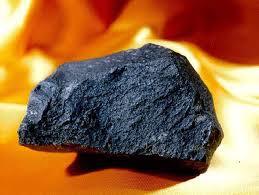
igneous rock

c)

sedimentary rock

7.
Means that a mineral cannot come from something that was once living.
a)
Inorganic
b)
Organic
c)
Naturally Occurring
d)
Not Living
8.
This is measured on  the Mohs Scale.
a)
Cleavage
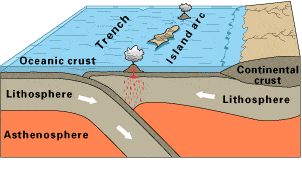
b)
Density
c)
Hardness
d)
Luster
9.
The _________ of a mineral is a physical property that is easy to observe.
a)
Chemical Composition
b)
Color
c)
Hardness
d)
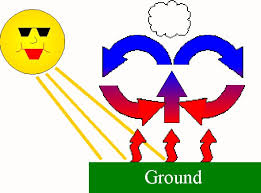
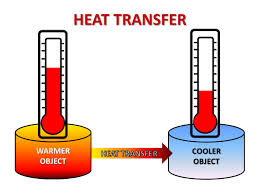
Streak
10.
_______ is found by rubbing the mineral against an unglazed tile called a plate.
a)
Cleavage
b)
Color
c)
Luster
d)
Streak
11.
This is how a mineral reflects light.
a)
Cleavage
b)
Density
c)
Hardness
d)
Luster
12.
_______ is a property that describes a mineral  that splits evenly along flat surfaces.
a)
Cleavage
b)
Fracture
c)
Inorganic
d)
Organic
13.
The three major rock groups are:
a)
Inorganic, Metamorphic, and  Sedimentary
b)
Inorganic, Metamorphosis, and Sediment
c)
Igneous, Metamorphic, and Sediment
d)
Igneous, Metamorphic, and Sedimentary
14.
This rock  is formed from molten rock (magma/lava) that has cooled.
a)
Igneous
b)
Inorganic
c)
Metamorphic
d)
Sedimentary
15.
This rock is formed by extreme heat and/or pressure that alters the chemical composition into a new form of rock.
a)
Inorganic
b)
Igneous
c)
Metamorphic
d)
Sedimentary
16.
This rock is formed by erosion (continuously broken down into small fragments) and  then is compressed and  cemented together.
a)
Inorganic
b)
Igneous
c)
Metamorphic
d)
Sedimentary
17.
When identifying minerals, _______ can be tested by scratching the surface with different materials such as your fingernail or a coin.
a)
Cleavage
b)
Density
c)
Hardness
d)
Streak
18.

If a mineral can SCRATCH another one, it is -

a)

harder than the mineral

b)

weaker than the mineral

c)

the same mineral

19.

Diamond is the hardest mineral.

a)

True

b)

False

20.

What type of property test is a mineralogist conducting when she rubs a mineral over a mirror, tile, or hard surface?

a)

Streak Test

b)

Luster Test

c)

Appearance Test

d)

Cracking Test

21.
What are the 3 major types of rocks?
a)
Igneous, Metamorphic, Sedimentary
b)
Metamorphic, Igneous, Cementation
c)
Brown, Red, Gray
d)
Streak, Hardness, Breakage
22.

Rocks formed by heat and pressure beneath the Earth's surface are...

a)

igneous

b)

metamorphic

c)

sedimentary

d)

magma

23.
A solid material that is made up of one or more minerals.
a)
mineral
b)
rock
c)
fossil
d)
soil
24.
Rock formed from materials that have settles into layers from weathering
a)
igneous rock
b)
sedimentary rock
c)
metamorphic rock
25.
An object that is solid, formed in nature, and has never been alive
a)
sand castle
b)
mineral
c)
plant
26.
What is the small broken down pieces of rock called?
a)
dirt
b)
grime
c)
sediment
d)
popcorn
27.
When sediments are pressed together tightly, this is called ____________.
a)
Compaction
b)
Cementation
c)
Weathering
d)
Erosion
28.
The process by which metamorphic rocks are formed...
a)
heat and pressure
b)
erosion and deposition
c)
melting and cooling
29.
_______ rock forms from magma/lava
a)
Metamorphic
b)
Sedimentary
c)
Igneous
30.

What causes igneous rocks to form

a)

pressure

b)

cooling magma and lava

c)

compaction

d)

cementation

31.

A rock made of magma that cools inside the Earth and contains large crystals?

a)

Igneous

b)

Sedimentary

c)

Metamorphic

d)

Magma

32.

How can a Metamorphic rock become an Igneous rock?

a)

Weathering and Erosion

b)

Compaction and Cementation

c)

Heat and Pressurew

d)

Melting and cooling

33.
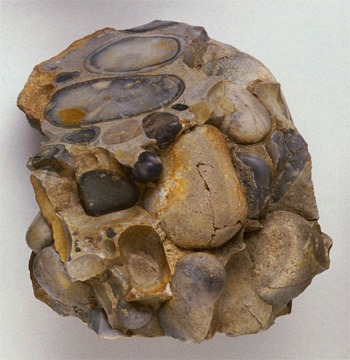
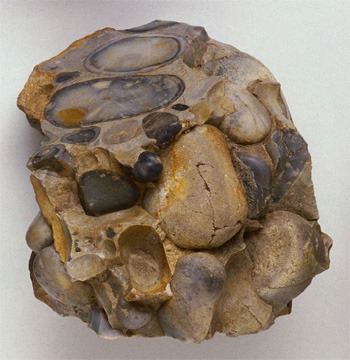
This rock was formed by smaller pieces of rock that settled at the bottom of a lake millions of years ago. What type of rock is this?
a)
Sedimentary
b)
Igneous
c)
Metamorphic
34.

The process that breaks down rocks and other materials on Earth's surface is called

a)

Weathering

b)

Erosion

c)

Deposition

d)

Decomposition

35.

What is the wearing away or breaking down of rocks called?

a)

Deposition

b)

Erosion

c)

Glaciers

d)

Weathering

36.
What is the small broken down pieces of rock called?
a)
dirt
b)
grime
c)
sediment
d)
popcorn
37.
This is the process of dropping sediment in a new location.
a)
Weathering
b)
Erosion
c)
Deposition
38.

The amount of light reflected off the surface of a rock or mineral

(a)  

39.

The way a rock or mineral feels. They can be rough or smooth

(a)  

40.

Moh's ________ Scale or the Scratch test are two ways that we measure _________.

a)

Hardness, Hardness

b)

Luster, Luster

c)

Color, Color

d)

Texture, Texture

41.
The Earth uses this method to constantly recycle rocks.
a)
water Cycle 
b)
Nitrogen Cycle 
c)
Luster Cycle 
d)
Rock Cycle 
42.
Which item listed below is not a property of a mineral?
a)
Streak 
b)
Shape 
c)
Luster
d)
Hardness
43.
Which type of rock is formed from fragments that have been compacted or cemented together?
a)
Igneous 
b)
Organic 
c)
Metamorphic 
d)
Sedimentary
44.
What type of rock forms from cementation and compaction close to or on earth's surface?
a)
Sedimentary
b)
Metamorphic
c)
Igneous
45.
What type of rock forms from heat and pressure deep inside earth's surface?
a)
Sedimentary
b)
Metamorphic
c)
Igneous
46.
What type of rock forms from lava that has cooled at or near earth's surface?
a)
Sedimentary
b)
Metamorphic
c)
Igneous
47.
What is the geological process by which rocks are formed, destroyed, or altered?
a)
continental drift
b)
plate tectonics
c)
water cycle
d)
rock cycle
48.
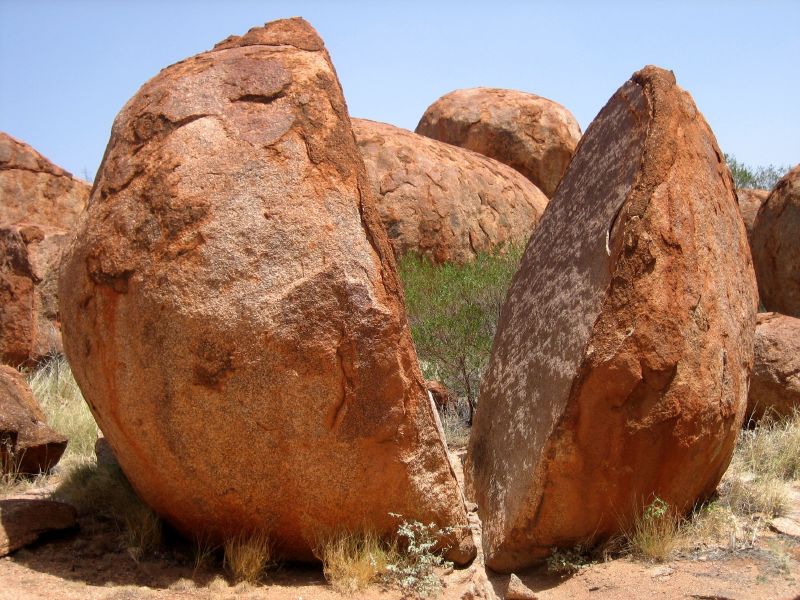
This rock was another type of rock that was heated and compressed over time. What type of rock is this?
a)
Sedimentary
b)
Igneous
c)
Metamorphic
49.

This rock started as molten magma but transformed after a volcano erupted. What type of rock is this?

a)

Sedimentary

b)

Igneous

c)

Metamorphic

50.
This rock was formed by smaller pieces of rock that settled at the bottom of a lake millions of years ago. What type of rock is this?
a)
Sedimentary
b)
Igneous
c)
Metamorphic
51.
The process when rocks break into smaller pieces due to exposure to natural elements is called
a)
erosion
b)
weathering
c)
sediments
52.
What are the 3 major types of rocks?
a)
Igneous, Metamorphic, Sedimentary
b)
Metamorphic, Igneous, Cementation
c)
magma, lava, crystals
53.
The process by which metamorphic rocks are formed...
a)
heat and pressure
b)
erosion and deposition
c)
melting and cooling
54.

What do we call the material that comes from rocks that have been broken down into smaller pieces. This usually results from weathering.

a)

texture

b)

weathering

c)

sediment

d)

erosion

55.

What causes igneous rocks to form

a)

animal and plant remains aka fossils

b)

cooling magma, lava, and pressure

c)

compaction of sediment

d)

cementation or hardening of minerals

e)

sediment

56.

Name of the impression of a plant or animal, in the soil, that existed in the past

a)

diamond

b)

hardness

c)

fossil

57.

Geologists are scientists that study _______.

a)

rocks

b)

lakes

c)

rivers

d)

animals

58.

Geologists can find ______ in old rocks.

a)

fossils

b)

toys

c)

sofas

d)

people

59.

This image shows the rock cycle. Which event most likely occurs at point K?

a)

cooling

b)

cementing

c)

melting

d)

weathering

60.

What happens when magma cools during the rock cycle?

a)

Igneous rock is formed.

b)

Metamorphic rock is melted.

c)

Sediments form sedimentary rock.

d)

Metamorphic rock forms sediments.

61.

This image shows a model of the rock cycle. At point R, rocks melt underground to form magma. Which is another process that contributes to the formation of rock at point R?

a)

compacting of sediments on the mountain

b)

cooling as the lava runs down the mountain

c)

weathering of the mountain from the environment

d)

eroding of different rocks at the base of the mountain

62.

When magma cools slowly inside the earth, we get _____ rocks with large crystals.

a)

extrusive igneous rocks

b)

Plutonic (intrusive) igneous rocks

c)

Basalt rocks

d)

Obsidian rocks

63.
Wind, water, and ice breaking down rock is called
a)
Erosion
b)
Deposition
c)
Compaction
d)
Weathering
64.
What is the MAIN way rocks are classified?
a)
Their color and shapes
b)
How they form
c)
Mineral bands
d)
Where they form
65.
The process in which dissolved minerals crystallize and glue sediment together.
a)
compaction
b)
deposition
c)
organic rock
d)
cementation
66.
This rock was formed by smaller pieces of rock that settled at the bottom of a lake millions of years ago. What type of rock is this?
a)
Sedimentary
b)
Igneous
c)
Metamorphic
67.
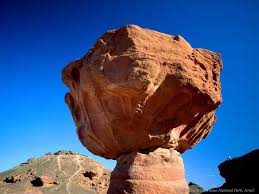
This rock was found near the mouth of a volcano. What type of rock is this?
a)
Sedimentary
b)
Igneous
c)
Metamorphic
68.
Fossils are only found in
a)
Sedimentary rocks
b)
Foliated Metamorphic rocks
c)
Igneous Rocks
d)
Nonfoliated Metamorphic rocks
69.

Why is the inner core solid if the outer core is liquid?

a)

It is made of solid rock

b)

it is located directly below the mantle

c)

it is affected by pressure from the layers above it

70.

Which layer of the Earth is believed to be composed primarily of liquid iron and nickel?

a)

Crust

b)

Mantle

c)

Outer Core

d)

Inner Core

71.

What type of heat transfer occurs in the mantle of the Earth?

a)

Conduction

b)

Convection

c)

Radiation

72.

Which layers makes up 1% of the Earth's weight?

a)

crust

b)

mantle

c)

inner core

d)

outer core

73.
Identify layer  #20.
a)
mantle
b)
pizza crust
c)
inner core
d)
outer core
74.
A dense ball of solid iron and nickel.
a)
crust
b)
inner core
c)
mantle 
d)
outer core
75.

Which best describes the mantle?

a)

molten metal

b)

dense, solid metal ball

c)

hot but not completely solid rock

d)

dry land and ocean floor

76.
In which layer of the Earth is the athenosphere located?
a)
inner core
b)
mantle
c)
outer core
d)
crust
77.

The idea that continents were once part of a single landmass that broke apart and

moved

a)

Continental Drift

b)

Tectonic Plates

c)

Transform

78.

Forms where plates are moving away from each other

a)

Divergent-

b)

Convergent-

c)

Transform-

79.

Formed where two sections of Earth’s crust are colliding

a)

Divergent-

b)

Convergent-

c)

Transform-

80.

The land mass where all of the continents were once together in one large continent is called ________________.

a)

Laurasia.

b)

Pangaea.

c)

Eurasia.

d)

Gondwana.

81.

Tectonic plates consist of

a)

continental crust.

b)

mesosphere.

c)

both continental and oceanic crust.

d)

oceanic crust.

82.

The fact that similar fossils are found on both sides of the ocean is evidence of

a)

magnetic reversal.

b)

global positioning.

c)

continental drift.

d)

oceanic drift.

83.

The movement of the tectonic plates is caused by

a)

the rotation of the Earth.

b)

convection currents in the Asthenosphere

c)

the gravity of the iron-nickel core.

d)

the Moho discontinuity.

84.

Observe this diagram of a plate boundary. One statement BEST describes what is happening. It is that

a)

the oceanic crust is melting.

b)

the denser oceanic crust is subducting under the less dense oceanic crust

c)

volcanic islands are forming.

d)

the tectonic plates are moving away from each other.

85.

The solid, but bendable layer of Earth. Tectonic plates move on top of this layer.

a)

Inner Core

b)

Asthensophere

c)

Lithosphere

d)

Outer Core

86.
Identify the letter in the diagram.  Identify letter E
a)
Lithosphere
b)
Asthenosphere
c)
Mantle
d)
Outer Core
87.
The pieces of Earth's crust that compose the lithosphere
a)
Tectonic plates
b)
Core
c)
Asthenosphere
d)
Fault
88.

The Earth's lithosphere contains

a)

The upper mantle

b)

The oceanic crust

c)

The continental crust

d)

All are correct

89.
Which layer of the earth is completely Liquid?
a)
Crust
b)
Mantle
c)
Outer Core
d)
Inner Core
90.

What is the name of layer R?

a)

lithosphere

b)

inner core

c)

outer core

d)

asthenosphere

e)

mesosphere

91.

What is the name of layer Q?

a)

lithosphere

b)

inner core

c)

outer core

d)

asthenosphere

e)

mesosphere

92.

What is the name of layer Z?

a)

crust

b)

mantle

c)

outer core

d)

inner core

e)

core

93.

If the most abundant substances in the earth are silicon and oxygen, which part would you expect these elements to be found?

a)

crust

b)

mantle

c)

outer core

d)

inner core

e)

core

94.

Where is heat and pressure the greatest in the Earth?

a)

crust

b)

mantle

c)

outer core

d)

inner core

95.

Which of the following is not a method for heat transfer

a)

Radiation

b)

Insulation

c)

Conduction

d)

Convection

96.

How does heat energy reach the Earth from the Sun

a)

Convection

b)

Radiation

c)

Conduction

d)

Insulation

97.

Which is the best surface for reflecting heat radiation?

a)

Shiny white

b)

Dull white

c)

Shiny black

d)

Dull black

98.

Which is the best surface for absorbing heat radiation?

a)

Shiny white

b)

Dull white

c)

Shiny black

d)

Dull black

99.
a)

Conduction

b)

Convection

c)

Radiation

100.
a)

Conduction

b)

Convection

c)

Radiation

101.
What is the definition of CONDUCTION?
a)
When heat is transferred from objects like rays of light or electromagnetically.
b)
a  hot liquid or air that  expands, becomes less dense, and rises or becomes more dense, and sinks.
c)
When heat transfers from objects that are touching.
d)
When heat transfers through the heater or AC in your house.
102.
What is the definition of CONVECTION
a)
When heat transfers through waves.
b)
When heat transfers from objects that are touching.
c)
a  hot liquid or air that  expands, becomes less dense, and rises or becomes more dense, and sinks.
d)
Heat traveling from the sun
103.
What kind of heat transfer happens when the sun is heating your body?
a)
Conduction
b)
Radiation
c)
Convection
d)
Density
104.
Warm air rises and the cool air sinks demonstrates this type of heat transfer. 
a)
conduction
b)
convection
c)
radiation
d)
Insolation 
105.
Heat transfers from an area of ____temperature to an area of ___ temperature.
a)
high to low
b)
low to high
c)
high to high
d)
It can travel high to low and low to high. 
106.

Hot coffee is stirred with a spoon, the spoon gets hot due to ...

a)

Conduction

b)

Radiation

c)

Convection

107.

A chair is placed several feet from a fire in a fireplace. The fire has a glass screen. The side of the chair facing the fireplace gets warm because of ...

a)

Conduction

b)

Radiation

c)

Convection

108.

Near the ceiling of a room the air is warmer. The warm air rises because of ...

a)

Conduction

b)

Radiation

c)

Convection

109.

One end of a copper rod is placed in a flame of a Bunsen burner. Small pieces of wax placed along the rod melt a progressively larger distance from the flame. Heat is transferred through the rod by ...

a)

Conduction

b)

Radiation

c)

Convection

110.

P waves are also called

a)

pushing waves

b)

pulling waves

c)

primary waves

d)

primordial waves

111.

S waves

a)

are slower than P waves

b)

Faster than P waves

c)

compression waves

d)

faster waves

112.

The diagram shows a

a)

S wave

b)

P wave

113.

The diagram shows a

a)

S wave

b)

P wave

114.
These are the secondary, or second waves to be released. They cannot travel through the liquid outer core
a)
S waves
b)
Surface Waves
c)
P waves
115.
These are the first waves released during an earthquake
a)
S waves
b)
Surface Waves
c)
P waves
116.

Which picture correctly shows how S waves travel through the layers of the Earth?

a)

A

b)

B

117.

Which picture correctly shows how P waves travel through the layers of the Earth?

a)

A

b)

B

118.

Which diagram below correctly shows the shadow zone for S waves.

a)

A

b)

B

119.

Which letter correctly identifies the area of Earth called the inner core?

a)

A

b)

B

c)

C

d)

D

120.

Which letter correctly identifies the area of Earth called the crust?

a)

A

b)

B

c)

C

d)

D

121.

Which letter correctly identifies the area of Earth known as the outer core?

a)

A

b)

B

c)

C

d)

D

122.

Which layer is # 20.

a)

A: Mantle

b)

B: Lithosphere

c)

C: Asthenosphere

123.

Which layer has strong convection currents, which are responsible for the crust's movement?

a)

crust

b)

mantle

c)

outer core

d)

inner core

124.

Which layer is made up of two different kinds of layers, continental and oceanic?

a)

crust

b)

mantle

c)

outer core

d)

inner core

125.

Which layer is solid and made of iron and nickel?

a)

outer core

b)

inner core

c)

mantle

d)

crust

126.

Which layer is responsible for the Earth's magnetic field?

a)

crust

b)

mantle

c)

outer core

d)

inner core

127.

Which layer is the thinnest?

a)

crust

b)

mantle

c)

outer core

d)

inner core

128.

Name the largest layer

a)

crust

b)

mantle

c)

outer core

d)

inner core

129.

Which compositional layer is made mostly of solid iron and nickel?

a)

Crust

b)

Mantle

c)

Inner Core

d)

Outer Core

130.

Earth's outermost compositional layer?

a)

Crust

b)

Mantle

c)

Core

131.

Which of the following is the correct order of the Earth's layers moving inward to the center.

a)

Crust

Mantle

Outer Core

Inner Core

b)

Mantle

Outer Core

Inner Core

Crust

c)

Inner Core

Outer Core

Crust

Mantle

d)

Outer Core

Inner Core

Mantle

Crust

132.

Temperature and pressure ___ as you move towards the center of the Earth.

a)

decrease

b)

increase

c)

neither answer is correct.