
 Worksheets
Unit 1: Electricity and Magnetism study guide
Total questions: 119
Worksheet time: 2hrs 44mins
What is an electrical circuit?
a whole bunch of wires
a broken path that electric charges can flow
a circuit board
a complete, unbroken path through which electric charges flow
When a switch is open...
the circuit is working and gives energy
the circuit is broken and charges cannot flow
the circuit is turning lights on
I don't know...ask Ms. Cednick

Will this circuit light the bulbs?
Yes, both will light up
Yes, but only the one on the right
Yes, but only one on the left
No, neither of the bulbs will light up

Is this a working circuit?
Yes
No
I'm not sure, I would need to test it myself.


If a circuit is OPEN...
the circuit is complete and the light will work.
the circuit is broken and the light will NOT work
the circuit is a series circuit
What are the three components needed for a complete circuit?
wire, load, energy source
wire, switch, load
wire, switch, energy source
A series circuit...
has a single path for energy to flow
has multiple paths for energy to flow
has a single load
A battery can be a ______________ in an electric circuit.
energy source
load
switch
A complete, unbroken path that allows electricity to flow is called a ___________ circuit.
open
closed
parallel
The buildup or electrical charges is called ________. It is what makes clothes stick together.
static electricity
charged particles

What type of circuit is this?
parallel circuit
series circuit
open circuit
closed circuit

What type of circuit is shown?
series circuit
open circuit
parallel circuit

Will the light bulb light in this circuit?
Yes
No
Is a plastic fork an insulator or conductor?
insulator
conductor
Is a paperclip an insulator or a conductor?
insulator
conductor
Which of the following is an insulator?
nail
screw
cardboard
copper sheet
When ___________ and __________ charges are not balanced they can cause object to attract to one another.
positive, positive
positive, negative
negative, negative
Which of the following is a conductor?
plastic chip
yarn
brass ring
paper
In our water analogy, what did the water represent?
electrons
wires
energy
a complete circuit
In our water analogy, what did the students represent?
protons
electrons
neutrons
Megatron
What element in our water analogy represented the wires in an electric circuit?
water
path students walked
students
empty bin
How can we define voltage?
electrons per second
energy transferred per second
beakers per second
energy per electron
How can we define current?
electrons per second
energy transferred per second
how much water splashed out
energy per electron
How can we define power?
electrons per second
energy transferred per second
beakers per second
energy per electron
How was voltage represented in the water analogy?
how fast the empty bin fills
the amount of water in each beaker
how fast the full bin empties
how fast the students moved
How was current represented in the water analogy?
how fast the empty bin fills
the amount of water in each beaker
how fast the full bin empties
how fast the students moved
How was power represented in the water analogy?
how fast the empty bin fills
the amount of water in each beaker
yoda
how fast the students moved
The important equation we derived was
Power = Current/Voltage
Power = Voltage/Current
Power = Current x Voltage
Physicists use P to represent power, V to represent voltage, and which letter to represent current?
I
J
Q
X
In a circuit, the graph of energy transferred over time forms which pattern?
horizontal line
proportional
quadratic
inverse
What happens to the power if the current doubles?
The power halves.
The power stays the same.
The power doubles.
The power triples.
What happens to the power if the voltage doubles?
The power halves.
The power stays the same.
The power doubles.
The power triples.

What is the name of this device?
electric circuit
generator
electromagnet
electric motor

What is the name of this device?
electric circuit
electric motor
electromagnet
generator

What is the name of this device?
electric circuit
electric motor
generator
electromagnet

What is the name of this device?
electric circuit
electric motor
generator
electromagnet
What happens in an electromagnet?
Mechanical energy produces an electric field
Mechanical energy transforms into electrical energy
Electrical energy produces a magnetic field
Electrical energy transforms into mechanical energy
When electricity to an electromagnet is stopped, what happens to the strength of the magnet?
The magnetism stays the same
The magnetism decreases
The magnetism increases
The magnetism stops
Which energy transformation is found in generator?
Chemical energy to Electrical energy
Chemical energy to Mechanical energy
Electrical energy to Mechanical energy
Mechanical energy to Electrical energy
What type of machine converts electrical energy to mechanical energy using magnetism?
Turbine
Motor
Generator
Electromagnet
What is created by the flow of electric current?
A magnetic field
A transformer
An electric field
A battery
Which part of the power plant rotates when pushed by wind, water, or steam to help the generator create power for future use?
Electromagnet
Turbine
Gasoline
Motor

How would you describe this circuit?
Open
Closed
Efficient
Parallel

What is the role of the generator in this system?
It supplies the original energy source for the system.
It converts the magnetism in the turbine into mechanical energy.
It produces the electrical current using the mechanical energy of the turbine.
It transmits the higher-voltage current throughout the power grid system.

The light bulbs are examples of what in the circuit?
voltage
resistor
switch
path

A series circuit will continue to work if one of the light bulbs is unscrewed.
true
false
If the switch is closed on a circuit it means the circuit is working.
true
false
If two balloons have the same charge the balloons will...
repel
attract
stay neutral
Where is the strongest force of a magnet present?
the ends
the middle
its equal everywhere
An electromagnet can be found in all of the following except...
car
computer
home outlets
speaker
An object with equal amounts of positive and negative charge is electrically....
neutral
charged
positive
negative
All of these are examples of conductors except...
wooden ruler
paper clip
metal key
copper penny
All of these are examples of insulators except....
plastic fork
glass marble
rubber band
aluminum can
The region around any charged object where an electric force is applied matches which term?
electric discharge
electric current
electric field
electric force
An object that has gained electrons is....
electrically neutral
negatively charged
positively charged

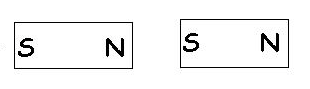
These magnets will...
attract
repel
nothing will happen

This is an example of what type of circuit?
simple
series
parallel
A closed path in which electric charges flow matches which term?
electric circuit
electric resistance
electric field
electric force
A material that does not allow electrons to move freely matches which term?
electric circuit
electric current
insulator
conductor
What device changes mechanical kinetic energy into electrical energy?
electric motor
insulator
electromagnet
generator
Which of the following is the most appropriate definition for magnetism?
the force of attraction or repulsion of magnetic materials
the force of attraction only of magnetic materials
the force of repulsion only of magnetic materials
none of the above
Which of the following is the most appropriate definition for magnetic field?
an area surrounding a magnet that does not apply a force (a push or pull)
an area directly on the magnet that applies a force (a push or pull) without actually touching an object
an area of magnetism surrounding a magnet that applies a force (a push or pull) without actually touching an object
an area surrounding a magnet that applies a force (a push or pull), but only by directly touching an object
If placed in a magnetic field, which of the following materials would be affected?
a compass
wood chips
plastic paper clips
pieces of glass

How does the electromagnet in the diagram above demonstrate the relationship between magnetism and electricity?
The wire is wrapped around the iron core, but no electric circuit is present.
The wire is wrapped around the iron core, but no energy source is present.
The wire in the electric circuit is wrapped around an iron core producing a magnetic field.
No circuit is present.

Which of the following is flowing through the electromagnet above?
electric current
magnetic current
magnetic energy
chemical energy

In order for the electromagnet above to lose its magnetism, which of the following must occur?
The wire of the circuit must be tightened.
The battery in the circuit must be switched for a different brand.
The electric current must stop flowing in the circuit.
No circuit is present.

What energy transformation occurs in this device?
electrical energy to mechanical energy
chemical energy to mechanical energy
mechanical energy to chemical energy
mechanical energy to electrical energy

How is the device above different from an electric motor?
Electric motors turn mechanical energy into electrical energy.
Electric motors turn electrical energy into mechanical energy.
Electric motors turn chemical energy into mechanical energy.
Electric motors turn mechanical energy into chemical energy.
Which of the following is the best description of a generator?
A generator produces an electric current when a coil of wire wrapped around an insulator is rotated near a battery.
A generator produces an electric current when a coil of wire wrapped around an iron core is rotated near a magnet.
A generator produces an electric current when a coil of wire wrapped around an iron core is rotated near another iron core.
None of the above
Turbines are huge wheels in power plants that rotate when pushed by water, wind, or steam. How do turbines affect generators?
They rotate the magnets.
They directly turn on the light bulb.
They produce gasoline.
None of the above
What purpose do magnets serve in an electric motor?
The magnets serve as a source of energy for the motor.
The magnets change the flow of the electric current.
The magnets cause the coil to rotate by their poles attracting and repelling.
The magnets are not a necessary part of a motor.
When using iron filings to create a magnetic field in his lab activity, Cameron needs to remember to follow which lab safety procedure?
Use caution when working with heat or open flame.
Tell the teacher about accidents or spills right away.
Keep hands away from eyes when using iron filings.
Follow all proper handling of animals and plants in the classroom.
Jess is in a hurry to get to special area when she realizes she is four steps away from finishing her lab. What safety procedure should Jess follow in spite of being in a hurry?
Use caution when working with heat or open flame.
Follow all directions when completing a science lab investigation.
Follow all proper handling of animals and plants in the classroom.
Tell the teacher about accidents or spills right away.
How many variables should be tested in a lab investigation?
1
2
3
4
A conclusion that is written appropriately must include which of the following?
an answer to the question, a summary of the data, and a statement on the accuracy of the hypothesis
only the answer to the question
only a summary of the data
only a statement on the accuracy of the hypothesis



Magnetic or Non-Magnetic?
Magnetic or
Non-Magnetic?
How is a permanent magnet DIFFERENT from an electromagnet?
A permanent magnet attracts materials made of iron.
A permanent magnet has poles.
A permanent magnet has a magnetic field.
A permanent magnet keeps its magnetism for a long time and an electromagnetic can be turned on and off anytime.

What happens if you cut a bar magnet in half?
You get two North pole magnets
You get two South pole magnets
You get a North pole magnet and a South pole magnet
You get two smaller magnets, each with a North and South pole

