Wayground logo

Free Printable Worksheets

Font size

S
M
L
XL
Worksheets

Year 8 Semester 2 revision

Total questions: 109

Worksheet time: 4hrs 23mins

Name
Class
Date
1.
What are the states of matter?
a)
solid, liquid, and juice
b)
solid and liquid
c)
solid and gas
d)
solid, liquid, and gas
2.
Gases have...
a)
A definite shape and volume
b)
A definite shape but no definite volume
c)
No definite shape but a definite volume
d)
No definite shape or volume
3.
Liquids have...
a)
A definite shape and volume
b)
A definite shape but no definite volume
c)
No definite shape but a definite volume
d)
No definite shape or volume
4.
Solids have...
a)
a definite shape and volume
b)
a definite shape but no definite volume
c)
No definite shape but a definite volume
d)
no definite shape or volume
5.
Liquid particles are...
a)
tightly packed.
b)
loosely bonded and flowing.
c)
free to fly in all directions.
d)
so hot that the electrons are removed from the nucleus.
6.
Solid particles are...
a)
tightly packed.
b)
loosely bonded and flowing.
c)
free to fly in all directions.
d)
so hot that the electrons are removed from the nucleus.
7.
Gas particles are...
a)
tightly packed.
b)
loosely bonded and flowing.
c)
free to fly in all directions.
d)
so hot that the electrons are removed from the nucleus.
8.
Gas particles have the _______ energy.
a)
most
b)
middle amount of
c)
least
9.
Solid particles have the _________ energy.
a)
most
b)
middle amount of
c)
least
10.
The speed of the molecules determines the _____.
a)
Temperature
b)
density
c)
pressure
11.
The slower the particles in a substance move,
a)
the colder it is.
b)
the warmer it is.
12.
Thermal energy is...
a)
heat energy.
b)
the energy of motion
c)
energy of nuclear processes.
d)
an indication of physical change.
13.
Condensation is the change of state from _______ to ______ as a result of losing heat energy.
a)
Solid, Liquid
b)
Solid, Gas
c)
Liquid, Gas
d)
Gas, LIquid
14.
Evaporation is a change of state from ______ to ______.
a)
Solid, Liquid
b)
Gas, Solid
c)
Liquid, Gas
d)
Gas, Liquid
15.
Solids melt when solid particles _____ energy, liquids freeze when liquid particles _____ energy.
a)
absorb, release
b)
release, absorb
c)
absorb, absorb
d)
release, release
16.
What is the change from a Solid to a Gas due to the gaining of energy?
a)
Condensation
b)
Vaporization
c)
Sublimation
d)
Deposition
17.
Matter changes state when...
a)
energy is added or removed
b)
energy is added
c)
energy is removed
d)
there is no energy
18.
The container of a gas determines it's ______ and _______
a)
weight, mass
b)
shape, volume
c)
shape, mass
d)
color, shape
19.
The particles of a _________ have the most thermal energy; while the particles of a _________ have the least thermal energy
a)
solid, gas
b)
gas, solid
c)
liquid, solid
d)
liguid, gas
20.
When a solid changes into a liquid
a)
melting
b)
freezing
c)
vaporization
d)
condensation
21.
When a liquid changes into a solid
a)
sublimation
b)
freezing
c)
melting
d)
condensation
22.
Which example best describes a physical change?
a)
baking a pie
b)
burning a candle
c)
making a paper airplane
d)
mixing vinegar with baking soda
23.
Brad accidentally left his crayon box in the car on a hot day. Which best explains what happened to his crayons?
a)
crayons melted; changed from solid to liquid 
b)
crayons melted; changed from liquid to solid
c)
crayons evaporated; changed from liquid to solid
24.
Which is the best example of a change that can be undone?
a)
clay put in an oven to harden
b)
cake batter put in an oven to bake
c)
chocolate left in a warm car to melt
d)
wood being burnt
25.
A glass of salt water is put on a windowsill. After several days the water has disappeared, and there is only a film of white crystals left in the bottom. Which best explains what has happened?
a)
The salt caused the water to dry up.
b)
The water evaporated and left the salt behind.
c)
The water and the salt evaporated and left a film behind
d)
There is no explanation. Magic
26.
Which is an example of a chemical change?
a)
melting ice to make water
b)
baking cake batter to make a cake
c)
putting cheese on bread to make a cheese sandwich
d)
cutting an orange into slices for a snack
27.
Wendy left her bike outside, buried in snow. In the spring, when the snow melted, she found her bike covered in rust. Which best describes the change to the bike?
a)
It was a chemical change, because the bike was a different color.
b)
It was a chemical change, because the rubber tires were deflated.
c)
It was a chemical change, because rust can be removed from the metal.It was a chemical change, because rust is a new substance on the metal.
d)
It was a chemical change, because rust can be removed from the metal.
28.

A green powder is heated & a gas is given off while it turns to a black solid. This describes

a)

Physical Change

b)

Chemical Change

c)

Change in State

d)

Change in Temperature

29.

Which of the following could indicate that a chemical change took place?

a)

Change in color

b)

Production of Energy

c)

Formation of Gas

d)

All are correct

30.

The difference between a Physical change and a Chemical change is…

a)

Physical change is only a change to the outside appearance.

b)

Chemical change is when matter is changed into something new.

c)

Atoms are rearranged in chemical changes & not in physical.

d)

All are correct.

31.

What does a chemical change result in?

a)

A change in state of the substance (ex. liquid to solid)

b)

A change in texture of the substance.

c)

A change in the way atoms are bonded to each other.

d)

A change in the appearance of the substance.

32.

Which type of change is most often easily reversed?

a)

Chemical

b)

Physical

c)

Both a physical and chemical change.

d)

Neither a physical or chemical change.

33.

Identify what type of change happening in the picture below...

a)

Chemical Change

b)

Physical Change

c)

Endothermic Reaction

d)

Exothermic Reaction

34.

Identify what type of change happening in the picture below...

a)

Chemical Change

b)

Physical Change

c)

Endothermic Reaction

d)

Exothermic Reaction

35.

Identify what type of change happening in the picture below...

a)

Chemical Reaction

b)

Physical Change

c)

Change in State

d)

Change in appearance only

36.

If the chemical properties of a substance remain unchanged & the appearance or shape of an substance changes it is a...

a)

Chemical Change

b)

Physical Change

c)

Both a physical and chemical change.

d)

Neither a physical or chemical change.

37.

Which of the following is an example of a physical change?

a)

A glass falling and shattering on the floor.

b)

Baking a birthday cake.

c)

Burning a piece of paper.

d)

Baking soda and vinegar mixing together.

38.

When a new substance is formed with different properties than the original substance it is called a...

a)

Chemical change

b)

Physical change

c)

Change in State

d)

Change in appearance only.

39.

Which type of change are irreversible?

a)

Chemical Changes

b)

Physical Changes

c)

Changes in State

d)

Changes in Temperature

40.

Which is not a clue that could indicate a chemical change has occurred?

a)

Change in color

b)

Change in shape

c)

Release of energy

d)

Formation of an odor

41.

During Chemical Reactions, the new substances created are called?

a)

Precipitate

b)

Corrosion

c)

Reactants

d)

Products

42.

During Chemical Reactions, the substances that are used are called?

a)

Precipitate

b)

Corrosion

c)

Reactants

d)

Products

43.

What are the subatomic particles?

a)

Protons, Electrons, Neutrons

b)

Molecules, and atoms

c)

Electrons, Protons, Nucleus

d)

Nucleus, and Electrons

44.

What is this subatomic particle that has positive charge?

a)

Electron

b)

Neutron

c)

Proton

d)

Megatron

45.

What is this subatomic particle that has negative charge?

a)

Electron

b)

Neutron

c)

Proton

d)

Megatron

46.

What is this subatomic particle that has no charge?

a)

Electron

b)

Neutron

c)

Proton

d)

Megatron

47.

What is the small, DENSE REGION consisting of protons and neutrons at the CENTER of an atom?

a)

Molecules

b)

Nucleus

c)

Subatomic particle

d)

Atoms

48.
True or False - Protons and Neutrons have about the same mass.
a)
True - They have about the same mass
b)
False - They do not have about the same mass
49.
Which two subatomic particles make up the nucleus of an atom?
a)
Protons and Electrons
b)
Neutrons and Electrons
c)
Electrons and Protons
d)
Protons and Neutrons
50.
Where are the Electrons found in the structure of an atom?
a)
In the nucleus
b)
In spaces around the nucleus
51.

The mass of an atom is

a)

equal to the number of protons

b)

the protons + electrons

c)

the protons + neutrons

d)

the protons + neutrons + electrons

52.

In a neutral atom,

a)

protons = electrons

b)

protons = neutrons

c)

neutrons = electrons

d)

protons = neutrons = electrons

53.
A rock formed from fragments of other rocks is a(n)
a)
Metamorphic Rock
b)
Sedimentary Rock
c)
Extrusive Rock
d)
Igneous Rock
54.
This rock was another type of rock that was heated and compressed over time. What type of rock is this?
a)
Sedimentary
b)
Igneous
c)
Metamorphic
55.
This rock started as molten magma. What type of rock is this?
a)
Sedimentary
b)
Igneous
c)
Metamorphic
56.
This rock was formed by smaller pieces of rock that settled at the bottom of a lake millions of years ago. What type of rock is this?
a)
Sedimentary
b)
Igneous
c)
Metamorphic
57.
The process when rocks break into smaller pieces due to exposure to natural elements is called
a)
erosion
b)
weathering
c)
sediments
58.
What are the 3 major types of rocks?
a)
Igneous, Metamorphic, Sedimentary
b)
Metamorphic, Igneous, Cementation
c)
magma, lava, crystals
59.

The name rock is given when ithas been broken down into smaller pieces.

a)
texture
b)
weathering
c)
sediment
d)
erosion
60.

Which rock is formed form the cooling of volcanic lava on Earth's surface?

a)

intrusive igneous

b)

foliated metamorphic

c)

extrusive igneous

d)

organic sedimentary

61.

Rocks that form from cooling magma inside Earth?

a)

Igneous intrusive

b)

Igneous extrusive

c)

Metamorphic foliated

d)

Metamorphic nonfoliated

62.
True/False: Igneous rocks can only turn into metamorphic rocks.
a)
True
b)
False
63.

Any rock that forms from another rock as a result of changes in heat or pressure (or both) is a:

a)

chemical rock

b)

igneous rock

c)

sedimentary rock

d)

metamorphic rock

64.

This is a natural solid that is made of one or more minerals.

a)

Mineral

b)

Fossil

c)

Rock

d)

Sediment

65.

This is the continuous process of rock changing from one type to another.

a)

Igneous rocks

b)

Sedimentary rocks

c)

Metamorphic rocks

d)

Rock Cycle

66.

What type of rock might contain evidence of past life?

a)

Sedimentary Rock

b)

Igneous Rock

c)

Metamorphic Rock

67.

Which of the following lists the steps an igneous rock undergoes in order to become a sedimentary rock, in the correct order?

a)

Deposition, erosion, melting, cooling

b)

Erosion, weathering, eruption, cooling

c)

Dissolving, deposition, cooling, fracture

d)

Weathering, erosion, deposition, compression, cementation

68.

Limestone is a sedimentary rock. During the rock cycle, limestone is changed into marble, a metamorphic rock. The processes that act on limestone and change it into marble are

a)

weather and erosion

b)

heat and pressure

c)

compacting and cementing

d)

melting, cooling, and hardening

69.

According to the diagram, what process is shown by letter A?

a)

extrusion

b)

erosion

c)

crystallization

d)

intrusion

70.

According to the diagram, what process is shown by letter B?

a)

compaction & cementation

b)

weather & erosion

c)

heat & pressure

d)

melting

71.

If a lot of heat is applied to a rock, it will turn into

a)

magma

b)

rocks

c)

sediment

d)

metamorphic rocks

72.
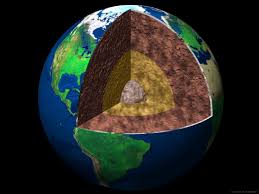
Which layer of Earth is located above the outer core?
a)
crust
b)
inner core
c)
mantle
d)
lithosphere
73.
What is the top layer of the Earth's surface called? 
a)
Mantle
b)
Innercore
c)
Outercore
d)
Crust
74.

Which layer of Earth is located below the outer core?

a)

crust

b)

inner core

c)

mantle

d)

lithosphere

75.
What part of the earth is a layer of rock that comprises 67% of Earth’s mass?
a)
mesosphere
b)
mantle
c)
asthenosphere
d)
lithosphere
76.
Temperature _____________________ as you go deeper into the earth.
a)
increases
b)
decreases
c)
goes up and down depending on the layer
d)
stays the same
77.
Pressure ______________________ as you go deeper into the Earth
a)
increases
b)
decreases 
c)
goes up or down depending on the layer
d)
stays the same
78.
What layer is the hottest?
a)
Core
b)
Crust
c)
Mantle
79.
True or False: 
The Earth's thin shell of hard rock is called the crust.
a)
True
b)
False
80.
Dilcia wants to know how drinking milk affects how tall a Monica grows. Which is the independent variable?
a)
Monica's growth
b)
drinking milk
81.
Ramone wants to know: does the distance a person kicks a soccer ball effect how well they will do on their math test.  What is the dependent variable?
a)
How far they kick the soccer ball
b)
who the person is
c)
how well they do on the math test
d)
Type of soccer ball.
82.
What would the INDEPENDENT variable be in an experiment testing which types of paper airplane goes furthest?
a)
the paper used
b)
the type of paper airplane
c)
the distance of each plane's flight
d)
how hard the plane is thrown
83.
Marcos wants to know: Does the type of gasoline put in a car effect how fast the car can drive? What is the independent variable?
a)
Type of gasoline
b)
which car the gas is put into
c)
how fast the car can drive
d)
how much gas is put into the car
84.
An experiment is performed on plants to see how different liquids affect plant growth. Each plant in the experiment is given a different liquid; water, apple juice, or milk. Each plant has the same amount of soil, sunlight, and listens to the same music. In this investigation, the independent variable is ...
a)
The type of plant
b)
The amount of sunlight
c)
The type of music
d)
The type of liquid
85.
Angelina set up an experiment to see how the mass of a ball affects the distance it rolls off a ramp. Identify the independent variable.
a)
Distance traveled by the ball
b)
Height of the ramp
c)
Mass of the ball
d)
Who set up the experiment (Ms. S, etc)
86.
Kreedence wants to know if birds prefer to eat in one place over another. She makes three feeders out of 2-liter bottles and paints all of them red. She fills each of the feeders with the same amount of mixed birdseed, and plans to keep the feeders out for 10 days before measuring how much seed is eaten from each feeder. She puts each of the feeders in her back yard: one feeder in a large dead tree, another feeder she sits on the dog house, and the last she sits in a small bushy tree.
What is the dependent variable?
a)
Length of the birdfeeders
b)
Amount of time feeders are outside
c)
Amount of seed eaten
d)
Location the feeders are put in.
87.
Does the flavor of ice cream effect how fast the ice cream melts?
a)
independent
b)
dependent
88.
Does the type of shoe worn during a 30 meter dash affect the speed of the runner?
a)
independent
b)
dependent
89.
How does increasing the slope of a ramp affect how far a marble travels?
a)
independent
b)
dependent
90.
What effect does decreasing the temperature of a room have on a lifespan of a battery?
a)
independent
b)
dependent
91.
How does watching TV during studying affect a student’s test grades?
a)
independent
b)
dependent
92.
Does changing the scent of a brand of dog food affect how much the dog eats?
a)
independent
b)
dependent
93.
What is the effect on increasing the amount of sunlight given to tulips?
a)
independent
b)
dependent
94.
Which brand of bubblegum allows for you to blow the largest bubble?
a)
independent
b)
dependent
95.
How does adding cardio to one’s daily schedule affect their heart rate?
a)
independent
b)
dependent
96.
A person’s teeth will be whitened quicker if they use baking soda with their toothpaste.
a)
independent
b)
dependent
97.
An apple’s freshness will last longer if they are refrigerated.
a)
independent
b)
dependent
98.
Does deflating a ball affect a its ability to bounce?
a)
independent
b)
dependent
99.

What does the subscript in a chemical formula tell you? (a)  

Choose from the below words
How many molecules are present
How many atoms are present
How many elements are present
How many neutrons are present
100.

How many elements are in this chemical formula?

H2SO4H_2SO_4  

a)

1

b)

2

c)

3

d)

4

101.

How many atoms of Carbon are in this formula? C6 H12O6C_{6\ }H_{12}O_6  

a)

6

b)

1

c)

12

102.

What is the total number of atoms in this formula? H2O2H_2O_2  

a)

2

b)

4

c)

3

103.

How many more atoms of Oxygen than than Magnesium are in this formula? (subtraction) MgSO4MgSO_4  

a)

4

b)

3

c)

2

d)

6

104.

Which of the following is a molecule of a compound?

a)

H2H_2

b)

Cl2Cl_2

c)

H2OH_2O

d)

F2F_2

105.

Is this an element or a compound? CaSO4CaSO_4  

a)

Element

b)

Compound

106.

Which chemical formula correctly displays 1 atom of nickel and 2 atoms of Fluorine?

a)

niF2

b)

NIF2

c)

Ni1F2

d)

NiF2

107.

What is the total number of atoms in this chemical formula? C8H3NaBr12C_8H_3NaBr_{12}  

a)

18

b)

12

c)

25

d)

24

108.

Which element has the greatest number of atoms? AgNO3AgNO_3  

a)

Silver

b)

Gold

c)

Nitrogen

d)

Oxygen

109.

How many elements are in this chemical formula? NaHCO3NaHCO_3  

a)

1

b)

2

c)

3

d)

4