
 Worksheets
Water Unit Review 2025-2026
Total questions: 109
Worksheet time: 2hrs 47mins
The amount of water on average used by individuals, based on domestic and agricultural or industrial consumption is termed ____.
watershed
Which of the following are part of your water footprint?
How long your showers last
What kind of foods you eat
How often you flush your toilet
How often you water your lawn
The major agricultural use of water is for
Diluting pollutants
Irrigating
Marketing
Drinking water
What is virtual water?
Water on a computer screen
Water that is salty
Amount of water to create a product
Water that is frozen
What is potable water?
pure water
Water that has dissolved ions in but is safe to drink
Water from an underground source
Water that is safe to wash in
What is an example of direct water use?
The production of clothes
The production of food
When you take a shower
When someone builds a house.
Which food would probably have the largest water footprint?
Apples
Corn
Rice
Pork
variety of frsh fruits and vegetables year round
variety of consumer products available at low prices
depletion of groundwater supplies from irrigation
water pollution from release of toxic materials
Why is fresh water considered a limited resource?
It isn't because it is a renewable resource
97% of freshwater is in the oceans and too salty to drink.
Only 2.5% is drinkable and much of it is stored in icecaps and groundwater
lakes and rivers
Where is fresh water not located?
Aquifers
Wetlands
Wetlands Rivers
oceans

Which area is facing the greatest water scarcity?
South America
North Africa
Australia and New Zealand
North America
Which answers are below are the reasons for unequal distribution of water?
Being rich or poor
access to sanitation
climate and geography
Water used for building projects and irrigation
All the above
Which of the following would be the strongest evidence to support the claim that water scarcity is a concern for some First Nation reserves in Canada?
In 2013, 73% of First Nations water systems were at high or medium risk of contamination.
Water pollution is common on many First Nation reserves.
Canada has one of the largest supplies of freshwater in the world.
Without access to clean drinking water, many people will die.
Order the sources of water globally from most to least
ocean
glaciers and ice caps
ground water
surface freshwater (rivers and lakes)

The photograph shows scratched and grooved bedrock with boulders on its surface. The scratches and grooves were most likely created when ....
alternating thawing and freezing of water cracked the bedrock
flooding from a nearby lake covered the bedrock
a glacier dragged rocks over the bedrock
rocks from a landslide slid along the bedrock
Glacial advancement causes ______ as it moves across the land?
U-shaped valleys and striations
beaches and sand bars
sea caves and V-shaped valleys
Warm and cold currents to form

What process causes features C and D on the figure?
Glacial erosion
Glacial deposition
Stream erosion
Stream deposition
Ridges or rock and till left behind by a glacier (C and D) are called
Moraines
U shaped valleys
flood plains
Eskers
____________________ is stored in the spaces between soil and rock beneath the Earth's surface.
Groundwater
Ice
Salt water
Runoff

The part of the ground that is saturated with water (D in the diagram)
The water table usually rises when there is
a decrease in the amount of infiltration
a decrease in the amount of surface area covered by vegetation
an increase in the amount of precipitation
an increase in the slope of the land
The movement of colored water through gravel in a clear cup best models what?
Condensation
surface runoff
conservation of water
pollution of groundwater
As the current in a stream becomes stronger, what will happen to its erosional power?
it will increase
it will decrease
it will stay the same
it will increase then decrease
What geographical feature is caused by fast moving rivers?
U shaped valley
V shaped valley
Sea caves
moraines

What river feature does this picture show?
V-shaped valley
Meander
Sea arch
waterfall
Match the following stream features
fastest stream flow
slowest stream flow
primarily erosion
primarily deposition
medium stream flow
erosion and deposition

What should the students conclude from the results of the experiment?
Rock A weathers slower
A crushed rock weathers faster
Rock B weathers faster
A crushed rock weathers slower

At which point does the greatest stream erosion occur?
A
B
C
D

Match the following
Evidence of glacial erosion
striations and U-shaped valleys
Evidence of glacial deposition
moraines and till
Evidence of stream erosion
V-shaped valleys and waterfalls
Evidence of stream deposition
flood plains and sand bars
Tides are caused by
strong winds that blow over ocean waters.
the interaction of Earth, the moon and the sun.
the shifting of the plates on the ocean floor.
variations in the salinity of ocean water
Which statement correctly describes the motion of water particles due to the action of waves?
they travel from one crest to another
they move in opposite direction of the wave
they rise and fall in a circular motion
they move back and forth

Which ocean feature is pictured?
Trench
Mid-Ocean Ridge
Seamount
Volcanic Island
The deepest part of the ocean is callled a
Trench
Mid-Ocean Ridge
Seamount
abyssal plain
Why would places near the ocean with the same latitude have very different climates?
One place is near a warm ocean current.
It is not possible
Because of neap tides
Because of wave action
What feature transports plastic waste to the Great Pacific Garbage Patch?
Ocean Currents
Tides
Waves
Revolution of the sun around the Earth

Which city is most likely closest to the ocean and why?
Edinburgh because it has warmer temperatures in January
Moscow because it has warmer temperatures in July
Edinburgh because it has milder range in temperatures throughout the year
Moscow because it has more extreme temperatures throughout the year
Which of the following is a factor that influences where an organism lives in an aquatic ecosystem?
sunlight
nutrient availability
temperature
all of the above

In which ecosystem would you most likely find a blob fish?
wetland
Fast moving river
Arctic ocean
Deep ocean

What factor is most likely responsible for the blobfish's lack of bone structure?
Salinity
Pressure
Lack of sunlight
Temperature
What of the following is an adaptation specific to species who may live in polar oceans?
can make their own light
Natural antifreeze in their blood
Streamlined shape
are producers
plankton
nekton
abiotic factor
insects
What is the main difference between marine and freshwater ecosystems?
the amount of animals
the amount of plants
the amount of rocks
the amount of salt

Adaptations in the deep ocean might include
the ability for plants to excrete salt water
the ability to hold on to rocks against strong current
strong swimming abilities
glowing bacteria to signal in the dark
Adaptations in the river biome might include the ability to ___________
ability to produce energy from sulfur
excrete salt water
resist a strong current
conserve oxygen by not moving
Match the adaptation to the ecosystem
stomata on upper surface of leaves
open ocean
blubber for insulation in mammals
Arctic Ocean
bioluminescence
deep ocean
tube feet that suction to rocks
seashore and tidal zone
Climate change affects melting glaciers, which means
More sun
More rain
Drought in coastal regions
sea level rise
Which of the following is an effect of excess fertilizer or untreated wastewater (sewage) washing into streams and lakes?
the pH is too low for plants and animals
cooler water holds more oxygen
increased sediment reduces oxygen
algae "blooms", leading to lower oxygen
What is "overfishing"?
Fishing out of season
Catching fish faster than they can replenish
Catching fish from the top of the food chain
Catching more fish than what people eat
What is an economic impact of fish disappearing because of overfishing?
Global warming
Sea levels will rise, flooding coastal areas
Jobs and economies can disappear
The cost of fish will decrease
Scientists are concerned about overfishing of shark populations. Sharks feed on rays and rays feed on scallops. Without sharks, rays consume all the scallop beds. This situation demonstrates that:
humans can improve an ecosystem by removing predators.
humans can upset an ecosystem by removing species.
reducing the shark population increases the quantity of scallops that can be taken.
sharks are not important for the stability of the ecosystem.


Which organism shown in the food chain above would contain the greatest concentration of chemical pollutants?
phytoplankton
krill
tuna
shark
How do microplastics cause most sea life deaths?
The microplastics cause acid rain
The microplastics are sharp and hurt sea life.
The sea life mistake the small objects for food
The microplastics contribute to climate change
Why do the populations of invasive species grow so quickly?
Invasive Species are native to an area.
Invasive species are prey to many animals.
Invasive species have few limitting factors such as predators.
Invasive species keep the ecosystems in equilibrium.
What is the danger to humans in eating some fish from lakes or ocean?
They may be invasive species.
They may contribute to algae bloom
If they are high on the food chain they may contain high levels of mercury or toxins like PCB's
They may contain too many nutrients from fertilizers.

What is the manipulated variable in the experiment above?
Effect of temperature on sea level change
1840-2020
Year
Sea level change

What conclusion could you infer from the data above?
Sea levels have been rising increasingly more in the last 50 years
Sea levels have remained relatively constant over the past 100 years
Sea level rise is caused by greenhouse gases trapping heat
Rising sea levels will cause the collapse of many industries

When water used to cool machinery is returned to a river, it raises the river water temperature. This causes a sharp decline in small invertebrate populations. Based on the food web, a likely consequence of this change would be:
an increase in the number of clams.
an increase in the number of water plants.
an increase in the number of crayfish.
an increase in the number of crabs.

Classify soap as acid, base or neutral
acid
base
neutral

Plastic garbage can block out the sunlight, preventing the phytoplankton from photosynthesizing. If the phytoplankton goes down, the most likely consequence is...
lantern fish would increase due to more available food
zooplankton population would increase due to less competition
All populations would decrease due to less food available
All populations would increase due to less predation
Which of the following is NOT a desired indicator in streams?
a pH of about neutral
low salinity
high temperature
low nitrates

What do the DO test results shown here indicate?
high water quality; supports a diversity of life
high water quality; supports few organisms
poor water quality; supports a diversity of life
poor water quality; supports few organisms
pH value of less than 7 is considered to be
polluted.
basic.
like drain cleaner.
acidic.

Which glass contains water with high turbidity?
Glass 1
Glass 2
Fertilizer, sewage, and animal feces can wash into water, leading to...
thermal pollution
Nutrient pollution
Desalination
Biomagnification
Salinity is a measure of
dissolved oxygen content
salt concentration
pH
nitrate concentration
A body of water showed a high turbidity level, high levels of nitrates and phosphates, a pH of 7.5, and low dissolved oxygen levels. Would this body of water be considered healthy?
Yes
No

What can you determine about the health of the stream?
The stream is extremely healthy and has little to no pollution.
The stream has some pollution.
The stream is extremely unhealthy and heavily polluted.
There is no way to determine how healthy this stream is based on this information.
The water and human wastes that are washed down sinks, showers, and toilets are called __________________.
the water cycle
Sewage
thermal pollution
point pollution sources
Which of the following is MOST likely to be found in agricultural runoff?
nitrates
dissolved oxygen
acid rain
heavy metals
Which of the following would LEAST likely be found in urban runoff?
oil
plastic
pesticide
cow manure
Why are too many nutrients (like nitrates and phosphates) bad for our waters?
Nutrients decrease the pH of the water, causing it to become increasingly acidic
Nutrients change the salinity of the water
Wetlands filter out runoff that may contain nutrients
Nutrients in the water cause too much algae growth, which decrease the level of oxygen in the water

A student was investigating the question: What effect does the amount of dissolved oxygen have on the number of fish in a pond. What label should be on the x axis on her graph?
Number of fish
Dissolved oxygen
Temperature
Type of pond

What is the responding variable in the experiment above?
Temperature
Oxygen solubility
Temperature-oxygen solubility relationship
The effect of temperature on oxygen solubility

What conclusion could you infer from the data?
Oxygen dissolves better in hot water
Oxygen dissolves better in cold water
Temperature has no effect on oxygen dissolving in water
Oxygen dissolves equally well in water at any temperature

Which beaker in the image has the highest turbidity?
A
B
C
D
What pH level is best for most aquatic organisms?
1.0
7.4
10
14
Which is an accurate prediction of the pH of a lake that receives large amounts of acid rain?
4-5
7-8
9-10
13-14

Below is a chart of test results from water samples taken at various sites. Which of the following best describes the results from these sites?
Site 1 is unhealthy because of its dissolved oxygen levels are too high.
Site 3 and 4 are unhealthy because the temperature is too low.
Site 2 is unhealthy because the pH is too high and the temperature is too low.
Site 5 is unhealthy because the temperature is too high and the dissolved oxygen is too low.
How does most nonpoint-source pollution reach bodies of water?
by run-off
by water treatment
by evaporation
by condensation
Which of the following is an example of point source pollution?
fertilizer run-off
air pollution
desalination
oil leak from train derailment
At a factory, salt and other minerals are removed from water to make it suitable for human consumption. What is this process called?
Decalcification
Mineralization
Detoxification
desalination
How do filters work to clean water?
The bigger the filter, the less debris can pass through.
The size of the filter doesn't matter.
The smaller the filter, the less debris can pass through.
All water must be disinfected with chemicals
All are ways human lives are impacted because of changing water resources. Which of the following is an example of a POSITIVE impact?
Dried up rivers/seas can mean that people lose fishing jobs
Dust storms from the newly dried area can impact breathing and air quality
Dried up rivers/seas can mean loss of farmland and income
Water is able to reach farms and towns further away from a river, opening up more places for people to live
Which of the following would be the best choice for improving water quality?
tertiary sewage treatment
primary sewage treatment
agricultural runoff
industrial runoff
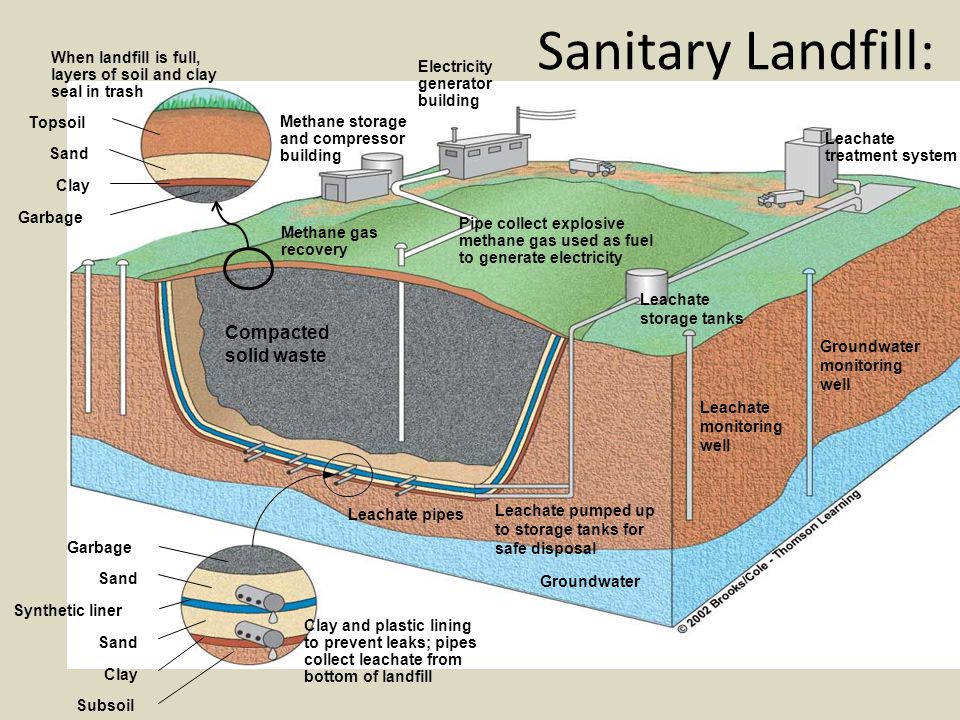
Sanitary landfills have __________ to prevent contaminants from getting into groundwater.
methane gas ecovery
daily layers of soil
garbage
clay and plastic liners beneath landfill
What is a wastewater (sewage) treatment plant?
The place where water is cleaned, filtered and tested before re-entering the water cycle.
The place where water is cleaned, filtered and tested before going to our houses.
The network of pipes that carry sewage (dirty water) from our houses.
The place where water is bottled for drinking.
Why do many developing nations not have water treatment plants?
they are not necessary for the health of its citizens
they are expensive to build and operate
they pollute the environment more than they help
they do not have any water to treat
"A study published in the Marine Pollution Bulletin recently reported that plastic pollution in the world's oceans costs society up to $2.5 trillion a year." The perspective described here is
technological
economic
ecological
political
"Countries like Bangladesh, the Philippines, Cameroon, China, Brazil and 16 African Countries have banned the production of thin or ultralight plastic bags." The perspective represented here is
technological
ecological
ethical
political
The statement “There is 89% less Atlantic shark species compared to 15 years ago.” The perspective shown here is:
Ecological
Economic
Political
Health and Wellness
An ethical perspective related to the First Nations water crisis issue would be:
“73% of First nation's water systems are at high or medium risk of contamination”
"In 2010 the United Nations declared water and sanitation are basic human rights, which many First Nations lack access to."
"The Trudeau government has not done enough to ensure clean drinking water is available in First Nations."
"A single drinking water advisory can mean as many as 5000 people lack access to clean drinking water."

Students have a box of ice pops to take to their soccer game to sell on a hot day. The students know they need a device to keep the ice pops from melting for 3 hours. They have a $15 budget. Which step of the engineering design process does this demonstrate?
Identify the problem
Test and evaluate
Redesign
Develop possible solutions
Brian is trying to create a process for cleaning up oil spills for his engineering design project. Which of the following should he do during his research step?
Look up current techniques online
Ask professionals who work in ocean cleanup
Find out properties of the materials he has available
All of the above
Juan is going to design a kite. After doing research, Juan creates several different design drawings and selects the one he wants to use. What are the next two steps Juan should do in the design process?
build a prototype and test it
build and finish full-sized kites
identify the criteria and constraints
do background research and evaluate the process

What effect is Bakerville having on the water quality in the river?
decreasing the water quality due to increased acidity
increased the water quality due to decreased pH
decreased water quality due to high dissolved oxygen
increased the water quality due to fish population
Which human activity is likely causing algae blooms in the river?
wind turbine farm
alpaca ranch
wastewater treatment plant
Bakerville
oil refinery
At which water sample site would be the best location to build a drinking water treatment plant?
5
1 or 4
7
2 or 3

What is the effect that the untreated sewage storage tank is having on the water quality downstream?
increasing water quality
decreasing water quality
no effect on water quality

Which of the two set-ups shown above should he use to ensure a fair test?
A and B
A and D
B and C
C and D

