wayground logo

Free Printable Worksheets

Font size

S
M
L
XL
Worksheets

1st 9 Weeks test review

Total questions: 106

Worksheet time: 2hrs 8mins

Name
Class
Date
1.

Why do birds choose to build their nests high on buildings rather than on the ground?

a)

Because it is easier

b)

To protect themselves and their offspring from predators

c)

To find food more easily

d)

To help them fly easier than if they were on the ground

2.
Biotic factors of an ecosystem are:
a)
non-living
b)
plants
c)
living thing
d)
soil
3.
Which biome covers most of the land mass near the Earth's equator?
a)
tundra
b)
desert
c)
grassland
d)
tropical rainforest
4.
Which biome is characterized by low temperatures and low amounts of rainfall?
a)
tundra
b)
desert
c)
temperate deciduous forest
d)
tropical rain forest
5.
In an energy pyramid, energy_______ as you move up the pyramid.
a)
Increases
b)
Decreases
c)
Stays the same
d)
Changes up and down
6.

In this energy pyramid, which organisms have the most energy available?

a)

Producers

b)

Carnivores

c)

Herbivores

d)

Top Predator

7.
If there is 1000 Kcal available in the producers in trophic level 1, how much energy is available in the herbivores in trophic level 2?
a)
10 Kcal
b)
1 Kcal
c)
100 Kcal
d)
1000 Kcal
8.
Which organism in this food chain is a producer?
a)
Fish
b)
Grass
c)
Grasshopper
d)
Hawk
9.

The original source of energy for a food web is...

a)

plants

b)

sun

c)

producers

d)

decomposers

10.

Producers are ...

a)

plants

b)

able to do photosynthesis

c)

also called autotrophs

d)

all of these are true

11.

Arrows in a food web represent...

a)

eating

b)

sunlight

c)

energy

d)

matter

12.

An animal that hunts other animals for food is a ___________

a)

herbivore

b)

predator

c)

prey

d)

omnivore

13.
What is the purpose of a dichotomous key?
a)
to find a common ancestor
b)
to show the evolution of organisms
c)
to show relationships between organisms
d)
to identify organisms
14.
What step do we always start with when using dichotomous keys?
a)
1
b)
2
c)
3
d)
4
15.
When using a dichotomous key to identify organisms, what do we look at?
a)
physical features
b)
weather patterns
c)
environment
d)
diet
16.
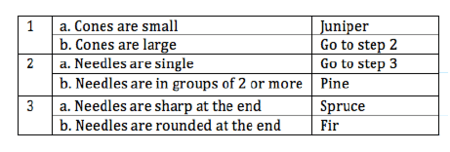
A dichotomous key for trees is provided. Hikers found a tree that has large brown cones and single sharp needles. What species of tree have the hikers found?
a)
Juniper
b)
Pine
c)
Spruce
d)
Fir
17.
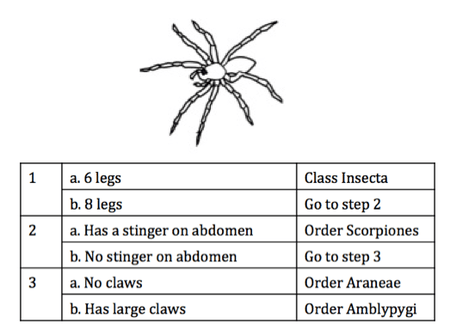
An illustration and a dichotomous key are given. What is the correct classification for this organism?
a)
Class Insecta
b)
Order Amblygygi
c)
Order Araneae
d)
Order Scorpiones
18.

Arthur plugs his digital music player into his computer to charge it?

a)

Luminous

b)

Electrical

c)

Thermal

d)

Mechanical

19.

It comes from the movement of electricity?

a)

Mechanical

b)

Thermal

c)

Luminous

d)

Electrical

20.

What is the STARTING energy for a solar cell panel?

a)

Electrical energy

b)

Solar energy

c)

Wind energy

d)

Biomass

21.

Which type of energy transformation occurs at the optic nerve after light energy enters the eyeball?

a)

light energy to solar energy

b)

light energy to mechanical energy

c)

Light energy to electrical energy

d)

Light energy to thermal energy

22.
How do adaptations help animals?
a)
to hide from predators
b)
to hunt for food
c)
to survive in their habitats
d)
All of these are correct
23.

Hibernation is a

a)

Structural Adaptation

b)

Behavioral Adaptation

24.
Movement from one place to another at a certain time of year or certain time in the life cycle is called:
a)
Hibernation
b)
Migration
c)
Competition
d)
Mutation
25.
Deep sleep to survive low temperatures and lack of food is called:
a)
Hibernation
b)
Migration
c)
Competition
d)
Mutation
26.
What is an adaptation?
a)
A feature that helps a plant grow.
b)
A feature that helps a living thing survive.
c)
A feature that helps a living thing walk.
d)
A feature that that helps only animals survive. 
27.

This is an image of a swim bladder inside of a fish.

Which of these explains how the swim bladder allows the fish to survive?

a)

The swim bladder allows the fish to hold onto waste for a long time.

b)

The swim bladder allows the fish to breathe underwater.

c)

The swim bladder allows the fish to communicate sounds to other fish.

d)

The swim bladder provides the fish more buoyancy

28.

When an ecosystem has a high number of species present it means that it has a ___________

    A. High Biodiversity                         C. Biodiversity        

    B. Low Biodiversity                          D. Extinction

a)

A

b)

B

c)

C

d)

D

29.

Which of the following environments would you expect to have the most biodiversity?

a)

Desert

b)

Tropical Rainforest

c)

Tundra

d)

Grassland

30.

Which ecosystem has a low biodiversity?

a)

Rainforest

b)

Desert

c)

Mountains

d)

Coral Reefs

31.

How can you say that an ecosystem has high biodiversity?

a)

Extinct animals are present

b)

Low number of species

c)

Variety of plants and animals

d)

Food shortage

32.

which of the following is a primary consumer?

a)

grass

b)

cows

c)

lion

d)

eagle

33.

The number and VARIETY of organisms in a given area during a specific period of time.

a)

Biosphere

b)

Population

c)

Community

d)

Biodiversity

34.

What type of organism makes its own food?

a)

Autotroph

b)

Heterotroph

35.
In an ecological pyramid, which type of organism always has the least amount of energy available?
a)
Producers
b)
Herbivores
c)
Carnivores
d)
Top Predator
36.

If an apex predator is removed from an ecosystem, biodiversity will ________?

4 lines
37.
All energy on Earth ultimately comes from what source?
a)
Water
b)
Sun
c)
Consumers
d)
Oxygen
38.

Animals that eat both plants and animals are known as ______________

a)

greedy

b)

herbivores

c)

carnivores

d)

omnivores

39.
What does a food web represent?
a)

All connections of energy flow throughout all organisms in an ecosystem.

b)
The specific ways that mutualism is carried out.
c)
A single pathway or energy flow between organisms. 
d)
How carnivores get their food. 
40.
Sustainable means
a)
using a lot of energy
b)
being able to last for a long time by creating as much as you use
c)
Being able to cause a stain
41.

Biodiversity, aka biological diversity, usually refers to

a)

the same species in a general location

b)

the number of different species in a given area

c)

the number of animal species in a given area

d)

the number of plant species in a given area

42.

Has high number of species living in an ecosystem.

a)

Low biodiversity

b)

High Biodiversity

c)

Ecosystem

d)

Biodiversity

43.

A system of interlocking and interdependent food chains.

a)

Food Web

b)

Trophic level

c)

Energy Pyramid

d)

Ecosystem

44.

How much energy is usually transferred from one trophic level to another?

a)

10%

b)

20%

c)

50%

d)

100%

45.

Which of the following is not true about energy flow in the ecosystem?

a)

Only 10% of the energy is transferred to the next trophic level.

b)

The decomposers absorb majority of the energy in the ecosystem.

c)

The sun is the ultimate source of energy in the ecosystem.

d)

The energy in the ecosystem flows in a one-way direction.

46.

Primary succession occurs in an area that has:

a)

Has Soil

b)

Has No Soil

c)

Has Some Soil

d)

none of these

47.

What is the main difference between primary and secondary ecological succession?

a)

Primary begins WITHOUT soil; Secondary begins WITH soil

b)

Primary is the first state and secondary is the second stage

c)

Primary builds plant community; secondary builds animal community.

d)

Primary begins WITH soil; Secondary begins WITHOUT soil

48.

What is the term that describes a steady and stable community?

a)

peak community

b)

turf community

c)

climax community

d)

disturbed community

49.

Which is faster: Primary or Secondary Succession?

a)

Primary Succession

b)

Secondary Succession

c)

Both Take The Same Amount of Time

50.
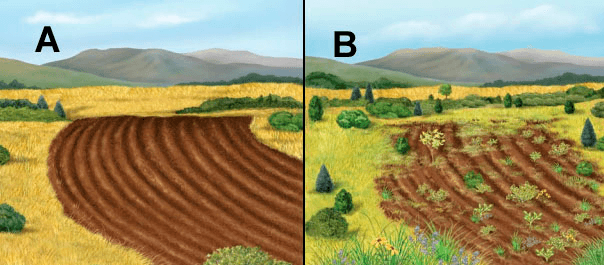
What type of succession is shown going from figure A to figure B?
a)
primary succession
b)
ecological succession
c)
secondary succession
d)
intermediate
51.
Succession type?
a)
primary succession
b)
secondary succession
c)
tertiary succession
d)
variable succession
52.
Which of the following is the correct equation for PHOTOSYNTHESIS?
a)
CO+ light + H2O --> O+ Sugar
b)
CO+ sugar + H2O --> O+ light
c)
O2 + light + H2O --> CO+ Sugar
d)
CO+ O2 + H2O --> Light+ Sugar
53.

The finches on the Galapagos island were similar in form except for variations of their beaks. Darwin observed that these variations were a direct result of:

a)

Attracting a mate.

b)

Availability of types of food sources.

c)

Defending territory.

d)

Building nests.

54.
Over time, the climate of an island became drier, which resulted in changes to the populations of various island finch species. Finch populations with a certain beak shape thrived, while those not having that beak shape decreased. Which of the following describes a necessary condition for these changes in the finch populations to occur?
a)
fewer mutations
b)

the types of food available to them

c)
limited beak variations
d)
overproduction of offspring
55.

Select the correct term for the following definition:

"The water transport system in plants."

a)

Villi

b)

Bronchi

c)

Bolus

d)

Xylem

56.

Recall the main function of a xylem cell.

a)

To transport nutrients (mainly sucrose) to different parts of a plant.

b)

To make energy for the plant via photosynthesis.

c)

To transport carbon dioxide to the leaves for photosynthessis.

d)

To transport water to different parts of plant.

57.

What does the Xylem transport?

a)

Water and Minerals

b)

Glucose

c)

Blood

d)

Chlorophyll

58.
What is the order of succession shown in this figure?
a)
A, B, C, D
b)
B, A, D, C
c)
C, D, A, B
d)
D, A, B, C
59.

What 3 things do plants need for the process of photosynthesis?

a)

Sunlight, oxygen and sugar.

b)

Water, soil and oxygen.

c)

Sunlight, carbon dioxide and water.

d)

Sunlight, soil and water.

60.

Select all materials needed for Photosynthesis.

a)

Water

b)

Carbon Dioxide

c)

Oxygen

d)

Sunlight (Light Energy)

e)

Glucose (Sugar/food)

61.
Which choice correctly shows the gases that enter and exit plants during photosynthesis?
a)
Enter: Oxygen
Exit: Carbon dioxide
b)
Enter: Water vapor
Exit: Glucose
c)
Enter: Carbon dioxide
Exit: Oxygen
d)
Enter: Light
Exit: Water vapor
62.
What is the ultimate ORIGINAL source of energy for living things
a)
Sugar
b)
Sun
c)
Moon
d)
Carbon Dioxide
63.
Plants need ________ for photosynthesis
a)
oxygen
b)
soil
c)
carbon dioxide
d)
sugar
64.

Which of the following would NOT be an explanation for why the rainforest tree canopy supports populations of specific birds.

a)

It has trees to catch rainfall

b)

It has trees and plants with lots of fruit for food

c)

It has tall plants and trees to keep away from possible predators

d)

It has lots of places for nests and to reproduce

65.

Which type of energy transformation is photosynthesis?

a)

Lunar to mechanical

b)

Thermal to electrical

c)

Radiant to chemical

d)

Electrical to thermal

66.

What is one reason for the decrease in biodiversity in urban settings?

a)

Too much food available

b)

increase in predators

c)

animal rights activists

d)

loss of habitats

67.
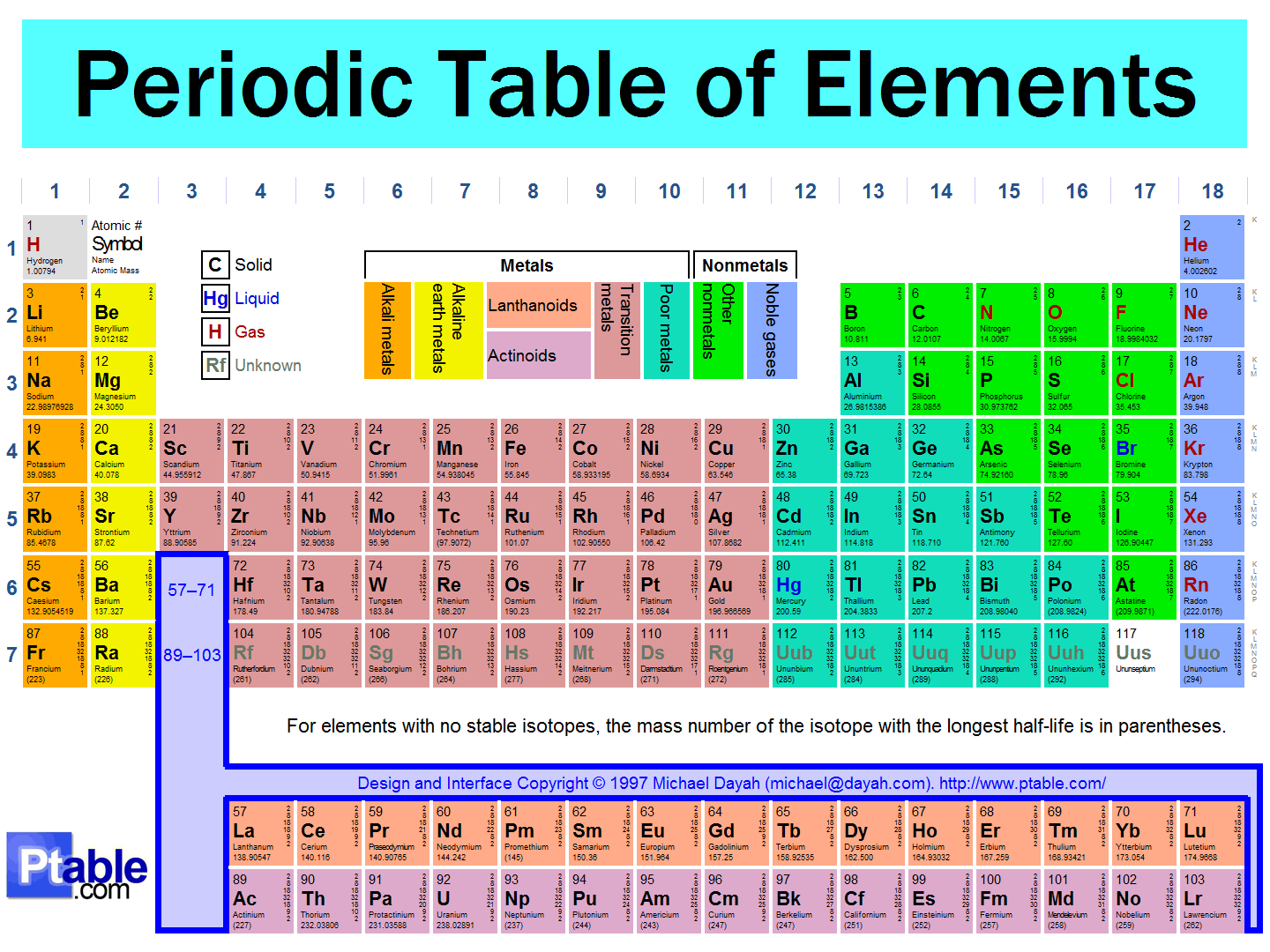
In the modern periodic table elements are arranged by:
a)
atomic mass
b)
atomic number
c)
valence electrons
d)
number of isotopes
68.
Each column in the periodic table is called a 
a)
period
b)
group
c)
cluster
d)
unit
69.
The atomic number tells you what?
a)

number of electrons

b)

number of protons

c)

number of neutrons

d)

both electrons and protons in an atom.

70.
Calcium is most like which of the following?
a)
Barium
b)
Potassium
c)
Cesium
d)
Nitrogen
71.
Beryllium is in group number______.
a)
Group 2
b)
Group 3
c)
Group 4
d)
Group 7
72.
The period for Bromine is ___________.
a)
3
b)
2
c)
4
73.
What is the name of the group that never reacts--ever ever they are stable with a full outermost ring!!!
a)
noble gases
b)
transition
c)
halogens
d)
borons
74.
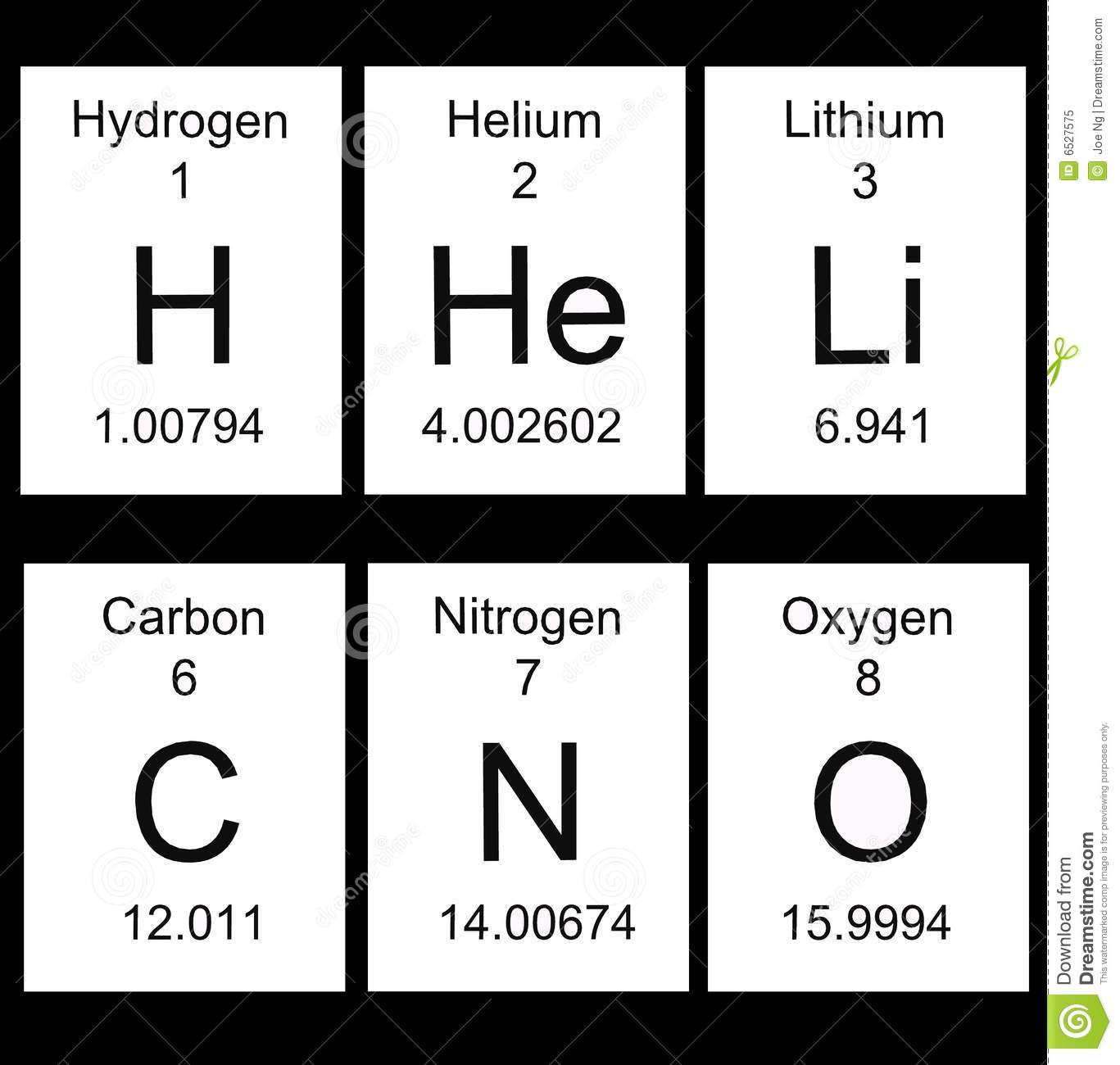
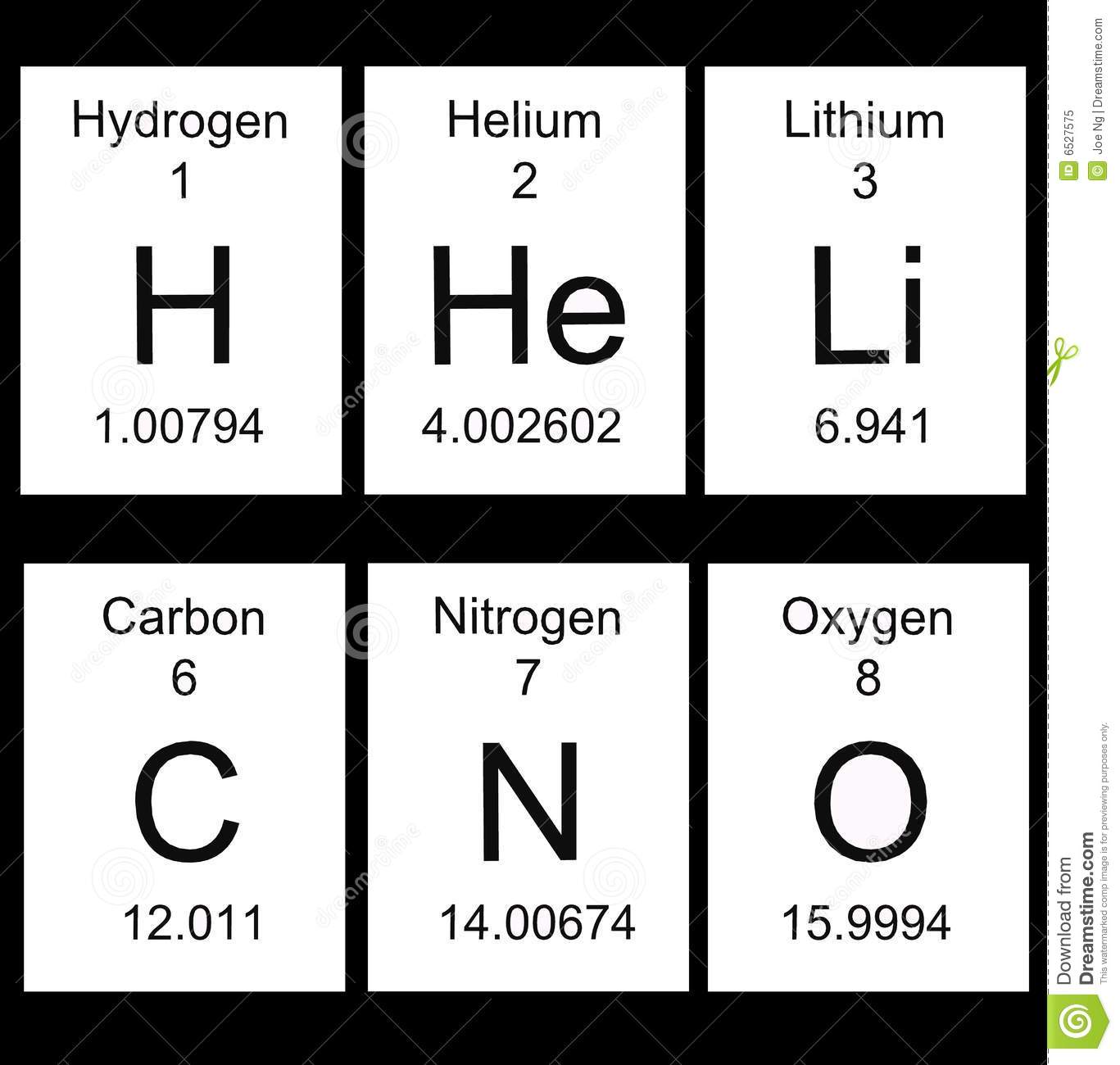
What is the chemical symbol for Lithium?
a)
H
b)
He
c)
Li
d)
N
75.
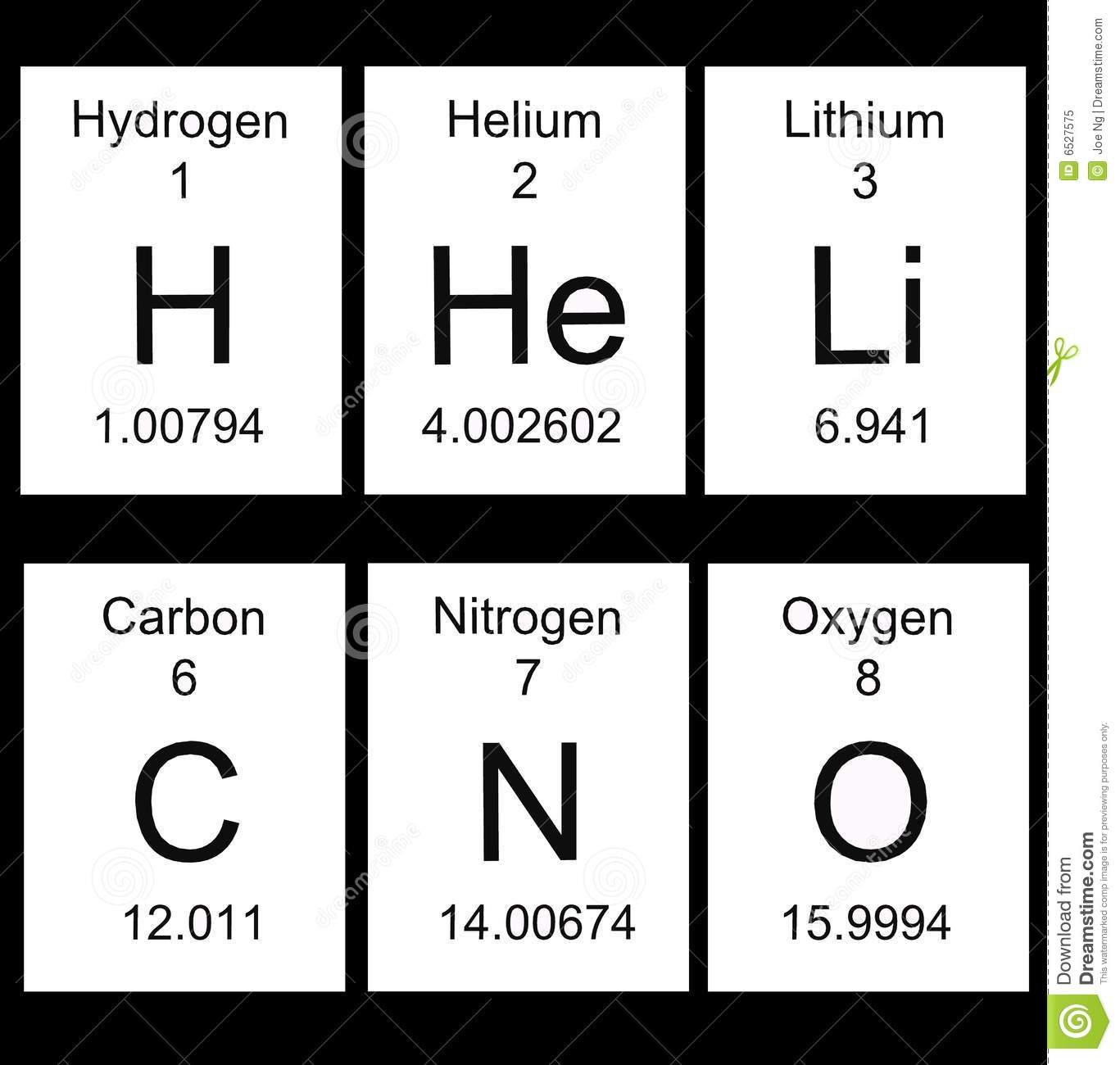
The number at the bottom of each square on the periodic table is the ...
a)
atomic number
b)
atomic mass
c)
chemical symbol
d)
element name
76.
The number at the top of each square on the periodic table is the ...
a)
atomic number
b)
atomic mass
c)
Chemical Symbol
d)
Element Name
77.
The horizontal row on the periodic table is called a
a)
group
b)
family
c)
period
d)
atomic number
78.
Which element is found in group 16 period 3?
a)
Sulfur (S)
b)
Selenium (Se)
c)
Chlorine (Cl)
d)
Carbon (C)
79.
Which element is found  in group 17 period 3?
a)
Chlorine
b)
Flourine
c)
Oxygen
d)
Phosphorous
80.
Which element is found in period 3 group 2?
a)
Sodium (Na)
b)
Magnesium (Mg)
c)
Yttrium (Y)
d)
Boron (B)
81.
Which element is found in group 18 period 4?
a)
Neon (Ne)
b)
Chlorine (Cl)
c)
Krypton (Kr)
d)
Xenon (Xe)
82.
Which element is found in group 1 period 2
a)
Lithium
b)
Magnesium
c)
Beryllium
d)
Potassium
83.
Which element is found in group 2 period 7?
a)
Radium (Ra) 
b)
Radon (Rn)
c)
Stontium (Sr)
d)
Lutetium (Lu)
84.
Which element is found in group 18 period 1?
a)
Neon (Ne)
b)
Helium (He)
c)
Chlorine (Cl)
d)
Krypton (Kr)
85.
Which element is found in group 2 period 4?
a)
Strontium (Sr)
b)
Barium (Ba)
c)
Calcium (Ca)
d)
Beryllium (Be)
86.
Which element is found in group 6 period 5?
a)
Chromium (Cr)
b)
Tungsten (W)
c)
Molybdenum (Mo)
d)
Tantalum (Ta)
87.

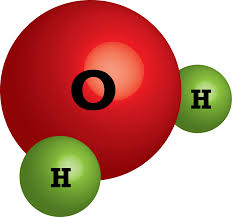
How many atoms of Hydrogen are in H2O

a)

1

b)

2

c)

3

d)

more than 3

88.

How many different elements are present in H2COCH2

a)

5

b)

4

c)

3

d)

2

89.

How many atoms are there TOTAL in H2SO4 ?

a)

6

b)

5

c)

7

d)

3

90.
Which is the correct formula for:
 three hydrogen (H)
one sulfur (S)
four oxygen (O)
a)
H3SO4
b)
HSO4
c)
H4S3O
d)
H2O
91.

What does the subscript in a chemical formula tell you?

a)

How many molecules are present

b)

How many atoms are present

c)

How many elements are present

d)

How many neutrons are present

92.

How many elements are in this chemical formula? NaHCO3NaHCO_3  

a)

1

b)

2

c)

3

d)

4

93.

How many atoms of Hydrogen are in this compound?

a)

1

b)

2

c)

3

d)

4

94.

NaCl is the chemical formula for salt. Is NaCl considered a compound or an element?

a)

element

b)

compound

c)

both

d)

neither

95.

We breathe oxygen. Its chemical formula is O2. Is this formula an element or a compound?

a)

element

b)

compound

c)

neither

d)

both

96.
Which of the following is a compound?
a)
Co
b)
O2
c)
C
d)
CO2
97.
The blue numbers in the image below represent ________
a)
I don't know, and don't want to try
b)
coefficients
c)
subscripts
d)
none of the answers are correct
98.
How many elements are in C6H12O6?
a)
1
b)
2
c)
3
d)
4
99.

How many different elements are present in H2COCH2

a)

5

b)

4

c)

3

d)

2

100.

How many elements are in this chemical formula?

NaOH

a)

1

b)

2

c)

3

d)

4

101.

How many atoms are in the formula?

NaOH

a)

4

b)

3

c)

2

d)

1

102.

How many elements are in this formula?

Li2O

a)

1

b)

2

c)

3

d)

4

103.

How many Nitrogen atoms are in the in H2C3O4N5?

a)

2

b)

3

c)

4

d)

5

104.

H2SO4

a)

H = 2, S = 4, O = 4

b)

H = 2, S = 1, O = 4

c)

H = 8, S = 4, O = 4

d)

H = 2, SO = 4

105.

How many atoms are present if there is no subscript following the element symbol?

a)

0

b)

2

c)

only 1

d)

1 million

106.

How man atoms of carbon are there?

a)

1

b)

2

c)

3

d)

4