wayground logo

Free Printable Worksheets

Font size

S
M
L
XL
Worksheets

Astronomy Unit test review

Total questions: 108

Worksheet time: 2hrs 44mins

Name
Class
Date
1.
In the diagram given, what happens as we move to the left?
a)
Stars Get Larger
b)
Stars get Colder
c)
Stars get hotter
2.
Which of these stars is hottest?
a)
Red Star
b)
Yellow Star
c)
Orange Star
d)
Blue Star
3.
Which star is the coldest?
a)
Yellow Star
b)
Red Star
c)
Orange Star
d)
Blue Star
4.
Compared to the rest of the stars, our sun is considered...
a)
Extremely Large and Cold
b)
Small with a medium temperature
c)
Medium size with medium temperature
5.
Which category is our Sun located in?
a)
White Dwarfs
b)
Supergiants
c)
Main Sequence
d)
Giants
6.
The category that contains the most stars is...
a)
Main Sequence
b)
Supergiants
c)
Giants
7.
As a whole, Giants are considered hotter than White Dwarfs.
a)
True
b)
False
8.
Red stars are the _____________.
a)
hottest
b)
coolest
c)
biggest
d)
brightest
9.
Blue stars are the _____________.
a)
hottest
b)
coolest
c)
smallest
10.
Look at the H-R diagram. Which star is
sort of cool, dim (not too much light), and red?
a)
Betelguse
b)
Sirius B
c)
Procyon B
d)
Barnard's star
11.
Which star has the lowest temperature?
a)
A
b)
B
c)
C
d)
D
12.
Which spectral class does our star, the sun, belong to?
a)
M
b)
K
c)
G
d)
F
13.
Changes in the moon's appearance are
a)
phases
b)
eclipses
c)
stages
d)
cycle
14.

What causes the moon's phases

a)

Where you are standing on Earth

b)

the amount of sunlight reflected onto the moon from the sun

c)

The tilt of Earth

d)

how fast the moon is moving

15.
Define Waxing
a)
Moon is increasing and light part appears to be growing
b)
Completely illuminated
c)
dark side is facing earth
d)
Moon is decreasing and light part appears to be shrinking
16.
As the moon's shape appears to get smaller, we say that the moon is _.
a)
swelling
b)
waxing
c)
waning
d)
disappearing
17.
The cycle of the moon lasts about a _.
a)
day
b)
year
c)
week
d)
month
18.

It takes about _____ for the earth to complete one rotation.

a)

28 days

b)

24 hours

c)

365 hours

d)

365 days

19.
Which moon phase is when you can't see the moon at all?
a)
Waning crescent
b)
Full moon
c)
Waxing gibbous
d)
New moon
20.
What Moon phase is this?
a)
Full Moon
b)
Waxing Gibbous
c)
New Moon
d)
Half Moon
21.
What Moon phase is this?
a)
Waxing Crescent
b)
Waning Gibbous
c)
Waning Crescent
d)
Waxing Gibbous
22.
What Moon phase is this?
a)
Last Quarter
b)
New Moon
c)
Third Quarter
d)
First Quarter
23.
What Moon phase is this?
a)
Waxing Gibbous
b)
Waning Crescent
c)
Waning Gibbous
d)
Full Moon
24.
What Moon phase is this?
a)
Old Moon
b)
Far Side of the Moon
c)
New Moon
d)
Waxing Gibbous
25.
What Moon phase is this?
a)
Waning Crescent
b)
Waxing Crescent
c)
Waxing Gibbous
d)
Waning Gibbous
26.
What Moon phase is this?
a)
Waxing Crescent
b)
Waning Gibbous
c)
Waxing Gibbous
d)
Waning Crescent
27.
What phase comes AFTER this one?
a)
Waning Crescent
b)
Waning Gibbous
c)
Waxing Crescent
d)
Third Quarter
28.
What phase comes BEFORE this one?
a)
Full Moon
b)
Third Quarter
c)
New Moon
d)
First Quarter
29.
What phase comes BEFORE this one?
a)
Waxing Crescent
b)
Waxing Gibbous
c)
Waning Gibbous
d)
Waning Crescent
30.
What phase comes BEFORE this one?
a)
New Moon
b)
Third Quarter
c)
Waxing Crescent
d)
Full Moon
31.
What phase comes AFTER this one?
a)
Waxing Crescent
b)
Waning Gibbous
c)
Waxing Gibbous
d)
Third Quarter
32.
All stars start as gas and dust in a(n)
a)
nebula
b)
black hole
c)
red giant
d)
black dwarf
33.
After the main sequence, a low mass star becomes a
a)
black dwarf
b)
protostar
c)
red giant
d)
supergiant
34.
After the main sequence, a high mass star becomes a
a)
black dwarf
b)
protostar
c)
red giant
d)
supergiant
35.
The final stage of a low mass star is a 
a)
neutron star
b)
nebula
c)
black hole
d)
black dwarf
36.
After a supergiant, a high mass star explodes and forms a
a)
supernova
b)
red giant
c)
black hole
d)
planetary nebula
37.
A high mass star can end as this stage, which is so dense that not even light can escape!
a)
black dwarf
b)
white dwarf
c)
supernova
d)
black hole
38.
What stage fills in the blank. Nebula --> Main sequence --> red giant --> ______________ --> white dwarf --> black dwaft
a)
supergiant
b)
planetary nebula
c)
black hole
d)
supernova
39.
When a nebula heats up, a "baby" star forms in the middle. It is called a
a)
supernova
b)
supergiant
c)
white dwarf
d)
protostar
40.

A star is born when:

a)

nuclear fusion starts

b)

a nebula becomes a protostar

c)

gases in a nebula condense

d)

hydrogen is used up in fusion processes

41.

Our sun is currently in what star stage?

a)

Protostar

b)

Nebula

c)

Main Sequence

d)

Red Giant

42.

Main sequence stars are made primarily of which elements?

a)

Hydrogen only

b)

Helium and Carbon

c)

Carbon and Iron

d)

Hydrogen and Helium

43.
Why won't our sun ever become a black hole?
a)
It is too massive
b)
It is too old
c)
It is too young
d)
It is too small
44.

The stable and longest lasting period of a star’s life cycle is called:

a)

The birth of a star

b)

Nebula

c)

Neutron star

d)

Main Sequence

45.
What fuel do stars use? 
a)
Oxygen
b)
Hydrogen
c)
Carbon
d)
Iron
46.

What is a celestial body that is composed of gas and emits light from nuclear fusion reactions?

a)

Nebula

b)

Star

c)

Galaxy

d)

Planet

47.

The life cycles of stars are determined by their:

a)

mass (size)

b)

color

c)

distance from Earth

d)

how bright they are

48.
______ is a force that causes dust particles to stick together in a nebula.
a)
nuclear fusion
b)
gravity
c)
hydrogen
d)
friction
49.
A gigantic explosion that causes the death of a large star is called
a)
pulsar
b)
red giant 
c)
supernova
d)
black hole
50.

A ________ is an object so dense with so much gravity that even light cannot escape.

a)

neutron star

b)

white dwarf

c)

black hole

d)

black dwarf

51.

This is an image of the first stage in the formation of a star, also known as a ....

a)

Main Sequence

b)

Planetary Nebula

c)

Supernova

d)

Nebula

52.

The stage after the main sequence star:

a)

red giant

b)

nebula

c)

white dwarf

d)

black dwarf

53.

Neutron stars are very small and extremely dense

a)

true

b)

false

54.

Our sun will end its life as a black hole

a)

true

b)

false

55.

All stars begin their life as a white dwarf

a)

true

b)

false

56.

How many stars are there in our solar system

a)

1

b)

1 billion

c)

1 million

d)

100

57.

The age of the earth

a)

4.5 billion years

b)

1.5 billion years

c)

5 billion years

d)

2.o billion years

58.

The age of the universe:

a)

23 billion years

b)

1.4 billion years

c)

4 billion years

d)

14 billion years

59.

The year that man first landed on the moon:

a)

1969

b)

2009

c)

1839

d)

1999

60.

the star around which the earth orbits.

a)

Sun

b)

Mars

c)

Moon

61.

The closer a star is

a)

the larger it appears

b)

the more hydrogen is in the star

62.

The sun's yellow color indicates that it is a

a)

star made up of stable gases

b)

that it is a mid-range temperature star

c)

that it is a low-range temperature star

d)

that it is a high-range temperature star
63.
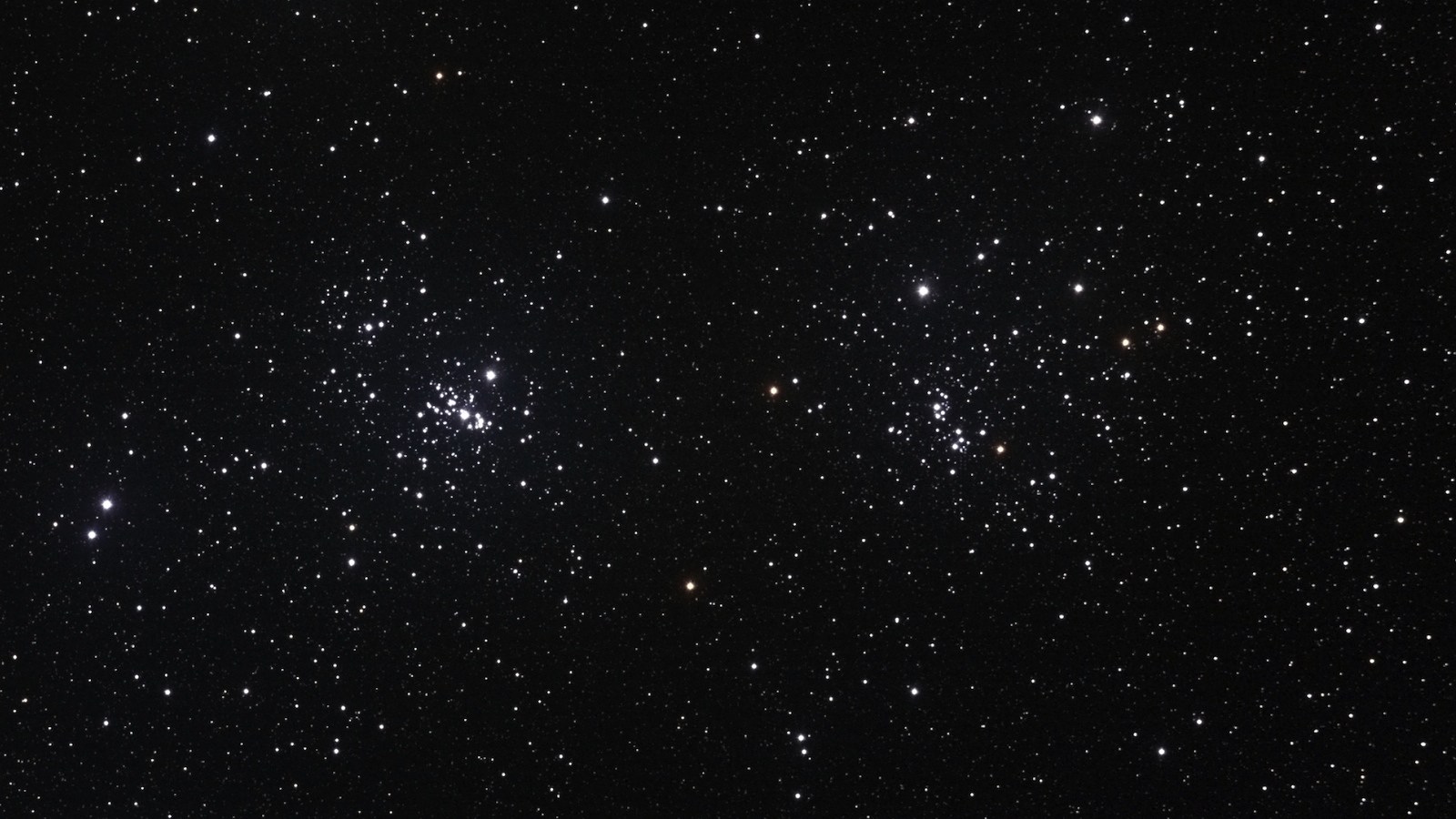
Why do other stars appear so much smaller than the sun?
a)
They are actually much smaller
b)
They are so far away
c)
They are not as bright
d)
They are dwarf stars
64.
What color of star is the hottest?
a)
Blue
b)
Red
c)
Yellow
d)
Orange
65.
What color of star is the coolest?
a)
Red
b)
Yellow
c)
Blue
d)
White
66.
The color of a star tells us its
a)
magnitude
b)
temperature
c)
size
d)
age
67.
Galaxies are composed of 
a)
billions of stars
b)
a star and the planets that orbit around it
c)
all of the bodies and objects in space
68.

The brightness of a star as seen from earth

a)

Apparent magnitude

b)

Awesome magnitude

c)

Absolute magnitude

d)

Amazing magnitude

69.

Brightness determined by DISTANCE from the earth

a)

Amazing magnitude

b)

Absolute magnitude

c)

Apparent magnitude

d)

Awesome magnitude

70.

Alpha Centauri A is a star that is larger than the Sun, yet it appears much less bright. Which of the following is the best explanation for this?

a)

The difference in brightness is due to the distance of the Sun and Alpha Centauri A from Earth

b)

The smaller a star the brighter it appears

c)

The older the star the brighter it appears

d)

The larger the star always appears to be brighter

71.
Characteristics used to classify stars include
a)
distance, size, and color.
b)
size, distance, and brightness.
c)
color, brightness, and distance.
d)
size, brightness, and temperature.
72.
The absolute brightness of a star depends on its
a)
distance and temperature.
b)
size and temperature.
c)
color and temperature.
d)
distance and color.
73.
The brightness of a star as seen from Earth is its 
a)
apparent brightness.
b)
absolute brightness.
c)
parallax.
d)
reflective brightness.
74.
A very bright star can seem to be dimmer because it is 
a)
further away
b)
cooler in temperature
c)
very close
d)
batteries are dying
75.
Put the stars in order from coolest to hottest.
a)
Blue, White, Yellow, Orange, Red
b)
Red, Orange, Yellow, White, Blue
c)
Red, Orange, Yellow, Blue, White
d)
Red, Yellow, Orange, White, Blue
76.
Light is a form of 
a)
energy
b)
radiation
c)
reflection
77.
Which has the LONGEST wavelength and, therefore, the lowest frequency/energy
a)
Gamma Rays
b)
Radio Waves
c)
Visible Light
d)
Infrared rays
78.
Which has the SHORTEST wavelength and, therefore, the highest frequency/most energy
a)
Radio waves
b)
Ultraviolet Rays
c)
Gamma Rays
d)
X-rays
79.
Which section of the spectrum is the ONLY one we can see?
a)
X-rays
b)
Visible Light
c)
Gamma Rays
d)
Ultraviolet Rays
80.
This color has the shortest wavelength
a)
Indigo
b)
red
c)
Yellow
d)
violet
81.
Which type of visible light has the highest energy?
a)
Red
b)
Yellow
c)
Green
d)
Violet
82.
Which type of electromagnetic radiation has a wavelength near 10-8?
a)
Microwave
b)
Infrared
c)
Visible
d)
Ultraviolet
83.
Which of the following types of electromagnetic radiation has a wavelength near 10-5?
a)
Radio
b)
Microwave
c)
Infrared
d)
Visible 
84.
The shortest wavelength in visible light is______.
a)
violet
b)
red
c)
blue
d)
yellow
85.
Which has the SHORTEST wavelength and, therefore, the highest frequency/most energy
a)
Radio waves
b)
Ultraviolet Rays
c)
Gamma Rays
d)
X-rays
86.
Which is the correct order of waves of the electromagnetic spectrum, from lowest energy to highest energy? 
a)
radio waves, microwaves, infrared waves, visible light, ultraviolet light, x-rays, gamma rays
b)
gamma rays, x-rays, ultraviolet light, visible light, infrared light, microwaves, radio waves
c)
radio waves, gamma rays, x-rays, visible light, microwaves, ultraviolet light, infrared waves
87.
Which of the following does NOT belong in the electromagnetic spectrum:
a)
X-ray
b)
sound wave
c)
ultra violet rays
d)
microwaves
88.
Which is NOT a type of galaxy?
a)
Elliptical
b)
Spiral
c)
Oblong
d)
Irregular
89.
Where is our Solar System located in the Milky Way galaxy?
a)
Near the center
b)
Near the outside on one of the arms
90.
How long does it take light from our Sun to reach Earth?
a)
3 seconds
b)
8 minutes
c)
57 hours
d)
1 year
91.
How old do scientists think the Universe is?
a)
13.8 billion years old
b)
4.5 billion years old
c)
24,000 years old
d)
5 years old
92.
What is the best evidence for the Big Bang theory?
a)
How fast light can travel
b)
The expansion of the Universe
c)
Creation of new planets
93.
In ____shift, the galaxies appear _____ in color b/c they are moving away from us.
a)
blue; red
b)
red; red
c)
red; blue
d)
blue; blue
94.
If a star is being observed from Earth and it's light has shifted towards the blue side of the electromagnetic spectrum it would be...
a)
Moving towards the Earth
b)
Moving away from the Earth
c)
This is a trick question that cannot be answered
d)
It isn't a star, it is a very large blueberry.
95.
A light year is related to ...
a)
Time
b)
Energy
c)
Distance
d)
Mass
96.

Which description is considered most accurate regarding what actually happened during the Big Bang?

a)

Two galaxies collided causing an immense explosion as stars crashed into one another

b)

All of what would become the universe was concentrated in a single small point, or singularity, which rapidly expanded into what is now stars, planets, galaxies, matter, and energy.

c)

All matter emerged from a massive black hole at the center of the universe.

d)

Parts of the sun were ripped off by massive internal explosions and were thrown into space where they cooled to become other things, like plants, comets, and other galaxies.

97.

What instrument has allowed us to look deep into space to observe things far away that give us hints to the past?

a)

The Hubble telescope

b)

The Eiffel Tower

c)

Binkley's barometer

d)

The Smith Space Balloon

98.
If a star is being observed from Earth and it's light has shifted towards the blue side of the electromagnetic spectrum it would be...
a)
Moving towards the Earth
b)
Moving away from the Earth
c)
This is a trick question that cannot be answered
d)
It isn't a star, it is a very large blueberry.
99.
The vast majority of galaxies in our universe are moving away from us.  We know this because we observe __________ in the galaxies absorption spectra.
a)
Redshift
b)
Blueshift
c)
Turbulance
d)
Superposition
100.
What does the Red-shift tell us about the universe
a)
the universe is expanding
b)
the universe is contracting
c)
the big bang is false
d)
nothing
101.
When blueshift occurs, the perceived WAVELENGTH of the wave would...
a)
Increase
b)
Decrease
c)
Stay the same
d)
Make frog sounds
102.
When redshift occurs, the perceived WAVELENGTH of the wave would...
a)
Increase
b)
Decrease
c)
Stay the same
d)
Make squirrell sounds
103.
Galaxies that are redshifted are:
a)
actually blue.
b)
really far away.
c)
invisible.
d)
moving away from us.
104.
The light of Proxima Centaury takes 4.3 years to reach Earth.  What does it mean?
a)
The star is 4.3  miles from Earth
b)
The star is 4.3 light years from the  Earth
c)
The star is 43.000.0000.000. light years fromm the  Earth
d)
The  star is  4.3 km  from the Earth
105.

A star is moving away from Earth

a)

Blue shift

b)

Red Shift

c)

Stationary

106.

A star is moving towards Earth

a)

Red shift

b)

Blue Shift

c)

Neutral

107.

Is Galaxy A moving

a)

Away

b)

Towards

c)

Stationary

108.

Is the Galaxy moving

a)

Away

b)

Towards

c)

Stationary