
 Worksheets
Muscular System Review
Total questions: 106
Worksheet time: 55mins
What major muscle do you sit on?
latissimus dorsi
quadriceps
biceps
gluteus maximus
Which of the following muscles are located in the leg? check all that apply.
Tibialis Anterior
Soleus
Biceps Femoris
Vastus Lateralis
Which muscle will be the primary muscle contracting to allow plantar flexion?
Trapezius
Erector Spinae
Tibialis Anterior
Gastrocnemius
Which of these muscles is not found in the back?
Trapezius
Erector Spinae
Latissimus Dorsi
Pectoralis Major

Identify the muscle in the picture
Trapezius
Erector Spinae
Rectus Femoris
Obliques
Fascia is the fibrous, connective tissue that helps to attach, stabilize, and enclose muscles and internal organs.
true
false
What do muscles do for the body?
Support the body
Allow movement
Protect internal organs
All the above
What covers the entire skeletal muscle?
Endomysium
Perimysium
Epimysium
None of the above
What surrounds a bundle of muscle fibers?
Epimysium
Perimysium
Endomysium
None of these above
What surrounds a single muscle fiber?
Epimysium
Perimysium
Endomysium
None of these above
Forearm rotates medially so the palm of hand faces posterior
Pronation
Plantar flexion
Supination
Eversion
In the arm we have seen how the biceps flex the elbow and the triceps straighten it by extending the arm. This action is called ___________.
agonist
antagonist
antagonistic
prime mover
Thin filaments in a myofibril are
Sarcomeres
Sarcoplasm
Actin
Myosin
The energy needed to perform a muscle contraction comes directly from
ATP
Oxygen
Glucose
Calcium
Which is voluntary?
cardiac
skeletal
smooth
Place the following events in sequence:
A) Your arm moves
B) An impulse travels along a nerve
C) You decide you want to move your arm.
A B C
C B A
C A B
A C B

Type of muscle tissue shown in the picture.
smooth
cardiac
skeletal
Concentric
Eccentric
Curl
Isometric
When you slowly release down from a pull-up is that an Eccentric or Concentric movement of your bicep muscle?
Eccentric
Concentric
What is Isometric movement
When a muscle lengthens
There is no movement
When a muscle shortens
Whole muscle contraction is
sometimes a partial response
an all or nothing response
a steady increase in response
a steady decrease in response
A single, brief, jerky muscle contraction is termed:
tetanus
twitch
isotonic
eccentric
Paralysis of which of the following would make an individual unable to flex the hip?
sartorius
biceps femoris
iliopsoas
gastrocnemius
Which one of the following is NOT a criteria generally used in naming muscles?
relative size of the muscle
method of attachment of the muscle to bone
number of origins of the muscle
shape of the muscle
Performs very slow, sometimes rhythmic contractions
skeletal
cardiac
smooth
Primary action of the erector spinae
flexion
extension
circumduction
adduction
An aponeurosis is a ropelike piece of muscle fascia that connects the muscles of the leg to the bone.
true
false
The hamstring group inserts into the distal tibia.
true
false
Which type of muscle tissue responds the fastest to stimulations to contract?
cardiac
skeletal
smooth

What muscle is this?
Lats
Traps
Deltoids
Biceps

What muscle is this?
Deltoid
Traps
Triceps
Abdominals

What muscle is this?
Tibialis Anterior
Rectus Femoris
Hamstrings
Brachioradialis

What muscle is this?
Traps
Triceps
Lats
Obliques

What muscle is this?
Rectus Abdominis
External Obliques
Transversus Abdominis
Quads

What muscle is this?
Triceps
Biceps
Deltoids
Lats

What muscle is this?
Tibialis Anterior
Gastrocnemius
Quads
Hamstrings

What muscle is this?
Gluteus Maximus
Hamstrings
Gluteus Minimus
Lats

What muscle is this?
Rectus Abdominis
Deltoids
Lats
External Obliques

What muscle group is this?
Quads
Hamstrings
Deltoids
Abs

What muscle is this?
Deltoid
Triceps
Biceps
Pectoralis major

What muscle is this?
Triceps
Biceps
Tibialis Anterior
Brachioradialis

What muscle is this?
Soleus
Fibularis Longus
Tibialis Anterior
Brachioradialis

What muscle group is this?
Hamstrings
Quads
Glutes
Traps

What type of muscle tissue is pictured?
Skeletal Muscle
Smooth Muscle
Cardiac Muscle

What type of muscle tissue is pictured?
Skeletal Muscle
Smooth Muscle
Cardiac Muscle

What type of muscle tissue is pictured?
Skeletal Muscle
Smooth Muscle
Cardiac Muscle

What is the name of this muscle?
Triceps Femoris
Sternocleidomastoid
Achilles tendon
Deltoid

What is the name of this Largest Tendon of the body?
Triceps Brachii
Sternocleidomastoid
Achilles Tendon
Gastrocnemius

Biceps Femoris
Quadriceps Femoris
Biceps Femoris
Sartorius

Identify the red muscle
gluteus medius
gluteus maximus
Adductor Magnus
Latissimus Dorsi


What is the name of muscle "k"?
orbicularis oris
orbicularis oculi
buccinator
soleus

What is the name of muscle "A"?
pectoralis major
sternocleidomastoid
gluteus medius
temporalis

which skeletal muscle is represented in the image?
frontalis
orbicularis oculi
orbicularis oris
depressor anguli oris

which skeletal muscle is represented in the image?
orbicularis oculi
zygomaticus
orbicularis oris
frontalis

This muscle allows for dorsiflexion of the foot (5)
tibialis anterior
gastrocnemius
quadriceps group
hamstrings

This muscle helps to elevate the mandible (2)
frontalis
occipitalis
temporalis
platysma

This muscle helps to shrug the shoulders (2)
deltoid
sternocleidomastoid
trapezius
biceps

This is what connects the gastrocnemius to the calcaneous bone (6)
gastrocnemius
calcaneous
achilles tendon
forman's ligament

Identify the Muscle.
external intercostals
serratus anterior
external oblique
internal intercostals
internal oblique


What is the NAME of this muscle?
Supraspinatus
Infraspinatus
Teres Minor
Subscapularis


Muscle A?
rectus abdominus
external obliques
internal obliques
transverse abdominus
The point of muscle attachment to an immovable or less movable bone is known as the ________.
innervation
origin
insertion
action
The prime mover of arm abduction is the ________ muscle.
trapezius
deltoid
triceps brachii
biceps brachii
Jason injured his hamstring muscle group during football practice. He will be unable to perform ________.
thigh extension and knee flexion
dorsiflexion
thigh abduction and adduction
leg rotation and plantar flexion
What is the main function of the quadriceps group?
arm flexion
hand supination
thigh abduction
knee extension
foot inversion
Which muscle group includes the biceps femoris, semimembranosus, and semitendinosus?
abdominal muscles
quadriceps group
adductor group
fibularis muscles
hamstring group
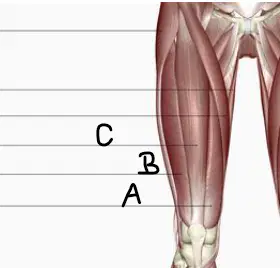
What muscle does letter A represent?
biceps femoris
vastus medialis
vastus lateralis
rectus femoris
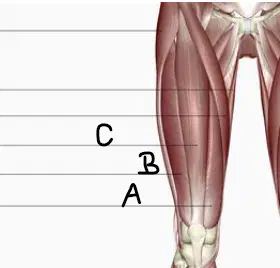
What muscle does letter C represent?
rectus femoris
vastus lateralis
vastus medialis
biceps femoris
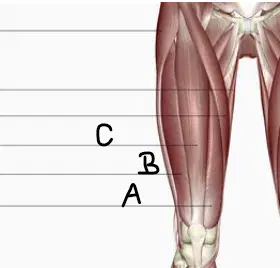
What muscle does letter B represent?
biceps femoris
rectus femoris
vastus medialis
vastus lateralis

What muscle does letter A represent?
biceps femoris
semitendinosus
semimembranosus
rectus femoris
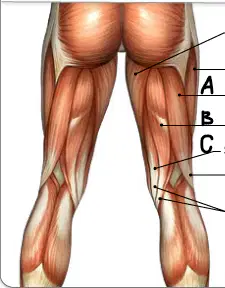
What muscle does letter B represent?
rectus femoris
semimembranosus
semitendinosus
vastus medialis
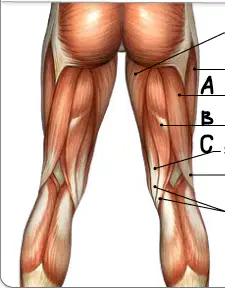
What muscle does letter C represent?
semimembranosus
semitendinosus
biceps femoris
gastrocnemius
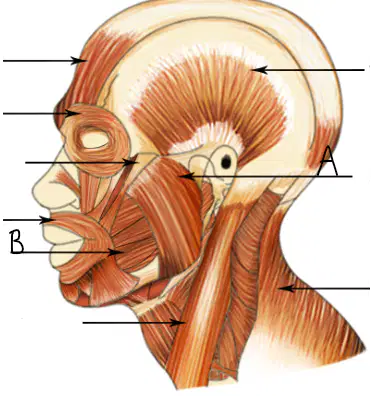
Which muscle does letter A represent?
masseter
buccinator
zygomaticus
orbicularis oris
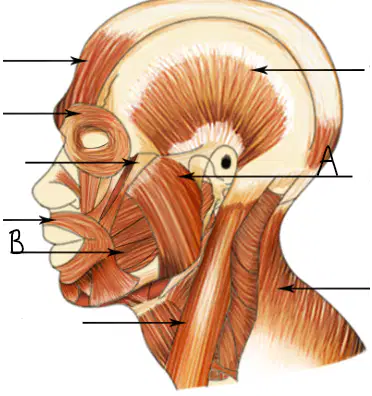
Which muscle does letter B represent?
buccinator
masseter
orbicularis oculi
orbicularis oris
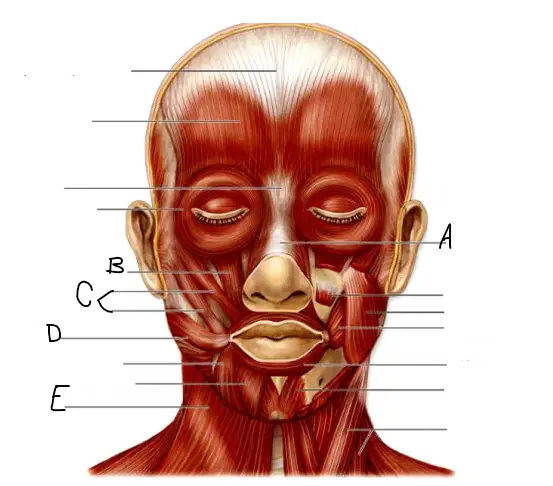
Which muscle does letter A represent?
orbicularis oculi
nasalis
zygomaticus
risorius
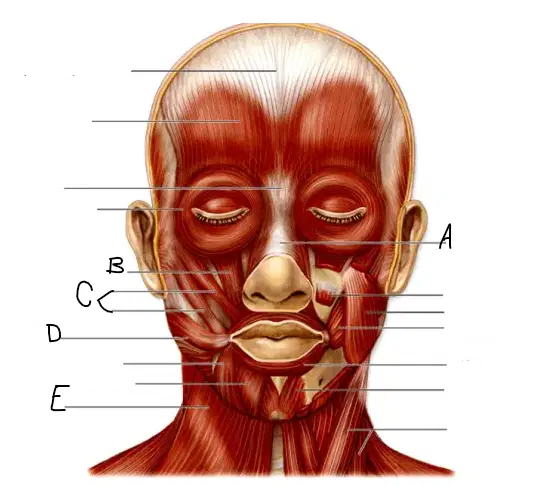
Which muscle does letter B represent?
buccinator
risorius
zygomaticus
levator labii superioris
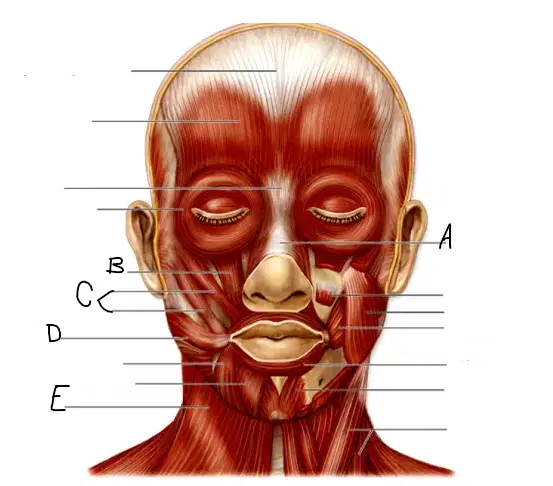
Which muscle does letter C represent?
risorius
zygomaticus
masseter
buccinator
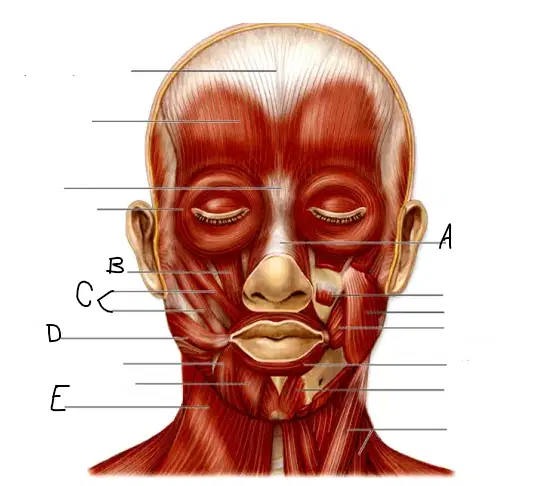
Which muscle does letter D represent?
risorius
orbicularis oris
masseter
buccinator
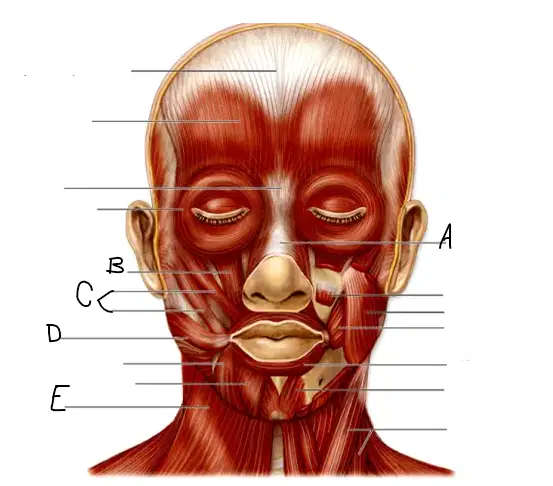
Which muscle does letter E represent?
platysma
sternocleidomastoid
orbicularis oris
risorius
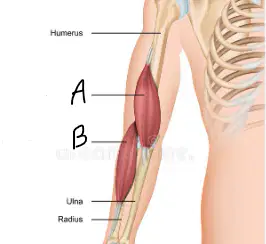
Which muscle does letter A represent?
brachioradialis
brachialis
biceps brachii
triceps brachii
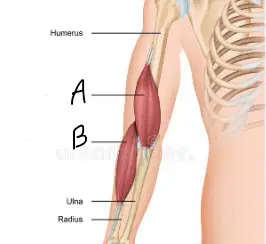
Which muscle does letter B represent?
brachioradialis
brachialis
biceps brachii
triceps brachii
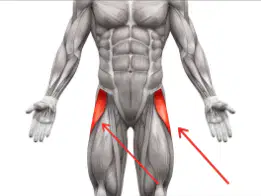
Which muscle is highlighted?
iliopsoas
sartorius
gluteus medius
tensor fasciae latae
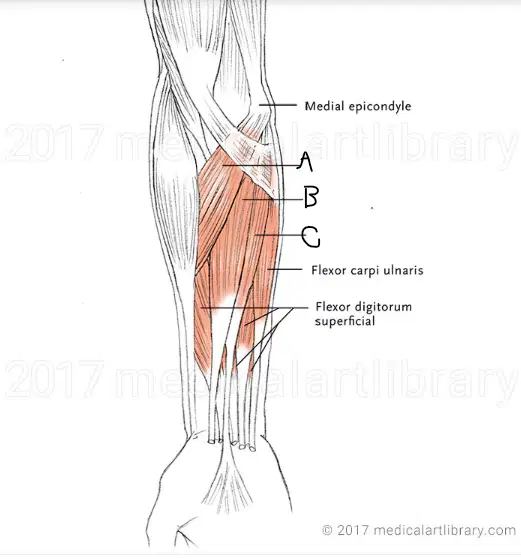
Which muscle is represented by letter A?
palmaris longus
brachioradialis
pronator teres
tibialis anterior
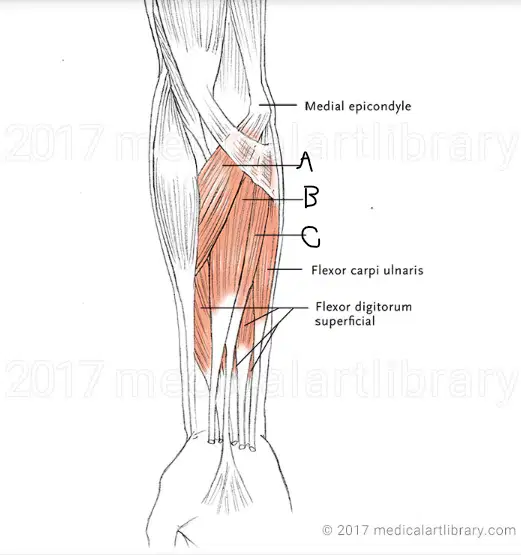
Which muscle does letter B represent?
brachialis
flexor carpi radialis
palmaris longus
iliopsoas
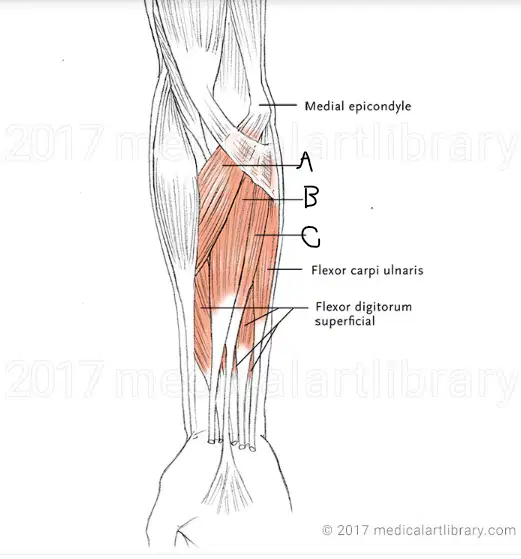
Which muscle does letter C represent?
extensor carpi ulnaris
biceps brachii
palmaris longus
tibialis anterior
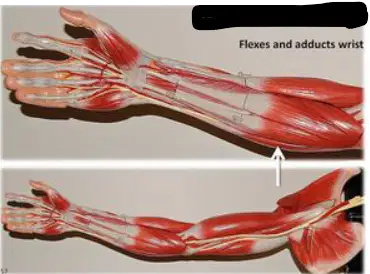
Which muscle is the arrow pointing to?
extensor carpi ulnaris
flexor carpi ulnaris
biceps brachii
triceps brachii
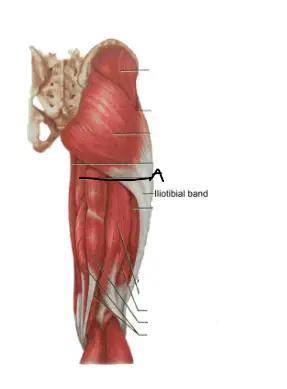
Which muscle is letter A representing?
gracilis
adductor magnus
biceps femoris
semitendinosus
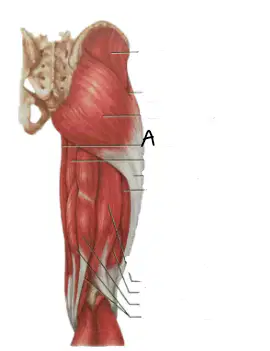
Which muscle is represented by letter A?
gracilis
adductor magnus
semitendinosus
semimembranosus

