
 Worksheets
Ohm's Law Quiz
Total questions: 101
Worksheet time: 2hrs 20mins

Which of the following represents the rate of the flow of electricity, expressed in unit of amps?
current
circuit
voltage
resistance

Which of the following represents the opposition presented to the current by a material or device, measured in ohms?
current
resistance
voltage
electricity

Which of the following represents the potential difference between two points, measured in volts?
voltage
current
electricity
resistance

In the model, what do the arrows represent?
The flow of current
The flow of resistance
The flow of voltage
The flow of positrons

In the model, what does the lightbulb represent?
electricity
current
voltage
resistance

In the model, what does the battery represent?
voltage
current
circuit
resistance

Based on this model, what change should be made in order to increase the current?
Close the switch
Add another battery
Add another lamp
Remove a wire

What is the formula for voltage?
V = (I x R) / 2
V = I / R
V = R / I
V = I x R

What is the formula for current?
I = V / R
I = R / V
I = V x R
I = (V x R) / 2

What is the formula for resistance?
R = I / V
R = V / I
R = V x I
R = (V x I) / 2

If a charger for a tablet offers a voltage of 120V and has 240Ω of resistance, what is the amperage?
0.5A
2A
14,400A
28,800A

If an electric ceramic brush has a current of 0.3 amps and a voltage of 120 volts, what is the resistance?
18Ω
36Ω
200Ω
400Ω

If a computer has 10.0A of current and 11Ω of resistance, what is its voltage?
0.9V
1.1V
55V
110V

Without considering the LED light, what would the current be in this schematic?
0.01A
73.3A
220A
660A

Without considering the LED light, how many more volts will you need to increase the current to 0.05A?
11V
8V
24V
18V

Based on the model, which of the following would be true regarding the relationship between voltage, current, and resistance?
Current will reduce voltage.
Current will not pass through resistance.
Resistance will reduce current.
Voltage will reduce resistance.

Based on the graph, which of the following would be true regarding the relationship of voltage and current?
As voltage increases, current decreases.
Voltage will not affect current.
As voltage decreases, current increases.
As voltage increases, current also increases.

Based on the table, which of the following is true regarding the relationship of voltage, resistance and current?
If resistance remains constant while voltage increases, current will decrease.
If current remains constant while resistance increases, voltage will increase.
If voltage remains constant while resistance increases, current will decrease.
If resistance remains constant while current is increasing, voltage will decrease.
(I X R)
Voltage divided by Resistance
(V / R)
Current
Power
Ohms
Watts
Voltage divided by Current
(V / I)
Current
Power
Resistance
Watts

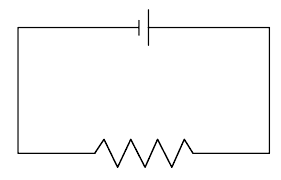
The current supplied by the battery for the circuit is 0.17 amps. Based on the circuit shown above, what is the potential difference across the 20.0 ohm resistor?
If the battery produced 12.6 Volts what would be the current flow for a 6 Ohm resistor?
2.1 Amps
2.4 Amps
1.71 Amps
15 Amps
Calculate the VOLTAGE through a load, if a resistance of 500 Ω that has a current of 1.4 A flowing through it.
70 V
357 V
.0028 V
700 V
A 3-V battery sends a current of 0.10 A through a light bulb. What is the resistance of the filament of the bulb?
.033 Ω
30 Ω
.3 Ω
300 Ω
A 10-V battery generates a current through a 5 Ω resistor. How much current does the battery generate?
2 A
50 A
2.5A
0.5
Which of the following represents the rate of the flow of electricity, expressed in unit of amps?
current
circuit
voltage
resistance
Which of the following represents the opposition presented to the current by a material or device, measured in ohms?
current
resistance
voltage
electricity
Which of the following represents the potential difference between two points, measured in volts?
voltage
current
electricity
resistance
If a charger for a tablet offers a voltage of 120V and has 240Ω of resistance, what is the amperage?
0.5A
2A
14,400A
28,800A
If an electric ceramic brush has a current of 0.3 amps and a voltage of 120 volts, what is the resistance?
18Ω
36Ω
200Ω
400Ω
What is the formula for voltage?
V = (I x R) / 2
V = I / R
V = R / I
V = I x R
What is the formula for current?
I = V / R
I = R / V
I = V x R
I = (V x R) / 2
What is the formula for resistance?
R = I / V
R = V / I
R = V x I
R = (V x I) / 2
If the battery produced 12.6 Volts what would be the current flow for a 6 Ohm resistor?
2.1 Amps
2.4 Amps
1.71 Amps
15 Amps
Which best describes a parallel circuit?
Electricity flows along one pathway.
The flow of electricity comes from one source.
Electricity flows along more than one pathway.
The flow of electricity comes from more than one source.
What is the formula for current?
I = V / R
I = R / V
I = V x R
I = (V x R) / 2
What is the formula for voltage?
V = (I x R) / 2
V = I / R
V = R / I
V = I x R
What is the formula for resistance?
R = I / V
R = V / I
R = V x I
R = (V x I) / 2
If an electric ceramic brush has a current of 0.3 amps and a voltage of 120 volts, what is the resistance?
18Ω
36Ω
200Ω
400Ω
If a computer has 10.0A of current and 11Ω of resistance, what is its voltage?
0.9V
1.1V
55V
110V
When the voltage in a circuit increases, what happens to the current?
Current Increases
Current Decreases
Current Remains the same
Which of the following is the correct formula for Calculating Current?
I = RV
R = V x I
I=VR
V= I x R
Which of the following is Ohm's Law?
Current is proportional to Voltage and inversely proportional to resistance.
Current is proportional to Resistance and inversely proportional to Voltage
Resistance, Current and Voltage are proportional to each other.
What is the current in a circuit with 6 ohms of resistance and a battery containing 24 Volts?
1/4 A
144 A
4 A
0.4 A
Which of the following would be a measurement of Current?
27 V
32 Ω
7 A
1.5 W
Which of the following would be a measurement of Resistance?
3 Ω
1.7 V
23 A
67 W
What is the relationship between voltage and current in Ohm's law?
The relationship between voltage and current in Ohm's law is that they are inversely proportional to each other.
The relationship between voltage and current in Ohm's law is that they are directly proportional to each other.
The relationship between voltage and current in Ohm's law is that they are only related in alternating current circuits.
The relationship between voltage and current in Ohm's law is that they are not related to each other.
If the resistance in a circuit is 5 ohms and the current is 2 amps, what is the voltage?
7 volts
3 volts
15 volts
10 volts
If the voltage in a circuit is doubled, what happens to the current if the resistance remains the same?
The current will double
The current will be halved
The current will remain the same
The current will decrease by 25%
What happens to the current in a circuit if the resistance is increased?
Fluctuates
Decreases
Increases
Remains the same
How does Ohm's law apply to the use of resistors in electronic devices?
Ohm's law cannot be used to calculate the current flowing through the resistor
Ohm's law can be used to calculate the resistance of the resistor when the voltage across it is unknown
Ohm's law only applies to capacitors in electronic devices
Ohm's law can be used to calculate the current flowing through the resistor when the voltage across it is known, or to calculate the resistance of the resistor when the current flowing through it and the voltage across it are known.
What is the unit of measurement for electrical resistance?
Ohm
Ampere
Volt
Watt
What happens to the voltage in a circuit if the current is increased and the resistance remains the same?
The voltage will increase
The voltage will decrease
The voltage will remain the same
The voltage will fluctuate
What is the formula to calculate voltage if the current (I) and resistance (R) are known?
(a)
How can you calculate resistance using Ohm's Law?
(a)
What does the symbol 'Ω' stand for in electrical terms?
Voltage
Current
Power
Resistance
If a circuit with one bulb has full current, what is the current when two bulbs are added to the circuit?
Full current
Half the current
Double the current
One-third the current
How does the current change when three bulbs are connected in a circuit compared to a single bulb?
It remains the same.
It is halved.
It is doubled.
It is one-third.

If the battery produced 12.6 Volts, what would be the current flow be for a 6 Ohm resistor?
2.1 Amps
2.4 Amps
1.71 Amps
15 Amps
A hair dryer draws 14.0 amps from a 120 volt circuit. How much power did the hair dryer use?
.1167 Watt
8.57 Watt
1,680 Watt
840 Watt
12. An overhead wire has a potential difference of 30,000 volts. If the current flowing through the wire is 1,000 amperes, what is the resistance of the wire?
0.033 ohms
30 ohms
3.0 x 10^7 ohms
3.0 x 10^8 ohms
What is the unit for energy?
Watt
Joule
Volt
Ohm

"Voltage" is a common term for ---.
potential difference
current
charge
electric potential energy
Voltage is measured with a _____.
ammeter
voltmeter
ohmmeter
What is the job of a battery? (BEST answer)
provide power
provide energy
turns the circuit on
provide energy for the electrons to flow
Current is like ______________________.
the water flowing from the spigot
the hose being squeezed
the water flowing from the hose
the dog running through the yard
Based on the graph, which of the following would be true regarding the relationship of voltage and current?
As voltage increases, current decreases.
Voltage will not affect current.
As voltage decreases, current increases.
As voltage increases, current also increases.
How many Volts would it take to push 1 Amp through a resistance of 1 Ohm
(a)
A Charging system producing 14.5 Volts with a current flow of 43.5 Amps, what is the circuit's resistance? (include the unit).
(a)

